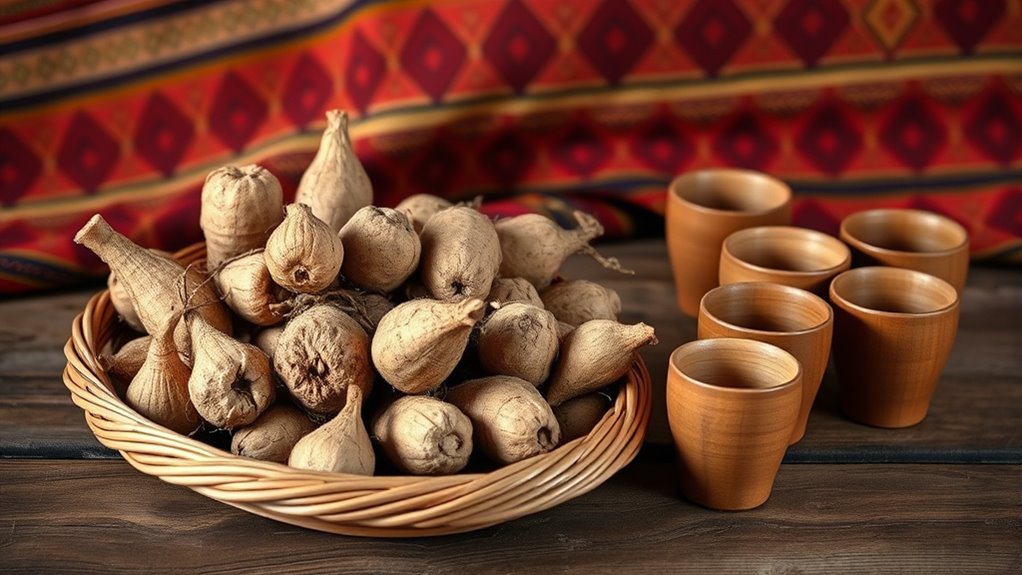

Kava became the Pacific’s ceremonial drink through its deep cultural roots, symbolizing unity, respect, and social bonding in Pacific Islander traditions. Its preparation and use follow strict protocols, maintaining cultural identity and connecting communities across generations. Today, kava also supports local economies through cultivation and export, experiencing rising global demand. This powerful blend of tradition and modern commerce shows how kava continues to evolve while preserving its cultural significance—if you want to learn more about this fascinating journey, keep exploring.
Key Takeaways
- Kava’s cultural significance as a ceremonial beverage in Pacific traditions established its role in social cohesion and identity.
- Traditional rituals and customs surrounding kava emphasize respect and reinforce its importance in community and spiritual practices.
- Its demand grew locally and internationally, turning kava into a valuable economic resource and export commodity.
- The global rise in interest for natural relaxants boosted kava’s popularity, expanding its export markets worldwide.
- The integration of cultural preservation with sustainable commercial practices has enabled kava’s evolution from ceremonial root to global product.

Kava has long been a pivotal part of Pacific Islander culture, serving as both a ceremonial beverage and a significant export commodity. When you participate in traditional ceremonies, sharing kava helps you connect with your community, honor ancestors, and mark important events. Its cultural significance runs deep, symbolizing unity, respect, and social cohesion. You’ll notice that in many Pacific societies, the preparation and consumption of kava follow strict protocols, emphasizing its role in maintaining cultural identity. This ritualistic aspect makes kava more than just a drink; it’s a fundamental expression of heritage and social harmony. As you observe these customs, it becomes clear how integral kava is to Pacific life, fostering bonding and cultural continuity across generations.
Beyond its cultural importance, kava also has a notable economic impact on the region. You might be surprised to learn that the kava trade supports local economies through cultivation, processing, and export. Small farmers grow the plant, often relying on kava as a primary income source, which helps reduce poverty and creates employment opportunities. When you visit Pacific markets or export hubs, you’ll see how kava’s demand has grown internationally, especially among health-conscious consumers seeking natural relaxants. This global interest has transformed kava into a valuable export commodity, bringing foreign currency into local communities. As a result, governments and entrepreneurs invest in sustainable cultivation practices to meet international standards, ensuring that the economic benefits continue to flow and that the environment remains protected.
Your understanding of kava’s dual role deepens when you see how its cultural significance and economic impact intertwine. The tradition of sharing kava in ceremonies preserves cultural identity, which in turn fuels the global demand that boosts local economies. This cycle helps Pacific nations maintain their cultural heritage while also participating in the global marketplace. However, balancing tradition with commercial interests requires careful management to prevent overharvesting or cultural commodification. As you explore further, you’ll realize that the story of kava is one of resilience and adaptation—how a traditional plant has become a symbol of Pacific identity and an important economic driver. In essence, kava’s journey from ceremonial root to international export highlights its profound role in shaping the social and economic fabric of the Pacific Islands.
Frequently Asked Questions
How Is Kava Traditionally Prepared in Pacific Ceremonies?
In traditional preparation for ceremonial rituals, you start by pounding or grinding kava roots to create a fine powder. You then mix this with water in a large bowl, kneading and squeezing the mixture to extract the liquid. The resulting kava brew is strained to remove solids, and you drink it in a communal setting, respecting customs and protocols. This process emphasizes connection, respect, and the cultural significance of the ceremony.
What Are the Health Benefits and Risks of Consuming Kava?
You might wonder about kava’s health benefits and risks. Kava can promote relaxation, reduce anxiety, and improve sleep, offering calming effects. However, you should also consider the health implications, such as potential liver toxicity and interactions with medications. For kava safety, moderation is key, and consulting a healthcare professional is wise. Balancing its calming benefits with awareness of risks helps you enjoy kava responsibly.
How Has Kava’s Global Popularity Affected Pacific Cultures?
You see that kava’s global popularity influences Pacific cultures by boosting economic impact through exports, creating new opportunities for local communities. However, it also challenges cultural preservation, as traditional practices risk dilution when kava is commercialized internationally. While you might enjoy its benefits, it’s essential to recognize how this surge impacts local customs and economies, balancing modern interest with respect for cultural significance and heritage.
What Are the Main Challenges in Exporting Kava Internationally?
Imagine steering a vast ocean, with obstacles like regulatory hurdles and a fragile supply chain blocking your path. You face challenges in exporting kava internationally, as strict regulations vary by country and impact your ability to meet demand. Ensuring quality, managing logistics, and complying with diverse laws create complex hurdles. These issues threaten to limit kava’s global reach, making it hard to share this Pacific tradition beyond its shores.
How Do Pacific Communities Ensure Sustainable Kava Farming?
You can guarantee sustainable kava farming by adopting sustainable cultivation practices that protect the environment and maintain soil health. Community management plays a key role, as local farmers collaborate to set harvesting limits and share resources. By focusing on these strategies, communities preserve kava’s traditional significance while supporting ongoing production. This approach helps prevent overharvesting and ensures future generations can enjoy and benefit from kava.
Conclusion
So, next time you sip kava, remember you’re tasting centuries of tradition and a drink so powerful it shaped entire cultures. It’s not just a beverage; it’s the heartbeat of the Pacific, a potion that’s bridged ancient ceremonies with today’s global markets. You’re part of something monumental—an epic story of resilience, connection, and tradition. So, raise your cup and toast to kava—more than a drink, it’s a Pacific legend in every drop!