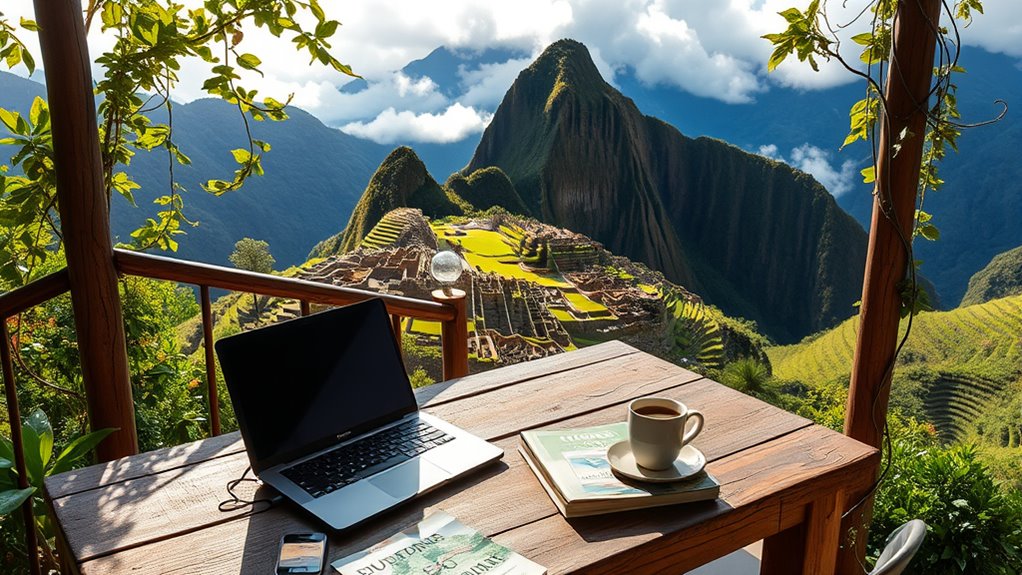

If you’re considering living in South America as a digital nomad, you’ll find countries like Brazil, Ecuador, and Peru offering special visas for remote work, with requirements such as proof of income and health insurance. The region boasts affordable housing, vibrant markets, and reliable internet, especially in major cities. Building a community is easy through coworking spaces and local events, and extensions are possible with proper planning. Explore further to discover tips for a smooth and successful remote lifestyle across South America.
Key Takeaways
- Overview of visa options and application procedures for digital nomads in countries like Brazil, Ecuador, and Peru.
- Cost-effective accommodation, local markets, and cultural experiences across major South American cities.
- Reliable internet access, coworking spaces, and tips for maintaining productivity while abroad.
- Tax regulations, financial planning, and managing expenses for a sustainable remote work lifestyle.
- Strategies for building community, extending stays, and navigating local support networks.
Overview of Digital Nomad Visas in South America
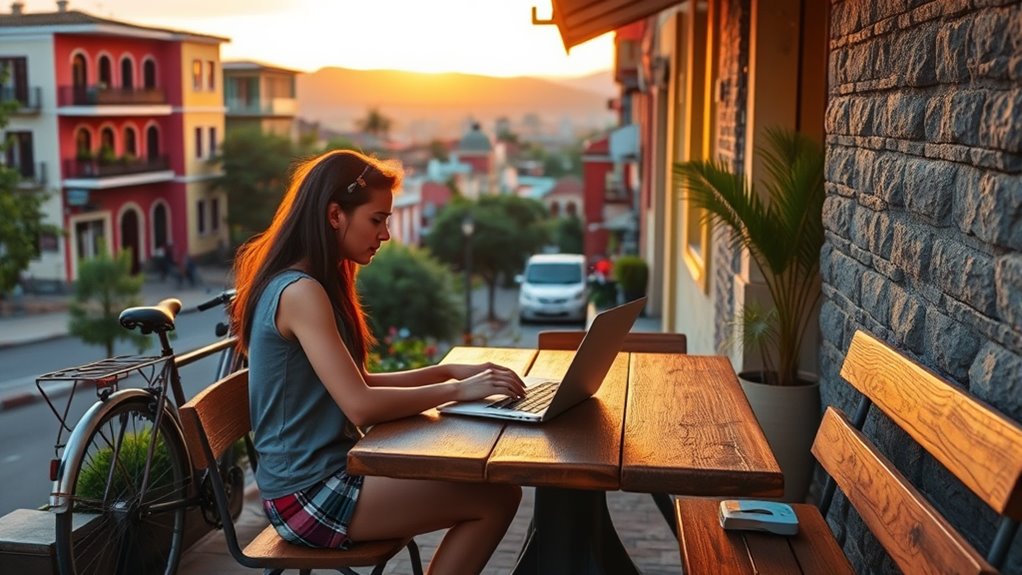
Are you considering working remotely while exploring South America? Digital nomad visas make it easier to live and work in this vibrant continent. Countries like Brazil, Ecuador, and Peru have introduced specific visas that allow you to stay for extended periods, often with the option to renew. Brazil’s visa, launched in 2022, lets you live there for a year with the chance to extend. Ecuador offers a two-year visa for remote workers earning at least $15,300 annually. Peru is developing a similar option for international remote employees. These visas typically require proof of income, health insurance, and a clean criminal record. Many countries are also building communities and infrastructure to support digital nomads, making South America an increasingly attractive destination for remote work. Supporting local biodiversity through sustainable practices can enhance your experience and contribute positively to the regions you visit.
Visa Eligibility Criteria and Application Procedures

To apply for a digital nomad visa, you’ll need to gather key documents like your passport, proof of income, and health insurance. The application process usually involves submitting everything online or at a consulate, depending on the country. Make sure you meet the income and eligibility requirements to increase your chances of approval. Additionally, understanding the visa eligibility criteria can help ensure your application process goes smoothly.
Required Documentation Overview
Wondering what documents you’ll need to qualify for a digital nomad visa in South America? Typically, you’ll need to provide proof of income, health insurance, and a valid passport. Specific requirements vary by country, but these core documents are universal. To help you prepare, here’s a quick overview:
| Document | Purpose |
|---|---|
| Valid Passport | Identity verification and travel authorization |
| Proof of Income | Demonstrates financial stability and remote work ability |
| Health Insurance | Ensures medical coverage during your stay |
| Criminal Record Check | Confirms good conduct, often required for approval |
| Application Form | Completed official form submitted for visa processing |
Having these documents ready accelerates your application process and increases your chances of approval.
Application Submission Process
Applying for a digital nomad visa in South America typically involves reviewing the specific eligibility criteria for each country and submitting your application through the designated channels. You’ll usually need to complete an online form or visit the consulate in person. Prepare your required documents, such as proof of income, health insurance, passport, and background check, ahead of time. Some countries allow online submissions, while others require in-person visits. Pay the applicable visa fee, which varies by country. After submitting your application, you’ll wait for processing, which can take a few weeks. During this period, authorities may request additional information or documents. Once approved, you’ll receive your visa, either electronically or stamped into your passport, ready for your South American adventure. Additionally, understanding the projector technology used in home cinema setups can significantly enhance your viewing experience.
Eligibility and Income Criteria
Eligibility and income criteria are vital for qualifying for a digital nomad visa in South America. You need to meet specific requirements, such as holding a valid passport and providing proof of remote work or employment. Most countries require a minimum income; for example, Ecuador asks for at least $15,300 annually, while Brazil requires monthly earnings of around $1,500 or savings of $18,000. You’ll also need health insurance and a clean criminal record. Application procedures typically involve submitting documents online or at consular offices. Make sure your proof of income, health coverage, and background check are in order. Understanding sound design techniques can also help you create compelling audio content during your travels, which may support remote work projects. Meeting these criteria is essential to securing and extending your visa, allowing you to enjoy your stay without legal issues.
Cost of Living and Accommodation Options
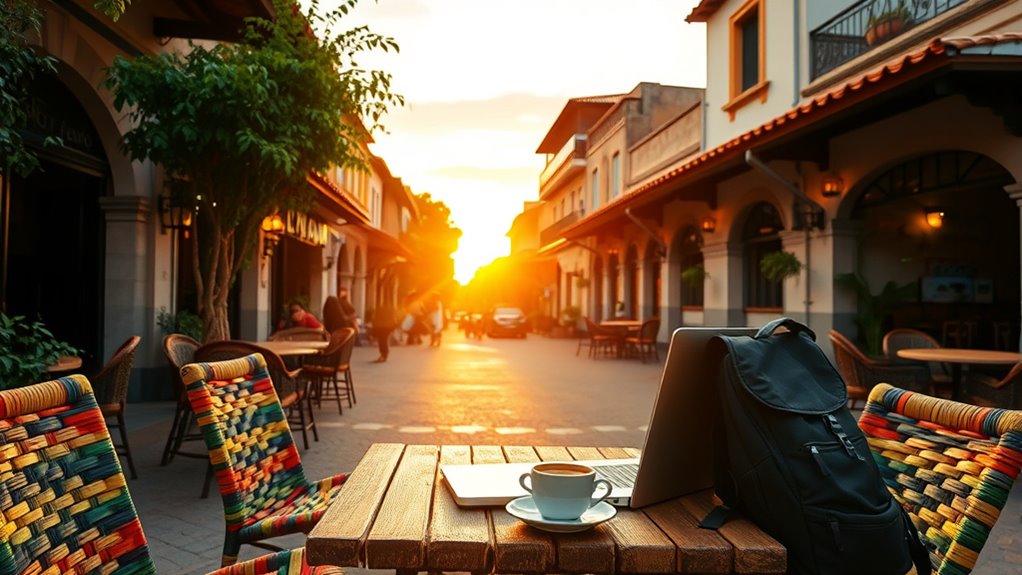
You’ll find that affordable housing options vary from shared apartments to private rentals, fitting different budgets and lifestyles. Local markets and street vendors offer delicious, inexpensive cuisine that lets you enjoy authentic flavors without overspending. Exploring these options can help you make the most of your budget while experiencing South America’s vibrant culture.
Affordable Housing Choices
Affordable housing options are a major draw for digital nomads choosing South America as their base. You’ll find a range of choices, from shared apartments and co-living spaces to private studios and fully furnished rentals. In cities like Quito, Lima, and Medellín, rent prices are reasonable, often costing a fraction of what you’d pay in Europe or North America. Many landlords accept short-term leases, giving you flexibility. You can also explore hostels with private rooms or look for community-driven co-living arrangements, which often include amenities like coworking spaces. Local neighborhoods offer affordable options, especially outside tourist hotspots. To save, consider living slightly outside city centers, where prices drop and community vibes thrive. Overall, South America offers budget-friendly housing that suits different needs and lifestyles. Incorporating local housing styles can also help you blend in and enjoy a more authentic experience.
Local Cuisine and Markets
South America’s rich culinary landscape adds a vibrant layer to the experience of living as a digital nomad. In local markets, you’ll find fresh produce, exotic fruits, and street food stalls serving authentic dishes at affordable prices. Cities like Lima and Quito boast bustling markets where you can buy everything from colorful vegetables to traditional snacks. Dining out is budget-friendly, with many casual eateries offering hearty meals for under $5. International cuisines also thrive, catering to diverse tastes. Exploring local markets not only saves money but immerses you in the culture. Whether you’re shopping for ingredients or grabbing a quick bite, the variety and flavors make every meal a memorable part of your South American adventure. Additionally, understanding cost of living factors can help you plan a sustainable budget during your stay.
Navigating Tax Regulations and Financial Planning
Understanding the tax regulations in South America is vital for digital nomads to avoid unexpected liabilities and optimize their financial situation. Each country has distinct rules for foreign income, so it’s important to research local laws. For example, in Brazil, income earned abroad isn’t taxed locally, but in Ecuador, foreign income might be taxed only in your country of residence. Peru generally doesn’t tax foreign income if it isn’t sourced locally. You should also consider the need for proper documentation, such as proof of income and health insurance, to meet visa requirements. Developing a solid financial plan involves understanding these regulations, tracking expenses, and consulting local tax professionals when needed. Proper planning ensures you stay compliant and maximize your income while enjoying your digital nomad experience. Additionally, understanding tax regulations can help you identify opportunities for tax savings and avoid potential penalties.
Internet Infrastructure and Remote Work Resources
Ever wondered how reliable your internet connection will be while working remotely across South America? In major cities like Rio de Janeiro, Lima, and Quito, you’ll find decent to high-speed internet, often suitable for video calls and cloud-based tasks. However, outside urban centers, connection quality can vary markedly, with some rural areas experiencing slower or unstable internet. Coworking spaces are on the rise, offering reliable Wi-Fi, comfortable work environments, and networking opportunities. Many countries also provide public Wi-Fi in cafes, libraries, and airports—though you should use a VPN for security. Mobile internet is widely accessible via SIM cards, with affordable data plans in most countries. Overall, while South America’s internet infrastructure is improving, it’s wise to research specific locations beforehand to guarantee your remote work runs smoothly.
Building Community and Finding Support Networks
As reliable internet becomes more widespread in urban centers, digital nomads are increasingly seeking out community and support networks to enhance their experience. Joining local coworking spaces is a great way to connect with like-minded people, share resources, and find opportunities. Attend meetups, workshops, or social events organized for expats and remote workers; platforms like Meetup and Facebook groups make it easy to discover these gatherings. Engaging with online communities, such as Reddit or Nomad List, helps you exchange tips and advice. Many cities also host language exchanges and cultural events, which foster deeper connections. Building relationships with fellow nomads and locals not only improves your social life but also provides valuable support for steering through challenges and discovering hidden gems. Incorporating sound therapy techniques can also improve your focus and mental well-being during busy travel periods.
Extending Stay and Managing Visa Renewals
To extend your stay in South America, you’ll need to navigate visa renewal processes before your current permissions expire. Many countries allow extensions if you meet ongoing requirements, such as proof of income and health insurance. Be proactive—check deadlines and gather necessary documents early. Some countries require you to apply online, while others prefer in-person visits. When renewing, expect to provide updated proof of remote work and financial stability. Additionally, understanding the specific visa policies of each country can help prevent unexpected complications during the renewal process.
Tips for a Successful Digital Nomad Experience

Achieving a successful digital nomad experience in South America requires careful planning and adaptability. Start by researching visa requirements and ensuring your documentation is in order, including proof of income and health insurance. Choose destinations with reliable internet and coworking spaces to stay productive. Embrace local cultures and learn basic phrases in Spanish or Portuguese to enhance your interactions. Budget wisely, considering the cost of living and potential expenses like transportation or activities. Connect with local and expat communities online or in person for support and networking. Be flexible—plans may change due to visa extensions or local regulations. Finally, prioritize your health and safety by staying updated on local health guidelines and maintaining good insurance coverage. This approach will help guarantee a rewarding and seamless experience. Incorporating elements like listening to calming music can also help manage stress and enhance your overall well-being during your travels.
Frequently Asked Questions
Are Digital Nomad Visas Available for All South American Countries?
Not all South American countries provide dedicated digital nomad visas. Countries like Brazil, Ecuador, and Peru have introduced specific visas for remote workers, but others are still developing or haven’t formalized such programs. You’ll need to verify each country’s current regulations, as some may require regular tourist visas or work permits instead. Planning ahead ensures you meet the specific visa requirements for your preferred destination.
What Are the Health Insurance Requirements for Digital Nomad Visas?
Imagine feeling secure under the warm sun, knowing your health is protected. For digital nomad visas, you typically need valid health insurance covering medical expenses during your stay. Countries like Brazil and Ecuador require proof of insurance, sometimes with specific coverage limits. You should choose a plan that offers all-encompassing international coverage, giving you peace of mind and allowing you to focus on exploring vibrant streets and breathtaking landscapes without worry.
Can I Work Remotely for a Non-International Company While in South America?
Yes, you can work remotely for a non-international company while in South America. Most countries don’t restrict remote work from local or international employers as long as you comply with visa requirements, like proof of income and health insurance. Just make certain your visa allows remote work and keep documentation handy. It’s also wise to stay updated on local laws to avoid legal issues during your stay.
How Safe Are Popular Digital Nomad Destinations in South America?
Safety varies by destination, but with a little caution, you can navigate South America’s popular spots safely. Think of it as walking a tightrope—you need awareness and common sense. Stick to well-known neighborhoods, avoid flashing valuables, and stay updated on local advice. Many cities have vibrant communities and good infrastructure, making them safer for digital nomads. By staying alert, you’ll find your adventure both exciting and secure.
Is It Possible to Switch Between Different South American Countries Easily?
Yes, you can switch between South American countries relatively easily, but it depends on each country’s visa policies. Many countries allow visa extensions or border runs to extend your stay, especially if you meet renewal requirements. You’ll need to prepare your documents, like proof of income and health insurance, and be aware of each destination’s border crossing rules. Planning ahead helps guarantee smooth shifts between countries.
Conclusion
Embracing South America as a digital nomad means balancing adventure with preparation. While the vibrant culture and stunning landscapes offer endless inspiration, maneuvering visas and regulations requires diligence. It’s easy to get lost in the beauty, but staying organized guarantees your journey stays smooth. Ultimately, the freedom to explore new horizons and build a remote career hinges on your planning—so plunge in, but stay grounded. Your South American adventure awaits—ready when you are.