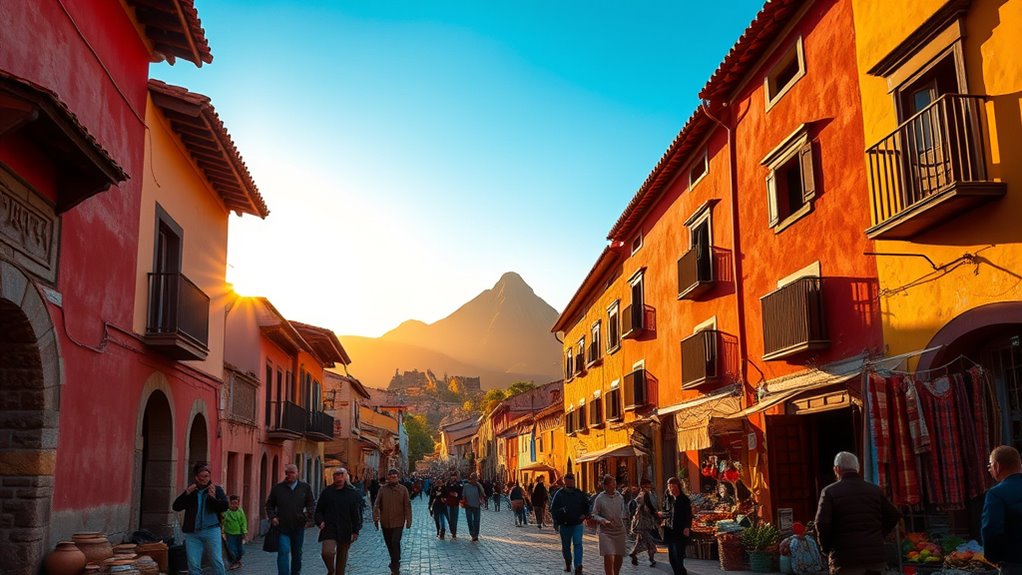

South America’s history and culture stem from ancient civilizations like the Incas, whose impressive architecture and innovations still inspire awe. Indigenous traditions, arts, and languages shape modern festivals, music, and cuisine, blending with colonial influences from Spanish and Portuguese rule. The continent experienced independence struggles, political shifts, and modernization, all contributing to its diverse identity today. If you want to explore how these elements intertwine and shape South America’s rich heritage, there’s much more to uncover beyond the surface.
Key Takeaways
- South America’s rich history includes ancient civilizations like the Incas, Aztecs, and Nazca, with archaeological sites such as Machu Picchu and the Nazca Lines.
- Indigenous cultures significantly influence modern South American traditions, languages, art, festivals, and craftsmanship.
- The Inca Empire’s rise and Spanish conquest in the 16th century shaped the region’s colonial heritage and cultural fusion.
- Movements for independence in the 19th century led to diverse nations, border disputes, and evolving political systems.
- The continent’s culture is reflected in its landmarks, festivals, music, cuisine, and ongoing social and economic transformations.
Ancient Civilizations and Archaeological Heritage
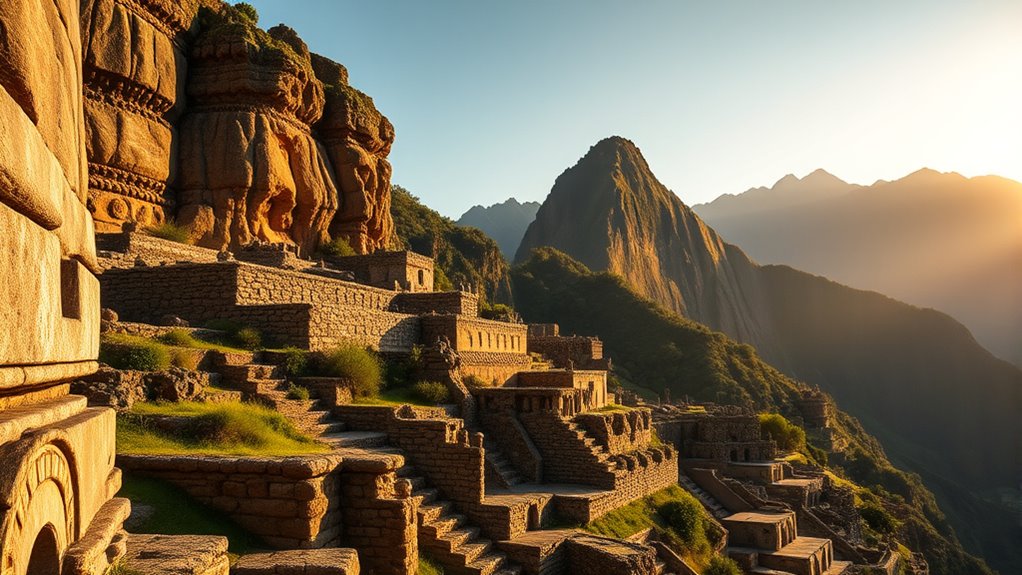
South America’s ancient civilizations laid the foundation for its rich cultural heritage and continue to fascinate archaeologists today. You can explore sites like Machu Picchu, where the Incas built impressive stone structures high in the Andes, showcasing advanced engineering skills. The Nazca Lines reveal enormous geoglyphs etched into the desert floor, visible only from the air, hinting at complex religious or astronomical beliefs. Tiwanaku’s stone city features intricate carvings and monolithic statues, reflecting sophisticated craftsmanship. These civilizations domesticated animals like llamas and alpacas, supporting agriculture and trade. Pottery and textiles found at archaeological sites display artistic mastery and cultural expressions. Despite limited written records, these cultures left behind a wealth of artifacts that continue to reveal their ingenuity, spirituality, and social organization. Additionally, ongoing excavations and research help deepen our understanding of their archaeological heritage.
The Rise and Fall of the Inca Empire
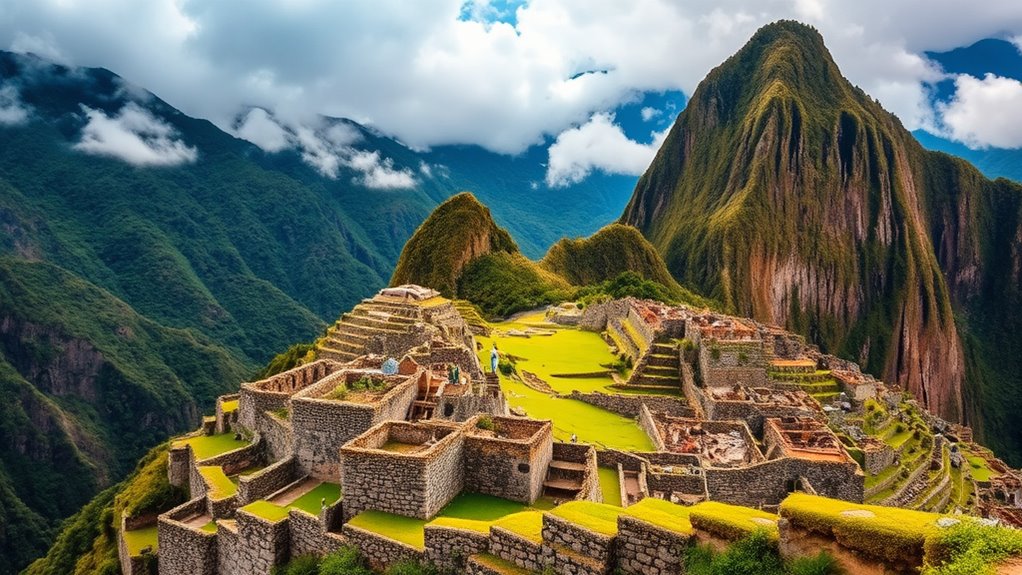
The Inca Empire rose to dominance in the Andes during the 15th century, building on the rich cultural traditions of earlier Andean civilizations. You witness their rise through impressive engineering, agriculture, and centralized control. The Incas expanded rapidly, uniting diverse peoples under a sophisticated bureaucracy. Their economy thrived on terraced farming, llama trade, and tribute systems. However, within a few decades, Spanish conquistadors arrived, bringing warfare, disease, and conquest that led to the empire’s collapse. Below is a snapshot of key aspects: archaeological sites reveal invaluable insights into their advanced engineering and societal organization.
| Aspect | Description | Impact |
|---|---|---|
| Engineering | Machu Picchu, roads | Enabled control and communication |
| Society | Cuzco as capital | Political and cultural hub |
| Downfall | Spanish invasion, 1532 | End of the empire |
Indigenous Cultures and Their Lasting Impact
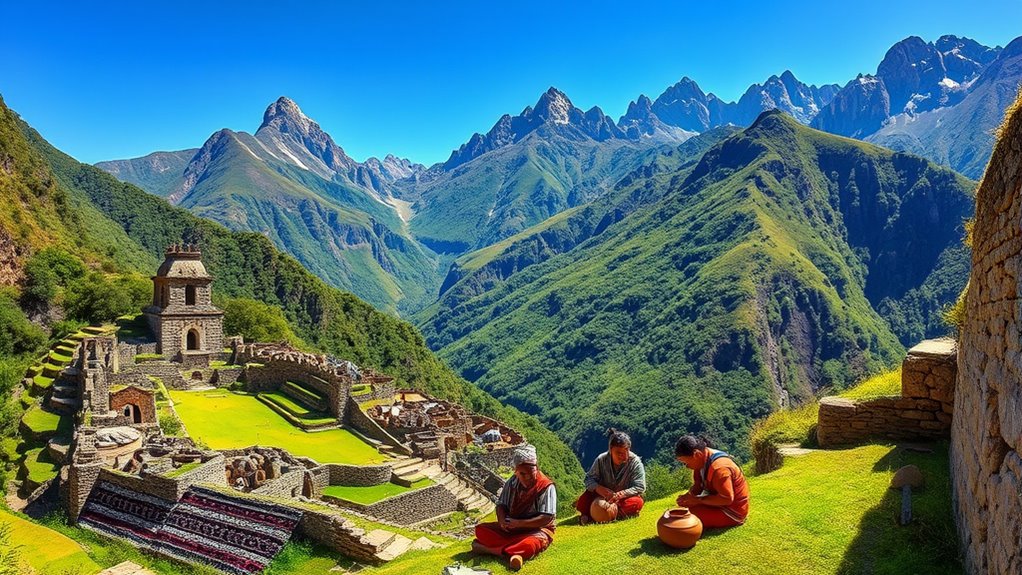
Indigenous cultures across South America have left an indelible mark on the region’s history, art, and traditions that persists today. You can see their influence in modern festivals, music, and cuisine, which blend ancient practices with contemporary life. Indigenous languages still thrive in many communities, shaping local dialects and storytelling traditions. Their craftsmanship, from textiles to pottery, continues to inspire artists and designers worldwide. Architectural marvels like Machu Picchu remind you of sophisticated engineering rooted in indigenous knowledge. You also notice how traditional beliefs and rituals remain integral to cultural identity, often intertwined with national festivities. The use of self-watering plant pots exemplifies how traditional ingenuity can be adapted to modern gardening practices, reflecting the enduring resourcefulness of indigenous innovations. Their enduring legacy fosters a sense of pride and resilience, reminding you of the rich, diverse roots that continue to shape South America’s cultural landscape.
European Conquest and Colonial Transformations
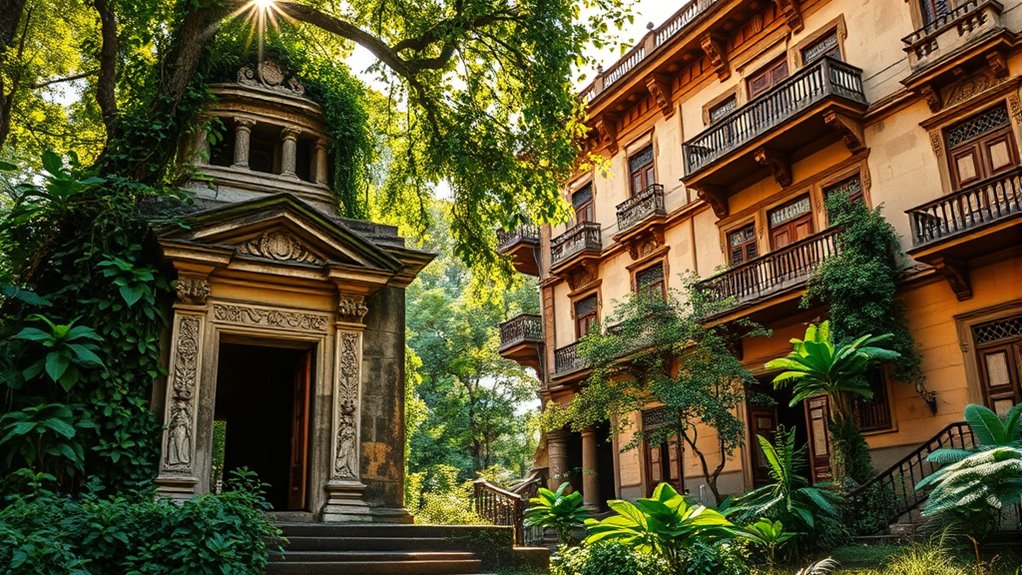
When Europeans arrived, they brought conquest that drastically reduced indigenous populations through warfare and disease. They built colonial economies based on silver, gold, and agriculture, transforming local societies into parts of global trade networks. This period also sparked cultural fusion, blending European, indigenous, and African traditions into South America’s unique heritage.
Conquest and Population Decline
European explorers and conquistadors rapidly transformed South America’s societies after their arrival in the late 15th and early 16th centuries. Their conquest brought devastating violence, warfare, and forced labor that decimated indigenous populations. Diseases like smallpox, measles, and influenza spread quickly, killing millions who had no immunity. Warfare and colonization disrupted established societies, leading to a sharp population decline. You can see this impact in the near disappearance of large civilizations, such as the Inca and Muisca. As indigenous communities fell, Europeans established new social orders rooted in colonial rule and plantation economies. This population decline reshaped the continent’s demographic landscape, replacing thriving societies with colonial populations rooted in European culture and African slavery. The conquest’s legacy remains evident in South America’s diverse, yet deeply scarred, cultural fabric. Additionally, the introduction of new technologies and crops significantly altered indigenous ways of life and agriculture, further accelerating cultural and demographic changes.
Colonial Economy Structures
European conquest dramatically transformed South America’s economic landscape by establishing a colonial system centered on resource extraction and plantation agriculture. You become part of a new economy that prioritized silver, gold, sugar, and cotton, fueling global markets. This system relied heavily on enslaved African labor and indigenous exploitation, reshaping social hierarchies. You’ll see how colonial authorities imposed monopolies and trade restrictions, controlling exports and imports. Large estates, or haciendas, dominated rural life, emphasizing export crops over local needs. This economic model created wealth for European powers while marginalizing indigenous communities and local producers. The focus on resource extraction and plantation agriculture laid the groundwork for the region’s ongoing economic dependence on primary commodities. Additionally, colonial policies often promoted economic monopolies, further consolidating control over local resources and trade.
Cultural Fusion and Heritage
The conquest and colonization of South America ignited a profound cultural transformation, blending indigenous traditions with European and African influences. You experience this fusion in language, religion, art, and social customs today. Mestizo populations reflect this blending, creating unique identities. African heritage, introduced through enslaved Africans, shaped music, dance, and cuisine. This cultural mixture is evident in festivals like Carnival and Day of the Dead, and UNESCO sites like Machu Picchu. The table below illustrates key aspects of this fusion:
| Indigenous Culture | European Influence | African Heritage |
|---|---|---|
| Traditional rituals | Catholicism | Rhythmic music |
| Art and textiles | Colonial architecture | Dance styles |
| Languages | European languages | Drumming, percussion |
| Festivals | Christian holidays | Afro-Brazilian rites |
| Culinary traditions | European ingredients | Spicy flavors |
Additionally, cultural syncretism has played a crucial role in shaping contemporary South American identity by blending diverse traditions into new expressions.
Movements Toward Independence and Nation Formation
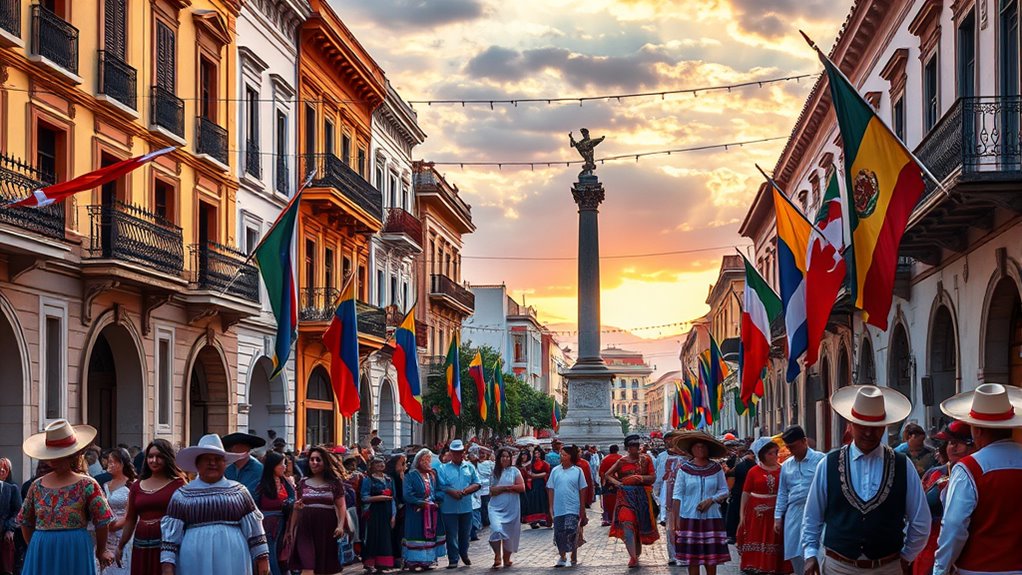
What sparked the push for independence across South America? You can thank the influence of Enlightenment ideas, economic hardships, and widespread resentment of colonial rule. Colonial authorities imposed heavy taxes, restricted trade, and suppressed local governance, fueling unrest. The success of the American and French Revolutions inspired many leaders. Key figures like Simón Bolívar and José de San Martín organized military campaigns to challenge Spanish authority. Economic exploitation and social inequalities deepened frustrations. Local elites sought greater political autonomy, pushing for self-rule. The creole population, born in the colonies but of European descent, played an essential role. They united in rebellion, leading to the formation of new nations. These movements transformed South America from colonies into independent countries with distinct identities. Additionally, colonial grievances and economic hardship fueled widespread discontent and mobilization.
Post-Independence Conflicts and Political Evolution
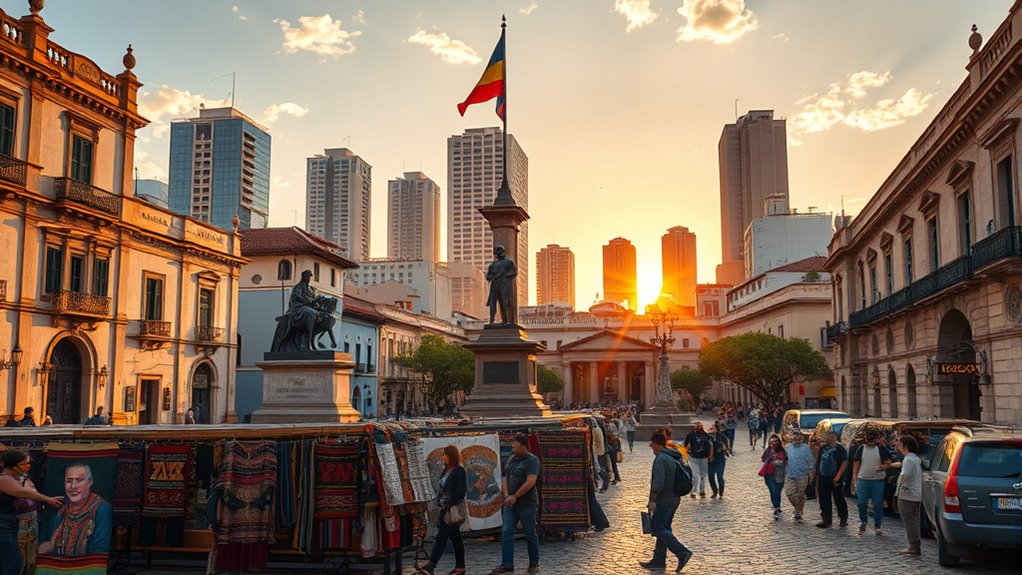
After gaining independence, South American nations faced ongoing conflicts over borders, often leading to wars and regional tensions. You’ll see how military coups and autocratic leaders shaped many countries’ political paths, delaying democratic development. Despite these struggles, some nations switch to stable democracies, though challenges to political stability still remain. The influence of political tuning and leadership styles from the region’s history continues to impact governance today.
Regional Border Disputes
Regional border disputes have shaped South America’s political landscape since independence, often fueling tensions and conflicts between neighboring countries. These disputes stem from colonial boundaries, ambiguous treaties, and resource claims, leading to long-standing disagreements. Countries like Bolivia and Chile fought over the Atacama Desert, while Venezuela and Guyana dispute border regions over mineral-rich areas. These conflicts sometimes escalate into military confrontations or diplomatic standoffs, affecting regional stability. Resolving disputes often involves negotiations, international arbitration, or occasional conflict. Border conflicts also influence national identities and foreign relations, shaping regional alliances and rivalries. Understanding these disputes reveals how history, resources, and sovereignty continue to influence South America’s modern geopolitics. Historical context of colonial legacy plays a significant role in shaping current border issues.
Military Coups and Autocrats
Following independence, many South American countries experienced a cycle of political instability, often marked by military coups that overthrew civilian governments. These coups led to autocratic regimes headed by caudillos or military leaders who prioritized control over democracy. Such rulers often suspended constitutions, dissolved legislatures, and suppressed opposition. Their rule shaped the political landscape, delaying democratic development and fostering social unrest. You can see how these regimes influenced regional dynamics:
| Cause | Effect | Outcome |
|---|---|---|
| Military coups | Autocratic governments | Political instability |
| Caudillo rule | Suppression of opposition | Delayed democracy |
| External influence | Foreign support or opposition | Regional power shifts |
Furthermore, these regimes often relied on military support to maintain their grip on power, further entrenching autocratic rule.
Democratic Transitions and Stability
Since gaining independence, South American countries have experienced a complex journey toward democratic stability. You see, many nations faced internal conflicts, military coups, and caudillo rulers that delayed true democracy. Over time, however, waves of democratization emerged, often replacing authoritarian regimes. Still, challenges like economic dependence, border disputes, and political corruption persisted, causing instability. You can observe how countries progressing through elections, protests, and reforms, striving for lasting democracy. Some nations, like Chile and Argentina, made significant progress, while others struggled with recurring coups and authoritarian backslides. Ultimately, these efforts shaped modern political landscapes, fostering resilience and ongoing democratization.
- Addressing past autocratic rule and military influence
- Strengthening democratic institutions and elections
- Managing economic vulnerabilities and inequality
- Navigating regional border disputes
- Promoting civic participation and stability
Social Changes, Modernization, and Economic Shifts
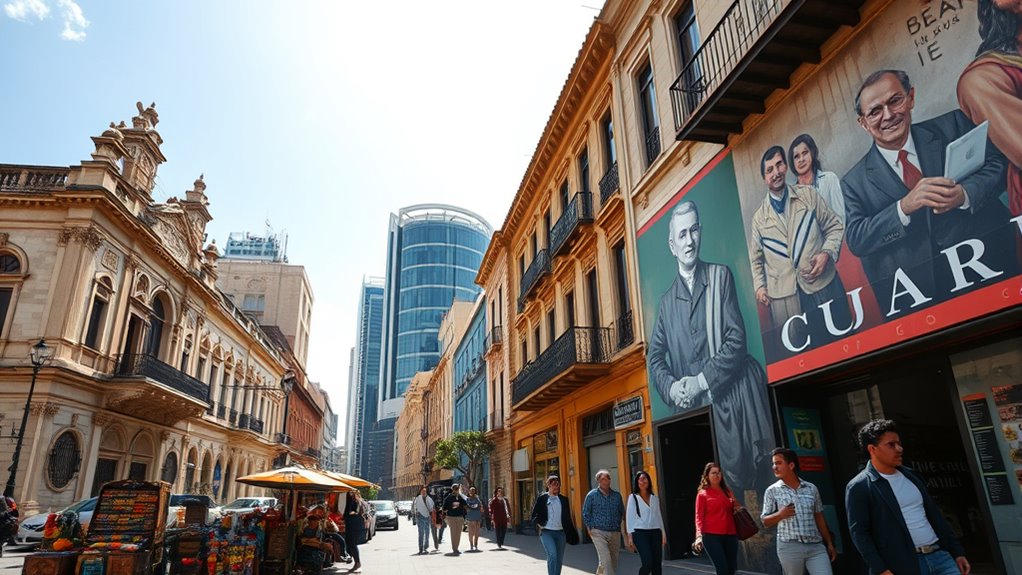
South American countries have undergone significant social transformation as they embraced modernization and economic shifts throughout the 20th and 21st centuries. You witness rapid urbanization, especially in cities like São Paulo, Buenos Aires, and Santiago, where populations swell and infrastructure expands. Industrial growth and technological advances reshape work and daily life, yet social inequality remains a challenge. You see governments endeavoring for economic diversification, moving beyond reliance on commodities like oil or coffee, to include manufacturing and services. Education and access to technology improve, but disparities persist across regions and social classes. You observe social movements advocating for rights, gender equality, and environmental sustainability, reflecting ongoing efforts to balance modernization with social justice. These changes reshape the continent’s identity and future prospects.
Artistic Expressions and Cultural Traditions

Have you ever been captivated by the vibrant rhythms of Latin American music or the intricate patterns of indigenous textiles? South America’s artistic expressions reflect its rich cultural tapestry. You can explore the colorful murals and pottery of ancient civilizations, showcasing their storytelling traditions. Music plays a crucial role, with genres like tango, samba, and cumbia spreading globally. You’ll find vibrant festivals, such as Carnival in Brazil, celebrating heritage through dance and costumes. Indigenous crafts, like woven textiles and goldwork, reveal ancestral techniques passed down through generations. Modern artists blend tradition with innovation, creating compelling visual and performing arts.
- Traditional music and dance styles
- Indigenous textiles and craftsmanship
- Celebratory festivals and rituals
- Murals and street art
- Contemporary art movements
UNESCO Heritage Sites and Cultural Landmarks
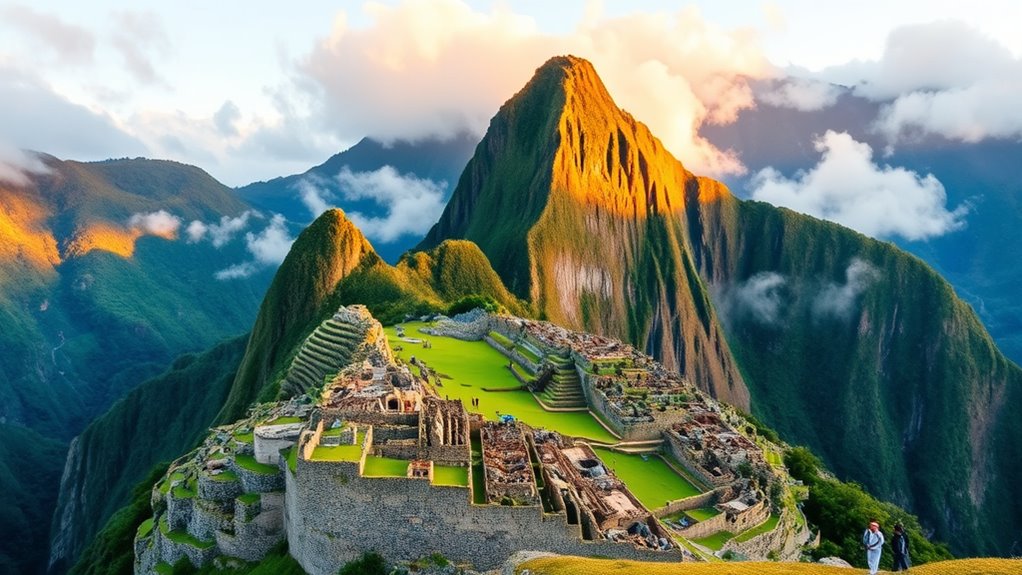
UNESCO World Heritage Sites in South America showcase the continent’s diverse cultural and natural heritage, attracting visitors from around the world. You can explore iconic landmarks like Machu Picchu, a marvel of Inca engineering, and the stunning Iguazu Falls, a natural wonder shared by Brazil and Argentina. These sites preserve ancient civilizations and breathtaking landscapes, highlighting South America’s rich history. The table below summarizes some key UNESCO sites:
| Site | Location | Significance |
|---|---|---|
| Machu Picchu | Peru | Inca citadel, architectural masterpiece |
| Iguazu Falls | Argentina/Brazil | Largest waterfall system in the world |
| Historic Centre of Salvador | Brazil | Colonial architecture, Afro-Brazilian culture |
| Tiwanaku | Bolivia | Pre-Columbian archaeological site |
These landmarks embody the continent’s cultural resilience and natural beauty.
Frequently Asked Questions
How Did Indigenous Societies Influence Modern South American Culture?
You can see indigenous societies’ influence in modern South American culture through language, art, and traditions. They have shaped local cuisine, music, and festivals, blending their customs with European and African elements. Many communities still practice indigenous rituals and wear traditional clothing. Their agricultural practices, like terracing and crop cultivation, remain essential. Overall, the deep roots of indigenous societies continue to enrich the region’s identity and cultural diversity today.
What Role Did African Slaves Play in Shaping Regional Traditions?
You see, African slaves played a crucial role in shaping regional traditions by bringing their music, dance, and religious practices, which blended with indigenous and European cultures. Their influence is evident in vibrant festivals like Carnival, samba rhythms, and Afro-Bolivian and Afro-Colombian traditions. Through their resilience, they enriched cuisine, language, and spiritual beliefs, creating a diverse cultural tapestry that remains integral to South America’s identity today.
How Have Border Disputes Impacted Regional Stability?
Border disputes have substantially impacted regional stability, leading to conflicts that have claimed thousands of lives. For example, the War of the Pacific (1879–1884) resulted in Chile gaining valuable mineral-rich territories, shifting regional power dynamics. These disputes foster mistrust, hinder economic growth, and often delay diplomatic progress. You can see how unresolved borders continue to spark tensions, making regional cooperation more challenging and emphasizing the importance of peaceful resolution for lasting stability.
What Are South America’s Major Contemporary Cultural Festivals?
You’ll find that South America’s major contemporary cultural festivals include Brazil’s Carnival, a vibrant celebration with samba parades and elaborate costumes; Peru’s Inti Raymi, honoring the sun god with traditional ceremonies; and Colombia’s Feria de las Flores, showcasing floral displays and cultural events. These festivals highlight local traditions, music, dance, and art, drawing visitors worldwide and fostering a sense of community and cultural pride across the continent.
How Does South American Literature Reflect Its Diverse History?
South American literature reflects its diverse history through themes of colonialism, indigenous traditions, and social struggles. As you read, you’ll notice stories blending European influences with indigenous voices, highlighting cultural fusion. Writers like Gabriel García Márquez and Pablo Neruda use magical realism and poetic language to explore identity, history, and political upheaval. This vibrant literary landscape captures the complex, layered past of the continent, giving voice to its many perspectives.
Conclusion
As you explore South America’s rich history and vibrant cultures, remember that “history repeats itself.” From ancient civilizations to modern nations, each chapter shapes who the continent is today. Embrace the diverse traditions, enduring legacies, and ongoing transformations that define South America. By understanding its past, you gain insight into its future. Keep in mind, the roots you uncover today will grow into the stories of tomorrow.