
Florida’s history is shaped by indigenous peoples who arrived over 14,000 years ago, European explorers like Ponce de León, and later, Spanish, British, and American influences. Its diverse culture reflects Native traditions, Spanish missions, African heritage, and immigrant communities. From early settlements to modern cities, Florida’s story includes wars, territorial changes, and growth fueled by tourism and industry. To discover how these elements merge into today’s vibrant culture, explore further into Florida’s fascinating past.
Key Takeaways
- Florida’s history begins with over 14,000 years of Indigenous habitation, including tribes like the Seminole, shaping its cultural roots.
- European exploration by Spain and Britain introduced missions and settlements, influencing Florida’s diverse cultural heritage.
- Acquired by the U.S. in 1821, Florida’s early development was marked by conflicts like the Seminole Wars and territorial growth.
- The state played a significant role in the Civil War and experienced economic growth through tourism, military bases, and urbanization in the 20th century.
- Florida’s modern culture is a vibrant mix of Native, European, African, and immigrant influences, celebrated through festivals, museums, and traditions.
Origins and Indigenous Heritage
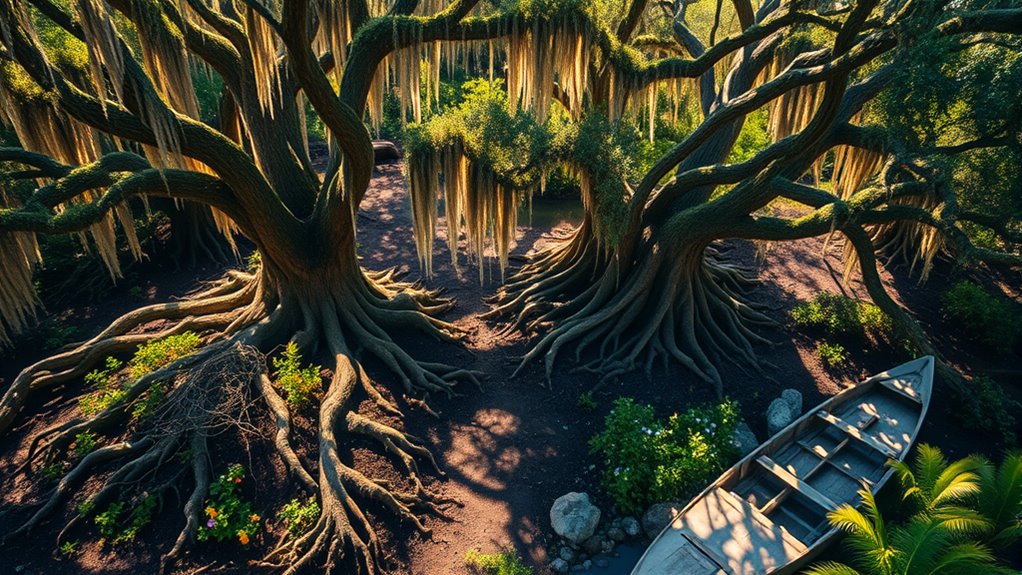
Human presence in Florida dates back at least 14,000 years, making it one of the earliest inhabited regions in North America. You can imagine early peoples arriving across land bridges and along coastlines, adapting to diverse environments. These Native groups developed sophisticated cultures, leaving behind archaeological evidence of settlements, tools, and pottery. The Seminole Indians, one of the prominent tribes, emerged later, resisting European and U.S. expansion through conflicts like the Seminole Wars. Throughout millennia, these indigenous peoples maintained distinct identities, traditions, and languages, shaping Florida’s rich cultural landscape. Their resilience and history are woven into the state’s fabric, offering a deep connection to the land’s ancient past. Understanding this heritage helps you appreciate Florida’s diverse origins and the enduring legacy of its original inhabitants. Preserving indigenous history remains vital to honoring their contributions and understanding the full scope of Florida’s cultural heritage.
European Exploration and Colonial Influence
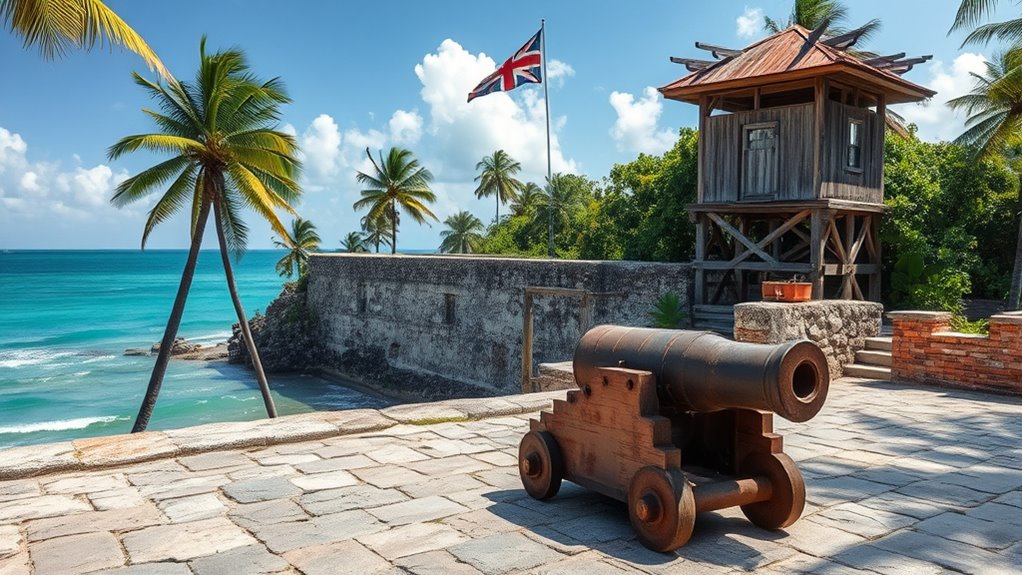
European exploration dramatically reshaped Florida’s history, beginning with Spanish conquistadors like Juan Ponce de León, who first documented European arrival in 1513. During this period, the Spanish established control, influencing the region’s culture and politics. You should know that:
European explorers like Ponce de León first arrived in Florida in 1513, shaping its culture and history.
- Spain founded St. Augustine in 1565, making it the oldest European settlement in the U.S.
- Control shifted between Spain and Britain, with Florida changing hands multiple times until 1821.
- The Spanish introduced missions and forts, shaping indigenous communities and territorial borders.
- European powers competed for dominance, leading to conflicts that affected native populations and settler settlements.
- The colonial legacy of these European powers continues to influence Florida’s diverse cultural landscape today.
This colonial influence left a lasting legacy, blending European traditions with native and African cultures, shaping Florida’s unique identity today.
The Path to Statehood and Early American Period
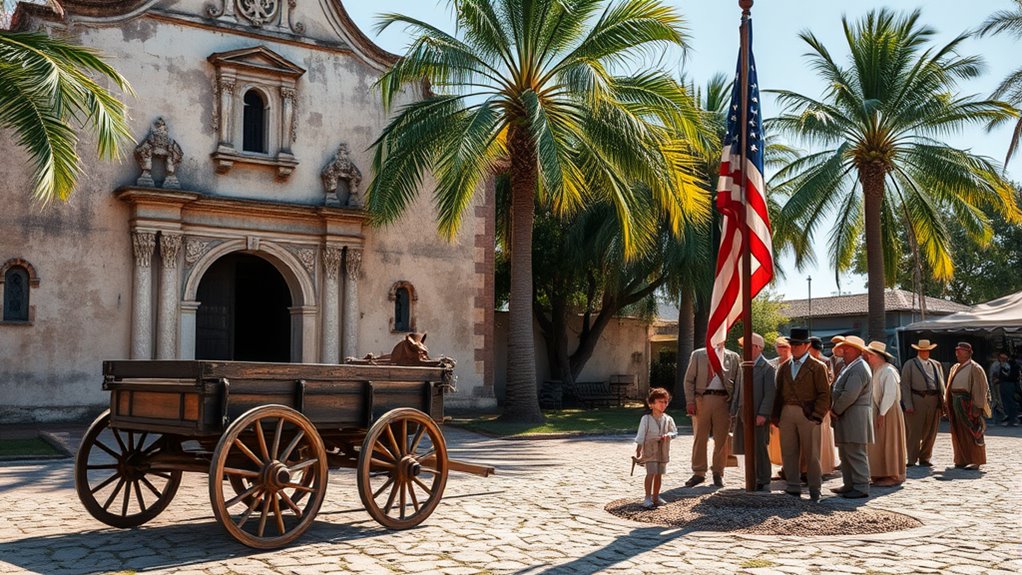
After centuries of exploration and control shifting among European powers, Florida’s journey toward becoming part of the United States gained momentum in the early 19th century. In 1821, the U.S. officially acquired Florida through the Adams–Onís Treaty, with Andrew Jackson acting as the first military governor. The Florida Territory was organized in 1822, establishing early counties like Escambia and St. Johns. Tallahassee was chosen as the territorial capital in 1824. During this period, the Seminole Wars (1817–1818, 1835–1842) resisted U.S. expansion, shaping Florida’s early identity.
| River | Barrier | Settlements |
|---|---|---|
| Suwannee | Swamps | Pensacola |
| Apalachicola | Forests | St. Augustine |
| St. Johns | Wetlands | Tallahassee |
Civil War, Reconstruction, and 20th Century Growth

During the Civil War, Florida seceded from the Union in 1861 and joined the Confederacy, though much of the fighting took place along the coast, leaving inland areas under Confederate control. During Reconstruction, the state faced political upheaval and slow economic recovery, with new constitutions and efforts to reintegrate formerly enslaved populations. In the 20th century, Florida’s growth accelerated through four key developments:
Florida’s Civil War and Reconstruction shaped its early post-war struggles and growth.
- Major land booms and hurricanes in the 1920s, causing economic downturns.
- Population surges, reaching over 1.4 million by 1930.
- New Deal projects and infrastructure improvements during the Great Depression.
- Post-World War II expansion fueled by military bases, tourism, and urbanization.
Additionally, the development of transportation infrastructure played a crucial role in connecting Florida to national markets.
These events transformed Florida from a primarily agrarian society into a major economic and cultural hub.
Cultural Diversity and Contemporary Heritage
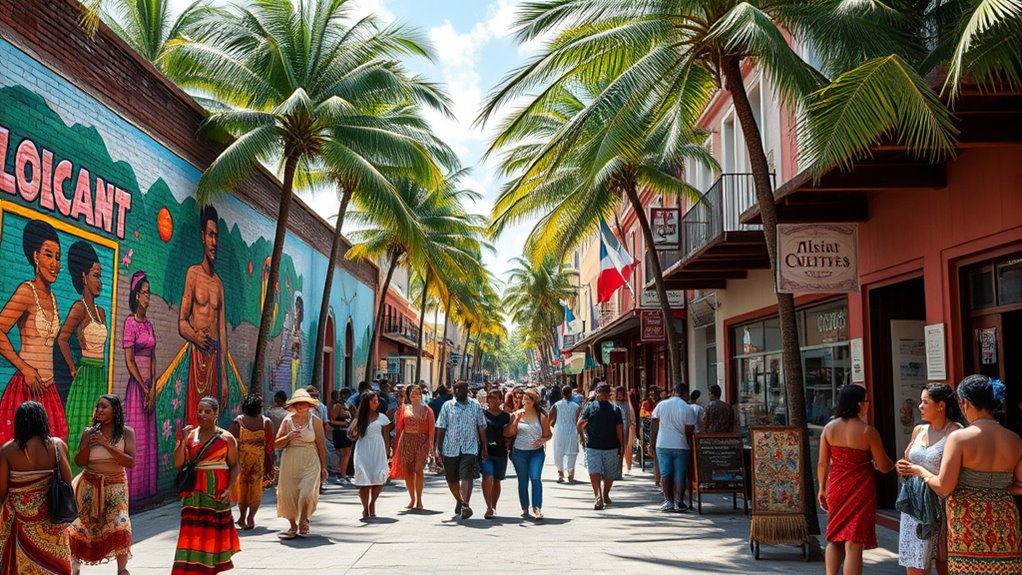
Florida’s rich cultural diversity is evident in its vibrant communities, festivals, and institutions that celebrate its varied heritage. You’ll find a blend of Native American, Spanish, African American, and immigrant influences shaping the state’s identity. Events like the Calle Ocho Festival and the Florida Folk Festival highlight this mix, showcasing music, dance, and traditions from around the world. Museums and historical sites preserve stories of settlers, indigenous peoples, and migrants, reflecting a layered history. This diversity fosters a unique contemporary heritage that’s dynamic and inclusive. Additionally, cultural preservation efforts ensure that these diverse traditions continue to thrive for future generations.
Frequently Asked Questions
How Did Florida’s Native Tribes Adapt During European Colonization?
You see Florida’s native tribes, like the Seminoles, adapt by resisting European influence and maintaining their cultural identities. They often fought against colonizers, utilizing guerrilla tactics during conflicts like the Seminole Wars. Some tribes, including the Seminoles, blended European tools and ideas into their traditional ways, while others retreated to parts of the Everglades to preserve their way of life. This resilience helped them survive colonization’s upheavals.
What Were the Main Economic Drivers in Early Florida History?
You’ll find that farming, fishing, and forestry fueled Florida’s early economy. Fishing for Florida’s famous seafood, like oysters and fish, thrived along the coast. Agriculture flourished with crops such as oranges and sugarcane. Timber and turpentine tapped into Florida’s forests for profit. These essential ventures fueled growth, brought prosperity, and laid the groundwork for Florida’s future industry, shaping its economic evolution through the early years.
How Have Florida’s Cultural Influences Evolved Over Centuries?
You see Florida’s culture evolve through a blend of Native American, Spanish, British, and African influences, shaping its unique identity. Over centuries, these traditions merged with waves of U.S. settlers, Caribbean immigrants, and retirees, creating a diverse, vibrant society. Today, Florida celebrates this rich heritage through cultural festivals, museums, and institutions that preserve its multifaceted history, reflecting a dynamic mix of old and new influences shaping its modern identity.
What Role Did Florida Play in U.S. Military History?
You see Florida’s strategic position shaping its role in U.S. military history. It served as a essential training ground during World War II, hosting numerous military bases that boosted the economy and prepared troops. The state also played a key part in the Seminole Wars, resisting expansion, and its coastlines have been critical for naval defense and maritime operations. Florida’s military significance continues to influence national security and regional development.
How Is Florida Preserving Its Diverse Cultural Heritage Today?
You can see Florida preserving its diverse cultural heritage through museums, cultural festivals, and historic sites that celebrate Native American, Spanish, African American, and immigrant histories. Local communities actively promote traditional crafts, music, and dance, while state and national programs protect landmarks like St. Augustine’s old city and Seminole tribal sites. Schools incorporate history lessons, ensuring future generations understand and appreciate Florida’s rich, multicultural past.
Conclusion
As you explore Florida’s history and culture, you’re walking through a vibrant tapestry woven with indigenous roots, colonial stories, and modern diversity. Each chapter is like a brushstroke on a grand canvas, revealing a state that’s constantly evolving yet rooted in its rich past. Embrace the journey, for Florida’s story is a living thing—blooming like a garden where history and culture grow side by side, inviting you to become part of its ongoing narrative.