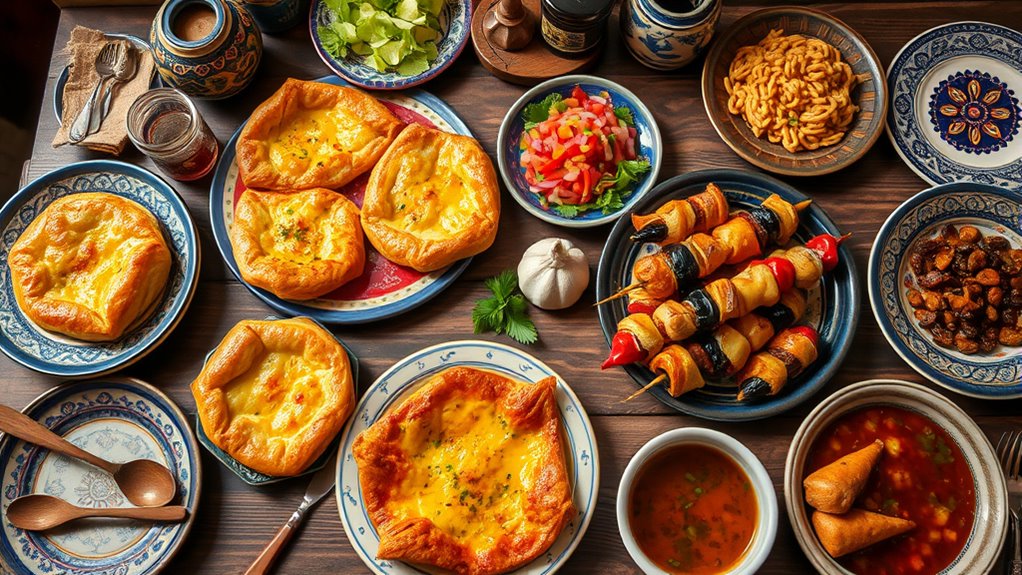
Georgia’s cuisine celebrates bold flavors, fresh herbs, and aromatic spices like saffron and blue fenugreek. You’ll find hearty dishes like khachapuri, khinkali, and flavorful stews, all often served with handmade bread and nutty sauces. The use of pomegranates, sour plums, and walnuts adds complexity and balance. Rich traditions of hospitality and shared meals run deep, and exploring further reveals a vibrant culinary heritage shaped by historic influences.
Key Takeaways
- Georgian cuisine features bold flavors with fresh herbs, spices like saffron and blue fenugreek, and tart ingredients such as pomegranates and sour plums.
- Signature dishes include khachapuri (cheese bread), khinkali (meat dumplings), and herb-infused stews like chakapuli.
- Bread and meat are central to cultural identity, symbolizing hospitality and community, with traditional techniques passed across generations.
- Use of walnut sauces, fresh herbs, and unique spices creates layered, harmonious flavors characteristic of Georgia’s culinary diversity.
- Meals emphasize hospitality, with elaborate feasts, communal sharing, and toasts, reflecting Georgia’s rich culinary traditions and social customs.
Key Ingredients and Flavors Shaping Georgian Cuisine
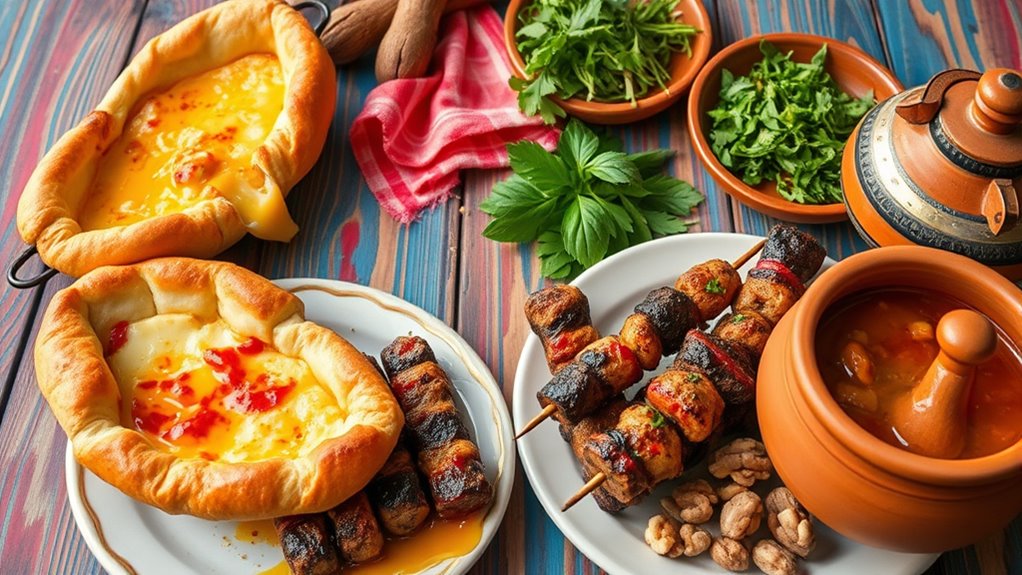
Georgia’s cuisine is defined by its use of fresh, local ingredients that create vibrant and aromatic dishes. You’ll find herbs like cilantro, dill, and parsley, which add brightness to hearty stews and salads. Spices such as blue fenugreek and saffron give dishes a unique, fragrant depth. Corn is essential for making mchadi, a traditional bread often served alongside main courses. Walnuts feature prominently—they thicken sauces like satsivi, fill eggplant rolls, and enrich stews with a nutty flavor. Pomegranates, sour plums, eggplants, and red beans introduce tartness and complexity, balancing richness. Garlic, coriander, tarragon, and more fresh herbs season meat and cheese dishes, enhancing their flavors. Both the use of fresh ingredients and specific culinary techniques contribute to Georgian cuisine’s bold, fresh, and aromatic character.
Signature Dishes and Culinary Classics

Among the most celebrated dishes in Georgian cuisine are khachapuri and khinkali, which showcase the country’s rich culinary heritage. You’ll find regional variations like Adjarian, topped with an egg yolk and butter, or Imeretian, filled with cheese. Khinkali are hearty dumplings filled with spiced meats or vegetables, traditionally eaten by holding their doughy tops. These dishes highlight Georgia’s skill in balancing flavors with fresh herbs, spices, and local ingredients. Other classics include chakapuli, a herb-infused lamb stew, and nigvziani badrijani, eggplant rolls filled with walnut paste. Georgian cuisine emphasizes communal feasting, where these signature dishes often take center stage, reflecting deep-rooted traditions of hospitality and shared culture. Each dish embodies Georgia’s rich history and diverse regional influences. Culinary heritage also influences the preservation of traditional cooking methods, ensuring these flavors are passed down through generations.
The Role of Bread and Dough in Daily Meals
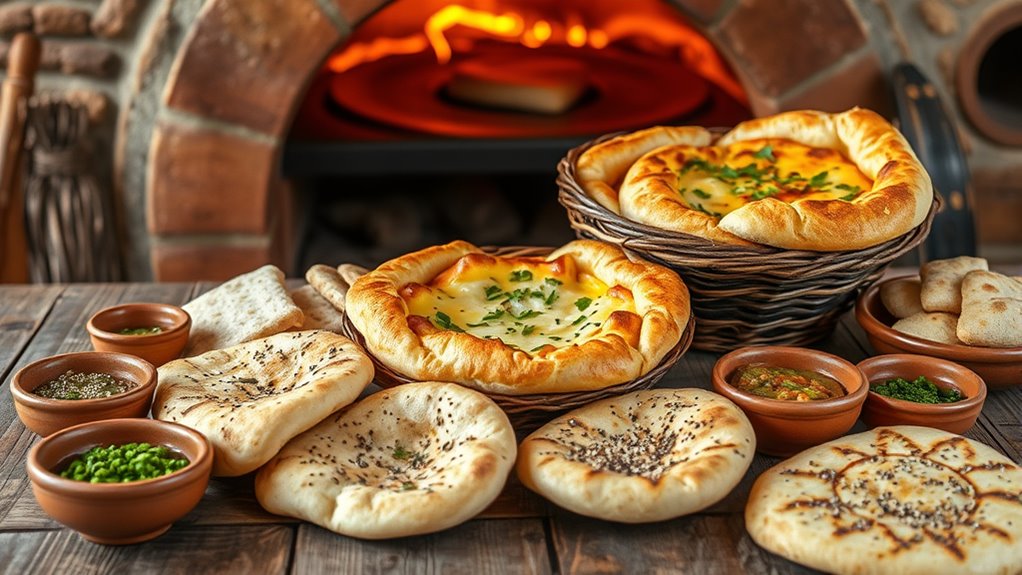
Bread and dough are the foundation of daily meals in Georgia, serving both as essential sustenance and cultural symbols. You’ll find various types, from leavened loaves to cornbread like mchadi, which accompany most dishes. They’re not just carbs but integral parts of social and culinary identity. Georgian bread is often handmade, reflecting regional styles and techniques, and shared during communal meals. These breads often contain cheese, herbs, or fillings, transforming them into main dishes or snacks. Breads are readily available at markets, restaurants, or homemade, emphasizing their importance across regions. They symbolize hospitality and tradition, tying generations through shared recipes and customs. Regional styles and techniques influence the unique shapes and flavors of Georgian breads, highlighting the country’s rich culinary diversity.
| Bread Type | Key Characteristics |
|---|---|
| Khachapuri | Cheese-filled, regional shapes, baked |
| Mchadi | Cornbread, crispy, eaten with stews |
| Leavened loaf | Soft, fluffy, often with herbs or cheese |
| Flatbread | Thin, versatile, used as wrap or accompaniment |
| Stuffed bread | Filled with herbs, cheese, or meat |
Meat and Stew Traditions: Hearty and Flavorful
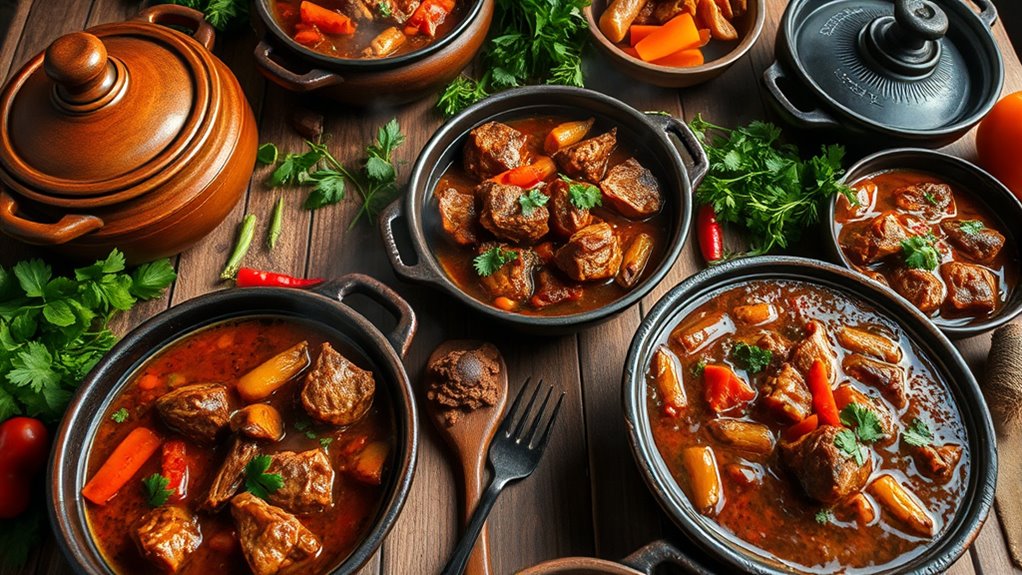
You’ll find that Georgian meat dishes are rich, hearty, and full of flavor, often featuring lamb, beef, or pork. Herb-infused stews like chakapuli highlight fresh herbs and local wines, creating balanced and aromatic meals. Traditional recipes emphasize bold ingredients and techniques passed down through generations, making every bite memorable. Incorporating authentic ingredients ensures the dishes remain true to Georgia’s culinary heritage.
Traditional Meat Dishes
Georgia’s traditional meat dishes are the heart of its culinary heritage, showcasing bold flavors and hearty textures. You’ll find lamb, beef, pork, and poultry prepared with simple yet impactful techniques. Grilled meats are common, seasoned with herbs like dill, coriander, and tarragon, then often served with mchadi or fresh salads. Stews such as chakapuli use local herbs, white wine, and garlic to infuse tenderness and complexity. Meat fillings in khinkali feature spiced ground meat, wrapped in thin dough for portability and flavor. Walnut paste enriches many dishes, adding nutty depth to sauces and fillings. These dishes emphasize balance—robust, savory flavors paired with vibrant herbs and acidity, creating a satisfying, memorable culinary experience rooted in Georgia’s rich traditions. Attention to detail and technique enhance the overall quality and authenticity of these dishes.
Herb-Infused Stews
Herb-infused stews are a cornerstone of Georgian cuisine, showcasing the country’s mastery of combining fresh herbs with hearty meat preparations. You’ll notice their vibrant flavors come from generous use of herbs like cilantro, dill, and tarragon, which balance rich meats. These stews often feature wine and sour plums, adding tartness and depth. The use of walnuts thickens the broth and adds a nutty richness, while saffron and blue fenugreek provide aromatic complexity. You might find these stews served with mchadi or leavened bread, enhancing their hearty appeal. To elevate the dish, consider these elements:
- Incorporation of fresh herbs during cooking
- Use of sour ingredients like plums or vinegar
- Walnut paste for thickening and flavor
- Aromatic spices such as saffron and fenugreek
- Serving alongside traditional bread or grains
- Culinary heritage plays a vital role in shaping these traditional recipes.
Herbs, Spices, and Sauces: Crafting Complex Flavors
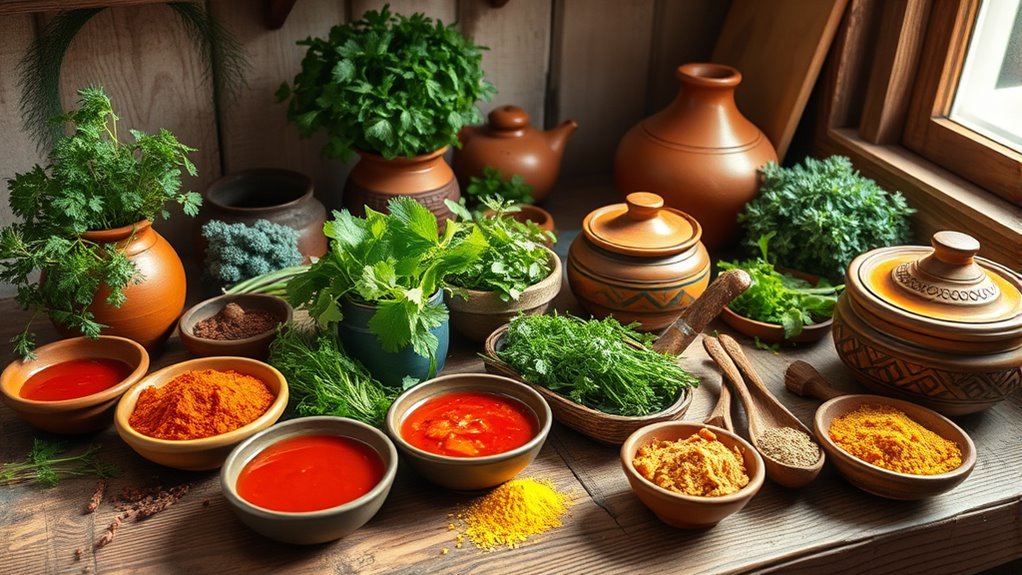
Have you ever wondered how Georgian cuisine achieves its vibrant and layered flavors? It all comes down to herbs, spices, and sauces that add depth and complexity. You’ll find fresh herbs like cilantro, dill, parsley, and tarragon brightening savory dishes and balancing rich meats and cheeses. Unique spices like blue fenugreek and saffron lend aromatic richness, making every bite memorable. Sauces such as satsivi, a walnut-based sauce with garlic and vinegar, bring tang and nutty flavor to poultry and meat. Pickled vegetables and sour plums add tartness that cuts through heaviness. By combining these ingredients thoughtfully, Georgians craft dishes with a harmonious blend of freshness, spice, and acidity—creating the truly distinctive taste that defines their culinary tradition. Incorporating authentic ingredients helps in achieving the true essence of Georgian flavors.
Ancient Influences and Cultural Exchanges
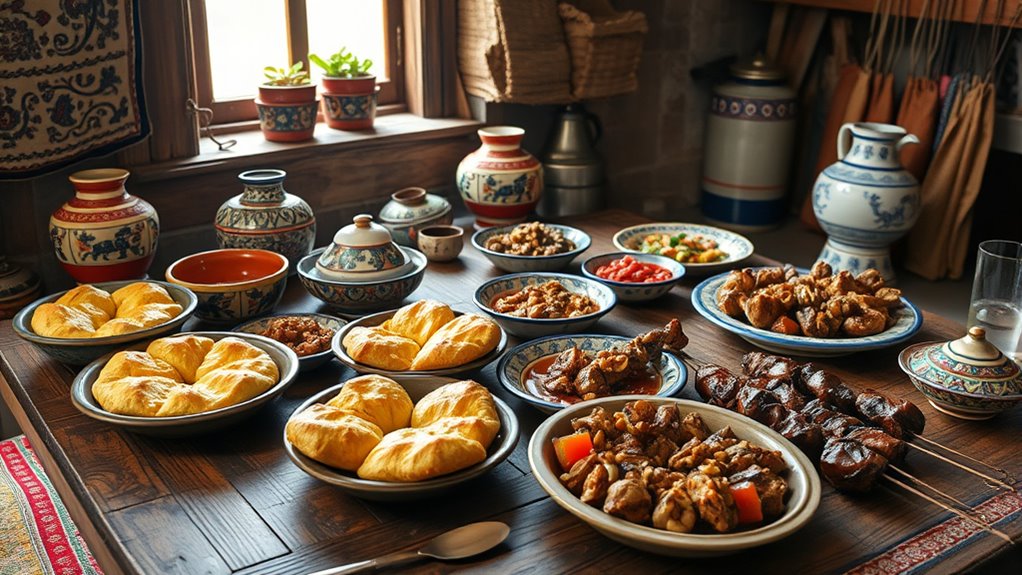
The rich culinary traditions of Georgia are deeply shaped by its position along historic trade routes and its encounters with neighboring civilizations. These exchanges introduced new ingredients, techniques, and flavors that Georgian cooks adapted into their own style. You can see this influence in the variety of spices, such as saffron and blue fenugreek, originating from Persia and India. The Ottoman Empire’s presence contributed methods like bread baking and meat preservation, while Persian culture influenced the use of walnuts and herbs. Trade brought pomegranates and sour plums, now staples in Georgian dishes. Over centuries, these diverse elements blended into a unique culinary identity. Culinary influences from various cultures continue to shape modern Georgian cuisine, creating a rich tapestry of flavors.
Regional Variations and Local Specialties
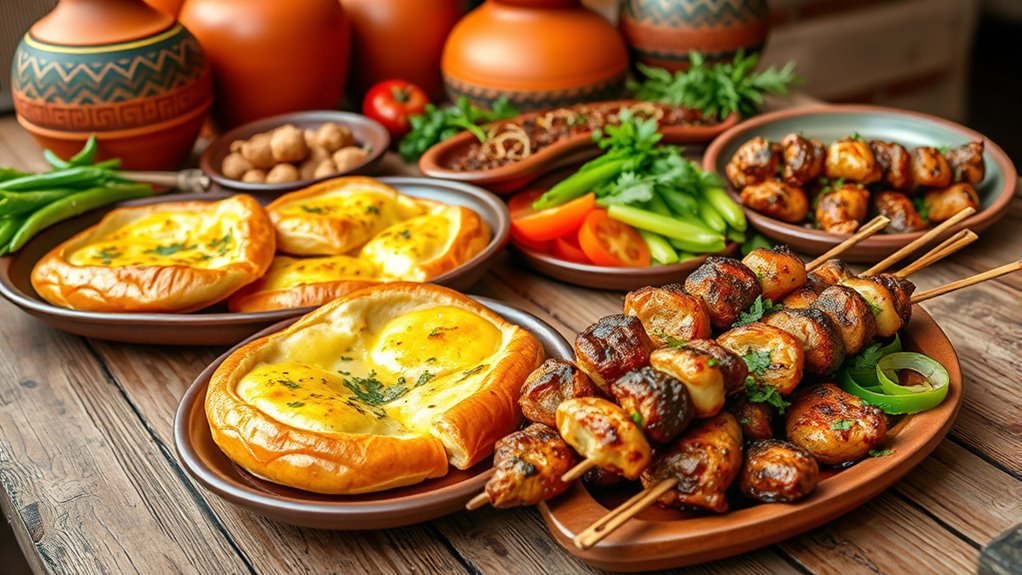
Georgia’s diverse geography and cultural history give rise to distinct regional culinary identities, each with its own specialties and variations. In the west, you’ll find rich, cheese-filled khachapuri like Imeretian and Megrelian, often served with fresh herbs. The mountainous regions emphasize hearty stews and grilled meats, such as the herb-infused chakapuli. The east favors lighter, sour flavors, with dishes like lobio and spicy eggplant rolls. To explore further, here’s a quick comparison:
| Region | Signature Dishes | Special Features |
|---|---|---|
| West | Imeretian Khachapuri, Lobio | Cheese-rich, herb-heavy |
| Mountain | Chakapuli, Grilled meats | Heartier, meat-focused |
| East | Nigvziani Badrijani, Sour plums | Tart, sour, and vegetable-centered |
This regional diversity highlights Georgia’s culinary richness. Additionally, the use of local ingredients and traditional cooking techniques further enriches each region’s unique flavors.
The Art of Georgian Culinary Hospitality
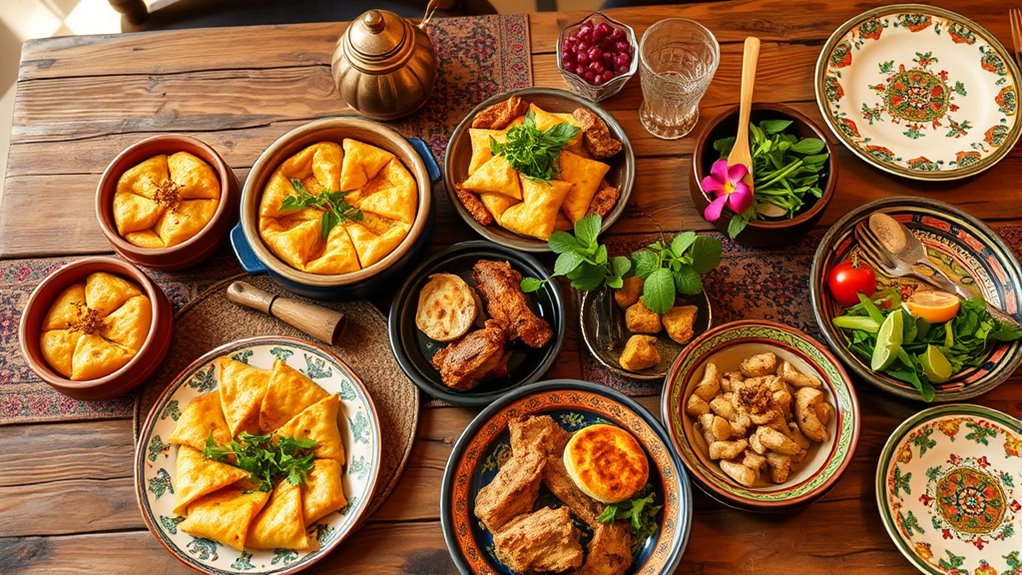
When you visit Georgia, you’ll notice that sharing a meal is more than just eating—it’s a symbol of hospitality and community. Hosts go above and beyond to show generosity, often offering multiple dishes and insisting you eat more. Celebrations revolve around elaborate feasts that emphasize warmth, respect, and the importance of gathering together. In fact, traditional Georgian dishes like khachapuri and khinkali are often served during these gatherings, illustrating the rich culinary heritage of the region culinary traditions.
Rituals of Sharing Meals
Sharing a meal in Georgia goes beyond just nourishing the body; it’s an essential expression of hospitality and community. You’re expected to warmly welcome guests, offering generous portions and heartfelt conversation. Meals are often shared around large tables, emphasizing collective enjoyment and connection. The ritual involves multiple courses, with each dish presented with pride and care, reflecting regional pride. You might find that toasting with wine or chacha is a key part of the experience, symbolizing friendship and respect. Georgian hospitality also includes specific gestures, like offering bread or salt as signs of goodwill.
- Presenting dishes with a sense of pride and tradition
- Toasting with wine to celebrate friendship
- Offering bread or salt as symbols of welcome
- Engaging in lively conversations during meals
- Ensuring everyone leaves satisfied and appreciated
Generosity in Hosting Traditions
In Georgian hospitality, the act of hosting transforms into a heartfelt expression of generosity, where every gesture emphasizes warmth and openness. You’ll welcome guests with an abundant spread of dishes, reflecting pride in your culinary heritage. It’s customary to serve multiple courses, each showcasing fresh herbs, local spices, and hearty bread like mchadi. You’ll insist guests try everything, often refilling glasses and offering more food to demonstrate care. Sharing food becomes a symbol of community, where no one leaves hungry. Hospitality extends beyond the table—smiles, storytelling, and genuine attention create a welcoming atmosphere. Your goal is to make everyone feel like family, emphasizing the importance of connection through food, generosity, and heartfelt service.
Celebratory Feast Practices
Celebratory feast practices in Georgia revolve around the vibrant display of hospitality and the artistry of communal dining. You’ll find that meals are elaborate, with an emphasis on sharing and honoring guests. Guests are welcomed with a variety of dishes, often featuring cheese-filled breads, hearty stews, and fragrant herbs. The centerpiece is usually a toast, accompanied by traditional wine or chacha, Georgia’s grape brandy. During these feasts, you’ll notice:
- The use of a supratable, where a toastmaster leads speeches and rituals
- Elaborate serving of khachapuriand *khinkali* as symbols of hospitality
- Continuous pouring of wine, reinforcing bonds and celebrating tradition
- Sharing stories alongside dishes, emphasizing community and heritage
- Respectful acknowledgment of elders through special toasts and gestures
These practices exemplify Georgia’s rich culinary hospitality and cultural pride.
Frequently Asked Questions
How Do Georgian Culinary Traditions Vary Across Different Regions?
You’ll notice regional differences in Georgian cuisine through variations in bread, cheese, and spice use. In the mountainous regions, bread shapes and fillings differ, and hearty stews like chakapuli are more common. Coastal areas emphasize fresh seafood and herbs, while eastern regions favor spicy, aromatic dishes with more saffron and blue fenugreek. Local ingredients and climate influence flavors, making each region’s cuisine uniquely vibrant and reflective of its cultural heritage.
What Are Unique Cooking Techniques Specific to Georgian Cuisine?
You’ll notice Georgian cuisine uses unique techniques like slow braising for dishes like chakapuli, which infuses lamb with herbs and wine. You’ll also see hand-rolling for khinkali, ensuring perfect dumplings. Grilling meats over open flames is common, giving dishes smoky depth. Additionally, bread is often baked in traditional tone ovens called tone, adding a distinct flavor. These methods emphasize preserving flavors and showcasing regional ingredients.
How Is Wine Integrated Into Georgian Dining and Rituals?
You’ll find wine deeply woven into Georgian dining and rituals, often serving as the centerpiece of gatherings. You’re encouraged to participate in traditional toasts, called “supra,” where wine is poured generously, symbolizing hospitality and respect. Georgian wine is enjoyed with almost every meal, often in special clay vessels called qvevri. Sharing wine fosters community, celebrates heritage, and honors centuries-old customs rooted in Georgian culture.
What Role Do Traditional Utensils and Serving Methods Play?
Did you know Georgians still use ancient clay qvevris for wine fermentation? Traditional utensils and serving methods are essential; they preserve authenticity and enhance flavor. You’ll often see bread, like mchadi, served on wooden boards, and dishes presented in communal style, encouraging sharing. Hands-on techniques, such as shaping khachapuri or serving stews in clay pots, reflect deep-rooted customs, emphasizing hospitality and the cultural importance of food and conviviality.
How Do Seasonal Ingredients Influence Georgia’s Dishes?
You notice that seasonal ingredients shape Georgian dishes by highlighting what’s fresh and available. In spring, you might add tender herbs like tarragon and fresh greens, while summer offers ripe tomatoes, berries, and pomegranates for tangy sauces and salads. Autumn brings sour plums and walnuts for stews, and winter emphasizes preserved foods like pickled vegetables. This seasonal cycle keeps Georgian cuisine vibrant, diverse, and deeply connected to nature’s rhythms.
Conclusion
Discovering Georgian cuisine is like opening a treasure chest of flavors that will forever change your palate. From the legendary bread to the fiery stews, each bite transports you to a land where food is an art, a tradition, and an unforgettable experience. Once you taste Georgia’s culinary magic, you’ll never see your plate the same way again—it’s a soul-stirring journey you’ll crave forever. Prepare to be utterly captivated by Georgia’s extraordinary food heritage!