
Kentucky’s history and culture are rich and diverse, shaped by Indigenous tribes, explorers like Daniel Boone, and its role as the first state west of the Appalachians. You’ll find a deep-rooted tradition of music, especially bluegrass, along with legendary horse racing at Churchill Downs. The state’s economic growth came from industries like bourbon, coal, and manufacturing, while natural wonders like Mammoth Cave reveal its geological significance. Explore further to uncover more about Kentucky’s unique contributions to American history.
Key Takeaways
- Kentucky’s history includes Native American tribes, European exploration via the Cumberland Gap, and early settlements like Harrodsburg and Boonesborough.
- Statehood was achieved in 1792, with Louisville as a trading hub and Lexington as a cultural center known as the “Athens of the West.”
- Religious revival movements such as the Cane Ridge Revival shaped social cohesion and community values in early Kentucky.
- The state experienced divided Civil War loyalties, with significant battles and a strong economic focus on steamboat trade and industries like bourbon.
- Kentucky is renowned for natural wonders like Mammoth Cave and cultural contributions such as the Kentucky Derby and birthplace of bourbon.

Libbey Signature Kentucky Bourbon Trail Whiskey Glasses Set of 4, Dishwasher Safe, Restaurant Quality Bourbon Tasting Glasses
Bourbon Trail Tasting Glass Set: Promote the rich tradition and history of America’s native spirit with our bourbon…
As an affiliate, we earn on qualifying purchases.
As an affiliate, we earn on qualifying purchases.
Indigenous Peoples and Early Exploration

Before European settlers arrived, Kentucky was home to tribes like the Shawnee, Cherokee, Mingo, Osage, and Chickasaw, who lived off the land and established vibrant communities. You would have seen them hunting, fishing, and gathering wild plants, relying on their deep knowledge of the environment. The Shawnee’s Eskippakithiki was one of the last permanent Native settlements in the area. In 1750, explorers like Dr. Thomas Walker became the first Europeans to enter Kentucky, steering through the Cumberland River. Later, Daniel Boone led hunting expeditions into the region starting in 1767, exploring the land along the Big Sandy River. The Cumberland Gap was cleared to create the Wilderness Road, a crucial route that opened Kentucky to migration and settlement. These early Native and exploration efforts set the stage for the state’s future development, highlighting the significance of early exploration routes in shaping Kentucky’s history.

The Real Bluegrass Book – C Instruments | Over 300 Bluegrass Songs Including Rocky Top Foggy Mountain Top Wabash Cannonball and Wildwood Flower | Hal Leonard Fake Book for Musicians
Used Book in Good Condition
As an affiliate, we earn on qualifying purchases.
As an affiliate, we earn on qualifying purchases.
Settlement and Statehood Developments
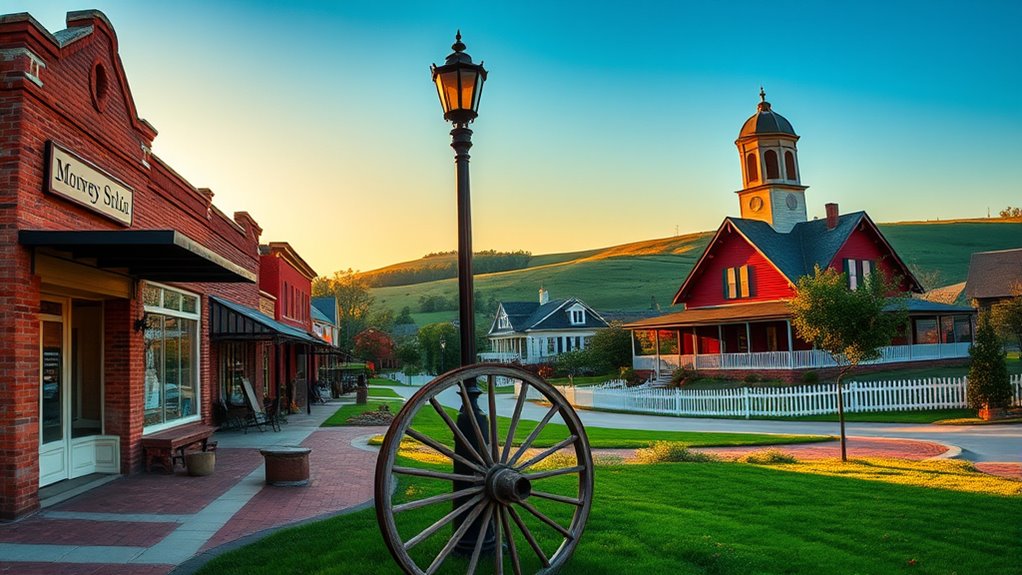
You can see how early settlements like Harrodsburg and Boonesborough laid the foundation for Kentucky’s growth. When Kentucky became the 15th state in 1792, it chose Frankfort as its capital, shaping its political future. These developments marked Kentucky’s shift from frontier territory to an organized state. Understanding the legalities of land ownership at that time helps explain how settlement expanded and how communities flourished.
Early Settlements Formation
Have you ever wondered how Kentucky’s early settlements took shape? You’d find that it all started with Native tribes like the Shawnee and Cherokee, who lived in the region long before Europeans arrived. In 1750, explorers like Dr. Thomas Walker entered Kentucky through the Cumberland Gap, opening the door for settlement. Daniel Boone’s hunting expeditions from 1767 explored the area, leading to the creation of the Wilderness Road, a crucial migration route. The first permanent British settlement, Harrodsburg, was established in 1774 by James Harrod, followed by Boonesborough in 1775. Louisville appeared in 1778 near the Ohio River falls. These settlements laid the groundwork for Kentucky’s path to statehood, shaping its early history and growth. Vetted
Statehood and Capital
Kentucky’s journey to statehood began with the establishment of key settlements that laid the groundwork for its future. You can trace this progress back to Harrodsburg, founded in 1774, and Boonesborough, established in 1775, which served as early colonial outposts. Louisville, founded in 1778, grew into a crucial trading hub along the Ohio River. On June 1, 1792, Kentucky officially became the 15th state, the first west of the Appalachian Mountains. Frankfort was chosen as the state capital because of its central location, while Lexington earned its reputation as the “Athens of the West” for its educational and cultural prominence. These developments marked Kentucky’s evolution from frontier settlements to an organized state with a distinct identity. The state’s early growth was also influenced by Gold IRA investments, which helped diversify the economic development during its formative years.

SAFERIN® Women's Church Christening Derby Kentucky Wedding Formal Party Hat White5
Material: Organza. 100% Polyester,Color:White with Colorful Line
As an affiliate, we earn on qualifying purchases.
As an affiliate, we earn on qualifying purchases.
Religious Movements and Social Growth
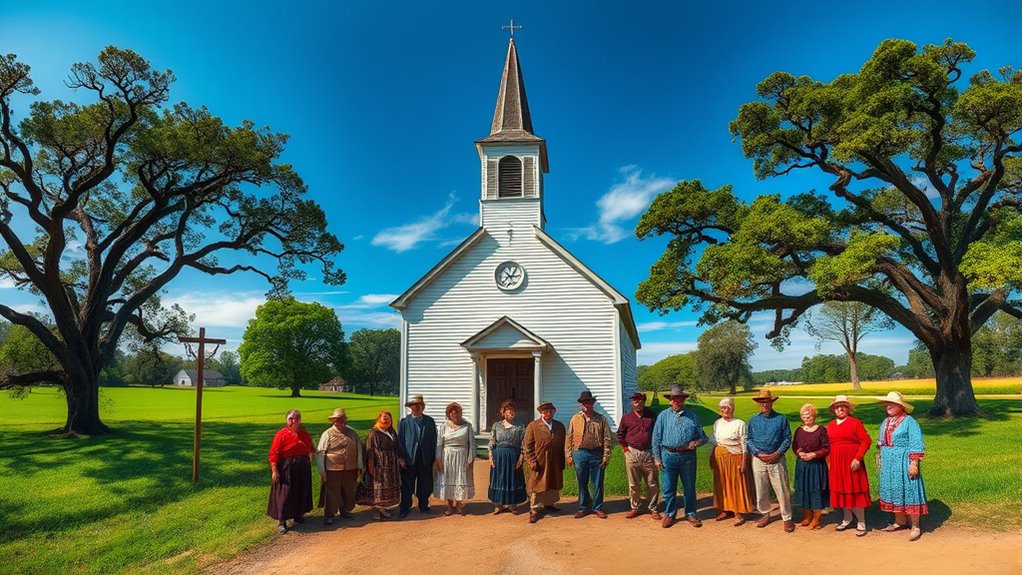
Religious movements played a significant role in shaping Kentucky’s social landscape, especially during the early 19th century. The 1801 Cane Ridge Revival sparked a wave of spiritual renewal, drawing thousands and fueling the growth of Methodist and Baptist churches. This event also led to the founding of the Christian Church (Disciples of Christ), emphasizing personal faith and community. As Kentucky’s population nearly doubled in the first decade of the 1800s, these religious movements helped foster social cohesion amid frontier hardships. They provided moral guidance, community support, and stability, encouraging many settlers to establish churches and schools. These movements also contributed to a broader sense of identity and shared values, shaping Kentucky’s social fabric during its rapid growth.
Mammoth Cave tour tickets
As an affiliate, we earn on qualifying purchases.
As an affiliate, we earn on qualifying purchases.
Civil War Loyalties and Political History
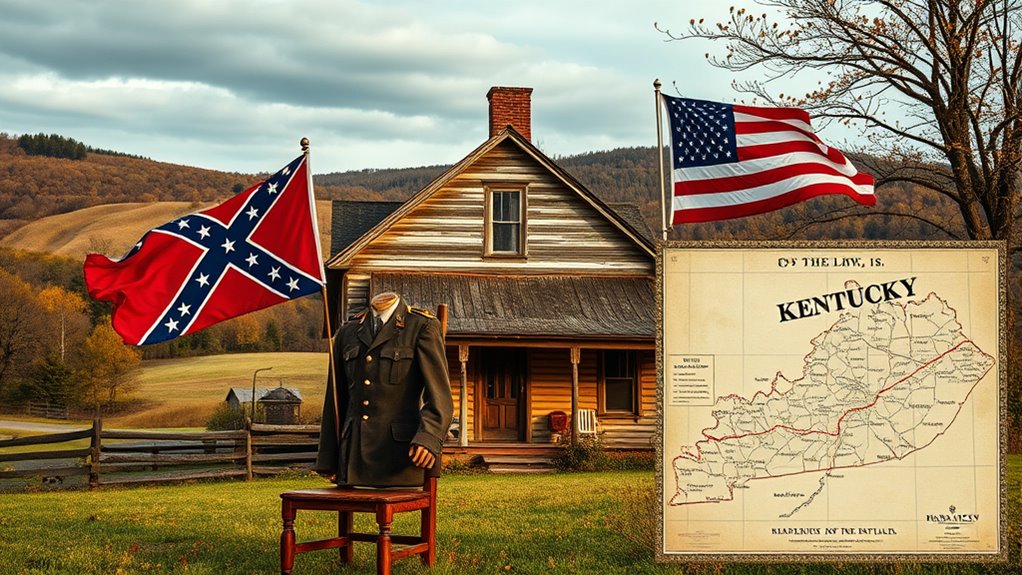
During the Civil War, Kentucky’s loyalties were deeply divided, reflecting its strategic location and complex history. You’d find many Kentuckians supporting the Union, driven by economic ties and a desire to preserve the Union’s integrity. However, a significant portion sympathized with the Confederacy, sharing cultural and political connections to the South. The state officially remained in the Union, but its terrain saw fierce battles like Perryville in 1862. Pro-Confederate factions established a provisional government in Bowling Green, challenging Union authority. You’d also notice that both Abraham Lincoln and Jefferson Davis were born within a hundred miles of Kentucky, symbolizing the state’s divided loyalties. After the war, Kentucky’s political landscape remained conflicted, shaping its post-war identity and policies.
Economic Advancements and Trade Routes
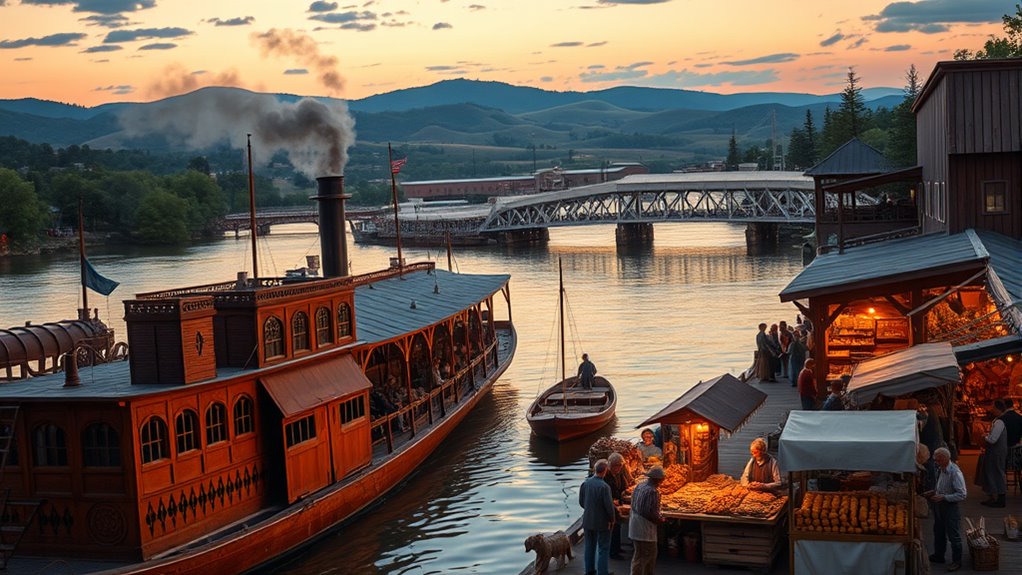
You can see how Kentucky’s economy grew with the opening of the first steamboat route from Louisville to New Orleans, boosting trade across the region. The discovery of Kentucky’s first commercial oil well in 1819 marked a significant milestone in energy exploration. Additionally, Kentucky’s industries, like bourbon whiskey and baseball bats, helped shape its economic identity and global reputation. The development of home theater projectors has also contributed to the state’s modern entertainment landscape, reflecting technological advancements.
Steamboat Commerce Boost
The advent of steamboat commerce revolutionized Kentucky’s economy by establishing efficient transportation routes along its rivers. You can imagine how this innovation drastically reduced travel time and costs, making trade more accessible. Steamboats enabled farmers, merchants, and manufacturers to move goods like tobacco, livestock, and textiles quickly to markets along the Mississippi and Ohio Rivers. Louisville emerged as a crucial hub, connecting Kentucky to the Gulf of Mexico and international trade routes. This growth encouraged settlement and economic expansion across the state. You also saw the rise of commercial centers along the rivers, fueling local industries and boosting exports. Overall, steamboats transformed Kentucky into a key player in regional commerce, laying the foundation for future economic development and trade routes. The development of transportation infrastructure through steamboat commerce significantly contributed to the state’s economic growth and integration into broader markets.
Oil Exploration Milestone
Have you ever wondered how Kentucky’s economy took a significant leap forward? In 1819, the discovery of the first commercial oil well marked a turning point. Oil exploration opened new trade routes and provided an alternative energy source, fueling industrial growth. Kentucky’s oil fields attracted investors and workers, boosting local economies in areas like Franklin and Barren County. This milestone not only enhanced trade by supplying fuel for steamboats and machinery but also laid the groundwork for future extraction industries. The early success of Kentucky’s oil industry helped diversify its economy beyond agriculture and trade. As a result, oil exploration contributed to economic development, attracting commerce and expanding Kentucky’s role in regional and national markets. Additionally, the development of energy sources like oil played a crucial role in the broader Industrial Revolution, further advancing Kentucky’s economic landscape.
Whiskey and Bats Industry
Kentucky’s economic growth continued to expand through its renowned whiskey industry and the production of iconic baseball bats. The state became famous for bourbon, which fueled trade routes along the Ohio and Mississippi Rivers, connecting Kentucky to national and international markets. Distilleries like Maker’s Mark and Jim Beam gained prominence, establishing Kentucky as the birthplace of bourbon. Simultaneously, Louisville’s craftsmanship led to the creation of the Louisville Slugger, a symbol of baseball history. The industry’s success attracted investments and created jobs, boosting local economies. Trade routes facilitated the distribution of both whiskey and bats, making Kentucky a hub for manufacturing and commerce. This synergy of tradition and industry helped shape Kentucky’s economic identity, leaving a lasting mark on its cultural and financial landscape. Commercial applications of heat pump technology in manufacturing sectors also contribute to sustainable growth in the region.
Landmark Discoveries and Natural Wonders

Landmark discoveries and natural wonders in Kentucky reveal a rich tapestry of geological and archaeological significance. You can explore Mammoth Cave, the world’s longest cave system, which has fascinated explorers for centuries and became a National Park in 1941. Its vast chambers and intricate passages tell stories of Earth’s geological history. The Kentucky River Palisades showcase dramatic cliffs carved by natural forces, offering stunning views and insight into the region’s ancient landscapes. On the surface, the Bluegrass region features fertile soil and rolling hills, perfect for horse breeding and agriculture. You might also visit the Big South Fork, where rugged terrain and waterfalls highlight Kentucky’s diverse topography. These natural wonders and archaeological sites connect you to the land’s deep history and geological evolution. Incorporating natural textures and environmentally inspired decor can deepen your appreciation for Kentucky’s unique landscape.
Cultural Heritage: Music, Sports, and Industry

Kentucky’s cultural heritage shines through its vibrant music, passionate sports traditions, and thriving industries that have shaped the state’s identity. You can feel the rhythm of bluegrass music echoing across rolling hills and the excitement of horse racing at Churchill Downs, home of the Kentucky Derby. Industry has long fueled Kentucky’s economy, from bourbon distilleries to manufacturing. The table below captures key aspects that evoke pride and emotion:
| Music | Sports | Industry |
|---|---|---|
| Bluegrass roots | Kentucky Derby | Bourbon whiskey |
| Gospel hymns | College basketball | Horse breeding |
| Folk traditions | Racing legends | Coal mining |
| Bluegrass festivals | Fan fervor | Automotive manufacturing |
| Cultural pride | Historic rivalries | Innovation and growth |
This vibrant mix reflects Kentucky’s enduring spirit and rich heritage.
Notable Places and Contributions to American History
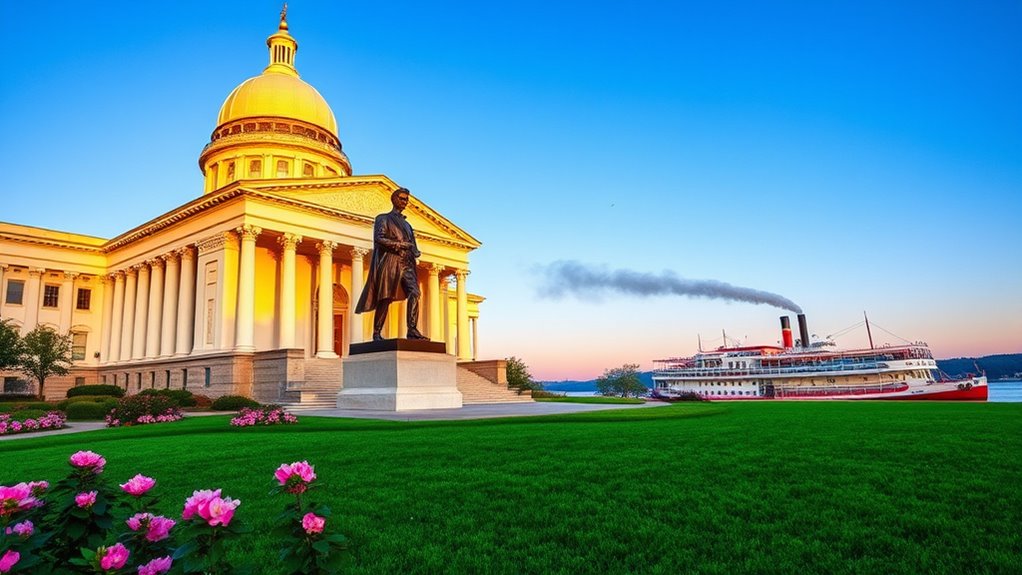
Many of the places in Kentucky have played pivotal roles in shaping American history. You can explore key sites that highlight the state’s contributions to the nation. For example:
- Abraham Lincoln’s birthplace near Hodgenville, preserved as a National Historical Park.
- The Wilderness Road, which opened Kentucky to westward expansion through the Appalachian Mountains.
- Mammoth Cave, the world’s longest cave system, now a UNESCO World Heritage site.
- Louisville’s first enamel bathtub factory in 1856, showcasing industrial innovation.
- Churchill Downs, home of the first Kentucky Derby in 1875, a symbol of American horse racing.
These places reflect Kentucky’s influence on politics, exploration, industry, and culture, making the state a significant chapter in American history. Additionally, understanding the role of attention in preserving and interpreting these sites enhances our appreciation of their historical significance.
Frequently Asked Questions
How Did Kentucky’s Native Tribes Influence the State’s Early Culture?
You can see Kentucky’s Native tribes influence in the land’s early shape and culture. They introduced you to hunting, fishing, and farming techniques that settlers later adopted. Their legends, stories, and spiritual beliefs shaped local traditions. Native tribes also established important trade routes and settlements, like Eskippakithiki, which influenced where towns developed. Their presence and practices laid the groundwork for Kentucky’s diverse cultural heritage you see today.
What Role Did Kentucky Play in the Underground Railroad?
Kentucky played a pivotal role in the Underground Railroad, serving as a key route for escaping enslaved people seeking freedom. You can explore hidden safe houses and secret passages that helped individuals travel north to free states. The state’s location along the Ohio River made it a strategic crossing point, where abolitionists and sympathizers offered aid and shelter, making Kentucky an important part of the Underground Railroad network.
How Did Kentucky’s Bourbon Industry Develop Into a Global Brand?
You see, Kentucky’s bourbon industry grew into a global brand through a combination of rich tradition, quality craftsmanship, and favorable climate. You can taste the influence of early distillers who perfected recipes and techniques, which they passed down through generations. Major companies like Jim Beam and Maker’s Mark expanded their reach worldwide by marketing Kentucky bourbon’s unique heritage, smooth taste, and strict production standards, making it a symbol of American craftsmanship recognized globally.
What Are the Origins of Kentucky’s Bluegrass Music Tradition?
Kentucky’s bluegrass music tradition blossoms from a rich tapestry of Appalachian roots, blending Scottish, Irish, and African influences like a well-woven quilt. You’ll find that early settlers brought string instruments and vocal styles, shaping a lively, soulful sound. Folk musicians and pioneers like Bill Monroe, the genre’s father, cultivated this unique style, turning it into a symbol of Kentucky’s cultural identity, resonating across the nation like a mountain stream’s gentle ripple.
How Did Kentucky’s Geographic Features Shape Its Settlement Patterns?
Kentucky’s geographic features, like the Appalachian Mountains and fertile river valleys, shape your settlement patterns by directing where communities form. You’ll find towns clustered along rivers such as the Ohio and Big Sandy, which served as transportation routes. The mountains made some areas hard to access, so early settlers focused on the valleys. These features also influenced trade, agriculture, and migration routes, shaping Kentucky’s development over time.
Conclusion
As you explore Kentucky’s rich tapestry, you see its history as a mighty oak rooted deep in indigenous spirits and early explorers. Its vibrant culture, like a flowing river of music and sports, continues to shape the nation’s story. Each landmark and discovery is a star shining in the night sky, symbolizing resilience and pride. Kentucky’s legacy is a timeless melody, inviting you to carry its spirit forward, forever part of America’s grand symphony.