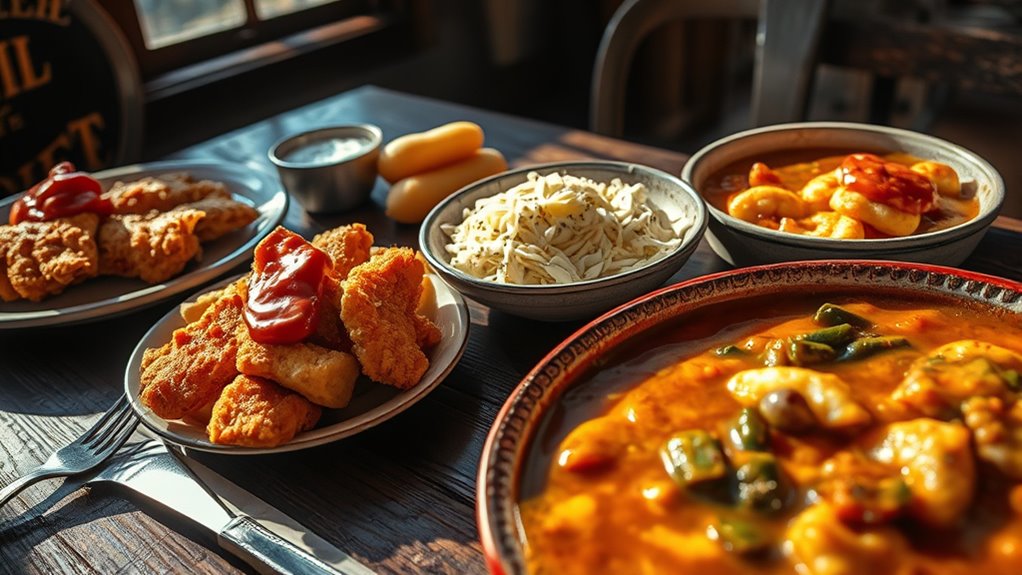

Mississippi’s cuisine blends Native American, African, and European influences to create a unique culinary scene. You’ll find signature dishes like gumbo, crawfish étouffée, fried catfish, and shrimp po’boys, highlighting fresh seafood and regional flavors. Traditional techniques like frying and slow simmering add depth to these foods, which are central to local celebrations and community gatherings. To explore more about Mississippi’s rich food heritage and cultural traditions, keep exploring these culinary stories.
Key Takeaways
- Mississippi’s cuisine is a vibrant blend of Native American, African, and European food traditions, reflected in signature dishes like gumbo and fried catfish.
- Seafood such as shrimp, oysters, crawfish, and crab is central to regional dishes along the Gulf Coast and Delta.
- Traditional cooking techniques emphasize frying, slow simmering, and wood-fired methods, enhancing flavor and authenticity.
- Food plays a vital cultural role in community bonding, celebrations, festivals, and preserving family recipes and culinary heritage.
- Local specialties like Delta tamales, comeback sauce, and seafood boils showcase Mississippi’s diverse culinary history and regional identity.
The Roots of Mississippi Culinary Heritage
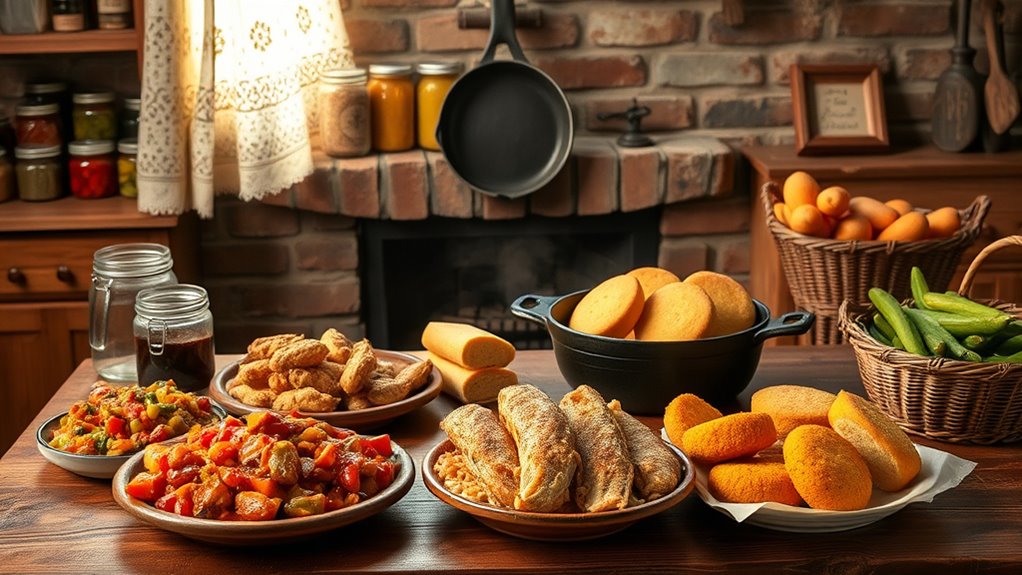
Mississippi’s culinary heritage is rooted in a rich tapestry of Native American, African, and European food traditions that have evolved over centuries. You’ll find Native Americans contributed techniques like drying and grinding corn and harvesting local seafood and game, shaping early diets. European settlers brought ingredients such as wheat, rye, and pigs, which quickly became staples, especially pork. Enslaved Africans introduced key ingredients like okra and watermelon and cooking methods that laid the foundation for soul food traditions. These influences merged, creating a diverse culinary landscape. Over time, regional ingredients and cultural practices blended, giving rise to signature dishes and regional specialties. Your understanding of Mississippi’s food history reveals a complex, vibrant heritage rooted in centuries of cultural exchange and adaptation.
Signature Dishes and Key Ingredients
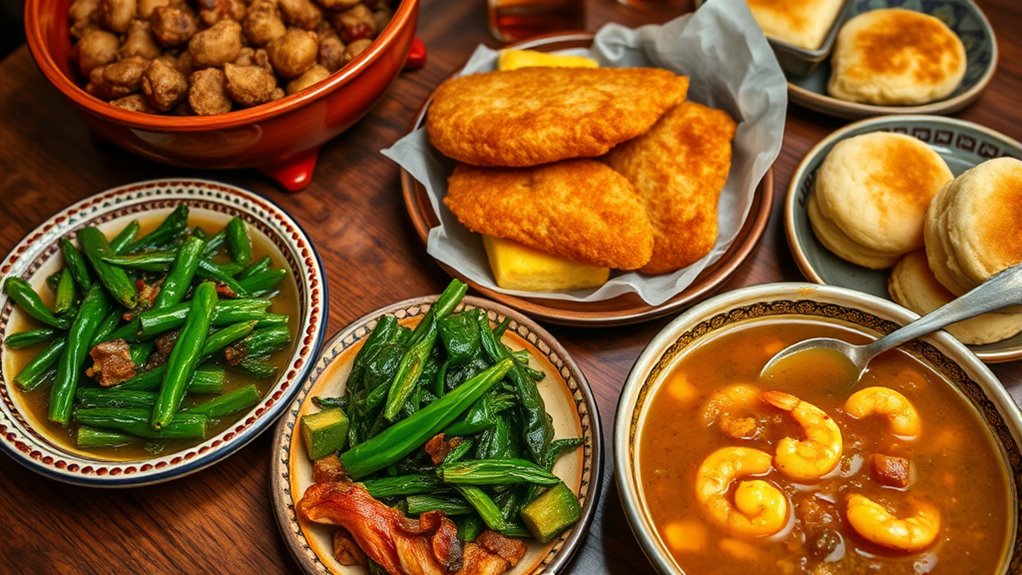
Among the signature dishes that define Mississippi cuisine, seafood plays a starring role. You’ll find shrimp, oysters, crab, catfish, and crawfish featured prominently, especially along the Gulf Coast and Delta regions. Fried catfish and fried dill pickles are iconic snacks, with the latter originating at the Hollywood Café. Mississippi’s signature tamales, known as Delta tamales, differ from traditional Latin American versions by using cornmeal and being simmered with spicy seasonings. Key ingredients like okra, watermelon, and corn are rooted in Native American and African influences. Regional staples also include gumbo, crawfish étouffée, and comeback sauce—tangy, spicy condiments that complement local dishes. These ingredients and dishes embody Mississippi’s rich, multicultural culinary identity. Using self-watering plant pots in your gardening can help maintain the fresh herbs and vegetables that often feature in Southern cooking, ensuring your ingredients stay healthy and vibrant.
Traditional Cooking Techniques and Styles
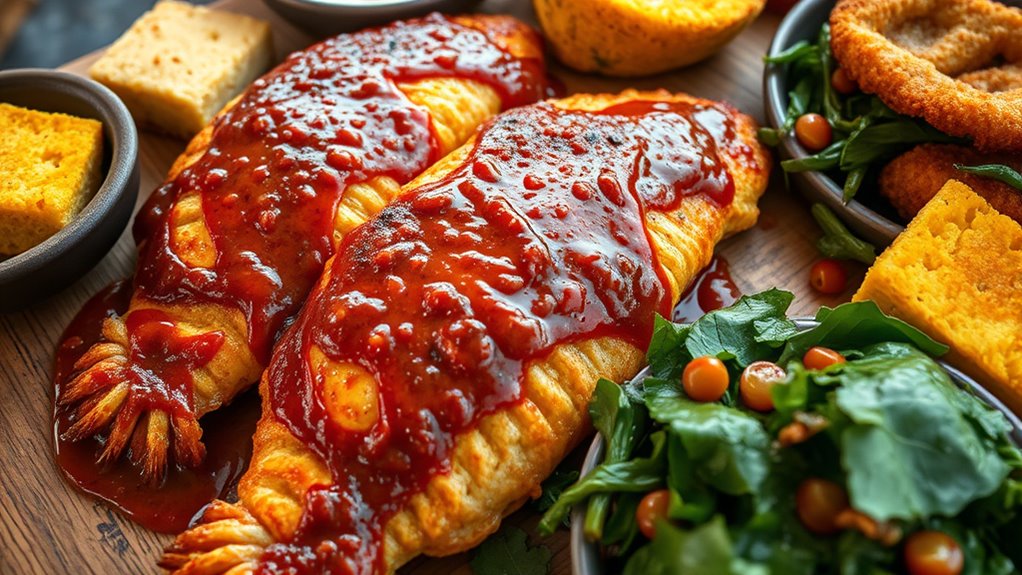
You’ll notice that frying is a cornerstone of Mississippi cooking, especially for dishes like catfish and pickles, which get crispy and flavorful through expert pan techniques. Slow simmering also plays an essential role, developing deep flavors in stews, gumbo, and tamales. These methods reflect the blend of cultural influences that shape the state’s unique culinary style. Incorporating traditional cooking techniques such as these enhances the authenticity and richness of Mississippi cuisine.
Frying and Pan Techniques
Frying remains one of the most signature techniques in Mississippi cuisine, emphasizing crispy textures and bold flavors. You’ll find it applied to dishes like catfish, hushpuppies, and pickles, creating irresistible crunch and savory richness. Mastering the right pan and oil is essential—cast-iron skillets are traditional for even heat and durability. Proper temperature control prevents sogginess and preserves flavor. The table below shows key frying methods and their cultural significance:
| Method | Ingredient Focus | Significance |
|---|---|---|
| Deep frying | Seafood, vegetables | Creates crispy, tender textures |
| Pan frying | Meats, fritters | Quick, flavorful browning |
| Shallow frying | Croquettes, pies | Balances oil use with crispness |
| Reusing oil | Traditional dishes | Enhances flavor through seasoning |
These techniques reflect Mississippi’s love for bold, textured, and deeply flavorful foods.
Slow Simmering Methods
Slow simmering is a cornerstone of Mississippi’s traditional cooking, allowing flavors to develop deeply and ingredients to become tender. You’ll often see it used in making hearty stews, gumbo, and tamales, where patience enhances taste. The process involves cooking ingredients gently over low heat for extended periods, breaking down tough meats and melding spices. For example, when preparing Delta tamales, you simmer the cornmeal mixture to achieve a rich, cohesive texture. Seafood stews like crawfish etouffee benefit from slow simmering, which intensifies the seafood’s natural flavors. This technique also helps develop the thick, flavorful roux used in many signature dishes. By giving ingredients time to meld, slow simmering creates depth and complexity—hallmarks of authentic Mississippi cuisine.
Cultural Influences Shaping Mississippi Cuisine
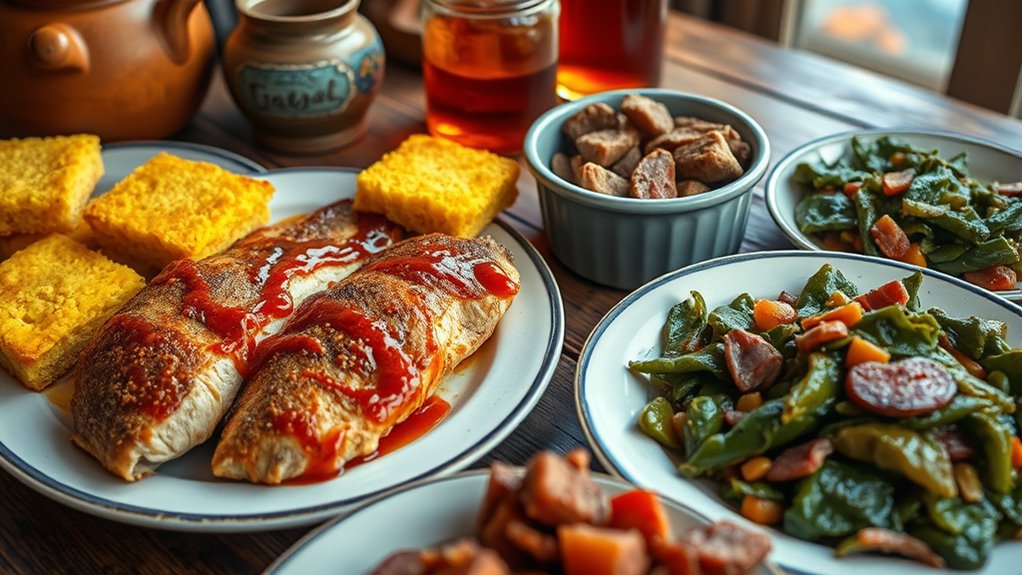
Mississippi cuisine reflects a rich tapestry of cultural influences that have shaped its unique flavors and techniques over centuries. You’ll find that Native American, African, and European traditions blend seamlessly in every bite. Here’s how these influences come together:
- Native Americans contributed corn-based dishes, dried meats, and seafood harvest techniques that still influence regional recipes.
- African traditions introduced ingredients like okra and watermelon, plus cooking methods that birthed soul food staples.
- European settlers brought wheat, rye, and pork, creating hybrid dishes like baked goods and hearty stews.
- Immigrant communities, including Slovenians and Vietnamese, added spices and seafood styles along the Gulf Coast.
- The use of traditional wood-fired cooking techniques further enhances the smoky flavors characteristic of Mississippi dishes.
This mix creates a vibrant culinary identity rooted in history, migration, and shared innovation.
Iconic Seafood and Regional Specialties
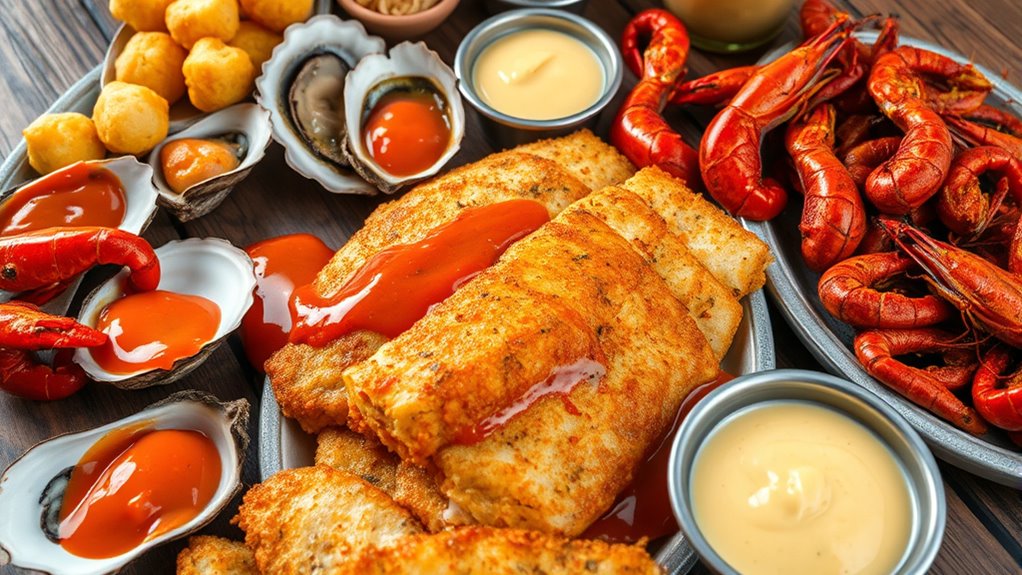
Seafood plays a central role in Mississippi’s culinary landscape, reflecting the abundance of the Gulf Coast and the Mississippi River. You’ll find dishes like fried catfish, a Mississippi staple, often served with tartar sauce or comeback sauce. Shrimp po’boys and oysters on the half shell highlight the region’s access to fresh Gulf seafood. Crawfish etouffee and gumbo showcase a rich blend of flavors from Native American, African, and European influences, thickened with roux and seasoned with herbs. Delta tamales, unique to Mississippi, use cornmeal and are simmered with spicy seasonings, distinguishing them from traditional Latin versions. Whether grilled, fried, or stewed, seafood and regional specialties define Mississippi’s vibrant food scene and celebrate its coastal bounty. Developing a relationship with inner guidance can also inspire a deeper appreciation for local culinary traditions and cultural history.
Unique Food Products and Culinary Icons
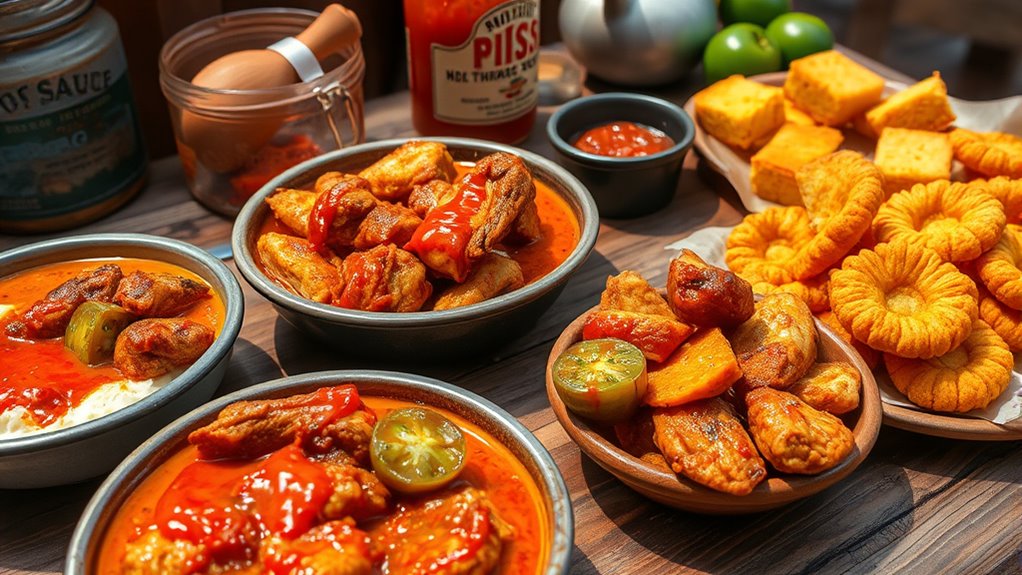
Among Mississippi’s most celebrated culinary icons is comeback sauce, a tangy, spicy condiment that perfectly complements fried foods, sandwiches, and salads. This signature sauce adds bold flavor to many dishes, making it a staple in local cuisine. Here are some other unique food products and icons you should know:
- Delta Tamales – Spicy, simmered cornmeal tamales that reflect regional flavors and traditions.
- Fried Catfish – A quintessential dish showcasing fresh Mississippi River catch, often served crispy and hot.
- Gumbo and Crawfish Etouffee – Flavorful, thick stews blending African, Native American, and European influences.
- Pecan Pie – A sweet Southern classic, celebrating Mississippi’s abundant pecan harvest.
These icons embody the heart and history of Mississippi’s culinary identity.
The Role of Food in Mississippi’s Social and Cultural Life
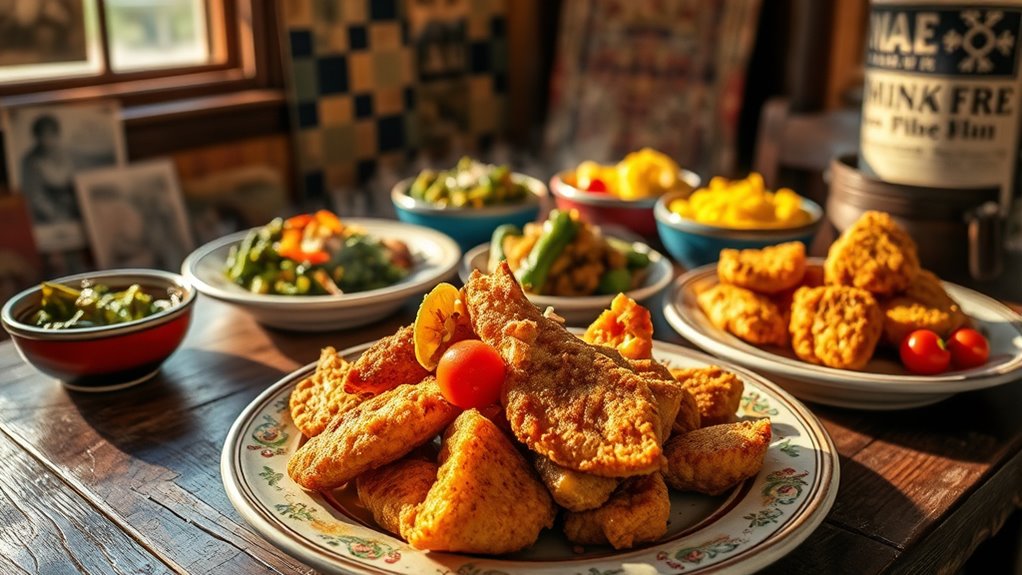
Food brings people together in Mississippi, serving as a foundation for community bonds and shared traditions. It helps preserve cultural heritage by passing down recipes and cooking techniques through generations. Celebratory meals, like festivals and family gatherings, highlight how food plays a central role in shaping the state’s social and cultural life. Additionally, the diverse culinary traditions found throughout Mississippi reflect its rich history and regional influences.
Food as Community Bond
In Mississippi, sharing a meal goes beyond satisfying hunger—it weaves together the fabric of community and cultural identity. Food brings people together during celebrations, family gatherings, and festivals, strengthening bonds and preserving traditions. You’ll find that:
- Community cookouts feature signature dishes like fried catfish and Delta tamales, uniting neighbors.
- Festivals celebrate local specialties, creating shared experiences around seafood boils or barbecue.
- Family recipes passed down through generations foster a sense of continuity and pride.
- Food-centered events, like crawfish boils, serve as communal rituals that reinforce social ties and storytelling.
- Incorporating traditional comfort solutions enhances the overall dining experience and supports long-lasting connections through shared meals.
Through these gatherings, food acts as a powerful connector, helping Mississippians honor their history, nurture relationships, and keep their vibrant culture alive.
Culinary Heritage Preservation
Preserving Mississippi’s culinary traditions goes beyond keeping recipes alive; it involves actively safeguarding the stories, techniques, and cultural practices that give these dishes their meaning. You play a crucial role in passing down knowledge through family heirlooms, community gatherings, and local festivals that celebrate regional specialties. By supporting traditional food artisans and participating in culinary events, you help maintain authentic cooking methods rooted in Native American, African, and European influences. Documenting recipes and storytelling ensures future generations understand the cultural significance behind each dish. Embracing data-driven marketing strategies can also help promote these culinary traditions to a wider audience. Preserving these traditions keeps Mississippi’s diverse heritage vibrant, fostering pride and identity. Your efforts help sustain the flavors, techniques, and narratives that define Mississippi’s unique culinary landscape, ensuring it remains a living testament to its rich, multiethnic past.
Celebratory Food Traditions
Celebratory food traditions hold a special place in Mississippi’s social and cultural life, serving as vibrant expressions of community, history, and identity. When you gather for festivals, holidays, or family events, you’ll find these foods bring people together. Here are some key examples:
- Barbecue — Slow-cooked, smoky meats like pork ribs and brisket are central at gatherings.
- Seafood feasts — Shrimp boils and oyster shuckings highlight coastal celebrations.
- Delta tamales — Spiced, simmered cornmeal treats often appear at festivals and family reunions.
- Sweet desserts — Pecan pie and Mississippi Mud Pie top off special occasions with rich, comforting flavors.
These foods not only mark celebrations but also preserve traditions, forging bonds through shared tastes and stories.
Exploring Mississippi’s Culinary Tourism and Foodways
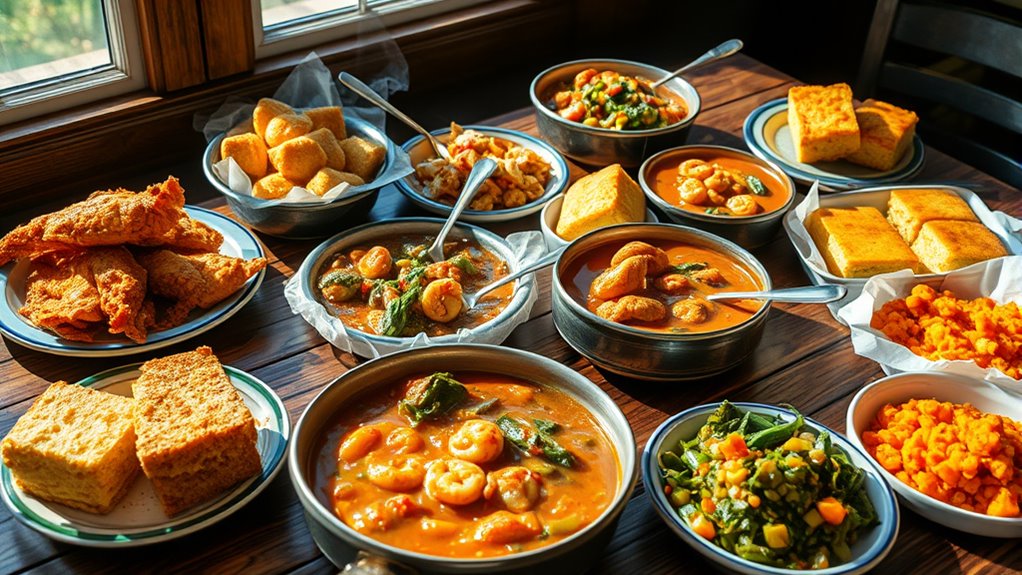
Exploring Mississippi’s culinary tourism reveals a vibrant tapestry of flavors rooted in centuries of diverse foodways. You’ll find that food festivals, like the Mississippi Seafood Trail, celebrate the region’s rich seafood heritage, showcasing dishes from shrimp po’boys to oysters. Visiting local markets and eateries offers authentic experiences with signature items like Delta tamales, fried catfish, and comeback sauce. Food tours often highlight the blending of Native American, African, and European influences through stories and tastings. You can also explore historic sites where traditional cooking methods are preserved, giving insight into Mississippi’s culinary evolution. These experiences connect you to the state’s cultural tapestry, making food a powerful lens to understand its history and community spirit. Mississippi’s foodways invite you to taste, learn, and celebrate its unique culinary identity.
Frequently Asked Questions
How Have Native American Cooking Methods Influenced Modern Mississippi Cuisine?
Native American cooking methods have deeply influenced your Mississippi cuisine by introducing techniques like drying, grinding corn, and harvesting local game and seafood. You’ll find these methods reflected in dishes such as tamales, where cornmeal is simmered instead of steamed, and in the use of wild game and seafood like oysters and deer. These techniques add authentic flavors and traditional preparation styles that shape your regional dishes and culinary identity.
What Role Does Barbecue Play in Mississippi’s Culinary History?
Barbecue holds a essential place in Mississippi’s culinary history, serving as a communal activity that brings people together. You’ll find slow-cooked, smoked meats like pork and chicken, reflecting Southern traditions and African influences. Barbecue festivals and family gatherings highlight its role in social bonding. Its preparation methods and flavors showcase a blend of cultural practices, emphasizing slow cooking, seasoning, and shared experiences that define Mississippi’s rich food heritage.
How Do Immigrant Communities Impact Regional Food Diversity in Mississippi?
Have you ever wondered how immigrant communities shape Mississippi’s vibrant food scene? They bring diverse spices, techniques, and ingredients that enrich regional flavors. Slovenians, Czechs, Cajuns, and Vietnamese, for example, introduce unique dishes and seasonings, blending seamlessly with local traditions. This cultural mosaic creates a dynamic culinary landscape, ensuring Mississippi’s cuisine remains innovative and deeply rooted in multiple heritages, making every meal a celebration of its diverse immigrant history.
What Are the Origins of Mississippi’s Signature Comeback Sauce?
You might be surprised to learn that Mississippi’s signature comeback sauce originated in the 1950s at the Hollywood Café in Jackson. Created by local cooks, it was initially a tangy, spicy condiment served with fried foods like shrimp and oysters. Its popularity grew quickly as it became a staple for enhancing flavor and adding a unique regional touch to sandwiches, salads, and seafood dishes, symbolizing Mississippi’s vibrant culinary spirit.
How Has Mississippi Tamale Evolved From Its Early 20th-Century Roots?
You might think Mississippi tamales are just traditional treats, but they’ve actually evolved into a bold, regional twist. Instead of steaming, they’re simmered, with cornmeal replacing masa, and add a touch of spice that’s uniquely Delta. Over time, locals have adapted the recipe, blending Native American techniques with African flavors and Southern ingenuity. So, what started as simple fare now boasts a spicy, simmered sophistication that’s distinctly Mississippi.
Conclusion
As you savor Mississippi’s rich culinary heritage, remember it’s a blend of history and innovation, tradition and change. From smoky barbecue pits to fresh seafood shores, the flavors tell stories of resilience and celebration. Food isn’t just sustenance here—it’s a vibrant part of life, connecting generations. In this state’s kitchens and festivals, you find a culinary tapestry woven with contrast, inviting you to taste the legacy and embrace the future of Mississippi’s vibrant food culture.