

North Carolina’s history begins with Indigenous tribes like the Lumbee and Cherokee, who thrived before European explorers arrived in the 16th century. The state played a key role in the Revolutionary and Civil Wars, shaping its identity. Its culture mixes ancient traditions with modern innovations, from historic sites to thriving industries like biotech and finance. The vibrant arts, diverse festivals, and rich heritage reveal a story of resilience, progress, and unique character—discover more by exploring what has made North Carolina special.
Key Takeaways
- North Carolina’s history includes Native American societies, European exploration, and its role in the American Revolution and Civil War.
- The state’s culture is shaped by Native traditions, African American heritage, and Southern customs, reflected in music, crafts, and festivals.
- Early economic development centered on agriculture, trade, and transportation, with railroads and ports boosting growth.
- Reconstruction and post-war periods focused on economic recovery, infrastructure rebuilding, and social change amid racial tensions.
- Modern North Carolina is a hub for technology, finance, and arts, blending historical roots with contemporary innovation and cultural diversity.

Making Native American Pottery
As an affiliate, we earn on qualifying purchases.
As an affiliate, we earn on qualifying purchases.
Indigenous Roots and Early European Encounters
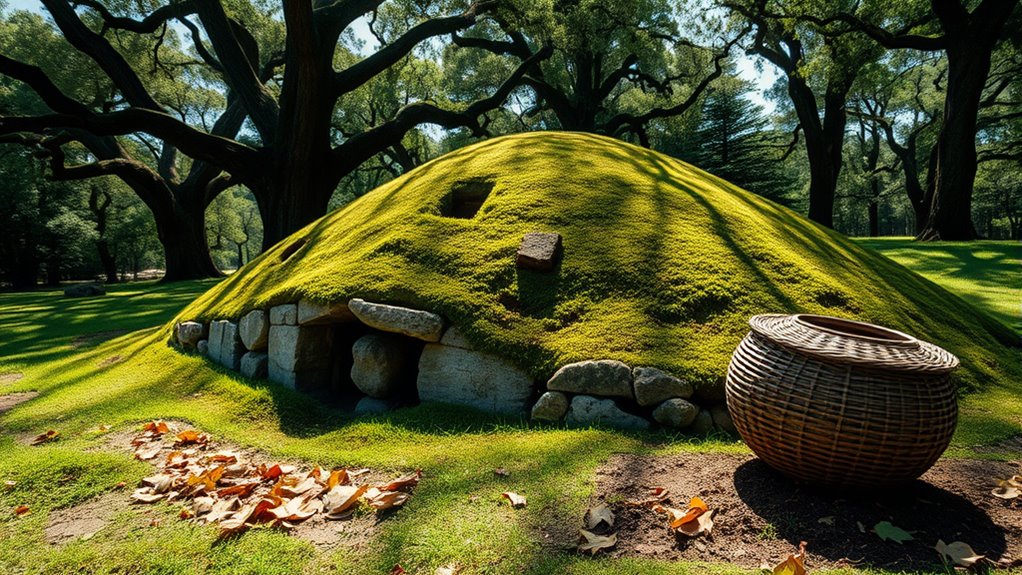
Before European explorers arrived, many Native American tribes inhabited what is now North Carolina, including Algonquian-speaking groups along the coast and Iroquoian-speaking tribes inland. These tribes organized sophisticated societies, relied on hunting, fishing, and farming, and had rich cultural traditions. The Algonquian peoples, like the Lumbee and Powhatan, thrived near the coast and rivers, while the Iroquoian tribes, such as the Huron and Cherokee, occupied inland areas. You can still find their descendants today, preserving their languages, crafts, and history. European contact began in the 16th century, bringing profound changes. Spanish explorers, like Juan Pardo, established early forts, but lasting European settlement was slow, and Native Americans fiercely defended their lands and way of life against colonization efforts. Indigenous cultures played a vital role in shaping the history and identity of North Carolina.

Touring North Carolina's Revolutionary War Sites (Touring the Backroads)
As an affiliate, we earn on qualifying purchases.
As an affiliate, we earn on qualifying purchases.
The Birth of a State: Revolution and Early Growth

You can see the revolutionary spirit strong in North Carolina as it fought for independence, with events like the Halifax Resolves in 1776. The state officially became part of the United States on November 21, 1789, marking a new beginning. Early economic foundations, mainly agriculture, helped shape its growth during those formative years. Additionally, the state’s nutritional diversity reflects the varied cultural influences that have contributed to its development over time.
Revolutionary Spirit Emerges
The revolutionary spirit in North Carolina took hold as colonists increasingly sought independence from British rule, fueled by a desire for self-governance and resistance to external control. You’d notice how ideas of liberty spread quickly, especially after events like the Halifax Resolves in 1776, which called for independence. Local leaders and everyday citizens began organizing militias and participating in protests against British policies. You’d see growing support for the patriot cause, despite some divided loyalties. The backcountry, less developed and more rural, embraced rebellion as a way to assert their rights. As tensions escalated, North Carolinians fought in battles and supported the Continental Congress, demonstrating their commitment to breaking free from British dominance and shaping a new, independent state. The widespread use of patriotism and shared ideals helped galvanize the movement and unify diverse groups within the colony.
Statehood Achieved 1789
As North Carolina solidified its independence during the revolutionary years, its push for formal recognition culminated with the adoption of a state constitution and the ratification of the U.S. Constitution. On November 21, 1789, you became the 12th state to join the Union, marking a pivotal moment in your history. This achievement reflected your desire for self-governance and commitment to the new nation. The process involved establishing government structures and aligning with federal laws. North Carolina’s early years as a state were shaped by the tensions of revolution and the challenges of building a functioning government. Your state’s ratification helped solidify the fragile unity of the young United States and set the stage for future growth and development. The experience of statehood played a crucial role in shaping North Carolina’s identity and its contributions to the nation’s history.
Early Economic Foundations
How did North Carolina’s economy take shape during its early years as a new state? In those formative years, agriculture dominated the economy, with farmers growing tobacco, cotton, and other crops. The backcountry remained less developed, focusing mainly on subsistence farming, while coastal areas thrived on trade and fishing. The construction of railroads in the 1830s and 1840s, like the Wilmington and Raleigh Railroad and the North Carolina Railroad, boosted commerce by connecting markets and shipping ports. Wilmington became an essential port for trade and supplies, especially during the Civil War. Small industries, such as timber and textiles, began to emerge, setting the foundation for future industrial growth. Overall, North Carolina’s early economy centered on agriculture, trade, and the expanding transportation network. Advancements in AI detection also played a role in monitoring trade practices and ensuring authenticity in commercial transactions.

Catstudio North Carolina Fine Art Print – 8×8 | Geography Inspired Gallery Wall Art
TELL YOUR STORY: Spark joy and nostalgia by showcasing all the places you love in your home. Mix…
As an affiliate, we earn on qualifying purchases.
As an affiliate, we earn on qualifying purchases.
Building Connections: Transportation and Economic Expansion
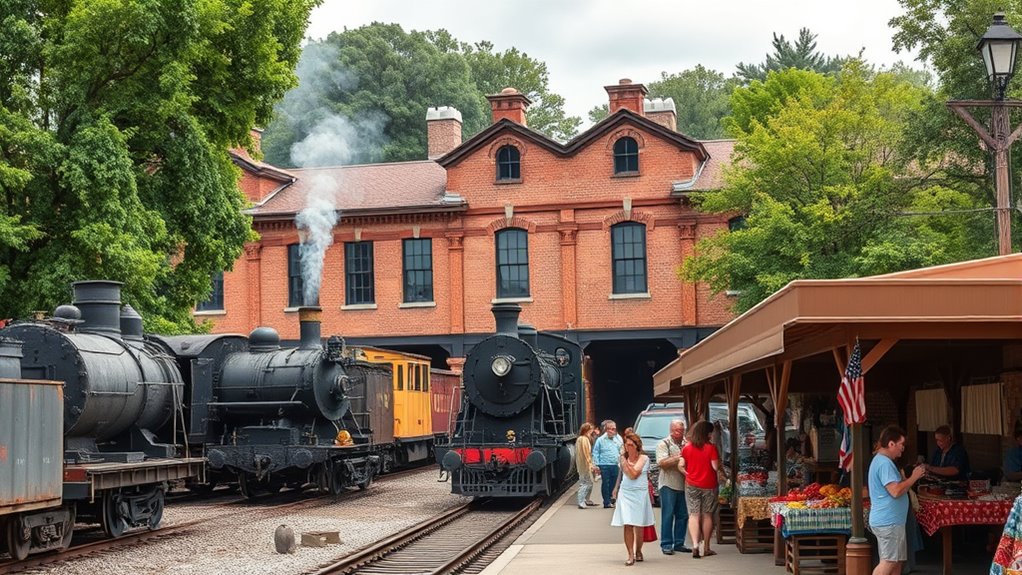
You can see how the development of railroads transformed North Carolina’s economy by connecting cities and enabling faster trade. Ports like Wilmington became essential hubs for importing and exporting goods, fueling growth along the coast. Together, these transportation networks laid the foundation for the state’s expanding industries and broader economic influence. The integration of transportation methods also facilitated the spread of new industries, further accelerating economic growth.
Railroad Impact on Growth
The construction of railroads in North Carolina transformed the state’s economy by connecting key cities and facilitating the movement of goods and people. As rail lines expanded, towns like Wilmington, Raleigh, and Charlotte grew rapidly, attracting businesses and settlers. The railroads made it easier to transport agricultural products, textiles, and raw materials to markets, boosting local industries. They also opened up new areas for development, encouraging settlement in the interior regions. With better transportation, trade flourished, and North Carolina’s economy diversified beyond farming. The rail network also supported the movement of military supplies during the Civil War, underscoring its strategic importance. Additionally, the integration of Music Therapy and sound healing techniques contributed to community well-being, demonstrating the diverse ways transportation and cultural practices influence regional development. Overall, railroads laid the foundation for North Carolina’s economic expansion and helped shape its modern landscape.
Port Cities’ Trade Roles
Port cities in North Carolina have long served as essential hubs for trade and economic growth, connecting the state to national and international markets. Wilmington, Charleston, and Morehead City have historically handled vital imports and exports, including tobacco, cotton, and naval supplies. These ports facilitated commerce during colonial times and expanded with the development of railroads and roads, boosting regional industries. During the Civil War, Wilmington’s port was crucial for Confederate supplies. Today, modern port facilities support container shipping, bulk cargo, and cruise tourism, fueling economic diversity. These ports also attract businesses and contribute to job creation, making transportation and trade integral to North Carolina’s economic expansion. Their strategic locations continue to strengthen the state’s role in global commerce. Additionally, advancements in transportation infrastructure have further enhanced the ports’ capacity and efficiency, ensuring continued growth and competitiveness.

Silk Flags and Cold Steel: The Piedmont (Civil War in North Carolina)
As an affiliate, we earn on qualifying purchases.
As an affiliate, we earn on qualifying purchases.
The Civil War and Reconstruction Era
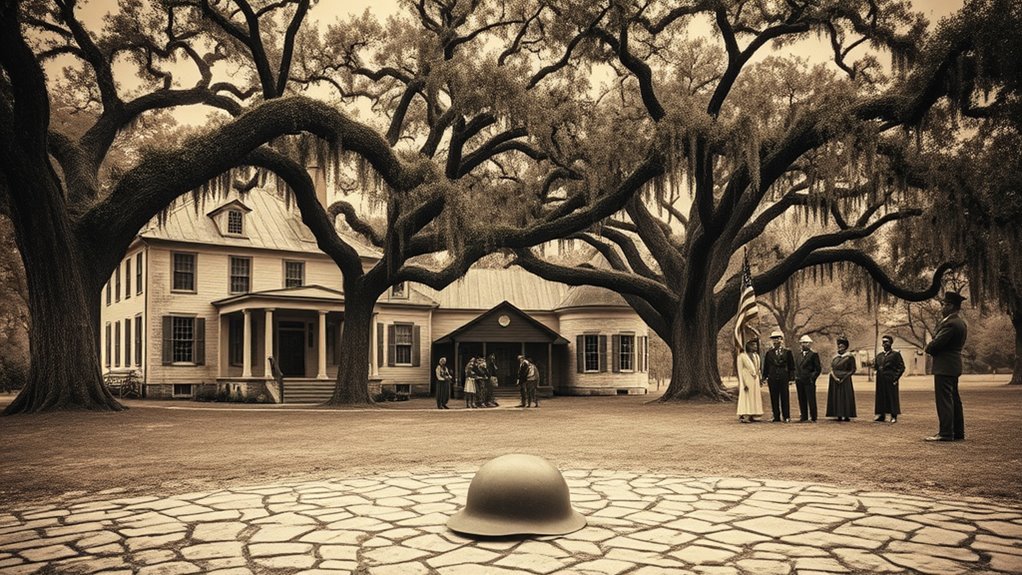
Have you ever wondered how North Carolina‘s role in the Civil War shaped its future? During this era, the state seceded from the Union in 1861 and joined the Confederacy, becoming essential for its railroads and supplies. After the war, North Carolina faced the challenge of rebuilding. Its readmission to the Union in 1868 marked a new chapter. Consider these key points:
- North Carolina seceded in 1861, supporting the Confederacy.
- Railroads played a fundamental role in Confederate logistics and war efforts.
- Reconstruction efforts focused on economic recovery and social change, despite racial tensions.
- The importance of railroads in the Civil War underscored their significance in shaping North Carolina’s infrastructure and economy.
This period deeply influenced North Carolina’s social fabric, economy, and political landscape, shaping its development long after the war ended.
Cultural Heritage and Educational Foundations
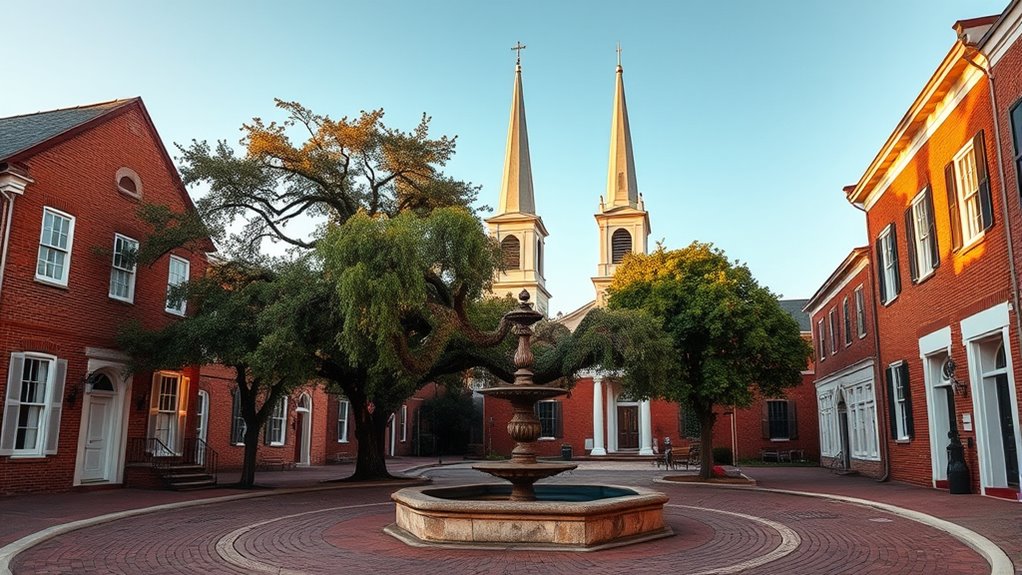
North Carolina’s rich cultural heritage and educational foundations reflect a deep sense of history and community. You can see this in the preservation of historic sites like Bath and the ongoing efforts to maintain traditions through music, crafts, and festivals. Education has played a crucial role, with institutions like NC State, established in 1887 as a land-grant college, shaping the state’s focus on agriculture and engineering. You’re also part of a legacy that values learning, evident in the early push for agricultural schools and the development of a structured education system in the late 19th and early 20th centuries. These foundations foster a sense of pride and identity, connecting communities to their past while guiding future generations toward growth and innovation. Developing a Cultural Intelligence mindset can further enhance understanding and appreciation of these diverse traditions and histories.
Modern North Carolina: Innovation, Diversity, and Cultural Flourishing

Driven by innovation and a dynamic cultural landscape, modern North Carolina has become a hub of creativity and progress. You’ll find a thriving arts scene, diverse communities, and cutting-edge industries shaping its identity. Here are three highlights:
- Technological Growth: The state has become a center for tech startups, finance, and biotech, especially around Charlotte and Research Triangle Park.
- Cultural Diversity: You’ll experience a blend of cultures through festivals, cuisine, and music, reflecting its rich immigrant heritage.
- Arts and Innovation: From contemporary art galleries to innovative music scenes, North Carolina fosters a flourishing arts community that celebrates both tradition and new ideas.
This vibrant mix makes North Carolina a place where history meets the future, inspiring growth and cultural expression.
Frequently Asked Questions
How Did Native American Tribes Influence North Carolina’s Cultural Identity?
You can see Native American tribes’ influence in North Carolina’s cultural identity through their traditions, crafts, and stories that still shape local customs today. They introduced unique art, music, and spiritual practices that have been passed down. Their history of resilience and connection to the land also fostered a deep appreciation for nature. You’ll find their legacy reflected in cultural festivals, place names, and community values across the state.
What Role Did Women Play During North Carolina’s Revolutionary and Early Statehood Periods?
Women during North Carolina’s revolutionary and early statehood periods were the backbone of the community, like roots holding the tree steady. They organized boycotts, managed homes and farms, and supported independence efforts. Some, like women in resistance movements, even took on roles beyond traditional expectations. Their resilience and efforts strengthened the fight for independence and helped shape the young state’s foundations, proving they were essential architects of change.
How Did Transportation Developments Impact North Carolina’s Social and Economic Disparities?
Transportation developments, like railroads and plank roads, dramatically improved North Carolina’s economy by connecting cities, boosting trade, and encouraging industrial growth. However, these improvements also widened social disparities, as wealthier regions gained better access to markets and resources, leaving rural and less-developed areas behind. You’ll see how infrastructure shaped economic opportunities unevenly, reinforcing existing inequalities between urban centers and the countryside, which persisted well into the state’s growth.
What Are the Most Significant Contributions of North Carolina’s African American Community?
You might not realize it, but North Carolina’s African American community has been the backbone of progress and change. They contributed through powerful leadership in the Civil Rights Movement, like the Greensboro Four’s sit-in protests, inspiring nationwide activism. Their cultural influence thrives in music, art, and cuisine, shaping the state’s identity. Without their resilience and innovation, North Carolina’s social fabric wouldn’t be as rich and vibrant as it is today.
How Has Modern Technology Shaped North Carolina’s Cultural and Economic Landscape?
Modern technology has transformed North Carolina’s cultural and economic landscape by boosting industries like finance, tech, and film. You can now access arts, music, and cultural events online, connecting communities across the state. Technology also attracts businesses, creating jobs and fueling growth in cities like Charlotte and Raleigh. It makes education more accessible and helps preserve history through digital archives, keeping North Carolina’s rich heritage alive for future generations.
Conclusion
As you explore North Carolina’s history and culture, you’re diving into a story so rich and vibrant, it could fill an entire universe! From ancient indigenous legends to groundbreaking innovations, this state’s legacy is larger than life itself. You’ll find a tapestry woven with courage, creativity, and resilience that’s simply unstoppable. So, get ready—North Carolina’s story isn’t just told; it’s practically bursting at the seams, waiting for you to discover its extraordinary spirit!