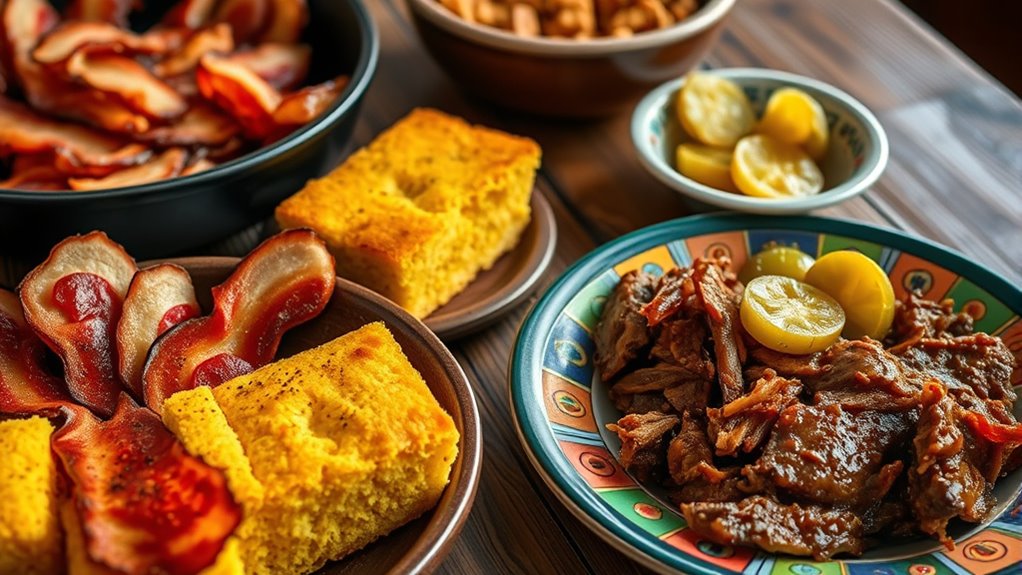

West Virginia’s cuisine blends Native American, Appalachian, and immigrant influences, creating hearty, resourceful dishes rooted in history. You’ll find core ingredients like cornbread, greens, wild foods, and preserved meats, prepared through traditional methods such as hearth cooking, canning, and fermenting. Dishes like pepperoni rolls and chow chow highlight the state’s resilience and cultural diversity. If you want to uncover more about West Virginia’s unique food traditions and modern twists, there’s plenty to explore.
Key Takeaways
- West Virginia cuisine is rooted in Native American, African-American, and immigrant influences, reflecting diverse cultural heritages.
- Traditional ingredients include cornbread, beans, greens, and wild foods like ramps and fiddlehead ferns.
- Preservation techniques such as canning, pickling, and fermenting are vital for maintaining seasonal foods year-round.
- Iconic dishes like pepperoni rolls and vinegar pie symbolize resourcefulness and community resilience.
- Modern culinary trends blend traditional flavors with innovative techniques, emphasizing local ingredients and cultural diversity.
Origins of Iconic West Virginia Foods
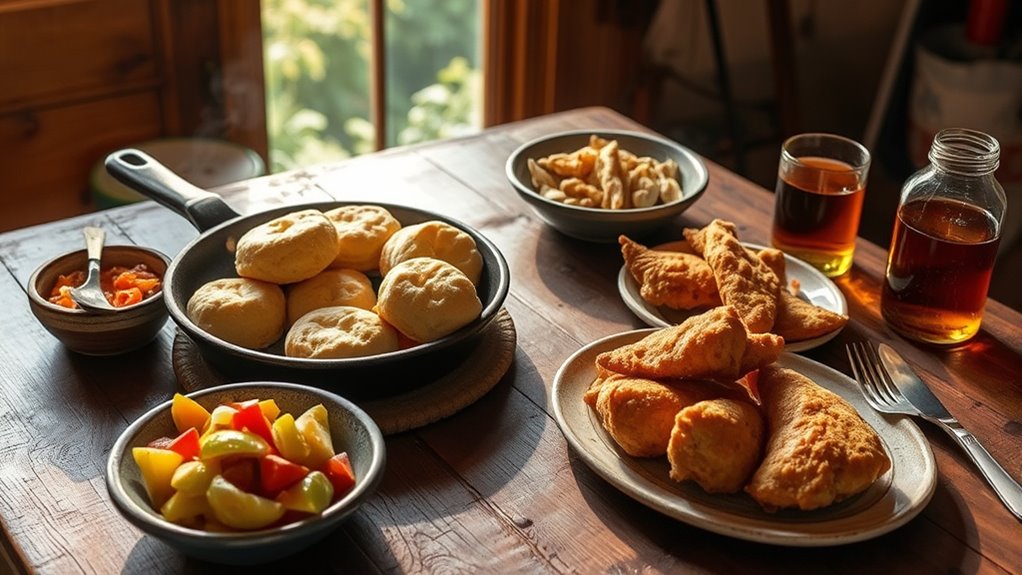
The origins of iconic West Virginia foods are deeply rooted in the state’s diverse immigrant and indigenous communities, each bringing their unique culinary traditions. Italian miners in the coalfields created pepperoni rolls around 1927 as a portable, shelf-stable meal, reflecting their practical approach to hard labor. Cherokee tribes contributed ramps and fiddlehead greens to regional dishes, emphasizing native ingredients. African-American communities influenced the cuisine with collard greens, molasses, and spoonbread, adding rich flavors and preservation techniques. Greek settlers introduced rustic breads and Mediterranean cooking styles, while immigrant groups like Turks and Greeks brought breads and sauces that blended seamlessly into Appalachian foodways. These culinary roots reveal a rich tapestry formed by necessity, resourcefulness, and cultural exchange. Additionally, the use of indigenous ingredients and traditional preservation methods highlights the importance of native foods in shaping regional dishes.
Core Ingredients in Appalachian Cooking
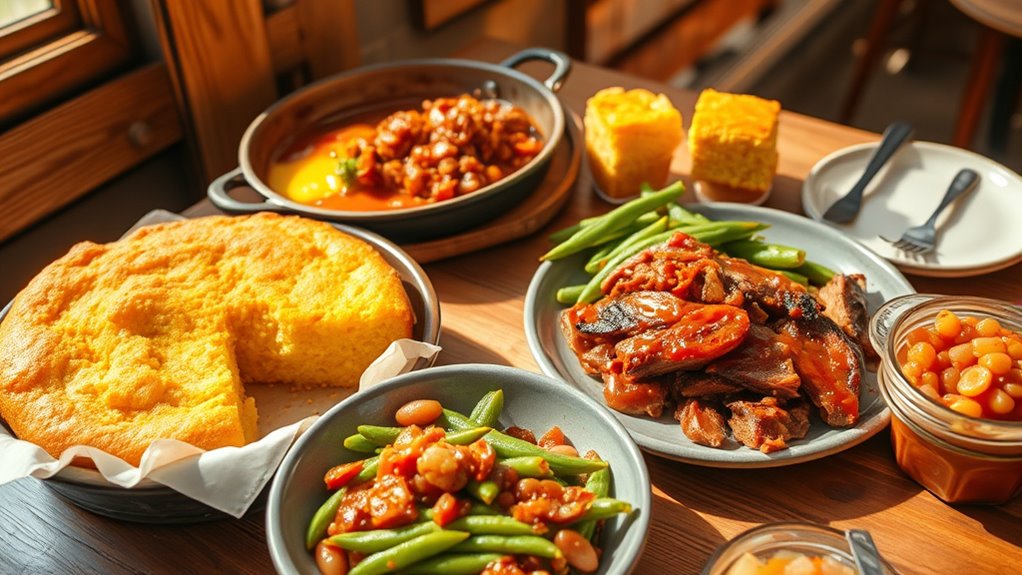
You’ll find that staple ingredients like pepperoni, cornbread, and greens form the backbone of Appalachian cooking, reflecting both Native American and immigrant influences. Wild foods such as ramps, fiddlehead ferns, and paw paws add seasonal variety and foraged flavors to dishes. Preserved foods like chow chow and pickled vegetables guarantee year-round availability, connecting Appalachian culinary traditions to resourcefulness and sustainability. Incorporating vertical storage solutions can help organize ingredients and kitchen tools, making traditional preservation methods more efficient.
Staple Ingredients and Flavors
Core ingredients in Appalachian cooking form the foundation of West Virginia’s flavorful and resourceful food traditions. You’ll find staples like pepperoni, used in popular pepperoni rolls, and hearty bread for sandwiches and rolls. Cornbread and beans are essential, reflecting Native American roots and immigrant influences. Greens such as collard and creasy greens add earthiness, often cooked with garlic, molasses, or bourbon for extra depth. For preserved flavors, mustard seeds, turmeric, and vinegar are common, seasoning relishes like chow chow. Wild ingredients like ramps, fiddlehead ferns, and paw paws bring seasonal variety. Meats such as venison, rabbit, and squirrel provide protein, often enhanced with garlic, molasses, or homemade sauces. The use of traditional preservation methods and seasonal foraging demonstrates the cultural significance of resourcefulness in Appalachian cuisine.
Wild and Preserved Foods
Have you ever tasted the unique flavors that wild and preserved foods bring to Appalachian cuisine? These ingredients define the region’s resourcefulness and connection to nature. Ramps, fiddlehead ferns, and paw paws are foraged, offering fresh, seasonal flavors that flavor dishes like salads and sautés. Preservation methods like canning, pickling, and fermenting—especially with chow chow relish—allow families to store vegetables and fruits for winter months. Wild meats such as venison, rabbit, and squirrel have long provided sustenance, especially in rural and coal camp communities. These foods reflect a self-reliant spirit, blending Native American, African-American, and immigrant traditions. The use of data analytics in traditional food preservation techniques also helps optimize storage and quality, ensuring these flavors endure over time. Wild and preserved ingredients remain essential, enriching Appalachian dishes with bold, authentic, and deeply rooted flavors.
Traditional Techniques and Cooking Methods
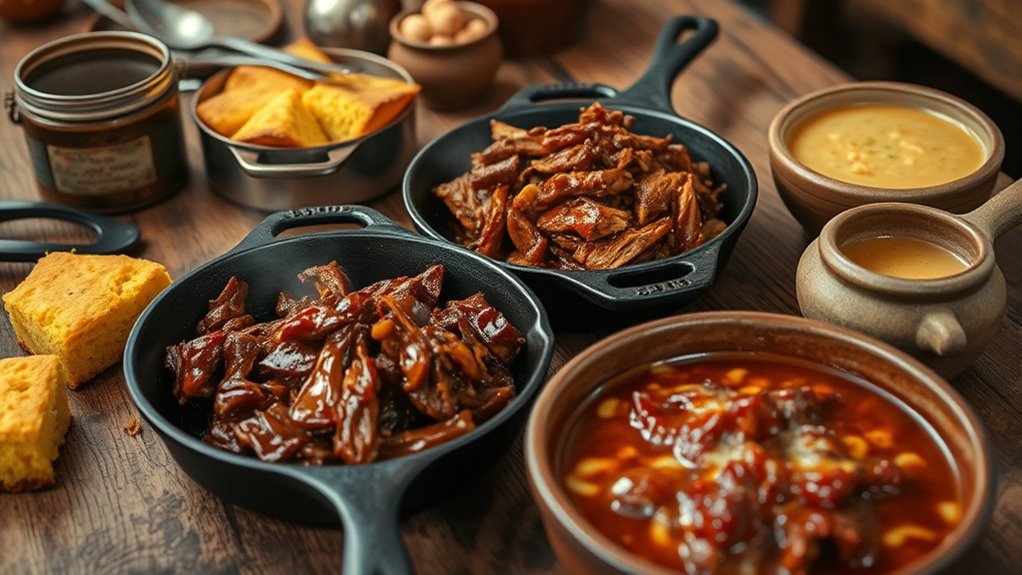
You’ll find that hearth and fireplace cooking play a crucial role in West Virginia’s culinary history, providing a dependable way to prepare hearty meals like roasts, stews, and baked bread. Canning and preserving vegetables and fruits guarantee that families can enjoy seasonal abundance year-round, especially in rural and coal camp communities. These traditional techniques reflect resourcefulness and a deep connection to the land, shaping the flavors and techniques still used today. Incorporating proper storage techniques helps preserve the freshness and flavor of homemade preserves.
Hearth and Fireplace Cooking
Hearth and fireplace cooking have long been central to West Virginia’s culinary traditions, serving as the primary method for preparing hearty, comforting meals in rural and mountain communities. You likely gather around an open fire, using cast iron pots, Dutch ovens, and skillets to craft dishes that are both practical and flavorful. Baking bread and roasting meats over an open flame allow for slow, even cooking, essential in preparing staples like cornbread, beans, and wild game. You may also use a swing arm or crane to position pots at different heat levels. These methods require skill and patience but reward you with rich, smoky flavors and tender textures that define Appalachian cuisine. Hearth cooking remains a crucial link to the region’s cultural and culinary heritage. Incorporating traditional cooking techniques can deepen your appreciation for the region’s rich culinary history and help preserve these age-old methods.
Preserving With Canning
Canning has long been a vital part of West Virginia’s food traditions, allowing families to preserve the bounty of each season for year-round enjoyment. You’ll find that traditional techniques like water bath and pressure canning are still widely used, especially for vegetables, fruits, and relishes. Families often gather around their wood-fired stoves or modern canning setups to process produce from their gardens and farms. You might see jars of chow chow, green beans, or tomatoes lined up in pantries, ready to be enjoyed months later. Rooted in necessity, canning helped coal camp families and farmers survive winter shortages. Today, these methods preserve not just food but cultural heritage, connecting you to generations of West Virginians who relied on these durable, resourceful techniques. Canning techniques remain a testament to the ingenuity and resilience of local communities.
Contributions From Immigrant and Indigenous Communities

Immigrant and Indigenous communities have profoundly shaped West Virginia’s culinary landscape by introducing diverse ingredients, techniques, and flavors that blend seamlessly into local food traditions. Italian immigrants brought their bread-making skills and preserved meats, giving rise to iconic dishes like pepperoni rolls and family pasta sauces. Cherokee communities contributed ramps, fiddlehead greens, and native preparation styles, enriching Appalachian diets with wild vegetables. African-American communities added collard greens, molasses, and bourbon-influenced flavors, shaping regional tastes. Greek settlers established restaurants serving Mediterranean breads and dishes, integrating new flavors into Appalachian cuisine. Recent Mexican and Central American immigrants introduced chorizo and fresh ingredients, broadening culinary diversity. These contributions reflect a tapestry of cultural influences that continue to define and diversify West Virginia’s food heritage. Vacuums for Pet Hair
The Socioeconomic Roots of West Virginia Cuisine
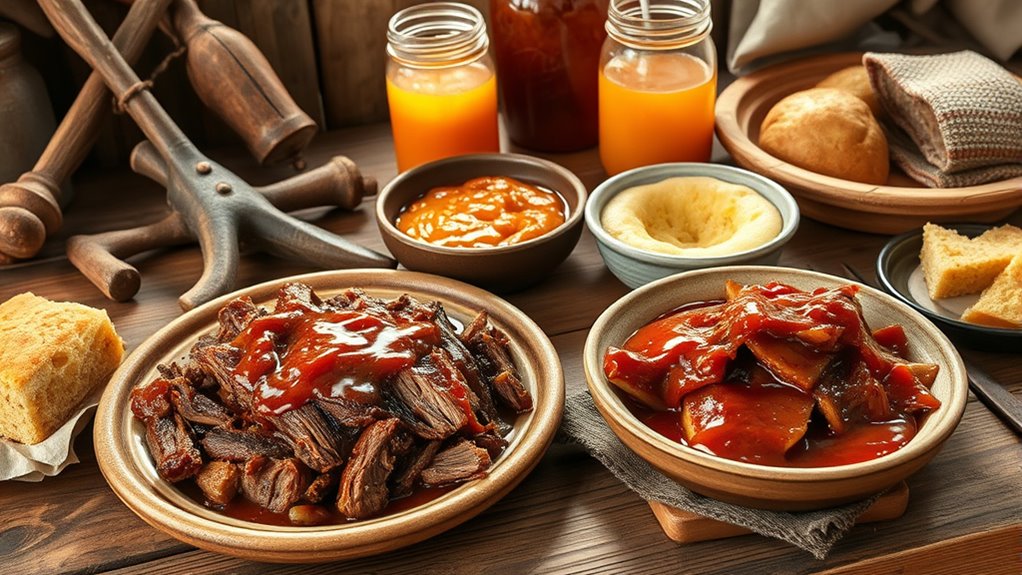
West Virginia’s cuisine has deep roots in its socioeconomic history, shaped by the struggles and resourcefulness of its communities. You learn that economic hardship and labor demands influenced many traditional dishes, making them practical and affordable. For example, coal miners relied on portable foods like pepperoni rolls, which could be eaten during long shifts. Preservation methods such as canning and fermenting allowed families to store seasonal harvests, ensuring year-round nutrition. The table below highlights key influences:
| Economic Hardship | Community Resourcefulness | Food Preservation |
|---|---|---|
| Coal mining economy | Canning and fermenting | Cabbage, green tomatoes |
| Limited grocery access | Using native ingredients | Ramps, paw paws |
| Seasonal scarcity | Preserving meats and vegetables | Chow chow, pickles |
| Food as survival | Cultural adaptation | Molasses, molarized flavors |
Additionally, cultural adaptation played a significant role in shaping unique dishes that reflect the diverse heritage of West Virginia residents.
Popular Dishes That Define the State’s Food Scene
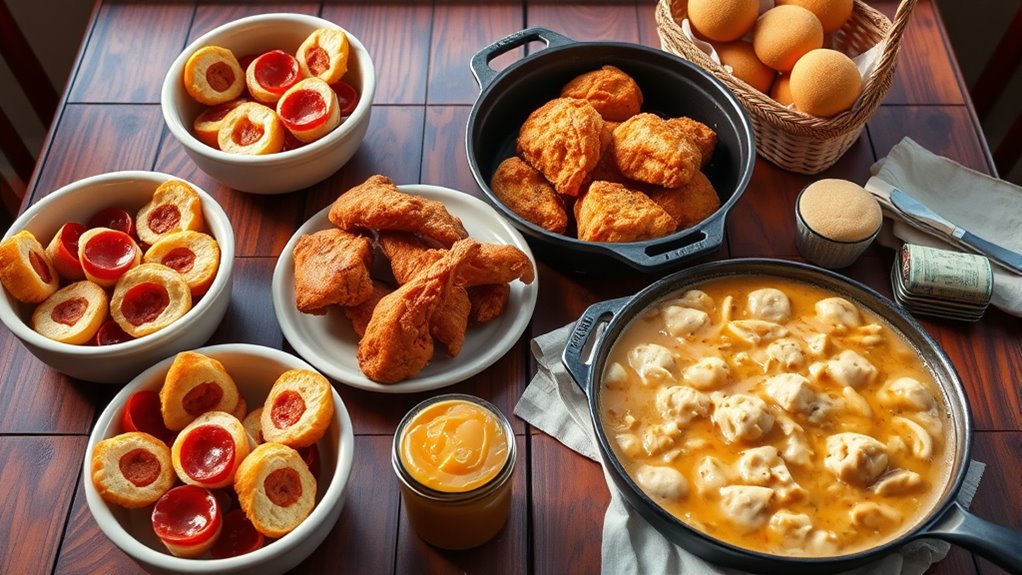
Pepperoni rolls stand out as the signature dish that defines West Virginia’s food scene, capturing both the state’s culinary ingenuity and its coal mining heritage. You’ll find them at nearly every gathering, from tailgates to local festivals, often baked fresh and filled with cheesy, spicy pepperoni. This portable comfort food originated in coal camps, designed for miners needing quick, hearty meals during long shifts. Other iconic dishes include vinegar pie, a tangy dessert born from economic hardship, and chow chow, a fermented relish used to preserve vegetables and add flavor. Beans and cornbread serve as staples, reflecting Native American roots and Appalachian tradition. Wild game like venison and rabbit also features prominently, honoring hunting customs. These dishes embody West Virginia’s resourcefulness, history, and community spirit.
Modern Revivals and Fusion of Appalachian Culinary Heritage
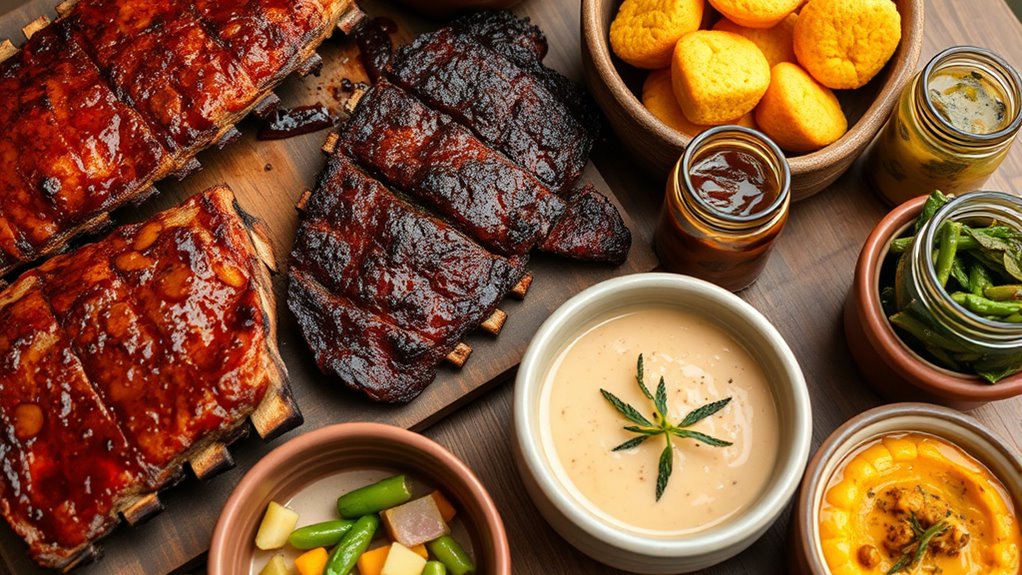
Recent culinary trends have sparked a resurgence of Appalachian heritage, blending traditional flavors with innovative techniques and global influences. You might find local chefs reinvent classic dishes like pepperoni rolls with gourmet cheeses or add unexpected ingredients to chow chow for a modern twist. Fusion cuisine is gaining popularity, merging Appalachian staples with Mediterranean, Latin, or Asian flavors, creating exciting new dishes. Farmers’ markets and restaurants emphasize locally sourced ingredients, highlighting native greens, wild herbs, and foraged foods like ramps and fiddleheads. Chefs are also experimenting with cooking methods such as sous vide or wood-fired ovens to elevate traditional recipes. This movement celebrates Appalachia’s culinary roots while embracing diversity and innovation, making West Virginia’s food scene vibrant, dynamic, and deeply connected to its heritage. Incorporating local ingredients and sustainable practices enhances both flavor and cultural significance in these modern culinary explorations.
Frequently Asked Questions
How Have West Virginia’s Foods Evolved With Changing Demographics?
You’ve seen West Virginia’s foods evolve as new communities settle in, bringing fresh ingredients and cooking styles. You might notice Italian immigrants introduced pepperoni rolls and pasta dishes, while Hispanic newcomers add chorizo and flavorful spices. Native ingredients like ramps and paw paws remain popular, blending tradition with diversity. As a result, you experience a vibrant food scene that reflects the state’s changing demographics, enriching its culinary heritage with each new flavor and technique.
What Role Do Seasonal Ingredients Play in Local WV Cuisine?
Seasonal ingredients add a special touch to your WV cuisine, turning everyday meals into celebrations of nature’s rhythm. You’ll find ramps and fiddlehead ferns in spring, paw paws in summer, and hearty greens and root vegetables in fall and winter. These ingredients not only connect you to the land and tradition but also inspire creative dishes, preserving the Appalachian spirit of resourcefulness and harmony with the seasons.
Are There Specific Cooking Utensils Unique to Appalachian Culinary Traditions?
You’ll find that traditional Appalachian cooking relies heavily on simple, durable utensils like cast iron skillets, Dutch ovens, and wooden spoons, which have been used for generations. These tools are valued for their heat retention and versatility, perfect for baking bread, roasting meats, or simmering stews over open flames or wood stoves. While not entirely unique, their craftsmanship and usage are deeply rooted in Appalachian culinary heritage.
How Do Modern Restaurants Incorporate Traditional WV Dishes?
Modern restaurants in West Virginia turn traditional dishes into culinary masterpieces, blending old and new with flair. They incorporate signature foods like pepperoni rolls, chow chow, and cornbread by elevating them with fresh ingredients, creative presentation, and innovative techniques. Chefs often add a contemporary twist—like gourmet fillings or artisanal bread—making these classics irresistible. It’s as if Appalachian history comes alive on a plate, mesmerizing both locals and visitors alike.
What Are Some Lesser-Known Native Plants Used in WV Cooking?
You should explore lesser-known native plants like ramps, fiddlehead ferns, paw paws, and wild garlic that West Virginia cooks often incorporate. Ramps, with their pungent flavor, add zest to dishes, while fiddlehead ferns provide a unique, tender green. Paw paws, native to the region, are used in desserts or eaten fresh. Wild garlic adds aroma and depth, enriching traditional Appalachian recipes with native, foraged ingredients.
Conclusion
Exploring West Virginia’s cuisine shows how its rich history and diverse roots create a unique flavor. From hearty stews to modern twists, you see a blend of tradition and innovation, like mixing a vintage vinyl with Spotify playlists. Embrace these dishes as more than sustenance—they’re a living history, reminding you that food connects us across time. Just like the timeless Appalachian mountain, West Virginia’s culinary spirit endures, echoing stories that are still waiting to be discovered.