Looking for the ultimate travel guide to Alaska? Discover the best times to visit, from summer for wildlife and outdoor adventures to winter for northern lights. Explore major cruise ports, like Juneau and Ketchikan, or venture inland to experience wilderness wonders and indigenous culture. Learn about transportation options to navigate this vast landscape efficiently. With stunning natural sights and unforgettable wildlife encounters, your Alaska trip promises unforgettable moments—keep exploring to uncover all the essential details for planning your adventure.
Key Takeaways
- Best visiting times include summer for outdoor activities and winter for Northern Lights and snow sports.
- Major cruise ports like Juneau, Ketchikan, and Skagway offer access to glaciers, wildlife, and Indigenous culture.
- Interior Alaska provides wilderness adventures such as hiking, wildlife viewing, and Northern Lights in remote areas.
- Combining cruises, flights, ferries, and guided tours is essential for comprehensive exploration across Alaska’s vast terrain.
- Key natural attractions include glaciers, diverse wildlife, and the Northern Lights, with opportunities for memorable wildlife encounters.

Binoculars for Adults | Compact Small Mini Travel Binocular for Bird Watching High Powered Electronics Cruise Ship Essentials Norwegian Alaska Must Haves Hiking Camping Gear a by VULNESS (Black, 8X21)
Keep your backpack light with these compact and lightweight portable binoculars.
As an affiliate, we earn on qualifying purchases.
As an affiliate, we earn on qualifying purchases.
Best Times to Visit Alaska and Seasonal Highlights

The best times to visit Alaska depend on what you want to experience. If you’re after warm weather, longer days, and outdoor adventures, plan your trip between late May and mid-September. Summer offers peak opportunities for cruising, fishing, hiking, and sightseeing, with daylight lasting up to 20 hours in some areas. For wildlife enthusiasts, summer provides prime viewing of whales, bears, and other animals. Conversely, if you want to see the Northern Lights, consider visiting from late August through early April. Fall, especially September and October, balances aurora viewing with fewer crowds. For winter sports or to witness the quiet, snow-covered wilderness, visit from December through February. Each season offers unique attractions, so choose your timing based on your interests and preferred activities. Incorporating indoor gardening techniques can also help you enjoy fresh herbs and vegetables year-round, even when traveling or during off-season months.
Northern Lights and Arctic Circle Guide 2025/2026: Best Places to See the Aurora Borealis in Norway, Iceland, Sweden and Finland – Adventures, Itineraries, Winter Packing Tips and Photograph Secrets
As an affiliate, we earn on qualifying purchases.
As an affiliate, we earn on qualifying purchases.
Top Cruise Ports and Coastal Destinations

Alaska’s top cruise ports attract millions of visitors each year, serving as gateways to the state’s stunning coastal scenery and unique cultural experiences. Juneau, Ketchikan, and Skagway lead the way, each welcoming over a million passengers in 2024. These ports offer more than just scenic views—they provide access to glaciers, wildlife, and Indigenous heritage. Other notable coastal destinations include Sitka and Haines, known for rich history and wildlife encounters. Many ports are equipped with modern facilities capable of handling large cruise ships, ensuring smooth arrivals and departures. Beyond the ports, coastal towns feature charming shops, local cuisine, and cultural centers. Whether you’re here for breathtaking fjords or authentic Alaskan culture, these destinations serve as perfect starting points for your journey. Embrace Adventure by exploring the diverse coastal scenery and cultural richness that make Alaska so unique.

Alaska Wildlife (Nature Observation North America)
As an affiliate, we earn on qualifying purchases.
As an affiliate, we earn on qualifying purchases.
Exploring Interior Alaska and Wilderness Adventures
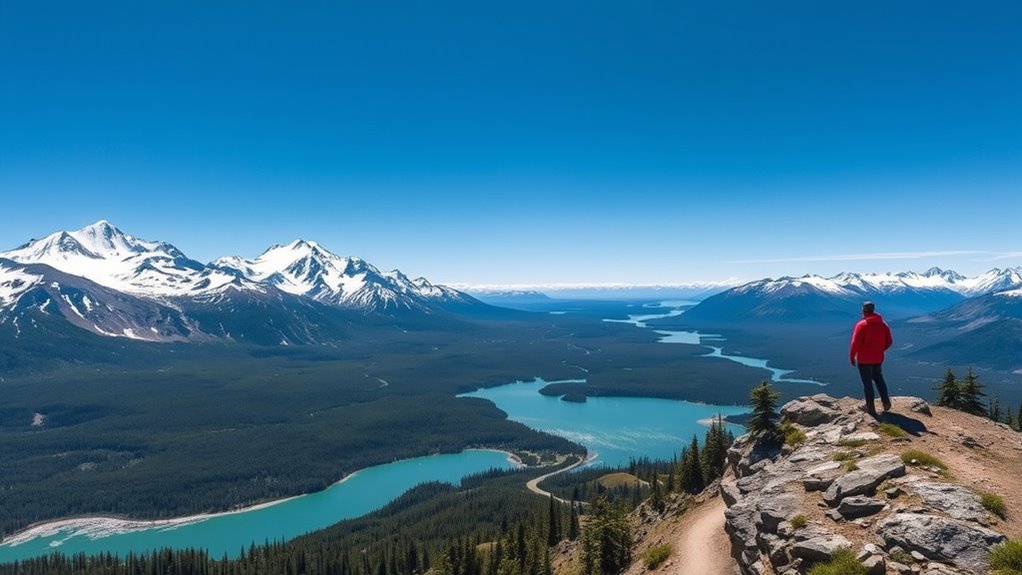
Looking to escape the bustling coastlines and explore a quieter, more rugged side of Alaska? Interior Alaska offers breathtaking wilderness, vast forests, and remote landscapes perfect for adventure. You can hike through Denali State Park, where towering mountains and glaciers surround you, or visit Fairbanks to experience the Northern Lights in fall and winter. Wildlife enthusiasts will enjoy spotting bears, moose, and caribou in their natural habitats. For a true wilderness experience, consider guided multi-day trips into remote areas, where you can kayak, fish, or snowmachine depending on the season. These adventures allow you to immerse yourself in Alaska’s untouched beauty, away from crowds. Planning ahead ensures access to these pristine landscapes, offering unforgettable memories of Alaska’s rugged interior. Additionally, understanding environmental considerations such as Leave No Trace principles helps preserve these delicate ecosystems for future explorers.
Alaska Aurora Borealis Bear Stainless Steel Insulated Water Bottle
Gift for wildlife fans and bears, Alaska.
As an affiliate, we earn on qualifying purchases.
As an affiliate, we earn on qualifying purchases.
Navigating Transportation Options and Planning Your Trip

Traveling transportation options in Alaska require careful planning, as the state’s vast size and limited infrastructure mean no single mode covers all your needs. To navigate effectively, consider combining different transportation methods.
Alaska’s vastness calls for smart planning and combining transportation modes for smooth travel.
For example, you might:
- Take a cruise to explore coastal regions and remote fjords
- Fly between major cities like Anchorage, Fairbanks, and Juneau for quick access
- Use ferries and boats to reach islands and coastal communities
- Rent a vehicle or join guided tours for interior or wilderness exploration
- Incorporate AI-powered travel planning tools to optimize your itinerary and ensure seamless connections
Alaska’s transportation system can be complex, so planning ahead guarantees smooth travel. Check schedules, book early, and consider multi-modal itineraries to maximize your experience in this expansive and diverse state.
Must-See Natural Wonders and Wildlife Encounters
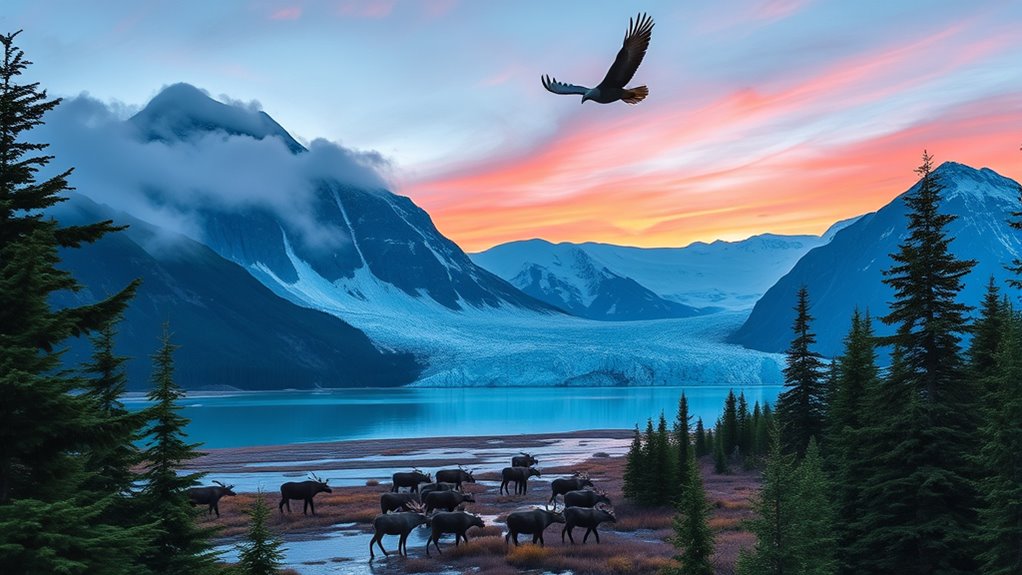
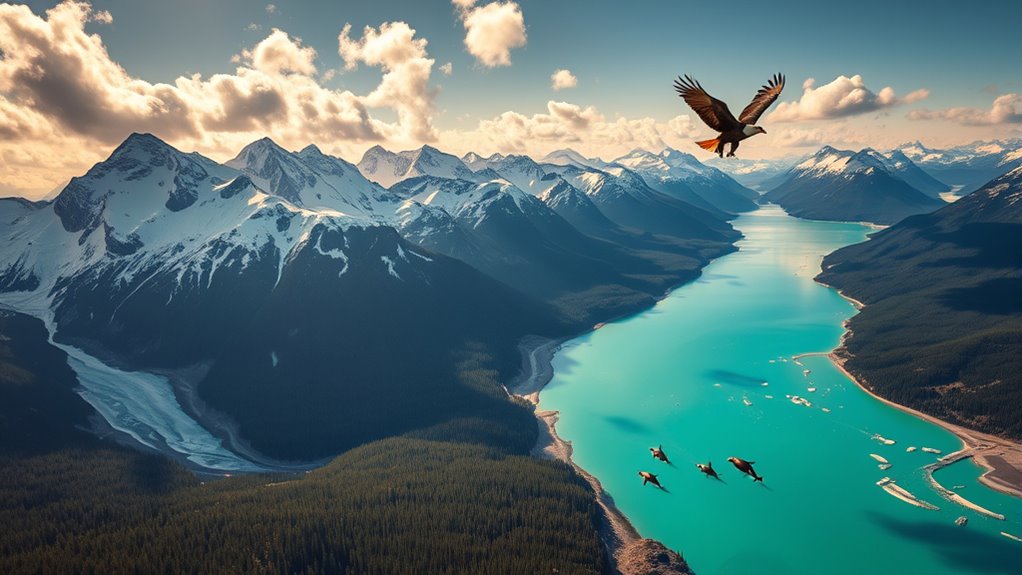
As you plan your Alaska adventure, no visit would be complete without experiencing its world-renowned natural wonders and wildlife encounters. You’ll marvel at towering glaciers like those in Kenai Fjords and Glacier Bay, where calving ice creates thunderous sounds. Keep your binoculars ready for sightings of bears, moose, and bald eagles in their natural habitats. Whales, including humpbacks and orcas, frequent coastal waters, offering unforgettable viewing opportunities from boats or shorelines. In Denali National Park, you can witness the majestic mountain and spot wildlife like caribou and wolves. During September and winter months, chase the Northern Lights in Fairbanks. These encounters connect you deeply with Alaska’s pristine wilderness and rich biodiversity, making your trip truly extraordinary. Additionally, understanding the importance of wildlife habitats can enhance your appreciation of the delicate ecosystems you’re observing.
Indigenous Cultures and Unique Cultural Experiences
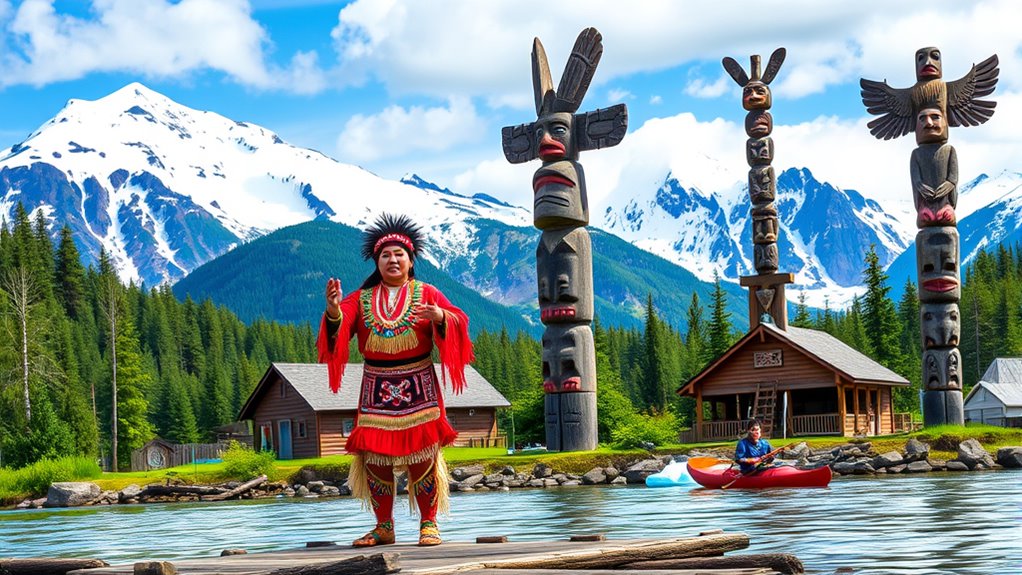
Alaska’s Indigenous cultures offer authentic and immersive experiences that deeply connect you to the state’s rich heritage. You can explore Native art, hear traditional stories, and participate in cultural ceremonies that reveal centuries-old traditions. Visiting local communities provides direct insight into Alaska’s native way of life. You might:
- Attend storytelling sessions led by Indigenous elders
- View intricate carvings, beadwork, and basketry in art centers
- Join workshops on traditional dance and music
- Visit cultural centers dedicated to native history and language preservation
- Engage with traditional textiles and learn about their significance in native culture
These experiences foster respect and understanding for Alaska’s native peoples, enriching your journey beyond natural wonders. Engaging with Indigenous communities ensures a meaningful, educational connection to Alaska’s diverse cultural landscape.
Outdoor Activities and Seasonal Recreational Opportunities
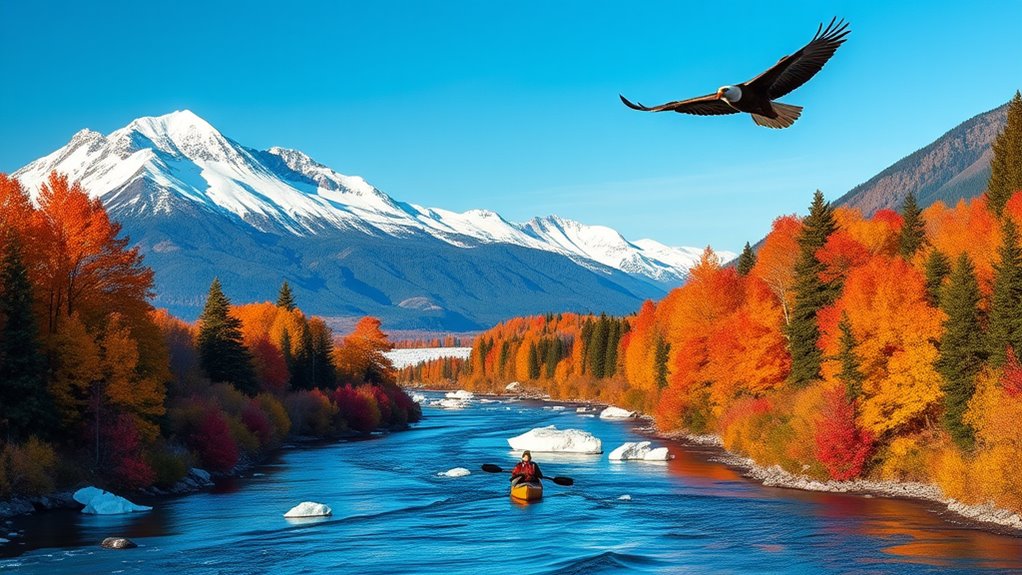
Alaska offers a wide range of outdoor activities year-round, from summer hiking, kayaking, and fishing to winter skiing, snowboarding, and snowmobiling. You can spot wildlife like bears, whales, and moose while exploring the wilderness or taking guided tours. No matter the season, outdoor adventures await to make your trip unforgettable. Additionally, be aware of privacy and cookie usage policies that may affect your online browsing experience while planning your trip.
Summer and Winter Activities
Wondering what outdoor adventures await during different seasons? Alaska offers a diverse array of activities tailored to the changing seasons. In summer, you can kayak through fjords, hike scenic trails, fish for salmon and halibut, or take scenic flightseeing tours over glaciers. When winter arrives, the landscape transforms into a winter wonderland perfect for:
- Snowboarding and downhill skiing in resorts like Alyeska
- Dog sledding across snowy plains
- Aurora borealis viewing under clear, dark skies
- Cross-country skiing through remote wilderness areas
Each season offers unique opportunities, whether exploring icy landscapes or basking in endless daylight. Prepare for variable weather and plan ahead to maximize your experience in this vast, ever-changing environment. Alaska’s seasonal activities promise adventure, awe, and unforgettable memories. Performance upgrades can also enhance your experience by improving mobility and comfort during outdoor excursions.
Wildlife and Wilderness Adventures
Exploring Alaska’s wilderness offers an unparalleled array of outdoor adventures year-round. You can witness breathtaking wildlife and explore pristine landscapes, from towering glaciers to dense forests. In summer, hike through national parks, kayak across shimmering lakes, or go fishing for salmon and halibut. During winter, chase the Northern Lights, snowshoe through quiet backcountry, or ski on powdery slopes. Wildlife encounters are abundant, with opportunities to see bears, whales, moose, and numerous bird species. The following table paints a vivid picture of Alaska’s wilderness experiences: wildlife viewing opportunities.
Tips for Planning a Multi-Region Alaska Itinerary
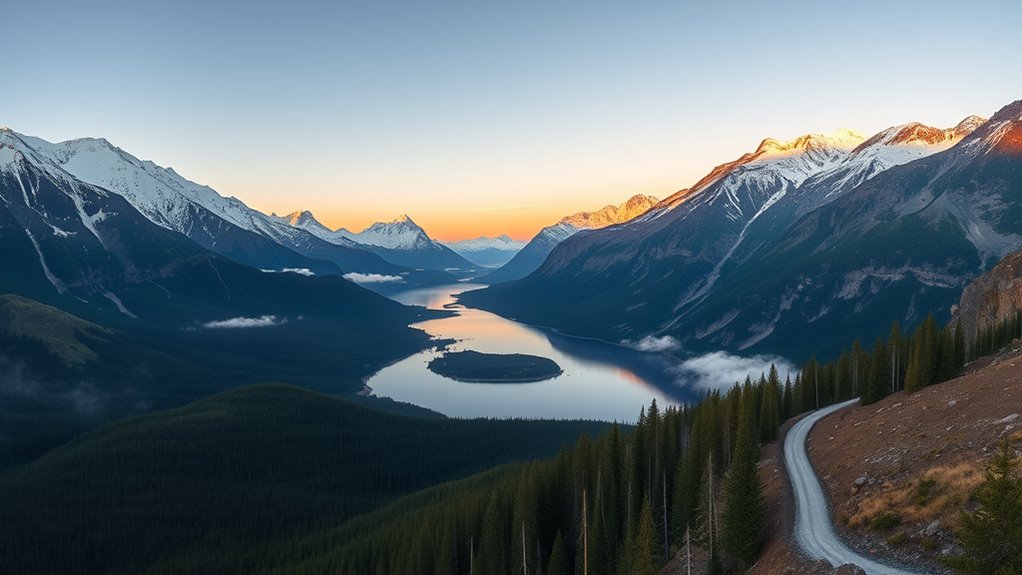
When planning a multi-region Alaska trip, choosing the right route is key to making the most of your time. Consider how the seasons, activities, and transportation options align with your goals, and plan your stay accordingly. Balancing your trip duration across regions guarantees you experience the highlights without feeling rushed or overwhelmed. Additionally, understanding the luxury travel options available can enhance your experience and ensure comfort throughout your journey.
Optimal Route Selection
Planning a multi-region Alaska itinerary requires careful route selection to maximize your experience and make the most of your time. To do this effectively, consider the logistical connections between destinations, balancing travel methods and regional highlights. Focus on geographic proximity to reduce transit time and avoid backtracking. Prioritize routes that align with your preferred activities, such as wildlife viewing, glacier tours, or cultural experiences. Use a combination of transportation modes—cruise, flight, ferry, or road—to access remote areas efficiently. Keep in mind seasonal factors that influence routes, like weather and daylight hours.
- Choose primary hubs (Juneau, Fairbanks, Anchorage) to streamline your travel flow
- Incorporate scenic routes to enjoy Alaska’s landscapes en route
- Schedule transfers to minimize waiting times between modes
- Flexibility in routing helps adapt to weather or unexpected closures
Timing & Duration
Timing and duration are key to getting the most out of your multi-region Alaska trip. Planning around seasonal peaks ensures you experience ideal weather, wildlife, and activities. Summer (late May to mid-September) offers long days and warm weather, perfect for cruises, fishing, and outdoor adventures. For Northern Lights, visit from late August to early April, especially in Fairbanks during September and October. To balance aurora viewing and fewer crowds, consider a 10-day itinerary. Use the table below to help structure your trip:
| Season | Best Activities |
|---|---|
| Late May–Mid Sept | Cruises, hiking, wildlife, fishing |
| Sept–Oct | Northern Lights, interior exploration |
| Nov–Apr | Winter sports, aurora viewing |
| Spring (Apr–May) | Fewer tourists, wildlife migration |
| Summer peak | Extended daylight, outdoor festivals |
Frequently Asked Questions
What Is the Best Way to See the Northern Lights in Alaska?
To see the Northern Lights in Alaska, plan your trip between late August and early April, focusing on September, October, or March for the best balance of aurora visibility and fewer crowds. Head to interior locations like Fairbanks, which offer extended darkness and higher chances of clear skies. Stay away from city lights, and consider booking guided tours or staying in remote lodges for ideal viewing conditions.
How Early Should I Book My Alaska Trip for Peak Season?
You should book your Alaska trip at least 6 to 12 months in advance for peak season, which runs from late May to mid-September. This guarantees you secure the best accommodations, tours, and transportation options, especially during busy months. Planning early also gives you time to customize your itinerary, find deals, and coordinate travel logistics, making your experience smoother and more enjoyable in Alaska’s popular summer months.
Are There Travel Restrictions or Safety Tips for Remote Wilderness Areas?
Absolutely, you should treat remote wilderness areas like a secret society—trust no one without proper preparation. Always carry bear spray, dress in layers, and inform others of your plans. Check weather forecasts often, since conditions change faster than a moose on the run. Stay on marked trails, avoid hiking alone, and respect local wildlife. Your safety depends on respecting nature’s wild side—so be smart, cautious, and always prepared.
What Are the Top Hidden or Less-Visited Destinations in Alaska?
You should explore Alaska’s lesser-known gems like the Kodiak Archipelago, with its remote wildlife refuges, or the Wrangell-St. Elias National Park, perfect for solitude and glacier adventures. Visit the Aleutian Islands for unique Native culture and rugged landscapes. Check out the Chugach Mountains for epic hiking, or venture into the Tok region for authentic, off-the-beaten-path experiences. These destinations give you a richer, more intimate Alaskan adventure away from the crowds.
How Can I Experience Alaska’s Indigenous Cultures Authentically?
You can experience Alaska’s indigenous cultures authentically by participating in cultural tours led by Native guides, visiting museums showcasing native art and history, and attending local festivals. Engage with community-run craft workshops, try traditional foods, and learn about indigenous storytelling. Staying respectful and open-minded enriches your connection to their heritage. Booking these experiences through local organizations ensures you gain genuine insights and support Indigenous communities directly.
Conclusion
Think of your Alaska adventure as a grand tapestry, each thread representing a season, a destination, or a cultural encounter. As you weave your experiences together, you’ll craft a vibrant masterpiece of unforgettable moments—glaciers shimmering like gemstones, wildlife dancing across the stage of wilderness, and indigenous stories echoing through time. Embrace each thread, and your journey will become a rich, living artwork you’ll cherish forever.