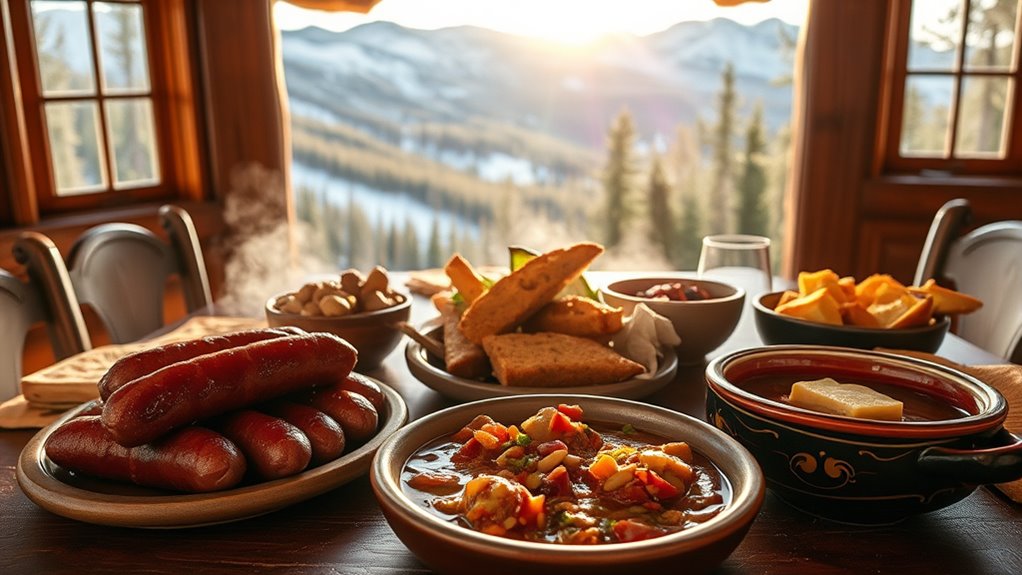

Colorado’s cuisine blends Native American, Hispanic, and immigrant influences, creating a vibrant food scene rooted in ranching and farming traditions. Iconic ingredients like green chiles, bison, elk, and regional fruits shape your experience, from hearty stews to innovative fusion dishes. Local markets celebrate seasonal bounty, while transportation improvements bring diverse flavors to the table. Exploring Colorado’s culinary landscape reveals a rich history of land, community, and innovation—there’s much more to discover beyond the surface.
Key Takeaways
- Colorado cuisine is shaped by Native American, Spanish, Mexican, and cowboy influences, emphasizing regional flavors like green chile and wild game.
- Local ingredients such as bison, elk, peaches, and corn are central to Colorado’s traditional and modern dishes.
- Transportation advancements historically expanded access to diverse ingredients, fostering culinary innovation and fusion.
- The state’s culinary scene blends traditional recipes with modern techniques, supporting farm-to-table practices and sustainability.
- Multicultural heritage and immigrant communities contribute to Colorado’s diverse and evolving food culture.

Chugwater Chili | Gourmet Green Chili Seasoning Mix | 4oz Bottle | Wyoming State Championship Chili Recipe | Secret Blend 12 Spices | All Natural, Gluten Free, No MSG & No Preservatives
PERFECT GREEN CHILI STARTER or GREEN CHILI SAUCE & MORE: This easy-to-use green chili seasoning is the perfect…
As an affiliate, we earn on qualifying purchases.
As an affiliate, we earn on qualifying purchases.
The Roots of Colorado’s Culinary Heritage
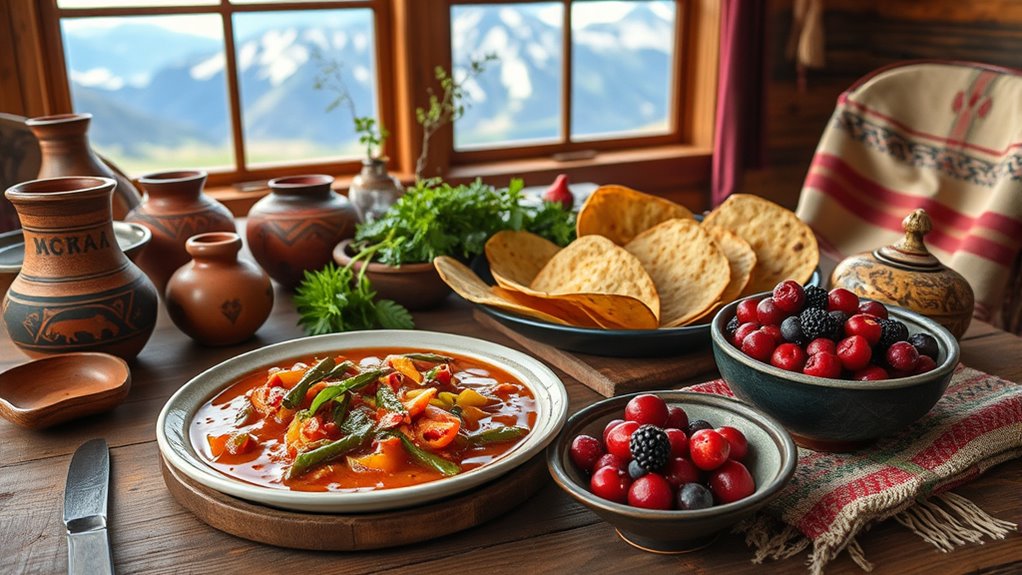
Colorado’s culinary heritage roots itself in a rich blend of Native American, Spanish, Mexican, and cowboy traditions. You’ll find that early settlers and indigenous peoples shaped the region’s flavors through hunting, farming, and trading. Wild game like elk, buffalo, and lamb became staples, while vegetables and chili peppers added depth to local dishes. The influence of Spanish explorers and Mexican migrants introduced ingredients like green chile and carne adovada, enriching the cuisine in the 1920s. Denver’s historic neighborhoods became melting pots of diverse cultures, blending German, Irish, Jewish, and Mexican influences. Over time, these traditions fused with cowboy food and frontier innovations, creating a unique culinary identity that reflects Colorado’s diverse history and land. Historical culinary practices have also played a role in shaping traditional Colorado dishes and cooking methods.

Force Of Nature Meats 100% Grass Fed, Regenerative Bison Grind, 14 oz
Regenerative raised, grass fed, grass finished
As an affiliate, we earn on qualifying purchases.
As an affiliate, we earn on qualifying purchases.
Iconic Dishes and Regional Ingredients
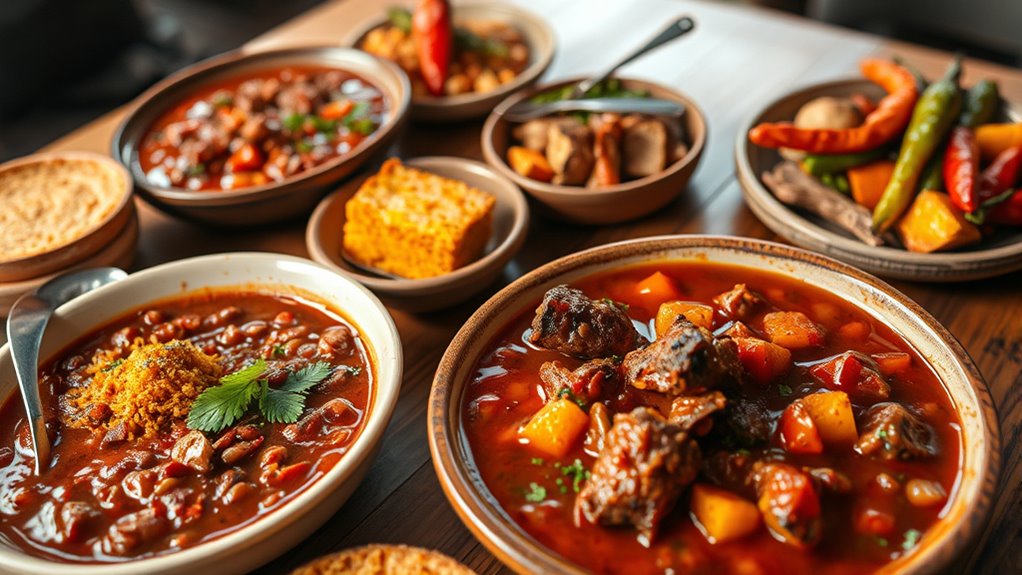
You’ll notice that Colorado’s iconic dishes highlight local meats like bison, elk, and lamb, which showcase the region’s ranching and wild game traditions. Signature flavors such as green chili and chili verde reflect a blend of Mexican heritage with regional twists. Additionally, seasonal produce like Palisade peaches and Rocky Ford cantaloupes play an essential role in creating fresh, flavorful dishes throughout the year.
Local Meats and Game
Local meats and game play an essential role in shaping Colorado’s culinary identity, showcasing the region’s rich hunting traditions and ranching heritage. You’ll find bison, elk, and venison featured prominently in many regional dishes, often prepared with berry sauces, wine reductions, or pecan crusts that highlight local flavors. Lamb from Colorado’s ranches also takes center stage, frequently slow-roasted or grilled with seasonal herbs. Wild game reflects the state’s hunting culture, bringing a savory, rustic touch to the cuisine. These meats are celebrated at festivals and markets, emphasizing sustainable sourcing and regional pride. By incorporating fresh, native ingredients, Colorado chefs preserve a culinary legacy rooted in the land, blending tradition with contemporary techniques to create authentic, memorable flavors. Additionally, the use of regional ingredients like wild berries and herbs further enhances the distinctiveness of Colorado’s traditional dishes.
Signature Chili Flavors
What makes Colorado’s chili truly stand out are its bold, regional flavors that reflect the state’s diverse culinary heritage. You’ll notice the signature green chili, or chili verde, which combines roasted tomatillos, peppers, and locally sourced pork or beef, creating a smoky, tangy profile. Colorado-style chili often features hearty, slow-cooked meats like bison, elk, or lamb, infused with local spices and sometimes a touch of wine or berry sauces. Regional ingredients, such as Pueblo-grown chilies and fresh Pueblo or Olathe corn, enhance the depth of flavor. Whether served as a steaming bowl or used as a sauce for enchiladas and stews, Colorado’s chili embodies a fusion of Native American, Mexican, and cowboy traditions, making it a true culinary signature. The use of regional ingredients is key to capturing the authentic flavors that define Colorado’s chili traditions.
Seasonal Produce Highlights
Colorado’s seasonal produce plays a vital role in shaping its culinary identity, showcasing the region’s agricultural bounty at its peak. When you dine here, you’ll experience fresh Palisade peaches, Rocky Ford cantaloupes, and Olathe sweet corn, celebrated in local festivals and seasonal dishes. These ingredients define regional flavors, often paired with meats like lamb, bison, and elk, or incorporated into hearty stews and salsas. Green chili, a Colorado staple, highlights the influence of Mexican and New Mexican traditions, yet with local twists. Farmers’ markets and farm-to-table restaurants emphasize sustainability and freshness, ensuring you enjoy vibrant, seasonal flavors. Whether in a simple roasted corn dish or a gourmet trout with miso glaze, Colorado’s produce reflects its land’s richness and diversity.

Old El Paso Taco Sauce – Creamy Salsa Verde, 9 oz.
CREAMY SALSA VERDE TACO SAUCE: Old El Paso Creamy Salsa Verde Sauce adds the zesty flavors of hot…
As an affiliate, we earn on qualifying purchases.
As an affiliate, we earn on qualifying purchases.
Evolution of Colorado’s Food Scene

Colorado’s food scene has transformed by blending traditional flavors with modern techniques, creating a dynamic culinary landscape. You’ll notice how chefs incorporate old recipes alongside innovative approaches, reflecting both history and progress. Transportation advances, like railroads, also expanded access to new ingredients, fueling this evolution. Additionally, understanding the production quantity variance helps in optimizing ingredient sourcing and maintaining cost efficiency in the culinary industry.
Fusion of Old and New
The evolution of Colorado’s food scene seamlessly blends traditional flavors with contemporary culinary innovations, creating a dynamic and diverse gastronomic landscape. You’ll find classic ingredients like bison, elk, and green chile reimagined with modern techniques, such as molecular gastronomy or farm-to-table plating. Chefs mix heritage recipes with global influences, producing dishes that honor history while embracing innovation. This fusion is evident across Denver’s vibrant dining scene, where old recipes meet new ideas. The table below highlights this mix:
| Traditional Dishes | Modern Interpretations | Fusion Examples |
|---|---|---|
| Green Chile | Green Chile Foam | Bison Tartare |
| Rocky Mountain Oysters | Bison Sliders | Green Chile Risotto |
| Denver Omelet | Stuffed Omelet Variations | Pulled Pork Tacos |
| Carne Adovada | Deconstructed Stew | Elk Sushi |
| Wild Game Sauces | Pecan-Crusted Elk | Vegetarian Bison Burger |
Colorado’s culinary evolution is also influenced by innovative technology that enhances both preparation methods and presentation, further enriching its gastronomic diversity.
Rise of Independent Chefs
As the culinary scene continues to evolve, independent chefs are transforming Colorado’s food identity by pushing boundaries and showcasing local ingredients in innovative ways. You’ll notice more chefs crafting unique dishes that blend traditional flavors with modern techniques, emphasizing farm-to-table principles. These chefs often source ingredients from nearby ranches and farms, highlighting Colorado’s rich agricultural and wild game offerings. They experiment with global cuisines, vegetarian options, and even cannabis-infused creations, diversifying the dining landscape. By opening small, independent establishments, they foster community connections and support local producers. Their focus on creativity and authenticity elevates the culinary scene, making Colorado a vibrant hub for innovative, flavorful food that respects its heritage while embracing the future. Additionally, many of these chefs prioritize emotional support by engaging with their communities and promoting sustainable practices.
Influences From Transportation
Transportation innovations have played an essential role in shaping Colorado’s evolving food scene by expanding access to diverse ingredients and culinary influences. The arrival of railroads in the 19th century connected remote towns to markets, bringing exotic ingredients and Victorian culinary trends. This access allowed local cooks to experiment with new flavors and techniques, blending frontier fare with international influences. As transportation improved, farmers and ranchers could deliver fresh produce and meats to urban centers like Denver. This exchange fostered culinary diversity, from Mexican chiles to European spices. Additionally, the development of transportation networks further enhanced the distribution of perishable goods, supporting Colorado’s dynamic culinary landscape.

Buffalo Bob's Wild Game Meat Snacks Variety Pack (14 Items)
WILD GAME MEAT VARIETY: Enjoy the thrill of 14 distinct wild game jerky sticks in one pack. From…
As an affiliate, we earn on qualifying purchases.
As an affiliate, we earn on qualifying purchases.
Cultural Influences Shaping Colorado Cuisine

Colorado’s culinary landscape is shaped by a rich tapestry of cultural influences that have merged over centuries. You’ll notice Native American traditions, Spanish colonial roots, Mexican flavors, and cowboy staples blending seamlessly in your dishes. Early fur traders brought recipes that incorporated wild game and hearty ingredients, setting a rugged foundation. Later, Mexican and New Mexican migrants introduced green chile, carne adovada, and other vibrant flavors, enriching local cuisine. Denver’s diverse neighborhoods fostered German, Irish, Jewish, and other immigrant influences, adding depth and variety. You’ll find that modern Colorado cuisine continues this legacy, combining traditional elements with innovative techniques and international flavors. This multicultural mix creates a dynamic food scene, celebrating a shared history of migration, adaptation, and regional pride. Additionally, the region’s diverse culinary influences contribute to an ever-evolving gastronomic identity that reflects Colorado’s multicultural heritage.
The Role of Agriculture and Ranching
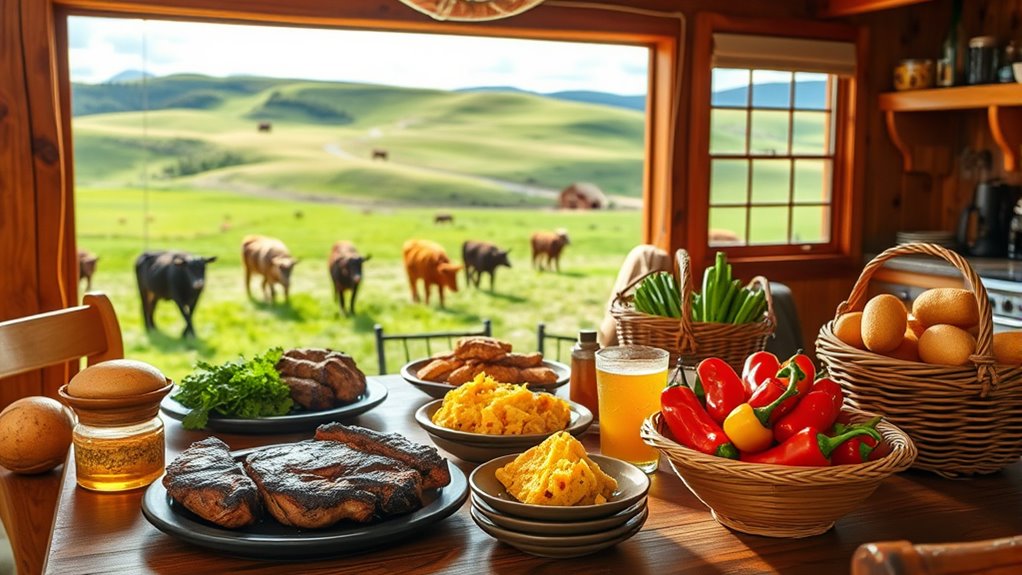
Agriculture and ranching form the backbone of Colorado’s vibrant culinary scene, directly influencing the flavors and ingredients that define regional cuisine. You’ll find locally raised lamb, bison, and elk on menus, showcasing Colorado’s rich ranching traditions. Seasonal harvests of peaches, cantaloupes, and sweet corn play a essential role in farm-to-table dishes, emphasizing freshness and regional character. Farmers’ markets and festivals celebrate these ingredients, connecting you to the land and its bounty. Sustainable practices are increasingly embraced, ensuring quality and preserving local ecosystems. Filtration systems, including HEPA filters, capture allergens and fine dust, helping maintain a healthy environment in agricultural settings. Whether you’re enjoying a hearty bison burger or savoring fresh peaches, it’s clear that Colorado’s land and livestock are central to its culinary identity. They reflect a deep respect for nature, tradition, and the ongoing pursuit of authentic flavor.
Debunking Myths and Embracing Diversity
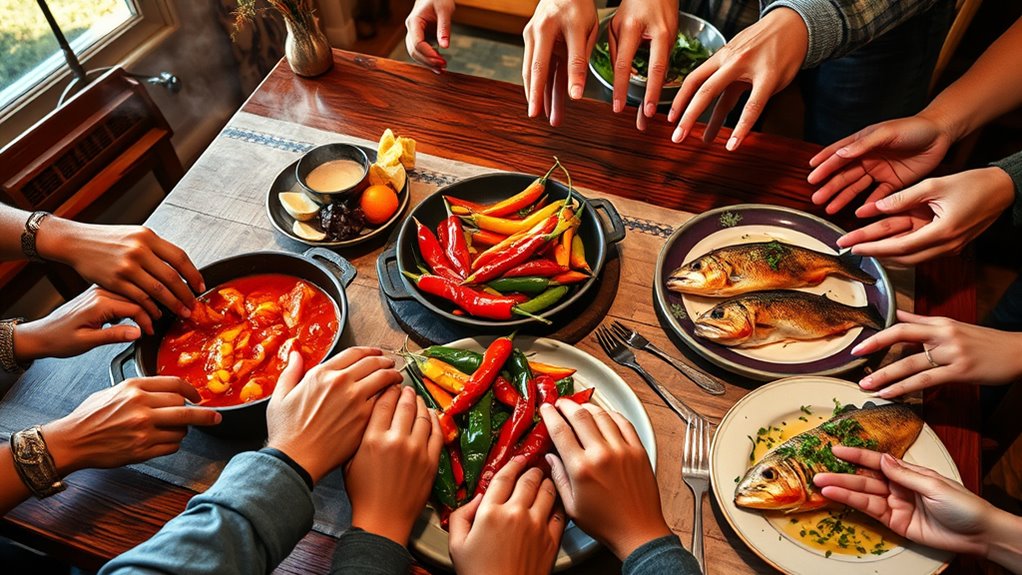
Many people assume Colorado cuisine is limited to hearty, rustic dishes centered around beef or wild game, but this stereotype overlooks its true diversity. You’ll find influences from Native American, Mexican, and immigrant communities shaping the food scene. Colorado’s culinary identity isn’t just about frontier fare; it includes innovative fusion dishes, vegetarian options, and international flavors. Wild game like elk and bison remain prominent, but so do fresh, seasonal produce such as peaches, cantaloupe, and corn. Chefs emphasize farm-to-table practices, blending traditional recipes with modern techniques. The state’s food culture celebrates multicultural roots, showcasing the contributions of miners, ranchers, and immigrants. Proper maintenance and cleaning techniques are essential for preserving equipment quality and ensuring consistent results. By debunking myths, you discover a vibrant, inclusive culinary landscape that reflects Colorado’s rich history and evolving identity.
Frequently Asked Questions
How Has Colorado’s Climate Influenced Its Food Preservation Methods?
Your Colorado climate, with its cold winters and dry air, heavily influences food preservation methods. You’ll find that drying, smoking, and curing are common techniques, especially for meats like bison, elk, and wild game. You might also use canning and pickling to preserve seasonal produce like peaches and corn. These methods help you store food safely through harsh winters, ensuring fresh flavors and local ingredients are available year-round.
What Role Do Modern Dietary Trends Play in Colorado’s Culinary Evolution?
You see modern dietary trends shaping Colorado’s culinary scene through farm-to-table practices, emphasizing local, sustainable ingredients. For example, a Denver restaurant might feature vegetarian, gluten-free dishes using seasonal produce like Palisade peaches or Rocky Ford melons. These trends push chefs to innovate, blending traditional flavors with health-conscious options, reflecting Colorado’s evolving food culture that values fresh, ethical ingredients and diverse dietary preferences.
Are There Any Indigenous Colorado Ingredients Still Used Today?
Yes, you can still find indigenous Colorado ingredients used today. You might enjoy locally sourced wild game like elk and bison, which are traditional staples. Colorado’s farmers markets often feature native crops such as Olathe sweet corn, Palisade peaches, and Rocky Ford cantaloupes. These ingredients connect you to the region’s heritage, showcasing how native flora and fauna continue to influence Colorado’s modern cuisine.
How Do Colorado’s Ethnic Communities Preserve Their Culinary Traditions?
You can see Colorado’s ethnic communities preserve their culinary traditions by passing down recipes through generations, celebrating festivals, and maintaining authentic eateries. They often use traditional ingredients like Mexican chiles, Native American grains, or European spices. Community events, cultural centers, and family gatherings serve as lively platforms for sharing these dishes, ensuring their culinary heritage stays vibrant. This ongoing dedication keeps their unique food customs alive in Colorado’s diverse culinary landscape.
What Sustainable Practices Are Most Common Among Colorado Chefs?
You’ll find Colorado chefs embrace sustainability by prioritizing farm-to-table practices, sourcing locally grown produce and meats like bison and lamb. They combine traditional hunting with modern sustainable farming, reducing waste and supporting regional farmers. While some use innovative techniques like composting and water conservation, others focus on seasonal menus that highlight peak ingredients. This blend of old and new guarantees responsible practices that protect Colorado’s land and culinary heritage.
Conclusion
You’ve explored Colorado’s enthralling culinary canvas, where history, harvest, and heritage harmonize. Embrace the evolving essence of its eclectic eats, and let the diverse dishes delight your taste buds. Remember, the true thrill lies in honoring traditions while boldly blending new flavors. Savor the story behind every bite, and keep celebrating Colorado’s colorful culinary journey — a tapestry of tastes that transforms tradition into tomorrow.