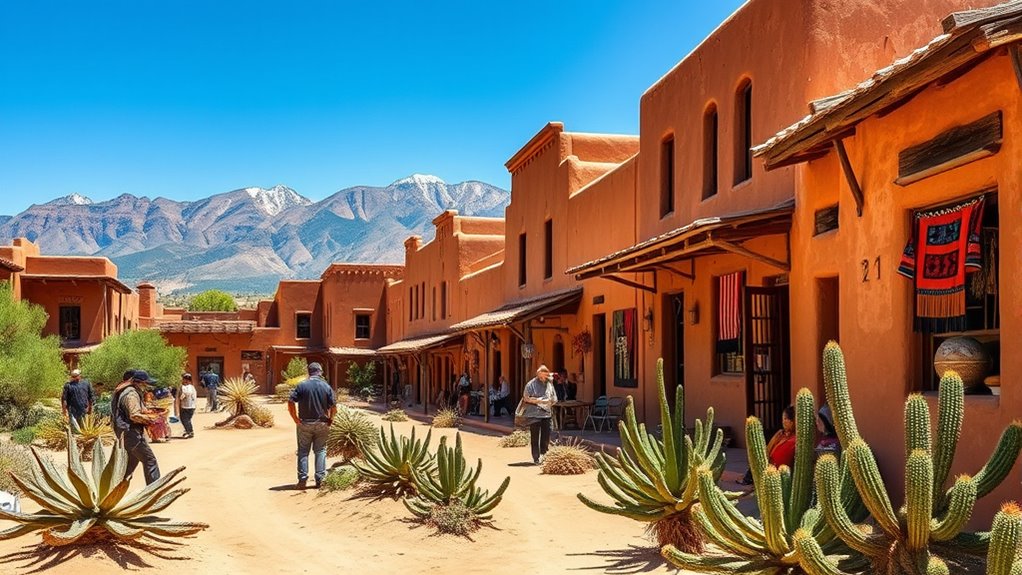

Discover how New Mexico’s history blends indigenous roots, Spanish exploration, and American statehood into a vibrant, multicultural identity. You’ll see how tribes like the Pueblo, Navajo, and Apache influenced the land through centuries of resilience, craft, and resistance, especially with events like the Pueblo Revolt. Spanish missions and architecture showcase centuries of cultural exchange, while festivals celebrate Native, Hispanic, and Anglo traditions. Uncover these stories and more as you explore New Mexico’s rich heritage.
Key Takeaways
- Indigenous peoples such as Pueblo, Navajo, and Apache tribes inhabited New Mexico for thousands of years, shaping its cultural identity.
- Spanish explorers established missions blending European and indigenous architecture, influencing local traditions and community life.
- The Pueblo Revolt of 1680 was a major indigenous resistance event that preserved native culture and autonomy.
- New Mexico’s history includes Mexican governance and U.S. statehood in 1912, creating a diverse cultural heritage.
- Festivals, crafts, and architecture reflect a fusion of Native American, Spanish, and Anglo traditions, celebrating multicultural heritage.
Indigenous Roots and Early Inhabitants
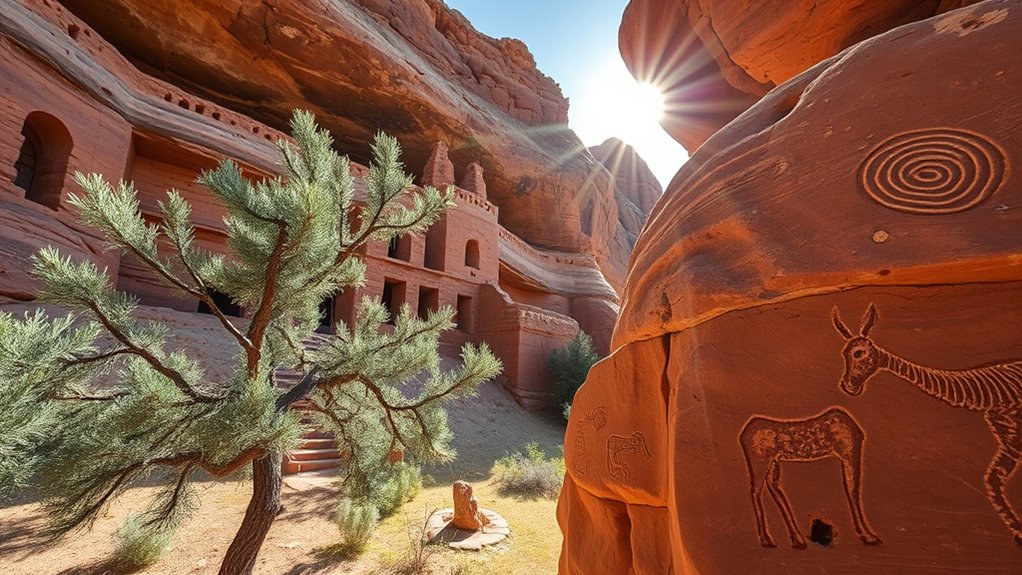
Have you ever wondered who first called New Mexico home? Long before European settlers arrived, Indigenous peoples lived in the region for thousands of years. The Pueblo, Navajo, Apache, and other tribes thrived here, leaving a rich cultural legacy. Evidence of human presence dates back to around 25,000 BC, showcasing a deep history of adaptation and resilience. These groups developed complex societies, built pueblos, and created traditions that still influence the area today. They fiercely defended their land and culture through revolts like the Pueblo Revolt of 1680. You can still see their influence in local art, language, and customs. Their history forms the foundation of New Mexico’s identity, reminding you of a diverse and enduring heritage that predates European contact by millennia. Additionally, their spiritual practices and cultural symbolism continue to be integral to the region’s identity today.
Spanish Colonial Foundations and Missions
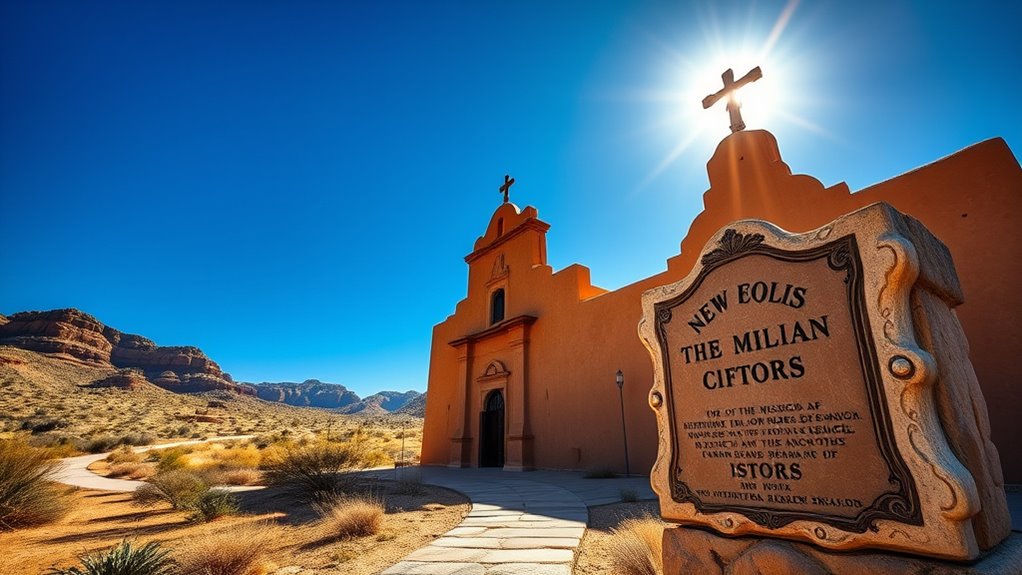
Spanish missions in New Mexico showcase a variety of architecture styles that reflect both European and indigenous influences. These structures served as centers for religious and cultural exchange, shaping the region’s identity. As you explore these missions, you’ll notice how their design and purpose reveal the deep connection between faith and community life. Additionally, these missions often incorporated local building techniques, blending European construction methods with indigenous craftsmanship to create unique architectural forms.
Mission Architecture Styles
Mission architecture in New Mexico reflects a distinctive blend of Spanish colonial design principles, emphasizing simplicity, durability, and harmony with the environment. You’ll notice thick adobe walls that keep interiors cool in summer and warm in winter, showcasing the importance of local materials. Flat or gently sloping roofs, often made of wooden beams covered with clay, help manage the arid climate. You’ll see bell towers or campaniles, which serve both functional and aesthetic purposes, and simple façades with minimal ornamentation, highlighting practicality. Courtyards and plazas are central, fostering community and reflection. Overall, these missions combine sturdy construction with elegant, straightforward designs, embodying the Spanish colonial spirit of resilience and a deep connection to the land.
Religious and Cultural Influence
The foundations of New Mexico’s religious and cultural landscape were shaped profoundly by the arrival of Spanish missionaries, who established missions to spread Christianity and solidify Spanish influence. You can see their impact in historic mission churches like San Miguel in Socorro and San Francisco de Asís in Ranchos de Taos, which blend Spanish architecture with indigenous craftsmanship. These missions served as centers of religious, cultural, and social life, often built atop indigenous sites. Missionaries introduced new agricultural techniques, art, and language, leaving lasting marks on local communities. Over time, these religious institutions became symbols of cultural resilience for Native Americans and Hispanos alike, shaping traditions, festivals, and identities that endure today. Their influence remains central to New Mexico’s cultural heritage.
The Pueblo Revolt and Indigenous Resistance

The Pueblo Revolt of 1680 was a powerful act of indigenous resistance against Spanish rule, as Pueblo peoples united to reclaim their land and culture. This uprising temporarily expelled the Spanish settlers, showing their resilience and desire for autonomy. Their legacy continues to influence Native identity and resistance today. The revolt is often remembered as a significant event in indigenous resistance history, highlighting the enduring strength of Native communities.
Pueblo Uprising of 1680
Have you ever wondered what sparked one of the most significant indigenous uprisings in North American history? The Pueblo Revolt of 1680 was fueled by Spanish efforts to suppress Pueblo religious practices, impose Christianity, and control local governance. Tensions grew as Spanish settlers forced labor, suppressed native traditions, and exploited resources. Facing increasing unrest, Pueblo leaders united to resist Spanish rule. On August 10, 1680, they launched a coordinated attack, destroying churches, killing Spanish colonists, and reclaiming their homeland. Over 10 days, they expelled the Spanish from New Mexico, establishing a brief period of Pueblo independence. This uprising challenged colonial authority, highlighted indigenous resilience, and remains a powerful symbol of resistance and cultural preservation. The uprising’s significance also lies in its role as a catalyst for future indigenous resistance movements across North America.
Indigenous Resilience and Legacy
The Pueblo Revolt of 1680 stands as a powerful affirmation to Indigenous resilience in New Mexico’s history. You see, Pueblo peoples temporarily expelled Spanish settlers, reclaiming their land and culture. This act of resistance showed their strength and determination to preserve traditions despite colonization pressures. Today, their legacy continues through language, art, and ceremonies that honor their ancestors. To visualize their resilience, consider this table:
| Aspect | Significance | Example |
|---|---|---|
| Cultural Practices | Preserving traditions | Kachina dances |
| Language | Maintaining identity | Tiwa and other Pueblo languages |
| Art | Expressing stories and beliefs | Pottery and murals |
| Community | Strength through unity | Pueblo councils |
Understanding how Indigenous wellness practices integrate traditional healing methods highlights their ongoing commitment to holistic health. Your understanding of their resilience underscores their essential role in New Mexico’s enduring cultural fabric.
Transition From Spanish to Mexican and U.S. Control

As Mexico gained independence from Spain in 1821, New Mexico shifted from Spanish to Mexican control, becoming part of the newly formed nation. You now find yourself in a land where Mexican governance introduces new laws, trade practices, and cultural influences. The region remains sparsely populated, with Pueblo peoples maintaining their traditions despite changing authorities. Over the next two decades, tensions grow as Mexican authorities assert more control, but local communities retain their unique identities. In 1848, the Treaty of Guadalupe Hidalgo ends the Mexican-American War, transferring New Mexico to U.S. control. You witness a shift in power structures, property rights, and citizenship status, as the region begins integrating into the expanding United States while still preserving its diverse cultural roots. Understanding the regional legal resources available can help navigate these complex changes.
Path to Statehood and Territorial Challenges
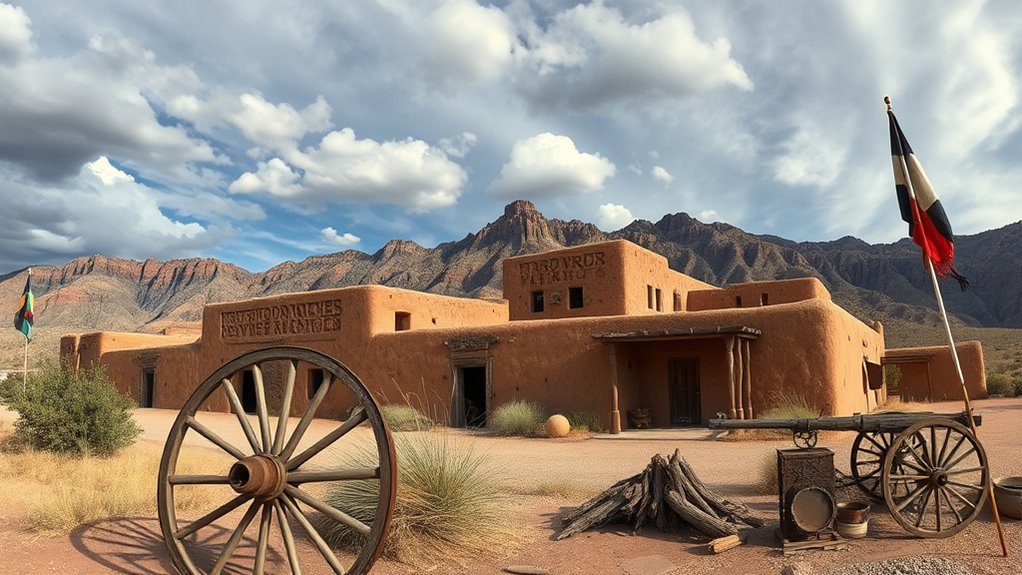
Negotiating its path to statehood, New Mexico faced numerous challenges rooted in political, social, and economic tensions. A constitutional convention in 1850 proposed an anti-slavery constitution, but southern opposition delayed statehood. The territory remained under U.S. control for over 60 years, as industries like mining and railroads preferred territorial status for tax benefits. Attempts to merge with Arizona failed in 1906, prolonging the wait. Despite growing economic development, political disputes and diverse populations complicated the process. It wasn’t until January 6, 1912, that New Mexico finally achieved statehood as the 47th state. This progression marked a significant milestone, allowing New Mexicans to participate fully in the federal government and paving the way for future growth amid ongoing territorial challenges.
Cultural Heritage and Multicultural Influences

You can see New Mexico’s rich cultural heritage in its architecture, blending Spanish colonial and indigenous styles. Celebrations and festivals showcase a vibrant mix of Native, Spanish, and Hispanic traditions that continue to thrive today. These influences shape everything from art and cuisine to everyday life, reflecting the state’s unique multicultural identity. The preservation of traditional crafts and textiles highlights the importance of cultural heritage in maintaining this diverse identity.
Native and Spanish Roots
What makes New Mexico’s cultural heritage so vibrant is its deep roots in both Native American and Spanish traditions. You can see this blend in the architecture, art, and festivals that celebrate both heritages. Native tribes like the Pueblo, Navajo, and Apache have inhabited the land for thousands of years, passing down traditions through generations. When the Spanish arrived in 1598, they introduced Catholicism, new farming techniques, and their own cultural practices, which mingled with indigenous ways. This fusion creates a unique multicultural identity, visible in vibrant ceremonies, colorful textiles, and historic sites. You’ll notice that Native languages, Spanish influences, and local customs continue to shape New Mexico’s identity, honoring its complex history of coexistence and cultural exchange. Additionally, the integration of Hackathons fosters innovation and creative problem-solving within local communities, reflecting the dynamic evolution of its cultural landscape.
Architectural Fusion Styles
Have you ever noticed how New Mexico’s buildings seamlessly blend Spanish colonial, Native American, and Western frontier styles? You’ll see adobe structures with thick walls, rounded edges, and terraced roofs, reflecting Native American craftsmanship. Spanish influences shine through ornate balconies, stucco facades, and decorative ironwork, adding elegance and detail. Western frontier architecture appears in rugged wooden beams, simple log cabins, and frontier-style churches, emphasizing practicality. This fusion creates a unique visual landscape that honors diverse cultural roots. Many historic pueblos and missions combine these elements, showcasing craftsmanship passed down through generations. Additionally, the use of materials ranging from ceramic to recycled products highlights sustainable and creative building practices. You’ll find that this blend isn’t just aesthetic—it’s a living history, embodying centuries of interaction, adaptation, and shared traditions that shape New Mexico’s distinctive identity today.
Cultural Festivals and Traditions
New Mexico’s vibrant festivals and traditions celebrate its rich multicultural heritage, bringing together Native American, Hispanic, and Anglo communities. You’ll experience lively events like the Burning of Zozobra, a Santa Fe tradition, and the Albuquerque International Balloon Fiesta, showcasing colorful hot air balloons. These festivals honor Native American rituals, Spanish religious celebrations, and Anglo pioneers’ customs.
| Festival | Cultural Significance |
|---|---|
| Fiesta de Santa Fe | Spanish colonial and Catholic traditions |
| Gathering of Nations | Native American powwow and cultural pride |
| Zozobra | Community renewal and local folklore |
Architectural Landmarks and Historic Sites

The state of New Mexico is home to a remarkable array of architectural landmarks and historic sites that reflect its rich cultural heritage. You’ll find Santa Fe’s Palace of the Governors, a centuries-old adobe building showcasing Pueblo and Spanish influences. The St. Francis Cathedral, built between 1869 and 1886, features stunning Gothic Revival architecture. Carlsbad Caverns National Park offers natural marvels alongside historic caves used by indigenous peoples. In Albuquerque, the Old Town district preserves adobe structures dating back to the 18th century. The Bandelier National Monument protects Ancestral Pueblo dwellings carved into cliffs. You can explore these sites to experience the blend of Native American, Spanish, and Mexican architecture that tells New Mexico’s story. These landmarks stand as enduring symbols of the state’s diverse history and cultural resilience.
Economic Development and Industry Growth
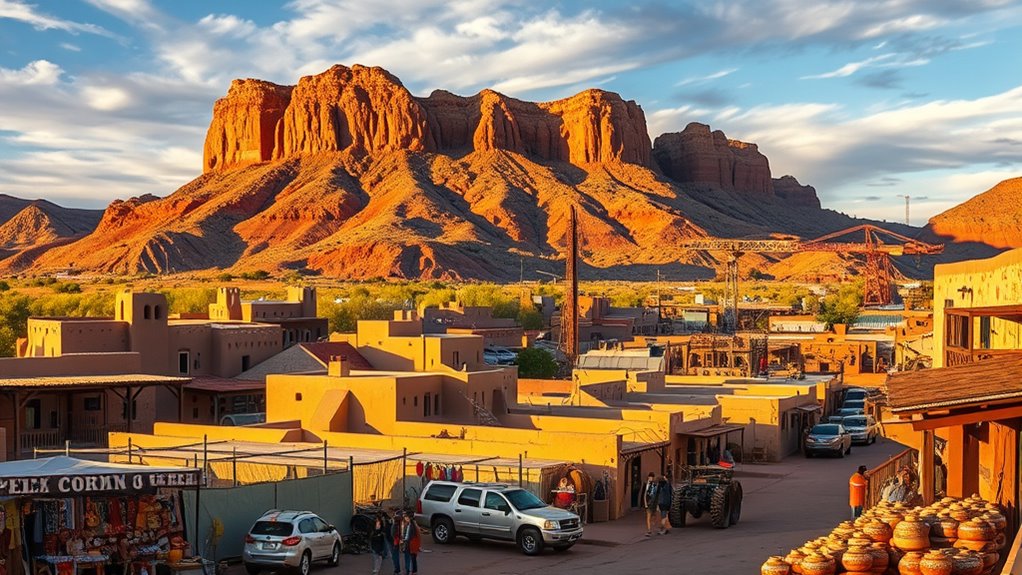
Economic development in New Mexico has historically centered on its abundant natural resources and strategic location. You’ve seen how mining, especially copper from Santa Rita, fueled early growth after the Gadsden Purchase. The arrival of railroads in 1879 opened new trade routes, boosting industry and migration. Agriculture thrived with irrigation methods influenced by Native and Spanish practices. The state’s rugged landscape and diverse population shaped economic decisions on taxes and governance. By the early 20th century, industry and settlement momentum grew, setting the stage for future expansion.
| Industry Sector | Key Contribution |
|---|---|
| Mining | Copper, silver, and other minerals |
| Railroads | Transportation and trade development |
| Agriculture | Irrigation and farming innovations |
Pivotal Events and Historic Milestones
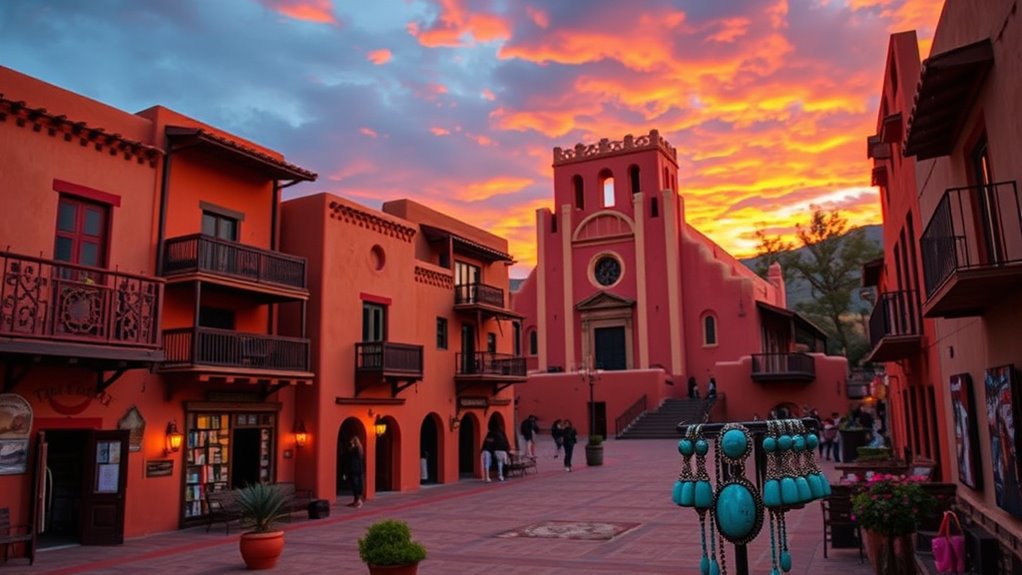
Among the many chapters shaping New Mexico’s history, certain events stand out as turning points that define the state’s identity and legacy. The Pueblo Revolt of 1680 was a major uprising where Pueblo peoples temporarily expelled Spanish settlers, showcasing indigenous resistance. In 1848, the Treaty of Guadalupe Hidalgo transferred New Mexico from Mexico to the United States, marking a shift in sovereignty and opening new opportunities. The arrival of the railroad in 1879 transformed trade and migration, fueling growth. A pivotal milestone was the 1945 Trinity test, the first atomic bomb explosion, which positioned New Mexico at the forefront of scientific innovation. These events, from indigenous resistance to technological breakthroughs, shape New Mexico’s diverse and resilient legacy, anchoring its significance in American history.
Modern Contributions and Cultural Celebrations
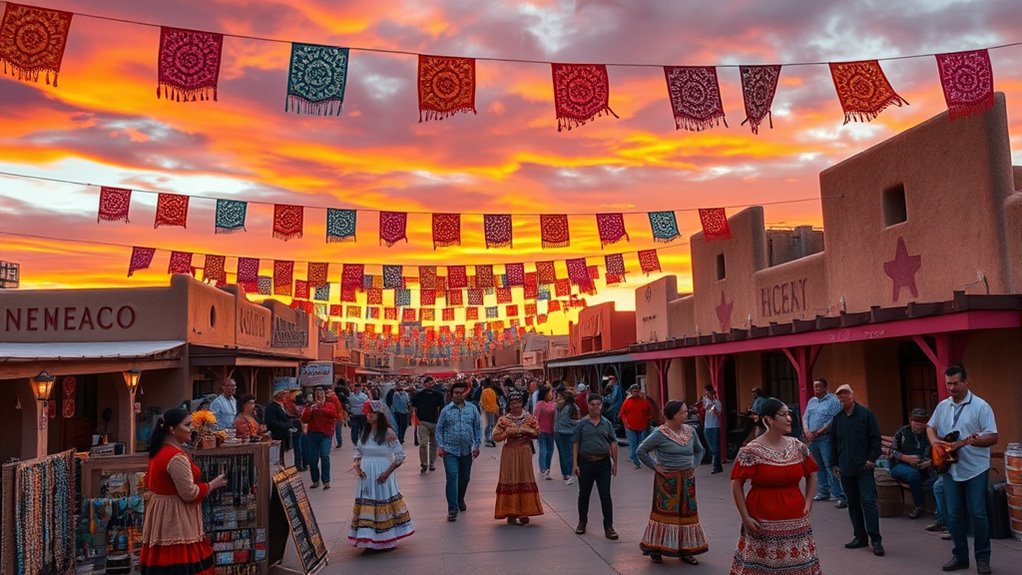
Modern New Mexico shines through its vibrant cultural festivals, innovative contributions to arts and science, and efforts to preserve its diverse heritage. You can experience this through lively celebrations like the Albuquerque International Balloon Fiesta, where colorful hot air balloons fill the sky. Artists continue to push boundaries, blending Native, Hispanic, and contemporary styles in visual arts, ceramics, and jewelry. In science, New Mexico’s Los Alamos National Laboratory advances research that impacts the world, including pioneering work in renewable energy and space exploration. The state also honors its rich history with events like Pueblo Feast Days and the Santa Fe Indian Market, showcasing traditional crafts and performances. These celebrations and innovations reflect New Mexico’s ongoing commitment to its multicultural roots and forward-looking spirit.
Frequently Asked Questions
How Did Native American Cultures Influence New Mexico’s Modern Traditions?
You can see Native American cultures influence New Mexico’s modern traditions through art, festivals, and crafts. You might participate in Pueblo dances, admire intricate pottery, or enjoy traditional foods rooted in indigenous recipes. These cultures also shape local architecture and community celebrations, highlighting their enduring presence. As you experience New Mexico, you’ll notice how Native traditions blend seamlessly with Hispanic and Anglo influences, creating a vibrant, diverse cultural landscape.
What Role Did the Santa Fe Trail Play in Regional Development?
You see, the Santa Fe Trail played a vital role in regional development by serving as a major trade route connecting Missouri to New Mexico. It facilitated the movement of goods, people, and ideas, boosting commerce and settlement in the Southwest. This trail helped establish economic ties, encouraged cultural exchange, and led to the growth of towns along its path, shaping New Mexico’s development into a vibrant frontier region.
How Did the Navajo Long Walk Impact Navajo Communities?
The Navajo Long Walk devastated Navajo communities by forcing them to march 450 miles to a reservation, causing loss of life, land, and cultural ties. You’d see families torn apart, traditions disrupted, and a lasting sense of trauma. This forced relocation weakened Navajo social structures and sovereignty, leaving scars that still affect the community today. It’s a painful chapter that changed Navajo life forever.
What Are the Origins of New Mexico’s Unique Architectural Styles?
You’ll notice that New Mexico’s unique architectural styles blend Spanish colonial, Native American, and Mexican influences. You see this in adobe buildings, which use sun-dried bricks, and in ornate churches like the St. Francis Cathedral. These styles developed through indigenous building techniques, Spanish mission designs, and local materials, creating a distinctive look that reflects the region’s diverse cultural heritage. This architecture celebrates both practicality and artistic expression.
How Has New Mexico Contributed to Scientific Advancements Like the Atomic Bomb?
You should know that New Mexico critically contributed to scientific advancements like the atomic bomb by hosting the Trinity test in 1945. As the site of the first-ever nuclear explosion, it marked a pivotal moment in history. The state’s remote location and scientific facilities made it ideal for testing, and this breakthrough played a vital role in ending World War II and shaping modern nuclear science.
Conclusion
As you explore New Mexico’s rich history, you realize it’s a tapestry woven with resilience and vibrant culture. From ancient pueblos to modern festivals, this land’s story is a declaration to enduring spirit and diverse influences. Like a phoenix rising through centuries of change, New Mexico’s past fuels its bright present. Embrace its legacy, for in its history, you find the heartbeat of a people who refuse to be forgotten.