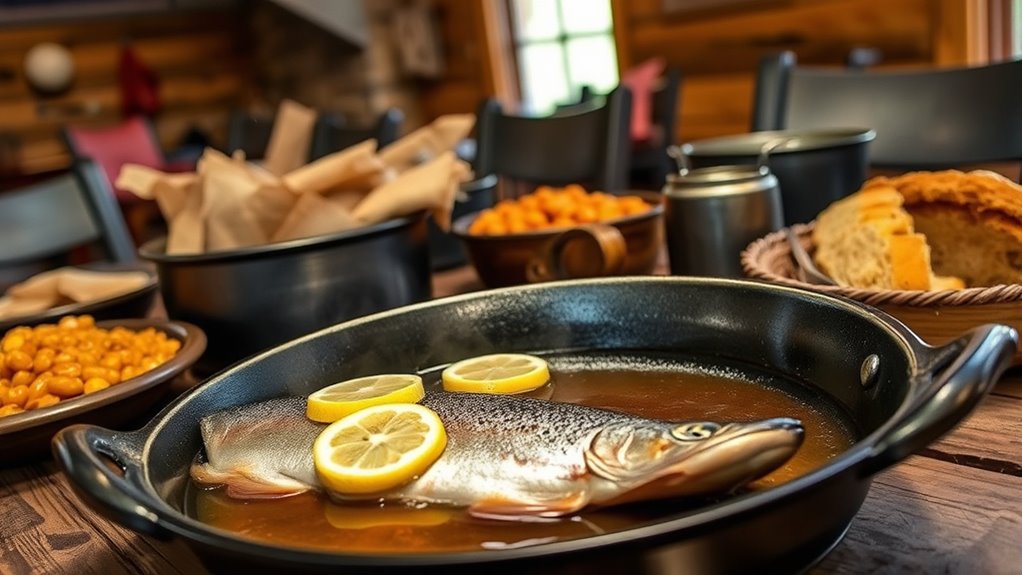

Wyoming’s cuisine reflects its rugged, ranching, and Native American roots. You’ll find hearty dishes using local meats like bison, elk, and beef, often prepared with simple, preservation-inspired methods. Traditional foods like pemmican and chuckwagon staples still influence modern menus, enhanced by cowboy-style barbecues and farm-to-table innovations. Cultural influences from indigenous, Mexican, and European traditions add variety. Explore further to uncover the rich history behind Wyoming’s bold flavors and vibrant food festivals.
Key Takeaways
- Wyoming’s cuisine features traditional meats like bison, elk, and venison, reflecting native hunting practices and ranching heritage.
- Indigenous, Mexican, and European influences shape dishes such as pemmican, tamales, hearty breads, and pickled vegetables.
- Chuckwagon staples like beans, biscuits, and salted meats originate from cattle drive and pioneer culinary traditions.
- Modern farm-to-table practices emphasize local sourcing, sustainable meats, and innovative preparations of regional ingredients.
- Food festivals highlight bold flavors, native berries, and cowboy-style barbecue, celebrating Wyoming’s diverse culinary heritage.
Traditional Ingredients and Dishes of Wyoming
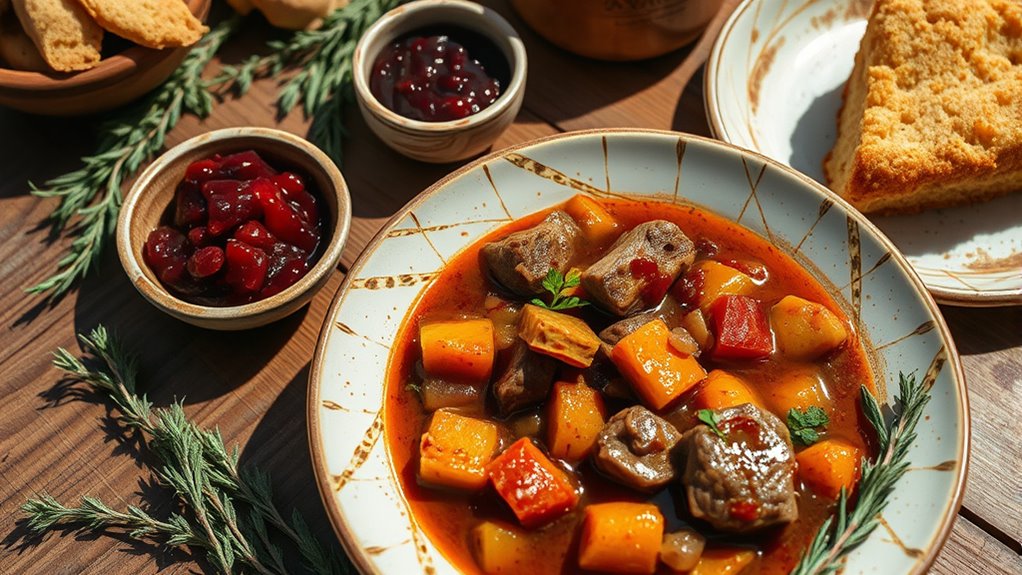
Wyoming’s traditional ingredients are deeply rooted in its rugged landscape and frontier history. You’ll find bison and game meats like elk and venison at the heart of many dishes, reflecting the state’s hunting traditions. Chuckwagon cooking brought hearty staples such as beans, biscuits, and salted meats, which sustained cattle drivers. Western grilling often features lamb chops and beef, seasoned with herbs like rosemary and garlic. Native foods like pemmican—made from dried bison, berries, and fat—highlight survival techniques of indigenous peoples. Today, modern Wyoming cuisine emphasizes farm-to-table practices, using locally sourced ingredients to craft hearty, authentic dishes. These ingredients form the foundation of Wyoming’s culinary identity, celebrating its rugged, frontier spirit through rich, simple flavors. Additionally, understanding regional resources and tools can enhance the appreciation of Wyoming’s unique culinary heritage.
Cultural Influences Shaping Wyoming’s Cuisine
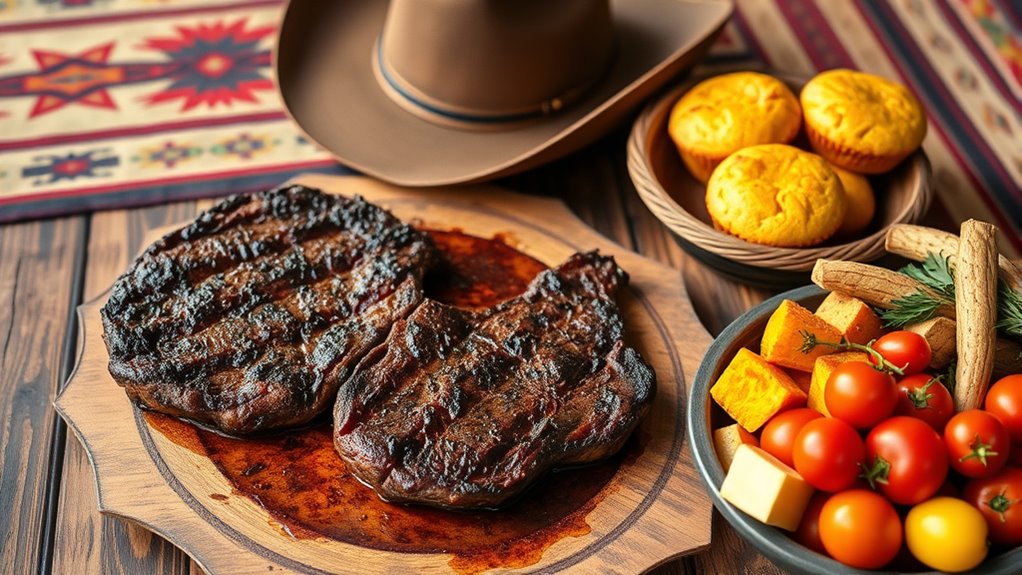
Cultural influences have profoundly shaped Wyoming’s culinary landscape, blending indigenous traditions with immigrant and frontier foodways. You’ll notice Native American practices, like using bison and foraged plants, still influence dishes today. Mexican cuisine has added favorites like tamales and tacos, reflecting a vibrant cultural presence. European settlers, especially Scandinavian and German immigrants, introduced hearty breads, sausages, and pickled vegetables that remain part of Wyoming’s food scene. The frontier era left a legacy of simple, durable meals like sourdough bread and preserved meats, still enjoyed in modern times. Ranching heritage emphasizes beef and lamb, central to local cuisine. Overall, Wyoming’s food culture is a mosaic, shaped by diverse communities and historical frontier life, creating a unique culinary identity rooted in tradition and adaptation. Regional flavors continue to evolve, influenced by contemporary culinary trends and local ingredients.
Historical Culinary Practices and Legacy
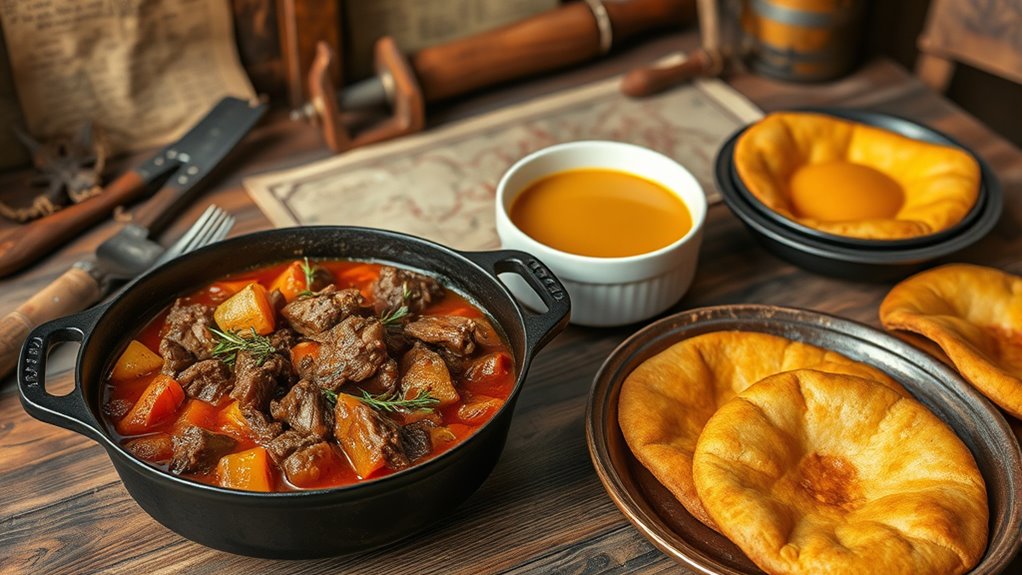
Historical culinary practices in Wyoming are rooted in practicality and survival, shaping the hearty, straightforward dishes that defined frontier life. You’ll find that meals centered around preserving resources, like salted meats and dried foods such as pemmican, were essential for enduring harsh winters and long cattle drives. Chuckwagon cooking introduced simple yet filling staples like beans, biscuits, and salted meats, fueling cowhands during cattle drives across open plains. Native American traditions heavily influenced early cuisine, with hunting game animals like bison and elk, and gathering wild plants. Pioneer settlers relied on durable, easy-to-make foods that could sustain them on rugged journeys. These practices created a legacy of robust, resourceful eating habits that continue to influence Wyoming’s culinary identity today. Additionally, the use of natural ingredients and traditional preservation methods remains a hallmark of Wyoming’s culinary heritage.
Modern Innovations and Farm-to-Table Movement
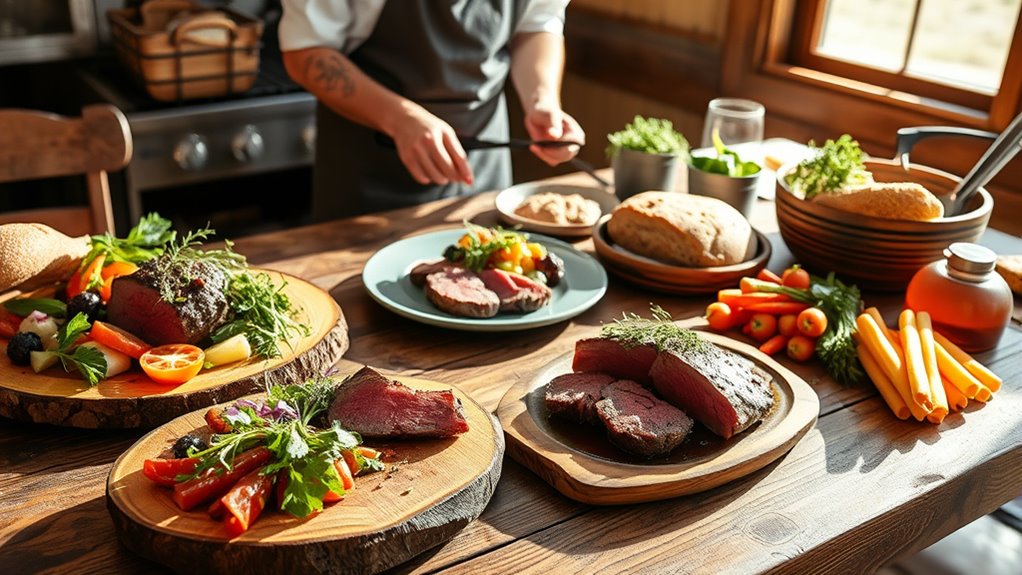
Today, Wyoming’s culinary scene embraces innovation by blending traditional ingredients with modern techniques. You’ll find chefs transforming classic bison and game meats into inventive dishes, emphasizing freshness and local sourcing. Farm-to-table restaurants focus on supporting local farmers and ranchers, ensuring ingredients are seasonal and sustainable. You might enjoy a locally raised lamb paired with heirloom vegetables or a contemporary twist on pioneer recipes using native berries and grains. Many eateries incorporate sustainable practices, reducing waste and carbon footprints. Food festivals celebrate Wyoming’s rich culinary heritage while spotlighting new creations. This movement not only honors traditional flavors but also pushes culinary boundaries, making Wyoming’s cuisine vibrant, eco-conscious, and deeply rooted in community. Your dining experience becomes a connection to the land and its evolving food culture.
Regional Flavors and Food Festivals
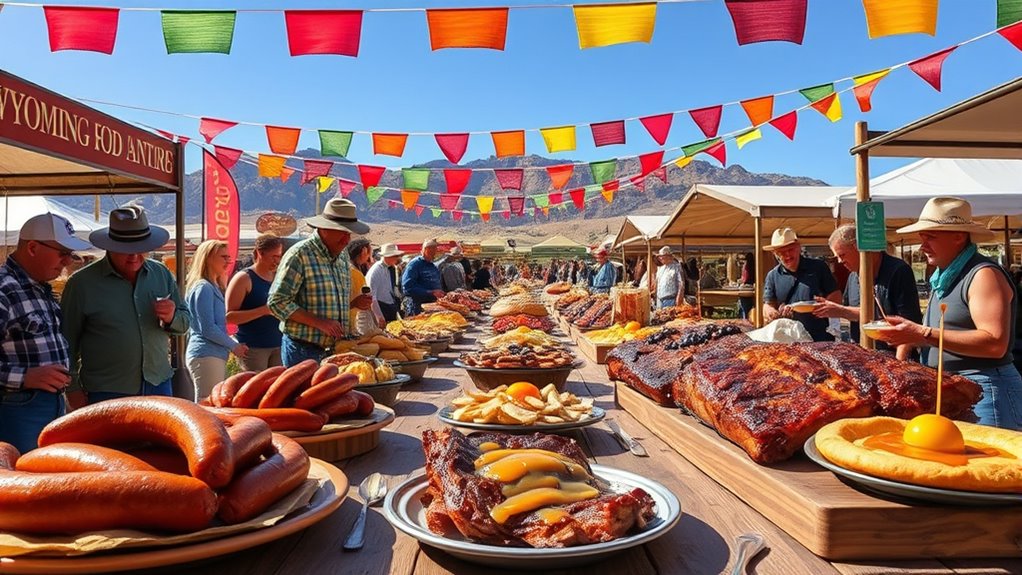
Wyoming’s rich regional flavors come alive through vibrant food festivals that celebrate the state’s culinary heritage. When you attend these events, you experience the bold tastes of bison, elk, and locally sourced meats, often featured in hearty dishes like chili and stews. Festivals like the Wyoming State Fair and local rodeo events highlight traditional western foods, including cowboy-style barbecue and chuckwagon favorites. You’ll also find berry pies made with chokecherries and huckleberries, showcasing native ingredients. These festivals foster community and preserve culinary traditions while embracing modern twists. As you explore, you get a taste of Wyoming’s diverse cultural influences—Native American, Mexican, and European—that blend to create a unique culinary identity. Food festivals are a celebration of Wyoming’s rugged flavors and enduring food heritage. Regional food traditions are often passed down through generations, adding depth and authenticity to the local cuisine.
Frequently Asked Questions
How Do Native American Culinary Traditions Influence Wyoming’s Current Cuisine?
You can see Native American culinary traditions influence Wyoming’s current cuisine through ingredients and cooking methods. You might find dishes featuring bison, elk, and foraged plants, reflecting indigenous hunting and gathering practices. Traditional foods like pemmican still appear in modern recipes, and native flavors often inspire local chefs. These influences blend seamlessly with other cultural elements, creating a unique, rich culinary scene rooted in Wyoming’s indigenous heritage.
What Are Some Lesser-Known Native Ingredients Used in Wyoming Dishes?
Imagine the wild Wyoming landscape, teeming with hidden treasures; lesser-known native ingredients like wild onions, prairie turnips, and chokecherries come to mind. You’ll find these used in traditional dishes, adding bold flavors and vibrant colors. Native Americans also incorporated native wild herbs like sage and juniper berries, which bring earthy, aromatic notes. These ingredients, like whispers of the land’s ancient past, continue to flavor Wyoming’s modern culinary tapestry.
How Has Wyoming’s Ranching History Impacted Contemporary Food Sourcing?
Wyoming’s ranching history heavily influences contemporary food sourcing by emphasizing locally raised beef, lamb, and bison for restaurants and markets. You’ll find many chefs prioritizing farm-to-table practices, sourcing ingredients directly from nearby ranches. This tradition guarantees freshness and supports local economies. You’re encouraged to seek out establishments that partner with regional producers, helping sustain Wyoming’s ranching legacy and promoting sustainable, authentic dining experiences rooted in the state’s ranching heritage.
What Traditional Cooking Methods Are Still Used in Wyoming Today?
You still use traditional methods like chuckwagon cooking, which was crucial for cowhands on cattle drives, to prepare hearty meals today. Grilling over open flames remains popular, especially for steaks and game meats, preserving the rugged, outdoorsy spirit. Pemmican, once essential for survival, is now a treasured historical recipe. These methods connect you to Wyoming’s frontier past, honoring resilience and simplicity in every meal you cook.
Are There Any Unique Regional Desserts Specific to Wyoming?
You’ll find Wyoming’s unique regional desserts highlighting native berries and pioneer flavors. Huckleberry and chokecherry pies are popular, showcasing local fruits. You might also enjoy homemade scones and fry bread, inspired by Native American and frontier traditions. These desserts often feature simple ingredients but deliver hearty, nostalgic flavors. Visiting local festivals or bakeries lets you experience Wyoming’s sweet side, celebrating its rich culinary history with a modern twist.
Conclusion
As you explore Wyoming’s cuisine, you’ll find a tapestry woven with rugged tradition and innovative spirit. From hearty steaks to vibrant food festivals, this state’s flavors are as wild and vast as the plains themselves. Embrace its culinary journey, where every bite tells a story of history, culture, and fresh farm treasures. Once you taste Wyoming’s food, you’ll realize it’s more than a meal—it’s an unforgettable adventure that’ll leave your taste buds forever changed.