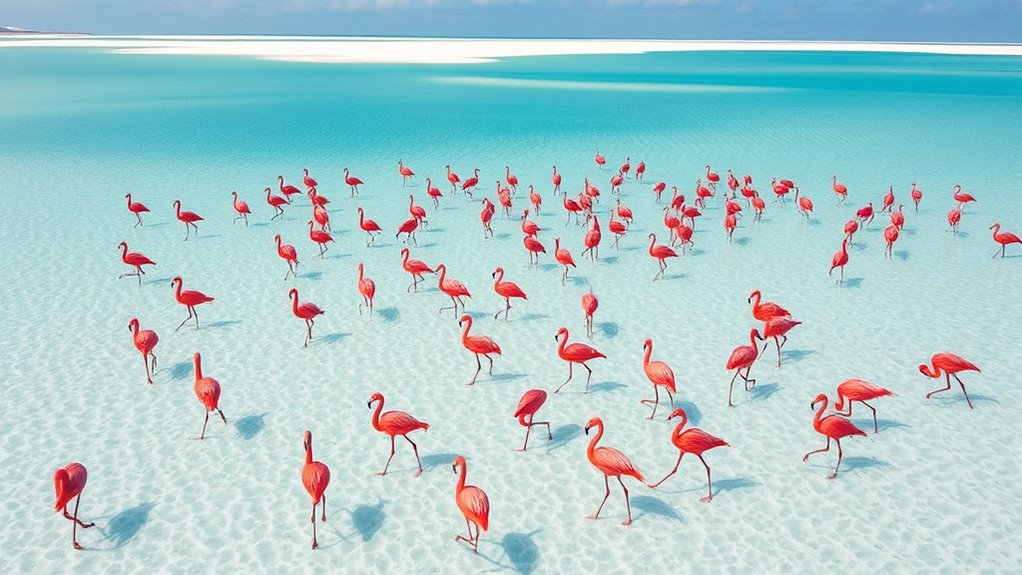

You can see Curaçao’s flamingo lagoons shine with vibrant pink water due to high salt levels and unique microorganisms like algae and brine shrimp that thrive there. These tiny organisms produce carotenoid pigments, giving the water its striking color. Flamingos have adapted physically and behaviorally to survive in these extreme conditions by feeding on these salt-tolerant creatures. To uncover how this incredible ecosystem sustains itself, there’s more fascinating science behind their remarkable harmony.
Key Takeaways
- The pink waters result from carotenoid pigments produced by algae and brine shrimps thriving in high-salinity conditions.
- Flamingos have specialized beaks and long legs adapted for filter-feeding on salt-tolerant microorganisms.
- High salinity creates an inhospitable environment for many predators, supporting flamingo survival.
- Microorganisms like algae produce carotenoids, which give the lagoon its vibrant pink coloration.
- The ecosystem’s unique chemical and biological adaptations exemplify nature’s resilience in extreme environments.
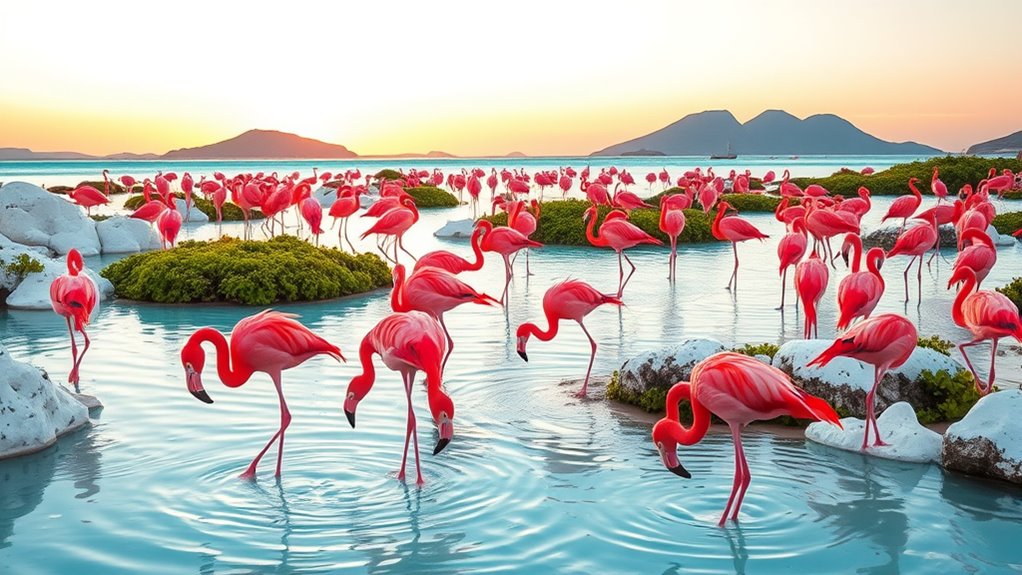
Curaçao’s iconic flamingo lagoons captivate visitors with their vibrant pink waters and graceful birds, but behind this stunning scenery lies a fascinating scientific balance. The striking pink hue of the lagoons results from a complex interplay of ecological adaptations and saltwater chemistry, which together create the perfect environment for flamingos to thrive. As you observe these birds wading through the shallow waters, you’re witnessing a remarkable example of how species adapt to their surroundings to survive and flourish.
Flamingos have evolved unique ecological adaptations that allow them to thrive in hypersaline environments like Curaçao’s lagoons. Their specialized beaks are designed for filter-feeding, enabling them to extract algae, crustaceans, and brine shrimps from the water—food sources rich in carotenoid pigments. These pigments are responsible for the birds’ vibrant pink coloration. The birds’ long legs and necks also serve ecological purposes, allowing them to access shallow waters where they find their food, while avoiding predators and competing species. This behavioral adaptation ensures they can exploit a niche that few others can, maintaining their population despite the harsh conditions.
Flamingos’ unique beaks and long legs help them thrive in hypersaline lagoons, feeding on carotenoid-rich algae and crustaceans.
Saltwater chemistry plays a vital role in shaping the lagoon environment. The high salinity levels in these lagoons result from intense evaporation, which concentrates salts and other minerals in the water. This chemical makeup creates an inhospitable environment for many organisms, but flamingos and a select few microorganisms have adapted to thrive under these conditions. The algae and brine shrimps that flourish here are specially adapted to tolerate the high salt content, and they, in turn, attract flamingos that feed on them. The carotenoids in these organisms give the water its distinctive pink hue, which the flamingos then absorb through their diet, reinforcing their coloration. Saltwater chemistry influences which species can survive and thrive, shaping the ecosystem’s unique composition.
This delicate balance between ecological adaptations and saltwater chemistry sustains the entire ecosystem of the lagoons. The high salinity acts as a natural barrier, limiting predators and competing species, which helps preserve the food sources that flamingos rely on. Meanwhile, the birds’ adaptations allow them to exploit this niche efficiently, maintaining their populations and the lagoon’s vibrant appearance. When you stand by these lagoons, you’re witnessing the outcome of millions of years of evolution, where ecological ingenuity and chemical conditions combine to create a unique habitat. It’s a vivid reminder of nature’s ability to adapt and thrive in even the most extreme environments.
saltwater lagoon snorkeling gear
As an affiliate, we earn on qualifying purchases.
As an affiliate, we earn on qualifying purchases.
Frequently Asked Questions
How Do Flamingos Maintain Their Vibrant Pink Color?
You might wonder how flamingos keep their vibrant pink color. It’s mainly due to their diet coloration, as they consume foods rich in carotenoids. These pigments are absorbed through their digestive system and deposited in their feathers, skin, and beaks. The more carotenoid-rich food they eat, the brighter their pink hue becomes. So, their stunning appearance directly depends on their diet and efficient carotenoid absorption.
What Is the Lifespan of a Flamingo in Curaçao?
You might wonder how long flamingos live in Curaçao. Typically, they reach around 20 to 30 years, thanks to their diet habits and breeding behavior. Their diet rich in carotenoids helps maintain vibrant feathers, while their breeding habits ensure the population’s continuity. In captivity, some live even longer, but in the wild, natural factors like food availability and predators influence their lifespan.
Are There Any Predators Threatening the Flamingo Populations?
You might wonder about predator threats to Curaçao’s flamingos. While natural predators like large birds and raccoons pose some risk, human activities are more significant. Conservation efforts focus on protecting their habitats and reducing poaching, helping to safeguard these beautiful birds. By supporting these initiatives, you contribute to maintaining healthy flamingo populations and minimizing predator threats. Your awareness and actions play a crucial role in their ongoing protection.
How Do Flamingos Communicate Within the Lagoons?
Imagine you’re watching a silent film, but in the lagoons, flamingos communicate vividly. You’d notice their bird vocalizations—high-pitched calls and grunts—and visual signals, like head bobbing and wing displays, which help establish dominance or attract mates. These methods are essential for maintaining flock cohesion and social structure. Their communication is a lively, colorful exchange that keeps the flamingo community connected amid the shimmering waters.
Can Flamingos Survive in Other Environments Besides Lagoons?
You wonder if flamingos can survive in environments other than lagoons. Thanks to their flamingo adaptability, they can thrive in alternative habitats like salt flats, shallow lakes, and coastal lagoons. These birds have specialized beaks and feet that help them find food in different conditions. While lagoons are ideal, their ability to adjust to various environments shows their resilience and flexibility in survival strategies.
bird watching binoculars for flamingos
As an affiliate, we earn on qualifying purchases.
As an affiliate, we earn on qualifying purchases.
Conclusion
As you explore Curaçao’s flamingo lagoons, you realize they’re nature’s delicate masterpiece, perfectly balanced and bursting with life. The vibrant pinks and shimmering waters tell a story of chemistry and climate working in harmony. Just like a symphony, each element plays its part, creating a stunning spectacle that leaves you in awe. These lagoons are a reminder that nature’s science is both intricate and beautiful, forever painting scenes you’ll never forget.
salt tolerance algae supplements
As an affiliate, we earn on qualifying purchases.
As an affiliate, we earn on qualifying purchases.
As an affiliate, we earn on qualifying purchases.