
To work remotely as a digital nomad in the USA, explore visa options like the B1/B2 for short trips or the O-1 for individuals with extraordinary achievements. You’ll need to follow application steps including filling out the DS-160 form, gathering proof of remote work and finances, and attending an embassy interview. Ensuring proper health insurance, legal compliance, and organized documentation is essential. If you keep going, you’ll discover details to help you navigate the US immigration process smoothly.

Get travel and outdoor gear delivered free — and shop member deals
- Fast, free delivery on millions of items
- Access to Prime Big Deal Days deals on October 6–7
- Prime Video, Amazon Music and more included
Key Takeaways
- Explore suitable US visas for digital nomads, such as B1/B2 for short stays or O-1 for extraordinary ability.
- Prepare essential documents like proof of remote work, bank statements, and health insurance for visa applications.
- Understand financial and legal responsibilities, including US tax filing and maintaining proper documentation.
- Secure comprehensive health insurance covering emergencies, hospitalization, and repatriation during your stay.
- Research practical living tips, including reliable internet, accommodation options, and local customs to ensure a smooth experience.
portable WiFi hotspot for travelers
As an affiliate, we earn on qualifying purchases.
As an affiliate, we earn on qualifying purchases.
Common Visa Options for Digital Nomads in the US

There are mainly two visa options that digital nomads can consider when staying in the US: the B1/B2 visa and the O-1 visa. The B1/B2 visa is primarily for tourism and short-term business visits, allowing you to stay up to six months but not work legally. It’s suitable if your activities are limited to sightseeing or attending meetings. The O-1 visa is for individuals with extraordinary ability in their field, such as arts, sciences, or business. It requires proof of significant achievements and recognition. While the O-1 allows a longer stay and some work-related activities, it’s more complex to obtain. Understanding these options helps you choose the right visa based on your purpose and planned duration in the US. Additionally, knowing about visa eligibility requirements ensures you select the most appropriate pathway for your stay.
As an affiliate, we earn on qualifying purchases.
Steps to Apply for a US Digital Nomad Visa

To start your US digital nomad visa application, you’ll need to fill out the DS-160 form online accurately. Next, gather all supporting documents like proof of employment, bank statements, and health insurance to strengthen your case. Additionally, understanding the application process for home-based work visas can help you prepare effectively. Finally, schedule an interview at the US embassy or consulate and be prepared to discuss your intentions and submit your documents in person.
Complete Application Form
Ready to start your US digital nomad journey? Completing the application form is your first step. Here’s how to do it efficiently:
- Fill out the DS-160 online form accurately, ensuring all personal and travel details match your passport.
- Upload a clear, recent passport-sized photo following the specified guidelines.
- Review your entries carefully before submitting to avoid errors that could delay processing.
- Print the confirmation page; you’ll need it for your visa interview and to track your application status.
- Utilize the security features of the application platform to ensure your information remains protected throughout the process.
Make sure your information is truthful and consistent across all documents. Double-check for typos, and keep digital copies handy. Completing this step correctly sets a smooth foundation for the rest of your visa application process.
Gather Supporting Documents
Gathering supporting documents is a crucial step in your US digital nomad visa application, as it proves your eligibility and authenticity. You’ll need to compile essential paperwork, including your valid passport, completed DS-160 form, proof of remote employment or freelance work outside the US, and bank statements from the last 3 to 6 months showing sufficient income or savings. Health insurance coverage that meets US requirements is also necessary. Additionally, gather documents demonstrating your financial solvency, such as payslips, contracts, or tax returns. Make certain all documents are clear, up-to-date, and, if required, translated or notarized according to embassy rules. Organizing these materials carefully will streamline your application process and strengthen your case during the review. Incorporating proper documentation can also help alleviate stress and build confidence throughout the process.
Schedule and Attend Interview
After assembling your supporting documents, the next step is to schedule your visa interview. You’ll need to complete the online DS-160 form and choose an appointment at the US embassy or consulate. To streamline the process, follow these steps:
- Visit the embassy’s appointment website and select your preferred date.
- Pay the required visa application fee.
- Confirm your appointment details and print the appointment confirmation.
- Gather all necessary documents, including your passport, DS-160 confirmation, and supporting paperwork.
- Remember to review relationship dynamics to ensure open and honest communication during your interview.
Make sure to arrive early on your scheduled date with all documents ready. During the interview, answer questions honestly and confidently. Once approved, your visa will be processed, and you’ll be ready for your US adventure.
laptop backpack with USB charging port
As an affiliate, we earn on qualifying purchases.
As an affiliate, we earn on qualifying purchases.
Financial and Income Requirements for US Stays

To stay in the US as a digital nomad, you’ll need to demonstrate that you can financially support yourself without relying on local resources. Typically, proof of income or savings equivalent to $2,000 to $5,000 per month is required, depending on the visa type. You should prepare bank statements from the last three to six months, along with payslips, contracts, or tax returns that verify your earnings. It’s essential to show you can sustain your lifestyle without employment or welfare in the US. International health insurance covering medical emergencies is often mandatory, ensuring you’re protected against high healthcare costs. Additionally, demonstrating knowledge of essential oils for health and well-being can support your overall wellness during your stay. Keep these documents organized and ready for review, as they are vital for your visa application and approval process.
As an affiliate, we earn on qualifying purchases.
Legal and Tax Responsibilities for Remote Workers
When working remotely in the US, you must understand your legal and tax obligations to avoid potential issues. Ignoring these responsibilities can lead to fines, visa problems, or even deportation. Here’s what you need to keep in mind:
- File US tax returns annually regardless of your residence, reporting worldwide income.
- Claim foreign income exclusions if eligible, using forms like IRS Form 2555.
- Maintain proper documentation: contracts, bank statements, and proof of remote work.
- Comply with visa conditions, ensuring your stay aligns with your visa type, and avoid unauthorized employment.
Staying compliant helps you enjoy your stay without legal complications, while also fulfilling your tax responsibilities as a remote worker in the US.
Essential Health Insurance and Safety Guidelines
Since healthcare costs in the US can be extremely high, securing extensive health insurance is essential for digital nomads. You need coverage that includes hospitalization, emergency care, and repatriation, as medical expenses without insurance can be financially devastating. During your visa application or entry process, proof of valid international health insurance is often required and scrutinized. Travel insurance might not suffice; expat-specific plans are recommended, especially for long-term stays. Make sure your policy covers emergency medical services, doctor visits, and prescription medications. Keep documentation handy to demonstrate coverage during visa interviews. Understanding your insurance options and choosing a plan tailored to your needs can save you from unexpected financial burdens. Remember, having comprehensive health insurance not only protects your finances but also ensures peace of mind, allowing you to focus on working and exploring without worry about unexpected health issues.
Practical Tips for Living and Working in the US
Living and working in the US necessitates some practical preparation to guarantee a smooth experience. Here are four key tips to help you settle in seamlessly:
- Learn local customs and etiquette to avoid misunderstandings and foster positive interactions.
- Set up a reliable internet connection—essential for remote work, so choose accommodations with strong Wi-Fi.
- Manage your finances by opening a US bank account to easily handle payments and avoid international transaction fees.
- Stay organized with documentation—keep copies of your visa, health insurance, and proof of residence handy for quick access when needed.
Following these tips ensures you’re well-prepared to live and work comfortably in the US, reducing stress and maximizing your experience.
Preparing Documentation and Meeting Visa Criteria

To meet US visa criteria, you need to prepare a clear documentation checklist, including proof of remote work and financial stability. Demonstrating your financial solvency with bank statements and income proof is vital for approval. Ensuring all your documents are accurate and meet eligibility requirements helps streamline the application process. Additionally, understanding performance metrics of your documentation can help you select the most effective evidence for your application.
Required Documentation Checklist
Are you prepared to gather all the necessary documents for your US digital nomad visa application? Having the right paperwork ready is essential to smooth your process. Here’s a quick checklist to keep you on track:
- Completed DS-160 form – the online visa application.
- Valid passport – must be valid for at least the duration of your stay.
- Proof of remote work – employment letters, client contracts, or freelance agreements.
- Bank statements – covering the last 3-6 months to demonstrate financial stability.
Make sure all documents are accurate, up-to-date, and, if necessary, translated or notarized according to embassy requirements. Staying organized will help prevent delays and increase your chances of visa approval.
Demonstrating Financial Solvency
Gathering proof of your financial stability is a key step in demonstrating your ability to support yourself during your stay in the US. You need clear documentation showing sufficient income or savings. This typically includes bank statements for the past 3 to 6 months, payslips, contracts, or tax returns. Make sure your funds meet the general requirement of $2,000 to $5,000 per month or equivalent savings. To help visualize, here’s a quick overview:
| Document Type | Purpose | Validity Period |
|---|---|---|
| Bank Statements | Show consistent savings/income | Last 3-6 months |
| Payslips/Contracts | Confirm ongoing income | Last 3-6 months |
| Tax Returns | Verify financial stability | Last year |
These documents must convincingly prove you can support yourself without US employment.
Meeting Visa Eligibility
How can you guarantee you meet the US visa requirements and prepare the right documentation? First, review the specific visa type’s criteria—whether B1/B2 or O-1—and gather necessary proof. Then, verify your documents are complete, accurate, and up-to-date. Here are four key steps:
- Complete the DS-160 form online and schedule your embassy interview.
- Gather supporting documents, including your passport, bank statements, proof of remote work, and health insurance.
- Ensure your financial and employment proof clearly demonstrate your ability to support yourself during your stay.
- Check if any documents need translation or notarization as per consulate requirements.
Following these steps helps you present a strong case and increases your chances of visa approval.
Navigating US Immigration Policies and Regulations
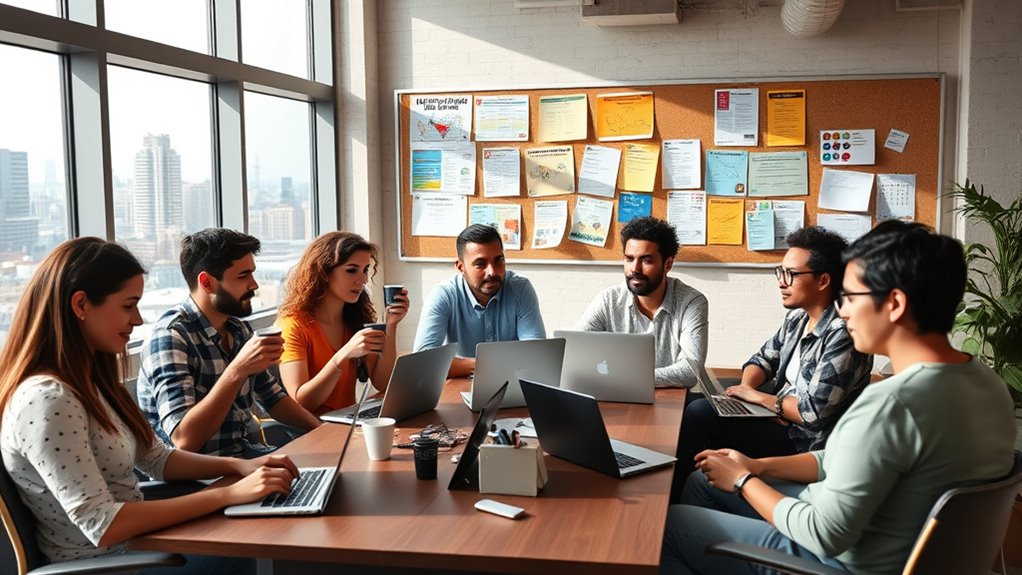
Managing US immigration policies can be complex for digital nomads, as the country maintains strict regulations to control entry and stay durations. You’ll need to understand the appropriate visa types, such as B1/B2 or O-1, and gather required documents like proof of remote work, financial stability, health insurance, and a valid passport. Completing the DS-160 form and scheduling an interview at the US embassy or consulate are essential steps in the application process. Be prepared to demonstrate your intent to leave after your stay and show proof of sufficient income or savings. Keep in mind that processing times vary, and some documents may require translation or notarization. Staying compliant with visa conditions and US laws guarantees a smooth experience managing the immigration system. Utilizing regulatory standards can help ensure your application meets all necessary requirements and increases your chances of approval.
Frequently Asked Questions
Can I Bring Family Members With Me on a Digital Nomad Visa?
Yes, you can bring family members with you, but you’ll need to apply for separate visas for them, such as a B2 tourist visa or other appropriate options. You must demonstrate your financial ability to support your family during your stay and provide necessary documentation, including proof of relationship, health insurance, and accommodation arrangements. Keep in mind that each family member’s visa approval depends on meeting all US visa requirements.
How Long Can I Stay in the US on a Digital Nomad Visa?
You can stay in the US on a digital nomad visa typically up to six months to a year, depending on the specific visa type and approval. Some visas allow extensions or multiple entries, but you must leave the country before your authorized stay expires. Make sure to check your visa’s validity period and comply with all regulations, including not working beyond permitted activities, to avoid legal issues.
Are There Restrictions on Remote Work Activities During My Stay?
Like a traveler in Alice’s Wonderland, you need to stick to the path. During your stay, you can work remotely for clients outside the US, but you can’t engage in US-based employment. Your activities must align with your visa type, such as a B1/B2 or O-1, which mainly permit remote work for foreign companies. Always remember, straying into local employment can jeopardize your visa status.
Do I Need to Pay US Taxes if I Stay Temporarily?
Yes, you may need to pay US taxes if you stay temporarily, especially if you’re a US citizen or resident. Even as a non-resident, you might owe taxes on US-sourced income. You must file an annual US tax return, like Form 1040, and report your worldwide income. Using exclusions like the Foreign Earned Income Exclusion can reduce your tax liability. Always consult a tax professional to guarantee compliance.
Can I Apply for US Citizenship Through a Digital Nomad Visa?
No, you can’t apply for US citizenship through a digital nomad visa. These visas are temporary, allowing you to stay and work remotely without a direct path to citizenship. If you want US citizenship, you’ll need to go through the standard legal process, such as obtaining a green card through employment, family sponsorship, or other eligible pathways. Digital nomad visas don’t provide a route to permanent residency or citizenship.
Conclusion
Now that you’ve got the scoop on navigating the US as a digital nomad, you’re all set to set out on this adventure. Remember, staying informed and prepared is your best ally—think of it like having a trusty map on a long voyage. With a bit of luck and savvy planning, you’ll be living the dream in the land of opportunity, just like an explorer from the days of old, ready to chart new territories and make your mark.
Fall Picks
fall essentials
As an affiliate, we earn on qualifying purchases.