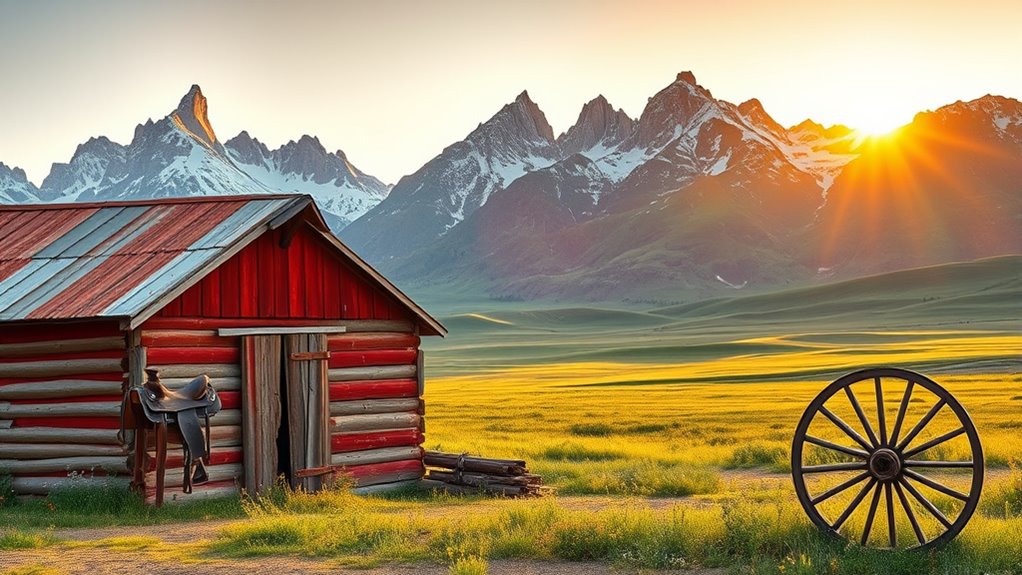

Montana’s history and culture are shaped by its Native tribes, explorers, miners, and settlers. Indigenous peoples like the Crow and Blackfeet thrived in the land long before Europeans arrived. Events like the gold rush, statehood in 1889, and the rise of railroads transformed the region. Today, strong Native traditions and stunning natural parks blend history with modern life. If you want to uncover more about Montana’s unique heritage, there’s plenty more to explore.

Get travel and outdoor gear delivered free with Prime
- Fast, free delivery on millions of items
- Prime Video, Amazon Music and more included
- Member-only deals all year
Key Takeaways
- Montana’s history is shaped by Native tribes, European exploration, and the gold rush, influencing its cultural and territorial development.
- Indigenous peoples, such as Crow and Blackfeet, maintain their languages, traditions, and ceremonies through reservations and cultural events.
- The state’s settlement accelerated with fur trade, exploration by Lewis and Clark, and the establishment of mining towns and railroads.
- Conservation efforts, including Yellowstone and Glacier National Parks, protect Montana’s natural landscapes and promote outdoor recreation.
- Modern Montana’s economy blends tourism, agriculture, mining, and renewable energy, reflecting its rich heritage and environmental commitment.
Yellowstone National Park guidebook
As an affiliate, we earn on qualifying purchases.
As an affiliate, we earn on qualifying purchases.
Indigenous Inhabitants and Prehistoric Landscapes
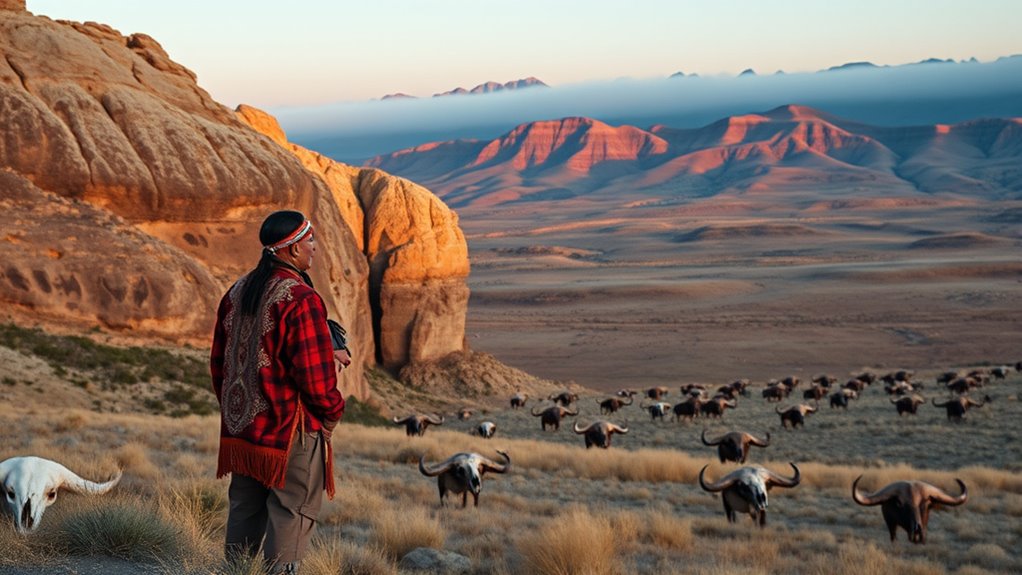
Long before European explorers arrived, indigenous tribes like the Crow, Assiniboine, Blackfeet, Gros Ventre, and Kootenai called Montana home, living a nomadic existence that followed the movements of bison and other game. You can imagine these tribes traveling across vast landscapes, hunting, and gathering to sustain their communities. Montana’s prehistoric landscapes include the remnants of Lake Missoula, a huge proglacial lake that existed around 15,000 years ago, shaping the land you see today. Archaeological sites reveal some of the oldest human burials in North America, near Wilsall. These early inhabitants depended heavily on bison for survival, using every part for food, clothing, and tools. Their deep connection to the land and wildlife defined their way of life for thousands of years. Additionally, prehistoric landscapes provide valuable insights into the environmental conditions that shaped their way of life.
Glacier National Park hiking gear
As an affiliate, we earn on qualifying purchases.
As an affiliate, we earn on qualifying purchases.
Early European Exploration and Settlement
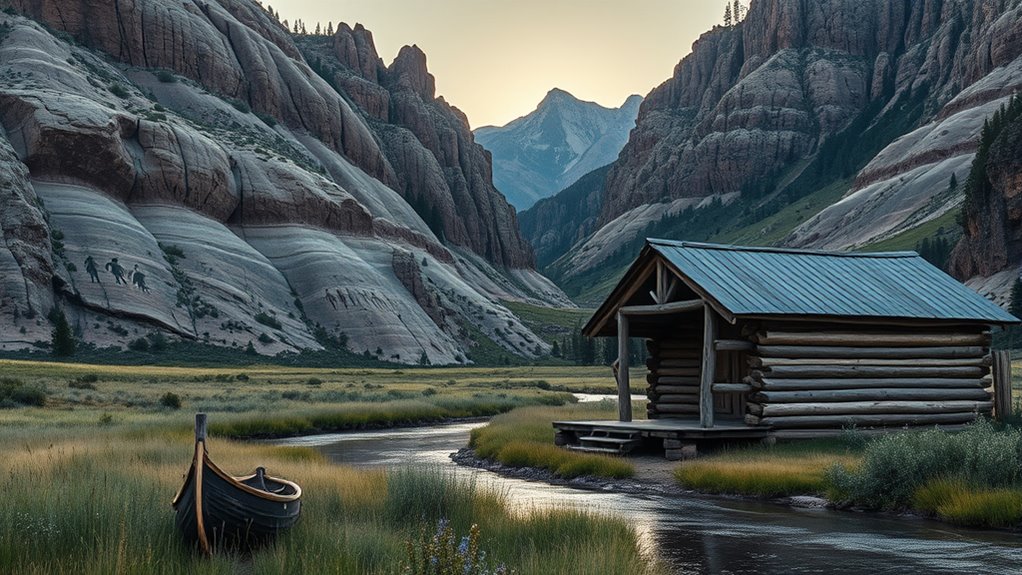
When you look at Montana’s early European history, you’ll see how it became part of the Louisiana Purchase in 1803, opening the land to new exploration. The Lewis and Clark Expedition from 1804 to 1806 marked their first detailed survey of the territory, paving the way for settlement. Eventually, the establishment of St. Mary’s Mission in 1841 became the first permanent Euro-American settlement in the region. The use of projectors in presentations has also played a significant role in sharing Montana’s story with audiences.
Louisiana Purchase Inclusion
The inclusion of Montana in the Louisiana Purchase of 1803 marked a significant turning point in its early European exploration and settlement. This vast land, previously unknown to Europeans, opened new opportunities for expansion and mapping. You learn that the purchase doubled U.S. territory, paving the way for future exploration. As European influence grew, fur traders and explorers moved into Montana, establishing trading posts and missions. You might note that this period sparked:
- Increased interactions with Indigenous tribes, leading to trade and conflict.
- The beginning of mapping efforts that identified key routes.
- The eventual establishment of early settlements and forts.
- The development of regional trade networks, which facilitated the exchange of goods and culture across the expanding frontier.
This purchase set the stage for Montana’s integration into the expanding United States, shaping its development and cultural landscape for centuries.
Lewis and Clark Expedition
The Louisiana Purchase in 1803 opened vast territories for exploration, and the Lewis and Clark Expedition was commissioned to chart this unknown land. As you follow their journey, you discover they crossed Montana, mapping rivers and mountains. Their expedition provided valuable knowledge about the terrain, flora, and fauna, opening the door for future settlers. Native tribes encountered along the route, like the Blackfeet and Crow, played pivotal roles. Their interactions shaped early relationships and territorial claims. To deepen your understanding, consider this table:
| Native Tribe | Key Contribution | Encounter Outcome |
|---|---|---|
| Blackfeet | Resistance to explorers | Tense, sometimes hostile |
| Crow | Guides and allies | Facilitated travel |
| Assiniboine | Trading partners | Established trade routes |
| Kootenai | Shaping exploration | Provided local knowledge |
This expedition marked a turning point, leading to European influence and settlement in Montana. Additionally, understanding early exploration helps contextualize the significant cultural exchanges that occurred during this period.
First Permanent Settlement
Among the earliest European settlements in Montana, St. Mary’s Mission stands out. Established in 1841, it marked the first permanent Euro-American settlement in the region. You’ll find that this mission served as a crucial hub for religious outreach, cultural exchange, and trade with Native tribes. Its location near the Blackfeet and Crow lands made it a strategic point for explorers and settlers. The mission’s influence extended beyond spiritual activities, helping to lay the groundwork for future settlement and development. The site also became a center for education and diplomacy, shaping Montana’s early interactions between Native peoples and European-Americans. Its establishment signified the start of a new era, transforming the wilderness into a land of increasing settlement and cultural exchange. Vast Native Territories played a significant role in shaping the region’s early history and interactions.
Montana Native American cultural souvenirs
As an affiliate, we earn on qualifying purchases.
As an affiliate, we earn on qualifying purchases.
Formation of the Montana Territory and Gold Rush Era
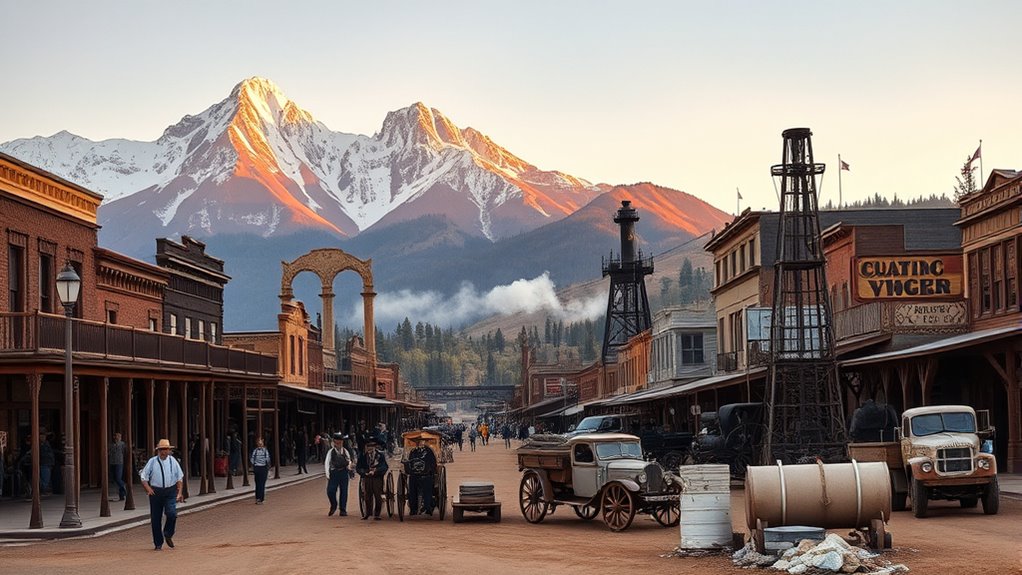
As news of gold discoveries spread through the region, prospectors flocked to Montana, transforming it from a sparsely inhabited wilderness into a hub of activity. The 1862 gold rush drew a flood of settlers enthusiastic to strike it rich, prompting the creation of the Montana Territory in 1864. You see, the discovery of gold in places like Bannack and Alder Gulch attracted thousands, fueling rapid population growth. To protect miners and settlers, the U.S. government established forts like Fort Shaw in 1867. The arrival of the Northern Pacific Railroad in 1883 further boosted development, connecting Montana to the rest of the country. This era turned Montana into a crucial frontier for mining, settlement, and economic expansion, laying the foundation for its future statehood. Additionally, market research methods can be used to understand the evolving needs of Montana’s growing population and industries.
As an affiliate, we earn on qualifying purchases.
The Transition to Statehood and Economic Growth
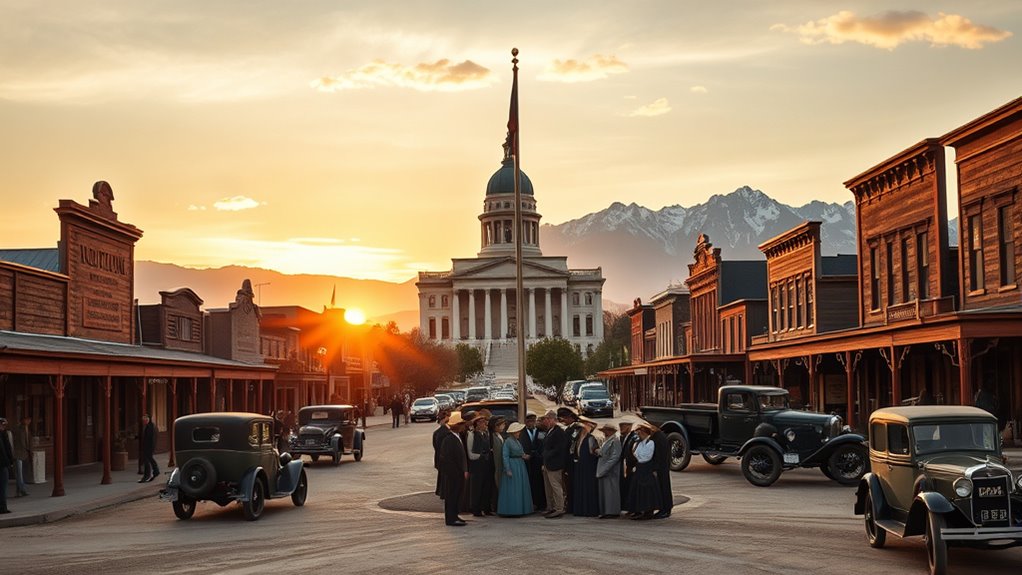
As Montana moves toward statehood, you see how the booming mining industry and expanding railroads fueled rapid growth. The arrival of the railroad connected Montana to national markets, boosting its economy and attracting more settlers. This shift marks a pivotal moment when economic opportunities and population growth pushed Montana to become the 41st state. Kia Tuning innovations, such as performance enhancements and aesthetic modifications, reflect the ongoing pursuit of personalization and improved functionality in vehicles.
Mining and Economic Boom
What sparked Montana’s rapid economic growth and push for statehood was the discovery of gold and other minerals in the early 1860s. This mineral rush attracted prospectors, entrepreneurs, and settlers, transforming the region’s economy. As mining boomed, towns sprang up quickly, and infrastructure like roads and camps developed to support the industry. The copper rush in Butte in the late 1800s further enriched Montana’s economy, drawing investments and workers. You can see this shift through:
- Increased population due to mining opportunities
- Development of mining towns and boomtowns
- Growth of related industries like supply, transportation, and services
This mineral-driven prosperity laid the foundation for Montana’s transition to statehood and economic diversification. Mining’s influence was central to shaping Montana’s early modern economy.
Railroad Expansion Impact
The expansion of the railroad was a pivotal factor in Montana’s shift to statehood and its economic growth. As the Northern Pacific Railroad completed its transcontinental line in 1883, it connected Montana to national markets, making it easier to transport goods and people. This infrastructure encouraged settlement, especially in remote areas, and spurred economic activity in mining, agriculture, and cattle ranching. With improved access, towns grew rapidly, and businesses flourished. The railroad also attracted investment and facilitated the movement of resources like copper, gold, and timber. As a result, Montana’s economy diversified, and its population increased. This expanded connectivity laid the foundation for Montana’s transition from territory to state, marking a new chapter of growth and development.
Statehood and Growth
The completion of the Northern Pacific Railroad in 1883 opened up Montana’s vast lands to wider settlement and economic activity. This development attracted more settlers, boosting the population and fueling growth. As a result, Montana’s economy expanded through mining, agriculture, and transportation. You can see this growth reflected in key milestones such as Montana becoming the 41st state in 1889, driven by rising population and economic strength. The copper boom in Butte also played a significant role in enriching the economy during this period. Additionally, the growth was supported by increased production quantities, which helped meet the rising demand and further stimulated economic development.
Native American Reservations and Cultural Preservation
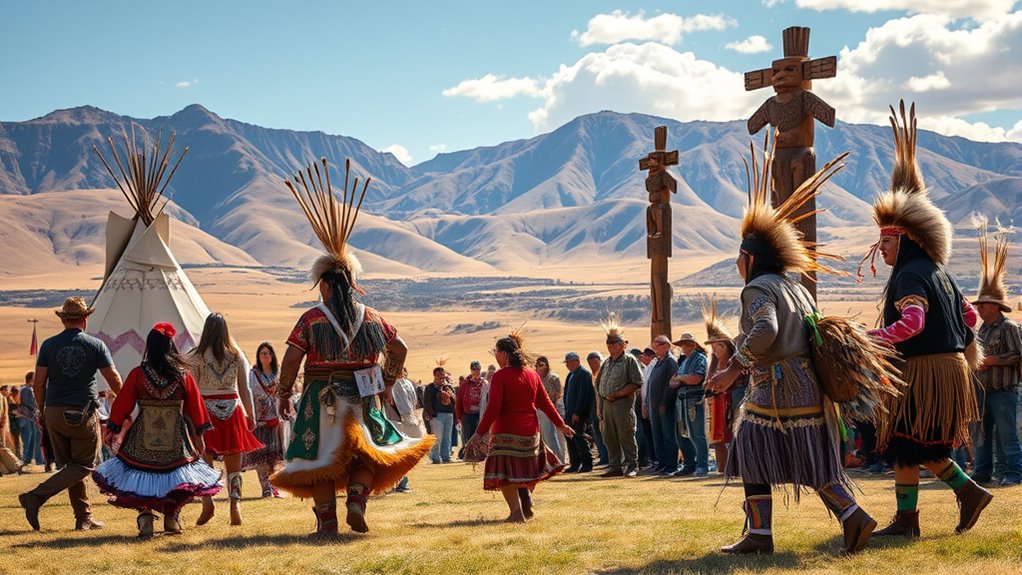
How do Native American reservations in Montana serve as essential centers for cultural preservation? You experience firsthand how reservations protect languages, traditions, and ceremonies that might otherwise fade away. They provide a space where elders pass down stories, crafts, and spiritual practices to younger generations, maintaining a strong sense of identity. You see efforts to revive native languages through schools and community programs. Cultural events, powwows, and rituals held on reservations celebrate tribal heritage and foster pride. These areas also serve as repositories for artifacts, art, and history that tell the tribes’ stories. By sustaining traditional practices and fostering community bonds, reservations act as fundamental anchors, ensuring that Montana’s Native American cultures remain vibrant and resilient amidst changing times. Additionally, the preservation of cultural heritage is supported through initiatives that document oral histories and protect sacred sites.
Montana’s Mining Boom and Infrastructure Development
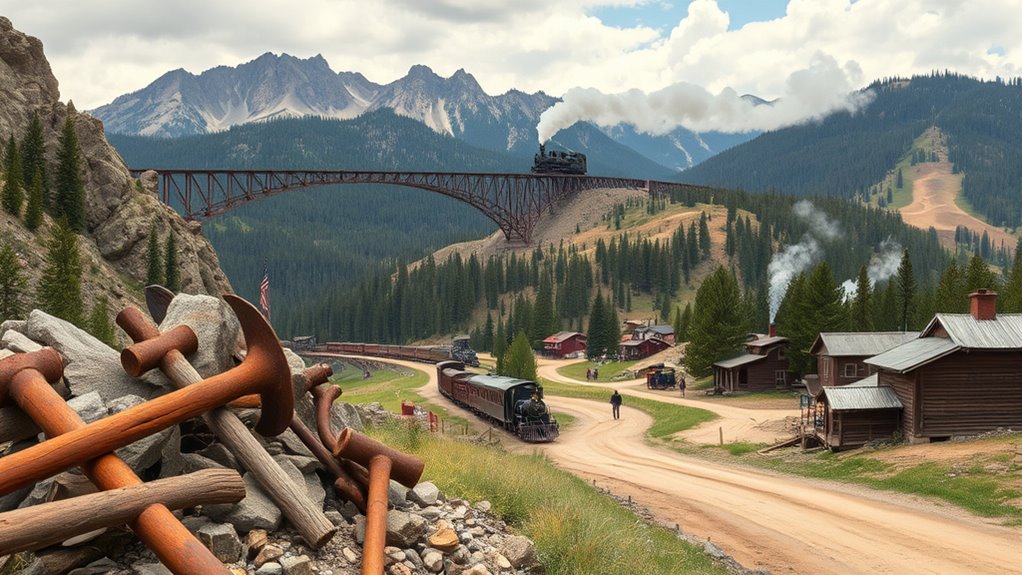
Montana’s rich Native American heritage laid a foundation of resilience and community, but the state’s economic story took a new turn with the discovery of valuable minerals. This sparked a mining boom that transformed Montana’s landscape and infrastructure. As prospectors flocked to mining districts, towns sprouted rapidly, and transportation networks expanded. Railroads, like the Northern Pacific, connected remote areas to national markets, fueling growth. Infrastructure improvements included roads, bridges, and power systems to support mining operations and workers’ needs. Notably, the influx of people and resources led to the development of for sale 100 industries and increased settlement in previously remote regions. Infrastructure investments supported growing populations.
Conservation Efforts and the Birth of Tourism
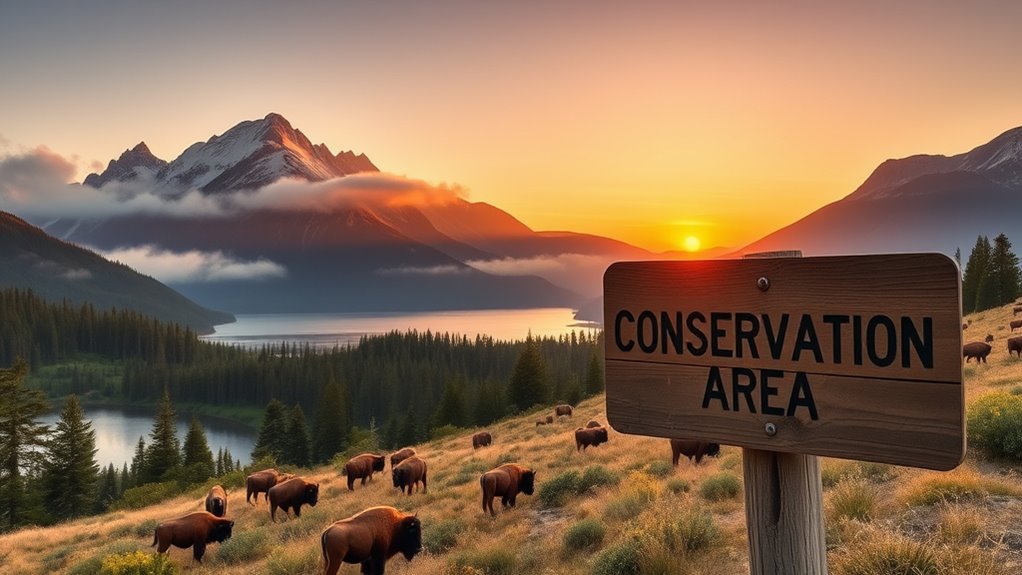
Conservation efforts in Montana have played a crucial role in preserving its breathtaking landscapes and natural resources. When Yellowstone National Park was established in 1872, it marked the beginning of federal commitment to protecting Montana’s unique ecosystems. These efforts helped safeguard iconic sites like Glacier National Park and numerous wilderness areas, ensuring their beauty endures. As a result, outdoor recreation and eco-tourism flourished, attracting visitors from around the world. You can explore pristine forests, rugged mountains, and vibrant wildlife, experiencing Montana’s natural splendor firsthand. Conservation initiatives also promote sustainable practices, balancing economic growth with environmental preservation. This legacy of protecting Montana’s landscapes has laid the foundation for a thriving tourism industry, fostering appreciation and stewardship of its extraordinary natural heritage.
Modern Montana: Economy, Culture, and Heritage
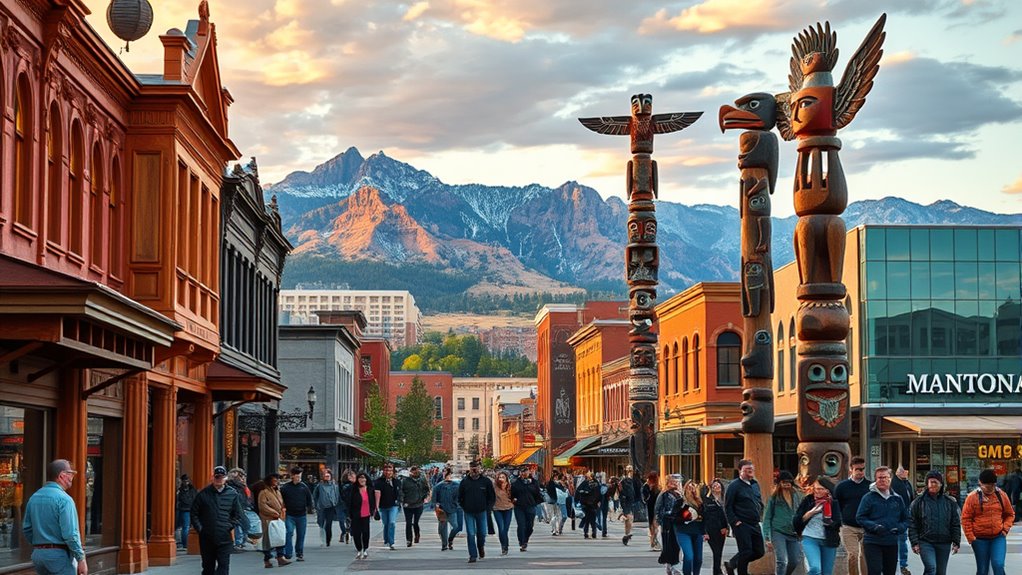
Today, Montana’s economy and cultural landscape have evolved beyond early conservation and tourism efforts to encompass a diverse mix of industries and traditions. You’ll find that mining, agriculture, and technology now play key roles alongside tourism, which thrives thanks to Montana’s breathtaking landscapes. The state also celebrates its heritage through vibrant festivals and cultural events that highlight Native American traditions and frontier history. Montana’s rich history is reflected in its ongoing preservation efforts, such as tribal initiatives and historic sites.
- Emphasis on sustainable tourism and conservation programs
- Growing tech sector and renewable energy investments
- Cultural festivals showcasing Native American and pioneer legacies
Frequently Asked Questions
What Are Montana’s Most Significant Native American Cultural Traditions Today?
You’ll find Montana’s Native American tribes actively preserving their cultural traditions today. They host powwows, where you can experience traditional dances, songs, and regalia. You might also participate in storytelling sessions that pass down legends and history. Tribes continue practicing crafts like beadwork and beadwork, and they celebrate their spiritual ceremonies and language revitalization efforts. These traditions keep their cultural identity vibrant and alive for future generations.
How Did the Prehistoric Lake Missoula Shape Montana’s Landscape?
You’ll see how Lake Missoula’s mighty melt shaped Montana’s landscape profoundly. When the ice dam burst, ferocious floods, known as the Missoula Floods, roared across the plains, carving canyons and creating the landscape you see today. These cataclysmic currents scoured the terrain, forming the dramatic features like the Columbia River Gorge and the landscape’s rugged, river-etched valleys, forever transforming Montana’s wild and wonderful wilderness.
What Role Did Montana Play in the Broader American Westward Expansion?
Montana played a key role in American westward expansion by serving as a gateway for settlers, explorers, and traders moving west. You see, the Lewis and Clark Expedition explored Montana, opening pathways for migration and commerce. The discovery of gold and other resources attracted thousands, and the completion of the Northern Pacific Railroad connected Montana to the rest of the country, fueling settlement, economic growth, and territorial development.
How Did Montana’s Early Industries Influence Its Modern Economy?
Your early industries like fur trading, cattle ranching, and mining laid the foundation for Montana’s modern economy. These industries attracted settlers, boosted infrastructure, and created jobs, which helped diversify the economy over time. Today, you see tourism, agriculture, and technology thriving alongside mining. The state’s resource-rich past continues to shape its growth, making Montana a blend of historic industries and modern economic pursuits.
What Are the Key Events That Shaped Montana’s Cultural Diversity?
You see, key events like the establishment of Native American reservations and treaties, along with the founding of Fort Shaw Indian Industrial School, profoundly shaped Montana’s cultural diversity. The gold rush and cattle ranching attracted diverse settlers, while the creation of Yellowstone National Park fostered conservation efforts. These moments fostered interactions among Native tribes, settlers, and immigrants, creating a rich, multicultural heritage that continues to define Montana today.
Conclusion
You’ve explored Montana’s rich history and vibrant culture, from ancient indigenous lands to modern-day treasures. Did you know that Montana is home to over 147,000 square miles of breathtaking landscapes, making it the fourth largest state? This vastness reflects its diverse heritage and natural beauty. As you visit or learn more, remember that Montana’s story is one of resilience and preservation, shaping a unique identity that continues to inspire and captivate.
Halloween Picks
halloween
As an affiliate, we earn on qualifying purchases.