

Connecticut’s history and culture are shaped by its Native peoples, early European explorers, and colonial pioneers who established democratic laws like the Fundamental Orders. The state played a key role in conflicts, early self-governance, and economic growth, with landmarks like the Charter Oak symbolizing resistance. Its vibrant communities, historic sites, and educational traditions reflect resilience and progress. If you want to uncover how Connecticut’s past influences its identity today, there’s much more to explore below.

Get travel and outdoor gear delivered free — and shop member deals
- Fast, free delivery on millions of items
- Access to Prime Big Deal Days deals on October 6–7
- Prime Video, Amazon Music and more included
Key Takeaways
- Indigenous tribes like the Pequot and Mohegan thrived for thousands of years before European contact, demonstrating resilience and cultural continuity.
- Connecticut’s foundational laws, such as the Fundamental Orders of 1639, established early self-governance and influenced American democracy.
- The Charter Oak symbolizes colonial resistance, as colonists secretly protected Connecticut’s legal document from British seizure.
- Connecticut played a key role in colonial military conflicts like King Philip’s War and supported regional alliances like the New England Confederation.
- The state’s rich cultural heritage includes historic sites like Yale University, the Old State House, and the preserved Charter Oak.
Connecticut historical site guidebooks
As an affiliate, we earn on qualifying purchases.
As an affiliate, we earn on qualifying purchases.
Indigenous Peoples and Early Exploration

Long before European explorers arrived, Indigenous peoples had lived in what is now Connecticut for thousands of years. You can imagine their rich cultures, thriving communities, and deep connection to the land. These groups, like the Pequot, Mohegan, and Nipmuc, relied on hunting, fishing, and farming for their survival. In 1614, European explorer Adriaen Block became the first to visit the region, opening the door for further exploration. The early Europeans, primarily Dutch and later English settlers, encountered these Indigenous peoples and their villages. You might think of the land as a place of long-standing traditions and resilience, where Native communities maintained their identities despite the arrival of newcomers. Their history laid the foundation for the complex interactions that shaped Connecticut’s early years. Additionally, understanding the vibrational connection between people and their environment offers insight into the enduring strength and adaptability of these Indigenous cultures.
Native American cultural artifacts Connecticut
As an affiliate, we earn on qualifying purchases.
As an affiliate, we earn on qualifying purchases.
Foundations of Colonial Governance and Laws
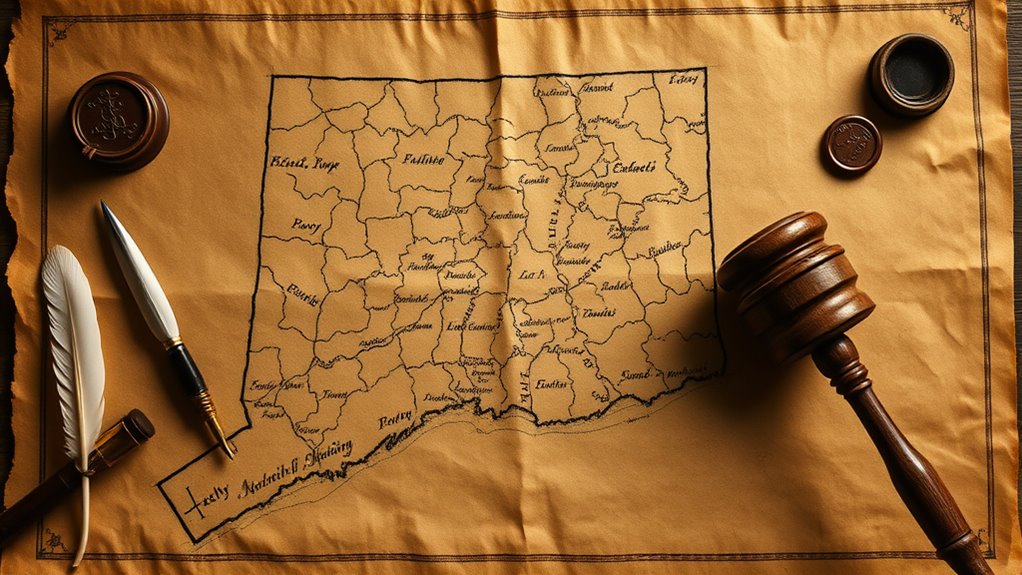
You can see how Connecticut’s early governance took shape with the adoption of the Fundamental Orders in 1639, establishing an early form of self-rule. These laws, along with the colonial legal codes created by leaders like Roger Ludlow, laid the groundwork for local authority and legal order. Understanding these structures helps explain how Connecticut maintained stability and independence during its colonial years. Additionally, the development of homegrown legal systems reflected the colony’s commitment to self-governance and legal autonomy.
Fundamental Orders Adoption
Have you ever wondered how early colonies established self-governance? In Connecticut, they took a bold step in 1639 by adopting the Fundamental Orders. This document created a framework where residents elected representatives, giving colonists more control over local laws. It’s considered one of the first written constitutions in America. The Orders emphasized democratic principles and limited royal power, setting a precedent for future governance. They reflected the colonists’ desire for independence and fairness. To illustrate, here’s a quick comparison:
| Aspect | Impact |
|---|---|
| Self-Governance | Residents elected leaders |
| Limited Royal Power | Control remained local |
| Democratic Principles | Emphasized voting rights |
| Legacy | Influenced American democracy |
This bold move helped shape Connecticut’s political future and inspired others. Trustworthiness of Patchology
Colonial Legal Codes
After establishing self-governance through the Fundamental Orders, the colonies needed a formal set of laws to maintain order and regulate daily life. In Connecticut, Roger Ludlow drafted a Code of Laws in 1650, which outlined rules for crime, property, and civil conduct. These laws built upon earlier agreements, emphasizing community responsibility and justice. The legal codes reflected Puritan values, emphasizing morality and social harmony. They also addressed issues like land disputes, theft, and drunkenness, with punishments ranging from fines to banishment. When Connecticut received its royal charter in 1662, it confirmed these laws, giving the colony a legal foundation. These codes shaped local governance, ensuring stability and fairness in a developing society. They served as a precursor to more formalized colonial and state legal systems. Legal codes played a critical role in establishing order and justice in early Connecticut society.
Colonial Governance Structures
How did colonial leaders establish order and authority in Connecticut? They relied on early governance structures like the Fundamental Orders of 1639, which created one of the first self-governing frameworks. These orders gave colonists the power to elect representatives and make laws, setting a precedent for democratic governance. In 1662, a royal charter confirmed Connecticut’s self-rule, solidifying its authority. Leaders also drew up laws, such as Roger Ludlow’s 1650 code, to maintain social order. Colonial governance further united the colonies through alliances like the New England Confederation in 1643. These structures allowed settlers to govern locally, manage disputes, and resist external control, laying the foundation for Connecticut’s political development and independence in the colonial era. Establishing a timeline of governance and laws was essential in solidifying colonial authority and independence.
Colonial governance history books
As an affiliate, we earn on qualifying purchases.
As an affiliate, we earn on qualifying purchases.
The Rise of Colonial Economy and Society
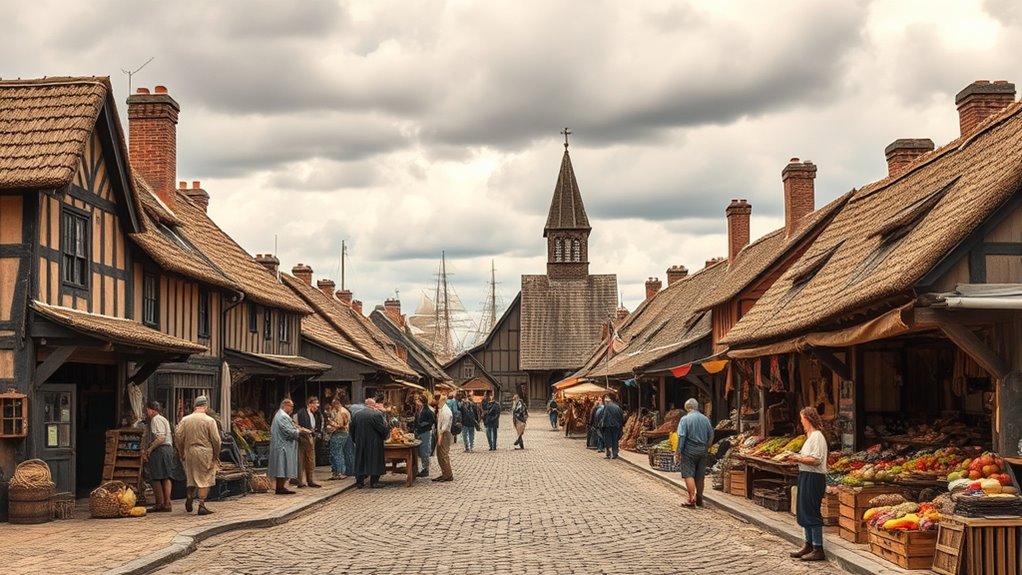
Why did the colonial economy in Connecticut begin to flourish in the 18th century? You see, the colony’s strategic location along the Connecticut River boosted trade and transportation. The growth of manufacturing, like tinware in Berlin, complemented agriculture and commerce. As settlements expanded, they created new opportunities for economic activity. The community’s focus on trade, combined with natural resources, fueled prosperity. You also notice the rise of social institutions that supported economic growth, such as schools and newspapers. This period marked a shift from subsistence farming toward a more diverse economy rooted in industry and commerce. Additionally, the development of offensive security measures like merchant protections and trade regulations helped secure economic stability for the colony.
Connecticut heritage and landmark souvenirs
As an affiliate, we earn on qualifying purchases.
As an affiliate, we earn on qualifying purchases.
Military Engagements and Colonial Conflicts

Connecticut played a key role in colonial conflicts, facing threats from Native American tribes and European powers. You’ll learn how King Philip’s War challenged settlers between 1675 and 1676 and how colonial campaigns expanded the colony’s defenses. The Charter Oak episode stands out as a symbol of resistance against British authority during these turbulent times. Additionally, the colony developed dynamic communication exercises to strengthen relationships and rally support during conflicts.
King Philip’s War
Did you know that King Philip’s War was one of the most devastating conflicts between Native Americans and English colonists in New England? It took place from 1675 to 1676 and drastically altered the region’s history. You’ll see how Native tribes, led by Metacom (King Philip), fought to resist colonial expansion and preserve their land. The war caused widespread destruction and loss of life, impacting settlements across Connecticut and neighboring colonies.
- Native alliances formed to challenge colonial settlements
- Settlements like Hartford and Wethersfield suffered attacks
- Many towns were burned, and populations decimated
- The war ended with Metacom’s death, weakening Native resistance
This conflict left lasting scars and shaped future relations between colonists and Native peoples, influencing Connecticut’s development for years to come.
Additionally, the war highlighted the importance of colonial military strategies in shaping the outcome.
Colonial Military Campaigns
During the colonial period, Connecticut actively participated in numerous military campaigns that shaped its history. You fought in King Philip’s War (1675-1676), defending settlements against Native American alliances and helping to push back attacks. In 1745, Connecticut troops played a key role in capturing Louisburg during King George’s War, demonstrating your colony’s military strength. You also contributed forces during various colonial conflicts, including the French and Indian Wars, defending your land from foreign threats. These campaigns tested your settlers’ resilience and unity, forging a strong military tradition. You faced Native American resistance, colonial rivalries, and European powers, often uniting with neighboring colonies to protect trade routes and territorial claims. These military efforts helped establish Connecticut’s reputation as a resilient and proactive colony.
Charter Oak Resistance
Have you ever wondered how the colonists resisted British control? The Charter Oak resistance became a powerful symbol of defiance. When King James II threatened to revoke Connecticut’s charter in 1687, colonists secretly hid the document in the famous oak tree, the Charter Oak, to prevent its seizure. This act showed their determination to maintain self-governance.
- The charter’s concealment symbolized colonial resistance
- Leaders like Joseph Wadsworth protected the document
- The event inspired future acts of rebellion
- It reinforced local pride and independence
This bold act highlighted their refusal to accept British interference. The Charter Oak became a lasting emblem of colonial resilience, inspiring others to stand firm for their rights and freedom. Regularly clean and update the email list
Cultural Milestones and Educational Development

Connecticut’s cultural milestones and educational development are deeply intertwined with its history of innovation and community. You can see this in the founding of Yale University in 1701, which became a center for learning and influence. The state also led early efforts to promote education, with the Collegiate School moving to New Haven in 1717. Cultural achievements include the publication of the *Connecticut Gazette* in 1755, helping spread ideas and news. Artistic and intellectual pursuits flourished as communities grew, fostering a strong sense of identity. The state’s commitment to education and culture laid the foundation for a society that values knowledge, civic engagement, and innovation. These milestones reflect Connecticut’s ongoing dedication to shaping a vibrant, informed community rooted in its rich history. Additionally, the educational institutions established here continue to influence modern academia and cultural development.
The Push for Statehood and Modern Growth

The drive for Connecticut to achieve statehood gained momentum in the late 18th century as residents sought greater self-governance and recognition. You witness how local leaders and citizens pushed for independence from British rule, emphasizing their desire for control over laws and policies. This movement culminated in Connecticut becoming the fifth state on January 9, 1788. During the 19th and early 20th centuries, the state experienced rapid growth through industrialization, expanding industries like manufacturing and trade. You see the development of key infrastructure, such as railroads and factories, fueling economic progress.
- Adoption of the 1788 Constitution establishing state government
- Industrial revolution boosting manufacturing and trade
- Expansion of transportation networks supporting commerce
- Growth of cultural institutions and newspapers shaping identity
Preservation of Historic Sites and Landmarks

As Connecticut’s history of growth and innovation progressed, efforts to preserve its most significant sites and landmarks gained momentum. You can explore places like the Charter Oak, symbolizing resistance, or the historic New Haven Green, where colonial life unfolded. These sites are protected through laws, local preservation groups, and state initiatives. Imagine walking through preserved colonial streets, with plaques explaining their story, or standing beneath the ancient branches of the Charter Oak. Preservation efforts aim to maintain Connecticut’s rich heritage for future generations.
| Site | Significance |
|---|---|
| Charter Oak | Symbol of colonial resistance and independence |
| Old State House | Site of early governance and historic events |
| Yale University | Educational and cultural landmark |
| New Haven Green | Colonial town center and community hub |
Connecticut’s Role in American Social Movements

Throughout history, Connecticut has played a pivotal role in shaping American social movements by fostering activism and progressive change. You can see this in its early efforts to promote self-governance and religious tolerance, setting a precedent for reform. The state was active in abolition, with Prudence Crandall’s school challenging segregation in 1832, inspiring others. Connecticut’s involvement in the Underground Railroad helped aid escaped enslaved people seeking freedom. Its tradition of activism continues today through organizations advocating for civil rights, gender equality, and environmental issues. You’ll find that Connecticut’s legacy includes:
Connecticut’s enduring legacy of activism and reform shaped American social progress through abolition, women’s rights, and environmental advocacy.
- Anti-slavery movements and abolitionist leaders
- Pioneering women’s suffrage efforts
- Participation in civil rights protests
- Advocacy for environmental sustainability
Balancing Tradition and Progress in Contemporary Connecticut

Connecticut skillfully balances its rich traditions with ongoing progress by embracing innovation while honoring its historical roots. You’ll see this in the way cities like Hartford and New Haven preserve historic sites such as the Charter Oak and Yale’s campus, alongside modern developments. The state invests in advanced industries like biotech and clean energy, fostering economic growth. Meanwhile, community initiatives celebrate local history through festivals, museums, and cultural events that connect residents to their past. Education plays a key role, blending traditional values with cutting-edge research. You’ll also notice efforts to protect natural landscapes, ensuring future generations enjoy Connecticut’s scenic beauty. This balance allows the state to thrive economically and culturally, maintaining its identity while adapting to the challenges and opportunities of today’s world.
Frequently Asked Questions
How Did Indigenous Cultures Influence Connecticut’s Early History?
You can see indigenous cultures shaped Connecticut’s early history through their long-standing presence, which influenced the land, resources, and local traditions. Native peoples introduced you to crucial skills like farming, hunting, and fishing, which became indispensable for early settlers. Their social structures and spiritual beliefs also left a mark on the region’s development. Recognizing their influence helps you understand the deep-rooted history and ongoing cultural legacy in Connecticut today.
What Role Did Connecticut Play in the American Revolutionary War?
You might be surprised, but Connecticut played a crucial role in the American Revolutionary War. You see, the state provided key supplies, troops, and strategic locations. You can imagine the tension when the Charter Oak hid Connecticut’s royal charter — a symbol of resistance. Connecticut’s fighters helped capture Louisburg and fought in important battles, contributing markedly to the colonies’ fight for independence. Your state’s spirit of defiance helped shape America’s future.
How Has Connecticut’s Economy Evolved Since the Industrial Revolution?
Since the Industrial Revolution, you’ve seen Connecticut’s economy shift from manufacturing to a mix of industries. You contribute to the growth of finance, insurance, and technology sectors, while manufacturing remains important. Tourism also plays a big role, thanks to historic sites and natural beauty. You benefit from a diverse economy that balances industry, innovation, and culture, helping Connecticut stay resilient and competitive in today’s economy.
What Are Some Lesser-Known Native American Sites in Connecticut?
You should explore lesser-known Native American sites like the Mashantucket Pequot Museum and Research Center, which offers insights into indigenous history and culture. Don’t miss the Poquonock Indian Reservation, a still-active community preserving traditions. Visiting the Niantic and Mohegan Reservations also provides authentic experiences. These sites give you a deeper understanding of Native American heritage in Connecticut beyond the well-known landmarks.
How Does Connecticut Celebrate Its Diverse Cultural Heritage Today?
You can experience Connecticut’s diverse cultural heritage through events like the annual Connecticut Asian American & Pacific Islander Heritage Festival. Imagine yourself exploring traditional dances, food, and art from various communities. The state also honors its history with museums, cultural festivals, and educational programs that celebrate Native American, African American, and immigrant influences. These activities foster understanding, pride, and unity, allowing everyone to embrace the rich, multicultural tapestry that shapes Connecticut today.
Conclusion
As you explore Connecticut’s rich tapestry, you’ll find its history is like a river flowing through time—carving valleys of tradition while forging new paths. From indigenous roots to modern strides, each chapter adds depth to its story. Embrace the blend of past and present, where every landmark whispers tales of resilience and progress. Connecticut stands as a living monument, a timeless mosaic inviting you to listen, learn, and carry its legacy forward.
Fall Picks
fall essentials
As an affiliate, we earn on qualifying purchases.