
Utah’s history and culture are rooted in its indigenous tribes like the Ute and Navajo, who thrived long before European arrival. You’ll find traces of pioneers who settled in Salt Lake Valley seeking religious freedom, transforming the desert into vibrant communities. The state’s journey to join the Union involved overcoming conflicts and reforms, shaping its unique identity. Today, Utah blends Native traditions, modern arts, and outdoor adventures—explore further to uncover the rich stories behind its evolution.
Key Takeaways
- Utah’s history begins with Native American tribes like Ute, Navajo, and Piute, shaping its indigenous cultural legacy.
- Mormon pioneers settled in Utah in 1847, transforming the desert into a thriving community guided by religious principles.
- Statehood was achieved in 1896 after overcoming federal restrictions on polygamy and political conflicts.
- Modern Utah boasts a vibrant arts scene, including events like the Sundance Film Festival, and a strong influence from the LDS Church.
- Demographic growth and infrastructure development in the 20th century transitioned Utah from a rural, Mormon-led society to a diverse state.
Top picks for "history culture utah"
Open Amazon search results for this keyword.
As an affiliate, we earn on qualifying purchases.
Indigenous Roots and Early Inhabitants

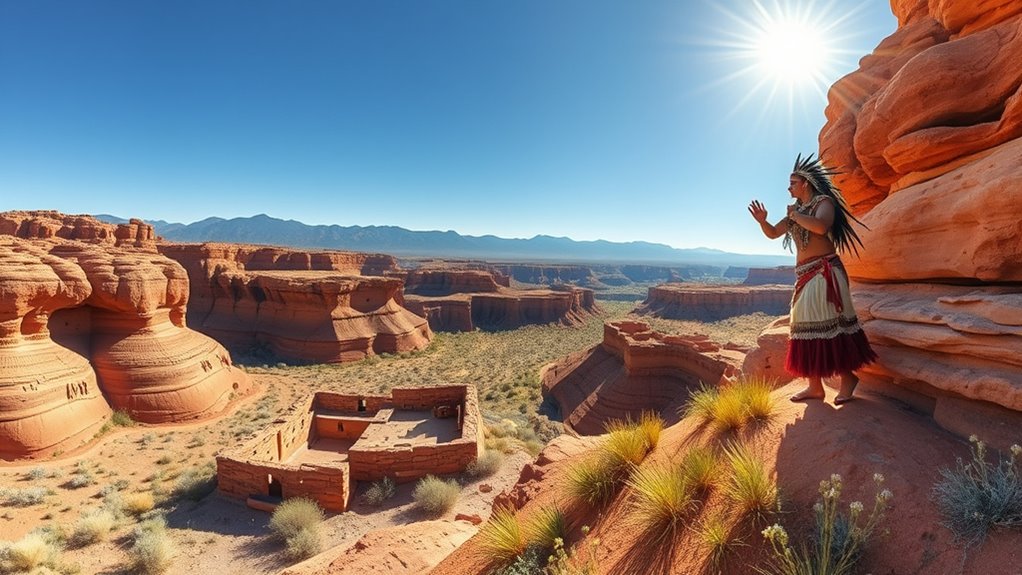
Have you ever wondered who first inhabited Utah? Long before European explorers arrived, Native American tribes like the Ute, Navajo, and Piute called this land home. These groups thrived in the arid Great Basin, developing hunter-gatherer lifestyles suited to the harsh environment. Archaeological discoveries reveal human presence in Utah dating back over 10,000 years, showcasing a deep history of resilience and adaptation. Tribes often formed alliances and engaged in conflicts, shaping the region’s social landscape. They crafted tools, traded, and maintained spiritual practices that remain significant today. Their enduring legacy provides a foundation for understanding Utah’s rich cultural tapestry, highlighting the importance of indigenous history long before European settlers set foot in the area.
Mormon Pioneers and Settlement Era

What motivated the Mormon pioneers to leave their homes and journey into the unfamiliar wilderness of Utah? You’re driven by a desire for religious freedom and a hope to build a community free from persecution. Facing hostility and discrimination in the Midwest, you seek a place where your faith can flourish without interference. Guided by Brigham Young, you endure difficult travel across harsh terrains, carrying everything needed to establish new settlements. Settling in the Salt Lake Valley in 1847, you work tirelessly to create farms, churches, and schools, transforming the desert into a thriving community. Your perseverance helps forge a new society rooted in faith, cooperation, and resilience, leaving a lasting impact on Utah’s history and culture. The settlers also utilized innovative textile techniques to meet their needs and improve their living conditions.
Utah’s Path to Statehood and Federal Relations
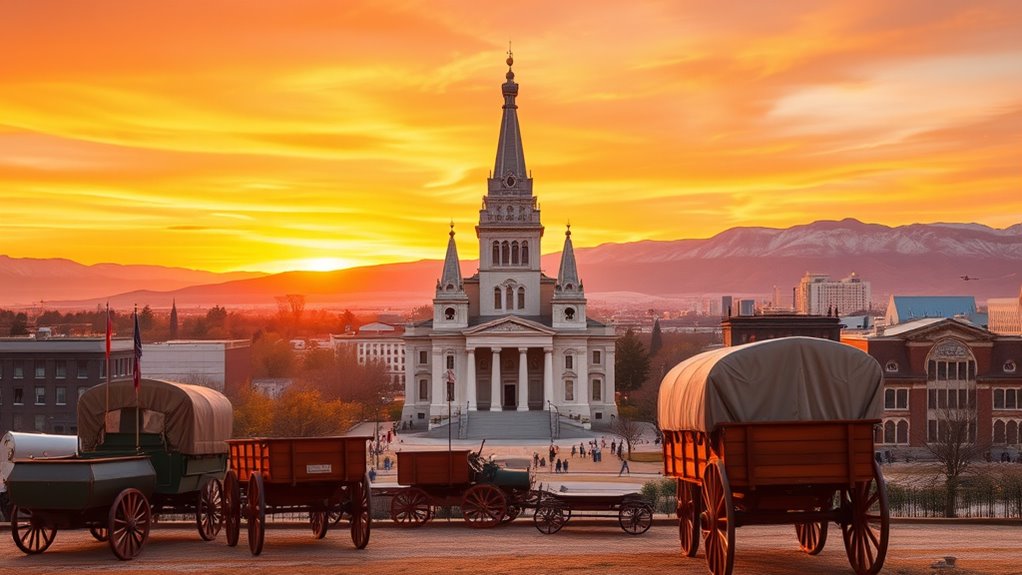
How did Utah navigate the complex path from territory to statehood amid conflicts over polygamy and tensions with the federal government? You see, Utah faced significant obstacles, including federal bans on polygamy and suspicion of rebellion. The Mormon settlers, led by Brigham Young, initially resisted federal authority, which led to the Utah War of 1857–58. Despite crackdowns, polygamy persisted, prompting Congress to pass laws like the 1862 Anti-Bigamy Act. Utah’s leaders worked to reconcile with the federal government by officially banning polygamy in the 1890s. This move, combined with efforts to establish a stable government, paved the way for Utah’s admission as the 45th state in 1896. Ultimately, Utah’s perseverance and reforms helped bridge the gap between local Mormon interests and federal requirements. Additionally, understanding the emotional support provided to community members during these turbulent times played a crucial role in fostering unity and resilience.
Cultural Development and Modern Influences
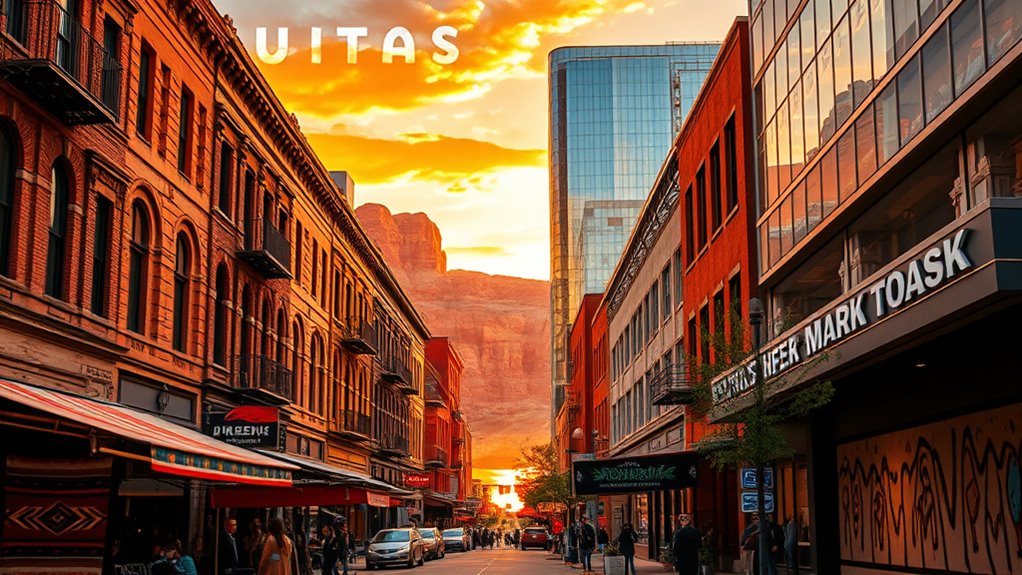
Utah’s cultural landscape today reflects a dynamic blend of tradition and modernity, shaped by its rich history and evolving influences. You see this in how the strong presence of The Church of Jesus Christ of Latter-day Saints continues to influence social values and community life, even as the state embraces greater diversity. Modern Utah also boasts a thriving arts scene, with events like the Sundance Film Festival drawing national attention and supporting local talent. Educational institutions like Utah State University foster innovation and cultural exchange, blending agricultural roots with cutting-edge research. Tourism, outdoor recreation, and a growing arts community all contribute to a vibrant, evolving identity. You experience a state that honors its heritage while actively shaping a diverse, forward-looking cultural future. Additionally, the development of home theater technology demonstrates Utah’s embrace of modern entertainment trends, enriching residents’ cultural experiences.
Key Events and Demographic Changes Through the 20th Century

Throughout the 20th century, Utah experienced significant demographic shifts and key historical events that shaped its development. Population growth accelerated, reaching about 550,310 in 1940, driven by migration and natural increase. During World War II, Utah contributed to the war effort through military bases and industry, boosting urbanization. Federal land management changes, like merging forests, affected land use. Politicians like J. Bracken Lee influenced state policies, and infrastructure expanded, transforming Utah from a primarily rural, Mormon-led society to a more diverse state. These land management policies often aimed at natural resource conservation and sustainable development.
Frequently Asked Questions
How Did Indigenous Tribes Sustain Themselves in Utah’s Arid Environment?
You learn that indigenous tribes in Utah, like the Ute, Navajo, and Piute, sustained themselves by adapting to the arid environment. You’d gather wild plants, hunt game such as deer and small animals, and fish when available. You also relied on water conservation techniques, built seasonal camps, and used portable tools to maximize resources. These strategies helped them thrive despite the challenging desert conditions.
What Role Did Native American Tribes Play in Early Utah History?
You see, Native American tribes like the Ute, Navajo, and Piute played vital roles in early Utah history. They adapted to the arid environment through hunting, gathering, and trading, shaping the land’s cultural landscape. Tribes often interacted with settlers, forming alliances or conflicts. Their traditions, stories, and resistance efforts deeply influenced Utah’s development, leaving a lasting legacy that continues to be recognized and preserved today.
How Did Mormon Beliefs Influence Utah’s Legal and Social Systems?
You might be surprised, but Mormon beliefs deeply shaped Utah’s laws and society. Their emphasis on community, family, and religious practices influenced policies like polygamy, education, and women’s suffrage. When the federal government cracked down on polygamy, Mormons adapted by banning it to gain statehood. This blend of faith and law created a unique social fabric, where religion and governance became closely intertwined, shaping Utah’s identity today.
What Impact Did the Sundance Film Festival Have on Utah’s Culture?
The Sundance Film Festival considerably boosts Utah’s cultural scene by attracting national and international attention to its arts and entertainment industry. You’ll notice how it promotes local filmmakers, encourages artistic expression, and fosters community engagement. The festival also stimulates tourism and the economy, making Utah a renowned hub for independent film. Overall, Sundance helps shape Utah’s modern identity, blending its traditional roots with contemporary arts and cultural innovation.
How Has Utah’s Demographic Makeup Changed Since the 20TH Century?
You’ve likely noticed Utah’s demographic makeup has become more diverse since the 20th century. Coincidentally, increased immigration from Latin America, Asia, and other regions has enriched the population, blending different cultures and traditions. Today, you see a mix of longstanding Mormon communities and newcomers, shaping a more multicultural state. This shift influences everything from local cuisine to educational programs, reflecting Utah’s evolving identity and expanding social fabric.
Conclusion
As you explore Utah’s history and culture, you see a tapestry woven with indigenous roots, pioneer resilience, and modern diversity. Each chapter adds a new thread, creating a vibrant story that’s still unfolding. Utah’s journey is like a river, constantly flowing, shaping its identity through time. Embrace this rich heritage, and you’ll discover a land that’s alive with history, spirit, and endless possibilities waiting to be written.