
Virginia’s cuisine blends indigenous food practices with colonial influences, creating a rich culinary heritage. You’ll find traditional methods like smoking, drying, and pickling that preserved local meats and seafood for generations. Regional flavors shine through seafood in coastal areas, ham and peanuts inland, and mountain game meats. Modern celebrations showcase these historic techniques and ingredients, ensuring Virginia’s diverse food traditions thrive today. Continue exploring to uncover more about this flavorful history.
Key Takeaways
- Virginia’s cuisine blends indigenous, European, and African influences, featuring seafood, ham, peanuts, and regional game meats.
- Traditional food preservation methods like smoking, drying, salting, and pickling have been essential for storage and trade.
- Coastal areas focus on oysters and blue crabs, while inland regions emphasize ham, peanuts, and game meats.
- Historic techniques such as open-hearth cooking and smoking are celebrated in festivals and reenactments.
- Modern Virginia cuisine incorporates traditional ingredients and methods, celebrating its diverse culinary heritage through local markets and chefs.

Seafood, Crab Cake Traditional, 1 Each
- Sustainably Sourced Crab: Responsibly farmed or wild-caught
- No Harmful Preservatives: Excludes sodium bisulfite and STPP
- Traceable Origin: Identifiable farm or fishery
As an affiliate, we earn on qualifying purchases.
As an affiliate, we earn on qualifying purchases.
Indigenous Roots and Early Food Practices
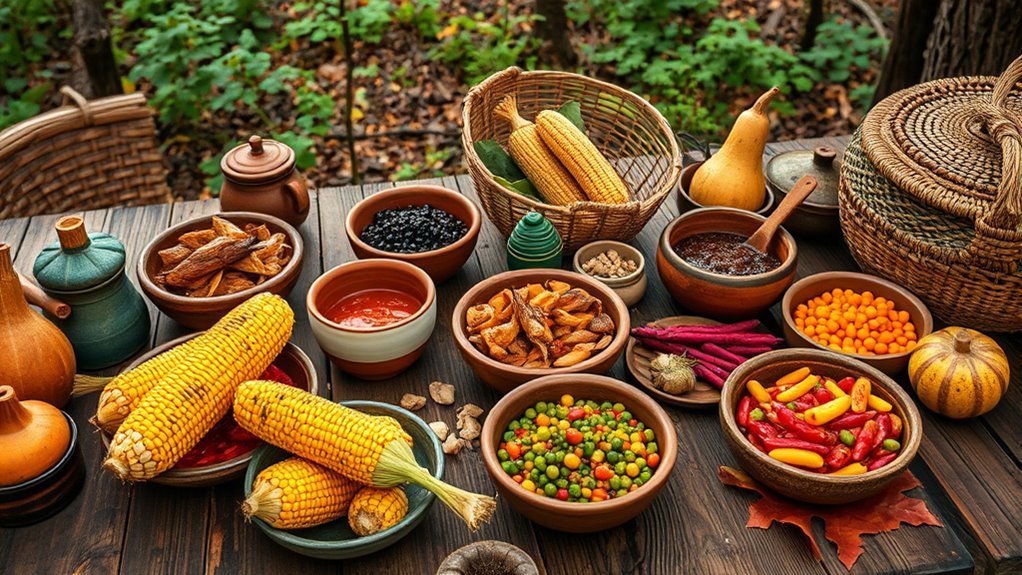
The indigenous peoples of Virginia laid the foundation for the region’s early food traditions by relying on hunting, fishing, and gathering wild plants. You’d gather berries, nuts, and wild grains to supplement your diet. Hunting deer, turkey, and small game provided essential protein, while fishing in rivers and estuaries yielded fish and shellfish like oysters and crabs. You roasted meats over open-air hearths or boiled them into stews, often using simple clay pots. Preserving food was vital; smoking and drying meats extended their shelf life for trade and storage. Oysters were roasted, boiled, or dried, becoming a staple. Your community’s diet was closely tied to the land and water, using natural resources efficiently and developing cooking techniques that emphasized flavor preservation and resourcefulness. Additionally, knowledge of food preservation techniques helped sustain communities through seasonal changes and ensured food security.

Elegant Cocktail Smoker Kit – Complete Whiskey Drink Smoking Gun with 8 Flavors of Wood Chips, Dome, and Accessories, Adds Flavor to Food and Drinks, Infuser Kit for Indoor Outdoor Use
- Enhances Food and Drink Flavor: Infuses smoky aroma into beverages and food
- Eight Wood Chip Flavors: Customize smoky taste with variety of wood chips
- Complete Smoking Kit: Includes dome, tray, lid, tweezers, brush, filters
As an affiliate, we earn on qualifying purchases.
As an affiliate, we earn on qualifying purchases.
Colonial Influences and Culinary Evolution
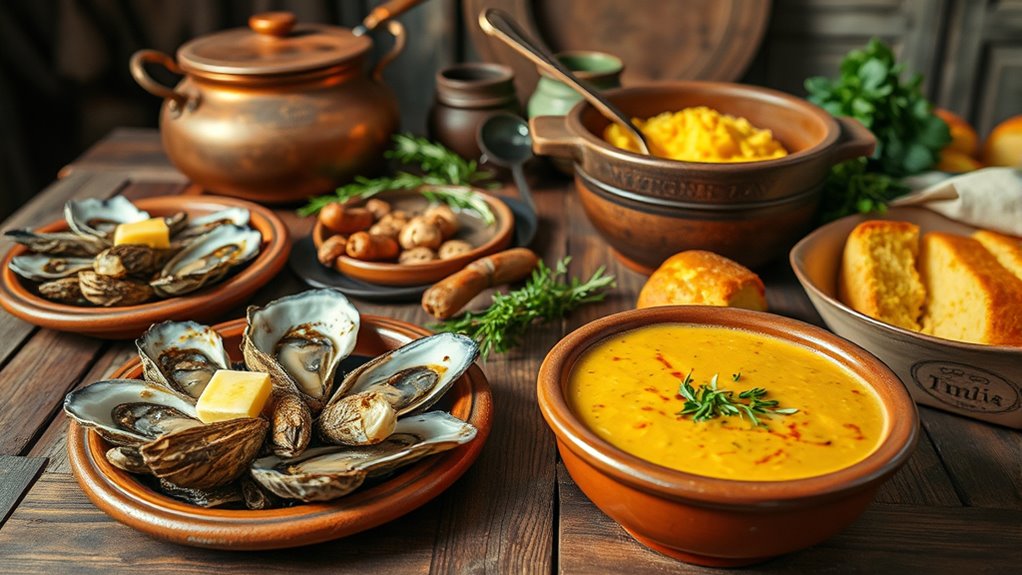
When English settlers arrived in Virginia, they brought with them European ingredients, recipes, and cooking techniques that gradually merged with indigenous practices. You’ll notice how early colonial menus combined local game, seafood, and produce with imported spices, sugar, and flour. Settlers adapted open-hearth cooking methods, mastering roasting, boiling, and baking without modern tools. Preservation techniques like salting, smoking, and pickling became essential for long-term storage. Colonial households often featured elaborate dishes, from roast meats to pies and puddings, reflecting both European traditions and regional availability. As settlements grew, so did the culinary landscape, blending native ingredients with new imports. This evolution laid the foundation for Virginia’s distinctive cuisine, emphasizing hearty, preserved foods that celebrated both its indigenous roots and colonial innovations. Durable wooden tools played a key role in food preparation, ensuring longevity and ease of use in colonial kitchens.

LEONICE Canning Supplies,Home Canning Starter kit for Beginner Full Set
- All-in-One Canning Kit: Includes essential tools and accessories
- Premium Stainless Steel: Safe and durable for canning tasks
- Versatile Canning Tools: Suitable for water bath and pressure canning
As an affiliate, we earn on qualifying purchases.
As an affiliate, we earn on qualifying purchases.
Iconic Virginia Food Staples and Regional Variations
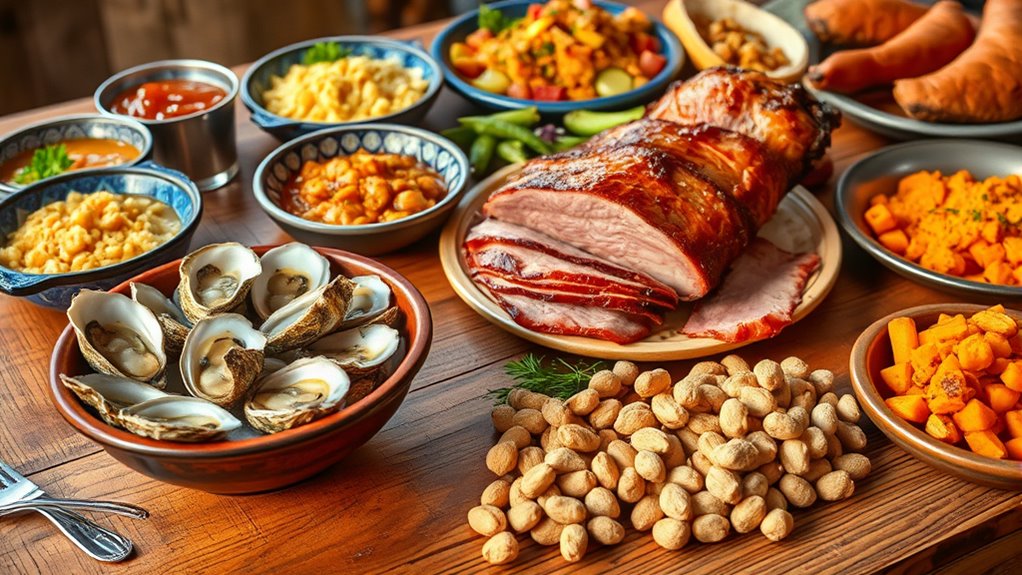
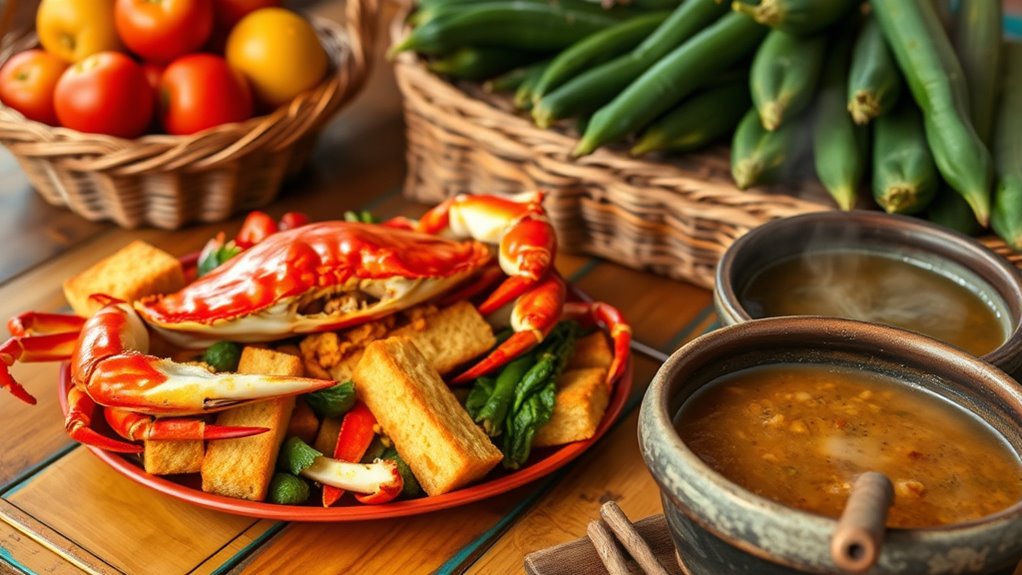
Virginia’s rich culinary landscape is defined by iconic staples like oysters, ham, peanuts, and blue crabs, each rooted in the region’s history and geography. In coastal areas, seafood dominates, with oysters and blue crabs prepared steamed, fried, or in crab cakes. Inland, you’ll find Virginia ham, salt-cured and aged, and peanuts, especially Virginia peanuts known for their large size. Regional variations reflect local ingredients and traditions: mountain areas focus on trout and game, while Piedmont blends indigenous, African, and European influences. Here’s a quick overview:
| Region | Key Ingredients | Typical Dishes |
|---|---|---|
| Coastal | Oysters, blue crabs | Crab cakes, steamed crabs |
| Mountain | Trout, game meats | Smoked trout, fried game |
| Piedmont | Peanuts, preserved meats | Peanut soup, stews |
Your culinary journey highlights Virginia’s diverse regional flavors. Additionally, cultural significance plays a vital role in shaping these regional dishes and food traditions.

Open-Hearth Cookbook: Recapturing the Flavor of Early America
- Condition: Used Book in Good Condition
As an affiliate, we earn on qualifying purchases.
As an affiliate, we earn on qualifying purchases.
Preserving Heritage Through Historic Cooking Techniques
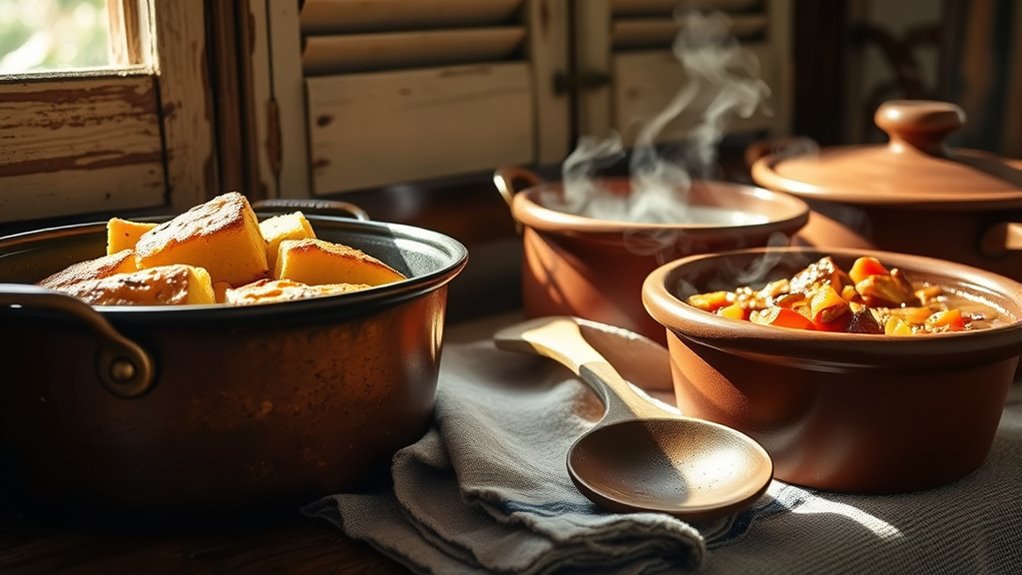
Throughout Virginia’s culinary history, techniques for preserving food have played a vital role in maintaining access to local flavors year-round. You can still see these methods in practice today, keeping traditions alive. First, smoking was essential for preserving meats and oysters, allowing you to enjoy them long after harvest or catch. Second, drying techniques, especially for seafood and meats, helped store food for trade or winter consumption. Third, salting and pickling transformed seasonal produce like vegetables and fruits into preserved staples. Additionally, organic and natural juices have become a modern way to incorporate fresh, wholesome flavors into preservation practices. By mastering these methods, you connect with Virginia’s past, where preservation meant survival and trade. These techniques, passed down through generations, guarantee that the rich flavors and culinary heritage of Virginia remain accessible, authentic, and enduring.
Modern Celebrations and the Living Food Heritage
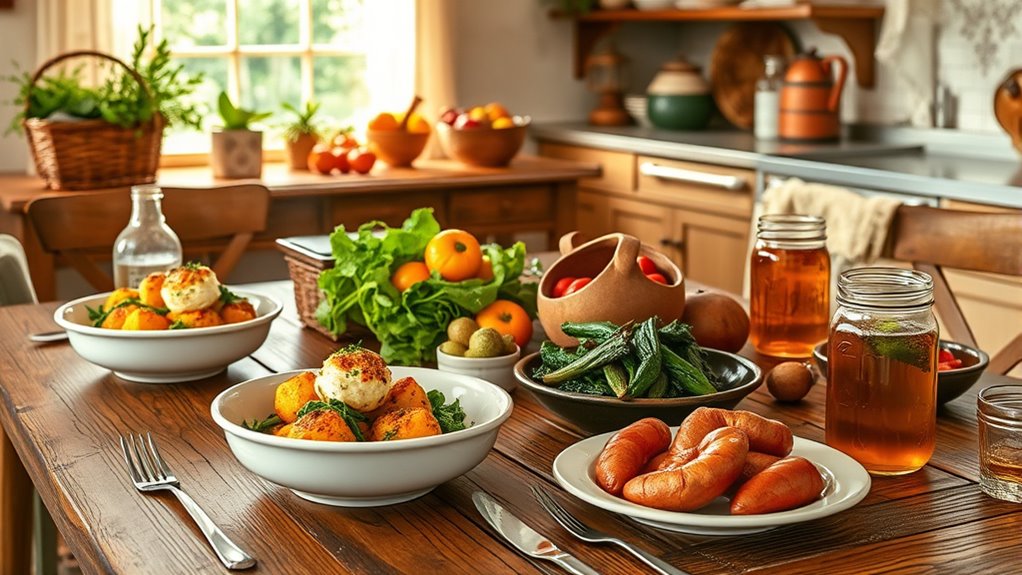
Modern celebrations in Virginia vividly honor the state’s rich culinary heritage by blending historic techniques with contemporary tastes. During festivals, you’ll see traditional methods like open-hearth cooking, smoking, and pickling showcased alongside modern culinary innovations. Events like Colonial Williamsburg’s reenactments and annual groaning board dinners allow you to experience colonial-era dishes with a fresh twist, connecting past and present. Local markets and food festivals highlight iconic Virginia ingredients such as oysters, ham, peanuts, and blue crabs, emphasizing regional flavors. Many families pass down recipes through generations, keeping traditional dishes alive. Today’s chefs incorporate indigenous, European, and African influences into new creations, celebrating Virginia’s diverse culinary history while appealing to modern palates. Food remains a crucial part of Virginia’s living cultural identity. Additionally, understanding the food heritage and traditional preparation methods enriches the appreciation for Virginia’s unique culinary landscape.
Frequently Asked Questions
How Have Virginia’s Indigenous Ingredients Influenced Contemporary Cuisine?
You’ll notice Virginia’s indigenous ingredients like oysters, blue crabs, and peanuts heavily influence contemporary dishes. These staples are incorporated into modern seafood boils, crab cakes, and peanut-based sauces, reflecting their historical significance. Chefs and home cooks alike preserve traditional flavors, blending them with new techniques. This connection to indigenous ingredients keeps Virginia’s culinary heritage alive, honoring its roots while adapting to today’s tastes and culinary innovations.
What Are Some Traditional Virginia Cooking Tools Still Used Today?
You’ll find traditional Virginia cooking tools still in use today, like cast-iron skillets for frying and baking, which retain heat well and add flavor. Wooden spoons and paddles are common for stirring and mixing, reflecting indigenous and colonial techniques. Open-hearth cookware, like large pots and spits, is used in historic reenactments. These tools connect you to Virginia’s culinary past while allowing you to cook authentically and with character.
How Do Regional Differences Shape Virginia’s Food Presentation and Dining Styles?
You notice that Virginia’s regional differences influence how food is presented and enjoyed. Coastal areas emphasize seafood dishes like oysters and crab cakes, often served simply to highlight freshness. Mountain regions favor hearty, rustic presentations with smoked meats and foraged ingredients. In urban centers, you’ll find more fusion-style plating and diverse flavors. These variations reflect local ingredients, cultural influences, and traditions, creating a vibrant, regionally distinct dining experience across Virginia.
In What Ways Are Modern Chefs Innovating Virginia’s Historic Recipes?
Modern chefs are breathing new life into Virginia’s historic recipes like artists restoring a classic painting. They experiment with local ingredients and contemporary techniques, turning traditional dishes into innovative creations. You’ll see chefs smoking Virginia ham with unique flavors, reimagining oyster dishes with bold spices, and modernizing Brunswick stew with fresh, seasonal produce. Their creativity bridges the past and present, making Virginia’s culinary history vibrantly relevant today.
How Do Virginia Food Festivals Celebrate Its Culinary History Today?
At Virginia food festivals, you get to experience the state’s culinary history firsthand. You can taste historic dishes like oyster stew, Virginia ham, and peanut treats, often prepared using traditional methods. These festivals highlight regional specialties through live cooking demos, tastings, and storytelling, allowing you to connect with Virginia’s rich food legacy. They also feature cultural events, music, and crafts, celebrating the state’s diverse culinary roots and evolving food traditions.
Conclusion
As you explore Virginia’s rich culinary tapestry, you’ll find it’s like a gentle river flowing through time, carrying whispers of indigenous roots and colonial whispers. Each bite invites you to savor the echoes of historic techniques and regional flavors, blending tradition with modern celebration. By embracing these culinary stories, you become part of a living heritage, where every dish gently nurtures the soul and keeps Virginia’s flavorful legacy softly glowing for generations to come.