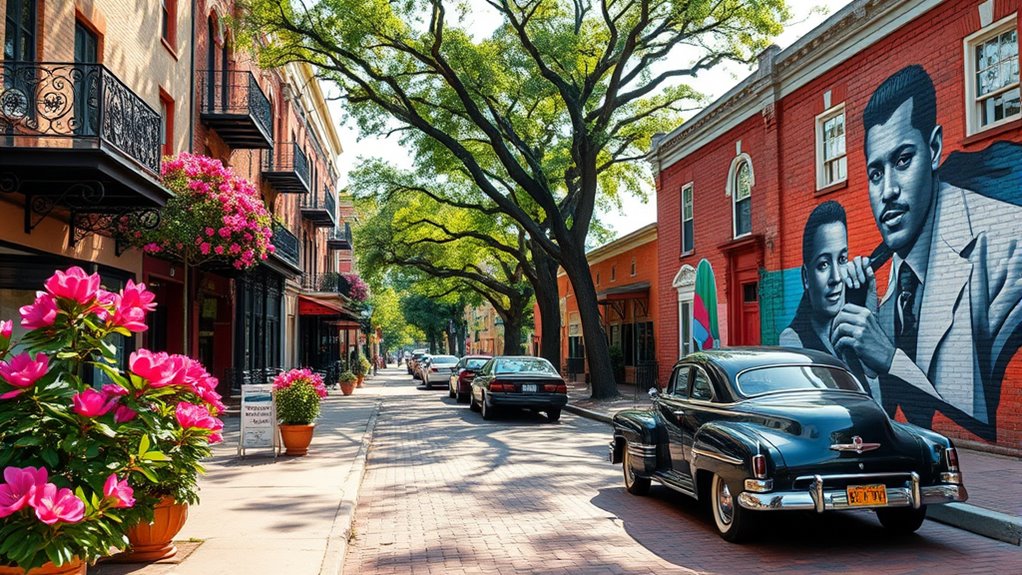

Alabama’s history and culture are deeply rooted in its Native American heritage, early European contact, and pivotal civil rights struggles. You’ll find a rich legacy of indigenous tribes, historic battles, and efforts to preserve Native traditions today. The state also played a major role in the Civil War and the fight for racial equality. Its industries shifted from agriculture to manufacturing and military contributions. Exploring further reveals how Alabama continues shaping its vibrant identity today.
Key Takeaways
- Alabama has a rich Native American heritage, including tribes like Creek, Cherokee, and Choctaw, with ongoing cultural preservation efforts.
- The state’s history includes European colonization, displacement of tribes, and its formation as a state in 1819.
- Alabama played a significant role in the Civil War, with key battles and efforts to end slavery and promote civil rights.
- Its cultural landscape features festivals, powwows, art fairs, and language revitalization programs celebrating Native and African American traditions.
- The economy evolved from agriculture to manufacturing, military contributions, and high-tech industries, shaping Alabama’s diverse cultural identity.

Native Americans and the Environment: Perspectives on the Ecological Indian
Used Book in Good Condition
As an affiliate, we earn on qualifying purchases.
As an affiliate, we earn on qualifying purchases.
Indigenous Roots and Early European Encounters
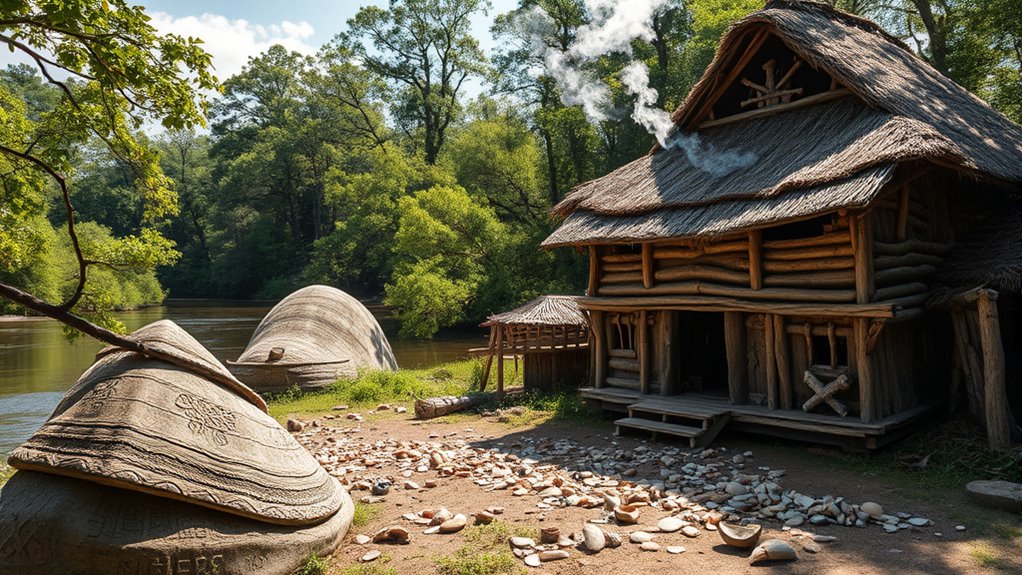
Before European explorers arrived, the land now called Alabama was home to Native American tribes such as the Creek, Cherokee, Choctaw, Chickasaw, and Seminole. These tribes thrived across the region, developing rich cultures, languages, and societies. They hunted, farmed, and traded, establishing complex social and political structures. When Europeans first made contact in the early 18th century, they introduced new goods, technologies, and diseases that drastically affected native populations. French settlers arrived in Mobile in 1702, establishing one of the first European colonies in the area. British control followed after 1763, and later, American settlers pushed westward after the Louisiana Purchase. European contact gradually displaced and marginalized the indigenous peoples, leading to treaties, land cessions, and forced removals like the Trail of Tears. Additionally, indigenous cultural resilience played a crucial role in preserving their identities despite these challenges.

Alabama and the Civil War: A History & Guide (Civil War Series)
As an affiliate, we earn on qualifying purchases.
As an affiliate, we earn on qualifying purchases.
Statehood, Governance, and Political Foundations
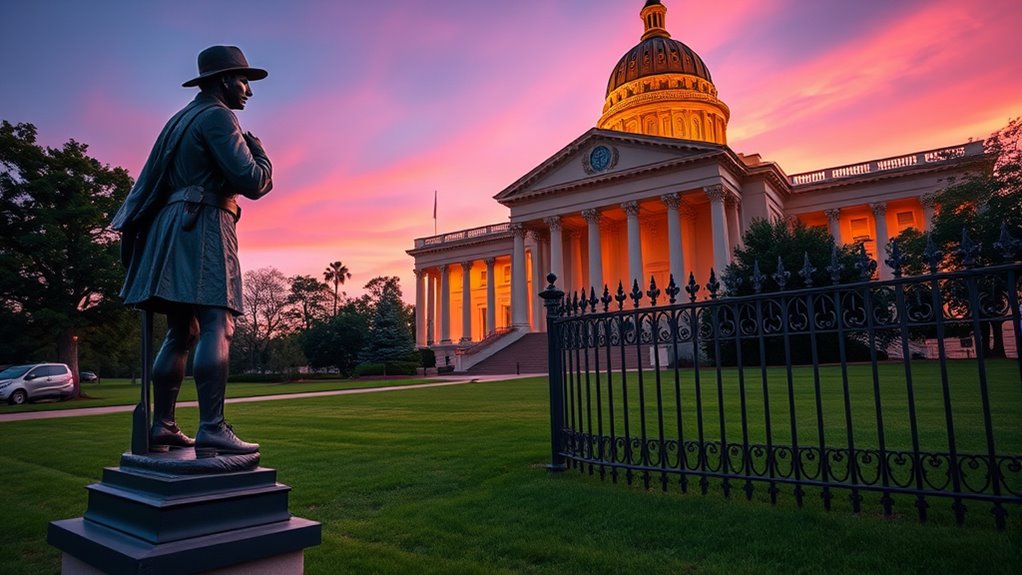
How did Alabama establish its political identity and governance structures as it evolved from territory to state? You played a role in shaping its early government, from territorial councils to a state constitution. Alabama’s path to statehood in 1819 marked its formal entry into the Union, balancing slaveholding interests with federal authority. You should know that its early governance reflected white male suffrage, excluding women and enslaved people. The state’s political landscape changed dramatically after the Civil War, especially during Reconstruction when black citizens gained voting rights. However, those gains were rolled back with the 1901 Constitution, severely limiting Black and poor white voters. As you explore Alabama’s history, consider how these political shifts impacted its development and identity.
- Formation of Alabama’s first state government and constitution
- Impact of Reconstruction on voting rights and racial politics
- The long-lasting effects of the 1901 disenfranchisement laws

30 Pack 4 Inch Wood Native American Totem Cutouts Unfinished Wooden American Totem Hanging Ornaments DIY Totem Craft Gift Tags for Home Party Decoration Craft Project
Unfinished wooden Native American Totem cutouts are made of quality wood for durable use; with smooth surface, easy…
As an affiliate, we earn on qualifying purchases.
As an affiliate, we earn on qualifying purchases.
Civil War and the Fight for Union and Independence

You see that Alabama chose to secede from the Union on January 11, 1861, asserting its desire for independence. The state played a key role in the Civil War, with major battles like Mobile Bay and Wilson’s Raid marking its involvement. These events shaped Alabama’s fight for sovereignty and its place in American history. Additionally, Alabama’s Water Parks offer modern leisure experiences that reflect the state’s diverse attractions beyond its historical significance.
Alabama’s Secession Decision
What led Alabama to choose secession from the Union in 1861? You learn that economic dependence on slavery and cotton exports heavily influenced the decision. Many residents believed that states had the right to secede if they felt their rights were threatened. Fear of Northern abolitionist policies and political disagreements also played a role. Alabama’s leaders asserted that secession was necessary to protect their way of life and economic interests.
- The desire to preserve slavery as a social and economic system
- Political conflicts over states’ rights versus federal authority
- The influence of Southern solidarity and fear of losing influence in national politics
Civil War Battles in Alabama
Alabama played a pivotal role in the Civil War, with several key battles that shaped the conflict’s outcome. You might visit Mobile Bay, where Admiral Farragut’s Union fleet achieved a critical victory at the Battle of Mobile Bay in 1864, gaining control of essential waterways. The Battle of Mobile, fought in April 1865, marked the Union’s final assault on a major Confederate stronghold. You could also explore the Battle of Decatur in 1864 or the skirmishes around Selma and Montgomery, which disrupted Confederate supply lines. These battles demonstrated Alabama’s strategic importance due to its rivers, railroads, and ports. The fighting resulted in significant Union gains, weakening Confederate defenses and hastening the end of the war in the Deep South. Additionally, the notable achievements and statistics from these campaigns highlight Alabama’s strategic contributions to Union efforts.

Histoical Photo Art,African American Photo,Civil Rights Young Men PRotesting Alabama With National Gaurd Black HIstory Month,Civil Rights Decor 11x14in Black Frame
Celebrate Black History Month: Our Historical Photo Art Captures The Essence Of African American History, Showcasing Powerful Moments…
As an affiliate, we earn on qualifying purchases.
As an affiliate, we earn on qualifying purchases.
Reconstruction, Civil Rights, and African American Progress
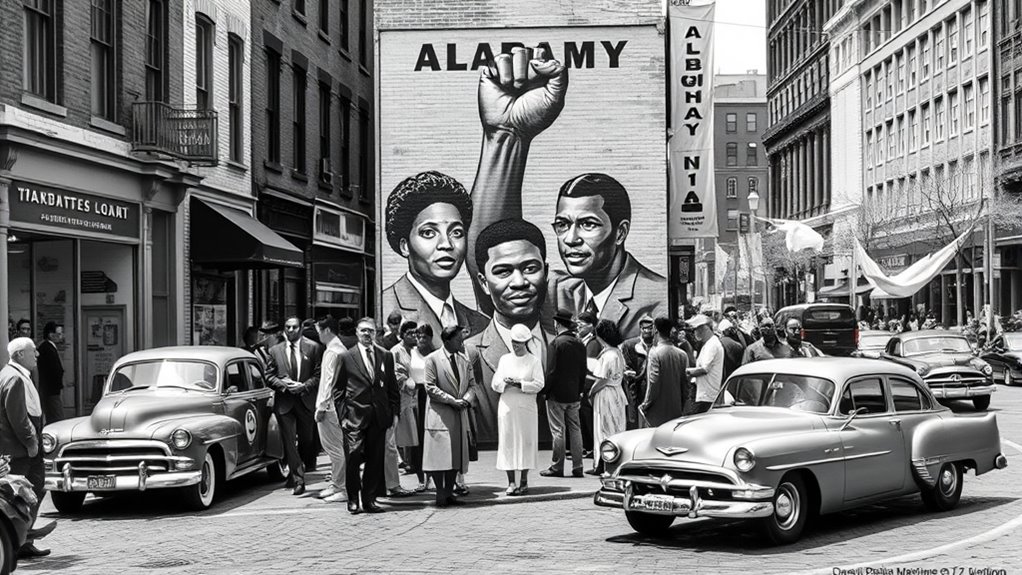
Following the end of the Civil War, Alabama faced the challenge of rebuilding a society deeply divided by slavery and segregation. During Reconstruction, new laws granted Black citizens voting rights and established public schools, marking significant progress. You should know that institutions like Lincoln Normal School helped educate African Americans, and William H. Smith became Alabama’s first Reconstruction governor. However, opposition was fierce, and by 1876, many advances were rolled back, leading to disenfranchisement. Penetration Testing techniques were sometimes used during this period to expose vulnerabilities in the newly established systems of racial segregation and disenfranchisement.
Economic Transformations in the 20th Century
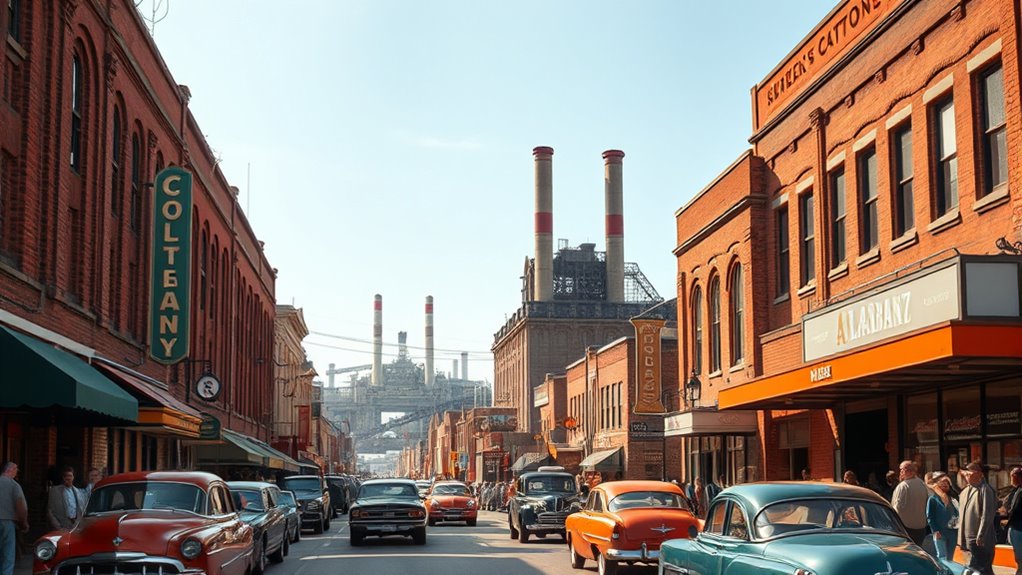
The 20th century brought significant economic changes to Alabama, transforming its industries and workforce. You see, the state shifted from a primarily agriculture-based economy to a hub for manufacturing, steel, and automotive industries. Post-World War II, military bases and defense contracts spurred growth in Mobile, Huntsville, and Montgomery, creating jobs and attracting new residents. The expansion of the textile industry also played an indispensable role, though it declined later in the century due to global competition. You’ll notice that infrastructure improvements, like highways and ports, facilitated commerce and industry growth. The introduction of a sales tax in 1937 helped fund public services, while economic diversification became essential for stability. Additionally, the adoption of high-tech industries in the late 20th century further transformed Alabama’s economic landscape. Overall, Alabama’s economy evolved from its rural roots into a more industrialized and diverse landscape.
Cultural Heritage: Music, Sports, and Regional Pride

Music and sports have become powerful symbols of Alabama’s cultural identity, reflecting its rich history and regional pride. You feel the heartbeat of country music through Hank Williams’ timeless songs, showcasing Alabama’s influence on American sound. College football, especially the Alabama Crimson Tide, ignites passion across the state, creating a sense of unity and pride. The state’s musical heritage is also celebrated through festivals and local talent, preserving its legacy. Sports victories and musical legends are woven into the fabric of community life, reinforcing regional identity. Additionally, the tradition of beekeeping has contributed to Alabama’s agricultural history, with honey and related products playing a role in local culture and economy.
Native American Legacies and Contemporary Reconciliation

Native American communities have left a lasting mark on Alabama’s history and culture, despite centuries of displacement and marginalization. Today, efforts focus on honoring their legacies and fostering reconciliation. You can see this in cultural centers, tribal events, and educational programs that celebrate Native traditions. Imagine a table like this:
| Heritage Site | Cultural Event | Educational Initiative |
|---|---|---|
| Creek Nation Museum | Powwows and festivals | Tribal history courses |
| Cherokee Heritage Center | Language revitalization | School programs for Native history |
| Choctaw Cultural Center | Art and craft fairs | Native leadership training |
These symbols of resilience remind you of Alabama’s rich Native roots and ongoing efforts to preserve and respect their contributions amidst a shared, complex history. Additionally, cultural preservation initiatives play a vital role in maintaining Native traditions and educating the broader community about their significance.
Alabama’s Role in World Wars and Military Contributions
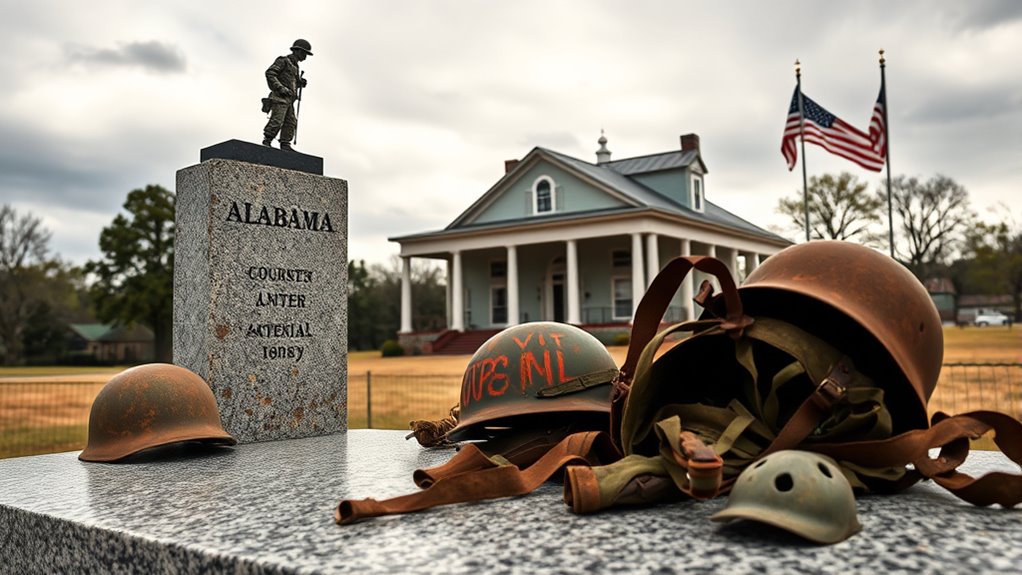
Alabama’s military history is deeply intertwined with its cultural legacy, especially during the World Wars. You should know that Alabama contributed considerably to U.S. military efforts through training, base expansion, and pioneering African-American pilots. During WWII, the Tuskegee Airmen trained in Alabama, breaking racial barriers and earning fame for their bravery. The state also hosted key military bases in Montgomery, Mobile, and Huntsville, boosting the economy and strategic importance. You might find it interesting that Alabama’s soldiers fought in major conflicts, shaping national history. Cultural intelligence played a vital role in fostering diverse teams that contributed to these military achievements.
Challenges and Opportunities in Modern Alabama

You face the challenge of transforming Alabama’s economy through diversification strategies that reduce reliance on traditional industries. At the same time, progress in civil rights offers opportunities to build a more inclusive and equitable society. By embracing these paths, you can shape Alabama’s future while honoring its complex history. Incorporating innovative self watering plant pots into urban development projects can promote sustainability and environmental awareness.
Economic Diversification Strategies
Despite its rich history rooted in agriculture, manufacturing, and resource extraction, Alabama faces the challenge of diversifying its economy to guarantee sustainable growth. You can explore new industries and opportunities to strengthen the state’s financial future. Key strategies include attracting high-tech companies, investing in renewable energy, and expanding healthcare and education sectors. These efforts aim to reduce dependence on traditional industries and create more resilient economic bases. Alabama’s strategic location and existing infrastructure offer a solid foundation for growth. By fostering innovation and supporting small businesses, the state can boost employment and stability. The goal is to transform Alabama into a diverse economic hub that adapts to modern demands and ensures long-term prosperity for its residents. Emphasizing creative practice and innovative thinking can also open new avenues for economic development and problem-solving within the state.
Civil Rights Progress
The state’s efforts to diversify its economy have opened new opportunities for growth, but longstanding challenges in civil rights remain deeply embedded. You witness ongoing struggles for equality, yet also see progress driven by brave activists and community efforts. Despite legal victories, disparities in education, housing, and justice persist. Opportunities now exist for meaningful change, but obstacles include entrenched biases and systemic inequities.
| Challenges | Opportunities |
|---|---|
| Racial disparities in justice | Community-led reforms |
| Unequal access to education | Increased political engagement |
| Economic inequality | Building inclusive policies |
| Persistent segregation | Celebrating cultural diversity |
You can be part of Alabama’s ongoing journey toward true civil rights and unity.
Frequently Asked Questions
How Did Native American Tribes Influence Alabama’s Early Culture and Traditions?
You can see Native American tribes’ influence in Alabama’s early culture through their traditions, languages, and social structures. They introduced hunting, farming techniques, and craft skills like pottery and weaving, which shaped local practices. Their spiritual beliefs and ceremonies also left a lasting mark. Even today, Native American heritage influences Alabama’s cultural identity, festivals, and place names, reminding you of their enduring legacy in shaping the state’s foundations.
What Role Did Alabama Play in the Civil Rights Movement?
You should know Alabama played a pivotal role in the civil rights movement, hosting the 1963 Birmingham campaign where over 1,000 protesters were arrested, highlighting racial injustice. The Montgomery Bus Boycott, sparked by Rosa Parks, lasted 381 days and challenged segregation laws. These moments galvanized national change, making Alabama a symbol of resistance and progress in the fight for racial equality.
How Has Alabama’s Economy Evolved From Agriculture to Industry?
You see Alabama’s economy shift from agriculture to industry through the 20th century. As farming declined, you notice the rise of manufacturing, especially in textiles, steel, and automotive sectors. World War II accelerated this change, with military bases and defense industries boosting growth. Today, you find Alabama diversifying further with technology, aerospace, and services, reflecting an economy that’s evolved from reliance on farming to a more industrial and industrially driven state.
What Are Some Notable Native American Sites in Alabama Today?
You can visit notable Native American sites like Horseshoe Bend National Military Park, where the Creek fought against U.S. forces, and the Creek Indian Village Museum, showcasing Creek culture. The Moundville Archaeological Park features impressive prehistoric mounds built by indigenous peoples. These sites offer a glimpse into Alabama’s Native American history, helping you understand the rich cultural legacy and the enduring presence of Native tribes in the state today.
How Does Alabama Preserve Its Musical and Athletic Heritage Nationally?
You can see Alabama’s musical and athletic heritage celebrated nationwide through iconic landmarks like the Alabama Sports Hall of Fame and the Hank Williams Museum. While football greatness is showcased on college campuses and in annual games, country music’s roots are honored in museums and festivals. These efforts preserve Alabama’s legacy, blending sports and music to highlight its cultural influence and inspire pride across the country.
Conclusion
As you explore Alabama’s rich history and vibrant culture, one thing becomes clear — its story is far from over. From ancient roots to modern challenges, the state’s past continues to shape its future in unexpected ways. Will Alabama’s legacy of resilience and innovation lead to new breakthroughs? Only time will tell. But one thing’s certain: the next chapter of Alabama’s story is waiting to be written, and you’re part of it.