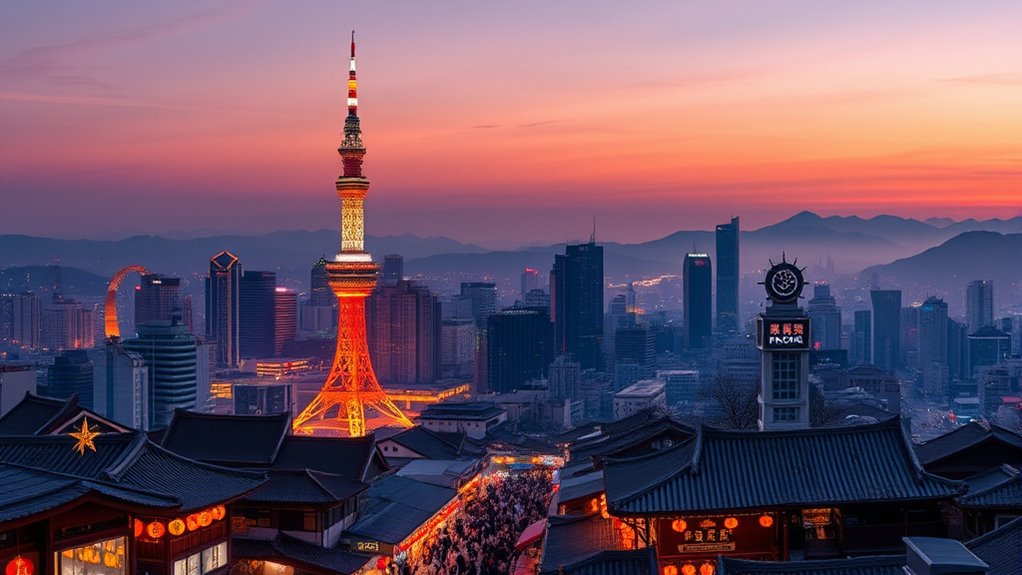

If you’re exploring South Korea, start with its iconic landmarks like Gyeongbokgung Palace and Bukchon Hanok Village to immerse yourself in rich history and traditional architecture. Venture into stunning natural sites such as Seoraksan National Park and Hallasan Mountain for breathtaking scenery and outdoor adventures. Then, experience vibrant urban areas like Myeongdong, Hongdae, and N Seoul Tower, where modern culture, shopping, and panoramic views await. Keep exploring to uncover even more unforgettable sights and experiences.
Key Takeaways
- Gyeongbokgung Palace: A historic royal palace showcasing Korea’s regal architecture and cultural heritage.
- Seoraksan National Park: Renowned for granite peaks, waterfalls, and scenic hiking trails.
- Bukchon Hanok Village: Preserved traditional hanok houses illustrating Joseon Dynasty architecture.
- N Seoul Tower: Offers panoramic views of Seoul via cable car and observation decks.
- Jeju Island’s volcanic sites: Unique natural wonders like Seongsan Ilchulbong and volcanic tubes.
Historic and Cultural Landmarks
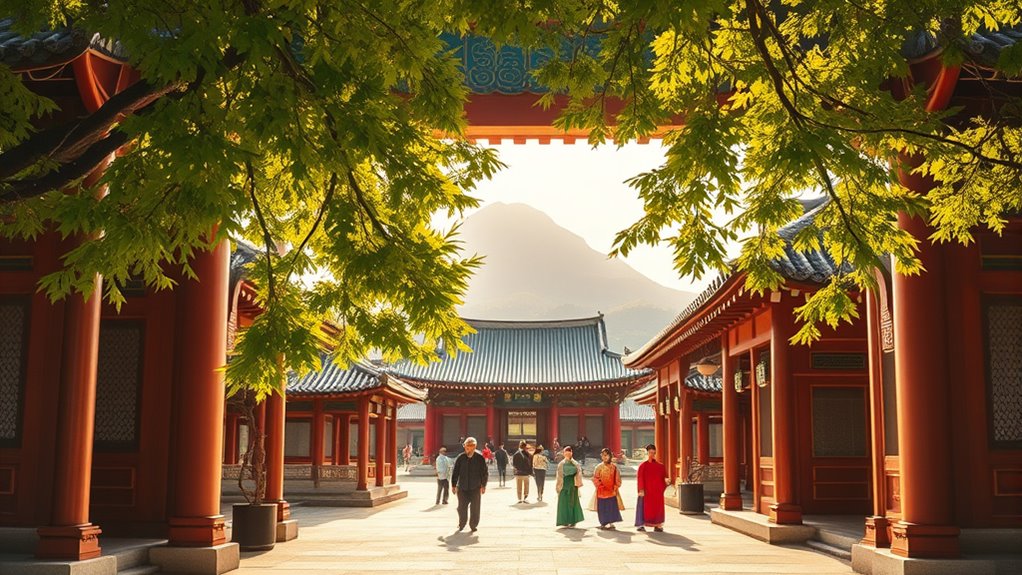
South Korea’s historic and cultural landmarks offer a glimpse into its rich past and enduring traditions. You can explore Gyeongbokgung Palace, a 14th-century royal residence built by the Joseon dynasty, which also houses the National Museum of Korea and the National Folk Museum. Walking through Bukchon Hanok Village, you’ll see beautifully preserved traditional hanok houses that showcase Joseon Dynasty architecture. In Gyeongju, you’ll find Bulguksa Temple, a UNESCO World Heritage site with stunning Buddhist statues from the Silla era, and the Daereungwon Tomb Complex, where ancient royal tombs lie. These sites give you a deep connection to Korea’s history, culture, and spiritual heritage, making them essential stops for anyone wanting to understand the country’s roots. Proper application timing of visiting these landmarks can enhance your overall experience and appreciation of Korea’s cultural significance.
Natural Wonders and Scenic Parks
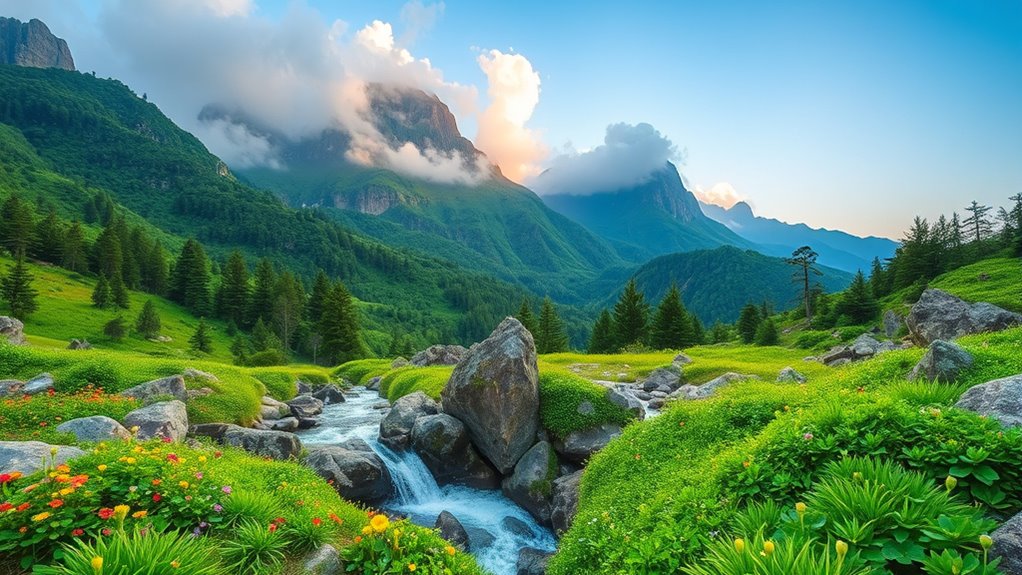
Natural wonders and scenic parks in Korea offer breathtaking landscapes that captivate visitors and provide a serene escape from urban life. You can explore:
Discover Korea’s stunning natural parks and breathtaking landscapes for a peaceful outdoor escape.
- Seoraksan National Park – Known for granite peaks, waterfalls, and lush valleys, it offers hiking trails and a cable car to Gwongeumseong Fortress.
- Hallasan Mountain – Jeju Island’s dormant volcano features scenic hiking routes and unique flora.
- Bijarim Forest – An ancient nutmeg tree forest celebrated for its biodiversity and tranquil atmosphere.
- Jeju Volcanic Tubes and Seongsan Ilchulbong – Volcanic formations perfect for hiking and taking in stunning views.
These natural wonders showcase Korea’s diverse landscapes and provide unforgettable outdoor experiences, with conservation efforts helping to preserve these beautiful sites for future generations.
Urban Hotspots and Unique Experiences
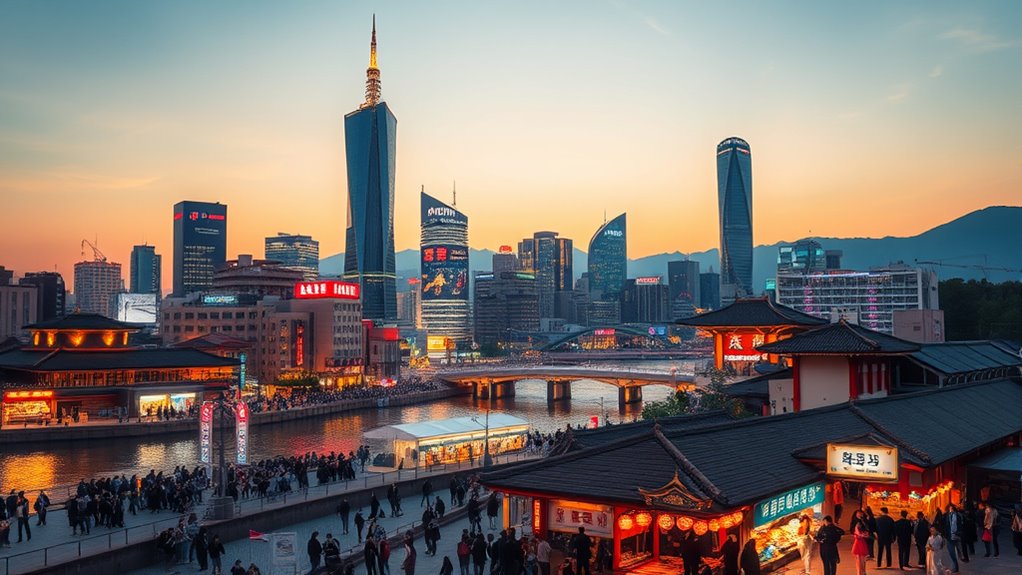
Discover the vibrant energy of Seoul’s urban hotspots, where cutting-edge entertainment, shopping, and cultural experiences come together to create unforgettable memories. You can explore the bustling streets of Myeongdong, filled with skincare, fashion, and street food stalls that buzz into the night. Head to Hongdae for youthful energy, live music, and quirky cafes that showcase Korea’s innovative spirit. For panoramic city views, visit N Seoul Tower, accessible by cable car, and enjoy the breathtaking skyline. Don’t miss the stylish neighborhoods of Gangnam, known for luxury shopping and trendy cafes. Throughout your journey, discover unique experiences like themed cafes, secret bars, and immersive markets, all blending tradition with modern flair, making Seoul an urban playground full of surprises. Empowering independent sellers for success can also be observed in Seoul’s vibrant markets and retail environments, where entrepreneurial spirit thrives.
Frequently Asked Questions
What Are the Best Times to Visit South Korea’s Top Attractions?
You should visit South Korea’s top attractions in spring (April to June) and fall (September to November). During these seasons, the weather is mild and pleasant, perfect for exploring palaces, temples, and parks. Spring offers stunning cherry blossoms, while fall showcases vibrant autumn foliage. Avoid peak summer months (July and August) when high humidity and rain can hinder your experience, and winter for outdoor activities due to cold weather.
Are There Guided Tours Available at Major Cultural Sites?
Yes, guided tours are widely available at major cultural sites in South Korea, opening a door to the soul of each place. You can join organized group tours or hire private guides to enrich your experience. These tours often include fascinating stories, historical insights, and insider tips, transforming your visit into a memorable journey through Korea’s rich heritage. Book ahead to guarantee you don’t miss out on this immersive experience.
How Accessible Are the Attractions for Travelers With Disabilities?
You’ll find that many attractions in South Korea are becoming more accessible for travelers with disabilities. Major sites like Gyeongbokgung Palace, N Seoul Tower, and museums often have ramps, elevators, and designated pathways. However, some historic or traditional areas, like Bukchon Hanok Village or ancient tomb complexes, may have limited accessibility due to their preservation. It’s best to verify in advance or contact sites for specific accommodations to ensure a smooth visit.
What Local Customs Should Visitors Observe at Historic Sites?
You should show respect at historic sites by dressing modestly, speaking softly, and following designated pathways. Always bow slightly when greeting or thanking staff or monks, and avoid loud noises or disruptive behavior. Refrain from touching or climbing on ancient artifacts or structures. Take photos only where permitted, and never litter. Observing these customs shows appreciation for Korea’s cultural heritage and helps preserve these significant sites for future visitors.
Are There Any Special Festivals or Events Near These Attractions?
You won’t want to miss the festivals happening near these attractions—each one offers a unique glimpse into Korea’s vibrant culture. Imagine experiencing the colorful Gyeongju Cherry Blossom Festival or the lively Seoul Lantern Festival, both filled with lights, music, and tradition. These events are your chance to immerse yourself in local customs, taste special foods, and join in celebrations that make your visit unforgettable. Don’t miss out—plan your trip around these exciting festivals!
Conclusion
As you explore South Korea’s treasures, you’ll find a land that gently invites you to discover its hidden charms. From timeless landmarks to breathtaking landscapes and bustling cityscapes, every corner offers a subtle promise of unforgettable moments. Embrace the journey, and let the country’s elusive magic leave a lasting impression. Sometimes, the most enchanting experiences are those you never quite expected—ready to uncover the gentle secrets waiting just around the corner?