
South Korea’s history begins over 700,000 years ago with early settlements and advances through the Three Kingdoms, where Buddhism and cultural achievements flourished. The Joseon Dynasty emphasized Confucianism, shaping traditions that still influence society today. After hardships during Japanese colonization and war, South Korea rose rapidly as a powerful economy and cultural leader, especially with the Korean Wave. To discover more about its fascinating journey and vibrant culture, keep exploring its rich legacy and modern innovations.
Key Takeaways
- South Korea’s history spans from prehistoric settlements through the Three Kingdoms, unified dynasties, and modern resilience post-20th-century conflicts.
- Buddhism and Confucianism profoundly influenced Korea’s cultural development, art, social norms, and governance over centuries.
- The Joseon Dynasty saw significant cultural advancements, including Hangul script creation, ceramics, and preservation of traditional arts.
- Modern South Korea rapidly industrialized and became a global leader in technology, entertainment, and cultural exports like K-pop and Korean cinema.
- The Korean Wave (Hallyu) has globally popularized Korean music, drama, cuisine, and fashion, shaping Korea’s contemporary cultural identity.
Origins of the Korean Nation and Early Cultures

The origins of the Korean nation trace back over 700,000 years to prehistoric settlements on the Korean Peninsula and in Manchuria, where Paleolithic tools like those found at Jeongok-ri and Komun Moru provide evidence of early human activity. You can see how ancient people adapted to their environment, hunting and gathering to survive. Over time, these early groups developed more sophisticated tools and techniques, laying the groundwork for future cultures. As the climate warmed, communities began forming more permanent settlements, leading to the Bronze Age. During this period, tribes started using metals, which enabled them to craft weapons and tools, fostering social organization and early state formation. The development of early tools and techniques played a crucial role in shaping Korea’s cultural evolution and social structures. These early developments set the foundation for Korea’s rich and diverse cultural history.
The Three Kingdoms and the Rise of Buddhism
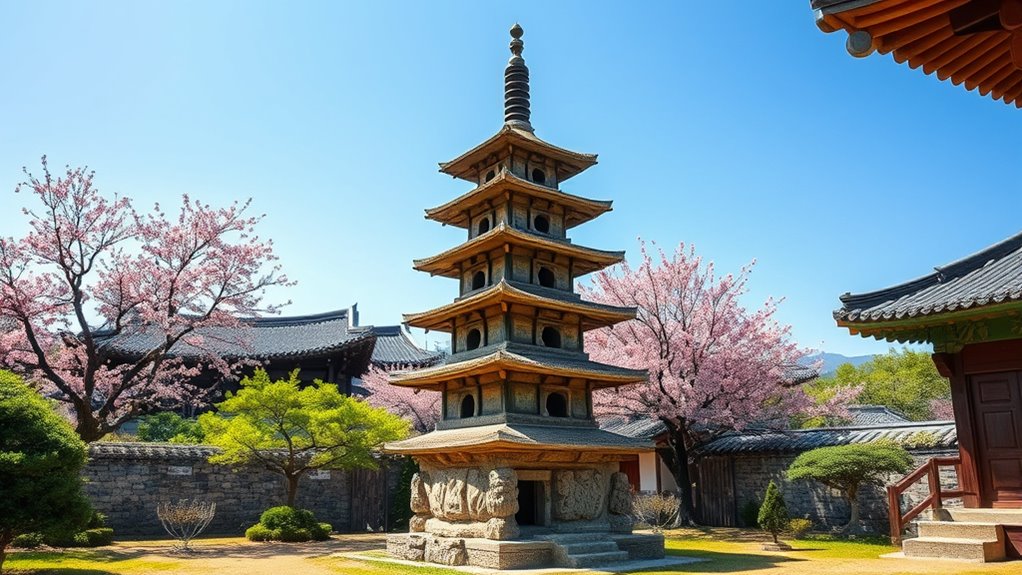
Around 57 BCE, Korea entered a period marked by the emergence of three powerful kingdoms—Goguryeo, Baekje, and Silla—that would shape its early history. During this time, Buddhism gained prominence, unifying the kingdoms culturally and spiritually. You see, rulers adopted Buddhism to legitimize their authority and foster stability. This religious shift influenced art, architecture, and governance, shaping Korea’s identity. The table below highlights key contributions:
| Kingdom | Religious Impact | Cultural Achievements |
|---|---|---|
| Goguryeo | Buddhist temples | Tomb murals, fortresses |
| Baekje | Spread of Buddhism | Gold crowns, maritime trade |
| Silla | Buddhism as state religion | Celadon ceramics, gold crowns |
Buddhism’s rise strengthened political alliances and promoted cultural exchange, leaving a lasting legacy. Furthermore, the spread of Buddhism played a crucial role in fostering diplomatic relations with neighboring regions.
The Unified Silla Dynasty and Cultural Flourishing
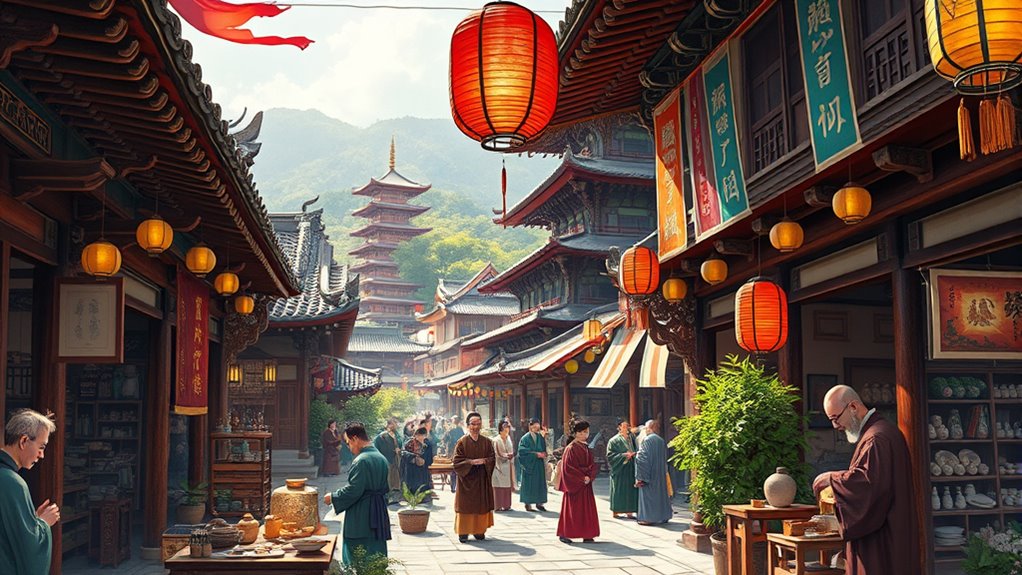
When Silla unified the Korean Peninsula in 668 CE, it sparked a remarkable period of cultural development and artistic achievement. During this time, Buddhism flourished, influencing architecture, sculpture, and painting. You’ll see impressive stone pagodas like Bulguksa and Seokguram Grotto, which showcase sophisticated craftsmanship. Literature and calligraphy advanced as scholars created new styles, reflecting the era’s spiritual and intellectual pursuits. Silla also promoted the arts of goldsmithing, ceramics, and intricate metalwork, which became highly valued. The establishment of a centralized government supported the arts, leading to a rich cultural landscape. This period solidified Korea’s identity, blending spiritual devotion with artistic innovation, and laid the foundation for future cultural achievements across the nation. Additionally, the promotion of cultural intelligence skills helped facilitate the exchange of ideas and artistic techniques across different regions and cultures.
The Joseon Dynasty: Confucianism and Cultural Advancements
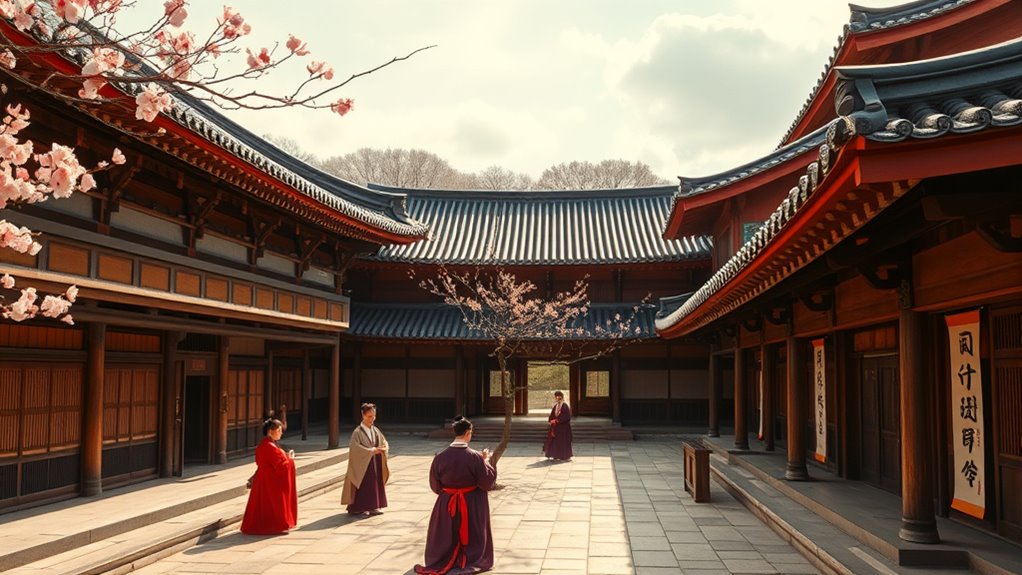
During the Joseon Dynasty, Confucianism became the guiding principle of government, society, and daily life, profoundly shaping Korea’s cultural landscape. You’ll find that it influenced everything from education to social hierarchy, emphasizing respect, filial piety, and moral conduct. The dynasty prioritized Confucian ideals, establishing a bureaucratic system based on merit and scholarly achievement. King Sejong’s creation of Hangul revolutionized literacy, making reading and writing accessible to all. Artistic and technological advancements flourished, including sophisticated ceramics, painting, and literature. You’ll also see the era’s emphasis on Confucian rituals and moral codes reflected in social customs. Despite invasions and internal struggles, the period’s focus on Confucian values left a lasting legacy that still influences Korean culture today. Additionally, project management support provided during architectural endeavors helped preserve and enhance cultural sites from this era.
Japanese Colonial Era and Korean Resistance Movements
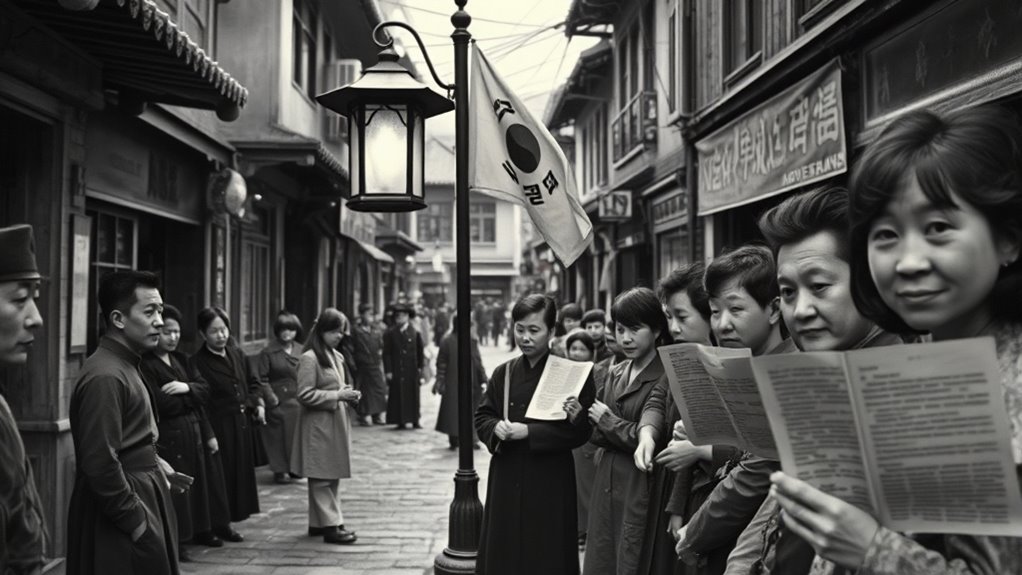
Why did Korea fiercely resist Japanese colonial rule despite overwhelming military and cultural dominance? You can see that, even under harsh repression, Koreans refused to give up their national identity. The March First Movement of 1919 exemplifies this resilience, as thousands took to the streets demanding independence. Despite Japan’s efforts to erase Korean culture through forced assimilation—such as banning the Korean language and suppressing traditional practices—you kept your traditions alive in secret. Resistance also took the form of underground independence groups operating both domestically and abroad, sabotaging Japanese efforts and spreading nationalist ideas. You fought to preserve your language, history, and spirit against overwhelming odds. The use of high-quality propaganda helped galvanize international support and maintain morale among the resistance. This unwavering drive for independence became a symbol of your collective resilience, fueling hope for a future free from colonial rule.
Post-World War II Division and the Korean War
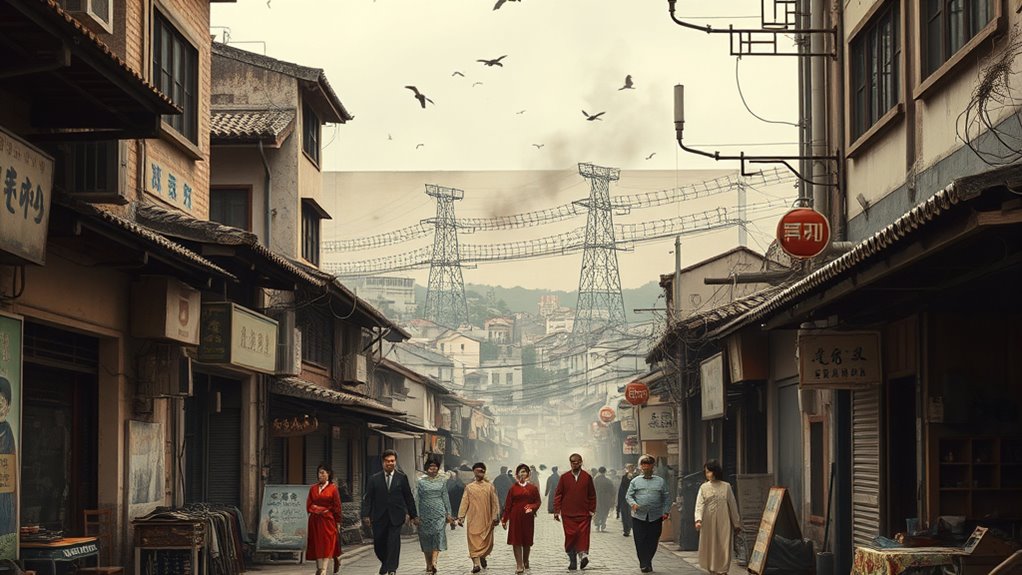
After Japan’s defeat in World War II, Korea was divided along the 38th parallel, with the Soviet Union occupying the north and the United States controlling the south. You witness the emerging tensions as both superpowers back different governments, leading to increasing hostility. In 1948, separate governments are established: North Korea under Kim Il-sung and South Korea under Syngman Rhee. Just two years later, North Korea invades South Korea on June 25, 1950, sparking the Korean War. You see devastating battles, massive civilian casualties, and widespread destruction as the conflict rages for three years. An armistice in 1953 halts fighting but leaves the peninsula divided. The war cements the division, shaping Korea’s political landscape and leaving a lasting impact on its people and history.
Political Transitions and Democratic Movements
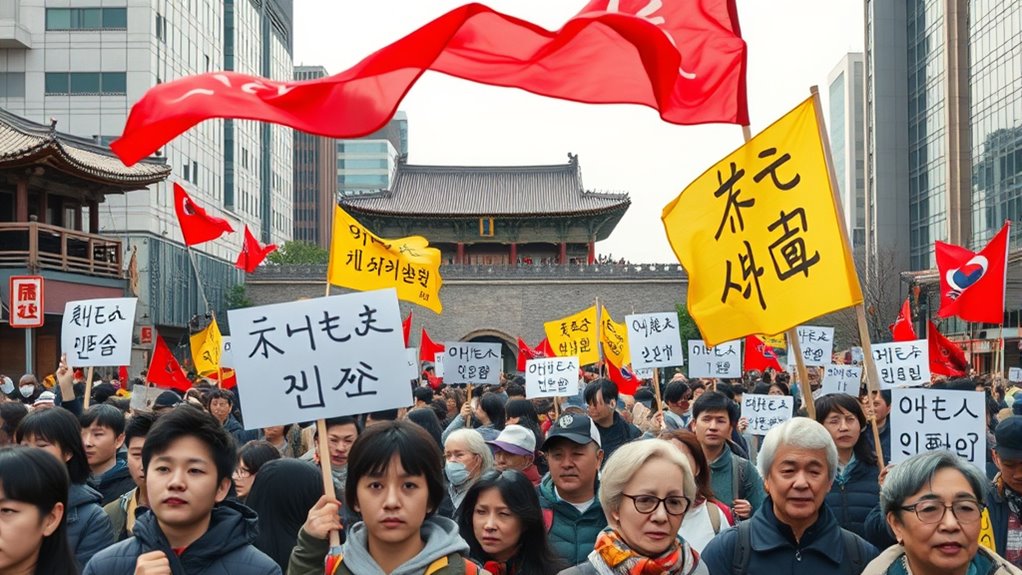
The path to democracy in South Korea has been marked by bold protests, political upheavals, and persistent citizen demands for change. You’ve witnessed fierce struggles, like the Gwangju Uprising of 1980, where thousands protested against authoritarian rule. These movements pressured leaders to reform, culminating in the June Democratic Struggle of 1987, which ended decades of dictatorship. Since then, South Korea’s political landscape has stabilized, with peaceful elections and democratic institutions. You can see the importance of activism in this progression, as shown in the table below:
| Event | Year | Impact |
|---|---|---|
| Gwangju Uprising | 1980 | Increased calls for democracy |
| June Democratic Struggle | 1987 | End of authoritarian rule |
| First Democratic Election | 1987 | Restored political freedom |
| Peaceful Power Transfer | 1997 | Consolidated democracy |
Additionally, ongoing civic engagement continues to shape South Korea’s democratic development, reinforcing the significance of political activism in this history.
South Korea’s Economic Development and Global Presence

You see how South Korea transformed from a war-torn nation into an economic powerhouse through rapid industrialization. This growth has propelled the country onto the global stage, shaping its international influence. Today, South Korea combines technological innovation with a vibrant cultural presence that reaches worldwide audiences. Notably, the country’s economic development has been supported by a strong emphasis on education and technological advancement, further cementing its position in the global economy.
Rapid Industrialization Achievements
South Korea’s rapid industrialization transformed it from a war-torn, impoverished nation into a leading global economy within just a few decades. You can see this change in the skyline and manufacturing power, fueled by government-led policies, innovation, and a skilled workforce. This growth is reflected in the following:
| Industry | Key Achievements | Global Impact |
|---|---|---|
| Technology | Samsung, LG, cutting-edge chips | Worldwide tech dominance |
| Automotive | Hyundai, Kia, export expansion | Major global auto players |
| Shipbuilding | Largest shipyards, export leader | Major ship exports |
| Steel & Heavy | Steel giants, infrastructure growth | Critical for global markets |
This transformation showcases South Korea’s resilience and drive, positioning it as a powerhouse in industry and innovation. Additionally, the country’s focus on technological innovation has been a driving force behind its economic success.
Global Cultural Influence
Thanks to its rapid economic development over the past few decades, South Korea has established a powerful global presence in various industries. You see Korea leading in technology with giants like Samsung and LG, shaping global markets. Its automotive industry, led by Hyundai and Kia, competes worldwide, while the entertainment sector, especially K-pop and Korean cinema, has captivated audiences across continents. Korean fashion, beauty products, and cuisine also enjoy international popularity, influencing global trends. This cultural export, known as the Korean Wave or Hallyu, promotes not only entertainment but also traditional arts and cuisine. South Korea’s strategic investments in innovation, media, and soft power have solidified its status as a major cultural and economic force, fostering a lasting influence that extends far beyond its borders. Additionally, advancements in AI-powered technology continue to enhance Korea’s global competitiveness and innovation capacity.
Preservation of Cultural Heritage and Traditional Arts
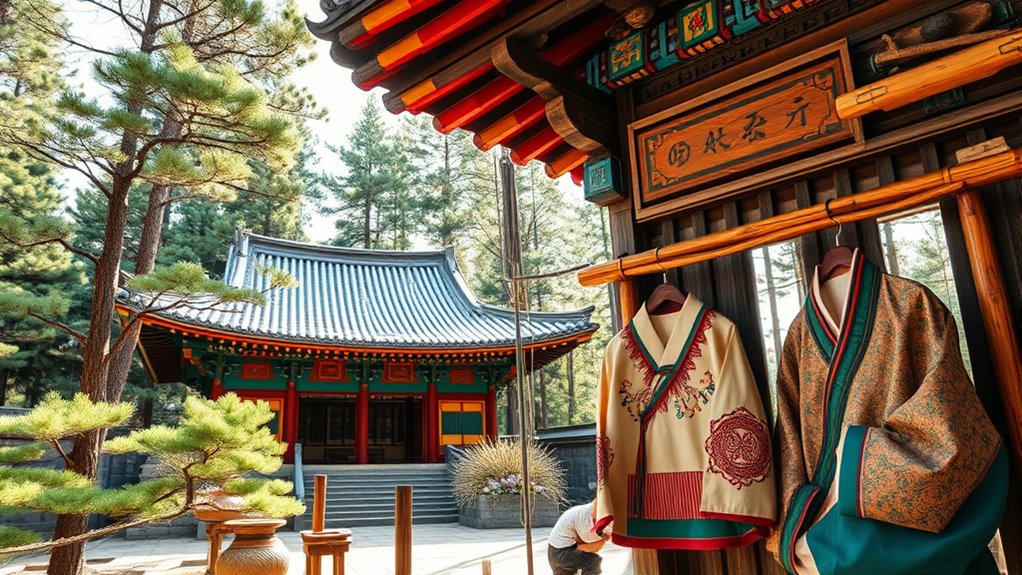
Preserving Korea’s rich cultural heritage and traditional arts is essential for maintaining national identity amid rapid modernization. You can actively support this effort by participating in cultural programs, visiting historical sites, and learning traditional crafts like pottery, weaving, and Hanbok-making. Efforts to protect ancient artifacts and restore historic landmarks guarantee these treasures survive for future generations. You might also promote traditional arts through festivals, exhibitions, and educational initiatives that emphasize their importance. Government agencies, cultural organizations, and local communities collaborate to safeguard intangible heritage, such as folk music, dance, and rituals. By valuing and passing down these traditions, you help keep Korea’s unique history alive, fostering a sense of pride and continuity in an evolving world. Additionally, engaging in creative practice related to traditional arts can deepen your appreciation and understanding of Korea’s cultural legacy.
The Korean Wave: Contemporary Culture and Global Influence
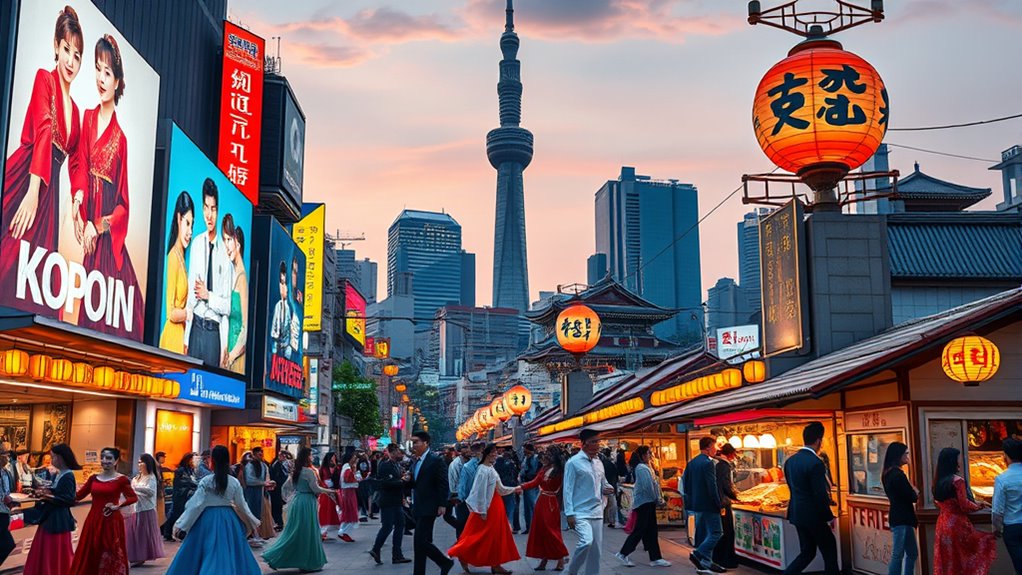
The rich traditions of Korea continue to inspire a vibrant and dynamic cultural movement that extends far beyond its borders. The Korean Wave, or Hallyu, has propelled Korean music, film, television, and fashion onto the global stage. You can see its impact through:
- The worldwide popularity of K-pop groups like BTS and Blackpink, influencing global music trends.
- The international success of Korean dramas such as “Crash Landing on You” and “Squid Game,” shaping global television.
- The spread of Korean cuisine, fashion, and beauty products, creating a major cultural export industry.
This movement showcases Korea’s modern cultural innovation while honoring its historical roots. It fosters cultural exchange, boosts tourism, and positions Korea as a leading global cultural force.
Frequently Asked Questions
How Did the Korean Alphabet, Hangul, Influence Literacy and Cultural Identity?
Hangul revolutionized literacy by making reading and writing accessible to everyone, regardless of social class or education level. You can quickly learn its simple, logical characters, which boosted literacy rates across Korea. It strengthened your cultural identity by fostering pride in your language and heritage. Hangul also allowed for the widespread dissemination of ideas, literature, and culture, helping Koreans preserve their traditions and develop a unique national consciousness.
What Role Did Buddhism Play During Korea’s Three Kingdoms Period?
During Korea’s Three Kingdoms period, Buddhism played a essential role in unifying and strengthening the states. You see, it was adopted as the official religion, providing a shared spiritual foundation that helped foster cultural development and political stability. Buddhism also influenced art, architecture, and philosophy, shaping the identity of each kingdom. By promoting moral values and offering a sense of unity, it became a powerful tool for consolidating power and cultural cohesion.
How Did Japanese Colonial Rule Impact Korea’s Cultural Traditions?
During Japanese colonial rule, your cultural traditions faced severe suppression. The Japanese enforced policies that aimed to erase Korea’s cultural identity, such as banning the use of Hangul and traditional customs. You experienced forced assimilation, with efforts to replace Korean traditions with Japanese culture. Despite this, you also saw resilience, as Koreans secretly preserved their language, customs, and arts, fueling a strong sense of national identity and resistance against colonization.
What Were the Key Factors Leading to South Korea’s Rapid Economic Growth?
You can see the key factors behind South Korea’s rapid economic growth in the 1960s and beyond by looking at their strategic focus on export-led development. For example, the government invested heavily in industries like electronics and automobiles, encouraging companies like Samsung and Hyundai. They also prioritized education, infrastructure, and technology, creating a skilled workforce. This combination transformed South Korea into a global economic powerhouse within a few decades.
How Does Modern K-Pop Reflect Traditional Korean Cultural Elements?
Modern K-pop reflects traditional Korean cultural elements through its incorporation of traditional music instruments, dance moves, and clothing styles like hanbok in performances. You’ll notice themes of filial piety, community, and respect, which are rooted in Confucian values, woven into lyrics and visuals. K-pop also blends modern aesthetics with historical motifs, creating a unique cultural fusion that celebrates Korea’s rich heritage while appealing to global audiences.
Conclusion
So, you’ve traveled through Korea’s vibrant history, from ancient kingdoms to modern global influence. Along the way, you’ve seen how resilience, tradition, and a dash of stubbornness shaped this nation’s identity. Now, as the Korean Wave sweeps the world, remember: behind the catchy K-pop beats lies a culture that’s survived invasions, dictatorships, and fashion trends. Truly, Korea proves that even in chaos, you can still find a way to dance your way to greatness.