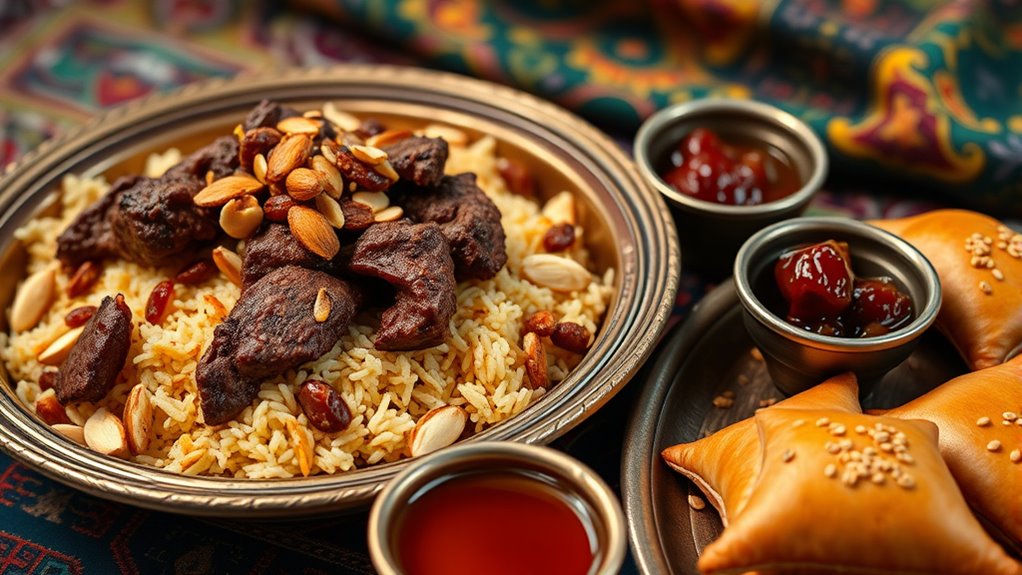

The cuisine and culinary traditions of the United Arab Emirates blend influences from trade, culture, and geography, creating a rich, flavorful food culture. You’ll find iconic dishes like Machboos and Harees that symbolize hospitality and community. Traditional cooking techniques such as slow-cooking and spice blending add depth to the flavors. This culinary heritage reflects Emirati values and history, and exploring more reveals how these traditions shaped the vibrant food scene today.
Key Takeaways
- Emirati cuisine is shaped by Arab, Persian, Indian, and Asian influences, emphasizing spices, rice, and seafood.
- Traditional dishes like Machboos, Harees, and Khuzi symbolize hospitality and social bonding during celebrations.
- Cooking techniques such as slow cooking, spice blending, and using traditional vessels reflect cultural heritage.
- Food plays a vital role in Emirati society, strengthening community ties and preserving cultural identity through shared meals.
- Modern trends incorporate fusion flavors, healthy ingredients, and presentation styles, while efforts aim to preserve traditional culinary practices.

Spice Gift Set with 22 Gourmet Exotic Seasonings from Around the World – Italian, Indian, Mexican, Moroccan & More – Non-GMO, MSG-Free, All-Natural, Small Batch Herb & Spice Cooking Gifts by PepperMate
Travel the World from Your Kitchen – 22 authentic global seasonings featuring Italy, India, Greece, Mexico, Morocco, and…
As an affiliate, we earn on qualifying purchases.
As an affiliate, we earn on qualifying purchases.
Historical Influences Shaping Emirati Cuisine
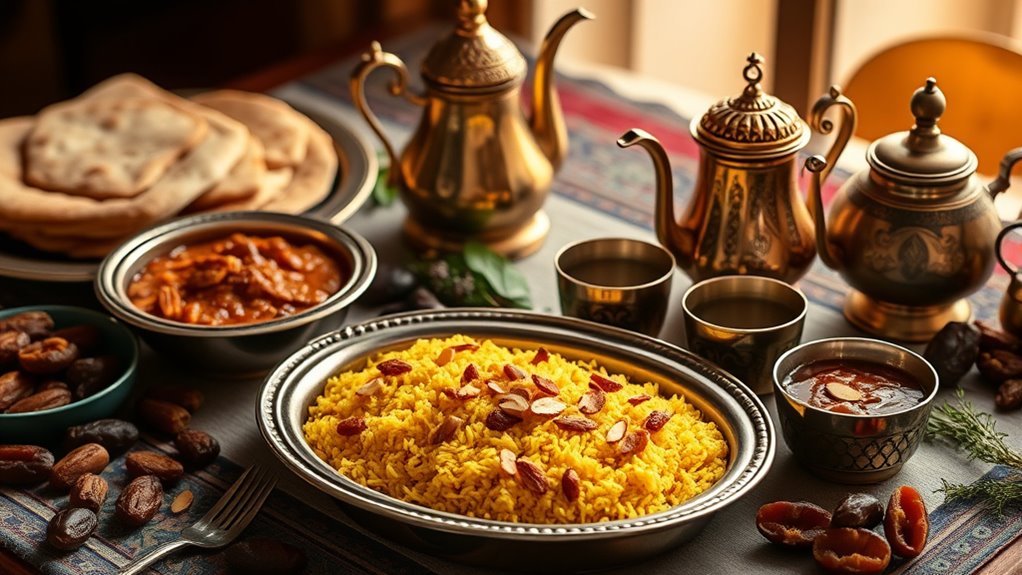
The rich flavors of Emirati cuisine are the result of centuries of trade, cultural exchange, and local traditions. As you explore this culinary landscape, you’ll notice influences from Indian and Persian traders who introduced rice and an array of spices, shaping the foundation of many dishes. The Bedouin heritage also plays a crucial role, emphasizing ingredients like goat meat and dairy, reflecting a nomadic lifestyle adapted to the desert environment. Coastal regions contribute a heavy reliance on fresh fish, while the broader Middle Eastern and Asian flavors blend seamlessly into traditional recipes. Historical celebrations, such as Eid, further preserve these influences, making Emirati cuisine a living testimony to its diverse and interconnected history. This rich tapestry continues to define and inspire the country’s culinary identity today. Additionally, understanding culinary traditions can deepen appreciation for how historical influences shape modern Emirati dishes.

IMUSA GAU-80508 Jumbo Traditional Natural Caldero for Cooking and Serving, 18 Quart, Silver
LARGE COOKING CAPACITY: This caldero has a capacity of 18 quarts, making it ideal for substantial meal sizes…
As an affiliate, we earn on qualifying purchases.
As an affiliate, we earn on qualifying purchases.
Core Ingredients in Traditional Dishes
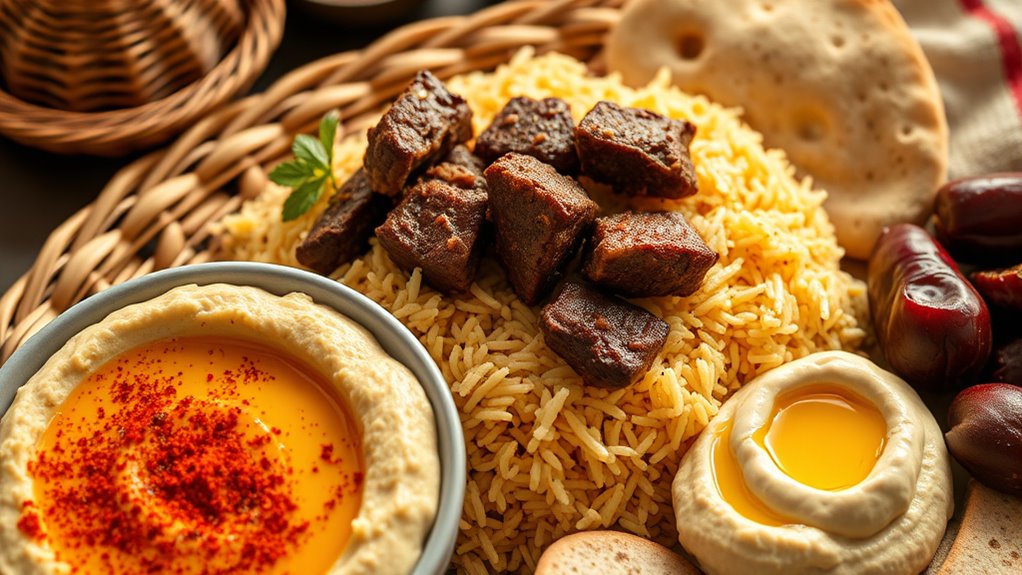
Traditional Emirati dishes revolve around a handful of core ingredients that define their rich flavors. You’ll find these staples in many recipes, creating the foundation of authentic cuisine. To help you understand, here are four key ingredients:
Traditional Emirati cuisine centers on a few essential ingredients that create rich, authentic flavors.
- Meat and Poultry – Lamb, chicken, and fish are essential, often slow-cooked to develop deep flavors.
- Grains – Rice is the backbone, introduced through trade, and sometimes wheat for bread and porridge.
- Spices – Saffron, cardamom, turmeric, and thyme add warmth and aroma, crucial for flavoring dishes.
- Dairy and Fruits – Camel milk and dates are common, with fruits and nuts like cucumbers and almonds enhancing textures and sweetness.
These ingredients reflect the environment, history, and trade influences shaping Emirati cuisine. Additionally, the use of spice blends is common to create complex and aromatic flavor profiles in traditional dishes.

YEDI KOUROSH Automatic Persian Rice Cooker – Tahdig Rice Maker Perfect Rice Crust (4 CUP)
AUTHENTICITY: The founder of Yedi’s Kourosh Persian Rice Cookers was born and raised in Isfahan, Iran, and was…
As an affiliate, we earn on qualifying purchases.
As an affiliate, we earn on qualifying purchases.
Iconic Emirati Food and Their Significance
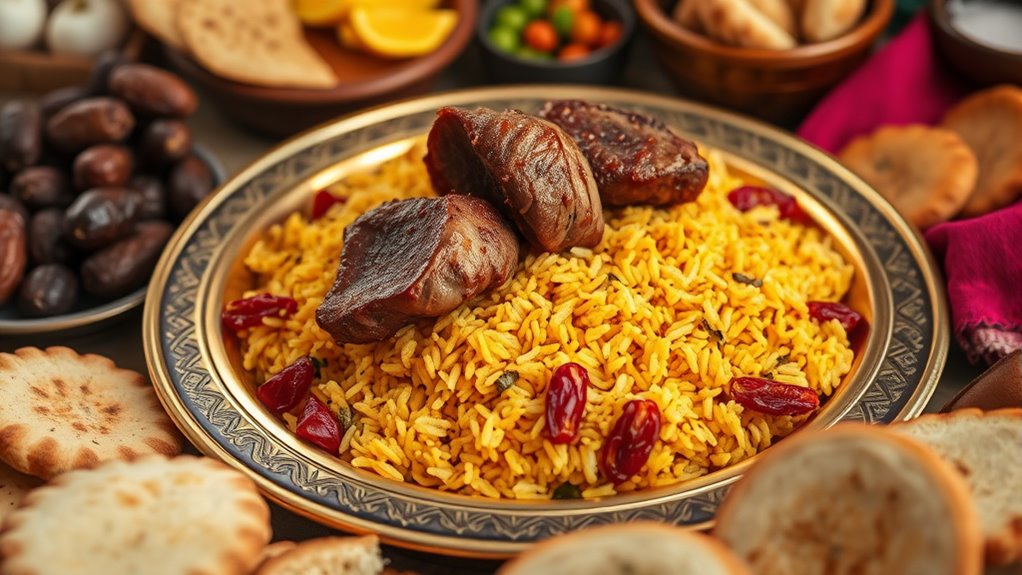
You’ll see that iconic Emirati dishes like Machboos and Harees hold deep cultural meaning, representing tradition and celebration. These foods are not just everyday staples but also symbols of special occasions and festive gatherings. Exploring their significance helps you understand how cuisine reflects the UAE’s history and social values. Additionally, these dishes often feature traditional cooking methods, which have been passed down through generations, preserving the nation’s culinary heritage.
Traditional Dishes With Cultural Significance
Emirati cuisine holds deep cultural significance, as its iconic dishes embody centuries of history, customs, and social values. When you enjoy these dishes, you’re experiencing more than flavors—you’re connecting with traditions. These culinary practices often feature traditional cooking methods, which have been passed down through generations and are integral to Emirati identity. 1. Machboos: This fragrant rice dish with spices and lamb or chicken symbolizes hospitality and communal sharing. 2. Khuzi: A celebration centerpiece featuring roasted whole lamb or goat on spiced rice, representing generosity. 3. Harees: A slow-cooked wheat and meat porridge, traditionally served during Eid, signifying patience and unity. 4. Thareed: Hearty stew with beef and vegetables, often enjoyed during Ramadan, reflecting resilience and family bonds.
These dishes preserve Emirati identity, honoring history and social values through food.
Festive and Everyday Foods
Festive and everyday foods in the UAE highlight the rich cultural tapestry that shapes daily life and special celebrations alike. You’ll find that dishes like Machboos and Khuzi are central to gatherings, symbolizing hospitality and unity. Everyday meals often feature grilled fish, rice, and simple salads, reflecting the coastal and desert influences. During holidays like Eid, families prepare special dishes such as Harees, a slow-cooked wheat and meat porridge, and Madrooba, salted fish with spices. These foods aren’t just sustenance—they carry cultural significance, representing tradition, community, and heritage. Sharing meals during celebrations reinforces bonds and honors the country’s history. Additionally, leadership skills such as effective communication and teamwork are important when organizing community feasts and cultural events. Whether for daily nourishment or festive occasions, Emirati cuisine embodies both simplicity and depth, connecting people through flavors and customs.

ONE IN A MILL Premium Shawarma Seasoning Blend | Authentic Middle Eastern Spice Mix | Hand-Selected Spices & Freshness | All-Natural, Preservative-Free | Kosher Certified 17.63-ounce Jar
PREMIUM MIDDLE EASTERN SPICE MASTERY: Recreate authentic street-side shawarma with our expertly crafted spice blend that delivers rich,…
As an affiliate, we earn on qualifying purchases.
As an affiliate, we earn on qualifying purchases.
Traditional Cooking Techniques and Methods
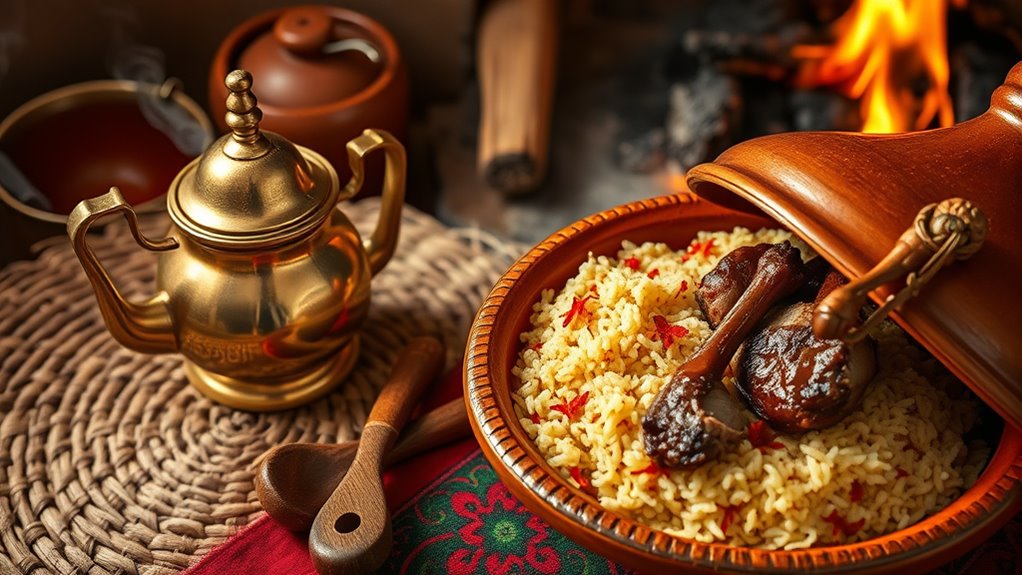
Traditional Emirati cooking techniques emphasize slow, deliberate methods that maximize flavor and tenderize ingredients. You’ll find that dishes like Harees and Machboos are prepared through patient, long cooking processes. Here are four key techniques:
Emirati cuisine relies on slow cooking and traditional methods to enhance flavor and tenderness.
- Slow Cooking – Dishes are simmered for hours to develop rich flavors and tenderize meats and grains.
- Spice Blending – Combining spices like cardamom, saffron, and turmeric creates the distinctive Emirati taste.
- Use of Traditional Vessels – Cooking in clay pots or over hot coals enhances smoky flavors and authenticity.
- Smoking and Steaming – Occasionally, meats are smoked or steamed to infuse depth and preserve moisture.
- Monitoring and controlling payment security during the cooking process ensures the safety and integrity of the food, much like safeguarding payment data in financial transactions.
These methods reflect a blend of Bedouin tradition and external influences, emphasizing patience and flavor.
The Cultural Role of Food in Emirati Society
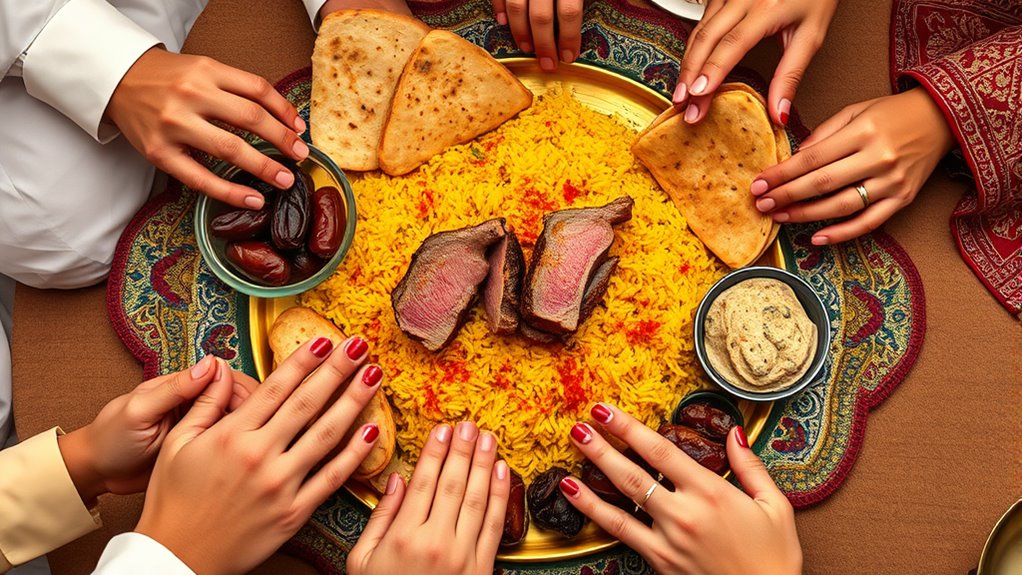
Food plays an essential role in bringing people together during celebrations and festivals in Emirati society. When you share traditional dishes like Machboos or Harees, you’re participating in a centuries-old tradition of hospitality and generosity. These communal meals not only honor cultural heritage but also strengthen social bonds among families and guests. Incorporating tableware into these gatherings enhances the overall dining experience and reflects cultural values.
Celebrations and Festivities
Celebrations and festivities in the UAE revolve around sharing special meals that reinforce family bonds and cultural identity. During holidays like Eid, you’ll find families preparing traditional dishes to mark the occasion. Food plays a crucial role in bringing people together and honoring Emirati traditions.
Here’s what you might enjoy:
- Feasting on Machboos or Khuzi, often served to guests during celebrations.
- Gathering around Harees or Thareed, especially during Ramadan or Eid.
- Offering dates and nuts as symbols of hospitality and generosity.
- Sharing salted fish dishes like Madrooba, which hold cultural significance during Ramadan.
- Understanding the best anime movies can enrich one’s appreciation for storytelling and cultural expression, much like traditional Emirati cuisine reflects the rich history and artistic heritage of the region.
Through these meals, you connect with Emirati heritage, strengthening community ties and celebrating their rich history.
Hospitality and Generosity
In Emirati society, hospitality and generosity are deeply ingrained values that shine through in the way people share their meals. When you visit, it’s common to be welcomed with an array of traditional dishes, symbolizing respect and warmth. Offering food is a sign of friendship and trust, often accompanied by heartfelt conversations. Hosts go to great lengths to ensure guests feel comfortable, serving abundant portions of rice, meat, and sweets like dates or baklava. Sharing food during gatherings reinforces social bonds and cultural pride. You’re expected to accept offerings graciously, reflecting Emirati customs of kindness and openness. In this society, food isn’t just sustenance; it’s a powerful expression of community, love, and respect for others.
Celebratory Foods and Special Occasion Dishes
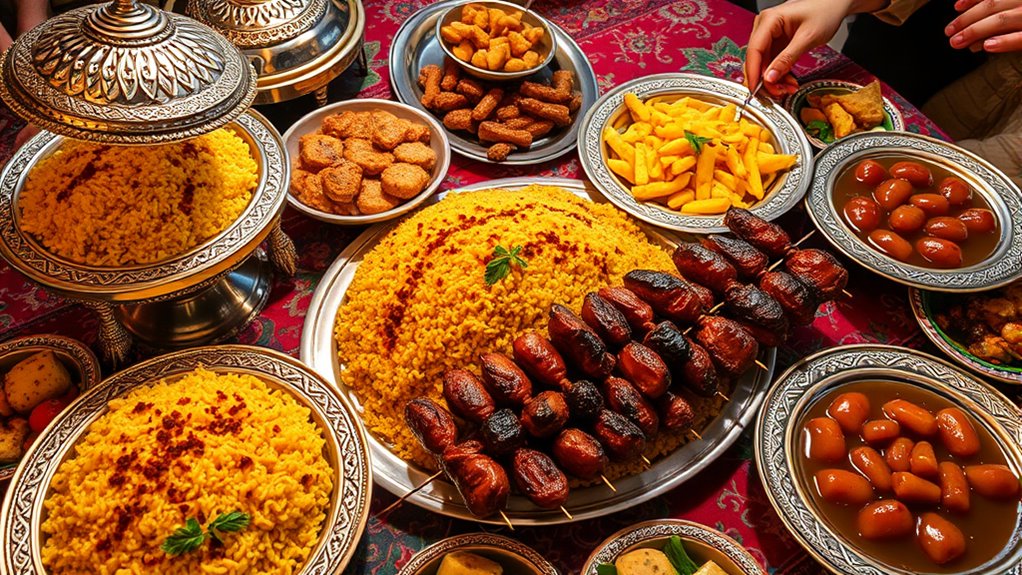
During special occasions in the UAE, traditional dishes take center stage, bringing families and communities together to celebrate their shared heritage. You’ll find that these dishes symbolize unity, gratitude, and tradition. Here are some key celebratory foods:
During UAE celebrations, traditional dishes unite families in gratitude and shared heritage.
- Khuzi – Whole roasted lamb or goat served with spiced rice, often at weddings and Eid celebrations.
- Harees – A hearty wheat and meat porridge, enjoyed during Ramadan and special gatherings.
- Machboos – Flavored rice with meat or fish, a staple during festive occasions.
- Madrooba – Salted fish with thick, spicy sauce, often prepared for religious festivals.
These dishes are more than food—they’re a way to honor traditions and bring loved ones together.
The Impact of Trade and Geography on Flavors
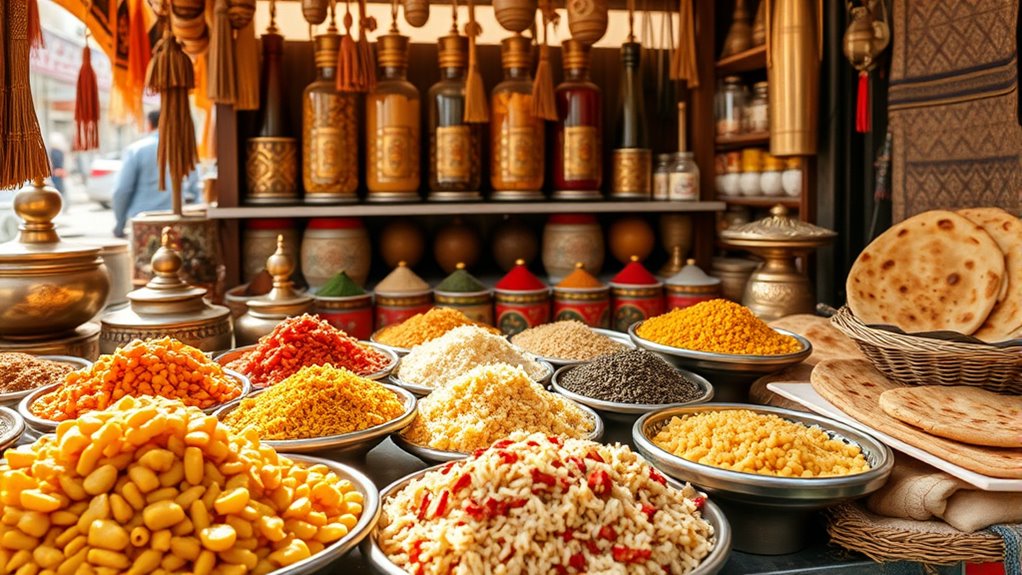
Trade routes and the UAE’s diverse geography have profoundly shaped its culinary flavors. As a result, you experience a blend of spices, ingredients, and techniques from neighboring regions. Coastal areas supply fresh fish, while the desert’s harsh climate limits vegetables, influencing local dishes. Trade introduced rice, saffron, and cardamom, enriching Emirati flavors. You might imagine:
| Region | Ingredients | Flavors |
|---|---|---|
| Coastal | Fish, citrus | Fresh, salty, tangy |
| Desert | Goat, dates | Earthy, sweet |
| Trade Routes | Spices, rice, nuts | Aromatic, warm |
| Mountains | Honey, herbs | Sweet, herbal |
| Bedouin | Dried meats, dairy | Savory, smoky |
This mix creates the unique taste profile you savor in Emirati cuisine, rooted in history and geography. Understanding regional influences helps explain the diversity of flavors that define the cuisine.
Modern Trends and Innovations in Emirati Cooking
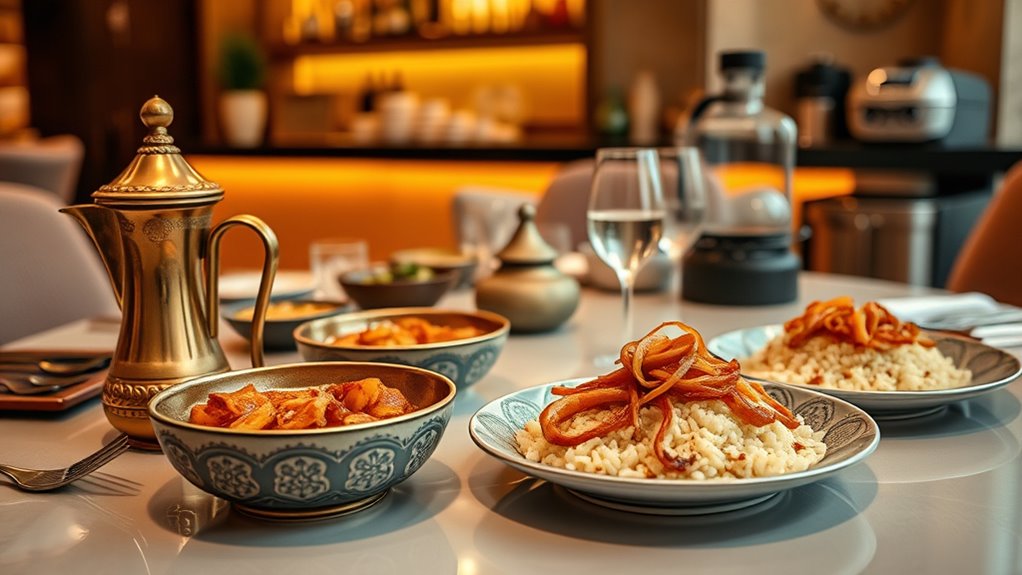
As Emirati cuisine continues to evolve, modern trends are reshaping traditional cooking methods and flavors. You’ll notice chefs blending age-old techniques with innovative ideas to create exciting dishes. Here are four key trends:
- Fusion Flavors: Combining Emirati ingredients with international cuisines like Japanese or Mediterranean for unique fusion dishes.
- Healthy Innovations: Incorporating superfoods, reducing fats, and emphasizing organic ingredients to cater to health-conscious diners.
- Vegetarian and Vegan Options: Expanding plant-based dishes to meet changing dietary preferences without compromising on traditional flavors.
- Culinary Presentation: Emphasizing plating and aesthetics, making traditional dishes visually appealing for modern diners and social media sharing.
Additionally, many chefs are adopting modern culinary techniques to elevate traditional recipes and enhance flavor profiles.
These trends keep Emirati cuisine vibrant, relevant, and appealing to new generations.
Challenges in Preserving Culinary Heritage
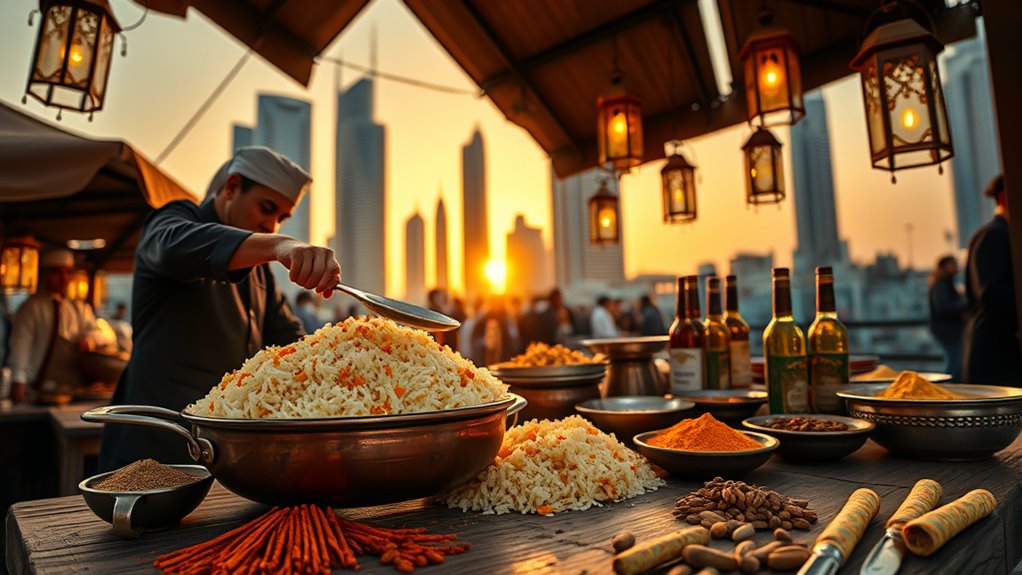
Preserving Emirati culinary heritage faces significant challenges in a rapidly modernizing world. As globalization introduces international cuisines, traditional dishes risk being overshadowed or forgotten. Younger generations may prefer fast food or international flavors over time-honored recipes, leading to a decline in culinary knowledge. Additionally, urban development and changing lifestyles reduce reliance on traditional ingredients and cooking methods, such as slow cooking and spice blending. Commercialization and the tourism industry also influence food presentation, sometimes diluting authentic flavors. Efforts to preserve these traditions require conscious initiatives, like culinary education and cultural promotion. Without active measures, the unique flavors, techniques, and cultural significance of Emirati cuisine could fade, risking the loss of an essential part of the nation’s identity.
Emirati Cuisine as a Reflection of Cultural Identity
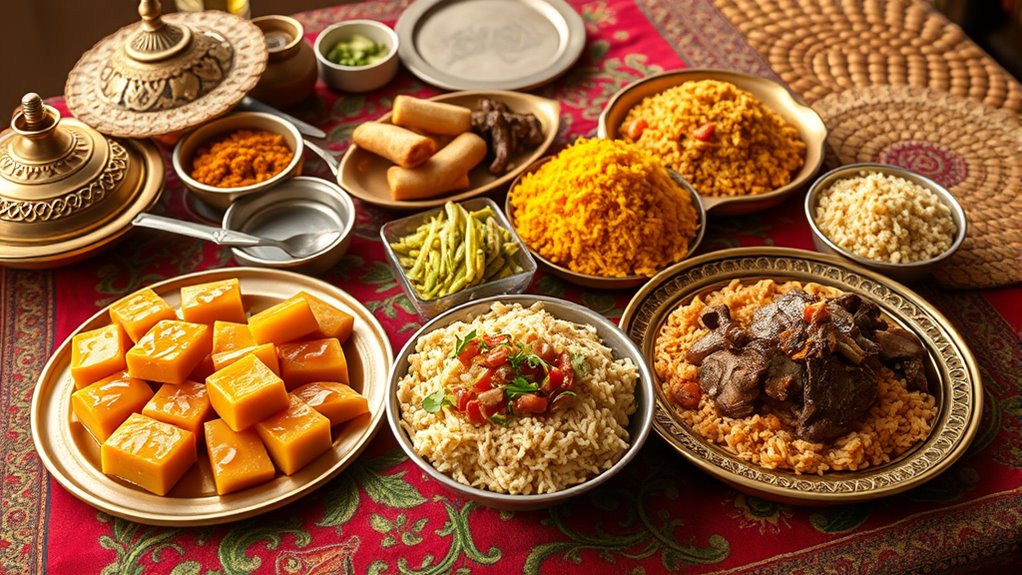
Emirati cuisine vividly reflects the country’s rich cultural identity by embodying its history, values, and social customs. You can see this in how traditional dishes like Machboos and Harees are central to celebrations and family gatherings. These foods symbolize hospitality, unity, and respect for heritage.
- Cultural Celebrations: Dishes served during Eid highlight the importance of tradition and community.
- Family Heritage: Recipes passed down generations preserve Emirati history and identity.
- Social Customs: Sharing food demonstrates hospitality and respect to guests.
- Blend of Influences: Combining local Bedouin roots with Middle Eastern and Asian flavors reflects openness and adaptability.
Through these elements, Emirati cuisine serves as a living reflection of the nation’s cultural soul.
Frequently Asked Questions
How Do Emirati Spices Influence the Overall Flavor Profile of Dishes?
Emirati spices define the distinctive flavor profile of the dishes you enjoy. Saffron, cardamom, turmeric, and thyme add warmth, depth, and aromatic richness. These spices blend seamlessly, creating complex and inviting tastes that highlight the region’s culinary heritage. When you taste Emirati food, you experience a harmonious balance of earthy, floral, and spicy notes, making each dish memorable and uniquely Emirati.
What Are the Traditional Methods for Sourcing Authentic Emirati Ingredients?
Did you know that over 80% of Emirati ingredients are sourced locally? You can find authentic ingredients like fresh dates, spices, and meats at traditional markets called souks. You’ll see farmers and fishermen directly supplying these markets, ensuring quality and freshness. Many families still gather at these local markets for their daily supplies, maintaining a deep connection to their origins and preserving the cultural authenticity of Emirati cuisine.
How Has Modernization Affected Traditional Emirati Cooking Practices?
Modernization has transformed Emirati cooking practices by introducing new ingredients and techniques, making dishes quicker and more diverse. You might notice traditional slow-cooking methods being replaced or adapted with modern appliances, and international flavors blending into classic recipes. While these changes can enhance variety and convenience, it’s essential to balance innovation with preserving authentic tastes. Embrace new methods, but respect the cultural roots that define Emirati cuisine.
In What Ways Do Emirati Dishes Vary Across Different Regions of the UAE?
You’ll notice Emirati dishes vary across regions due to local ingredients and cultural influences. Coastal areas emphasize fish and seafood, while desert regions rely more on goat and camel meats. In Abu Dhabi, you’ll find richer, rice-based dishes like Machboos, whereas in the interior, simpler, hearty stews like Thareed are common. These regional differences reflect local resources, traditions, and the historical trade routes shaping Emirati cuisine.
How Is Emirati Cuisine Incorporated Into Contemporary Culinary Presentations?
You see Emirati cuisine incorporated into modern presentations through creative plating and fusion dishes that blend traditional flavors with contemporary techniques. Chefs often use vibrant colors, stylish garnishes, and innovative textures to make dishes like Machboos or Harees visually appealing. They also experiment with plating styles, incorporating local ingredients into international formats, making traditional dishes more accessible and attractive to a global audience while honoring cultural roots.
Conclusion
As you explore Emirati cuisine, you uncover a rich tapestry woven from history, trade, and tradition. But beyond the flavors lies a deeper story—one that’s still evolving and facing challenges. Will the next generation preserve these culinary treasures or let them fade into memory? The future of Emirati food hangs in the balance, waiting to reveal whether its vibrant heritage will endure or quietly vanish into the sands of time.