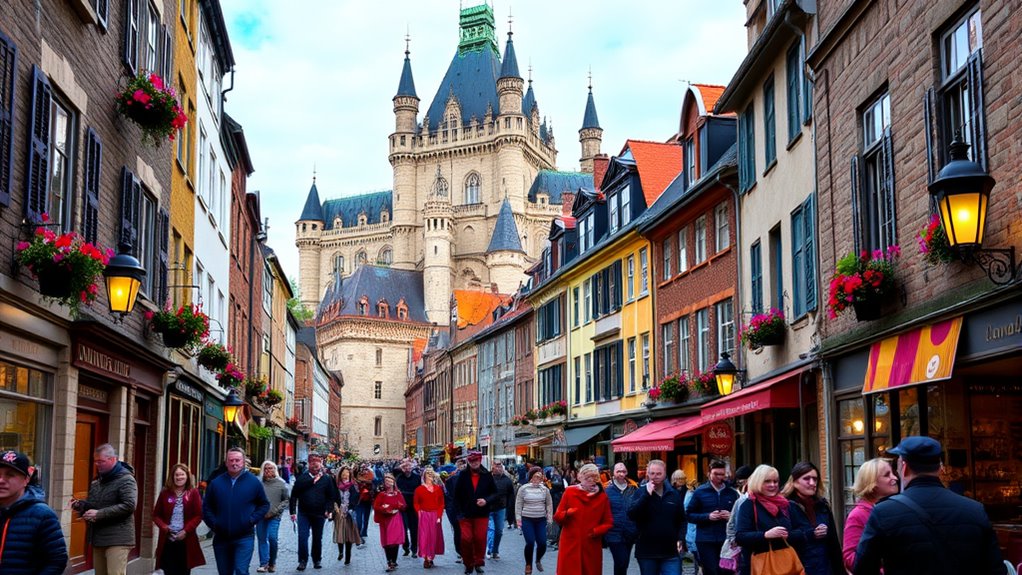

Canada’s history and culture are shaped by its Indigenous peoples, European conflicts, and nation-building efforts. You’ll see how Indigenous communities thrived long before European contact, and how their rights have evolved through treaties and activism. The country’s colonial past involved rivalries between France and Britain, leading to Confederation and economic growth. Today, multiculturalism, Indigenous resurgence, and cultural symbols define its identity. Explore further to uncover the rich stories behind Canada’s diverse and resilient spirit.

Get travel and outdoor gear delivered free with Prime
- Fast, free delivery on millions of items
- Prime Video, Amazon Music and more included
- Member-only deals all year
Key Takeaways
- Indigenous peoples inhabited Canada for thousands of years, maintaining rich cultures despite European contact and land disputes.
- European rivalry, colonization, and treaties shaped Canada’s territorial boundaries and early relationships with Indigenous nations.
- Confederation in 1867 unified colonies into a nation, with key symbols like the maple leaf representing national identity.
- Policies such as the Indian Act and residential schools impacted Indigenous cultures, prompting ongoing reconciliation and cultural revitalization.
- Modern Canada emphasizes multiculturalism, Indigenous resurgence, and shared values, shaping a diverse and inclusive national identity.
Canadian Indigenous history books
As an affiliate, we earn on qualifying purchases.
As an affiliate, we earn on qualifying purchases.
Indigenous Peoples and Early Contact
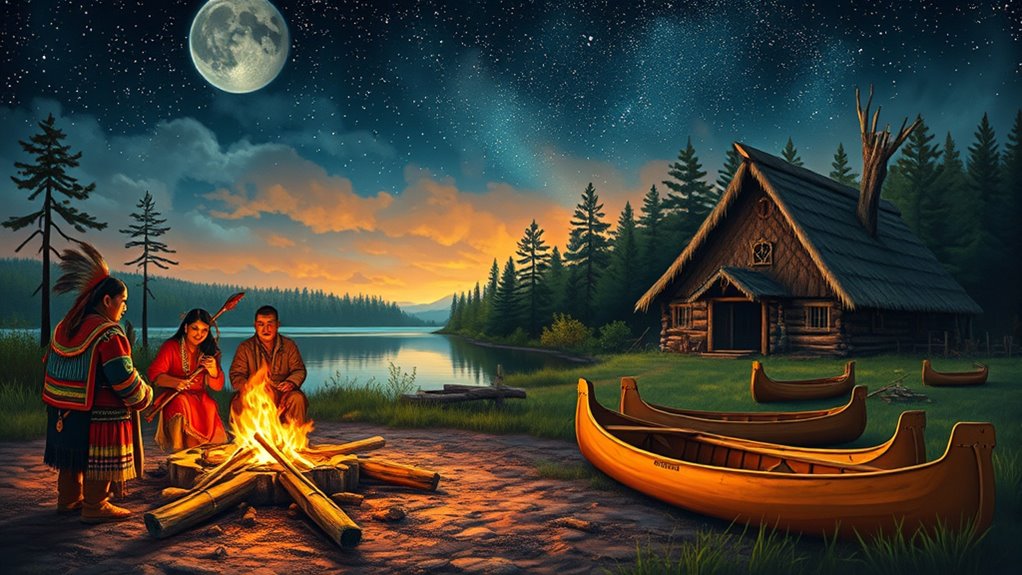
Have you ever wondered how long Indigenous peoples have inhabited what is now Canada? You should know that these diverse cultures have lived here for thousands of years before Europeans arrived. First Nations, Inuit, and Métis peoples developed rich traditions, languages, and social systems long before contact. When explorers like John Cabot reached Newfoundland in 1497, they encountered these well-established communities. French explorers, such as Jacques Cartier, mapped the land in the 1530s, laying the groundwork for colonization. Early relationships between Indigenous peoples and Europeans were complex, involving trade, alliances, and conflict. Despite European arrival, Indigenous societies thrived and maintained their cultural identities, shaping the foundation of what would become Canada. Their deep history predates European influence by millennia. Additionally, the enduring presence of Indigenous peoples highlights the importance of recognizing their long-standing heritage in Canadian history.
Canadian cultural symbols flag pin
As an affiliate, we earn on qualifying purchases.
As an affiliate, we earn on qualifying purchases.
European Rivalries and Colonial Foundations
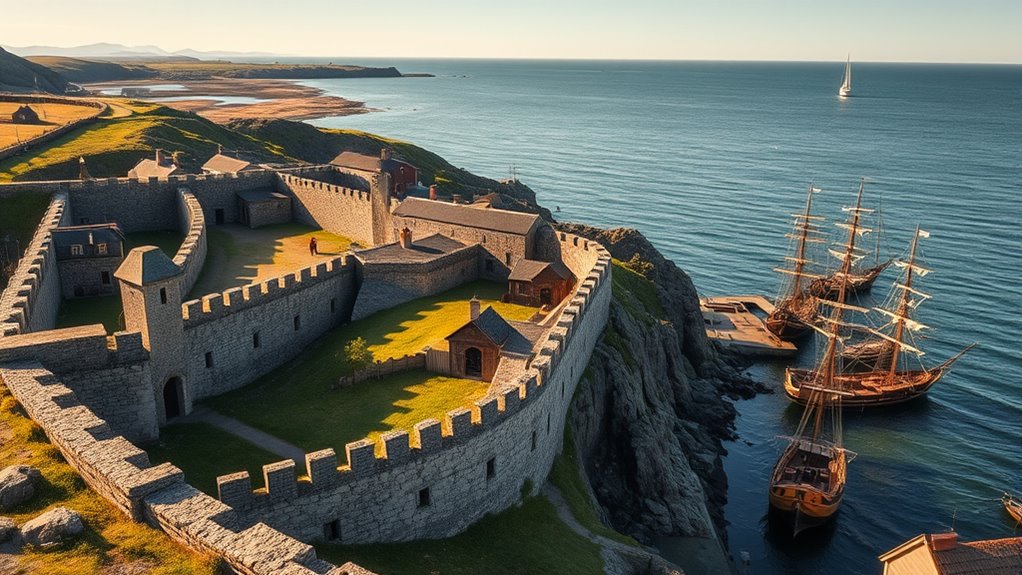
You see, the rivalry between France and Britain shaped much of Canada’s early history through conflicts and territorial disputes. These clashes led to pivotal treaties, like the Treaty of Paris in 1763, which shifted control and redrew borders. Understanding these events helps explain how colonial foundations laid the groundwork for modern Canada.
French and British Conflicts
Why did conflicts between France and Britain shape the early history of Canada? These rivalries led to territorial battles, influencing borders, governance, and cultural identities. You’ll see how their competition played out through key events:
- The Battle of the Plains of Abraham (1759) shifted control from France to Britain.
- The Treaty of Paris (1763) formalized France’s loss, establishing British dominance.
- Pontiac’s Rebellion (1763) showcased Indigenous resistance to British expansion.
- The division of the Province of Canada (1791) created distinct French and English communities.
- The evolving governance structures, such as the development of parliamentary systems, reflected ongoing colonial conflicts and contributed to Canada’s political identity.
These conflicts didn’t just change maps; they laid the foundation for Canada’s multicultural makeup and political landscape, shaping its evolution as a nation.
Territorial Changes and Treaties
European rivalries deeply shaped the territorial boundaries and political landscape of early Canada through conflicts, treaties, and negotiations. When France and Britain vied for control, they signed pivotal treaties like the Treaty of Utrecht (1713), which ceded territories from France to Britain, and the Treaty of Paris (1763), ending the Seven Years’ War and transferring New France to Britain. These agreements redefined borders and acknowledged Indigenous land rights, though often ignored in practice. The Royal Proclamation of 1763 recognized Indigenous territories, influencing future land negotiations. As settlers expanded, treaties such as the Numbered Treaties (1871–1921) were signed with Indigenous nations, ceding land in exchange for reserves and promises. These treaties and agreements laid the foundation for Canada’s evolving territorial boundaries and ongoing discussions on land rights. Additionally, land rights have continued to be a central issue in contemporary negotiations and reconciliation efforts.
Canadian history documentary DVD
As an affiliate, we earn on qualifying purchases.
As an affiliate, we earn on qualifying purchases.
Path to Confederation and Nation-Building

You are about to explore how Canadian leaders negotiated the Confederation, bringing together provinces like Ontario, Quebec, New Brunswick, and Nova Scotia. These talks paved the way for territorial expansion and the creation of a unified nation. Understanding this process reveals how Canada transformed from separate colonies into a thriving, interconnected country. The development of National Identity played a crucial role in uniting diverse regions under a shared sense of purpose.
Confederation Negotiations
The path to Confederation was marked by intense negotiations among British North American colonies enthusiastic to unite for mutual security and economic growth. You must understand that leaders faced critical debates over political structure, economic benefits, and regional interests. They discussed:
- The need for a central government to coordinate defense and trade.
- How to balance power between colonies and provinces.
- The importance of railway construction to unify territories.
- Disagreements over representation and the preservation of local identities.
- The negotiations also involved complex compromises, with colonies weighing independence against the advantages of unity, shaping the federal system that would protect regional interests while fostering a united nation. This process laid the foundation for Canada’s eventual political and economic stability.
Territorial Expansion
How did Canada’s territory grow from a collection of colonies into a vast, unified nation? You played a role in this expansion through key negotiations, treaties, and infrastructure projects. The push for unity led to the 1867 British North America Act, uniting Ontario, Quebec, New Brunswick, and Nova Scotia. Post-Confederation, new provinces like Manitoba, British Columbia, and Prince Edward Island joined, expanding the country’s borders. The construction of the Canadian Pacific Railway connected coasts, fostering economic growth and national identity. This table highlights major milestones:
| Year | Event |
|---|---|
| 1867 | Confederation creates Dominion of Canada |
| 1870 | Manitoba joins as a province |
| 1871 | British Columbia joins |
| 1873 | Prince Edward Island joins |
| 1885 | Completion of the Canadian Pacific Railway |
The development of nation-building projects and policies played a crucial role in uniting the diverse regions into one country.
As an affiliate, we earn on qualifying purchases.
Policies Shaping Indigenous Communities
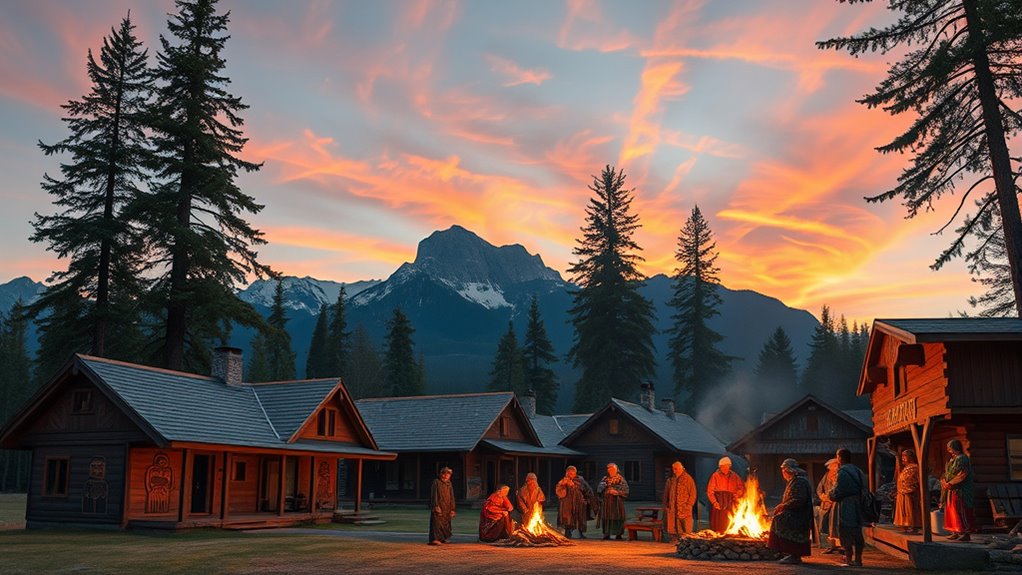
Policies shaping Indigenous communities have profoundly impacted their social, cultural, and political lives throughout Canadian history. These policies aimed to control, assimilate, and reshape Indigenous identities and lands. One example is the implementation of whole-house water filtration systems, which reflects ongoing efforts to improve living conditions and health standards in Indigenous communities. 1. The Indian Act of 1876 centralized government authority over Indigenous affairs, restricting governance, cultural practices, and land use. 2. Residential schools, beginning in the late 19th century, forcibly removed Indigenous children from their families, erasing languages and traditions. 3. Land treaties and the 1763 Royal Proclamation formalized land rights but often led to disputes and loss of territory. 4. Recent efforts focus on reconciliation, recognizing past injustices, and restoring rights through legal rulings, land claims, and cultural revitalization programs. These policies continue to influence Indigenous sovereignty and identity today.
20th Century Political and Economic Milestones
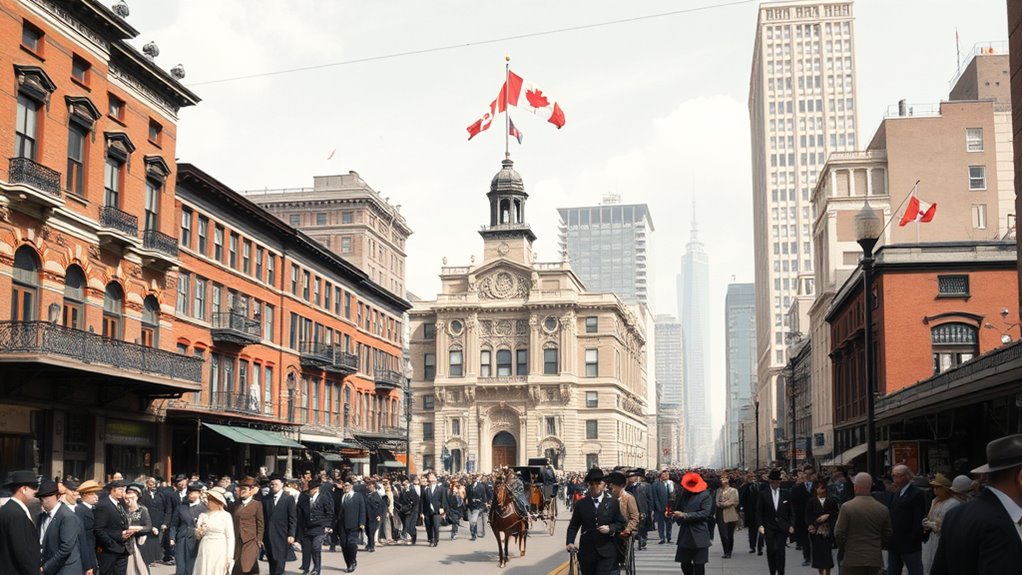
Canada’s 20th century was marked by significant political and economic milestones that shaped its independence and global presence. You witness the Statute of Westminster in 1931, which granted Canada legislative independence from Britain, solidifying its autonomy. During World Wars I and II, Canada played crucial roles, earning international recognition and strengthening national pride. In 1949, Newfoundland joined Confederation, expanding the country’s territory. Post-war economic growth led to major infrastructure projects like the St. Lawrence Seaway, boosting trade and industry. The adoption of the maple leaf flag in 1965 became a symbol of unity beyond colonial roots. These milestones reflect Canada’s evolution from a British colony to an independent nation with a strong, diverse economy. They laid the foundation for its modern political and economic identity.
Cultural Diversity and Multicultural Policies
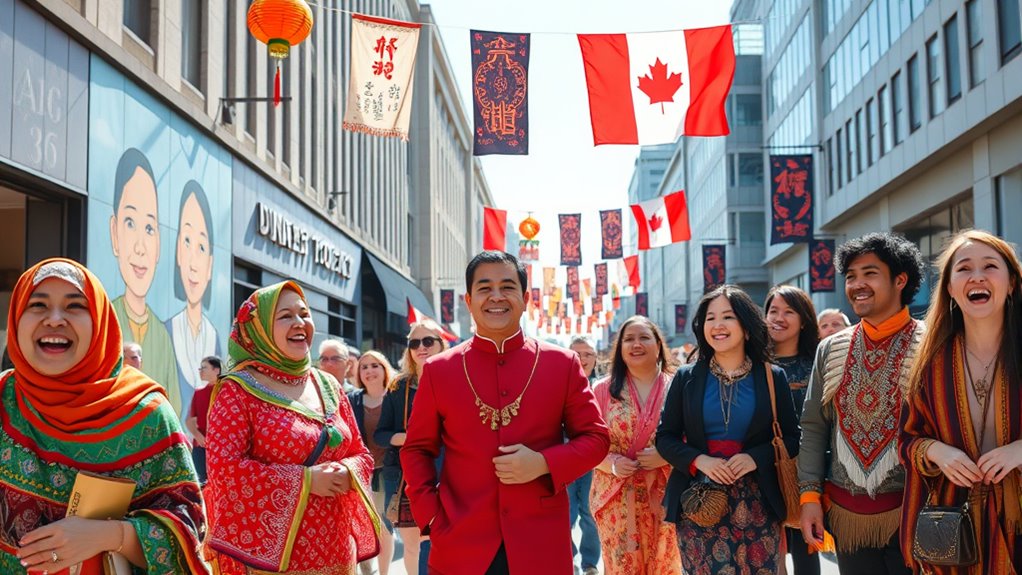
Canada’s commitment to multiculturalism officially took shape in the 1970s, recognizing the diverse backgrounds of its population as a national strength. This policy encourages the celebration of different cultures and promotes inclusion. You’ll see this reflected in the following ways:
Canada’s multiculturalism celebrates diverse backgrounds as a national strength since the 1970s.
- Immigration policies open doors to people from Europe, Asia, and beyond, shaping Canada’s vibrant cultural landscape.
- The Constitution recognizes both English and French as official languages, supporting cultural duality.
- Multicultural festivals, like Caribana and Lunar New Year, showcase various traditions and foster understanding.
- The government funds programs to preserve Indigenous cultures and promote intercultural dialogue.
- The safety of electric heated mattress pads is a consideration for many consumers, ensuring they can enjoy warmth without risk.
This approach helps you see Canada as a mosaic of identities, united yet diverse.
Contemporary Identity and Cultural Resurgence
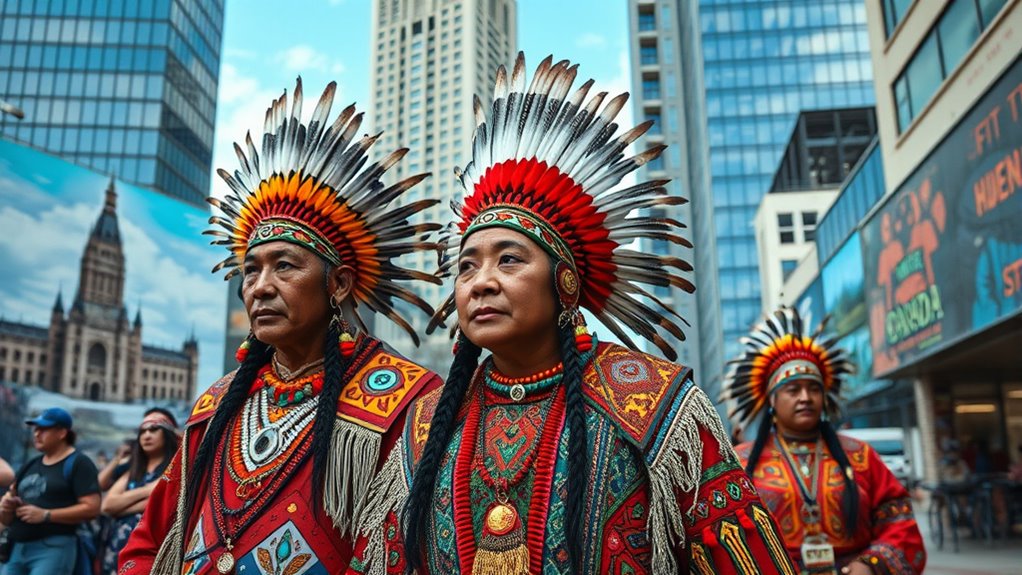
In recent decades, there’s been a renewed focus on shaping a distinct Canadian identity that reflects its evolving cultural landscape. You’re part of a nation embracing diversity, Indigenous resurgence, and shared values like inclusivity and reconciliation. Contemporary Canada actively promotes multiculturalism, celebrating different traditions and voices that contribute to its unique fabric. Indigenous communities are gaining recognition through legal rights, cultural revival, and efforts to address historical injustices. You see symbols like the maple leaf and national motto emphasizing unity and resilience. Pop culture, arts, and politics now emphasize the importance of identity, belonging, and shared history. This ongoing cultural resurgence helps define modern Canada not just as a country of diverse peoples but as a nation committed to growth, reconciliation, and a collective future. Additionally, the recognition of Indigenous rights and culture has become a central element in shaping the nation’s identity and fostering reconciliation.
Frequently Asked Questions
How Have Indigenous Cultures Influenced Modern Canadian Society?
You can see Indigenous cultures influence modern Canadian society through art, music, and traditions that enrich national identity. Indigenous practices inform environmental stewardship and land management, shaping policies today. Their languages and storytelling preserve cultural heritage, while Indigenous-led movements advocate for rights and reconciliation. The recognition of treaties and cultural resurgence demonstrate how Indigenous peoples shape Canada’s social fabric, inspiring ongoing efforts toward equality, respect, and cultural understanding across the country.
What Role Did Women Play in Canada’s Historical Development?
Women have been the silent architects shaping Canada’s foundation, their resilience weaving strength into the nation’s fabric. You see, through pioneering roles in settlement, activism, and social reforms, women challenged boundaries and sparked change. From fighting for suffrage to leading community efforts, their voices echoed like a steady drumbeat, guiding progress. Today, their legacy fuels the ongoing pursuit of equality, inspiring future generations to write new chapters in Canada’s story.
How Has Immigration Shaped Canada’s Cultural Landscape?
You see that immigration has profoundly shaped Canada’s cultural landscape by bringing diverse communities from Europe, Asia, and beyond. Your country’s identity has grown richer through these waves of newcomers, who contribute their languages, traditions, and values. As you experience Canada’s multiculturalism, you notice how this diversity fosters innovation, tolerance, and a unique national mosaic, making the nation vibrant and inclusive for everyone.
What Are the Current Challenges Faced by Indigenous Communities?
You face ongoing challenges like systemic discrimination, loss of cultural traditions, and inadequate access to healthcare, education, and housing in Indigenous communities. You’re also impacted by the legacy of residential schools and land disputes, which strain relationships and hinder progress. Despite efforts toward reconciliation, you still seek greater recognition of your rights, self-governance, and the preservation of your cultural identity, aiming for a more equitable and respectful future.
How Does Canada Celebrate Its Diverse Cultural Heritage Today?
Canada truly wears its heart on its sleeve by celebrating its diverse cultural heritage through festivals, arts, and public acknowledgments. You’ll find multicultural events, Indigenous ceremonies, and bilingual programs everywhere, showing the world what a cultural mosaic looks like. The country keeps the ball rolling with national holidays like Canada Day and Pride celebrations, embracing everyone’s identity. It’s a potluck of traditions where everyone’s welcome to join the feast.
Conclusion
You’ve explored Canada’s rich history and vibrant culture, from Indigenous roots to modern multiculturalism. Did you know that over 200 Indigenous languages are still spoken today? This highlights the resilience and diversity woven into Canada’s identity. As you reflect on this journey, remember that Canada continues to evolve, embracing its past and shaping a future rooted in inclusivity and cultural pride. Your understanding helps appreciate the remarkable story of this nation.
Fall Picks
fall essentials
As an affiliate, we earn on qualifying purchases.