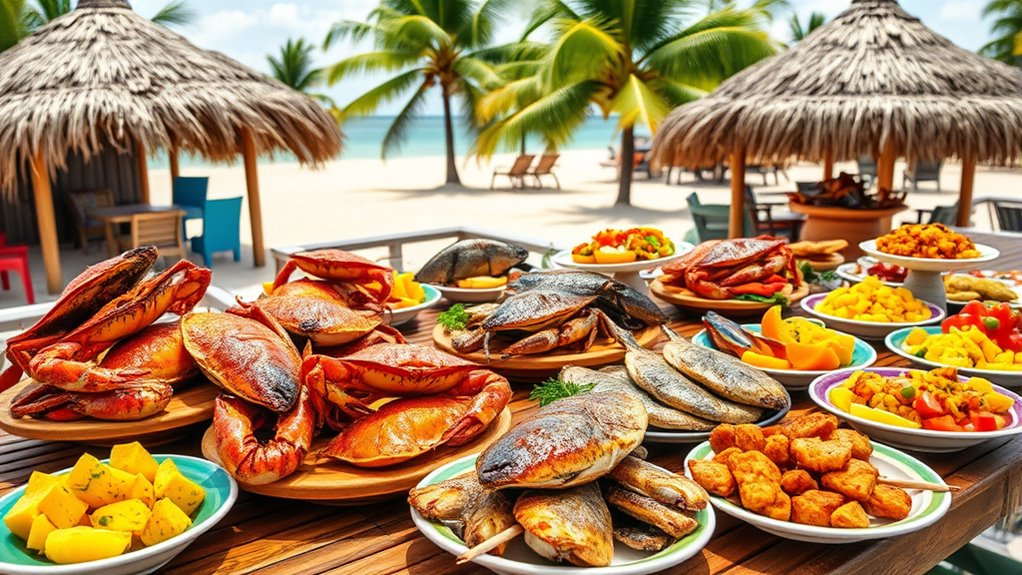

You’ll discover that Bahamian cuisine blends African, British, Caribbean, and American influences through dishes like peas and rice, conch salad, and Johnny cakes. Seafood, tropical fruits, and local vegetables are staples, often prepared with traditional methods like smoking and outdoor grilling. Social gatherings and festivals highlight signature foods and drinks like rum and fresh fruit juices. Explore further to uncover the rich history and cultural traditions that shape every delicious bite.
Key Takeaways
- Bahamian cuisine features seafood dishes like conch salads, fritters, and stewed fish, reflecting the country’s maritime resources.
- Influences from West African, British, and Caribbean cultures shape traditional dishes and cooking techniques.
- Staple ingredients include peas and rice, tropical fruits, and locally grown vegetables, prepared using outdoor and preservation methods.
- Regional variations highlight fresh produce, seafood, and indigenous practices, especially in Nassau, Freeport, and rural communities.
- Social gatherings often involve outdoor fish fries, rum and beer, and traditional foods, emphasizing community and cultural identity.
Historical Roots and Cultural Influences
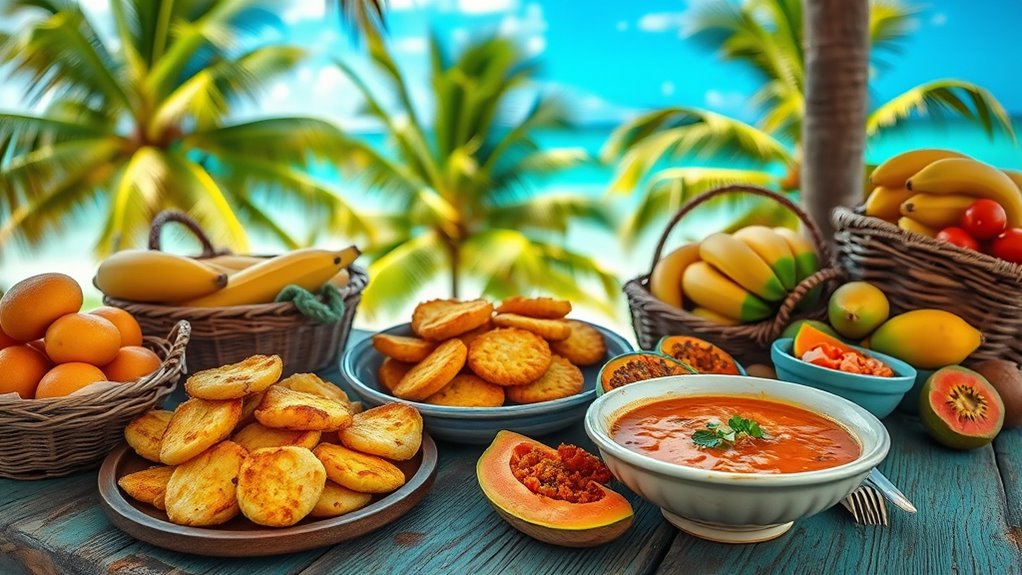
The culinary traditions of the Bahamas are deeply rooted in a diverse mix of cultural influences that reflect its history. You’ll notice West African flavors in dishes like peas and rice, fritters, and stewed fish or chicken, brought by enslaved Africans between the 1600s and 1800s. British colonizers contributed techniques like steam cooking, along with British favorites such as banana bread and guava duff. Southern U.S. immigrants introduced grits, while fishermen adapted journey cakes into Johnny cakes. The West Indian influence is also strong, seen in curries, salted codfish, and roti. These varied traditions blend to create a rich culinary heritage, shaped by history, survival, and cultural exchange, giving Bahamas cuisine its unique and flavorful identity.
Essential Ingredients and Local Staples
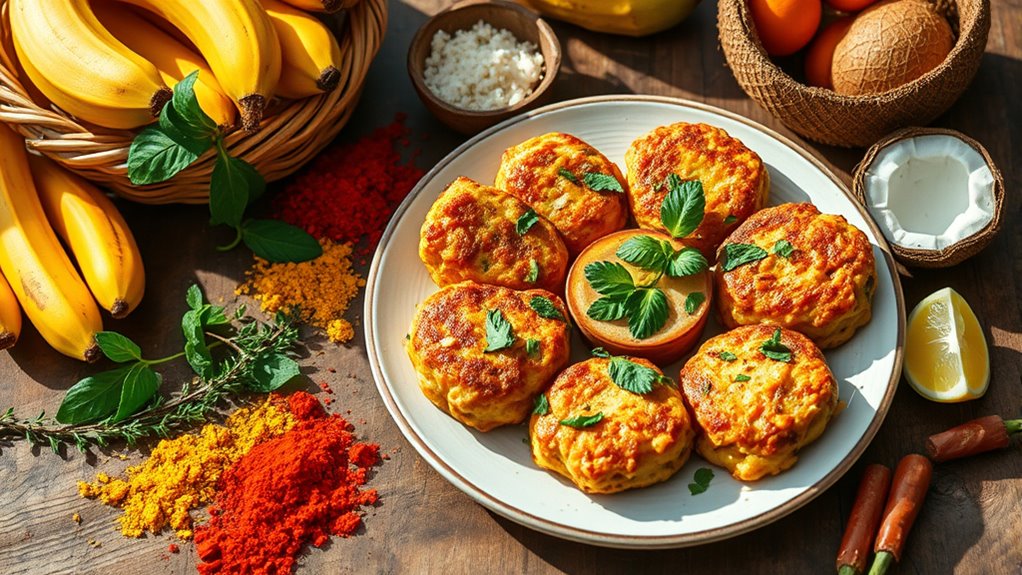
Food choices in the Bahamas are deeply rooted in the availability of local ingredients and staples that have sustained communities for generations. You’ll find seafood like fish, conch, lobster, and crab dominating many dishes, thanks to the islands’ abundant waters. Peas and rice serve as foundational staples, often paired with stewed meats or fish to create hearty meals. Tropical fruits such as guava, coconut, papaya, and watermelon are plentiful, adding sweetness and flavor. In the Family Islands, you’ll see locally grown vegetables like tomatoes, onions, okra, and pumpkins, which support both markets and home cooking. Preservation methods like salting and smoking developed out of necessity, helping communities store seafood and produce without refrigeration. These ingredients form the backbone of Bahamian cuisine, connecting you to the islands’ natural bounty. Additionally, colorful spices and herbs are used to enhance the flavor profiles of many dishes, reflecting the diverse influences on Bahamian culinary traditions.
Signature Dishes and Culinary Techniques
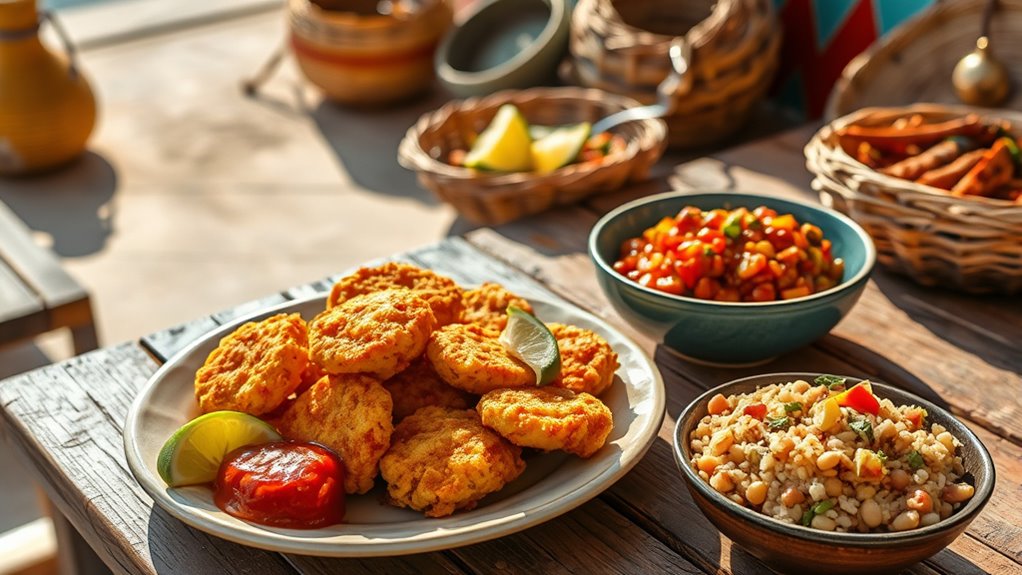
Signature dishes in Bahamian cuisine showcase a blend of local ingredients and traditional cooking methods that have been passed down through generations. You’ll find tender, battered conch, often deep-fried until crispy, served with lime and fries—an iconic street food. Conch salad offers a fresh, marinated raw seafood experience with peppers, onions, and tomatoes, highlighting the island’s seafood bounty. Baking techniques like making Johnny cake with flour, baking powder, and lard reflect British influences, while stewing and steaming seafood preserve flavors before refrigeration was common. Outdoor fish fries are social highlights, where you cook and share seafood outdoors using beehive or rock ovens. These techniques emphasize preservation, communal eating, and a deep respect for local ingredients that define Bahamian culinary identity. Additionally, incorporating authentic cooking methods such as open-flame grilling and pit roasting further enhances the traditional flavor profiles of Bahamian dishes.
Regional Variations and Food Traditions
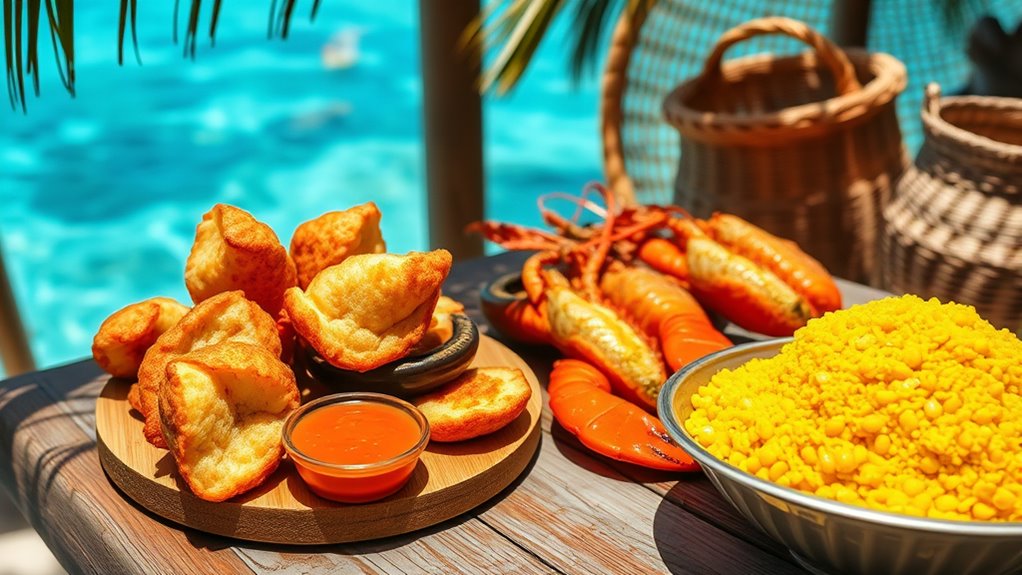
Regional variations in Bahamian cuisine reveal how local ingredients, cultural influences, and traditional practices shape distinct food customs across the islands. In Nassau and Freeport, you’ll find access to fresh produce and seafood, thanks to mail boats connecting them to Family Islands. These islands act as agricultural hubs, supplying urban markets and maintaining traditional methods like salting, smoking, and outdoor cooking. In rural communities, bush medicine and traditional tonics remain popular, reflecting indigenous practices. Conversely, urban areas adopt more modern, international flavors, blending local ingredients with global culinary trends. Food plays a crucial role in social events, festivals, and communal gatherings, where dishes like conch salad and Johnny cake symbolize regional identity. These variations highlight the rich diversity and resilience of Bahamian food culture.
Social Customs and Beverage Practices
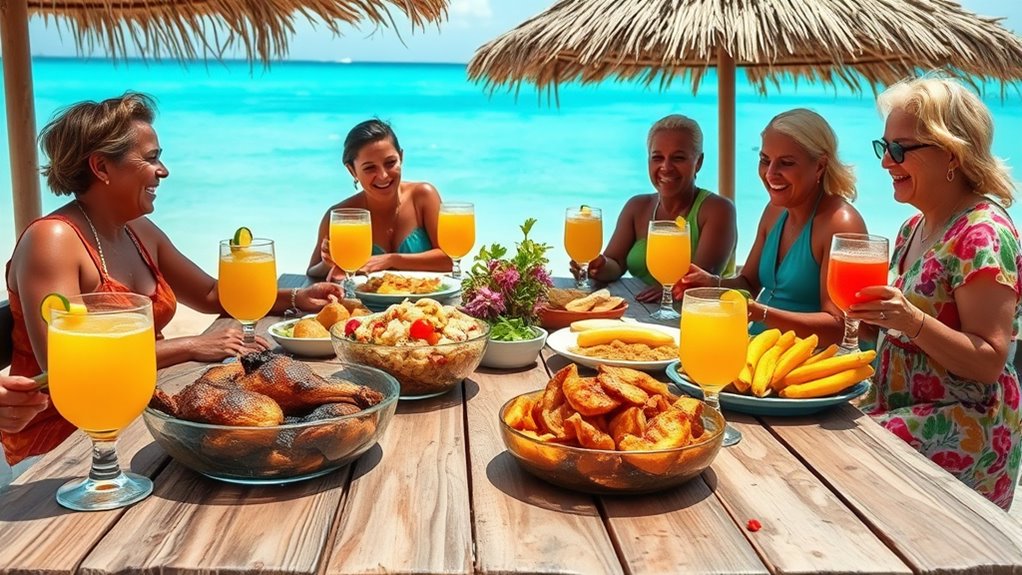
Social customs and beverage practices in the Bahamas are deeply woven into community life, reflecting a mix of cultural influences and local traditions. You’ll find lively gatherings where food and drinks bring people together. Here are some key aspects:
- Rum and beer are the most popular alcoholic drinks, often enjoyed during festivals and social events.
- Tropical fruit juices and coconut water are staples, especially in warm weather, keeping everyone refreshed.
- Homemade bush teas are common, used for medicinal purposes and traditional healing.
- Fish fries and outdoor gatherings serve as social hubs where locals share food, stories, and drinks, strengthening community bonds.
- Demonstrating leadership skills during communal events fosters trust and encourages active participation within the community.
These customs highlight the Bahamas’ vibrant, resilient spirit and its rich cultural tapestry.
Frequently Asked Questions
How Has Tourism Impacted Traditional Bahamian Cuisine?
Tourism has substantially influenced your traditional Bahamian cuisine by introducing international flavors and restaurant-style dishes, sometimes overshadowing local recipes. You might find more seafood prepared in modern ways or fusion dishes blending traditional ingredients with global cuisines. While this boosts the economy, it can also lead to the dilution of authentic culinary practices. Yet, you still experience vibrant food festivals and local markets that keep your cultural flavors alive and celebrated.
What Role Do Festivals Play in Preserving Culinary Heritage?
Festivals play a crucial role in preserving your culinary heritage by showcasing traditional dishes, cooking methods, and local ingredients. You get to experience authentic flavors like conch salad, guava duff, and Johnny cake, which are often central to celebrations. These events encourage community participation, passing down recipes and customs to younger generations, ensuring Bahamian culinary traditions stay alive and vibrant while fostering pride and cultural identity.
Are There Any Unique Bahamian Cooking Tools or Utensils?
Like a storyteller passing down secrets, Bahamian cooks use unique tools to preserve tradition. You’ll find the beehive-shaped outdoor ovens, which are like ancient giants, used for baking bread or roasting fish. Wooden paddles and large clay pots help prepare stews and seafood. These utensils are simple yet essential, connecting you to generations of cooks who keep Bahamian flavors alive through their handcrafted tools.
How Do Younger Generations Engage With Traditional Recipes?
Younger generations engage with traditional recipes by learning from elders during family gatherings and community events. Many actively preserve these dishes by cooking with family, sharing recipes on social media, and participating in cultural festivals. They often put modern twists on classics, blending old flavors with new techniques. This connection helps keep Bahamian culinary heritage alive while allowing personal creativity, ensuring these traditions continue to thrive for future generations.
What Are Common Dietary Restrictions or Vegetarian Options in Bahamian Food?
You’ll find that Bahamian cuisine isn’t heavily focused on dietary restrictions, but vegetarian options are available. You can enjoy dishes like conch salad made with fresh vegetables, stewed vegetables, and rice. Many locals also prepare vegetable-based sides with tropical fruits and plantains. While seafood dominates, you can ask for modifications or choose plant-based dishes during social gatherings. Just communicate your preferences, and Bahamian cooks often accommodate.
Conclusion
You embrace the rich history, savor the vibrant flavors, and celebrate the diverse traditions of Bahamian cuisine. You explore the essential ingredients, master the signature dishes, and appreciate regional variations. You honor social customs, enjoy local beverages, and connect with the cultural roots that make Bahamian food unique. You experience a culinary journey that’s flavorful, authentic, and unforgettable—where history meets hospitality, tradition meets taste, and every bite tells a story.