Costa Rica’s history begins with indigenous peoples and Spanish colonization, shaping its language and culture. It gained independence in 1821, fighting regional conflicts and establishing a stable democracy with a focus on education and environmental preservation. The country’s economy was driven by coffee, bananas, and infrastructure development, supporting social and cultural growth. Its vibrant culture reflects a blend of indigenous, Spanish, and modern influences. Keep exploring to learn how these roots influence Costa Rica today.
Key Takeaways
- Costa Rica’s history features Spanish colonization, independence in 1821, and a tradition of peaceful democratic governance.
- The country’s culture is shaped by indigenous roots, Spanish influence, and social movements advocating for rights and environmental conservation.
- Coffee and banana exports historically fueled economic growth and regional integration through railway and port development.
- Civil society played a vital role in democratic reforms, environmental preservation, and social activism over the years.
- Modern Costa Rica emphasizes eco-tourism, sustainability, and cultural diversity, reflecting its rich historical and environmental heritage.

The Costa Rica Reader: History, Culture, Politics (The Latin America Readers)
Used Book in Good Condition
As an affiliate, we earn on qualifying purchases.
As an affiliate, we earn on qualifying purchases.
Early Encounters and Spanish Settlement
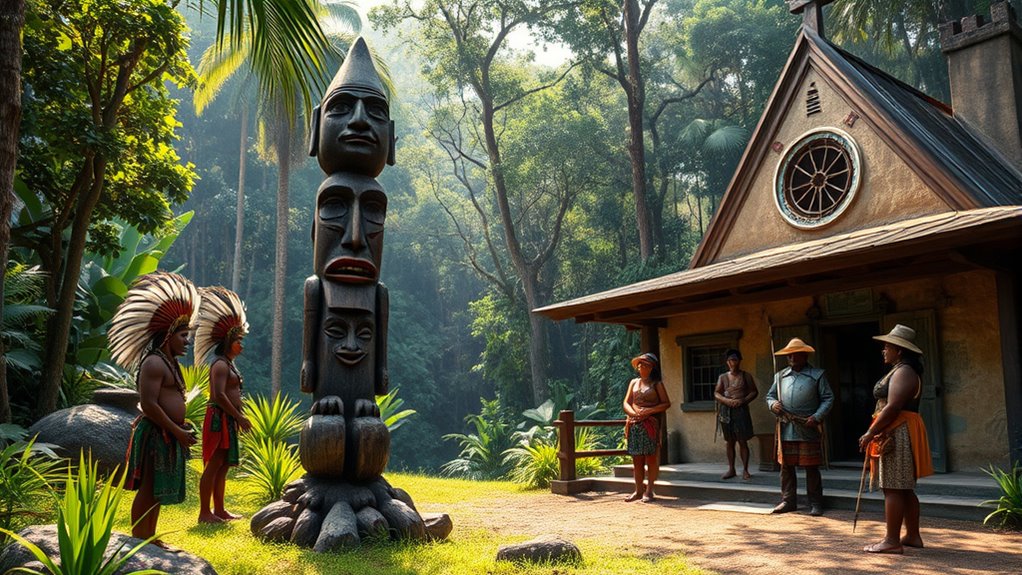
Have you ever wondered how Costa Rica’s history began with early encounters? When Christopher Columbus arrived in 1502, he called the region the “Rich Coast” because of its lush forests and coastlines. The first permanent Spanish settlement appeared in Cartago in 1564, nestled in the Central Valley. As Spanish explorers and colonizers moved in, the indigenous populations retreated to the Talamanca mountains to escape pressure and displacement. Costa Rica was part of the Viceroyalty of New Spain from 1540, but it lacked significant mineral resources, which slowed early development. Over time, Spanish influence shaped the land’s culture, language, and social structures, laying the groundwork for the nation’s future independence and identity. The region’s early encounters also included interactions with indigenous peoples, which influenced the cultural tapestry of modern Costa Rica.

Costa Rica: The Complete Guide: Ecotravel & Adventures (Color Travel Guide)
As an affiliate, we earn on qualifying purchases.
As an affiliate, we earn on qualifying purchases.
Path to Independence and Nation Formation

You can see how Costa Rica’s journey to independence began with its colonial roots and early settlements, shaping its identity over time. As Central American nations sought self-rule, Costa Rica declared independence from Spain in 1821 and moved toward establishing its own sovereignty. This process culminated in the formation of a distinct nation, emphasizing democratic principles and national unity. Additionally, the nation’s commitment to transparency in governance has been a key factor in its political stability and development.
Colonial Roots and Early Settlements
Costa Rica’s colonial roots began when Christopher Columbus arrived on its Caribbean coast in 1502, calling the region the “Rich Coast.” The Spanish established their first permanent settlement in Cartago in 1564, located in the Central Valley, to control the territory. As colonization progressed, you would notice:
- Indigenous populations retreating to the Talamanca mountains to escape Spanish influence.
- Limited early development due to a lack of mineral resources and sparse indigenous labor.
- Costa Rica remaining part of the Viceroyalty of New Spain from 1540 until independence.
- The region’s slow growth, primarily focused on agriculture and small settlements, setting the stage for its later path toward independence.
- The colonial legacy influenced the nation’s cultural and social structures, shaping its identity even after independence.
Central American Independence Movements
What drove Costa Rica and other Central American territories to seek independence from Spain in the early 19th century? Economic struggles, limited colonial benefits, and growing dissatisfaction with Spanish rule fueled the desire for self-governance. The decline of Spain’s colonial power, along with ideas of Enlightenment liberty and republicanism, inspired local leaders. The success of independence movements in Latin America encouraged Costa Rica to join the broader push for freedom. In 1821, Costa Rica declared independence alongside neighboring territories, motivated by the need to control its own destiny and economic resources. Although initially part of the Federal Republic of Central America, Costa Rica gradually moved toward full sovereignty, culminating in its separation from the federation in 1838, establishing the foundation for its own nationhood.
Formation of a Sovereign Nation
The path to Costa Rica’s sovereignty was shaped by a combination of regional political shifts and local aspirations for self-rule. You witness key moments that defined your nation’s independence:
- In 1821, you declared independence from Spain, joining other Central American territories.
- By 1823, you became part of the Federal Republic of Central America, seeking unity.
- In 1838, you fully separated after the federation dissolved, establishing your independence.
- The annexation of Nicoya from Nicaragua in 1824 reflected local voting, strengthening your borders.
Throughout this process, you experienced political upheaval, conflicts like the 1856 Filibuster War, and the abolition of slavery in 1824. These events laid the foundation for your nation’s sovereignty, shaping your identity as an independent country.
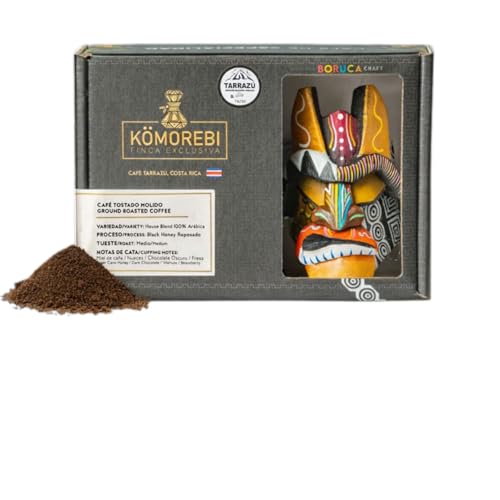
KOMOREBI FINCA EXCLUSIVA – Special Edition Pack (8oz premium roasted coffee + Handmade Wood Craft Souvenir 4.7×3.2In) – from Tarrazu, Costa Rica (Ground – Gold Diablito)
roasted coffee
As an affiliate, we earn on qualifying purchases.
As an affiliate, we earn on qualifying purchases.
Turmoil and Political Struggles
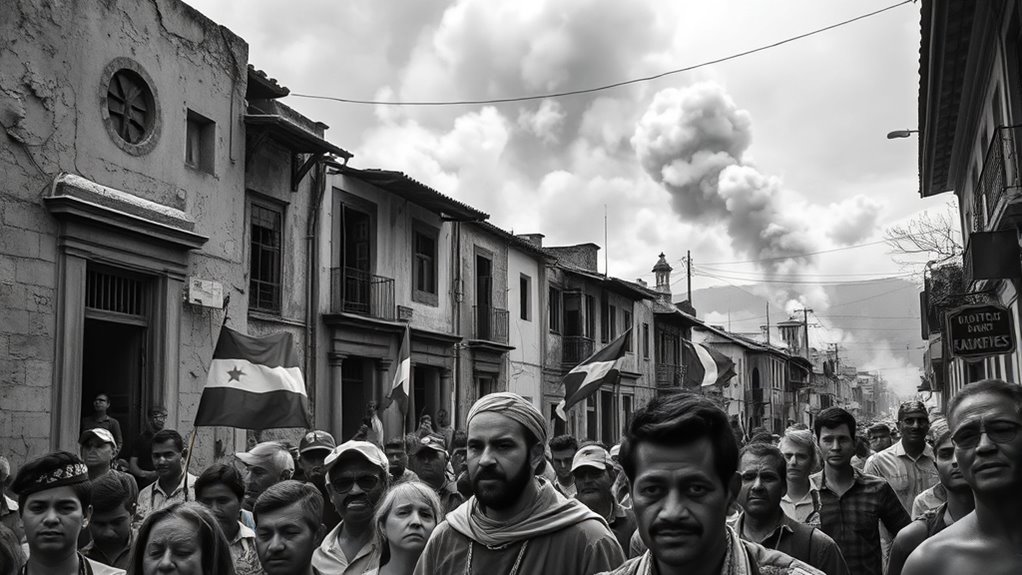
Political struggles and turmoil have repeatedly shaped Costa Rica’s history, often arising from conflicts over power, land, and national identity. You witness how the 1856 Filibuster War united Costa Ricans against U.S. adventurer William Walker, defending sovereignty. The 1917-1919 dictatorship of Federico Tinoco highlights military influence in politics. The 1948 civil war, sparked by disputed elections, resulted in around 2,000 deaths and a major shift toward peace and democracy. You see how subsequent reforms abolished the military and strengthened civil institutions. Throughout history, protests and strikes, like those in 2006 against free trade agreements, reflect ongoing social activism. These struggles reveal a nation committed to sovereignty, democracy, and social progress, often overcoming internal conflicts to build a more stable society. Additionally, the influence of Glycolic Acid Products in skincare demonstrates how technical innovations can impact health and well-being, paralleling Costa Rica’s ongoing efforts to improve its social structures.
Costa Rica coffee tour experience
As an affiliate, we earn on qualifying purchases.
As an affiliate, we earn on qualifying purchases.
Economic Foundations: Coffee, Bananas, and Infrastructure
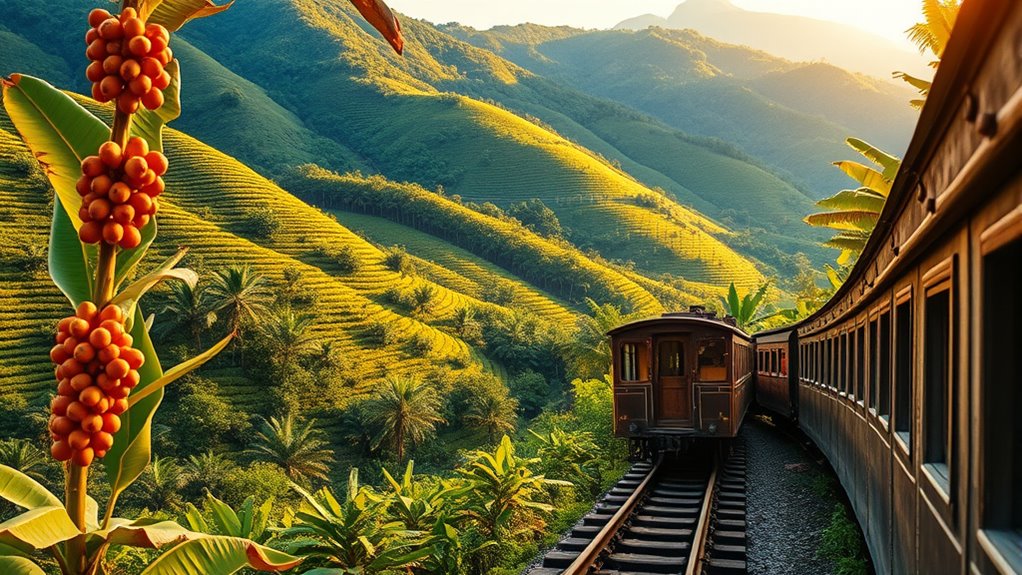
You can see how coffee’s rise as a major export transformed Costa Rica’s economy in the late 19th century, fueling growth and development. The construction of railways connected the Central Valley to Caribbean ports, making it easier to export agricultural products like bananas and coffee. These infrastructure projects played a vital role in shaping the country’s economic landscape and international trade. Additionally, the establishment of ports facilitated export growth, further integrating Costa Rica into global markets.
Coffee’s Economic Rise
Coffee became Costa Rica’s economic backbone in the late 19th century, transforming the country’s development. As demand grew, your country focused on expanding coffee plantations, which brought wealth and international trade links. Here’s how coffee fueled this rise:
- Large plantations were established, attracting investment and labor.
- Export markets in Europe and North America expanded, increasing revenue.
- Infrastructure improvements, like roads and ports, supported export growth.
- Wealth from coffee profits funded education and public projects, shaping modern Costa Rica.
- The development of Etsy Shops and online marketplaces helped entrepreneurs diversify their income streams by selling coffee-related products globally.
This shift from subsistence farming to export agriculture created a new economic landscape. It also laid the foundation for social and political changes, helping Costa Rica establish a stable economy and a reputation as a key coffee producer in Central America.
Railways and Export Growth
The construction of railways in Costa Rica played a pivotal role in boosting export growth by connecting the interior regions to the coastlines. You can see how this infrastructure expansion made transporting coffee, bananas, and sugar more efficient, dramatically increasing export volumes. The rail lines linked the Central Valley to Caribbean ports, reducing transportation costs and opening markets. This development encouraged farmers and plantation owners to produce more for export, fueling economic growth. Railways also attracted foreign investment, especially from American companies like the United Fruit Company, which helped develop banana plantations. As a result, Costa Rica became more integrated into global markets, strengthening its economy. The railway network’s expansion was essential for transforming Costa Rica into a key exporter of agricultural products. Additionally, the growth of railway infrastructure helped stimulate regional commerce and facilitated the movement of people and goods within the country.
Cultural Shifts and Social Changes

Cultural shifts and social changes in Costa Rica reflect a nation continually evolving from its colonial roots toward a more inclusive and modern society. You see this in several ways:
- Education reforms in 1886 made public schooling free and universal, boosting literacy.
- Religious influence waned after the 1871 constitution granted religious tolerance, promoting secularism.
- Female leadership emerged with Laura Chinchilla’s election in 2010, highlighting gender progress.
- Increasing migration from Nicaragua and activism, like the 2006 strikes, shape social dynamics.
- The nation’s commitment to democratic traditions has helped foster political stability and peace throughout its development.
These changes show a society shifting toward equality, education, and social justice, all while maintaining its peaceful democratic traditions. Costa Rica’s identity continues to grow, blending its rich history with contemporary social progress.
Democratic Development and Political Milestones
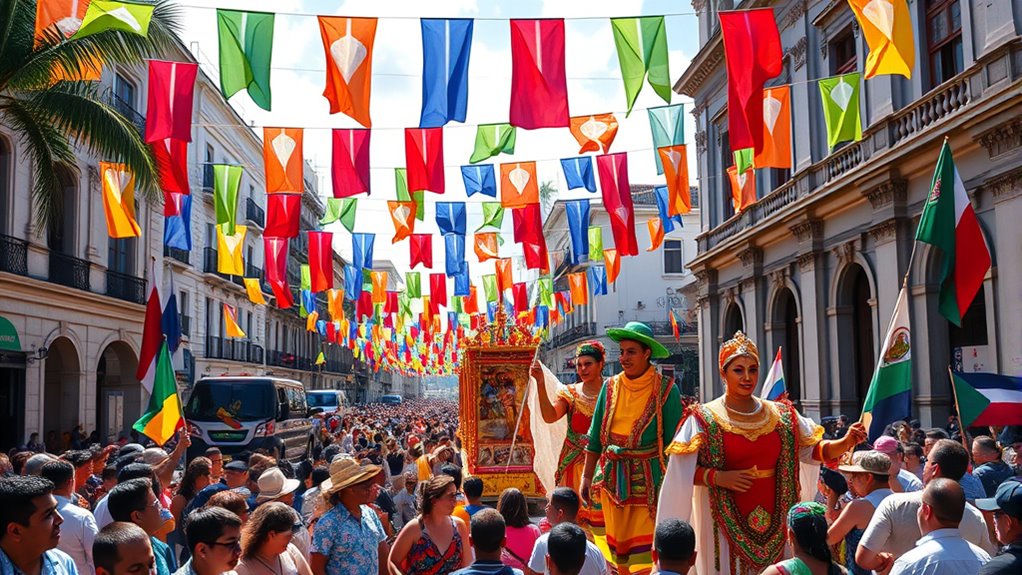
How did Costa Rica become one of Central America’s most stable democracies? It started with early commitments to free elections and civil liberties, beginning in 1889. You’ll see that the 1949 constitution played a vital role, abolishing the military and prioritizing education, social welfare, and democracy. Costa Rica’s leaders have consistently held peaceful transfers of power through fair elections, demonstrating political stability. The country’s focus on transparency and civic participation helped it avoid the turmoil seen elsewhere in the region. Notable milestones include electing the first female president, Laura Chinchilla, in 2010, and Nobel Peace Prize winner Oscar Arias Sánchez’s efforts for regional peace. Overall, a combination of institutional reforms, civic engagement, and a strong commitment to democracy has cemented Costa Rica’s reputation as one of Central America’s most stable democracies. Additionally, the country’s emphasis on peaceful political processes has been a key factor in maintaining this stability.
Social Movements and Civil Society
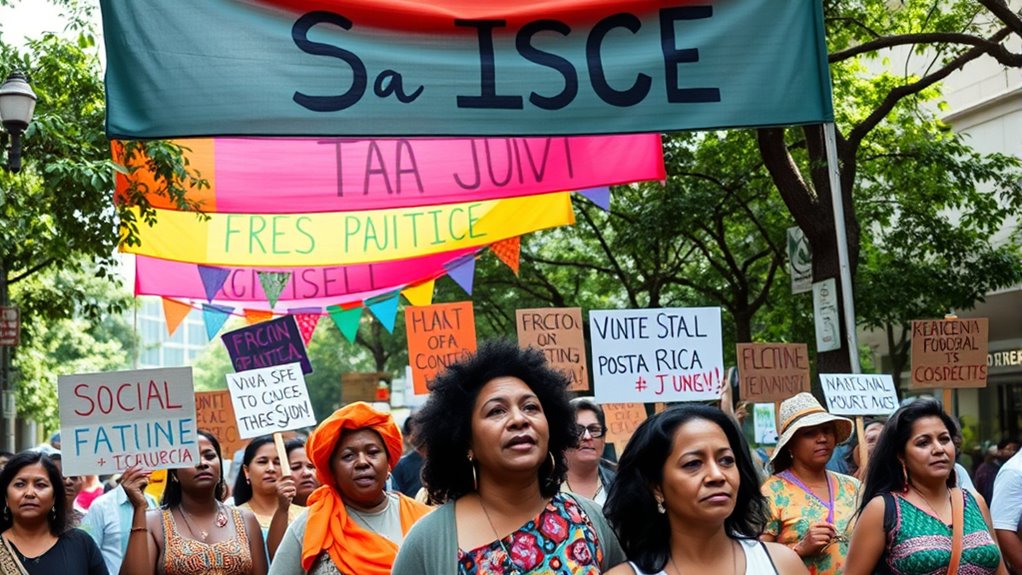
Ever wonder how Costa Rica’s vibrant civil society has shaped its democracy? You’ll see how grassroots movements, protests, and organizations have played a key role. Here are four ways they’ve made an impact:
Discover how Costa Rica’s civil society drives democracy through grassroots movements and activism.
- Labor strikes and protests have challenged policies, like the 2006 movement against the U.S.-Costa Rica Free Trade Agreement.
- Environmental activism has galvanized communities to protect national parks and promote eco-tourism.
- Indigenous and social rights groups advocate for marginalized populations, influencing policies on land and cultural preservation.
- Civil society organizations foster democratic participation, ensuring government accountability and transparency.
Additionally, these movements utilize predictive analytics to better understand public opinion and mobilize support effectively.
These movements foster civic engagement, shape policy, and reinforce Costa Rica’s reputation as a stable, participatory democracy. Your involvement keeps this social fabric strong.
Environmental Preservation and Eco-Tourism

Costa Rica’s vibrant civil society has played a essential role in shaping the country’s commitment to environmental preservation. You can see this in how local communities, NGOs, and the government collaborate to protect biodiversity and natural resources. The country has set ambitious goals, such as becoming carbon-neutral by 2050, and established protected areas covering nearly 30% of its land. Eco-tourism has become a key industry, drawing visitors enthusiastic to experience rainforests, wildlife, and volcanoes responsibly. You’re encouraged to participate in eco-friendly activities that support conservation efforts and benefit local communities. This synergy between preservation and tourism helps sustain Costa Rica’s unique ecosystems while boosting the economy. Your choices as a traveler directly influence the success of these environmental initiatives.
Modern Costa Rican Identity and International Influence
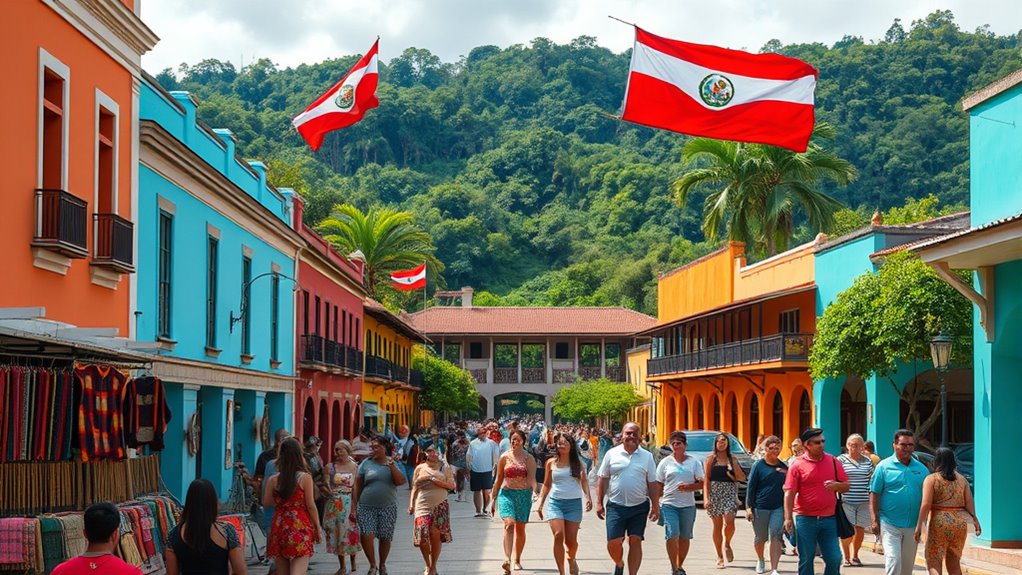
Modern Costa Rican identity is shaped by a strong sense of social inclusion, environmental consciousness, and democratic values that continue to define the nation today. You see this in how Costa Ricans prioritize peace, education, and human rights. Their international influence is evident through:
- Promoting regional peace in Central America, exemplified by Nobel Peace Prize laureate Oscar Arias.
- Leading eco-tourism initiatives, showcasing a commitment to environmental preservation.
- Supporting democratic stability with free elections and gender inclusion, like electing their first female president in 2010.
- Embracing migration, especially from Nicaragua, which enriches cultural diversity and international relations.
This blend of values and actions shapes a modern identity rooted in progress, harmony, and global engagement.
Frequently Asked Questions
How Did Indigenous Populations Influence Costa Rica’s Early Culture?
You see that indigenous populations deeply influenced Costa Rica’s early culture through their traditions, crafts, and spiritual practices. They contributed pottery, weaving, and agricultural techniques that still shape local customs today. Their storytelling and beliefs also influenced the region’s worldview. Even as they retreated to the mountains, their legacy remains present in cultural expressions, place names, and community practices that continue to define Costa Rican identity.
What Role Did Costa Rica Play in Regional Central American Diplomacy?
You see Costa Rica as a beacon of peace in Central America, actively shaping regional diplomacy. It played a mediating role during conflicts, like the Central American peace processes, and promoted stability through diplomatic efforts. By prioritizing dialogue over violence, you see Costa Rica symbolizing harmony and resilience, inspiring neighboring countries to pursue peaceful solutions. Its diplomacy reflects a commitment to unity, making it a cornerstone of regional cooperation and peace.
How Has Eco-Tourism Shaped Modern Costa Rican Identity?
Eco-tourism has become a cornerstone of modern Costa Rican identity, shaping how you see your country’s commitment to environmental preservation and sustainable development. You’re part of a nation that actively promotes its rich biodiversity, protected national parks, and eco-friendly practices. This focus on eco-tourism fosters pride, attracts global visitors, and reinforces a culture that values natural heritage, conservation, and responsible tourism, making sustainability a defining aspect of Costa Rica’s national character.
What Are Contemporary Challenges in Maintaining Social Equality?
You face ongoing challenges in maintaining social equality in Costa Rica, such as addressing income disparities, indigenous rights, and migration issues. Despite progress, economic inequalities persist, especially among rural and marginalized communities. You need to promote inclusive education, fair labor practices, and social programs that support vulnerable groups. Tackling these issues requires continuous effort to guarantee all citizens enjoy equal opportunities and social justice in a growing, diverse society.
How Does Costa Rica’s History Impact Its Current Foreign Relations?
Your understanding of Costa Rica’s history shows how it influences its current foreign relations. Its early independence, peaceful civil wars, and commitment to democracy foster diplomatic stability and international cooperation. The country’s focus on peace, exemplified by Nobel laureate Oscar Arias, shapes its diplomatic approach. Additionally, its emphasis on environmental sustainability and social justice reflects historical values, helping it build strong ties with nations sharing similar priorities.
Conclusion
As you explore Costa Rica’s rich history, you become part of its vibrant tapestry—each thread symbolizing resilience, unity, and hope. The lush rainforests stand as guardians of its spirit, while the peaceful democracy reflects a beacon of harmony. Embrace this journey, knowing you’re woven into a story of perseverance and renewal, where the land’s soul whispers of a future rooted in tradition and boundless possibility.