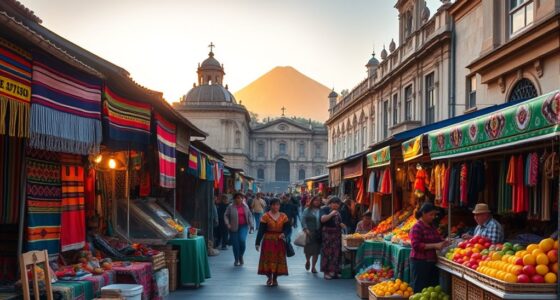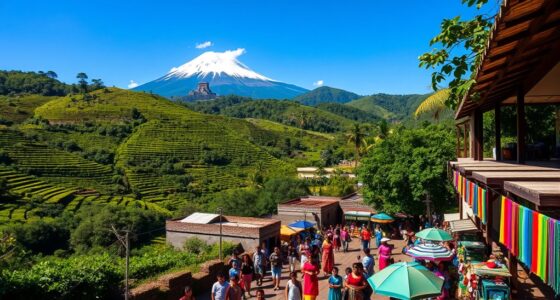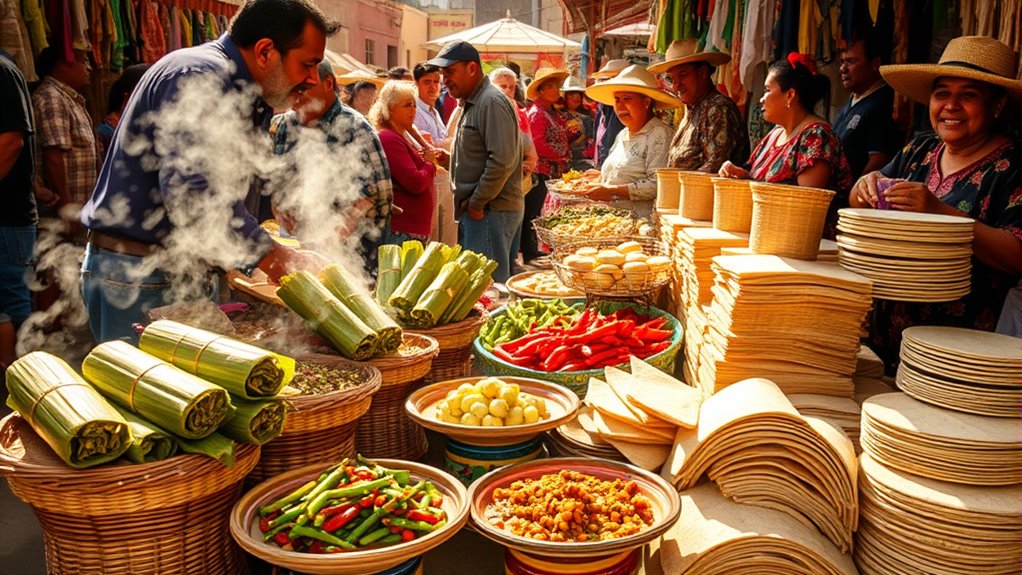

Guatemalan cuisine blends indigenous Mayan flavors with Spanish influences, creating vibrant dishes like Jocón, Kak’ik, and fiambre. You’ll find staples like corn, beans, chilies, and seeds, prepared using roasting and grinding methods that add earthy, smoky tastes. Festive foods often feature stuffed tamales, stews, and salads symbolizing tradition and community. If you’re curious, you’ll discover how these rich culinary practices reflect Guatemala’s cultural heritage and regional diversity.
Key Takeaways
- Guatemala’s cuisine features traditional dishes like Jocón, Kak’ik, and Fiambre, highlighting indigenous Mayan ingredients and flavors.
- Corn, beans, chilies, pumpkin, and sesame seeds are fundamental ingredients with cultural and nutritional significance.
- Cooking techniques include roasting, grinding, and steaming in leaves, preserving historical and ceremonial culinary practices.
- Fusion of Mayan and Spanish influences is evident, blending indigenous ingredients with colonial spices and methods.
- Social customs emphasize communal meals, hospitality, and traditional beverages like coffee and atol.

10-Piece Organic Spice Starter Set | Badia Cayenne Pepper, Paprika, Oregano, Cumin, Gonsalves Crushed Red Pepper & More – Gift for Home Cooks
10 Premium Badia Spices for Bold Flavor: Cayenne Pepper, Paprika, Basil, Cumin, Garlic Powder, Onion Powder, Oregano, Rosemary,…
As an affiliate, we earn on qualifying purchases.
As an affiliate, we earn on qualifying purchases.
Traditional Guatemalan Dishes and Signature Stews
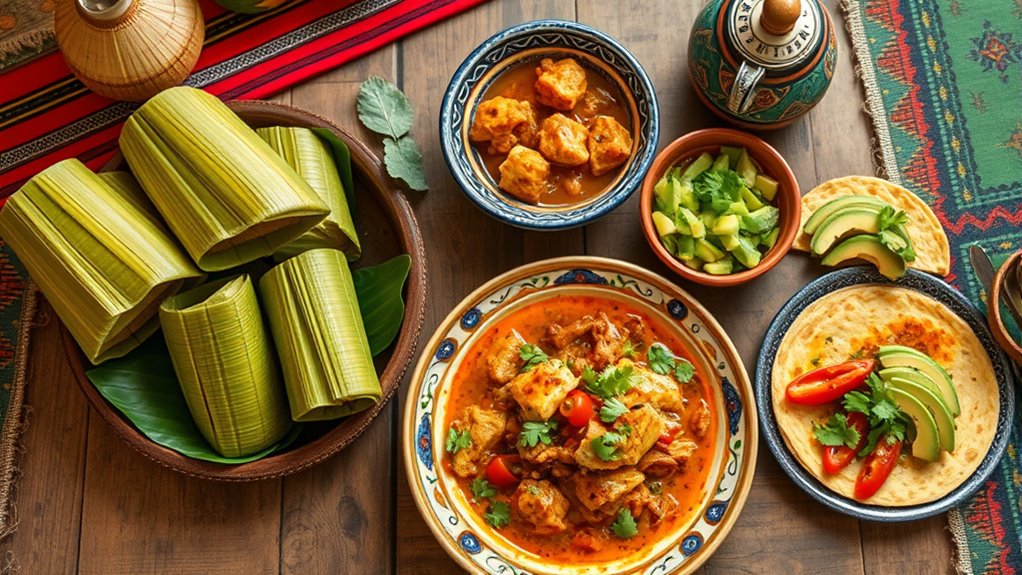
Guatemalan cuisine boasts a rich variety of traditional dishes and signature stews that reflect its Mayan roots and Spanish influences. You’ll find dishes like Jocón, a chicken stew made with green tomatillos, cilantro, sesame, and pumpkin seeds, thickened with tortillas. Hilachas features shredded beef in a tomato broth with potatoes and carrots, while Subanik combines three types of meat in a spicy-sweet chili sauce, often steamed in leaves. Kak’ik, a spicy turkey soup, showcases Mayan flavors, and Lengua en Salsa Roja offers tender beef tongue cooked in a rich red sauce. These dishes highlight the importance of slow cooking and bold flavors, using local ingredients like chili, herbs, and seeds. Each stew embodies a blend of ancestral traditions and colonial influences, creating a vibrant culinary heritage. Incorporating traditional ingredients such as achiote, coriander, and annatto further enhances the depth of Guatemalan flavors.

The original Molcajete Mexicano volcanic rock Handmade of Authentic Lava Rock in Mexico – Molcajete de Piedra volcanica – Molcajete Mortar Pestle molcajete bowl molcajete volcanic rock guacamole maker
AUTHENTIC LAVA ROCK – This molcajete is made of authentinc lava rock from the Popocatepetl Volcan in Puebla…
As an affiliate, we earn on qualifying purchases.
As an affiliate, we earn on qualifying purchases.
Key Ingredients and Culinary Staples of Guatemala
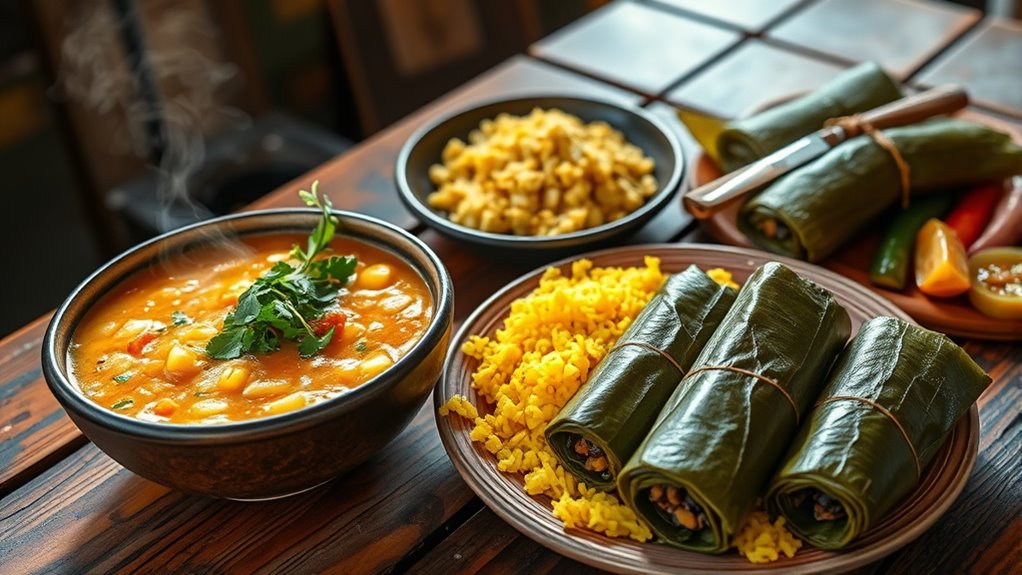
You’ll notice that corn, beans, and chilies are at the heart of Guatemalan cooking, reflecting a deep Mayan heritage. Rich, smoky recado sauces made with toasted pumpkin and sesame seeds add complex flavors to many dishes. These ingredients come together to create vibrant, hearty meals rooted in tradition and local abundance. Additionally, understanding dynamic communication exercises can enhance appreciation of cultural storytelling and culinary traditions within Guatemalan communities.
Indigenous Staple Foods
Corn, beans, and chilies stand as the foundational ingredients across Guatemala’s culinary landscape, reflecting deep roots in Mayan tradition. These staples shape the flavor and structure of many dishes you’ll encounter. To understand their importance:
- Corn is the primary grain, used in tortillas, tamales, and as a thickener in stews.
- Beans provide essential protein and are prepared as refried, boiled, or incorporated into soups.
- Chilies add heat and color, influencing dishes like Kak’ik and other sauces.
- Pumpkin and sesame seeds are vital for making recado sauce, adding depth and nutty flavors.
- The high nutritional value of these ingredients supports the health and nutrition of local communities.
Together, these ingredients form a resilient foundation that links Guatemala’s ancient culinary roots with contemporary eating habits, highlighting the significance of indigenous foods in daily life.
Rich Use of Chilies
Chilies are at the heart of Guatemalan cuisine, infusing dishes with vibrant color, intense flavor, and fiery heat. You’ll find dried and fresh chilies used in many recipes, adding depth and complexity. Red chilies like chiles guaque and chiles cascabel give dishes their signature smoky, spicy kick, especially in stews like Kak’ik. Green chilies, such as chiles verdes, brighten sauces like Jocón, blending with herbs for fresh, tangy flavors. Chilies also serve as color agents, turning soups and sauces a rich red hue. They’re often roasted or dried to enhance their smoky aroma before being ground into powders or pastes. This bold use of chilies reflects Guatemala’s love for vibrant, flavorful foods rooted in ancient Mayan culinary traditions. Incorporating natural ingredients like chilies is essential to achieving authentic flavors in Guatemalan dishes.
Nutty Seed Sauces
Have you ever noticed how Guatemalan dishes achieve their rich, smoky, and nutty flavors? It’s thanks to the essential use of nutty seed sauces. These sauces are key to many traditional recipes and are made with ingredients like:
- Toasted sesame and pumpkin seeds, which add depth and richness.
- Roasted dried chilies, providing smokiness and heat.
- Tomatoes, onions, and garlic, creating a robust base.
- Corn masa or flour, thickening and binding the sauces.
These elements combine to produce bold, earthy flavors that define dishes like Jocón and Subanik. The nutty seed sauces serve as a flavorful foundation, enhancing stews and braises while preserving Guatemala’s ancient culinary heritage. You’ll find them integral to both everyday meals and festive celebrations. Cooking techniques also play a vital role in preparing these sauces to achieve the desired texture and flavor.

Fjxxxn 4-Pack Stainless Steel Steaming Racks, 4 Sizes,Universal Steamer Insert & Canning Rack for Tamale Pot & Stock Pots, Fits 7.6 to 10.23 Inch Diameter Pressure Cooker Cooking
Bullet Point 1: Complete 4-Pack with 4 Sizes for Universal Fit This versatile set includes four sturdy steaming…
As an affiliate, we earn on qualifying purchases.
As an affiliate, we earn on qualifying purchases.
Regional Influences and Cultural Significance in Guatemalan Cuisine

Your exploration of Guatemalan cuisine reveals a rich blend of indigenous roots and colonial influences that shape regional flavors. You’ll notice how traditional Mayan ingredients and techniques merge with Spanish culinary elements, creating unique dishes across different areas. This fusion highlights the cultural significance and historical depth embedded in Guatemala’s food traditions.
Indigenous Culinary Roots
Guatemalan cuisine is deeply rooted in its indigenous Mayan heritage, shaping regional flavors and culinary traditions across the country. Your food reflects ancient practices and ingredients that have been passed down through generations. The use of maize, beans, and chilies remains central to many dishes, connecting you to your ancestors. You’ll find that:
- Traditional dishes like Jocón and Kak’ik honor Mayan rituals and symbolism.
- Ingredients such as recado sauce, made from sesame, pumpkin seeds, and chilies, showcase indigenous flavors.
- Cooking methods like steaming dishes in leaves preserve age-old techniques.
- Celebratory foods, like tamales and fiambre, highlight cultural significance and community bonds.
- Decoding slang reveals how indigenous culinary terms and descriptions continue to influence modern Guatemalan food culture.
These elements demonstrate how indigenous roots continue to shape Guatemalan cuisine, emphasizing its spiritual and cultural importance throughout history.
Colonial Influences and Fusion
The rich indigenous culinary traditions of Guatemala have been shaped and expanded through centuries of Spanish colonization, resulting in a vibrant fusion of flavors and techniques. You’ll notice Spanish ingredients like rice, olives, and spices blending seamlessly with Mayan staples such as corn, chilies, and seeds. This fusion is evident in dishes like Jocón, where green tomatillos meet Spanish tortillas, and in stews like Subanik, which combine spicy sauces with traditional maize-based thickeners. Spanish cooking methods, such as roasting, grilling, and steaming in leaves, have been integrated into local practices. Additionally, the introduction of new meats like pork and beef has enriched the culinary landscape. The use of culinary techniques from both cultures exemplifies how Guatemala’s cuisine reflects its complex history. This blending creates a unique cuisine that reflects both Guatemala’s indigenous roots and its colonial history, celebrating cultural diversity on every plate.

The Ultimate Guatemalan Cookbook: 111 Dishes From Guatemala To Cook Right Now (World Cuisines)
As an affiliate, we earn on qualifying purchases.
As an affiliate, we earn on qualifying purchases.
Typical Meal Components and Serving Customs

Meals in Guatemala typically revolve around hearty stews and soups served alongside staples like rice and tortillas, which are fundamental to daily dining. When you sit down to eat, you’ll notice these key components:
- Main Protein – Dishes like Jocón or Lengua en Salsa Roja provide rich flavors and are often the centerpiece.
- Starches – Corn tortillas and rice accompany every meal, balancing textures and filling.
- Vegetables – Potatoes, carrots, and chayote add nutrition and variety to stews.
- Condiments and Salsas – Fresh cilantro, recado sauces, and chilies enhance flavors and add spice or brightness.
- Meal Presentation and Customs – In Guatemalan culture, meals are usually served at once, emphasizing community and sharing. Family members often eat together, with the host’s wife serving guests first, reflecting the importance of cultural dining traditions.
Distinct Flavors and Notable Ingredients in Guatemalan Cooking
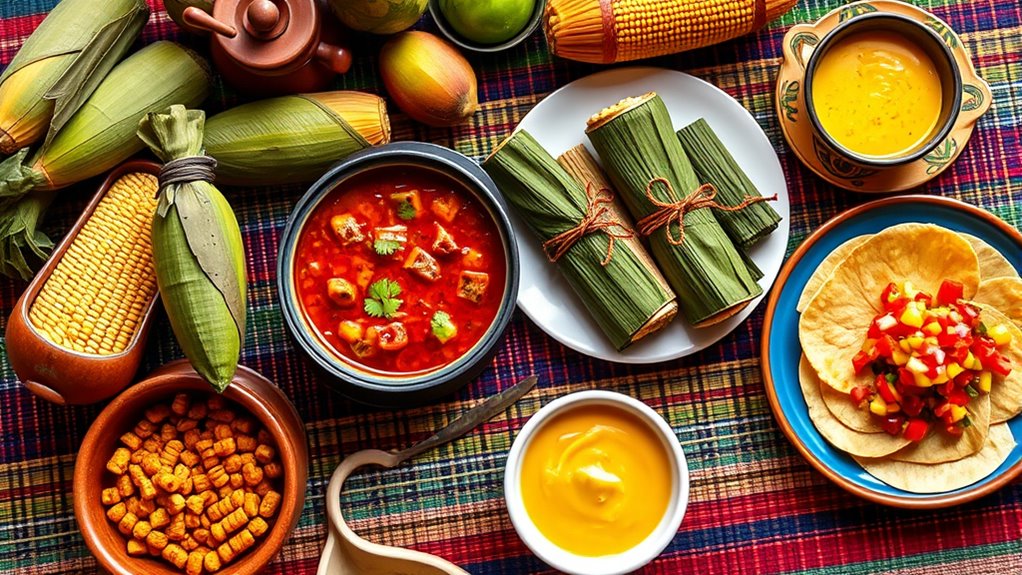
Rich, vibrant flavors define Guatemalan cooking, rooted in a blend of indigenous traditions and Spanish influences. You’ll notice the bold use of chilies, which provide both spice and color, especially in dishes like Kak’ik’s fiery red broth. Fresh herbs like cilantro and chives add brightness, balancing richer ingredients. Sesame and pumpkin seeds are essential, offering a nutty depth in recado sauces that flavor stews like Jocón and Subanik. Corn and masa are fundamental, thickening dishes while symbolizing maize’s cultural importance. Fruits such as mango, papaya, and pineapple infuse sweetness into meals or are enjoyed fresh. The combination of spicy, savory, and sweet elements creates complex, layered flavors that make Guatemalan cuisine uniquely memorable. These ingredients reflect both the land’s bounty and centuries of culinary evolution.
Festive and Symbolic Foods in Guatemalan Celebrations
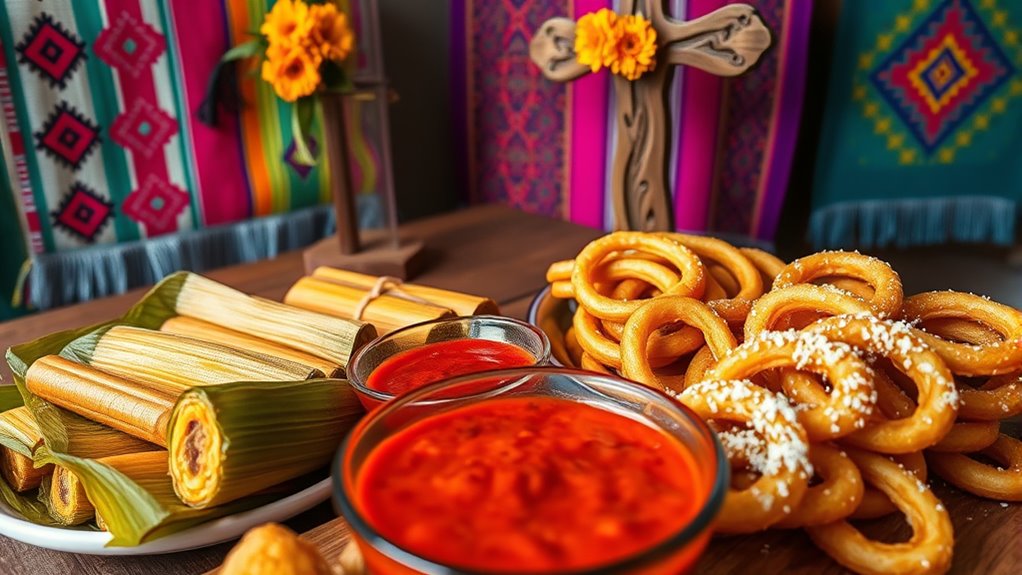
Festive and symbolic foods hold a special place in Guatemalan celebrations, connecting traditions, community, and spirituality. During these events, specific dishes carry cultural significance. For example, you might encounter:
Festive foods in Guatemala symbolize unity, tradition, and spiritual connection during celebrations.
- Fiambre – a colorful, cold salad with over 50 ingredients, representing unity and remembrance during All Saints Day.
- Tamales – prepared in various styles for Christmas and festivals, wrapped in leaves and filled with meats, vegetables, or sweets.
- Kak’ik – a spicy turkey soup symbolizing Mayan rituals, often served during special ceremonies.
- Paches – potato tamales eaten on Thursdays, linked to traditional beliefs and weekly customs.
These foods are more than nourishment; they embody Guatemalan history, spiritual beliefs, and communal bonds, making celebrations truly meaningful. Additionally, the preparation and sharing of these dishes foster community bonding and reinforce cultural identity among Guatemalans.
The Role of Coffee and Other Beverages in Guatemalan Food Culture
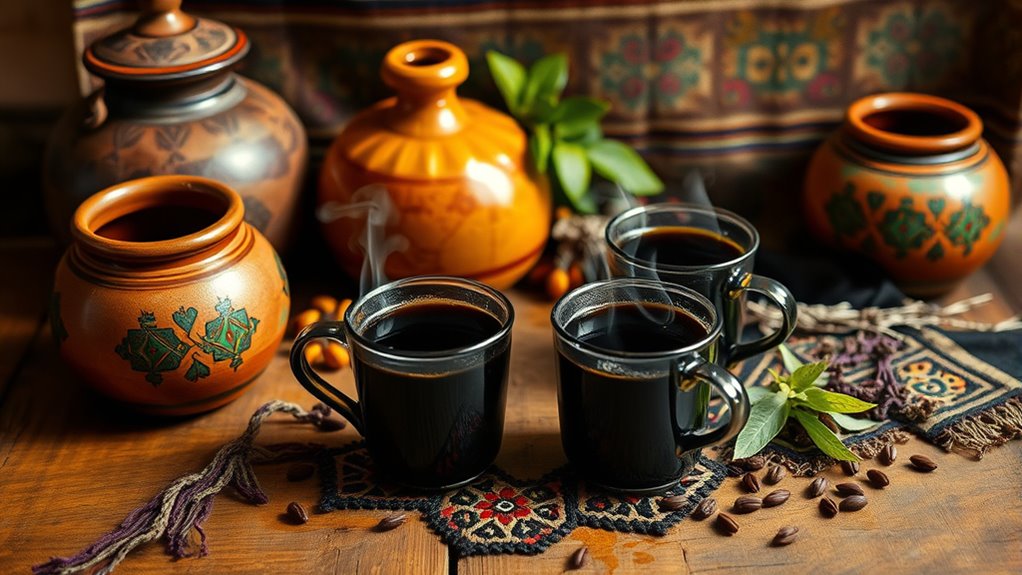
Coffee plays a central role in Guatemalan food culture, reflecting the country’s deep-rooted agricultural traditions and social practices. You’ll notice that coffee isn’t just a drink; it’s a symbol of hospitality and community. Guatemalans typically serve their coffee weak and sweetened, especially during breakfast or social gatherings, emphasizing comfort and warmth. The country’s high-altitude regions produce some of the world’s best coffee beans, which are exported globally, but locals also enjoy freshly brewed, locally grown coffee daily. Besides coffee, beverages like atol (a warm corn-based drink) and fresh fruit juices are popular, especially during celebrations and everyday meals. These drinks complement traditional dishes and reinforce the cultural importance of shared, communal experiences centered around food and drink. Additionally, the preparation and sharing of coffee often serve as a social bonding activity, bringing families and communities together over conversations and traditions.
Frequently Asked Questions
How Has Guatemalan Cuisine Evolved With Modern Culinary Trends?
Guatemalan cuisine has evolved by blending traditional flavors with modern trends like fusion, health-conscious ingredients, and innovative presentation. You might find classic dishes reimagined with organic, locally sourced ingredients or with contemporary cooking techniques such as grilling or sous-vide. Chefs incorporate international influences, making dishes more diverse and appealing to global palates. Despite these changes, you’ll still notice the deep-rooted use of indigenous ingredients and cultural significance in every bite.
What Are the Regional Variations in Guatemalan Street Food?
You’ll find regional street food in Guatemala as diverse as the landscapes themselves. In Guatemala City, expect tacos filled with spicy recado sauce; in Antigua, you might indulge in sweet tamales wrapped in banana leaves. Meanwhile, in the highlands, roasted corn and chuchos (sweet potato snacks) reign supreme. Each region adds its own twist, proving that even on the streets, Guatemalans love to keep it interesting—and deliciously unpredictable.
How Do Traditional Cooking Methods Influence Flavor in Guatemalan Dishes?
Traditional cooking methods like slow simmering, steaming, and wrapping in leaves deeply influence Guatemalan flavors. You’ll notice these techniques develop rich, smoky, and earthy tastes, especially in stews like Jocón or Subanik. When you steam dishes in banana leaves or use masa for thickening, it adds subtle depth and authenticity. These methods preserve ancient flavors, creating hearty, complex dishes that reflect Guatemala’s cultural heritage and natural ingredients.
What Role Do Indigenous Ingredients Play in Contemporary Guatemalan Cuisine?
Indigenous ingredients play a crucial role in contemporary Guatemalan cuisine, shaping its authentic flavors. You’ll find corn, beans, and chilies as foundational staples, adding depth and tradition to dishes. Sesame and pumpkin seeds, along with regional herbs, bring nutty and fresh notes. These ingredients connect you to the country’s Mayan roots, ensuring that modern dishes retain their cultural essence while blending Spanish influences for rich, vibrant flavors.
How Are Guatemalan Dishes Adapted for Dietary Restrictions and Health Trends?
You can adapt Guatemalan dishes for dietary restrictions and health trends by using lean meats, reducing salt and fats, and incorporating more vegetables and whole grains. Swap traditional ingredients like masa for healthier alternatives or gluten-free options. You might also substitute sugar with natural sweeteners or add plant-based proteins to make dishes more plant-centric. These adjustments help you enjoy authentic flavors while maintaining a balanced and inclusive diet.
Conclusion
Exploring Guatemalan cuisine reveals a vibrant tapestry of flavors and traditions that reflect its rich cultural history. Did you know that Guatemala is the world’s top exporter of organic coffee? This highlights how deeply coffee is woven into daily life and celebrations. Embracing these culinary treasures lets you experience the warmth and heritage of Guatemala, making every meal a meaningful journey into its lively culture.