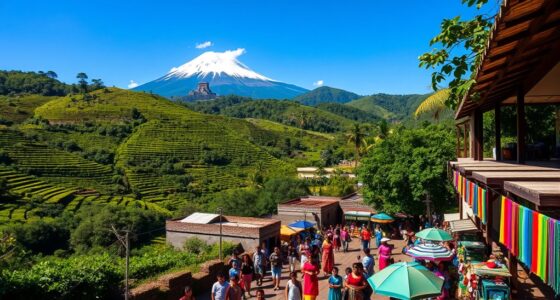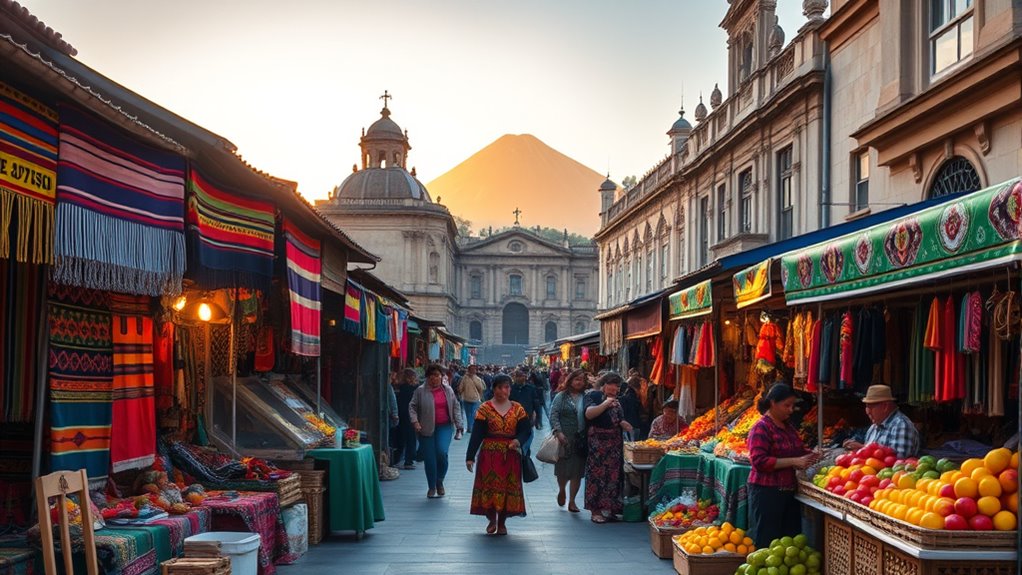
Guatemala’s history and culture are deeply rooted in the ancient Maya civilization, known for impressive cities and advanced astronomy. You’ll see their influence today in language, textiles, and festivals. The colonial period brought Spanish rule, which changed indigenous practices and caused social upheaval. After independence and decades of political conflict, the country faced a brutal civil war. Today, efforts focus on preserving indigenous heritage, addressing social issues, and shaping a more inclusive society—there’s much more to discover behind these stories.
Key Takeaways
- Guatemala’s rich history includes the ancient Maya civilization, known for advanced architecture, astronomy, and hieroglyphic writing.
- Colonial conquest brought Spanish influence, Christianity, and social hierarchies, impacting indigenous cultures and traditions.
- The 20th-century civil war involved military repression, land disputes, and human rights abuses, affecting indigenous communities.
- Indigenous languages like K’iche’, Q’eqchi’, and Mam are actively preserved alongside traditional clothing, textiles, and festivals.
- Modern Guatemala faces social inequalities and political challenges but continues to celebrate its vibrant cultural heritage.
The Ancient Maya Civilization and Its Legacy

Have you ever wondered how the ancient Maya civilization continues to influence Guatemala today? Their legacy lives on through language, traditions, and cultural practices that remain strong among indigenous communities. The Maya built impressive cities like Tikal and Copán, showcasing advanced architecture, astronomy, and writing systems. Their calendar and hieroglyphic script reveal sophisticated knowledge of astronomy and history. Even after centuries, many Guatemalans still speak Mayan languages, such as K’iche’ and Q’eqchi’, preserving an essential part of their identity. Religious rituals, woven textiles, and community festivals echo Maya traditions, emphasizing a deep connection to ancestral roots. The Maya’s enduring influence shapes Guatemala’s cultural landscape, reminding everyone of a rich history that predates colonial times and continues to thrive today. Decoding fan culture can help us appreciate the ways indigenous communities maintain and celebrate their heritage.
Spanish Conquest and Colonial Impact
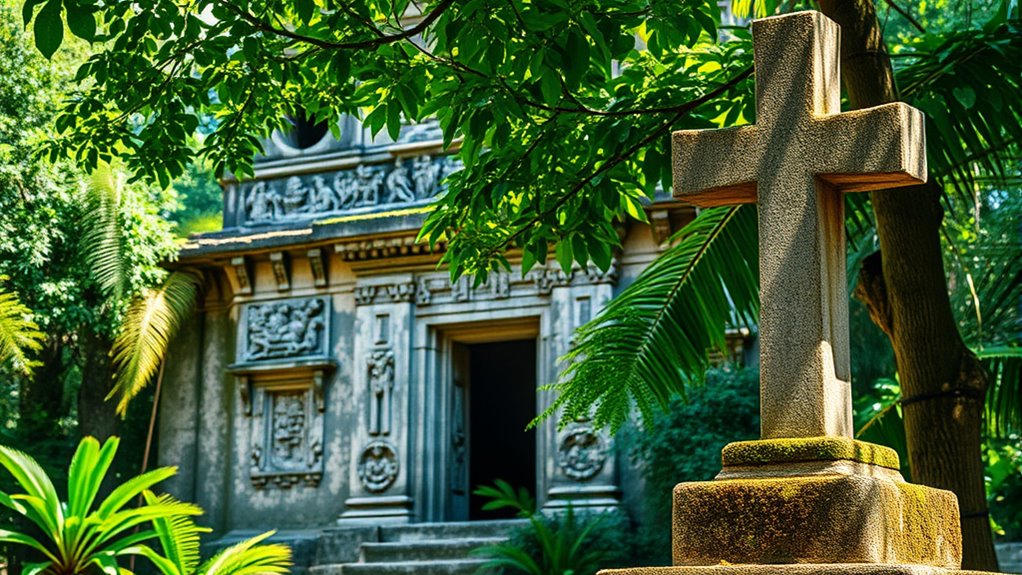
When the Spanish arrived, they brought devastating warfare and diseases that caused a sharp decline in the indigenous population. They imposed their culture, language, and religion, often suppressing Maya traditions and beliefs. Spanish administrative structures replaced local governance, establishing a hierarchy that favored Europeans and marginalized native peoples.
Indigenous Population Decline
The Spanish conquest dramatically reduced the indigenous populations of Guatemala through warfare, disease, and social upheaval. As you witness, Spanish soldiers and settlers fought brutal campaigns against Maya communities, leading to mass killings and forced migrations. Diseases like smallpox, measles, and influenza, brought by Europeans, decimated populations that had no immunity. The social order shifted drastically, with indigenous people subjected to forced labor, exploitation, and cultural suppression. Many Maya were killed outright, while others died from the harsh conditions of encomiendas and plantations. Over time, the indigenous population declined sharply, losing its prominence and influence. This demographic collapse disrupted Maya society, erasing many traditions and weakening their communities, effects that still echo in Guatemala’s indigenous struggles today.
Colonial Cultural Imposition
The Spanish conquest brought profound changes to Guatemala’s indigenous cultures, fundamentally reshaping the region’s social and spiritual landscape. You’re likely aware that Spanish colonizers imposed Christianity, often replacing Maya spiritual beliefs with Catholicism. They forced indigenous communities to adopt new customs, language, and governance structures, disrupting centuries-old traditions. Colonial authorities established new social hierarchies that privileged Europeans and mestizos while marginalizing indigenous peoples. You would see how indigenous practices were suppressed or blended with Catholic rituals, leading to syncretism but also loss of original beliefs. The colonizers exploited local resources and labor, further destabilizing Maya societies. This cultural imposition aimed to erase indigenous identities, replacing them with European customs, language, and religion—an enduring legacy that still influences Guatemala today. Additionally, the colonial cultural imposition led to the erosion of many traditional crafts and oral histories, which threatened the continuity of indigenous heritage over generations.
Spanish Administrative Structures
How did Spanish rulers organize Guatemala during the colonial period? They established a hierarchical system centered on the Captaincy General of Guatemala, which governed the region. The colony was divided into administrative units like corregimientos and encomiendas, where Spanish authorities controlled land and labor. You’d find Spanish officials, church leaders, and local indigenous leaders working together, often unevenly. To make it clearer, here’s a simple overview:
| Level | Role | Key Features |
|---|---|---|
| Captaincy General | Overall colonial authority | Enforced Spanish laws, military control |
| Corregimiento | Regional administration | Managed towns, collected taxes |
| Encomienda | Land and labor rights to Spanish settlers | Exploited indigenous labor |
| Indigenous Communities | Local governance and cultural practices | Preserved traditions, faced restrictions |
This structure aimed to maintain control, but also caused social and cultural upheaval among indigenous populations.
Path to Independence and Early Nationhood
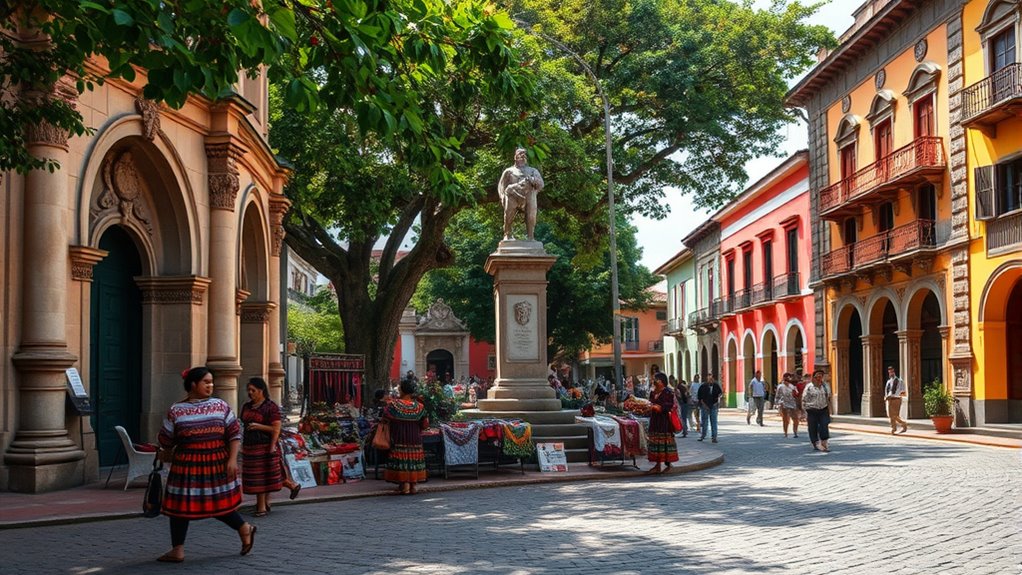
Guatemala’s journey toward independence began amidst a backdrop of regional unrest and shifting political alliances. In 1821, you witness the declaration of independence from Spain, sparked by widespread discontent with colonial rule. Soon after, Guatemala briefly joins the First Mexican Empire, then becomes part of the Federal Republic of Central America in 1823, aiming to unify Central American states. However, internal conflicts and regional rivalries cause the federation to dissolve in 1840. You see Guatemala assert its sovereignty in 1847 under Rafael Carrera, who consolidates conservative power and restores church privileges. During this early period, political struggles between conservatives and liberals shape the nation’s future, while borders remain contested, especially with British Honduras. This tumultuous path sets the stage for Guatemala’s ongoing efforts to forge a stable nation. You also observe the influence of regional unrest and shifting alliances on the country’s development during this formative era.
The Liberal Revolution and Political Shifts
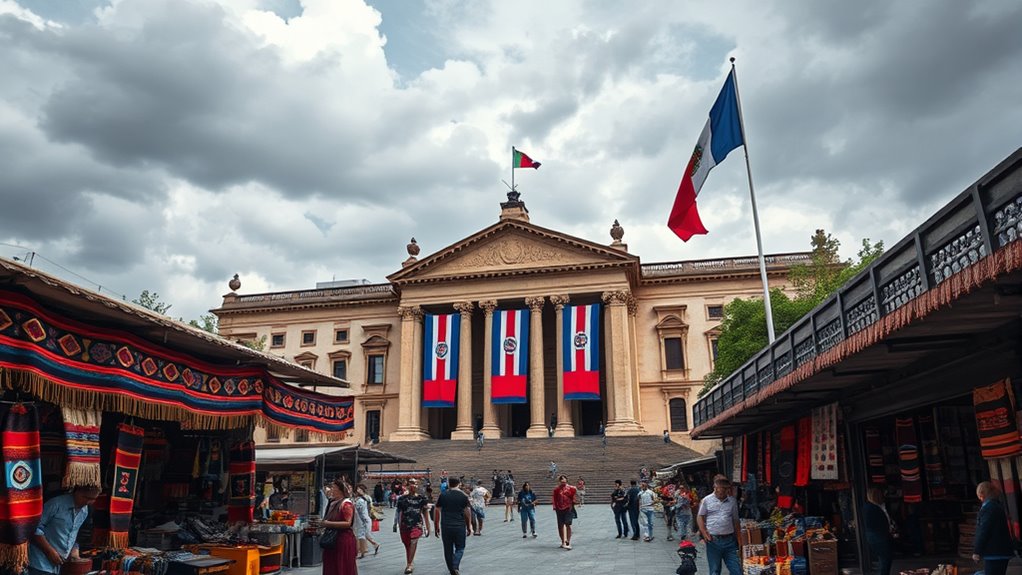
In 1871, a liberal revolution swept through Guatemala, ending decades of conservative dominance and initiating widespread reforms aimed at modernization and secularization. You’ll see this shift as liberals, led by Miguel García Granados and Justo Rufino Barrios, pushed for land redistribution, education reform, and the reduction of church influence. The new government promoted economic growth through coffee exports and attracted foreign investment, especially from American companies like the United Fruit Company. These changes disrupted traditional power structures, creating tensions between conservatives and liberals. You’ll notice that this period laid the groundwork for future political struggles, with liberals emphasizing progress and modernization, while conservatives sought to preserve societal hierarchies rooted in religion and tradition. This era marked a turning point in Guatemala’s political evolution. Additionally, the reforms introduced during this period significantly impacted the country’s social fabric and political landscape, shaping its development for years to come.
The Era of Dictatorship and Economic Change
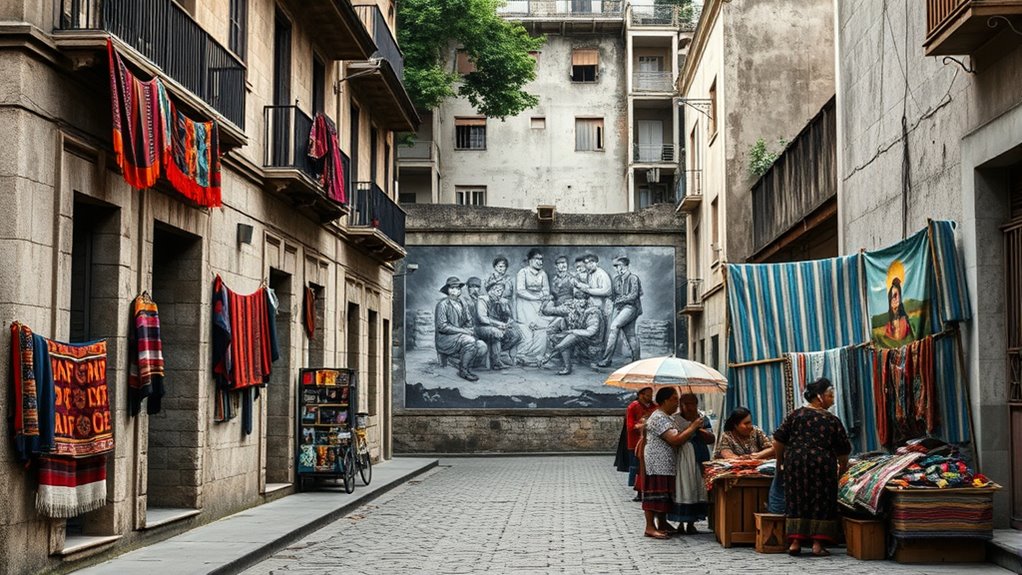
During the era of dictatorship and economic change, Guatemala experienced a period marked by authoritarian rule and significant shifts in its economy. Leaders like Jorge Ubico (1931–1944) imposed repression while promoting U.S. economic interests. This period saw increased foreign investment, especially in coffee and bananas, transforming the economy but widening inequality. The 1944 revolution ended Ubico’s dictatorship, sparking reforms and modernization efforts. However, instability returned with military regimes and coups, *particularly* in the 1950s. The table below highlights key aspects of this era:
| Leader | Economic Focus | Human Rights Impact |
|---|---|---|
| Jorge Ubico | U.S. investments, exports | Repression, political prisoners |
| Miguel Ydígoras | Military expansion | Suppressed protests |
| Carlos Castillo Armas | Land redistribution | Violent crackdowns |
| Efraín Ríos Montt | Agrarian policies | Human rights abuses |
| Jorge Serrano | Economic reforms | Political repression |
This period also saw the expansion of foreign influence shaping Guatemala’s political landscape and economic policies.
The 1954 U.S.-Backed Coup and Its Aftermath
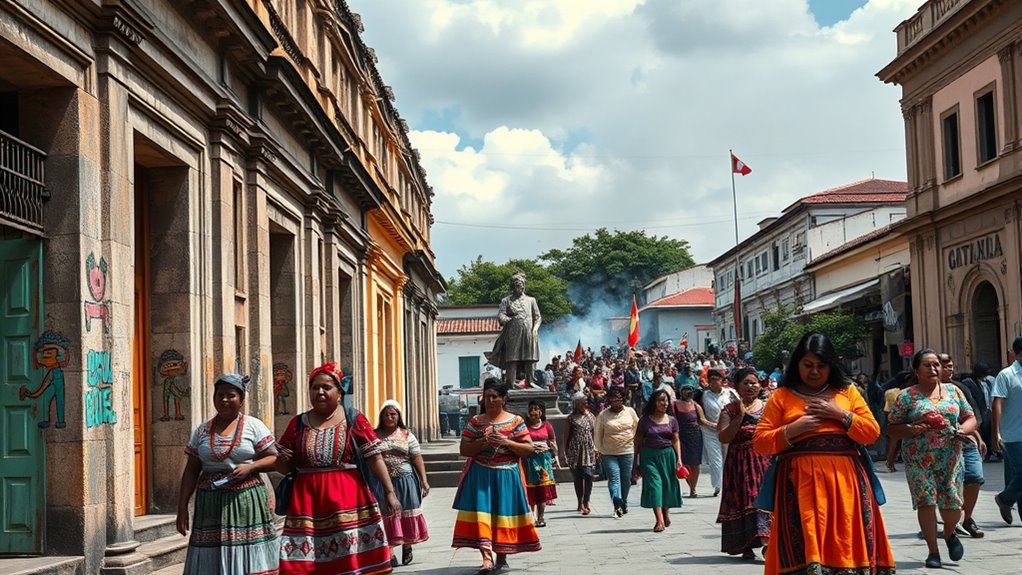
You see, in 1954, the United States backed a coup that toppled Árbenz and reversed his land reforms. This move paved the way for military leaders to take control and tighten their grip on the country. As a result, Guatemala experienced years of military rule and political instability that shaped its future. The coup also had lasting effects on the country’s political landscape, influencing its social and economic development for decades.
Overthrow of Árbenz
The overthrow of Árbenz in 1954 marked a pivotal turning point in Guatemala’s history, reshaping its political landscape and deepening Cold War tensions. The CIA-backed coup ousted Árbenz’s progressive government, undoing land reforms that threatened U.S. economic interests, especially those of the United Fruit Company. This event plunged Guatemala into decades of instability, authoritarian rule, and civil conflict. The new regime suppressed opposition and reversed reforms, fueling resentment and resistance. The table below highlights the contrasting impacts of Árbenz’s policies versus the coup:
| Árbenz’s Policies | Post-Coup Actions |
|---|---|
| Land redistribution | Land concentration for elites |
| Social reforms | Repression of dissent |
| Focus on sovereignty | U.S. influence and intervention |
Furthermore, the coup significantly impacted Guatemala’s sovereignty, leading to increased foreign influence and interference in domestic affairs.
Reversal of Reforms
The 1954 U.S.-backed coup in Guatemala dramatically reversed the country’s progressive reforms, restoring power to indigenous landowners and elites while halting land redistribution efforts. After overthrowing President Árbenz, the new regime dismantled land reforms that aimed to break up large estates, especially those owned by foreign companies like United Fruit. They reinstated the dominance of wealthy landowners and reasserted conservative control over politics and society. The coup also suppressed popular organizations and restricted voting rights, especially for the illiterate. These actions deepened social inequalities and intensified resistance. The reversal of reforms set the stage for decades of political instability, military rule, and civil conflict. It marked a turning point that preserved elite dominance and delayed meaningful social change in Guatemala.
Rise of Military Rule
Following the 1954 U.S.-backed coup, military leaders quickly took control of Guatemala’s government, establishing a regime centered on repression and authoritarian rule. You see, they dismantled democratic institutions and silenced opposition to maintain power. Here’s what happened next:
- They implemented brutal tactics, including disappearances and massacres, targeting anyone suspected of leftist sympathies.
- The military increased its influence over politics, often intervening in civilian governments and suppressing reforms.
- Indigenous communities suffered greatly, facing violence and displacement as part of counterinsurgency efforts.
This period entrenched military dominance, setting the stage for decades of instability, violence, and human rights abuses that deeply scar Guatemala’s history.
The Long Civil War and Human Rights Struggles

Why did Guatemala’s civil war last for over three decades, leaving a trail of human rights abuses and deep scars? The conflict stemmed from deep-rooted social inequalities, political repression, and government efforts to suppress leftist insurgents and indigenous communities. You saw military forces use brutal tactics, including massacres, scorched-earth campaigns, and forced disappearances, especially targeting Maya populations. The government aimed to eliminate perceived threats through systematic violence, often ignoring international human rights standards. As a result, thousands of innocent civilians suffered, families were torn apart, and communities were destroyed. The war’s brutality left lasting trauma, deepening social divisions and mistrust. Your country’s history became marred by these atrocities, highlighting the urgent need for justice and reconciliation. Understanding systemic violence is essential to grasp how these abuses persisted over such a long period.
Peace Agreements and Post-War Recovery

You’re about to explore how Guatemala’s peace process faced significant hurdles in addressing past violence and building trust. Despite progress, challenges remain in fully implementing agreements and ensuring justice for victims. At the same time, indigenous rights have seen improvements, but ongoing efforts are needed to protect cultural heritage and promote equality. Incorporating ethical considerations into the reconciliation process is essential for fostering lasting peace and social cohesion.
Peace Process Challenges
The peace process in Guatemala faces ongoing challenges despite the signing of the 1996 peace accords, which officially ended the civil war. You’ll find that implementing these agreements remains complex, as deep-rooted issues persist. Here are three main challenges:
- Impunity and Justice: Many human rights violations from the war go unpunished, hindering reconciliation and trust.
- Social Inequality: Economic disparities and marginalization of indigenous communities limit post-war recovery efforts.
- Political Stability: Corruption and weak institutions make it difficult to uphold peace and enforce reforms effectively.
These obstacles slow progress toward lasting peace, requiring continued effort, transparency, and genuine inclusion of marginalized groups to build a stable future.
Indigenous Rights Progress
Has progress been made in advancing indigenous rights since the signing of the 1996 peace accords? Yes, but it’s a slow process. Guatemala has taken steps to recognize indigenous cultural heritage, protect languages, and promote traditional practices. New laws support indigenous communities’ rights to land, resources, and self-determination. Efforts have been made to include indigenous voices in government and peacebuilding processes. However, challenges remain: many communities still face discrimination, poverty, and violence. Land disputes and social inequality persist, limiting full participation. Still, the government’s acknowledgment of indigenous contributions and the push for legal reforms mark meaningful progress. You can see a stronger recognition of indigenous identity and rights, but ongoing struggles highlight the need for continued efforts.
Contemporary Guatemala: Challenges and Progress
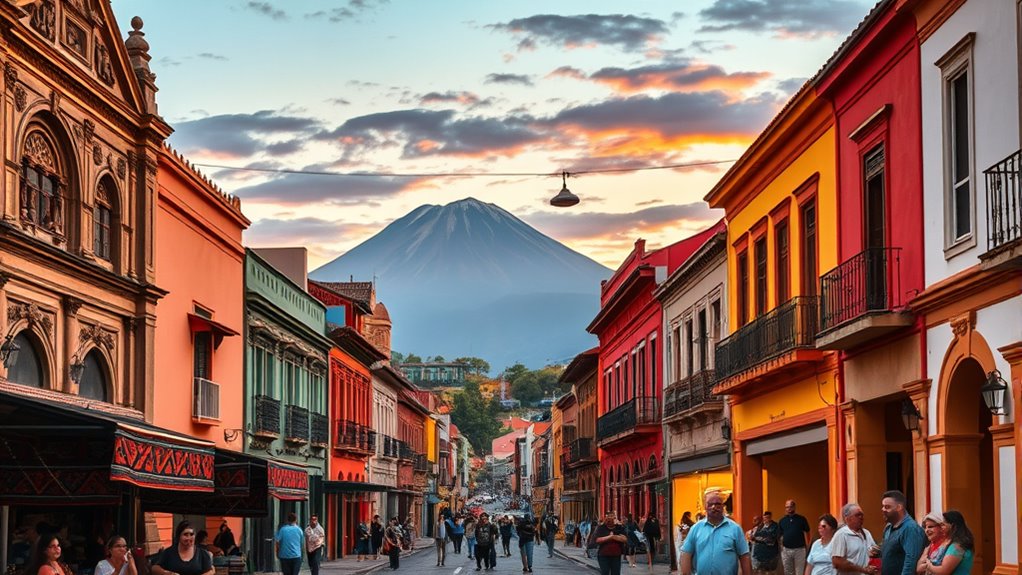
Despite significant progress since the peace accords of 1996, Guatemala continues to face substantial challenges in achieving social equity and political stability. You see efforts to promote reconciliation, protect indigenous rights, and improve governance, but issues remain. Here are three key areas:
Guatemala strives for progress amid ongoing social, political, and economic challenges.
- Social Inequality: Poverty and lack of access to education and healthcare persist, especially among indigenous communities.
- Corruption and Governance: Political scandals and corruption cases, like the 2015 resignation of President Otto Pérez Molina, highlight ongoing transparency issues.
- Economic Development: While agriculture and tourism grow, economic disparity hampers broad progress, and many struggle to escape poverty.
Despite these hurdles, Guatemala’s vibrant culture and resilient communities continue to push for positive change and recognition.
Preserving Indigenous Heritage and Cultural Identity

Guatemala’s rich cultural landscape remains deeply rooted in its indigenous heritage, even amid ongoing social and political challenges. You can see this in the vibrant traditional clothing, colorful textiles, and lively festivals that celebrate Maya roots. Indigenous communities actively preserve their languages, such as K’iche’, Q’eqchi’, and Mam, passing them down through generations. You help keep Maya arts, crafts, and rituals alive by supporting local artisans and cultural initiatives. Schools and organizations work to protect sacred sites and promote awareness of indigenous history. Despite threats from modernization and globalization, your efforts contribute to maintaining a strong cultural identity. By valuing and safeguarding these traditions, you ensure that Guatemala’s indigenous heritage continues to thrive for future generations.
Frequently Asked Questions
How Do Mayan Traditions Influence Modern Guatemalan Society Today?
Mayan traditions deeply influence your modern Guatemalan society through language, clothing, and festivals. You’ll see indigenous languages like K’iche’ spoken alongside Spanish, and colorful textiles in traditional dress. Celebrations such as the Day of the Dead honor ancestors, blending Maya rituals with Catholic practices. These customs keep Maya identity alive, shaping your community’s cultural landscape and reminding you of Guatemala’s rich, enduring heritage rooted in ancient traditions.
What Role Did Indigenous Peoples Play During Guatemala’s Independence Movement?
Like the silent giants of old, indigenous peoples played a crucial role in Guatemala’s independence movement. You see, they contributed through protests, armed resistance, and rallying others around their cause. Their resilience echoed like the Maya’s ancient chants, inspiring unity against colonial rule. Though often overlooked, their participation helped shape the nation’s future, ensuring their voices remained woven into Guatemala’s story of liberation and identity.
How Has Guatemala’s Colonial History Shaped Its Current Social Inequalities?
Your colonial history has deeply shaped Guatemala’s current social inequalities. You can see it in the hierarchical society established during Spanish rule, where indigenous peoples faced discrimination and economic exploitation. These structures persisted after independence, limiting access to education, land, and power for indigenous communities. Today, this legacy continues to reinforce inequality, making it difficult for many indigenous populations to achieve social and economic justice within Guatemala’s society.
What Are the Main Symbols of Maya Cultural Identity in Guatemala?
You’ll notice that vibrant traditional textiles, such as colorful huipiles and intricate weavings, beautifully showcase Maya cultural identity. The sacred calendar, with its Tzolk’in and Haab’ cycles, reflects deep spiritual beliefs. Iconic symbols like the jaguar and serpent appear in art and architecture, representing power and connection to nature. These symbols celebrate Maya heritage and serve as proud reminders of your rich ancestral roots in Guatemala’s diverse cultural tapestry.
How Does Guatemala Address Human Rights Issues Related to Its Indigenous Communities?
Guatemala works to address human rights issues by implementing legal protections for indigenous communities, promoting cultural preservation, and supporting bilingual education. You can see efforts to recognize indigenous land rights and improve access to justice. However, challenges remain, as systemic inequality and violence still affect many indigenous people. Advocacy groups and international organizations continue to push for stronger enforcement of these rights and greater inclusion in political and social decision-making.
Conclusion
As you explore Guatemala’s vibrant tapestry, imagine a land where ancient ruins whisper stories of resilience and culture blooms amidst challenges. Its history is a river flowing through time, shaping its people’s spirit. With each struggle and triumph, Guatemala’s soul shines brighter, a beacon of hope and heritage. Embrace its journey, for in every stone and song, you find the enduring heartbeat of a nation proud of its past and hopeful for its future.