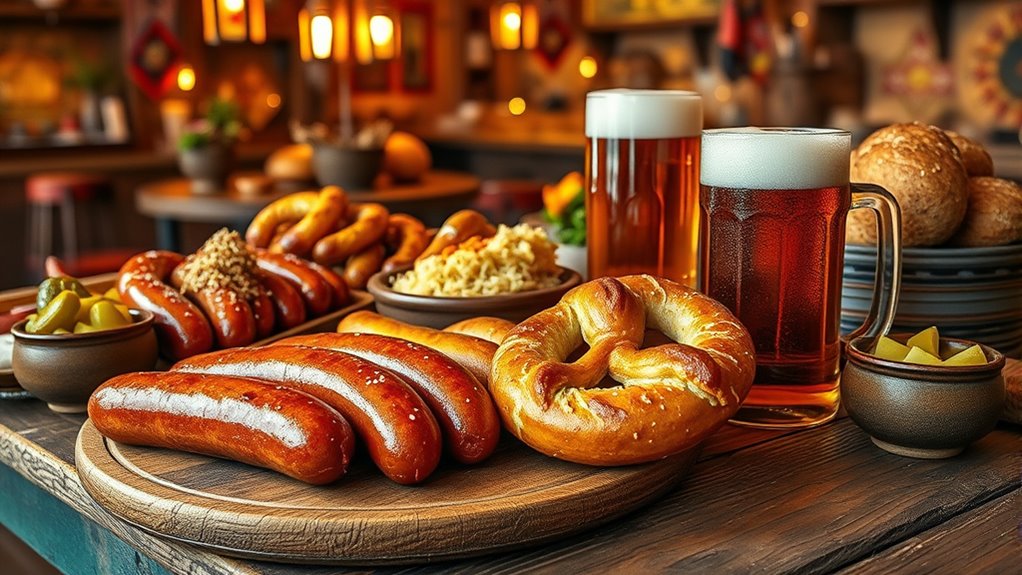

Germany’s cuisine blends regional flavors, hearty ingredients, and centuries-old preservation techniques. You’ll find countless breads, potatoes, and sausages, each with unique regional variations like Bavarian pretzels or northern fish dishes. Traditional dishes often feature cured, smoked, or pickled ingredients, supporting food security and rich flavors. Modern trends include vegetarian choices and international influences, all rooted in a strong culinary heritage. Exploring further reveals even more about Germany’s delicious and diverse food traditions.
Key Takeaways
- Germany’s cuisine features over 1,200 sausage varieties and regional dishes influenced by local ingredients and landscapes.
- Staple foods include bread, potatoes, rye, wheat, and preserved vegetables, forming the foundation of traditional meals.
- Preservation techniques like curing, smoking, and pickling have historically ensured food security and shaped regional specialties.
- Mealtime customs emphasize family, social bonding, and traditional dishes such as Abendbrot, hearty Mittagessen, and Kaffee und Kuchen.
- Modern trends incorporate international influences, vegetarian options, and a blend of traditional and contemporary culinary practices.

Kaiser Bread Roll, kaiser roll stamp,German Style Bread Roll, Croissant Cutter, 3PCS Dough Press Mold Set, Bread Press Stamp for Baking, Bread Hand Maker Mold,cookie press mold
【Three Press Mold Styles】There are triangle, oval, and round molds for you to choose. As long as you…
As an affiliate, we earn on qualifying purchases.
As an affiliate, we earn on qualifying purchases.
Bread, Potatoes, and Staple Foods
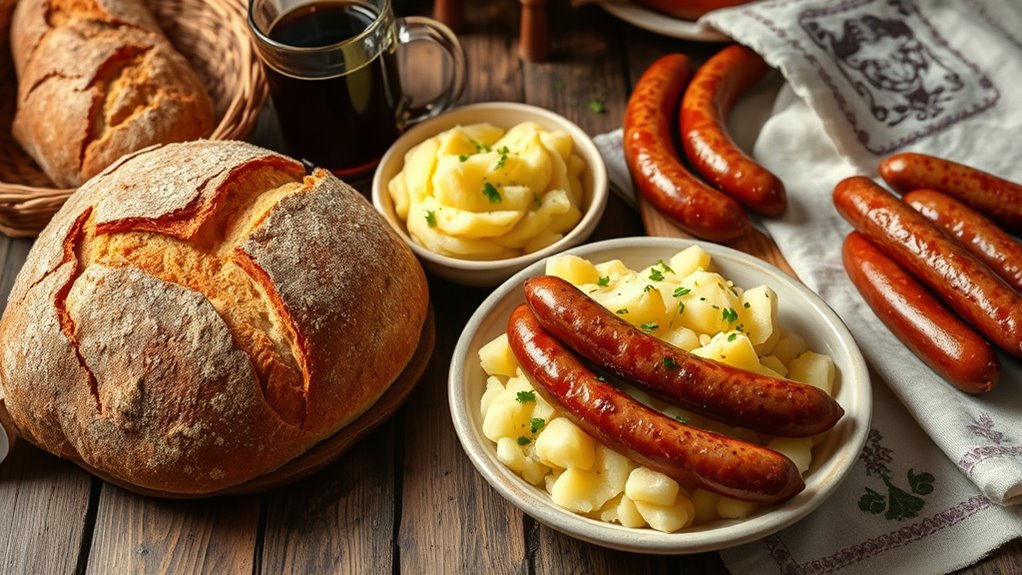
Germany’s culinary identity centers around its extensive variety of bread and the prominent role of potatoes in daily meals. You’ll find over 300 types of bread, from hearty rye loaves to delicate white rolls, often enjoyed during Abendbrot, the evening bread meal. Potatoes are a staple across the country, prepared in countless ways—mashed, boiled, fried, or turned into dumplings—reflecting their importance since being promoted in the 18th century to prevent famines. Alongside bread and potatoes, traditional staples like rye, wheat, sugar beets, and swede are common, especially in the north and east. These ingredients form the foundation of many classic dishes, demonstrating how bread and potatoes remain central to Germany’s everyday cuisine. Staple foods play a crucial role in shaping the country’s traditional recipes and regional flavors.

Hi Mountain Seasonings ǀ GERMAN Sausage Making Kit ǀ Includes Sausage Seasoning, Cure Natural Hog Casings, and Simple-to-Follow Directions ǀ Creates 30 Lbs of Delicious German Sausage
ELEVATE YOUR GRILLING GAME — with Hi Mountain German Sausage seasoning! This amazing seasoning is perfect for the…
As an affiliate, we earn on qualifying purchases.
As an affiliate, we earn on qualifying purchases.
Sausage and Meat Culture
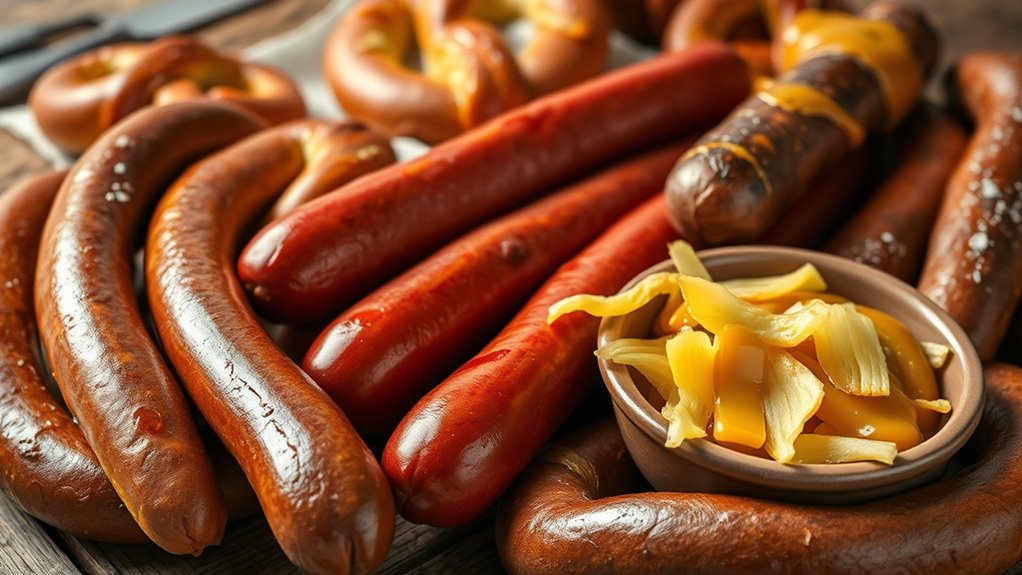
Germany’s sausage culture is incredibly diverse, with over 1,200 types and regional specialties like Nuremberg’s old-fashioned Bratwurst. You’ll also find traditional preservation methods, such as smoking and curing, that give these meats unique flavors and long shelf lives. These regional varieties and techniques highlight the country’s rich meat heritage and culinary traditions. Additionally, the importance of trust in relationships can influence how people approach sharing food and traditions, fostering communal bonds around meals.
Regional Sausage Varieties
Regional sausage varieties showcase Germany’s rich culinary diversity, with each area boasting unique flavors and traditions. You’ll find over 1,200 types of sausage, each reflecting local ingredients and techniques. For example, in Nuremberg, the famous Nürnberger Bratwurst has a centuries-old recipe, carefully regulated to preserve its authenticity. In Bavaria, Weisswurst combines veal and herbs, often served with sweet mustard and pretzels. Northern regions favor fish-based sausages and hearty smoked varieties like Landjäger. In the Rhineland, blood sausages and liverwurst are common, highlighting regional tastes. Street foods like Berlin’s Currywurst, sliced and topped with curry ketchup, show the modern twist on traditional sausage culture. These regional varieties highlight Germany’s diverse meat traditions and culinary heritage. Additionally, traditional sausage making often involves safe handling techniques, ensuring food safety and quality across regions.
Traditional Preservation Methods
Traditional preservation methods play a crucial role in German meat and sausage culture, allowing communities to store and enjoy their products long after harvest or slaughter. You’ll find that smoking, drying, curing, and salting are common techniques used to extend the shelf life of meats like sausages, ham, and blood sausages. For example, Landjäger, a smoked and dried sausage, reflects this tradition. Salting and curing are essential for making specialties like Leberkäse and various blood sausages, which can be stored for months. These methods not only preserve flavors but also develop unique tastes and textures. Many regional recipes have been passed down through generations, maintaining Germany’s rich meat and sausage heritage, especially in rural areas where self-sufficiency was historically crucial. Additionally, traditional preservation methods often enhance the nutritional value of the meats, ensuring their quality over time.
![The Preservation Kitchen: The Craft of Making and Cooking with Pickles, Preserves, and Aigre-doux [A Cookbook]](https://m.media-amazon.com/images/I/51DWRZlDHsL._SL500_.jpg)
The Preservation Kitchen: The Craft of Making and Cooking with Pickles, Preserves, and Aigre-doux [A Cookbook]
As an affiliate, we earn on qualifying purchases.
As an affiliate, we earn on qualifying purchases.
Regional and Seasonal Dishes
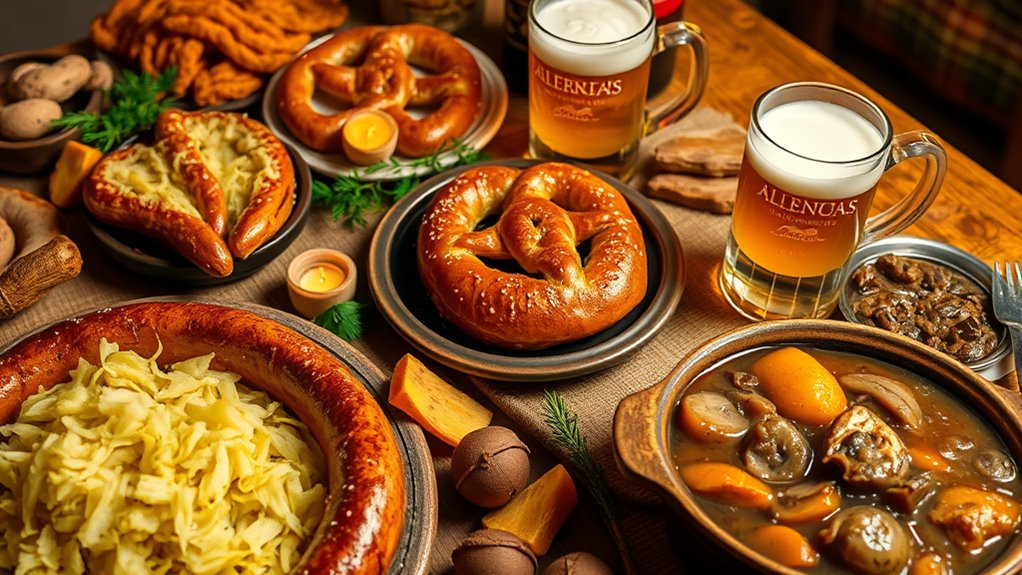
Have you ever noticed how the diverse landscapes of Germany influence its regional dishes? In Bavaria, you’ll find hearty Weisswurst and pretzels, perfect for cold mornings. Moving north, fish dishes and kale (Grünkohl) become staples, especially during winter. In the spring, asparagus festivals (Spargel) highlight seasonal produce across Baden-Württemberg, showcasing fresh, local flavors. Pomerania relies on smoked fish, poultry, and preserved fruits, reflecting its coastal environment. The Lake Constance region is famous for freshwater fish dishes, while the Rhineland celebrates Carnival with street foods that blend sweet and savory flavors. In rural areas, families traditionally preserve meats, fruits, and vegetables, ensuring year-round sustenance. These regional and seasonal dishes reveal Germany’s rich culinary diversity rooted in its landscapes and traditions. Incorporating traditional preservation techniques, such as curing and pickling, further enhances the variety and longevity of these regional specialties.
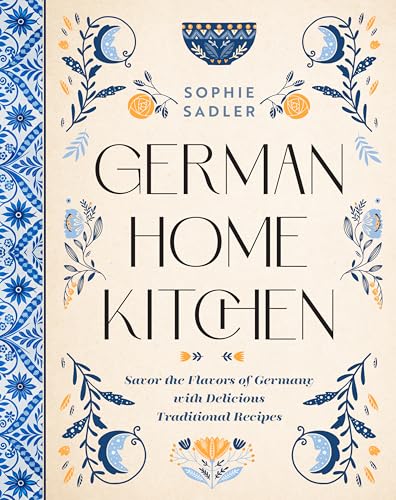
German Home Kitchen: Traditional Recipes That Capture the Flavors of Germany
As an affiliate, we earn on qualifying purchases.
As an affiliate, we earn on qualifying purchases.
Dairy, Cheeses, and Sweet Treats
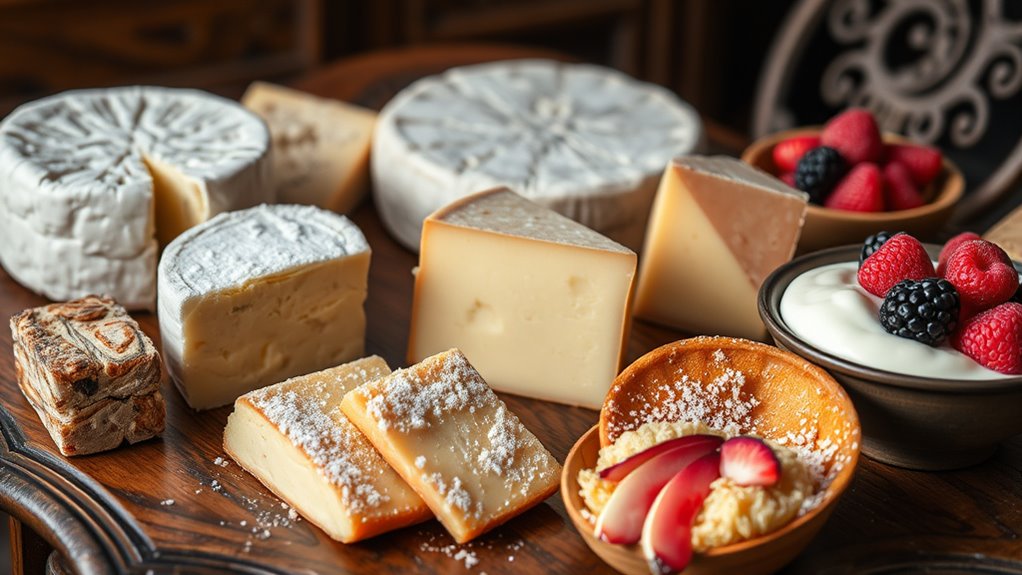
Germany’s rich culinary landscape extends beyond hearty meats and seasonal vegetables to include a wide variety of dairy products and sweet treats. You’ll find cheeses like quark, Harzer, and Emmentaler, used in both savory dishes and desserts. Cream, butter, and milk play essential roles in baking and confections, especially in cakes and custards. Coffee and cake afternoons, known as Kaffee und Kuchen, feature favorites like Black Forest Cake, Streuselkuchen, and Bienenstich. Traditional cookies such as Springerle, Lebkuchen, and Stollen represent festive traditions. City treats like Berliner Pfannkuchen and Spritzkuchen are enjoyed during celebrations. These dairy delights and sweets reflect Germany’s deep-rooted love for rich flavors and artisanal craftsmanship. Dairy products are integral to many regional specialties, highlighting the importance of quality ingredients in traditional German cuisine.
Mealtimes and Eating Habits

You typically start your day with a hearty Frühstück, then enjoy a substantial Mittagessen that often features meat and potatoes. In the afternoon, you might take a break for Kaffee und Kuchen, before relaxing with Abendbrot, a social evening bread meal. Family and tradition play a big role, especially during weekends and holidays, with meals passed down through generations. Additionally, many Germans incorporate water-based relaxation techniques, such as enjoying hot tubs or saunas, to enhance their overall well-being and social bonding during mealtimes.
Daily Meal Structure
The daily meal structure in Germany reflects a blend of tradition and modernity, with specific mealtimes that emphasize both social and cultural values. You’ll typically start your day with Frühstück (breakfast), often consisting of bread, butter, and coffee. Mittagessen (lunch) is the main meal, usually hearty with meat, potatoes, and vegetables, served in the early afternoon. Kaffee und Kuchen (coffee and cake) offers a relaxing break in the late afternoon, featuring regional pastries. Abendbrot (evening bread) is a lighter, social meal, centered on artisanal bread with spreads and cold cuts.
- Breakfast energizes your day, rooted in simplicity.
- Lunch is your most substantial, community-focused meal.
- Coffee and cake foster social bonding and tradition.
- Evening bread emphasizes winding down with shared, casual eating.
Traditional Eating Customs
Mealtimes in Germany are more than just routine; they reflect a deep respect for tradition and social bonds. You’ll find that breakfast (Frühstück) starts the day with bread, butter, cheese, and cold cuts, setting a relaxed tone. Lunch (Mittagessen) is the main meal, often hearty with meat, potatoes, and vegetables, enjoyed with family or colleagues. Afternoon, many indulge in Kaffee und Kuchen, a cherished tradition featuring coffee and cake like Black Forest or Streuselkuchen. Dinner (Abendbrot) is lighter, centered around artisanal bread with toppings, fostering social connection. Fast foods like Currywurst and Döner Kebab are common in urban areas, influenced by modern lifestyles. Family meals, especially on weekends, remain essential, passing down recipes and customs across generations. Incorporating authentic tableware and serving customs can also enhance the traditional experience, reflecting the importance of cultural food practices.
Vegetarian and Modern Trends

Have German cuisine’s hearty, meat-centric reputation shifted in response to modern dietary trends? Absolutely. Today, you’ll find a growing variety of vegetarian options, from potato pancakes (Kartoffelpuffer) to mushroom ragouts and cheese spaetzle. Seasonal vegetables like cabbage, carrots, and beets are staples, reflecting a historic reliance on local produce. Modern restaurants increasingly feature plant-based and vegan dishes, influenced by global trends. International cuisines, especially Turkish and Italian, also shape everyday eating habits in cities. While traditional preservation methods like pickling and smoking remain important, they’re now complemented by modern refrigeration and imports. This shift highlights a culinary evolution, blending old customs with contemporary tastes and health-conscious choices. Additionally, the local produce movement emphasizes sustainable sourcing and supports regional farmers.
Traditional Food Preservation and Modern Influences
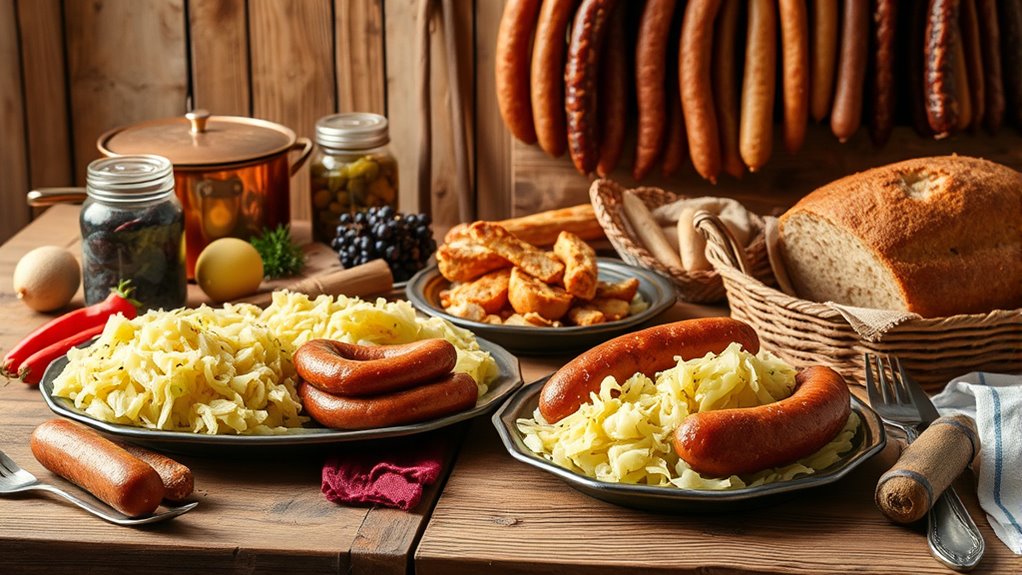
Traditional food preservation methods like pickling, smoking, and curing have long been central to German cuisine, allowing families to store and enjoy seasonal produce, meats, and fish year-round. These techniques helped guarantee food security before refrigeration, creating iconic dishes like sauerkraut, smoked sausages, and cured meats. Today, while modern refrigeration and global imports have reduced reliance on preservation, these methods still hold cultural significance. You’ll find traditional recipes that use pickling or smoking, especially during regional festivals and family gatherings. Modern influences, such as vacuum sealing, freezing, and innovative fermentation, complement traditional practices. Many chefs incorporate these methods into contemporary dishes, blending old techniques with new flavors. This fusion preserves Germany’s culinary heritage while adapting to modern lifestyles and tastes. To optimize preservation efforts, it’s important to avoid common pitfalls like neglecting progress reviews or overcommitting to too many techniques, ensuring the methods remain effective and culturally meaningful.
Frequently Asked Questions
How Do German Breakfast Traditions Vary Across Regions?
You’ll find that German breakfast traditions vary by region. In the north, you often enjoy fresh bread, rye, and butter with fish or cheese. In the south, especially Bavaria, Weisswurst and pretzels are common, while eastern areas favor hearty porridge or sausages. In cities, breakfast might include pastries or coffee, but in rural areas, simple bread, cold cuts, and homemade jams are typical. Regional ingredients shape each breakfast experience.
What Are Germany’s Most Celebrated Festive Foods During Holidays?
They say “The way to a person’s heart is through their stomach,” and during holidays, Germany’s most celebrated festive foods truly warm the soul. You’ll enjoy lebkuchen (gingerbread cookies), stollen (fruit bread), and cookies like Springerle. Festive sausages, roast meats, and hearty stews also shine, especially during Christmas and Carnival. These traditional treats bring families together, celebrating heritage and creating memories that last long after the holidays end.
How Has German Cuisine Adapted to Contemporary Health Trends?
You’ll notice that German cuisine has embraced healthier trends by adding more plant-based options like veggie schnitzels and mushroom ragouts. Many traditional dishes are now prepared with less fat and salt, and there’s a rise in vegetarian and vegan choices. People also incorporate more seasonal vegetables, whole grains, and lean meats. Additionally, modern restaurants emphasize fresh, local ingredients, reflecting a shift toward balanced, health-conscious eating habits across Germany.
What Role Do Street Foods Play in German Culinary Culture?
Street foods are a essential part of German culinary culture, offering quick, flavorful options that reflect regional flavors and history. You’ll find iconic items like Currywurst in Berlin and Bratwurst in Nuremberg, which are more than just snacks—they’re social experiences. These foods connect people, preserve traditions, and adapt to modern tastes, making street food a lively, fundamental aspect of everyday life and festivals across Germany.
How Do Modern Dietary Restrictions Influence Traditional German Recipes?
Modern dietary restrictions, like vegetarian, vegan, and gluten-free diets, influence traditional German recipes by encouraging substitutions and adaptations. You might find vegetarian sausages replacing meat, gluten-free bread during Abendbrot, or plant-based cheeses in classic dishes. Chefs and home cooks alike are embracing these changes, ensuring traditional flavors remain while accommodating new lifestyles. This blending of old and new keeps German cuisine dynamic and inclusive for everyone.
Conclusion
You now know the delicious diversity of Germany’s cuisine, from hearty breads to hearty meats. Embrace the rich regional recipes, relish seasonal specialties, and recognize the evolving eating habits. As you explore, appreciate how traditional techniques blend with modern trends, transforming timeless tastes. Whether you savor sausages or celebrate cheeses, remember that Germany’s culinary culture is a mesmerizing combination of history, harmony, and heritage—an irresistible invitation to indulge and inspire your culinary curiosity.