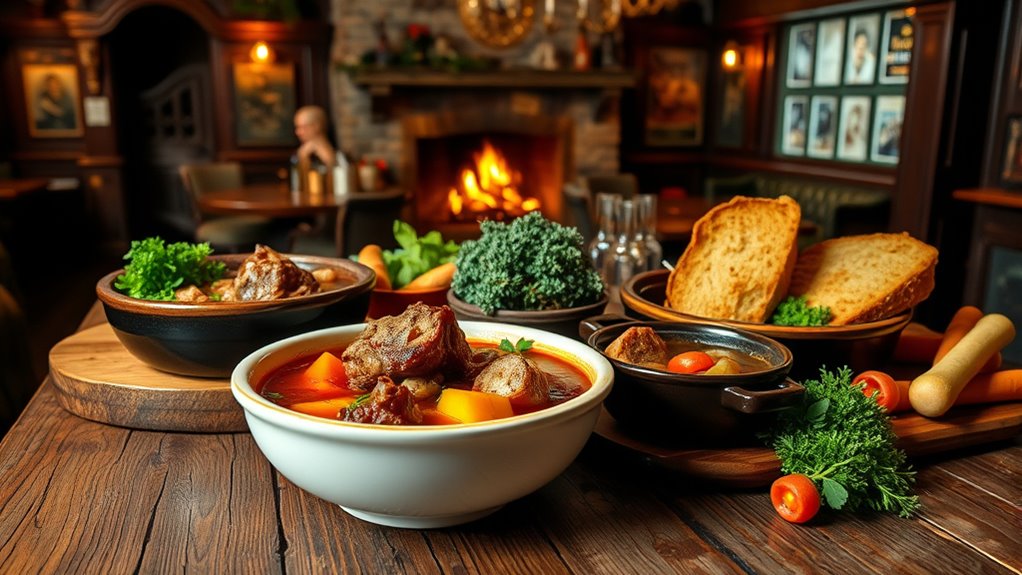

Irish cuisine reflects its long history of influences from Celtic, Norman, and English cultures. You’ll find hearty dishes like Irish stew, soda bread, and seafood, made with staple ingredients such as potatoes, cabbage, and fresh seafood. Baking and simple seasonings highlight resourcefulness and community spirit. Regional variations and coastal delights add flavor, while festivals and traditions celebrate Irish food customs. Explore further to discover the rich layers behind Ireland’s culinary heritage.
Key Takeaways
- Irish cuisine is rooted in traditional ingredients like potatoes, seafood, pork, and hearty stews, reflecting Ireland’s landscape and history.
- Regional variations highlight coastal seafood specialties and inland comfort foods based on lamb, beef, and vegetables.
- Baking, especially soda bread, holds cultural significance, symbolizing resilience and community, with recipes passed through generations.
- Herbs and mild spices such as parsley, thyme, and bay leaves subtly flavor dishes, emphasizing natural tastes and local sourcing.
- Modern Irish cuisine blends traditional recipes with contemporary trends, promoting sustainability, international recognition, and culinary innovation.

Bounty Foods Irish Soda Bread Mix 23 oz – Handcrafted in Montana, Traditional Recipe, Rustic Artisan Quick Bread Kit in Western-Style Bag, Great for St. Patricks Day, Just Add Buttermilk or Water
TRADITIONAL IRISH SODA BREAD MIX – MONTANA MADE – Crafted using an old-world Irish recipe and lovingly handmade…
As an affiliate, we earn on qualifying purchases.
As an affiliate, we earn on qualifying purchases.
The Roots of Irish Cuisine: Historical Influences and Development
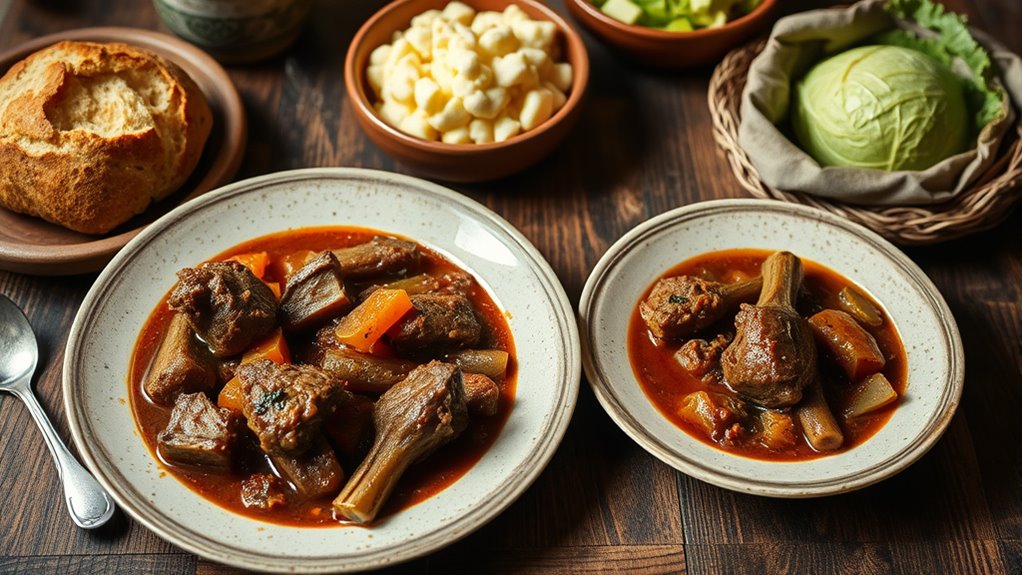
Irish cuisine has evolved over centuries, shaped by its temperate climate, abundant coastlines, and historical events. You’ll notice that early Celtic diets relied heavily on wild game, fish, shellfish, and foraged plants, reflecting Ireland’s natural resources. When the Normans and later English influence arrived, farming shifted toward intensive grain production, introducing wheat and oats. The 18th century saw potatoes become a staple, offering an affordable, reliable food source for the working class. During the Great Famine, reliance on potatoes increased, but hardships also prompted Irish immigrants to adapt recipes in new countries, like replacing traditional pork with corned beef in America. These layers of history created a cuisine rooted in practicality, resourcefulness, and adaptation to Ireland’s changing social and economic landscape. Additionally, the use of traditional cooking methods such as slow braising and stewing has helped preserve the hearty flavors characteristic of Irish dishes.

CAROTE 19Pcs Ceramic Cookware Set, Pots and Pans Set Non stick, Non Toxic Cookware Detachable Handle, Kitchen Cooking Set – Induction Cookware, Dishwasher/Oven Safe, PFAS Free, Green
Healthy & Non-Toxic: Cook safely with CAROTE ceramic pots and pans set. Free from PFAS, and other harmful…
As an affiliate, we earn on qualifying purchases.
As an affiliate, we earn on qualifying purchases.
Staple Ingredients and Traditional Irish Dishes
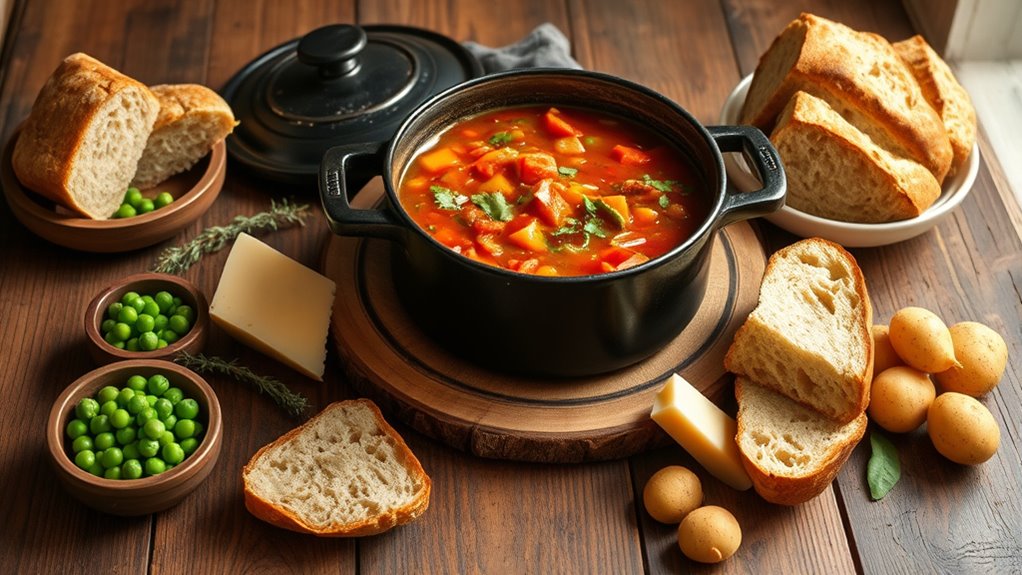
Irish cuisine relies heavily on ingredients like potatoes, cabbage, pork, and seafood, which reflect the country’s agricultural roots. Traditional dishes such as Irish stew, colcannon, and boxty showcase these staples, with regional variations adding local flavor. Exploring these ingredients and dishes reveals Ireland’s culinary history and cultural diversity. The use of fetal development stages in traditional recipes underscores Ireland’s deep connection to its natural resources and seasonal produce.
Key Irish Ingredients
Staple ingredients form the backbone of traditional Irish cuisine, with potatoes, cabbage, pork, beef, oats, and seafood playing essential roles in daily meals. Potatoes, introduced in the 18th century, became a key source of sustenance. Cabbage and other greens add flavor and nutrition, especially in dishes like colcannon. Pork and beef are common proteins, often prepared as stews or roasts. Oats serve as porridge or bread, reflecting Ireland’s grain traditions. Seafood like shellfish, mackerel, and herring are crucial for coastal communities. These ingredients are combined in hearty dishes, showcasing Ireland’s resourcefulness and connection to land and sea. Incorporating local ingredients and traditional cooking techniques helps preserve Ireland’s culinary heritage.
Classic Traditional Dishes
You’ll find that traditional Irish dishes revolve around hearty ingredients like potatoes, cabbage, meat, and seafood, which have shaped the nation’s culinary identity for centuries. Irish stew is a classic, slow-cooked with lamb or mutton, root vegetables, and onions, delivering comfort in every bite. Colcannon combines mashed potatoes with cabbage or kale, often served during festive times like Halloween. Boxty, a potato pancake, showcases Ireland’s love for potatoes, while soda bread, simple yet versatile, is a staple at every meal. Coddle, a stew with sausages, potatoes, and onions, offers another hearty option. These dishes highlight Ireland’s reliance on accessible ingredients, emphasizing robust flavors and traditional cooking methods that have been passed down through generations.
Regional Variations
Ireland’s diverse landscapes and regional climates have influenced the variations in traditional cuisine across the country. In coastal areas, seafood like oysters, mussels, and herring plays a central role, often featured in stews or served fresh. The west, with its lush pastures, favors hearty dishes like Irish stew with lamb or mutton, alongside dairy products. The Midlands and inland regions rely more on pork, cabbage, and root vegetables, creating comfort foods like coddle and colcannon. In the north, especially around Ulster, you’ll find a blend of seafood and meat-based dishes, reflecting both agricultural and maritime influences. Each region’s ingredients shape its local specialties, making Irish cuisine a tapestry of flavors rooted in geography.

The Complete Irish Pub Cookbook: Traditional Easy and Simple Recipies for Beginners to Experts for Saint Patrick's Day, Christmas, Family Get-Togethers, and More
As an affiliate, we earn on qualifying purchases.
As an affiliate, we earn on qualifying purchases.
The Art of Bread and Baking in Ireland
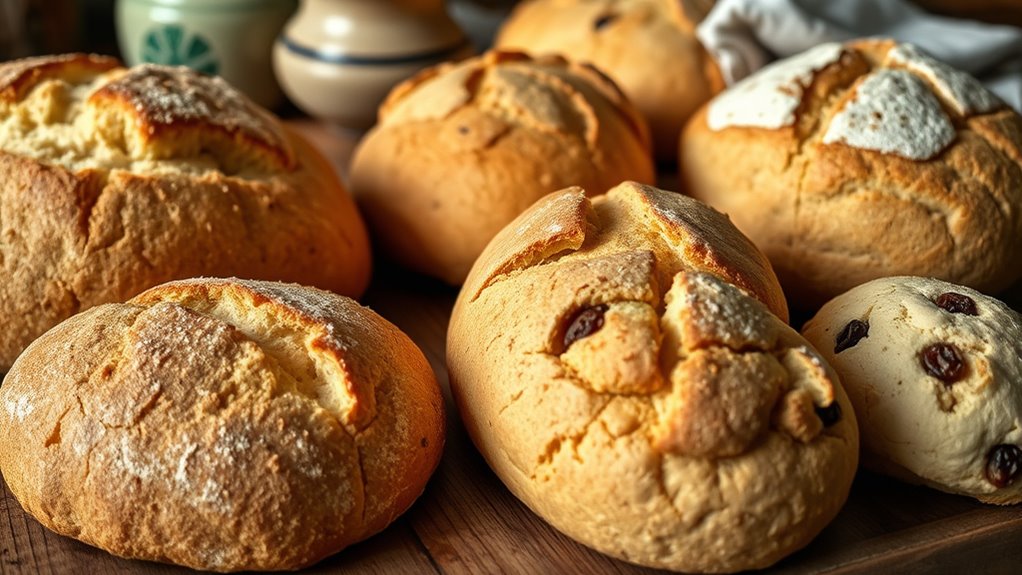
Ireland’s bread-making traditions highlight simple yet essential techniques passed down through generations. You’ll find familiar types like soda bread and oatcakes, each with unique methods and cultural meanings. Exploring these baking practices reveals how Irish culture values community, resourcefulness, and heritage through every loaf. Additionally, understanding traditional insulation and building techniques can help preserve the warmth and comfort of Irish homes, reflecting the importance of resourcefulness in Irish culinary and living traditions.
Traditional Irish Bread Types
Have you ever wondered how traditional Irish breads reflect the country’s history and culture? Irish bread has long been a symbol of resourcefulness and community. Oatcakes, once a daily staple, highlight Ireland’s reliance on oats and simple ingredients. When wheat became more accessible, wheaten bread gained popularity, especially among the Anglo-Norman settlers. Soda bread emerged in the 19th century as a quick, affordable loaf, often made at home using baking soda instead of yeast. Variations include caraway soda bread, fruit-spotted versions, and treacle-soda loaves, each reflecting regional tastes and special occasions. These breads embody Ireland’s adaptation to economic changes, resourcefulness, and the importance of home baking, making them enduring symbols of Irish culinary tradition. Additionally, the use of properly prepared flour and ingredients in traditional baking methods ensures the best quality and authenticity in Irish bread.
Baking Techniques and Methods
Irish baking techniques emphasize simplicity and resourcefulness, often relying on readily available ingredients and minimal equipment. You’ll find that traditional Irish bread-making focuses on straightforward methods passed down through generations. Here are four key aspects to understand:
- Soda Bread: Made with baking soda instead of yeast, it’s quick, dense, and relies on buttermilk for rise.
- Kneading and Shaping: Minimal kneading preserves a rustic texture; shaping often involves simple round loaves or flatbreads.
- Baking Conditions: Baking typically occurs in a hot oven, ensuring a crusty exterior and soft interior.
- Add-ins and Variations: Incorporate dried fruits, spices, or treacle for special occasions, enhancing flavor without complicating techniques.
Mastering these methods helps you recreate authentic Irish baked goods with authentic flavor and texture.
Cultural Significance of Baking
Baking holds a deep cultural significance in Ireland, serving as both a practical craft and an essential expression of community and tradition. You’re likely aware that baking, especially bread-making, connects generations, preserving customs and stories. Traditional Irish breads like soda bread symbolize resilience, born from necessity during hard times like the Great Famine. Baking at home fosters a sense of belonging, often shared during family gatherings and festivals. Recipes are passed down, maintaining a sense of identity and continuity. The ritual of baking also marks seasonal and religious occasions, reinforcing social bonds. Whether it’s a simple loaf or a special treat, Irish baking reflects a deep-rooted respect for locally sourced ingredients and the collective memory of a resilient, resourceful people.

Gudamaye 12 inch Olive Wooden Utensils for Cooking, Long Handle Wooden Spoons for Cooking, 6 PCES Crafting Wooden Spoon Set, Wooden Kitchen Utensil set, Natural Olive Wood utensil Set
6PCS Handmade Wooden Cooking Utensils: This Wooden Utensils made from natural Olive wood, including:Corner Spoon,Cooking Spoon, Slotted Spoon,Spatula…
As an affiliate, we earn on qualifying purchases.
As an affiliate, we earn on qualifying purchases.
Social and Economic Changes Shaping Irish Food Traditions
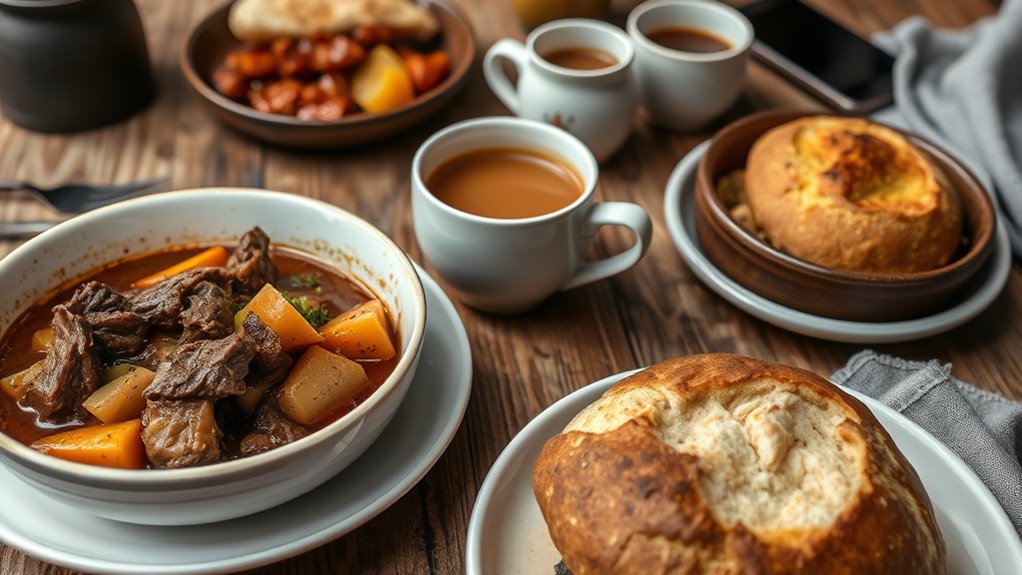
Social and economic changes have profoundly transformed Irish food traditions over the centuries. These shifts altered what, how, and why you eat Irish food.
- Colonization and commercialization pushed farmers to grow market crops like grains and export beef, reducing reliance on traditional ingredients.
- Poverty and famine, especially the Great Famine, made potatoes the main affordable food for many Irish households.
- Irish immigrants in the U.S. adapted dishes, replacing pork with corned beef due to different meat prices and availability.
- The 20th century saw a romantic revival of traditional peasant foods, turning modest dishes into symbols of Irish identity.
These changes reflect Ireland’s shift from subsistence farming to a modern culinary culture influenced by history, migration, and economic forces.
Herbs, Spices, and Seasonings in Irish Cooking
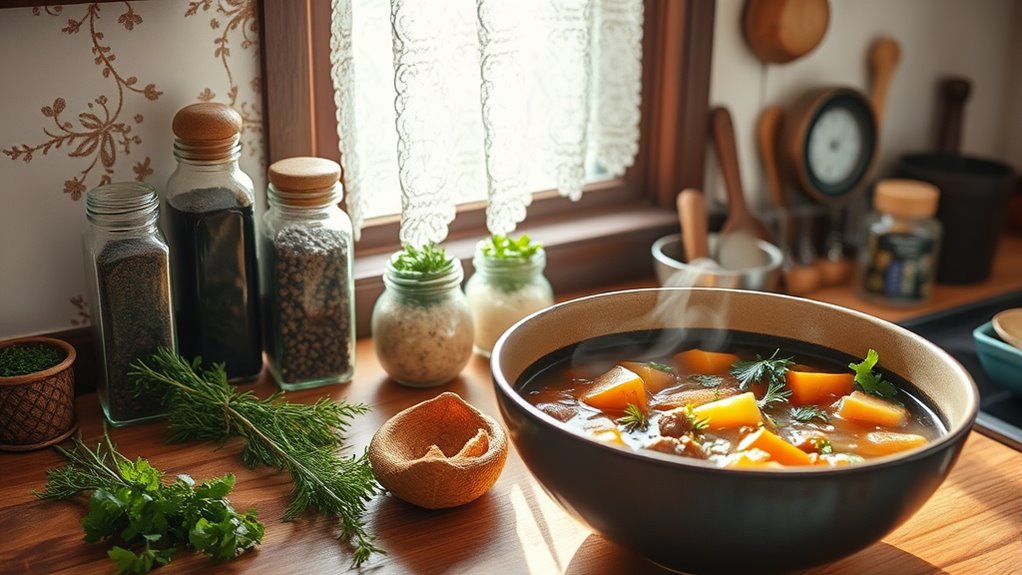
Have you ever wondered how traditional Irish dishes achieve their hearty, comforting flavors without relying on an array of complex spices? Irish cooking typically uses herbs like bay leaves, parsley, thyme, sage, rosemary, and wild garlic to add subtle depth. These herbs are often used in stews, soups, and bread to enhance natural flavors without overpowering them. Seasonings are kept simple—black pepper, mustard seeds, caraway, and horseradish are common, providing just enough kick. Historically, Irish cooks relied on fresh and foraged herbs, reflecting a practical approach focused on local ingredients. Unlike other European cuisines, Irish seasoning remains modest, emphasizing the quality of ingredients over complex spice blends. This simplicity highlights Ireland’s culinary roots in resourcefulness and the appreciation of natural flavors. Additionally, the use of vetted herbs and spices ensures authenticity and enhances the overall taste profile of traditional Irish dishes.
Festive and Cultural Food Customs in Ireland
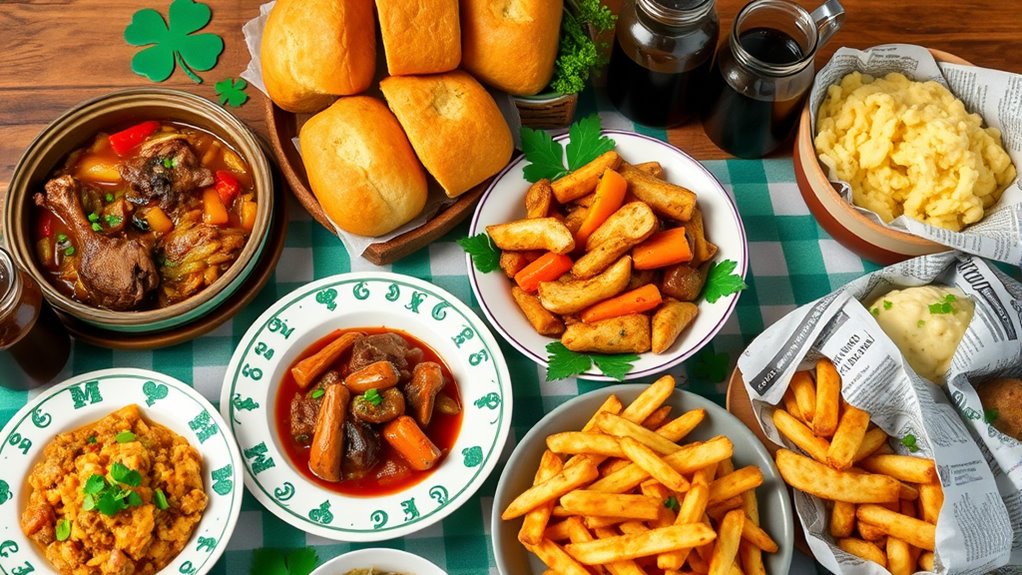
Irish food customs are deeply intertwined with seasonal celebrations and religious festivals, turning everyday meals into meaningful traditions. You’ll find that special dishes mark these occasions, creating lasting memories. During these festivities, traditional payment methods often play a role in facilitating shared meals and celebrations, reflecting Ireland’s evolving approach to transactions. 1. During Halloween, you eat colcannon, often with charms for love or marriage, making the meal both fun and mystical. 2. At Easter, pork and cabbage are traditional, symbolizing renewal and the end of Lent’s fasting. 3. St. Patrick’s Day in Ireland features hearty corned beef and cabbage, a modern adaptation, but in Ireland, bacon and cabbage remain popular. 4. Coastal communities celebrate with fresh seafood—oysters, mussels, and shellfish—highlighting Ireland’s maritime heritage.
These customs connect you to Ireland’s history and culture, emphasizing community, tradition, and seasonal change.
Coastal Delights: Seafood and Shellfish in Irish Cuisine
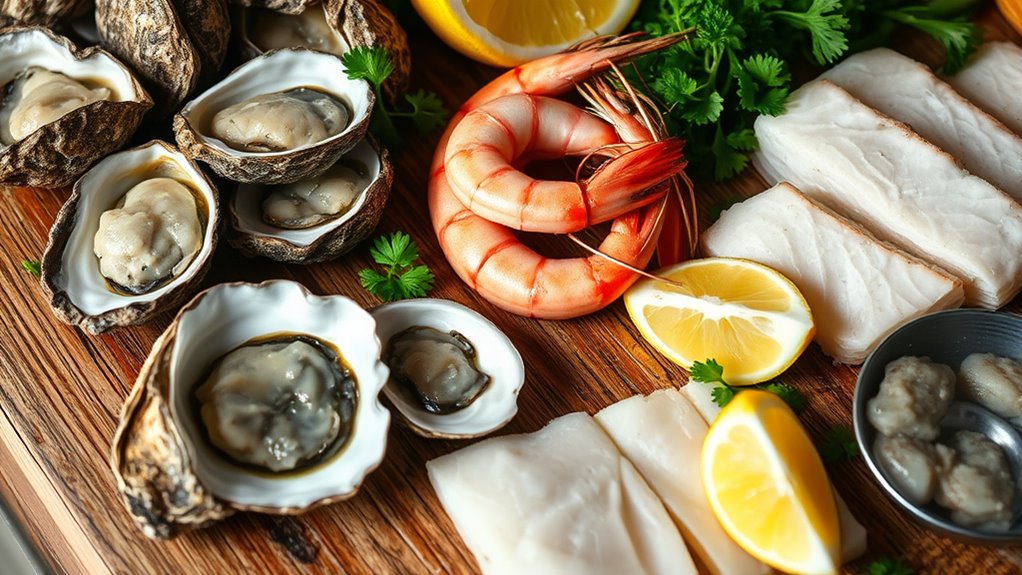
Ireland’s rugged coastline has shaped a rich tradition of seafood and shellfish that remains central to its culinary identity. You’ll find oysters, mussels, clams, and scallops harvested fresh from the Atlantic, often enjoyed simply to highlight their natural flavors. Coastal communities rely on fishing for species like herring, cod, and mackerel, which feature in hearty stews and grilled dishes. Traditional preparations include smoking or curing fish, preserving it for winter months. Shellfish like Dublin Bay prawns and lobster are prized delicacies, often served boiled or in seafood platters. These ingredients feature prominently in Irish cuisine, reflecting a long history of coastal living and resourcefulness. The use of preservation methods like smoking and curing has helped sustain communities through the seasons. Whether in a traditional seafood chowder or a simple grilled fillet, seafood remains an essential part of Ireland’s culinary landscape.
The Modern Revival and Global Appreciation of Irish Food
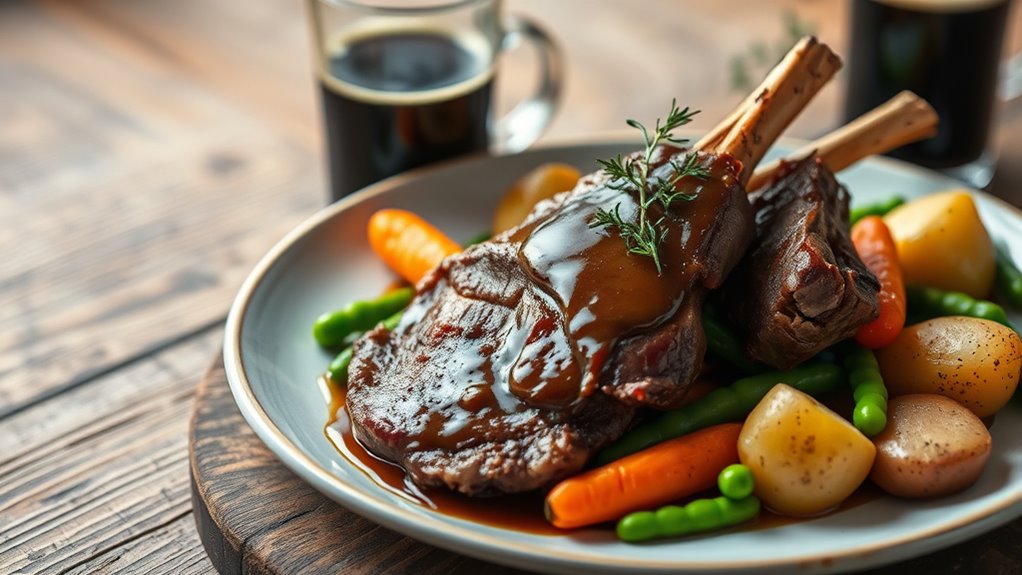
In recent years, the global culinary scene has embraced Irish food, transforming traditional dishes into celebrated symbols of cultural pride. You’ll find Irish restaurants and food festivals worldwide, showcasing its rich heritage. Here are four key ways Irish cuisine has gained international appreciation:
- Revival of traditional recipes—chefs reinvent classics like Irish stew and soda bread with modern twists, highlighting local ingredients.
- Celebrity chefs and food media—Irish chefs gain fame, spreading awareness of Ireland’s culinary roots.
- Farm-to-table movement—emphasizing sustainable, locally-sourced ingredients aligns Irish food with global trends.
- Gastronomic festivals—events like Dublin’s Food & Drink Festival promote Irish cuisine as a gourmet experience.
This renewed interest celebrates Ireland’s culinary history while embracing innovation and global tastes.
Frequently Asked Questions
How Has Irish Cuisine Evolved in Recent Years Beyond Traditional Dishes?
You’ll notice Irish cuisine has become more diverse and modern in recent years. Chefs now blend traditional ingredients with global flavors, emphasizing local, organic produce and innovative cooking techniques. You might find contemporary Irish restaurants serving fusion dishes, vegetarian options, and craft beverages. This evolution reflects Ireland’s growing appreciation for culinary creativity, while still honoring its rich heritage through fresh, high-quality ingredients and seasonal menus.
What Are Some Lesser-Known Regional Irish Foods and Specialties?
You’ll find fascinating, lesser-known Irish localities flaunting fantastic flavors like Donegal’s Drumlin Dulse, a dried seaweed packed with nutrients. In Kerry, try the tender, traditional tri-tip of Tullamore’s Irish lamb. In Sligo, savor the sweet, savory Sligo salmon, while in Cork, indulge in the rich, rustic Rathcormac rabbit stew. These regional specialties showcase Ireland’s diverse, delicious dishes, deeply rooted in local landscapes and longstanding traditions, waiting to be explored.
How Do Irish Cooking Techniques Differ From Other European Culinary Traditions?
You’ll notice Irish cooking techniques focus on simplicity and resourcefulness, unlike some European traditions that emphasize elaborate methods. Irish cooks often boil, simmer, or bake hearty ingredients like potatoes, meats, and vegetables to preserve flavor and nutrients. You won’t find many complex spices or multi-step processes; instead, the emphasis is on slow cooking and using fresh, local ingredients to create comforting, straightforward dishes that highlight natural tastes.
What Role Do Foraging and Wild Herbs Play in Contemporary Irish Cuisine?
You see, foraging and wild herbs play a crucial role in contemporary Irish cuisine, enriching dishes with fresh, locally-sourced flavors. You incorporate wild herbs like dill, chives, and wild garlic into soups, stews, and breads, embracing Ireland’s natural bounty. You celebrate seasonal foraging, connecting tradition with modern sustainability, and enhancing your meals with authentic, earthy tastes. You honor Ireland’s culinary roots by blending wild ingredients into everyday cooking, making each dish more vibrant and meaningful.
How Is Irish Cuisine Adapting to Modern Dietary Trends and Health Concerns?
Irish cuisine adapts to modern dietary trends by incorporating healthier ingredients, reducing processed foods, and focusing on local, organic produce. You’ll find more plant-based options, whole grains, and lean meats, aligning with wellness and sustainability goals. Chefs and home cooks are also experimenting with traditional herbs and wild ingredients, emphasizing fresh flavors and nutritional value. This shift helps balance tradition with contemporary health concerns, making Irish food both flavorful and health-conscious.
Conclusion
Embrace Irish cuisine’s rich history, savor its hearty ingredients, and celebrate its vibrant traditions. Appreciate the timeless connection between land and sea, the artistry in baking, and the cultural significance behind every dish. By exploring Irish food, you connect with a heritage that’s rooted in resilience, crafted with passion, and shared through community. In understanding Irish culinary traditions, you honor the past, enjoy the present, and preserve the future of Irish flavor.