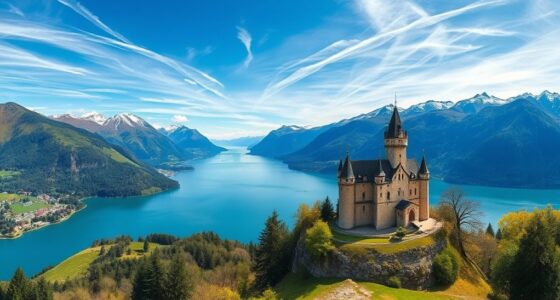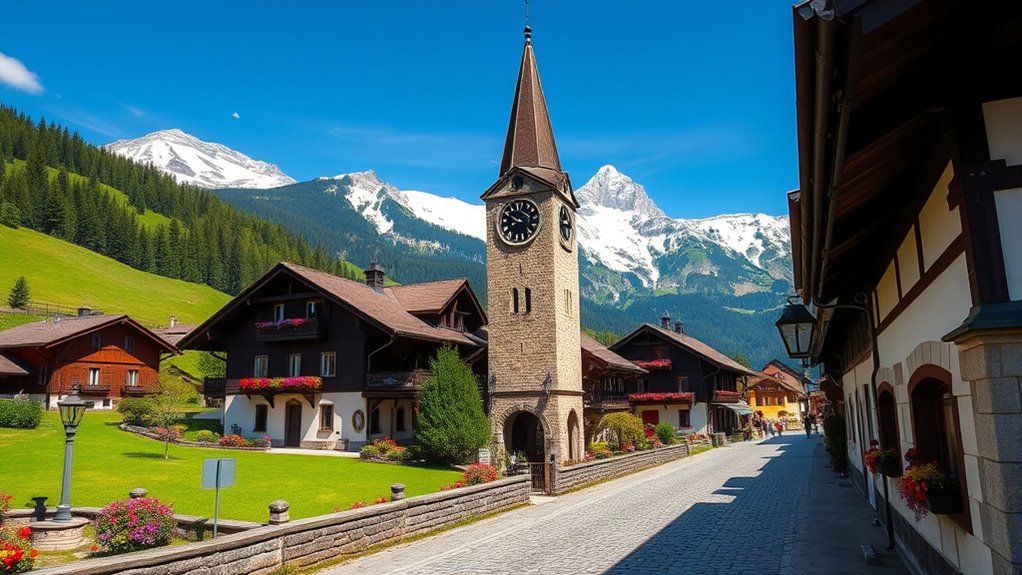

Switzerland’s history begins with Celtic tribes and Roman influence shaping its early development. It then formed a confederation for mutual defense, leading to a diverse culture blending traditions, languages, and artistic achievements. The country is known for its Alpine customs, stunning architecture, and commitment to neutrality and diplomacy today. Its modern economy boasts banking, watchmaking, and innovation. To discover more about how Switzerland’s rich past and vibrant traditions continue to influence its identity, explore further.
Key Takeaways
- Switzerland’s history includes Celtic tribes, Roman influence, and the formation of the Old Swiss Confederacy in 1291.
- The country has a rich cultural heritage with multilingual traditions, Alpine music, folk festivals, and distinctive cuisine like fondue.
- Architectural landmarks feature Gothic cathedrals, Renaissance buildings, traditional chalets, and modernist designs.
- Switzerland’s political evolution established a federal constitution in 1848, emphasizing neutrality and peaceful diplomacy.
- The nation is renowned for its craftsmanship, international humanitarian work, and blending historical traditions with modern innovation.
Early Inhabitants and the Roman Era
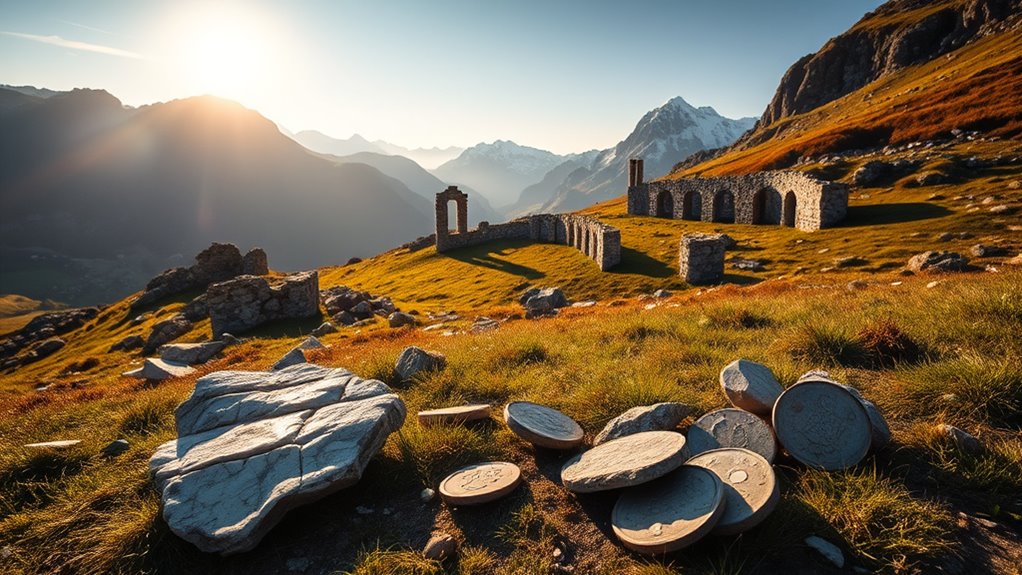
Long before Switzerland became a unified nation, Celtic tribes like the Helvetii inhabited the region, shaping its early cultural landscape. You would have seen their villages scattered across the Swiss plateau, with distinctive art and customs reflecting their way of life. Around the 1st century BC, the Romans arrived, bringing advanced engineering, roads, and urban planning. You’d observe Roman influence in the construction of towns like Augusta Raurica and the spread of Latin. Roman culture blended with local traditions, creating a Gallo-Roman society. Trade flourished, and Roman laws and infrastructure laid the foundation for future development. Their legacy remains visible today in archaeological sites, ancient artifacts, and the enduring influence on language, architecture, and regional organization. Additionally, the Roman period introduced new architectural styles, which continue to influence Swiss historical buildings and city layouts.
Medieval Developments and Confederation Foundations
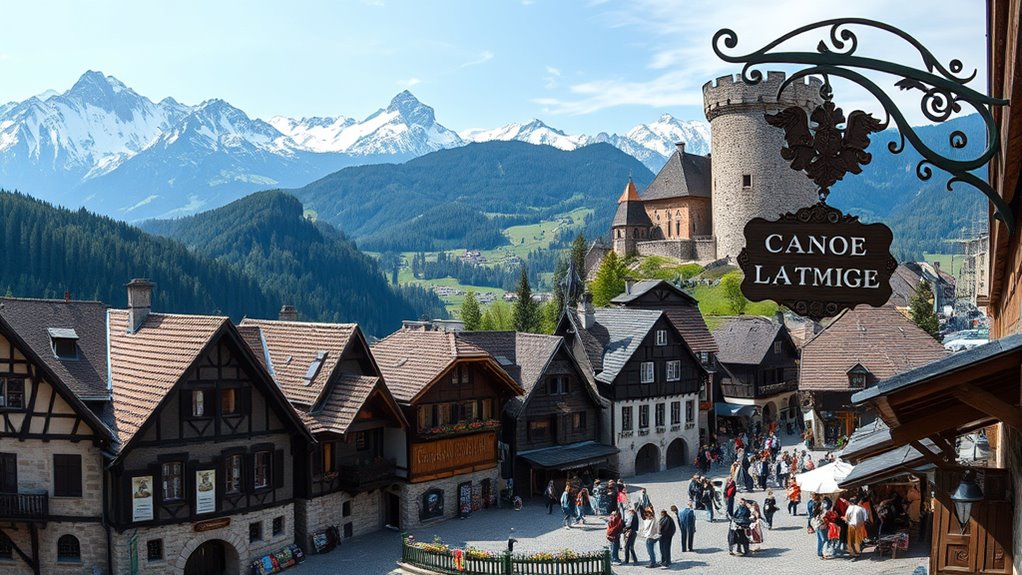
After the fall of the Roman Empire, Swiss territories saw significant shifts as Germanic tribes and the Frankish Empire expanded into the region. During this time, local communities began to organize for mutual protection. In 1291, you’ll find the pivotal moment: the signing of the Federal Charter, which formed the Old Swiss Confederacy. This alliance helped communities defend themselves against external threats. Key developments include:
- The alliance’s formation for mutual defense.
- The victory at the Battle of Morgarten in 1315 against the Habsburgs.
- The gradual expansion of the confederation through treaties.
- The increasing autonomy of individual cantons.
These steps laid the foundation for a unified Swiss identity, rooted in cooperation, resilience, and shared interests.
Cultural Heritage and Alpine Traditions
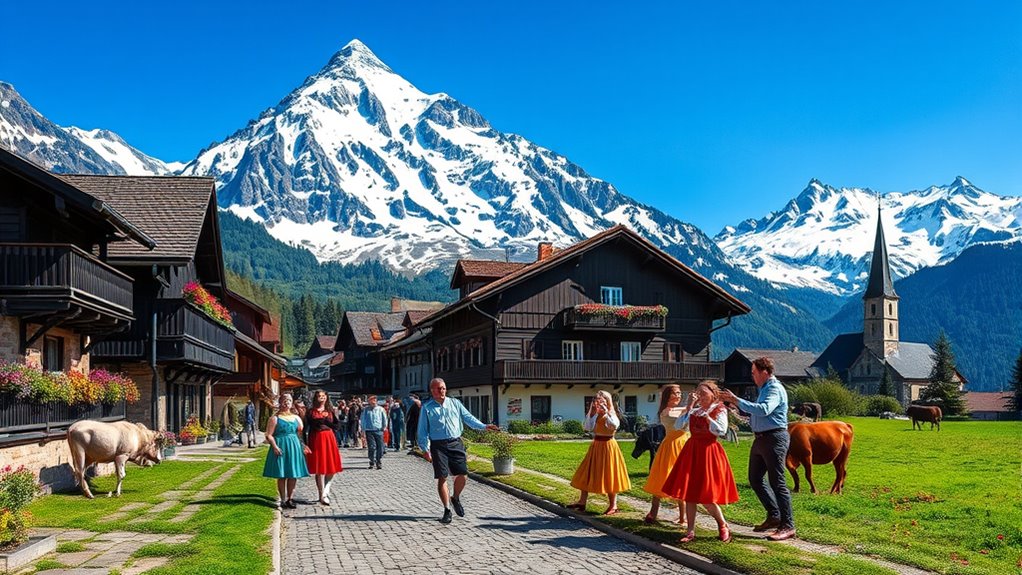
Switzerland’s rich cultural heritage is deeply intertwined with its Alpine environment, shaping traditions that have been passed down through generations. You’ll find in Alpine crafts, music, and folklore a reflection of the rugged landscape and rural life. Traditional attire like lederhosen and dirndls still appear at festivals, while yodeling and folk dances echo across mountain villages. Alpine festivals celebrate cattle, cheese, and local customs, reinforcing community bonds. To visualize this vibrant heritage, consider the following:
| Tradition | Description | Region |
|---|---|---|
| Yodeling | Vocal technique for communication | All Alpine regions |
| Swiss Cheese | Emmental, Gruyère, Raclette | Fribourg, Valais |
| Flag Throwing | Athletic display at festivals | Unspunnenfest |
| Alpine Cuisine | Fondue, raclette, hearty stews | Entire region |
Switzerland’s alpine traditions continue to thrive and adapt, blending age-old customs with modern influences.
Language Diversity and Festivals
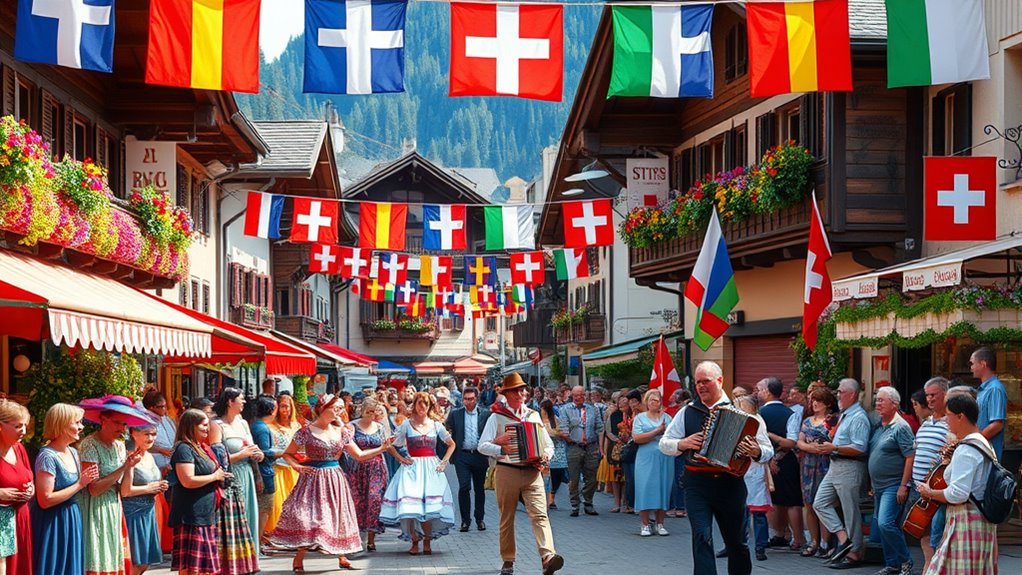
Switzerland’s multilingual heritage plays a crucial role in shaping its national identity, with German, French, Italian, and Romansh all holding official status. You’ll find that festivals celebrating these languages and regional traditions highlight the country’s rich cultural diversity. These celebrations foster a sense of unity while honoring the unique customs of each linguistic community. Additionally, the use of multilingual support in various cultural events helps promote understanding and appreciation among the different language groups.
Multilingual Heritage Significance
The linguistic diversity of Switzerland plays a pivotal role in shaping its rich cultural heritage, with four official languages—German, French, Italian, and Romansh—spoken across different regions. This multilingual heritage influences many aspects of daily life and cultural expression. You can experience this through:
- Regional festivals that celebrate language and traditions unique to each linguistic community.
- Multilingual signage and public communications, reflecting the country’s commitment to linguistic inclusivity.
- Literature and music that blend different languages, creating unique Swiss cultural expressions.
- Education policies promoting bilingual or multilingual learning, fostering cross-cultural understanding.
- The linguistic mosaic not only preserves historical identities but also encourages a vibrant, inclusive cultural landscape that unites diverse communities across Switzerland.
Celebrating Traditional Festivals
Traditional Swiss festivals vividly showcase the country’s rich linguistic diversity and cultural heritage. You’ll notice celebrations differ across regions, reflecting local languages and customs. For example, the Unspunnenfest in German-speaking areas highlights traditional wrestling, while the Fête de l’Escalade in French-speaking regions celebrates Geneva’s history. These festivals often feature music, dance, and food unique to each language community. To illustrate, here’s a quick overview:
| Festival | Region | Highlights |
|---|---|---|
| Unspunnenfest | German-speaking | Swiss wrestling, yodeling |
| Fête de l’Escalade | French-speaking | Historical reenactments, parades |
| Infiorata | Italian-speaking | Flower carpets, processions |
Participating in these festivals immerses you in Switzerland’s vibrant, multilingual culture. Cultural diversity plays a key role in shaping these lively celebrations, highlighting the country’s unique blend of traditions.
Cultural Diversity Impact
Because of its four official languages, Switzerland’s festivals are vibrant displays of cultural diversity that reflect the country’s rich linguistic landscape. You’ll experience unique traditions through various events, each highlighting different regions and cultures. Here are four ways language diversity influences festivals:
- Multilingual celebrations that include music, dance, and storytelling in German, French, Italian, and Romansh.
- Regional festivals honoring local dialects and customs, like the Fasnacht in Basel or the Sechseläuten in Zurich.
- Food festivals showcasing diverse cuisines, from fondue to pasta, reflecting linguistic and cultural influences.
- Cultural exchanges where communities share their traditions, fostering mutual understanding and respect across linguistic borders.
- The use of driving techniques during festival parades and processions helps maintain safety and coordination across diverse groups.
This diversity enriches Switzerland’s cultural scene, making festivals a true reflection of its complex heritage.
Architectural Styles and Artistic Achievements
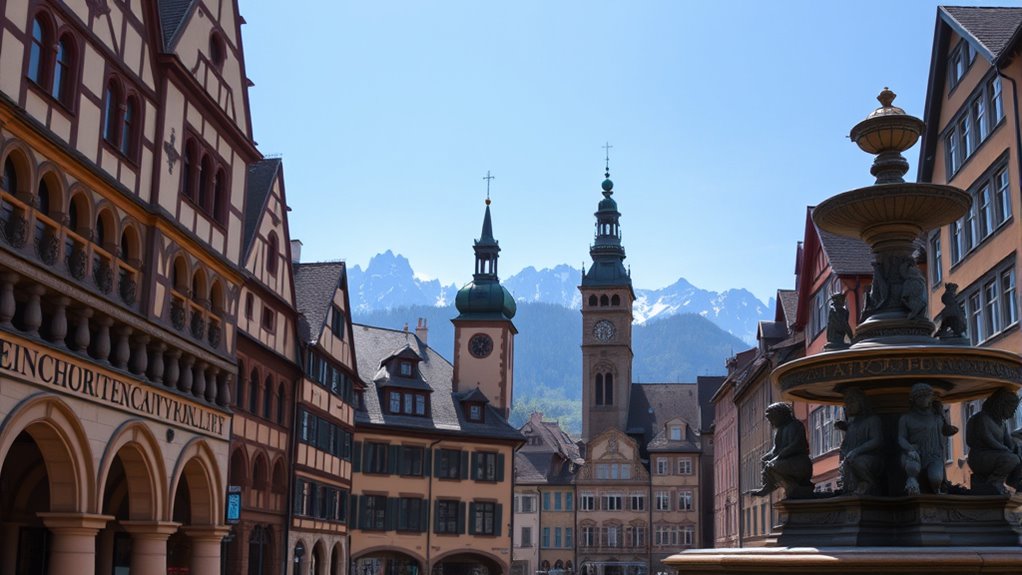
Switzerland’s architectural landscape reflects a rich blend of historical influences and regional styles that have evolved over centuries. You’ll notice Gothic cathedrals like Zurich’s Grossmünster, showcasing intricate stonework and soaring spires. Renaissance and Baroque buildings, such as Geneva’s St. Peter’s Cathedral, highlight decorative facades and artistic detailing. In alpine regions, traditional chalets with wooden construction and steep roofs reveal local craftsmanship and adaptation to climate. During the 19th and 20th centuries, modernist architecture emerged, with architects like Le Corbusier pioneering innovative designs. Artistic achievements extend beyond architecture, with renowned painters like Alberto Giacometti and Paul Klee shaping European art. These diverse styles and achievements reflect Switzerland’s cultural richness and ongoing creativity, blending tradition and innovation seamlessly.
Political Milestones and Federal Governance

You see, Switzerland’s federal constitution of 1848 marked a turning point by establishing the country as a unified federal state. Its long-standing neutrality policy has shaped its international identity and kept it out of conflicts. These milestones continue to influence Switzerland’s political landscape today, demonstrating the importance of federal governance in maintaining national stability.
Formation of Federal Constitution
How did Switzerland shift from a loose confederation to a unified federal state? The transformation began with the Federal Charter of 1848, which created a centralized federal government while respecting cantonal independence. This milestone replaced the earlier confederation’s loose alliances with a stronger, unified structure. The key steps include:
- The 1848 Federal Constitution established a federal system balancing national authority and cantonal sovereignty.
- It introduced a bicameral legislature, giving cantons equal representation.
- The constitution set clear divisions of powers, such as defense, education, and infrastructure.
- Amendments in 1874 expanded federal authority, strengthening the central government further.
This process allowed Switzerland to maintain regional diversity while uniting under a shared political framework, shaping its modern federal governance.
Evolution of Neutrality Policy
The evolution of Switzerland’s neutrality policy has been shaped by strategic political decisions and international events that reinforced its commitment to peace. In 1815, the Congress of Vienna officially recognized Switzerland’s neutrality, helping it avoid conflicts during the 19th century. This stance allowed Switzerland to maintain independence amid European upheavals and wars, including both World Wars. During World War II, Switzerland stayed neutral, providing humanitarian aid and hosting international organizations. Post-war, the country committed to peaceful diplomacy, avoiding military alliances. Its neutrality became a cornerstone of national identity and governance, shaping foreign policy decisions. Today, Switzerland actively promotes peace, hosts diplomatic talks, and remains committed to neutrality, balancing international cooperation with its longstanding policy of non-involvement.
Economic Transformation and Modern Industries
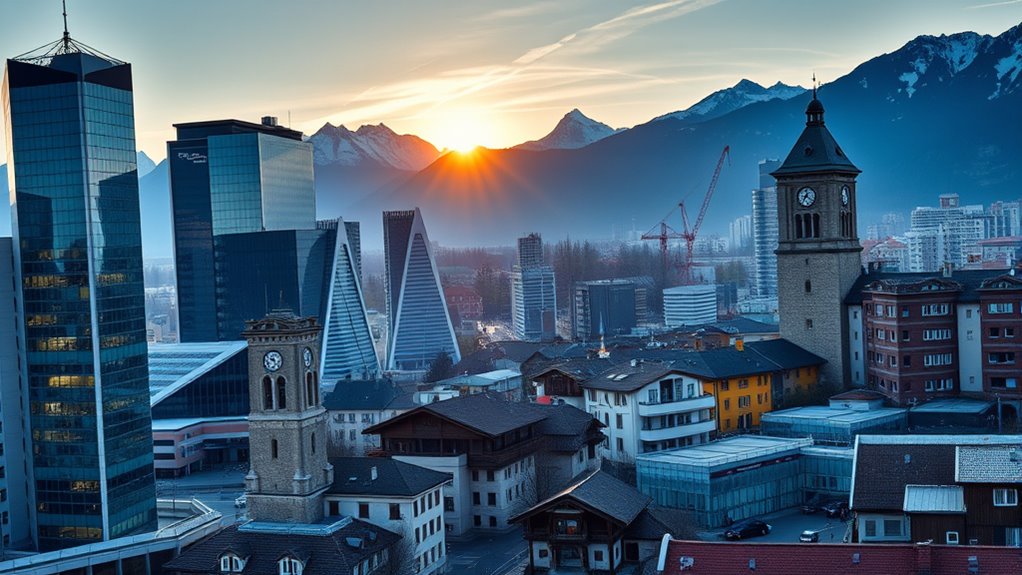
Switzerland’s economic landscape has undergone a remarkable transformation from its traditional reliance on agriculture and trade to a powerhouse of modern industries. Today, you benefit from a diverse economy driven by innovation and high-tech sectors. Here are four key developments:
- The finance sector flourished, making Switzerland a global banking hub known for stability and confidentiality.
- Precision engineering and watchmaking evolved into world-renowned industries that symbolize Swiss craftsmanship.
- The pharmaceutical and biotech sectors expanded rapidly, with companies leading in research and development.
- High-tech industries, including robotics and information technology, now play a significant role in the country’s economic growth.
- The country’s ongoing focus on AI security and technological safety measures highlights its commitment to maintaining a resilient and trustworthy innovation environment.
This transformation reflects Switzerland’s adaptability and forward-thinking approach, positioning it as a leader in global innovation and economic resilience.
Social Movements and International Engagement
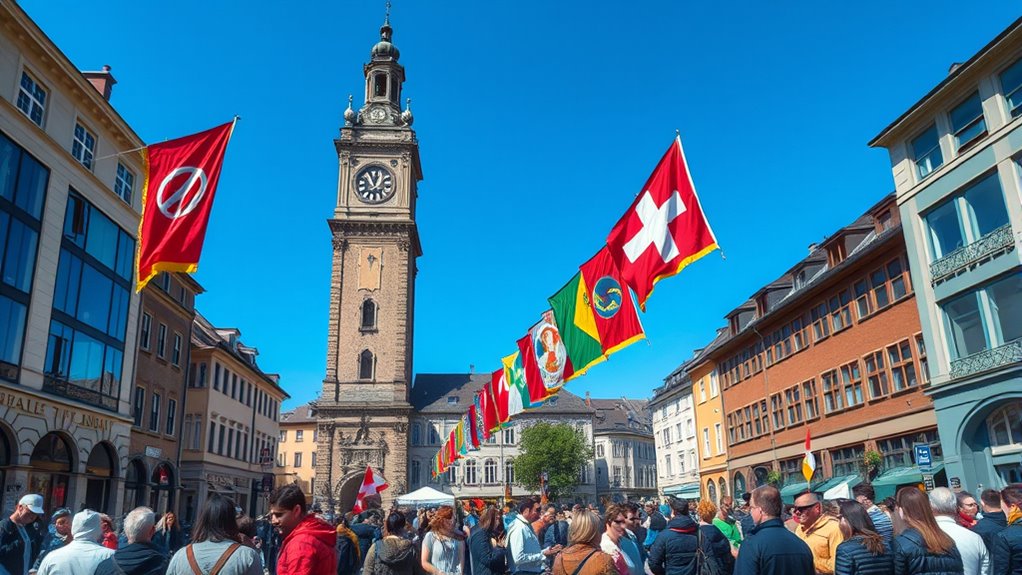
Switzerland has built a strong reputation for its commitment to neutrality and active participation in international diplomacy. You see, this stance allows the country to host numerous international organizations, including the International Red Cross and various UN agencies. Switzerland often mediates conflicts, providing neutral ground for negotiations. Its diplomatic efforts extend to humanitarian initiatives, peacekeeping, and global health campaigns. The nation’s membership in the UN since 2002 underscores its dedication to global cooperation. Social movements within Switzerland have advanced rights for women, LGBT individuals, and immigrants, shaping a more inclusive society. Additionally, the country’s diplomatic neutrality helps it serve as a trusted mediator in international conflicts. By balancing domestic progress with international engagement, Switzerland influences global policies while maintaining its sovereignty. This dual focus helps preserve its reputation as a peaceful, neutral hub for diplomacy and humanitarian efforts worldwide.
Frequently Asked Questions
How Did Switzerland Maintain Neutrality During Major European Conflicts?
You can see how Switzerland maintains neutrality by consistently avoiding military alliances and conflicts, especially during major European wars. You’re likely aware that they rely on diplomatic efforts, a strong tradition of neutrality, and international diplomacy, like hosting peace talks and humanitarian organizations. Switzerland’s strategic geographic position and commitment to non-aggression help it stay out of wars, ensuring it remains a neutral country even during turbulent times in Europe.
What Are the Origins of Switzerland’s Four Official Languages?
You might be surprised to learn that Switzerland’s four official languages—German, French, Italian, and Romansh—stem from its location at a cultural crossroads. Over centuries, neighboring regions influenced its linguistic landscape through trade, migration, and political ties. German spread from central Europe, French from the west, Italian from the south, and Romansh, a Romance language, persisted in remote valleys. This blend reflects Switzerland’s rich, diverse heritage shaped by natural and historical coincidences.
How Did the Swiss Reformation Influence Modern Swiss Culture?
You see, the Swiss Reformation profoundly shaped modern Swiss culture by fostering religious diversity and regional identities. It encouraged local communities to develop unique traditions, customs, and values tied to their faith. This era also promoted a spirit of independence and tolerance, which still influences Switzerland’s political neutrality and multicultural society today. The Reformation’s legacy of religious pluralism and local autonomy remains central to Switzerland’s cultural identity.
What Role Do Alpine Festivals Play in Contemporary Swiss Society?
Alpine festivals play a essential role in contemporary Swiss society by celebrating traditions, fostering community spirit, and preserving cultural heritage. You participate in lively events like Unspunnenfest, where traditional wrestling and flag-throwing showcase Swiss identity. These festivals also attract tourists, boosting local economies. They offer you a chance to connect with Swiss roots, enjoy regional customs, and strengthen national pride through vibrant, authentic celebrations rooted in Alpine traditions.
How Has Switzerland’s Economy Evolved From Agriculture to High-Tech Industries?
You might think Switzerland’s economy is just about chocolates and watches, but it’s actually a powerhouse of innovation. It evolved from simple agriculture to become a global leader in high-tech industries, finance, and precision engineering. This transformation is so remarkable, it’s like turning a quaint alpine village into a futuristic metropolis overnight. Today, your Swiss economy stands as a shining example of how tradition can seamlessly blend with cutting-edge technology.
Conclusion
You’ve explored Switzerland’s storied past, from primitive inhabitants to proud political progress. Its rich cultural canvas, carved through centuries of challenges and changes, continues to charm and challenge. By blending bold traditions with modern marvels, Switzerland sustains its unique unity. Remember, the nation’s history highlights harmony in diversity, heritage in innovation, and resilience in renewal—an inspiring interplay that invites you to investigate deeper into its dynamic, dazzling, and diverse destiny.