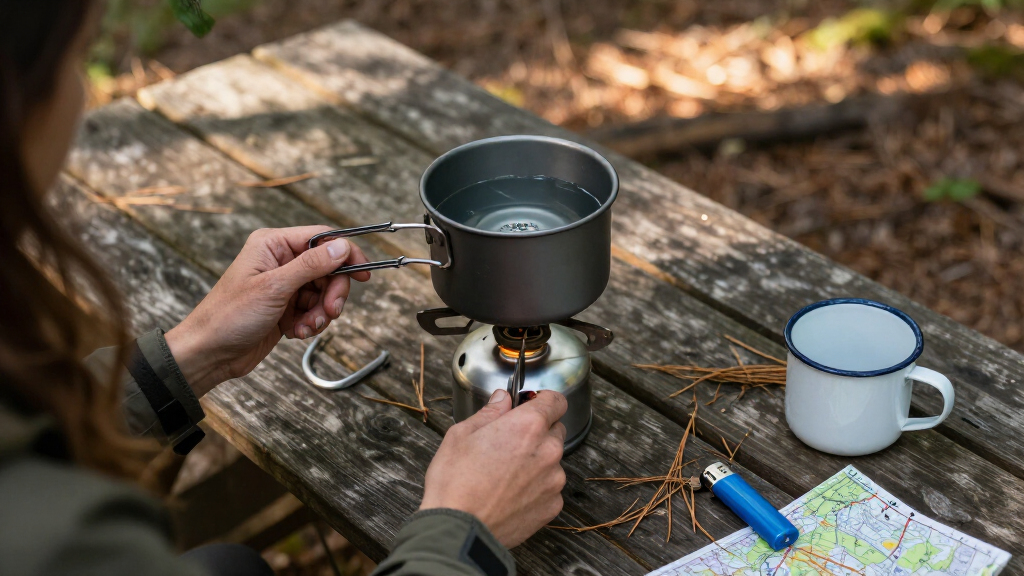

Almost every camper shopping for a compact stove ends up torn between the same two designs: an integrated canister system like the Jetboil Flash, and a small open burner like the MSR PocketRocket 2. They cost similar amounts, run on the same gas canisters, and both fit in a backpack pocket — but they solve the camp cooking problem in opposite ways. The Flash wraps burner, pot, and wind protection into one unit built to boil two cups of water in about two minutes. The PocketRocket 2 is a 73-gram burner you screw onto a canister and pair with whatever pot you already own, accepting slower boils and worse wind performance in exchange for true cooking ability and a fraction of the packed weight.

Get travel and outdoor gear delivered free with Prime
- Fast, free delivery on millions of items
- Prime Video, Amazon Music and more included
- Member-only deals all year

CAMPINGMOON XD-2F Regulated Canister Top Camping Stove with Z41 Canister Stabilizer
- ✔ Stove Weight: 3.2 oz (92 g)
- ✔ Combined Weight: 4.15 oz (119 g) with stabilizer
- ✔ Output: 3.3 kW (11,260 BTU/h)
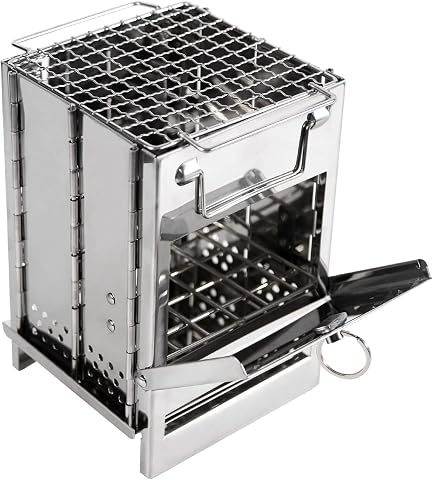
REDCamp Wood Burning Folding Camp Stove – Portable Collapsible Stainless Steel Backpacking Stove
- ✔ Fuel Type: Wood (twigs, leaves, natural material)
- ✔ Material: Stainless steel
- ✔ Unfolded Size: 8.3" x 5.9" x 5.5"

Gas One GS-3400P Dual Fuel Portable Camping Stove with Carrying Case
- ✔ Fuel Types: Butane and propane (dual fuel)
- ✔ Butane Capacity: 8 oz cartridge
- ✔ Propane Capacity: 16.4 oz cylinder
The real decision is not brand against brand. It is boil-versus-cook. If your backcountry meals are mostly freeze-dried pouches and instant coffee, the Flash’s approach is almost tailor-made. If you actually fry, simmer, or cook for two people from one pot, the PocketRocket 2’s flexibility wins despite its rough edges. This comparison works through the criteria that actually separate them — boil speed, weight, wind resistance, cooking versatility, fuel efficiency, packed size, and cost — and ends with explicit guidance on which stove belongs in which pack.
At a Glance
| Criteria | Jetboil Flash (integrated canister system) | MSR PocketRocket 2 (standalone canister stove) | Winner |
|---|---|---|---|
| Boil speed | ~100 seconds per 0.5 L in calm conditions | ~3.5 minutes per 0.5 L in calm conditions | A |
| Weight | ~370 g plus fuel (pot included) | ~73 g burner only; pot and windscreen sold separately | B |
| Wind performance | Excellent — fully enclosed FluxRing and burner | Poor — exposed flame, no included windscreen | A |
| Cooking versatility | Poor — narrow tall pot, weak simmer control | Good — works with any pot, decent simmer adjustment | B |
| Fuel efficiency | Excellent — roughly half the fuel per liter boiled | Mediocre — more fuel burned per liter, worse in wind | A |
| Packed size and convenience | One self-contained unit with pot, lid, and stabilizer nested | Very small burner, but pot, lid, and windscreen add up | Depends |
| Cost of ownership | Higher upfront (~$110–120), lower fuel spend | Lower upfront (~$50–60) plus pot and windscreen costs | B |
CAMPINGMOON XD-2F Regulated Canister Top Camping Stove with Z41 Canister Stabilizer
This is the pick that makes the most sense if packed weight drives your decisions. At a combined 4.15 oz including the Z41 stabilizer, the CAMPINGMOON XD-2F is a fraction of the REDCamp’s 1.9 lb and dramatically lighter than the Gas One’s cartridge-hungry setup — it’s the difference between a stove that lives in your pack and one you have to plan around. What separates it from cheaper canister-top burners, though, is the internal pressure regulator, which keeps gas flow consistent as temperatures drop and canister pressure falls. Unregulated stoves lose output noticeably in cold mornings or as a canister empties; this one holds a steady 3.3 kW (11,260 BTU/h) flame, which translates to reliable boil times when conditions aren’t ideal.The included Z41 three-leg stabilizer addresses the classic canister-stove weakness — a tall pot on a wobbly canister — and the built-in piezo igniter plus adjustable flame control mean no matches and real simmering capability, something the REDCAMP simply cannot offer. The tradeoffs are genuine: 3.3 kW is modest, so larger meals for groups will take longer than on the Gas One, and it won’t work with heat-exchanger cookware. It also shares the REDCamp’s limitation in one respect: you’re dependent on a specific fuel type, in this case EN417 threaded isobutane canisters, which must be purchased and carried. Compared with the Gas One, you gain cold-weather consistency and lose fuel flexibility entirely.
Pros:
- Featherweight 4.15 oz combined with stabilizer — lightest option in this lineup by a wide margin
- Pressure regulator maintains steady output in cold weather and as canisters empty
- Z41 three-leg stabilizer adds pot stability that most canister-top stoves lack
- Built-in piezo igniter and adjustable flame control enable true simmering
Cons:
- 3.3 kW output is modest for larger pots and group meals
- Incompatible with heat-exchanger cookware
- Locked into EN417 Lindal-valve isobutane canisters — no fuel flexibility
Best for: Ultralight backpackers and solo travelers who count ounces and cook in variable or cold conditions
Not ideal for: Group campers cooking large meals, or anyone who wants fuel flexibility beyond threaded isobutane canisters
Bottom line: The most complete ultralight package here, pairing regulated cold-weather performance with a stabilizer and igniter at a weight nothing else in this lineup approaches.
“The most complete ultralight package here, pairing regulated cold-weather performance with a stabilizer and igniter at a weight nothing else in this lineup approaches.”
REDCamp Wood Burning Folding Camp Stove – Portable Collapsible Stainless Steel Backpacking Stove
The REDCamp takes the opposite approach to fuel from the other two picks: it needs none. Burning twigs, leaves, and other naturally sourced material, it eliminates the single biggest logistical constraint of the CAMPINGMOON and Gas One — finding and carrying the right canister. For campers who stay out for days or travel where fuel canisters are hard to buy, that independence is worth more than any spec sheet number. The stainless steel build is straightforward and durable, the fold-flat 1.5-inch collapsed profile slips into a pack alongside other gear, and the grid backing plate gives pots a more stable platform than many improvised wood fires.Be realistic about the weight, though: at 1.9 lbs, it’s roughly seven times heavier than the CAMPINGMOON, so it’s better suited to backpackers on a budget of ounces rather than grams, or paddlers and base-campers. It also has no ignition, no flame dial, and no regulator — you manage the fire by feeding it, which is either a satisfying ritual or a hassle depending on your temperament. The standout weakness is weather: wet conditions make dry fuel hard to source, and unlike the CAMPINGMOON’s cold-weather-regulated canister, this stove’s performance is entirely at the mercy of your environment. A minor but real annoyance: units may arrive with residual protective film that needs peeling before first use. Compared with the Gas One, you trade convenience and instant ignition for total fuel freedom.
Pros:
- Burns free, naturally available fuel — no canisters to buy, carry, or run out of
- Folds flat to just 1.5 inches thick for easy packing
- Durable stainless steel construction with a stable grid cooking platform
- Includes a carry bag for organized transport
Cons:
- Wood fuel becomes very difficult to source in wet conditions
- No igniter, flame control, or regulator — cooking performance depends entirely on your fire-tending
- At 1.9 lbs, far heavier than canister-top alternatives like the CAMPINGMOON
Best for: Multi-day adventurers and remote-area campers who want to cook without buying, carrying, or tracking canister fuel
Not ideal for: Fair-weather-agnostic campers in wet climates, or anyone who wants push-button ignition and precise flame control
Bottom line: The only truly fuel-independent stove in this lineup, best for campers who value never running out of fuel over convenience and push-button control.
“The only truly fuel-independent stove in this lineup, best for campers who value never running out of fuel over convenience and push-button control.”
Gas One GS-3400P Dual Fuel Portable Camping Stove with Carrying Case
If the CAMPINGMOON is about doing one thing at minimum weight, the Gas One GS-3400P is about never being stuck without the right fuel. Running on either 8 oz butane cartridges or, with the included converter regulator, 16.4 oz propane cylinders, it covers the two most widely available fuel formats in North America — a genuine advantage for road-trippers and campers who resupply at whatever store happens to be nearby. Neither of the other two picks offers anything comparable: the CAMPINGMOON is locked to threaded isobutane, and the REDCamp is locked to whatever the forest provides.The automatic piezo-electric ignition and adjustable heat dial make it the most convenient stove here to operate — twist and cook, no matches, no fire-tending. It’s also the safest-feeling option on paper, with a pressure-sensing cartridge ejection system and gas-flow cut-off for butane use. The critical caveat: those safety features only function on butane. On propane, you’re relying on standard precautions without the automatic ejection backup, which matters if safety redundancy is your reason for buying. It’s also the least portable of the three in practice — a tabletop cartridge stove with a carrying case, best suited to car camping and camp kitchens rather than a backpack. And note that no fuel comes in the box, so budget for cartridges or cylinders on top of the stove itself. For groups and base camps, its higher practical output and stable platform outperform the CAMPINGMOON’s modest 3.3 kW burner.
Pros:
- Dual-fuel design runs on both 8 oz butane cartridges and 16.4 oz propane cylinders
- Automatic piezo-electric ignition — no lighters or matches needed
- Pressure-sensor ejection and gas-flow cut-off safety mechanisms (butane)
- Includes carrying case and propane converter regulator for full dual-fuel use out of the box
Cons:
- Safety ejection and cut-off features only work with butane, not propane
- Heavier and bulkier than canister-top stoves — not a backpacking option
- Fuel cartridges and cylinders are not included
Best for: Car campers, road-trippers, and group cooks who want fuel flexibility and push-button convenience at a camp table
Not ideal for: Backpackers counting grams, or buyers who expect the safety ejection system to work with propane
Bottom line: The most flexible and convenient stove in this lineup, ideal when fuel availability and ease of use matter more than packed weight.
“The most flexible and convenient stove in this lineup, ideal when fuel availability and ease of use matter more than packed weight.”
As an Amazon Associate we earn from qualifying purchases.
Key Differences
The single biggest practical difference is what each stove is shaped to do. The Flash is a water-boiling machine: its FluxRing heat exchanger captures heat that an open burner wastes, producing two-minute boils and cutting fuel consumption by roughly half when conditions get cold or breezy. For a trip built around rehydrating meals, that speed and efficiency translate directly into less fuel carried and less time standing around in the cold waiting for coffee. The PocketRocket 2 cannot match those numbers, and in any real wind — where its exposed flame struggles badly — the gap widens further.
The PocketRocket 2 counters with two advantages that matter to a different kind of camper. First, weight: at 73 grams it is one of the lightest legitimate stoves made, and even after adding a titanium pot it undercuts the Flash’s total cook kit weight considerably. Second, versatility: because it accepts any pot or pan, it can actually cook — fry eggs, simmer rice, handle a wide frying pan for two people — something the Flash’s tall, narrow 1-liter vessel with crude flame control simply cannot do well. Ultralight hikers and real- food cooks both land on the same stove for opposite reasons.
The third axis is system cost and convenience. The Flash is a complete kit out of the box: pot, lid, burner, and stabilizer all nest into one grab-and-go unit. That convenience is genuinely valuable for occasional campers who do not want to assemble a cook system piecemeal. The PocketRocket 2 demands you build a kit — pot, windscreen, lid — which costs both money and packing thought, but yields a lighter, more flexible result. The price tags look far apart at the register, but the true gap is smaller once you price a decent pot and windscreen for the MSR setup.
Detailed Comparison
Boil speed (Jetboil Flash (integrated canister system) wins — major)
In calm conditions the Flash boils half a liter in around 100 seconds against roughly three and a half minutes for the PocketRocket 2 — a gap that feels even larger at camp. The difference comes from the FluxRing heat exchanger, which grabs heat that an open burner lets escape around the pot sides. This is a major gap, and it matters most for morning routines on cold trips where every minute waiting for hot water is a minute standing still. If fast coffee and quick meal prep are a priority, this criterion alone can decide the purchase.
Weight (MSR PocketRocket 2 (standalone canister stove) wins — major)
The PocketRocket 2 weighs 73 grams; the Flash weighs about 370 grams with its pot — roughly five times more. To be fair, the comparison should include a cook pot for the MSR: a 750 ml titanium pot adds 90–120 grams, bringing a complete PocketRocket kit to roughly 200 grams, still well under half the Flash system. For thru-hikers and anyone counting grams, this is a major difference. For car campers and weekend backpackers carrying 15 kg packs, it is a minor one that most will never notice on the trail.
Wind performance (Jetboil Flash (integrated canister system) wins — major)
This is where the designs diverge most sharply in real conditions. The Flash’s burner and pot sit in a largely enclosed system that shrugs off moderate wind; the PocketRocket 2’s bare flame flutters, bends, and can lose most of its output in a breeze, and MSR does not include any windscreen — you must buy or improvise one, and foil screens are risky with canister stoves due to overheating the canister. In practice, a windy PocketRocket boil can take two to three times longer and burn far more fuel. If you cook in exposed terrain above treeline or on coastal sites, this gap is decisive in the Flash’s favor.
Cooking versatility (MSR PocketRocket 2 (standalone canister stove) wins — major)
The PocketRocket 2 accepts any pot or pan and has a reasonably adjustable flame, so it can simmer sauces, fry, and cook real meals for two from a wide-bottomed pan. The Flash is stuck with its tall, narrow 1-liter vessel and a burner tuned for full blast; simmering is possible but crude, and frying is effectively off the menu. Pouch-meal campers will never notice this limitation; anyone who cooks actual food in camp will find it crippling. This is a major gap, and it is the single strongest reason to pick the MSR.
Fuel efficiency (Jetboil Flash (integrated canister system) wins — moderate)
The FluxRing gives the Flash roughly double the boils per canister in favorable conditions, and the gap widens in wind and cold where open burners waste the most heat. On a week-long trip that can mean carrying one 100-gram canister instead of a 230-gram one — a real weight and cost saving that partially offsets the stove’s heavier base weight. This is a moderate-to-major advantage for multi-day users, and nearly irrelevant for one-night trips where fuel weight never becomes a constraint.
Packed size and convenience (moderate difference)
The Flash is a single nested unit — burner, canister stabilizer, lid, and pot in one grab-bag — which occasional campers genuinely appreciate because nothing gets forgotten and nothing needs matching. The PocketRocket 2 is smaller than a matchbox, but you must also pack and keep track of a separate pot, lid, and windscreen. Neither wins outright: the Flash wins on grab-and-go simplicity, the MSR on raw packed volume. Call it a tie that depends on how you think about your gear — systems thinker versus kit assembler.
Cost of ownership (MSR PocketRocket 2 (standalone canister stove) wins — minor)
Street prices put the Flash around $110–120 and the PocketRocket 2 around $50–60 — but the MSR needs a pot ($40–70 for titanium) and ideally a proper windscreen, closing the upfront gap to perhaps $30–40. Over time the Flash’s fuel efficiency claws back some of that difference on frequently used trips. Net: the PocketRocket 2 remains the cheaper route, but the real gap is smaller than sticker prices suggest, and heavy users may find lifetime costs nearly equal.
Jetboil Flash (integrated canister system): Pros and Cons
Pros:
- Two-minute boils — fastest in its class
- Excellent wind and cold-weather performance from the enclosed FluxRing design
- Roughly half the fuel burned per liter of water boiled
- Complete, self-nesting system with pot, lid, and stabilizer included
- Color-change heat indicator shows when water is near boiling
Cons:
- 370 g system weight is heavy for ultralight kits
- Tall, narrow pot with weak simmer control — frying is impractical
- Larger packed diameter takes more pack space than a tiny burner
- Higher upfront price than a bare burner
MSR PocketRocket 2 (standalone canister stove): Pros and Cons
Pros:
- 73 grams — one of the lightest functional stoves available
- Works with any pot or pan, enabling real cooking for one or two people
- Genuinely adjustable flame for simmering
- Tinier packed footprint than any integrated system
- Lower entry price and cheap, universally available replacement parts
Cons:
- Exposed flame performs poorly in wind; no windscreen included
- Slower boils — roughly three to four times the Flash in bad conditions
- Burns noticeably more fuel per liter
- Requires buying and packing a separate pot, lid, and screen
Who Should Choose What
Choose Jetboil Flash (integrated canister system) if:
- Your camp meals are primarily freeze-dried pouches, instant meals, coffee, and tea
- You camp in windy, exposed, or cold conditions where open flames struggle
- You take multi-day trips and want to carry less fuel
- You want one complete, no-assembly cook kit that works the first time out
Choose MSR PocketRocket 2 (standalone canister stove) if:
- You are counting grams on thru-hikes or ultralight trips
- You actually cook — fry, simmer, sauté — rather than just boiling water
- You already own a cook pot and want the cheapest viable stove
- You need flexibility to swap pot sizes for solo versus two-person trips
Skip both if: You camp mainly at drive-up sites with picnic tables — a cheap dual-burner propane stove or a $20 basic canister stove will do the same job for less, and skip both as well if you need winter liquid-fuel performance; neither is designed for sustained sub-freezing expeditions.
Value for Money
At first glance the PocketRocket 2 looks like the obvious value pick at roughly half the price. But the honest comparison prices a full kit: add a titanium pot and windscreen and you are within $30–40 of the Flash, which includes everything and boils faster on half the fuel. For frequent users, the Flash’s fuel efficiency keeps recovering that difference canister after canister, and on trips longer than a few days it can mean carrying a smaller, lighter fuel bottle — an efficiency the sticker price never shows.
The genuine value question is usage pattern, not price per gram of stove. For a once-a-season car camper, either is overkill and the cheaper the better — the PocketRocket 2 wins on value. For someone out twelve or more nights a year eating pouch meals in real weather, the Flash is the better long-run value despite the higher register price, because fuel savings, speed, and wind reliability compound every single trip. Paying more for the Flash is worth it only if you will actually use its boiling strengths often; pay less for the PocketRocket 2 if flexibility and weight matter more than raw boil performance.
Final Verdict
These are both excellent stoves serving different campers, and pretending otherwise would not help you choose. The Jetboil Flash is the right tool for the majority of backpackers: most people boil water far more often than they cook food, they camp in imperfect weather, and they benefit from halved fuel consumption on multi-day trips. If your kitchen is a kettle, buy the Flash — the speed and wind performance are not luxury features, they are the product.
Choose the PocketRocket 2 if weight or real cooking drives your decisions. Thru-hikers will take the 300-gram savings every time, and anyone frying or simmering for two will find the Flash’s pot unusable for their style. The biggest deciding factor is simple and honest: look at your last ten camp meals. If more than seven involved boiling water, get the Flash; if more than three involved actual cooking, get the PocketRocket 2 and a good windscreen.
Frequently Asked Questions
Can you actually cook meals on the Jetboil Flash, or is it only for boiling water?
You can simmer in the Flash’s pot, but it is genuinely poor at it. The pot is tall and narrow, the burner is tuned for full output, and flame control is coarse — sauces scorch and frying is impractical. Occasional instant rice or pasta is fine; regular real cooking is not what this system is built for.
Is the PocketRocket 2 usable in wind without buying anything extra?
Barely. The exposed flame loses much of its output in even moderate wind, and MSR does not include a windscreen. You can improvise with rocks or your pack for shelter, but a purpose-made windscreen — used carefully so it does not overheat the canister — is close to mandatory for exposed campsites.
Which stove is better for cold-weather camping?
Between these two, the Flash. Its enclosed design retains heat better and its efficiency drops less as temperatures fall. That said, neither is a true winter stove — below roughly -5°C (23°F), canister pressure problems affect both, and liquid-fuel stoves become the better category entirely.
Do they use the same fuel canisters?
Yes. Both run on standard threaded isobutane/propane canisters (EN417), sold under MSR, Jetboil, Coleman, and other brands. They are interchangeable, so you can share canisters between the two stoves or buy whatever brand is available at the trailhead store.
If I can only buy one stove ever, which should it be?
The PocketRocket 2, with reservations. It does an acceptable job at boiling water and a good job at everything else, while the Flash does a superb job at boiling and a poor job at everything else. The one-stove buyer is better served by the flexible tool — unless they know for certain they will never cook anything but pouch meals, in which case the Flash is the safer bet.
Halloween Picks
halloween
As an affiliate, we earn on qualifying purchases.