
Illinois’s history and culture are shaped by early Native American roots, European exploration, and its journey from a frontier land to a thriving industrial hub. You’ll find a mix of Native traditions, immigrant influences, and social movements that have shaped its identity. From the growth of Chicago’s vibrant scene to political reforms and scientific milestones, there’s much more to uncover about Illinois’s dynamic past and diverse culture as you explore further.
Key Takeaways
- Illinois’s history spans from Native American societies and French exploration to statehood in 1818 and extensive land development.
- Major transportation developments like canals and railroads fueled economic growth and urbanization, especially in Chicago.
- The state has a rich cultural heritage influenced by immigrant communities, social movements, and prominent leaders like Abraham Lincoln.
- Illinois experienced significant industrialization, demographic shifts, and post-World War II suburban growth shaping its modern identity.
- Its judicial and political evolution reflects regional diversity, emphasizing fairness, representation, and regional development.

Lost In Illinois: Discovering Strange and Historic Places in the Land Of Lincoln
As an affiliate, we earn on qualifying purchases.
As an affiliate, we earn on qualifying purchases.
Early European Exploration and Colonial Foundations

The history of Illinois begins with the first European explorers who mapped its rivers and lands. In 1673, French explorers Jacques Marquette and Louis Jolliet navigated the Mississippi and Illinois Rivers, marking the first European contact with the region. For nearly a century, Illinois was part of the French empire, shaping its early culture and trade networks. After the French and Indian War ended in 1763, control shifted to Britain, and French influence waned. Following the American Revolution, Illinois became part of the United States through the Treaty of Paris in 1783, and it was included in the Northwest Territory. These early explorations and colonial changes laid the groundwork for Illinois’s future development and settlement. Additionally, the region’s European exploration introduced new trade routes and cultural influences that would influence Illinois’s development for years to come.

Arrowheads and Spear Points in the Prehistoric Southeast: A Guide to Understanding Cultural Artifacts
As an affiliate, we earn on qualifying purchases.
As an affiliate, we earn on qualifying purchases.
Statehood and Territorial Growth
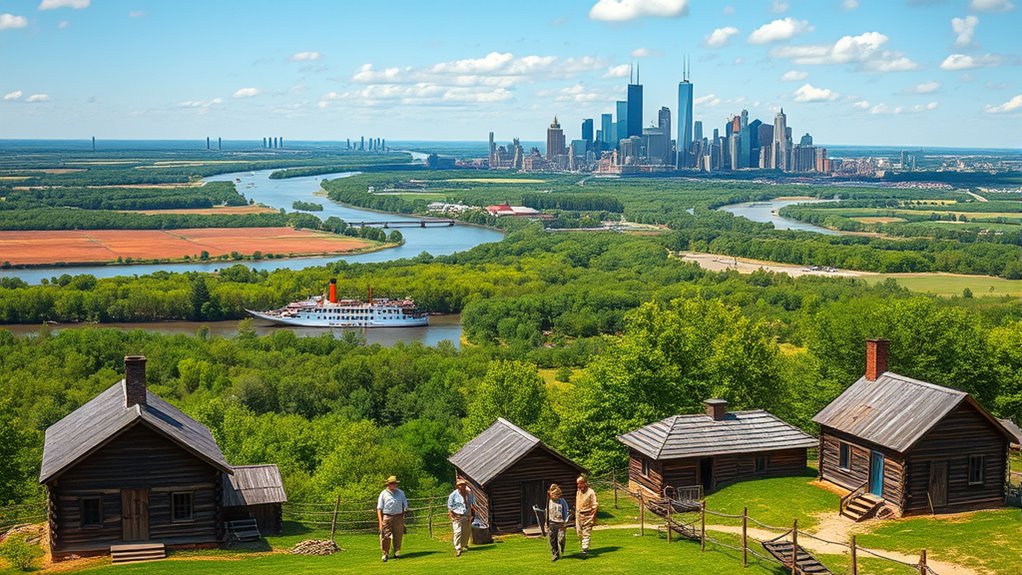
When Illinois shifted from a territory to a state in 1818, it set the foundation for growth through new capitals, land development, and migration. You can see how the choice of early capitals like Kaskaskia, Vandalia, and Springfield reflected shifting priorities and settlement patterns. This period also saw an influx of settlers and the expansion of land and industry, shaping Illinois’ future. Additionally, the development of agricultural heritage played a vital role in supporting the state’s economy and community growth during this formative era.
From Territory to State
How did Illinois shift from a remote territory to a fully recognized state? It happened through a series of key steps that transformed the land’s status and growth. You should know:
- The 1809 creation of the Illinois Territory, establishing governance.
- Growing settlement and land development, attracting pioneers and veterans.
- The 1818 admission as the 21st state, with Shadrach Bond as first governor.
- Expansion of infrastructure like canals and railroads boosting trade and migration.
- Native American conflicts, such as the Black Hawk War, leading to land cessions.
- The territorial growth and development of Illinois laid the groundwork for its rapid transition to statehood and economic prosperity in the 19th century.
These milestones marked Illinois’s journey from a frontier region to an integral part of the United States, setting the foundation for its economic, political, and social development in the 19th century.
Early Capital Cities
Have you ever wondered which city served as Illinois’s first capital after it became a state? Kaskaskia held that role when Illinois officially joined the Union in 1818. As the first seat of government, Kaskaskia was central to early political efforts and state administration. However, its prominence declined after the Great Flood of 1881, which damaged much of the town. In 1820, Vandalia replaced Kaskaskia as the capital, offering a more accessible location for growing state governance. Later, in 1839, Springfield became the capital, aligning with the westward expansion and economic development. These shifts reflect Illinois’s territorial growth and evolving priorities, moving from river-centered towns to more strategically located cities. Each change helped shape the state’s political landscape during its formative years. The evolution of capital cities demonstrates how early governance adapted to the changing geography and needs of Illinois.
Land and Migration
The journey of Illinois’s land and migration began with early European explorers and settlers pushing westward into the fertile prairies. You can see this movement reflected in key events and shifts:
- French explorers like Marquette and Jolliet charted the Mississippi and Illinois Rivers in 1673.
- The area changed hands from France to Britain in 1763, then became U.S. territory in 1783.
- Illinois officially became a state in 1818, with land development booming through land grants and mining.
- Transportation improvements, like canals and railroads, accelerated migration and economic growth.
- Native American removal, including conflicts like the Black Hawk War, cleared the way for American settlement.
This migration shaped Illinois’s diverse land, economy, and population, setting the foundation for its future growth. Territorial growth also contributed to the expansion of settlements and infrastructure across the state.
Illinois statehood commemorative items
As an affiliate, we earn on qualifying purchases.
As an affiliate, we earn on qualifying purchases.
Transportation Innovations and Economic Expansion
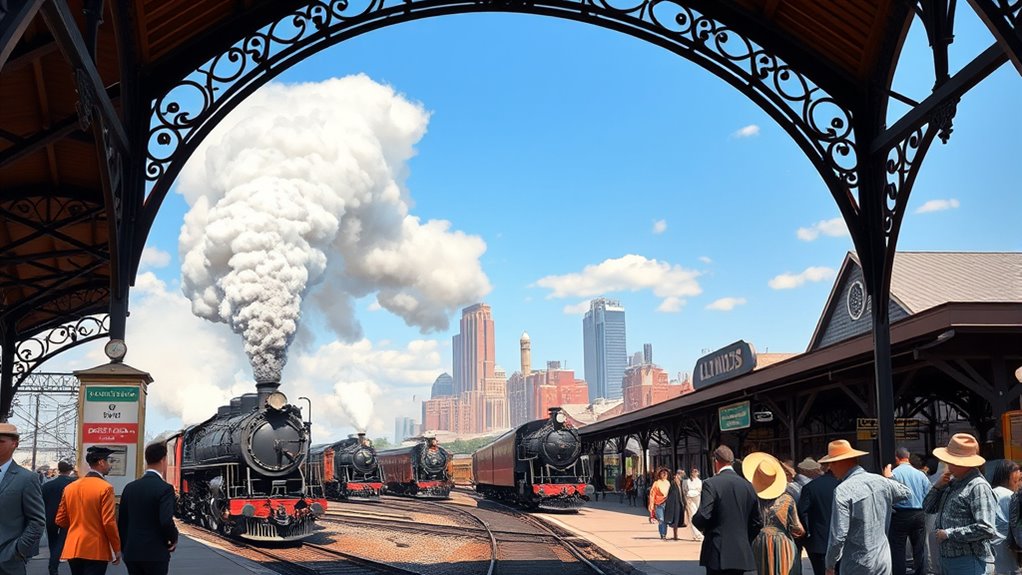
You can see how railroad development transformed Illinois by making travel and trade faster and cheaper. Canals, like the Illinois and Michigan Canal, linked key markets and opened new opportunities for commerce. These transportation innovations fueled urban growth and helped Illinois become an economic hub in the Midwest. Implementing whole-house water filtration systems can also improve overall water quality for residents in expanding urban areas.
Railroad Development Boosts Growth
Railroad development played a crucial role in Illinois’s rapid growth during the 19th century, transforming transportation and fueling economic expansion. As the railroads expanded, they connected Illinois cities to national markets, encouraging trade and migration. You’ll see how the Illinois Central Railroad, completed in 1856, linked Chicago to the South, boosting commerce. Railroads also spurred urbanization, especially in Chicago, turning it into a major transportation hub. They facilitated movement of crops, livestock, and manufactured goods, fueling agriculture and industry. Additionally, the development of railroad networks contributed to the rise of new towns and industries along these routes, further accelerating Illinois’s growth.
Canals Connect Markets
Canals revolutionized Illinois’s transportation network by providing direct links between key markets, boosting trade and economic growth. The Illinois and Michigan Canal, opened in 1848, connected Lake Michigan to the Illinois River, allowing goods to move more efficiently between Chicago and inland farms. This development lowered transportation costs, making Illinois products more competitive nationally and internationally. As a result, farmers could export crops like corn and wheat more easily, while manufacturers gained access to broader markets. The canal also encouraged settlement along its route, fueling community growth. It helped transform Illinois into a crucial hub of commerce and industry. The success of this canal demonstrated how improved transportation infrastructure could accelerate economic expansion and set the stage for future innovations. Additionally, the integration of sustainable building materials in construction projects contributed to long-term environmental benefits.
Transportation Fuels Urbanization
The development of transportation innovations beyond canals played a key role in fueling Illinois’s rapid urbanization and economic growth. These advancements made it easier to move goods and people, transforming the state’s landscape. You can see this impact through:
- The Illinois Central Railroad, connecting Chicago to southern markets.
- The Illinois and Michigan Canal, linking Lake Michigan to the Illinois River.
- Chicago emerging as a transportation hub for boats, trains, and eventually highways.
- Increased migration and settlement driven by accessible trade routes.
- The shift from frontier trade to industrial and agricultural expansion.
- The integration of diverse transportation modes contributed to the state’s economic transformation.
These innovations shortened travel times, lowered costs, and opened markets, enabling Illinois to grow into a thriving economic center. Urbanization accelerated as towns expanded around transportation nodes, setting the stage for future industrial strength.
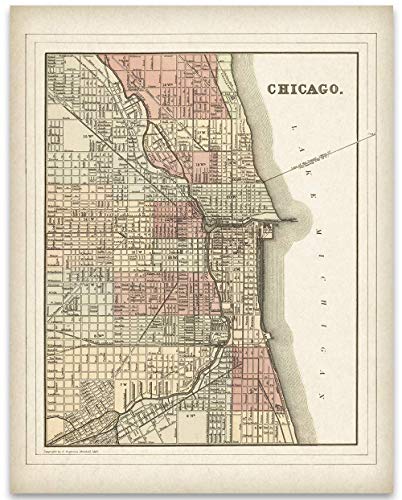
1890 Mitchell Map of Chicago – Vintage 11×14 Unframed Poster, Antique Illinois Cartography, Old Street Map Art, Historical Urban Layout Great for Home Office or Library, and for History Enthusiasts
1890 MITCHELL MAP OF CHICAGO – VINTAGE CHICAGO MAP POSTER – This must-have artwork captures the charm of…
As an affiliate, we earn on qualifying purchases.
As an affiliate, we earn on qualifying purchases.
Social Movements and Cultural Developments

Social movements and cultural developments in Illinois have played a pivotal role in shaping the state’s identity and societal values. You’ve seen how the abolitionist movement gained momentum in the 19th century, with Illinois producing leaders like Abraham Lincoln advocating for ending slavery. The rise of labor unions in Chicago during the late 1800s transformed workers’ rights and improved working conditions. You’ve also observed the influence of immigrant communities, such as Germans, Swedes, and Italians, enriching Illinois’s cultural fabric through festivals, churches, and businesses. The Civil Rights Movement in the 1960s further pushed for racial equality, shaping policies and social attitudes. Additionally, Illinois’s vibrant arts scene, from Chicago’s jazz and blues to Midwestern literary contributions, reflects its dynamic cultural evolution. These movements and developments continuously redefine Illinois’s societal landscape. Exploring the diverse cultural influences highlights how immigration and social activism have shaped Illinois’s unique identity.
Judicial Reforms and Political Evolution
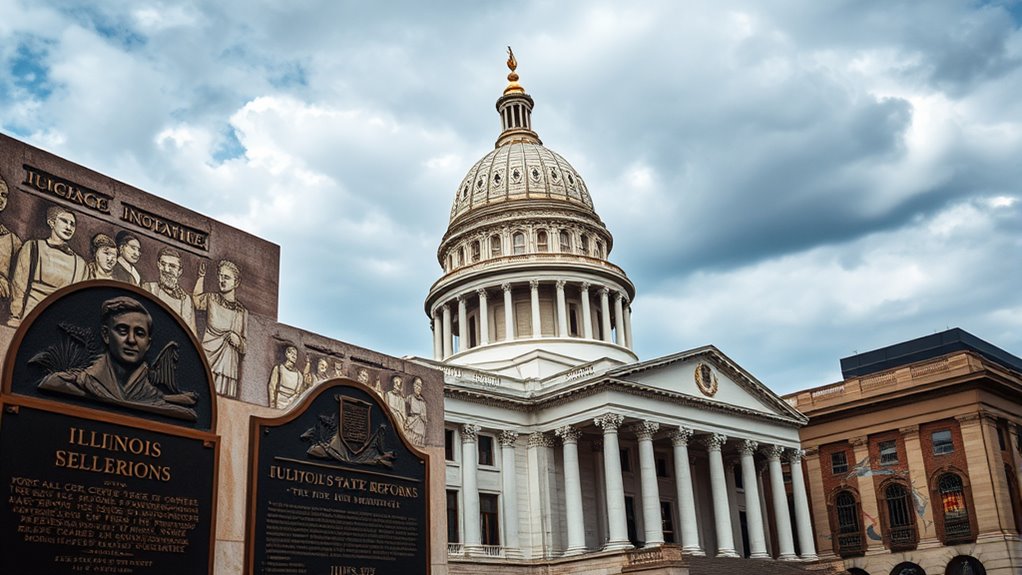
Illinois’s judicial system has undergone significant reforms that have shaped its political landscape. These changes aimed to improve fairness, reduce corruption, and increase accountability. You’ll see that:
- Justices shifted from gubernatorial appointment to popular election, promoting independence.
- The court’s size was reduced from nine to three, streamlining decisions.
- Judicial districts, or grand divisions, were established to reflect regional diversity.
- Judicial sessions started occurring in multiple cities, ensuring statewide representation.
- Reforms made judges more qualified and less influenced by politics.
These adjustments helped create a more transparent, balanced judiciary that aligns with democratic principles. As a result, Illinois’s courts gained credibility, fostering public trust and reinforcing the state’s evolving political identity.
Industrialization and Urban Growth in the 20th Century
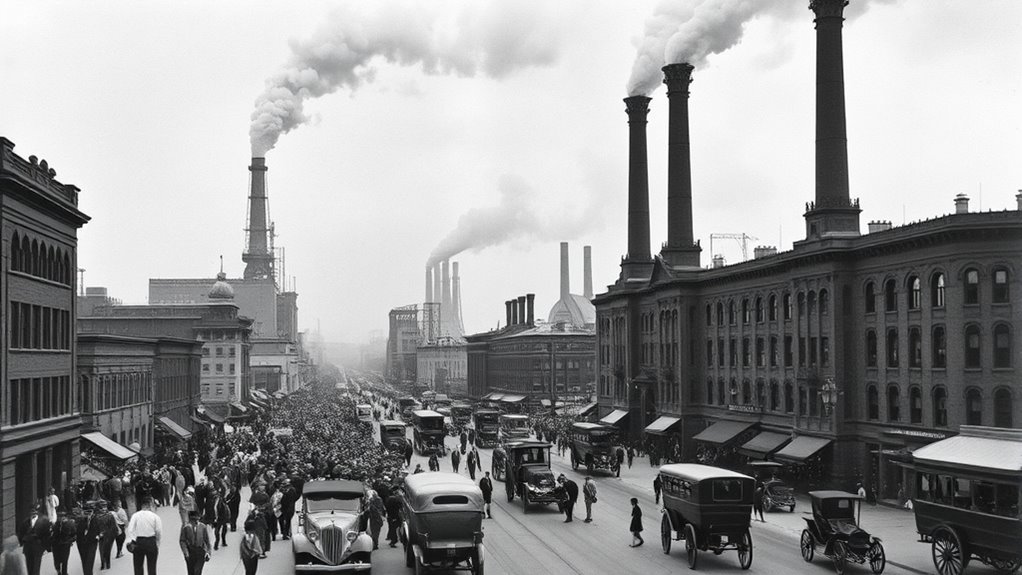
During the 20th century, Illinois experienced rapid industrialization that transformed its economy and urban landscape. Chicago emerged as a major industrial hub, especially in steel manufacturing along the Calumet River, fueling economic growth. Coal mining thrived in central and southern Illinois until it declined after 1940, with disasters like the Cherry Mine tragedy in 1909 highlighting the risks. The Great Migration brought a significant African American population to Chicago, shaping its cultural and political scene. You would notice the University of Chicago’s groundbreaking scientific achievements, such as the first self-sustained nuclear reaction in 1942. Suburban growth expanded rapidly after World War II, while industries diversified, modernizing Illinois’ economy and shifting its urban character. These changes laid the foundation for Illinois’s prominence in national industry and urban development.
Migration Patterns and Demographic Changes
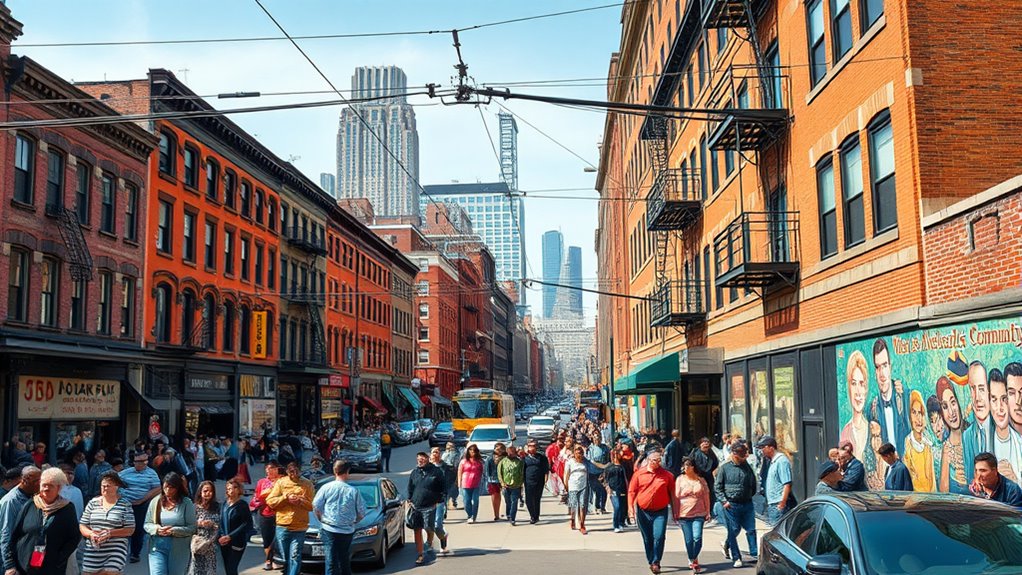
Migration patterns have dramatically reshaped Illinois’s demographics over the centuries. You’ve seen waves of Native Americans, European settlers, and later, diverse groups arriving in search of opportunities. The Great Migration brought a large African American population to Chicago, fueling cultural and political change. Post-World War II, suburban expansion attracted many newcomers. Consider these key shifts:
Migration has continuously transformed Illinois, bringing diverse peoples and shaping its vibrant, evolving communities.
- The influx of European immigrants in the late 19th and early 20th centuries
- The Great Migration increasing African American communities in northern cities
- Postwar suburbanization drawing white families to suburbs
- Latino migration, especially from Mexico, expanding urban populations
- Recent international migration diversifying Illinois’s cultural fabric
These movements continually transform Illinois, creating a vibrant, evolving state with a complex demographic landscape.
Scientific Advances and Educational Milestones
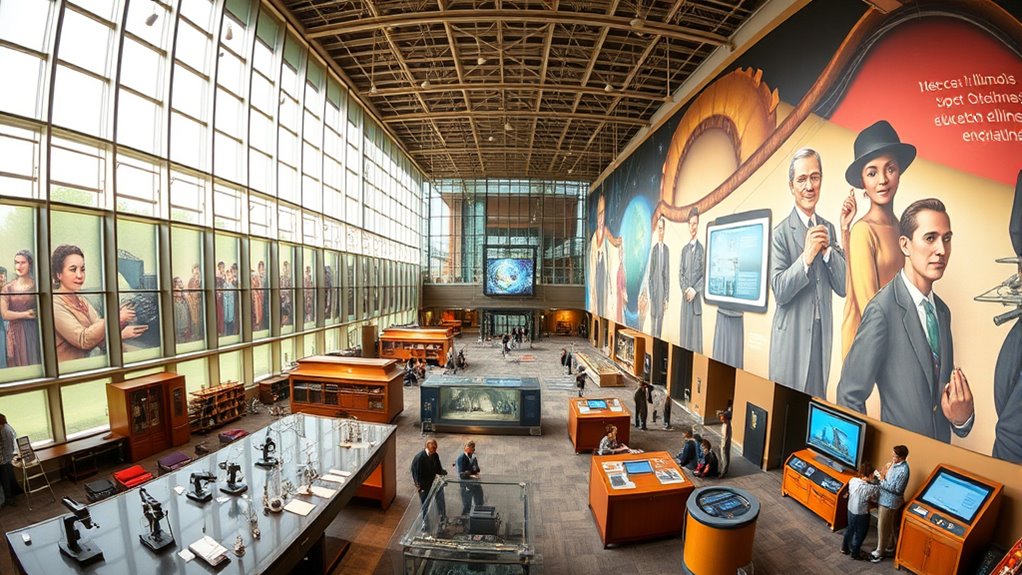
Scientific advances have played a crucial role in shaping Illinois’s development, especially in education and research. The University of Chicago’s 1942 achievement of hosting the first self-sustained nuclear reaction marked a milestone in atomic science. Illinois also saw growth in technological innovation, with Chicago becoming an industrial and scientific hub. You can explore key milestones in the table below:
| Year | Achievement | Significance |
|---|---|---|
| 1942 | Chicago Pile-1 | First nuclear chain reaction |
| 1851 | Illinois Central Railroad | Boosted commerce and education access |
| 1963 | Illinois State Museum | Promoted scientific and cultural understanding |
These advances propelled Illinois into a new era of scientific discovery and educational progress.
Illinois’s Role in National and Global Events
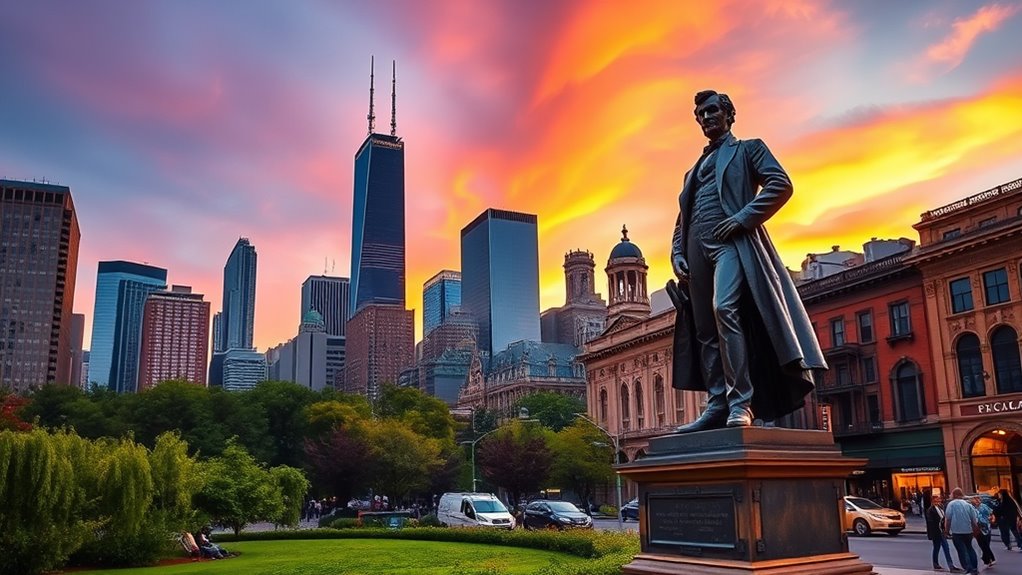
Illinois has played a pivotal role in shaping national and global history through its political, economic, and cultural contributions. You can see this influence in several ways:
- Abraham Lincoln’s leadership during the Civil War, shaping the nation’s future.
- Chicago’s emergence as a major transportation hub, boosting trade and migration.
- The city’s role in the Great Migration, transforming American culture and politics.
- Illinois’s scientific advances, like the first nuclear reactor at the University of Chicago.
- Its contributions to industrial growth, especially steel manufacturing and coal mining.
These actions have not only affected Illinois but also impacted the United States and the world. By fostering innovation, leadership, and economic strength, Illinois has cemented its position as a key player in history’s unfolding story.
Frequently Asked Questions
How Did Native American Tribes Influence Illinois Culture Before European Contact?
Before European contact, native tribes deeply shaped Illinois culture through their traditions, beliefs, and lifestyles. You’d notice their influence in local languages, ceremonies, and social structures that emphasized community and harmony with nature. Their skills in hunting, farming, and crafting laid the foundation for regional practices. These tribes also influenced territorial boundaries and trade routes that shaped Illinois’ development long before Europeans arrived.
What Role Did Illinois Play During the American Civil War?
During the Civil War, Illinois played a crucial role as a strong Union state, providing troops, supplies, and leadership. You’d see many soldiers from Illinois fighting in key battles, while Chicago became a major hub for war logistics and manufacturing. Abraham Lincoln, Illinois-born, led the nation through the conflict. The state’s support helped secure Union victory, and its strategic location made it vital for troop movements and supply routes.
How Did Prohibition Impact Illinois Cities Like Chicago?
Prohibition greatly impacted Illinois cities like Chicago by fueling illegal alcohol trade and organized crime. You’d see bootlegging flourish as gangs supplied speakeasies, leading to violence and corruption. Police and officials often turned a blind eye or were bribed, making enforcement difficult. The era also boosted the growth of notorious gangs like the Chicago Outfit, shaping the city’s criminal reputation and prompting community and law enforcement efforts to combat crime.
What Are the Origins of Illinois’ State Symbols and Motto?
Illinois’ state symbols and motto reflect its rich heritage. You should know that the state bird, the Northern Cardinal, was chosen because it’s common and easy to spot, symbolizing resilience. The state motto, “State Sovereignty, National Union,” was adopted in 1915, emphasizing Illinois’ pride in both independence and unity. These symbols honor Illinois’ diverse history, from Native roots to its role in national unity, making them meaningful identifiers of the state’s identity.
How Has Illinois Contributed to the U.S. Arts and Entertainment Industries?
Illinois has markedly contributed to the U.S. arts and entertainment industries through Chicago’s vibrant scene, famous for jazz, blues, and theater. You can explore iconic music venues, museums, and theaters that shaped American culture. Illinois also produced notable writers like Edgar Allan Poe and Upton Sinclair, and filmmakers who drew inspiration from its landscapes. Its rich arts scene continues to influence national trends, making Illinois a hub for creativity and entertainment.
Conclusion
If you think Illinois’s story is just about cities and history, think again—you’re standing on the backbone of a cultural giant that shaped the world! From pioneering explorers to revolutionary social movements, Illinois’s impact is nothing short of legendary. Its influence stretches across time and space, making it a powerhouse of innovation, progress, and culture. So next time you walk its streets, remember—you’re walking through the pages of history that could fill libraries!