
Kansas’s history is full of Native American roots, early exploration, and conflicts over slavery that led to “Bleeding Kansas.” You’ll see how settlers, railroads, and land policies transformed the state into an agricultural hub. Kansas’s culture reflects its free-state roots, symbols of loyalty, and resilience, shaped by a legacy of resistance and diversity. To understand how these elements create Kansas’s unique identity today, explore further into its rich story.
Key Takeaways
- Kansas has a rich Native American heritage, with tribes like Kansa and Osage shaping its early history before European exploration.
- The state played a central role in “Bleeding Kansas,” a violent pre-Civil War conflict over slavery and statehood.
- Kansas’s growth was driven by agriculture, railroads, and land-grant universities, fostering economic development and education.
- Its cultural identity is rooted in anti-slavery, Union loyalty, and symbols like the sunflower and “Jayhawker” legacy.
- Historic events, from Native displacement to Civil War battles, continue to influence Kansas’s diverse cultural landscape today.

Takenote : The Sacred Guardians – A Legacy of Native Wisdom and Power – Native American Chiefs and Leaders History Book
📖 Discover the Rich History of Native Americans – This beautifully made Takenote offers a powerful dive into…
As an affiliate, we earn on qualifying purchases.
As an affiliate, we earn on qualifying purchases.
Indigenous Roots and Early Exploration
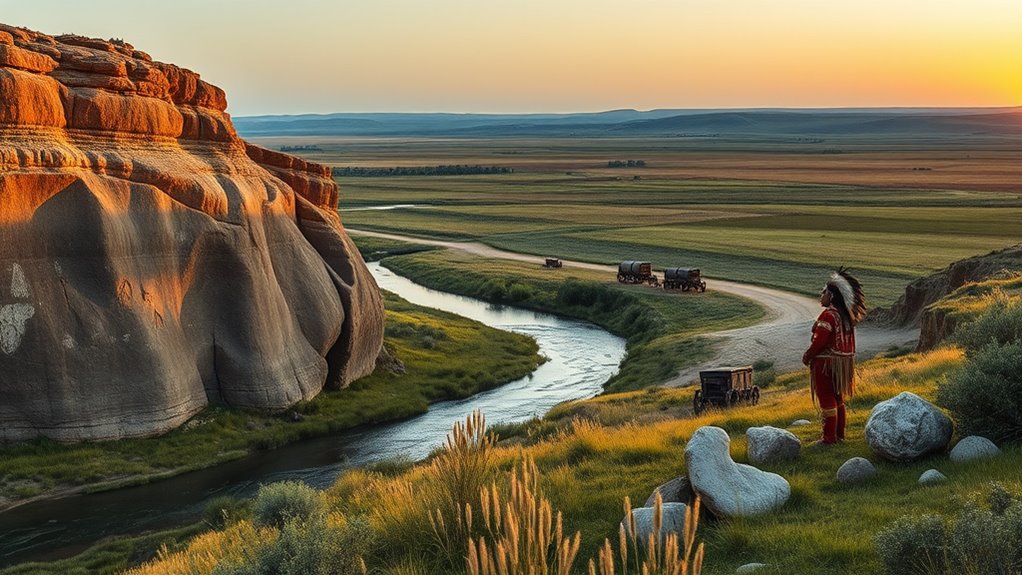
Long before European explorers arrived, Indigenous peoples have inhabited Kansas for thousands of years, shaping its landscape and culture. You can see their legacy in the land’s features, from river valleys to plains. Early tribes such as the Kansa, Osage, and Pawnee thrived, developing complex societies with rich traditions. In 1541, Spanish explorer Francisco Coronado led an expedition into Kansas, searching for gold, but found no riches. Later, in 1682, French explorer La Salle claimed Kansas for France as part of La Louisiane. The Louisiana Purchase in 1803 transferred the territory to the United States, opening new chapters of exploration and migration. Indigenous peoples’ presence and early encounters laid the foundation for Kansas’s diverse history, long before it became a battleground for settlers and conflicts.

Ken Burns: The Civil War DVD
As an affiliate, we earn on qualifying purchases.
As an affiliate, we earn on qualifying purchases.
The Birth of Kansas: Territories and Territorial Conflicts
As Kansas shifted from Native lands to a U.S. territory, conflicts over land and sovereignty intensified. You’ll see fierce rivalries and violence emerge as pro- and anti-slavery factions clash over who controls the territory. These struggles ultimately shape Kansas’s identity as a free state and highlight the turbulent birth of its history. The period was marked by violent confrontations, which played a crucial role in shaping the state’s future.
Native Lands and Displacement
Have you ever wondered how Kansas’s land was transformed from Native American territory into a battleground for expansion? Native tribes like the Potawatomi and Wyandot lived here long before explorers arrived. As European powers claimed the land, they forced Native peoples onto smaller reservations, often through violent conflict. The Indian Removal Act of 1830 accelerated this process, leading tribes to be displaced onto Kansas lands. With the Louisiana Purchase in 1803, the U.S. gained control, opening the door for settlers and expansion. Native lands were gradually taken, replaced by farms, towns, and railroads. This displacement shattered Native communities and forever changed the region’s cultural landscape, leaving a legacy of loss and resilience that shapes Kansas’s history today. The ongoing effects of territorial conflicts continue to influence the state’s identity and cultural memory.
Territorial Rivalries and Violence
When Kansas was established as a territory in 1854, it quickly became a battleground over the future of slavery, sparking fierce rivalries and violence. You’d see clashes between pro-slavery and anti-slavery groups, leading to chaos. Here’s what you’d notice:
- Armed confrontations like the Pottawatomie Massacre and Wakarusa War.
- Rival governments claiming authority—pro-slavery “Bogus Legislature” versus Free-State advocates.
- Acts of intimidation and violence, including Lawrence’s sacking by pro-slavery forces.
- The arrival of John Brown, engaging in direct armed resistance.
This turbulent period, known as “Bleeding Kansas,” set the stage for the nation’s impending Civil War and revealed deep divisions over slavery.
Statehood and Free Soil
How did Kansas shift from a violent, divided territory into a recognized free state? The turning point was the Kansas-Nebraska Act of 1854, which created the Kansas Territory and reopened debates over slavery. Violent clashes erupted between pro- and anti-slavery factions during “Bleeding Kansas,” with events like the sacking of Lawrence and John Brown’s armed resistance. Despite this chaos, Kansas adopted the Wyandotte Constitution in 1859, declaring itself a free state. Voters ratified it, and Congress accepted, leading to Kansas’s official admission to the Union on January 29, 1861. This shift marked the end of territorial conflict, establishing Kansas as a symbol of anti-slavery ideals and setting the stage for its role in the Civil War. The state’s journey was also shaped by ongoing territorial conflicts, which reflected the broader national struggle over slavery and statehood.

Westmon Works Kansas Keychain Souvenir of the Sunflower State with Flag Acrylic Key Chain
Acrylic key chain with metal ring
As an affiliate, we earn on qualifying purchases.
As an affiliate, we earn on qualifying purchases.
The Violence of Bleeding Kansas
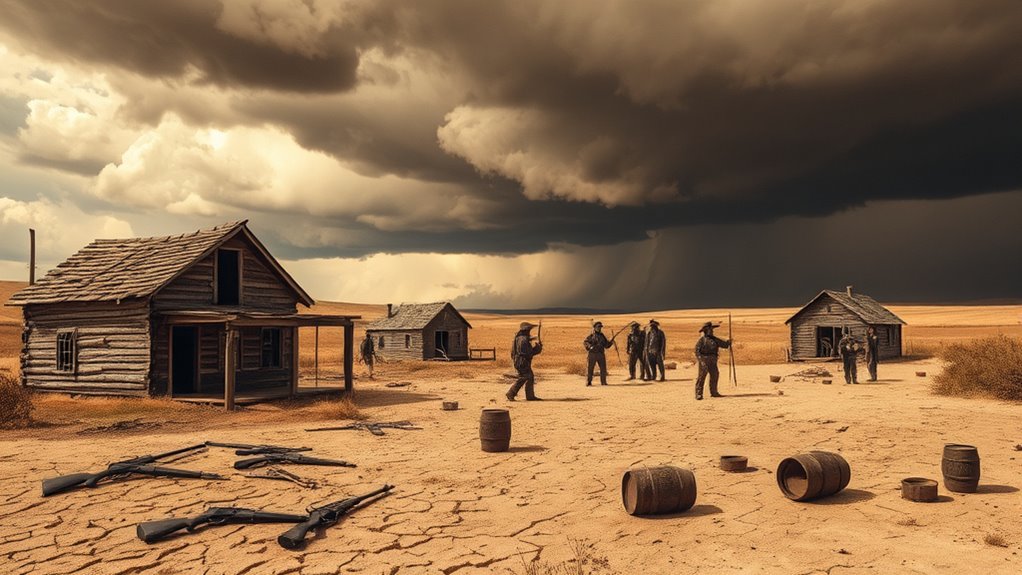
The violence of Bleeding Kansas erupted as pro-slavery and anti-slavery factions clashed fiercely over the future of the territory, turning political disputes into brutal confrontations. You witness chaos unfold as:
- Armed mobs sack the town of Lawrence, destroying printers and buildings supporting free-state laws.
- John Brown leads the Pottawatomie Massacre, killing five pro-slavery settlers to strike fear into opponents.
- The Wakarusa War erupts, with guerrilla fighters attacking each other in open skirmishes.
- Rival governments, like the pro-slavery “Bogus Legislature” and free-state authorities, vie for control, escalating tensions.
- The violence was fueled by deep-seated conflicts over slavery, transforming Kansas into a battleground where political disputes turn deadly, setting the stage for the larger national conflict to come.

Kansas state tourist map with landmarks, famous symbols, USA T-Shirt
Kansas Landmarks Map Tee shirt with symbols of the State is the perfect gift for brother or sister,…
As an affiliate, we earn on qualifying purchases.
As an affiliate, we earn on qualifying purchases.
Statehood and the Civil War Era
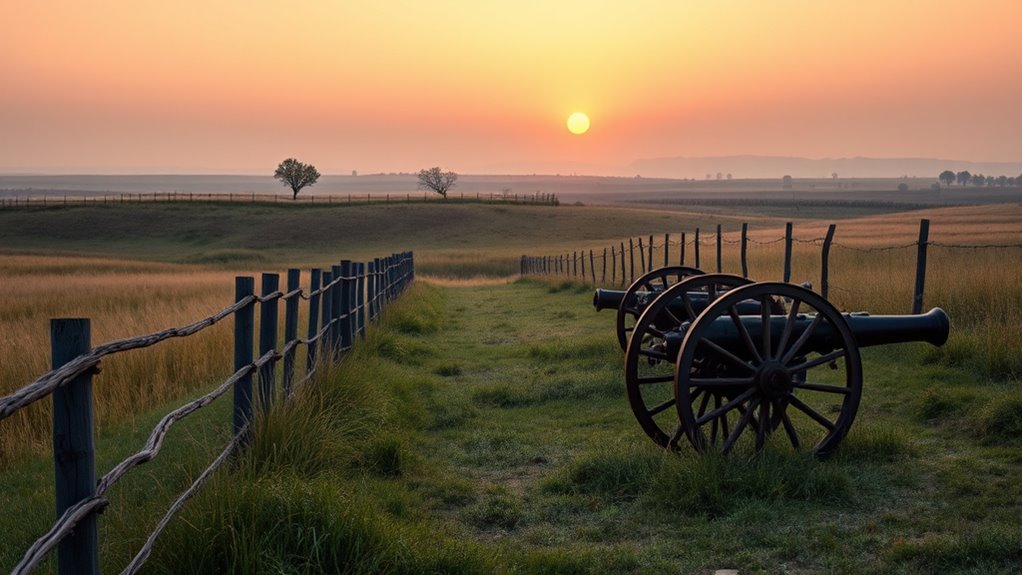
You see, Kansas became a state just as the Civil War started, and its support for the Union was unwavering. The conflict brought violence and chaos, shaping Kansas’s identity as a fierce anti-slavery stronghold. These events left a lasting mark on the state’s history and culture.
Kansas Joins Union
Kansas officially joined the Union as a free state on January 29, 1861, amid rising tensions over slavery. You witness the state’s entry just before the Civil War erupts, symbolizing its anti-slavery stance. This moment sparks key developments:
- You see Kansas quickly mobilize, raising over 20,000 troops to support the Union.
- You feel the tension surge with 29 Confederate raids and violent clashes like Quantrill’s Raid on Lawrence.
- You notice the state’s unwavering commitment, with Kansas suffering the highest Union mortality rate.
- You observe how Kansas’s support for abolition and Union causes becomes central to its identity, shaping its future as a symbol of resistance and freedom.
Civil War Impact
Why did the Civil War have such a profound impact on Kansas? Because Kansas became a battleground for the fight over slavery, shaping its identity and future. The violent clashes of “Bleeding Kansas” revealed deep divisions, with pro- and anti-slavery forces fighting for control. When Kansas joined the Union as a free state in 1861, it reinforced its anti-slavery stance. During the war, Kansas sent over 20,000 troops and faced 29 Confederate raids, including the infamous Quantrill’s Raid on Lawrence. The conflict fueled a sense of resilience and determination among Kansans, establishing a legacy of Union loyalty. The war also accelerated Native American relocations and land disputes, transforming the state socially, politically, and economically. These events left a lasting mark on Kansas’s history and cultural identity, contributing to its historic significance and development.
Post-War Indian Removal and Land Policies

After the Civil War, the United States intensified its efforts to remove Native American tribes from Kansas through a series of land policies and treaties. You see, these policies aimed to open land for settlers and expand U.S. control. Specifically:
- The Morrill Act (1862) shifted Indigenous lands to fund colleges, reducing tribal territories.
- The Medicine Lodge Peace Treaty (1867) sought to relocate tribes to Indian Territory, pushing them further west.
- Between 1867 and 1869, ongoing campaigns pressured tribes, leading to frequent skirmishes.
- In 1871, Congress ended treaty-making, forcing tribes to cede lands voluntarily or face military action.
These actions drastically diminished Native lands, displaced tribes, and paved the way for increased settlement and development in Kansas.
Growth of Agriculture and Infrastructure Development
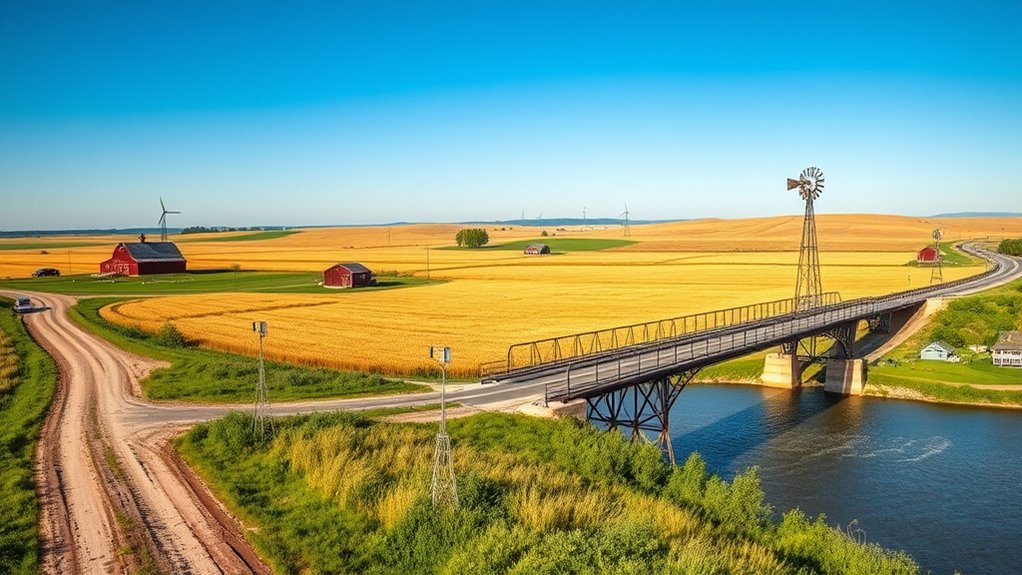
The growth of agriculture and infrastructure in Kansas transformed the state into a vital hub for commerce and settlement. The Homestead Act of 1862 drew thousands of settlers enthusiastic to claim land, fueling population growth and new town development. Railroads, like the Elwood & Marysville line, expanded rapidly after 1865, connecting Kansas to markets across the country. These rail lines facilitated the movement of crops, livestock, and people, boosting the economy. Kansas earned its reputation as the “Breadbasket of America,” particularly with wheat farming thriving across the plains. Infrastructure projects, including roads and telegraph lines, improved communication and transportation. The establishment of Kansas State Agricultural College in 1863 further supported agricultural innovation, ensuring the state’s future as a leading agricultural producer. Modern transportation and communication systems, such as efficient heat pumps, continue to support the state’s growth and sustainability efforts today.
The Rise of Railroads and Transportation

As Kansas’s agriculture and infrastructure expanded after the Civil War, railroads became the backbone of the state’s growth. They connected towns, opened markets, and accelerated settlement. Here’s what you’d see:
- Rapid construction of new lines, linking Kansas to the rest of the country.
- Railroad companies acquiring vast land tracts, encouraging farmers to settle.
- Towns sprouting up along rail routes, transforming the landscape.
- Increased movement of goods, especially wheat and livestock, boosting the economy.
- The expansion of the railroad network significantly influenced Kansas’s development and long-term prosperity.
Educational Foundations and Land-Grant Institutions
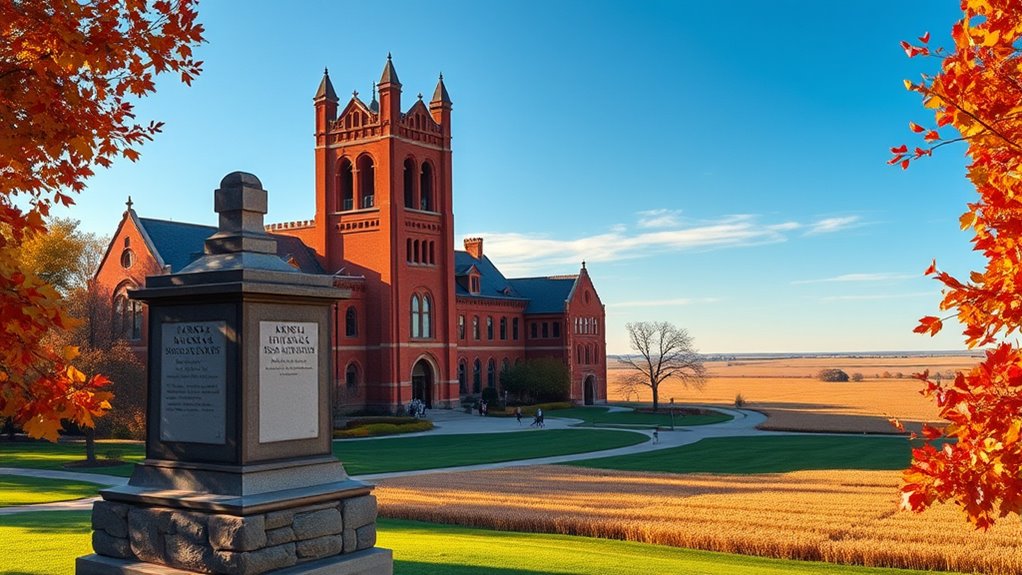
You can see how land-grant education played a key role in Kansas’s growth by providing accessible higher learning opportunities. Kansas State University, established in 1863, stands as a crucial example of this movement, shaping the state’s future. Its founding reflects the broader mission to promote education and development across the state.
Land-Grant Education Origins
Land-grant education in Kansas has its roots in the federal efforts to promote accessible higher education and agricultural development. The Morrill Act of 1862 was pivotal, providing land to states to establish institutions focusing on agriculture, science, and engineering. Kansas responded by founding its first land-grant college in 1863, now known as Kansas State University. To give you a clearer picture:
- Kansas received land grants to create institutions that served practical education needs.
- These colleges aimed to support local farmers and artisans with research and training.
- They promoted innovation through agricultural experiments and technical programs.
- The land-grant system helped expand higher education beyond elite circles, making it accessible to many residents.
- The public-private partnership model was essential in expanding resources and research capabilities for these institutions.
This foundation shaped Kansas’s educational landscape, emphasizing practical skills and community development.
K-State’s Founding Significance
The founding of Kansas State University marked a significant milestone in the state’s educational history by embodying the principles of land-grant institutions. By establishing K-State in 1863, Kansas committed to accessible, practical education focused on agriculture, engineering, and science. As the first land-grant college in the state, it aimed to serve everyday Kansans, helping them improve farming techniques and develop new technologies. This focus on applied knowledge fostered economic growth and innovation across Kansas. K-State also became a symbol of progress, education, and opportunity, reflecting the broader land-grant mission to promote public service and community development. Its founding helped shape Kansas’s identity as a state committed to education that benefits all citizens, laying the foundation for its future growth and prosperity. Land-grant mission continues to influence the university’s dedication to serving the community and advancing practical knowledge.
Cultural Identity: Free State Ideals and Regional Symbols
Kansas’s identity is deeply rooted in its unwavering commitment to free state principles, which emerged from the violent struggles over slavery during its territorial days. You can see this in how the state’s symbols and culture reflect its anti-slavery roots:
Kansas’s core identity stems from its fierce fight for freedom and anti-slavery roots.
- The term “Jayhawker” symbolizes Kansans fighting for abolition and Union loyalty.
- The “Free State” motto highlights the importance of resisting slavery’s expansion.
- The state flag features a sunflower and a blue star, representing hope and loyalty.
- Commemorations of “Bleeding Kansas” serve as a reminder of the fierce battles that defined its free state stance.
- The influence of anti-slavery sentiments has contributed to Kansas’s vibrant cultural identity and enduring regional symbols.
These symbols and stories form a collective identity rooted in resistance, liberty, and the pursuit of equality that still influences Kansas today.
Kansas’s Legacy: Agriculture, Diversity, and Memory

Agriculture has shaped Kansas’s identity, earning it the reputation of the “Breadbasket of America.” The state’s vast plains and fertile soil support extensive wheat production, making it a essential contributor to the nation’s food supply. This agricultural legacy fosters a sense of pride and resilience among Kansans, influencing local culture and economy. Kansas’s diversity also plays a critical role; settlers from different backgrounds—European, Southern, and New England—bring varied traditions that blend into a unique regional identity. The memory of “Bleeding Kansas” and the fight for abolition remains central to the state’s history, reinforcing its reputation for independence and activism. Together, agriculture, diverse communities, and historical memory create a complex legacy that continues to define Kansas’s cultural landscape today.
Frequently Asked Questions
How Did Native American Tribes Influence Early Kansas Culture?
You can see Native American tribes’ influence in Kansas through their traditions, art, and survival skills. They shaped the land with their hunting, farming, and crafting techniques, which early settlers adopted. Their stories, spiritual beliefs, and customs also left a lasting mark on Kansas culture. Even today, Native American heritage is celebrated through festivals, museums, and preservation efforts, reminding you of their essential role in shaping the region’s identity.
What Role Did Kansas Play During the American Civil War?
Kansas played a pivotal role during the Civil War as a staunch Union supporter, proving that actions speak louder than words. You’d see Kansas raising over 20,000 troops, more than its quota, and enduring fierce guerrilla warfare along the Missouri border. The infamous Quantrill’s Raid in 1863, where over 150 people were killed, shows how deeply the conflict tore through the state, shaping its fierce dedication to the Union cause.
How Did the Homestead Act Impact Kansas’s Population Growth?
The Homestead Act greatly boosted Kansas’s population by encouraging thousands of settlers to claim land. You’d see many families and individuals moving west, enthusiastic for free or inexpensive land to farm. This migration led to rapid town development, increased agricultural productivity, and a diverse community of pioneers from different backgrounds. As a result, Kansas grew quickly, shaping its economy and culture around farming and settlement, laying the foundation for its future prosperity.
In What Ways Did Kansas’s Diverse Migrant Communities Shape Its Identity?
Your diverse migrant communities shape Kansas’s identity by bringing various cultures, traditions, and perspectives that foster a unique, multicultural society. You see settlers from New England, Europe, and former slave states influencing local customs, farming practices, and community life. Their collective efforts create a vibrant, resilient identity rooted in hard work, independence, and a shared commitment to shaping Kansas into a thriving, diverse state that values freedom and progress.
What Are the Lasting Effects of “Bleeding Kansas” on Modern Politics?
The lasting effects of “Bleeding Kansas” on modern politics include a deep-rooted commitment to anti-slavery and civil rights, shaping Kansas’s identity as a symbol of moral resolve. You see this legacy in strong political activism, debates over individual freedoms, and a history of fierce, often partisan, conflicts over social justice. The state’s history of violent struggle fuels ongoing conversations about equality, justice, and the importance of standing firm on core moral values.
Conclusion
You might think Kansas’s history is a story of progress and unity, but it’s filled with clashes, conflicts, and contradictions. Amidst the peaceful plains, battles over values and identity shaped its soul. Ironically, those struggles that once tore the state apart now define its resilient spirit. As you reflect on Kansas’s turbulent past, remember that sometimes, it’s the scars of history that forge true strength and character.