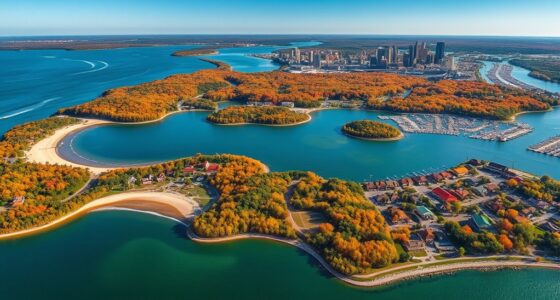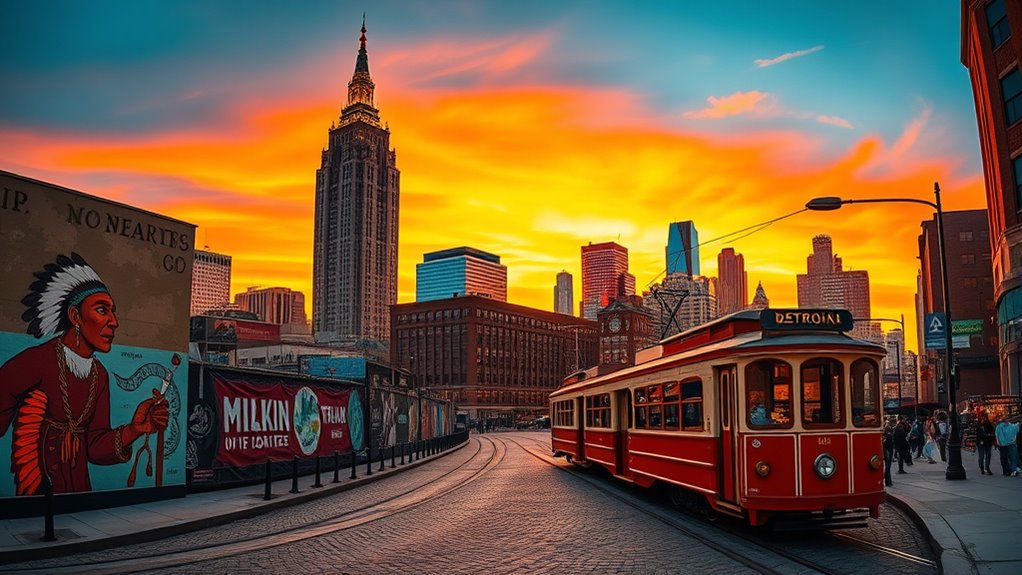

Michigan’s history and culture are shaped by Indigenous peoples like the Ojibwe and Potawatomi, who formed the Three Fires Confederacy, and early European settlers, including French explorers and British forces. The state evolved from a territory to the 26th state in 1837, driven by industries like fur trading and auto manufacturing. Today, Michigan celebrates its diverse heritage through landmarks, festivals, and vibrant communities. Explore further to uncover the stories behind its rich traditions and modern identity.
Key Takeaways
- Michigan’s history includes Native American tribes, French and British exploration, and statehood in 1837, shaped by treaties and territorial changes.
- The state’s economy evolved from fur trading and agriculture to booming automotive manufacturing, notably Ford’s assembly line in 1913.
- Michigan’s cultural heritage features indigenous traditions, Motown music, historic landmarks, and museums celebrating its diverse history.
- Major cities like Detroit and Grand Rapids grew through industrialization, immigration, and urban expansion, reflecting demographic shifts.
- Landmarks like the Mackinac Bridge and Fort Mackinac symbolize Michigan’s engineering feats and historical significance.

Rites of Conquest: The History and Culture of Michigan's Native Americans
As an affiliate, we earn on qualifying purchases.
As an affiliate, we earn on qualifying purchases.
Indigenous Roots and Early European Settlement
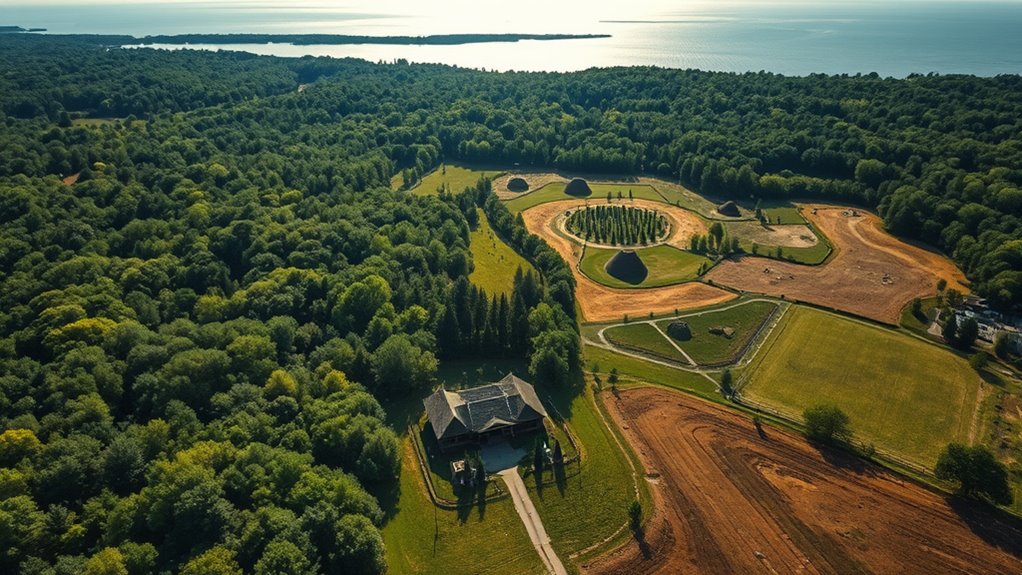
Have you ever wondered how Michigan’s rich history begins? The story starts with the Indigenous peoples who lived here long before Europeans arrived. The Anishinaabeg—Ojibwe, Ottawa, and Potawatomi—formed the Three Fires Confederacy, thriving across the region. In 1701, French explorer Antoine de la Mothe Cadillac founded Fort Pontchartrain du Détroit, marking the start of European influence and the city of Detroit. Over time, treaties like those in 1819 and 1821 transferred millions of acres from Indigenous nations to the U.S., drastically changing land ownership. Michigan was part of the Northwest and Indiana Territories before becoming its own Michigan Territory in 1805. During the War of 1812, British forces temporarily captured Detroit and Mackinac Island, but the U.S. reclaimed control. The integration of AI technology has also begun to influence how historical data and cultural narratives are preserved and shared today.

Detroit's Woodmere Cemetery (Images of America)
Discover Woodmere Cemetery's History, Architecture, and Diverse Residents
As an affiliate, we earn on qualifying purchases.
As an affiliate, we earn on qualifying purchases.
From Territory to Statehood: The Path of Michigan
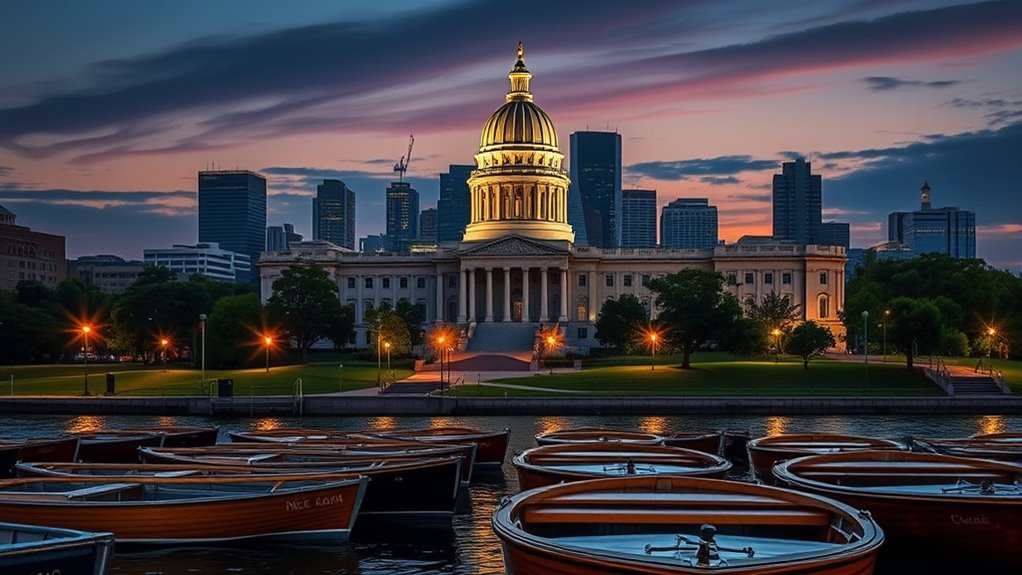
Michigan’s journey to statehood was marked by political struggles and territorial disputes that shaped its future. You’ll see that Michigan first sought to join the Union in 1835, but a boundary dispute with Ohio over the Toledo Strip delayed its admission. This conflict, known as the Toledo War, was resolved when President Andrew Jackson and Congress awarded the Toledo area to Ohio, compensating Michigan with the western Upper Peninsula. Michigan officially became the 26th state on January 26, 1837, ending its territorial status. The state’s capital was initially Detroit but moved to Lansing in 1847 for better centrality and security. These events transformed Michigan from a contested territory into a proud, independent state, laying the groundwork for its future development. Michigan’s transition from territory to statehood exemplifies how political negotiations and territorial compromises shaped its growth.

Michigan Counties Scratch Off Poster – Explorer's Map | Gift for Travelers | RV Poster | State of Michigan Gifts
[Discover & Document] – Traverse the Great Lake State with our detailed scratch-off map, marking off each of…
As an affiliate, we earn on qualifying purchases.
As an affiliate, we earn on qualifying purchases.
Economic Evolution: From Fur Trade to Industry
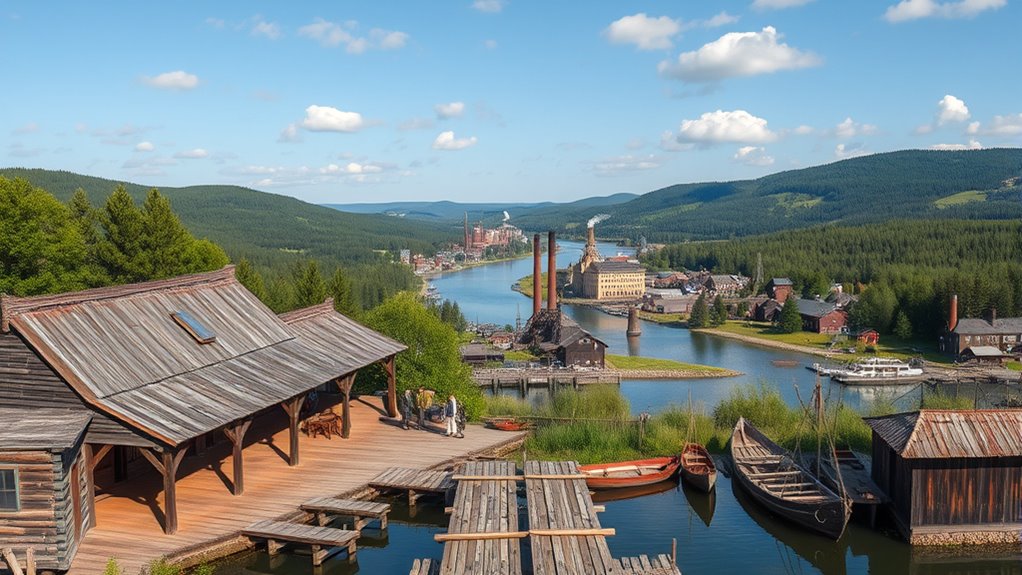
As Michigan moved from territorial disputes to establishing itself as a state, its economy began to evolve beyond early land-based pursuits. Initially driven by the fur trade, you saw traders and Indigenous peoples exchanging pelts for goods, shaping the region’s early wealth. As settlement grew, agriculture and timber became dominant industries, fueling local economies. The arrival of railroads and infrastructure improvements expanded markets and encouraged manufacturing. Detroit emerged as a manufacturing hub, especially with the rise of the auto industry. Ford’s introduction of the moving assembly line in Highland Park in 1913 revolutionized production, making Michigan a symbol of industrial innovation. Over time, the economy diversified further, shifting towards technology, healthcare, and education, reflecting Michigan’s ongoing transformation from raw resource extraction to a modern industrial economy. Additionally, the development of industrial machinery and technological advancements helped sustain Michigan’s position as a leader in manufacturing and innovation.

HesenDot Natural OAK Wood Lake Michigan Framed Wall Art,12x16in Natural Scenery Canvas Wall Print,Classic Urban City Landmark Wall Decor for Living Room,Bedroom,Office Gallery Gifts Set of 1
Wonderful Lake View Experience: Immerse yourself in a natural oak Lake Michigan framed wall art and experience the…
As an affiliate, we earn on qualifying purchases.
As an affiliate, we earn on qualifying purchases.
Cultural Heritage and Landmarks

Michigan’s rich cultural heritage is reflected in its iconic landmarks and historic sites that tell the story of its diverse past. You can explore Detroit’s historic buildings, like the 1828 capitol, which once housed government, a library, and a school. The Mackinac Bridge stands as a symbol of engineering achievement, connecting the Upper and Lower Peninsulas. Indigenous heritage remains visible through ongoing recognition of treaties and land use, with institutions honoring ancestral lands. Museums and festivals celebrate Michigan’s cultural variety, from Native American traditions to Motown music. Landmarks like Fort Mackinac and the Henry Ford Museum preserve stories of early settlers, industry, and innovation. These sites collectively embody Michigan’s history, highlighting its contributions and diverse cultural tapestry. When visiting historic sites, you might also consider exploring space‑heating basics to better understand how these buildings were historically heated.
Demographic Changes and Urban Growth
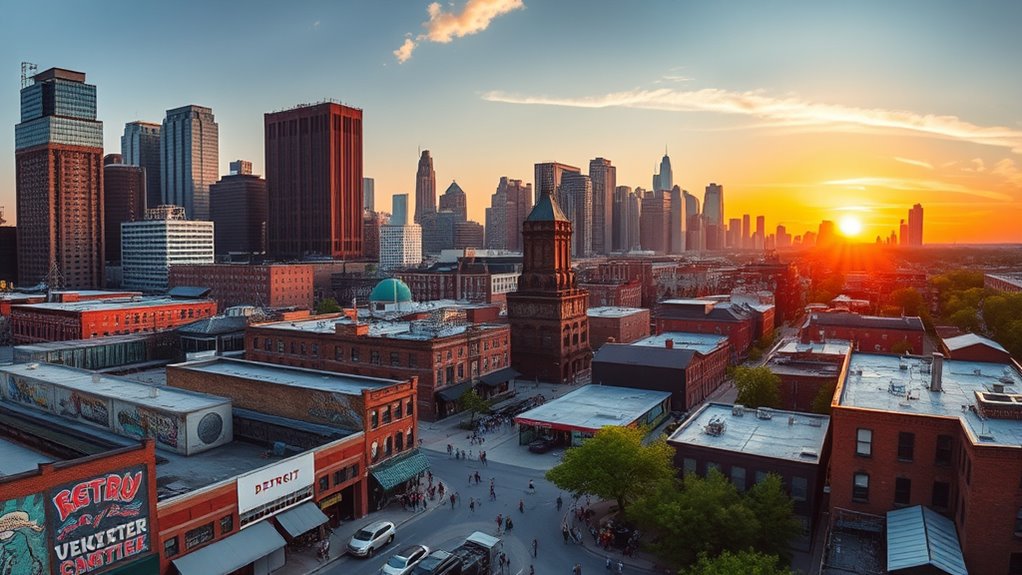
The state’s rich cultural landscape has been shaped by significant demographic shifts and rapid urban growth over the centuries. You’ve witnessed how Michigan’s population surged with early settlers after the Erie Canal opened, boosting migration into the Great Lakes region. Detroit, once a small trading post, transformed into an industrial powerhouse attracting diverse immigrant communities—Italians, Germans, Poles, and later African Americans during the Great Migration. Urban centers expanded rapidly, with cities like Grand Rapids and Flint following suit. You see how economic opportunities drew people from rural areas and other states, fueling suburban development and increasing diversity. Today, Michigan’s cities remain vibrant hubs of cultural exchange, reflecting a history of continual demographic change and urban evolution. Cookies help enhance user experience and support site functionality, contributing to the dynamic growth of Michigan’s communities.
Michigan’s Symbols and Modern Identity
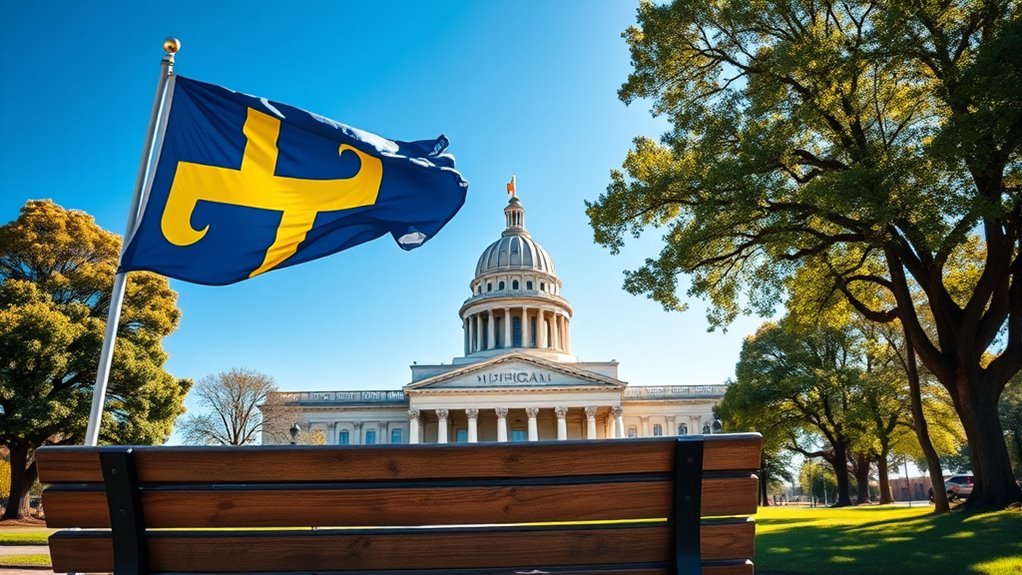
Michigan’s identity is vividly expressed through its symbols, which reflect the state’s natural beauty, history, and cultural heritage. You’ll notice the robin as the state bird, symbolizing resilience and renewal, and the white pine as the state tree, representing Michigan’s lush forests. The apple blossom stands for the state’s rich agricultural roots and thriving orchards. These symbols connect you to Michigan’s landscape and history, highlighting its natural resources and development. The state’s modern identity also shines through its leading research universities, innovative industries, and outdoor recreation opportunities. Michigan’s symbols serve as everyday reminders of its past and present, forging a collective pride rooted in the land, industry, and community. Together, they create a distinct identity that celebrates both tradition and progress. Additionally, embracing self-awareness can deepen your understanding of Michigan’s evolving cultural landscape and foster a stronger connection to its community and environment.
Celebrating Michigan’s Legacy Through Festivals and Education
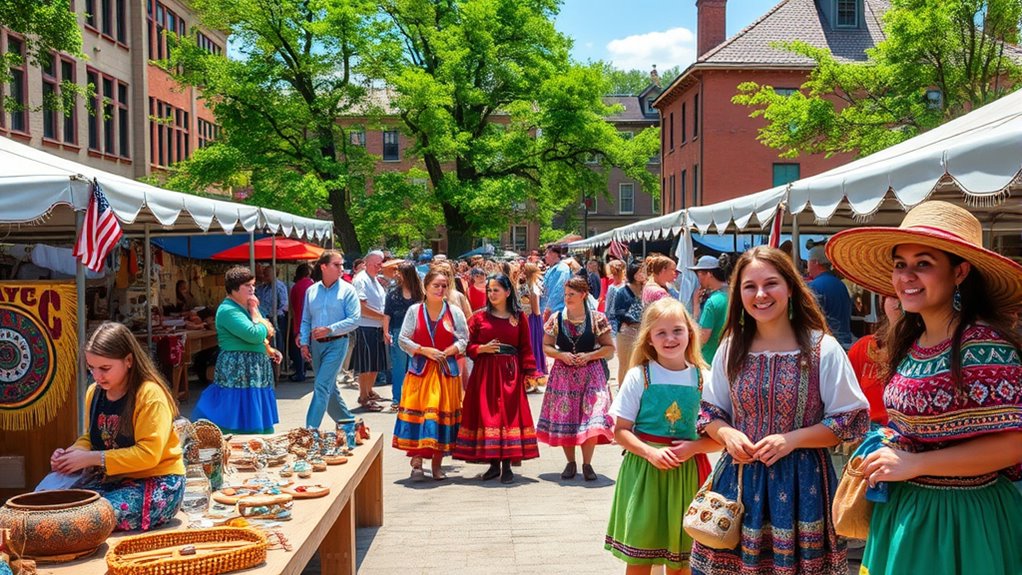
Festivals and educational initiatives play a pivotal role in honoring Michigan’s rich heritage and fostering community pride. You can experience this firsthand at events like the Michigan Renaissance Festival or the National Cherry Festival, which celebrate the state’s history, culture, and local traditions. These festivals highlight Michigan’s diverse roots, from Indigenous heritage to immigrant stories, through performances, crafts, and storytelling. Educational programs at museums and historic sites deepen your understanding of Michigan’s past, such as its Native American roots and automotive innovations. Schools and universities also organize events and initiatives that promote local history, ensuring future generations appreciate Michigan’s legacy. Recognizing the influence of sound healing science can further enrich cultural appreciation by exploring traditional practices and their modern applications. By participating in these celebrations, you help preserve essential traditions and strengthen your community’s sense of identity.
Frequently Asked Questions
How Have Michigan’s Indigenous Communities Preserved Their Cultural Heritage?
You can see Michigan’s Indigenous communities preserve their cultural heritage through language revitalization, traditional ceremonies, and storytelling. They maintain sacred sites and participate in cultural events that celebrate their history and identity. Many also establish museums and cultural centers to educate others about their heritage. By passing down traditions and advocating for treaty rights, they keep their vibrant cultures alive and guarantee future generations stay connected to their roots.
What Role Did Michigan Play in the Underground Railroad?
You should know that Michigan played a crucial role in the Underground Railroad, serving as a key route for escaped slaves seeking freedom in Canada. You can explore historic sites like the Detroit River and the Michigan-Montreal corridor, where abolitionists and safe houses helped fugitives. Michigan’s lakes and border crossings made it a natural pathway, and local communities actively supported efforts to free enslaved people during the 19th century.
How Did the Auto Industry Influence Michigan’s Cultural Identity?
The auto industry shaped Michigan’s cultural identity by turning Detroit into a symbol of innovation and resilience. You see its influence in the city’s diverse communities, vibrant arts scene, and strong work ethic. The industry also fostered economic growth and social mobility, making Michigan a hub of manufacturing excellence. As a result, automotive history is deeply woven into Michigan’s identity, inspiring pride, community spirit, and a legacy of ingenuity.
What Are Michigan’s Most Significant Native American Treaties Today?
Think of Michigan’s treaties as a delicate tapestry, woven with promises and land rights. Today, the most significant are the 1836 Treaty of Washington, which acknowledged tribal sovereignty, and the 1855 Treaty of Detroit, granting land and fishing rights. These agreements still influence tribal sovereignty, land claims, and resource management, shaping ongoing relationships between Native nations and the state. They serve as a foundation for future negotiations and respect.
How Has Michigan’s Diverse Population Shaped Its Modern Cultural Landscape?
Your Michigan’s diverse population shapes its vibrant cultural landscape through rich traditions, festivals, and communities. You experience a blend of Native American, African American, Arab American, and immigrant influences, creating unique neighborhoods, cuisine, and arts. You see this diversity reflected in local events, museums, and public spaces, fostering inclusion and understanding. This dynamic mix makes Michigan a place where cultural expression thrives, and everyone’s heritage contributes to the state’s evolving identity.
Conclusion
So, after exploring Michigan’s rich history and vibrant culture, you might think it’s all about old roots and proud symbols. Ironically, despite its deep past, Michigan keeps evolving, shaping a future as dynamic as its past. From Native tribes to modern cities, this state proves that even the most enduring traditions can adapt. Michigan’s story reminds you that history isn’t just behind you — it’s the foundation for what’s still to come.