Discover Missouri’s rich history rooted in Indigenous cultures that thrived thousands of years before European explorers arrived. European powers like France and Spain established settlements, shaping architecture and traditions. Missouri played a key role in westward expansion and the Civil War, reflecting diverse communities and cultures. Its strategic location fostered economic growth through trade and industry. To uncover more about Missouri’s enthralling past and vibrant traditions, continue exploring its compelling stories and heritage.
Key Takeaways
- Indigenous peoples, such as the Mississippian and Oneota cultures, profoundly shaped Missouri’s early history with complex societies and mound-building.
- European exploration began with French settlements like Sainte Genevieve (1735) and St. Louis (1764), influencing the state’s cultural landscape.
- Missouri’s admission as a slave state in 1820 and its Civil War divided loyalties reflect its complex political and social history.
- The state’s strategic location along major rivers fostered economic growth through trade, migration, and industries like fur trading and mining.
- Missouri’s diverse cultural heritage includes Native, French, Spanish, German, and Eastern European influences, celebrated through festivals, cuisine, and preservation efforts.
Indigenous Peoples and Early Cultures
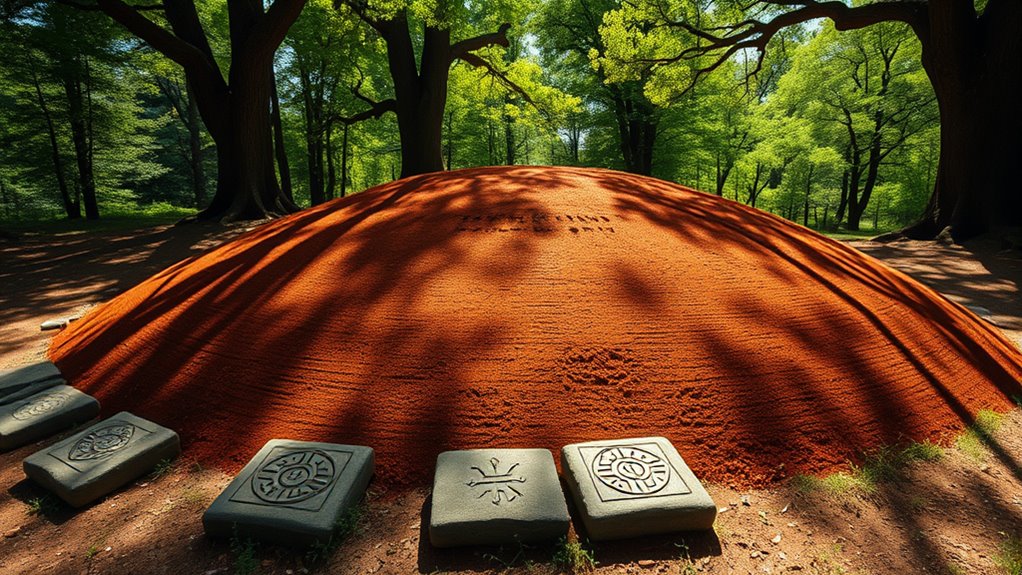
Did you know that Missouri’s history begins with its Indigenous peoples, who have inhabited the land for thousands of years? You can trace their presence back to the Paleo-Indian period around 12,000 BC, when early tribes hunted megafauna across the region. Over time, complex societies like the Mississippian culture arose, constructing large earthen mounds between 500 and 1500 AD, which served ceremonial and communal purposes. Around AD 1250, the Oneota culture from the Great Lakes migrated into Missouri, bringing new traditions. Native groups such as the Osage thrived before European contact, establishing powerful territories. These tribes developed rich cultural practices, social structures, and spiritual beliefs, shaping the land long before Europeans arrived and transforming the region’s history forever. Additionally, the development of complex societies like the Mississippian culture significantly influenced the region’s cultural landscape.
European Exploration and Colonial Foundations
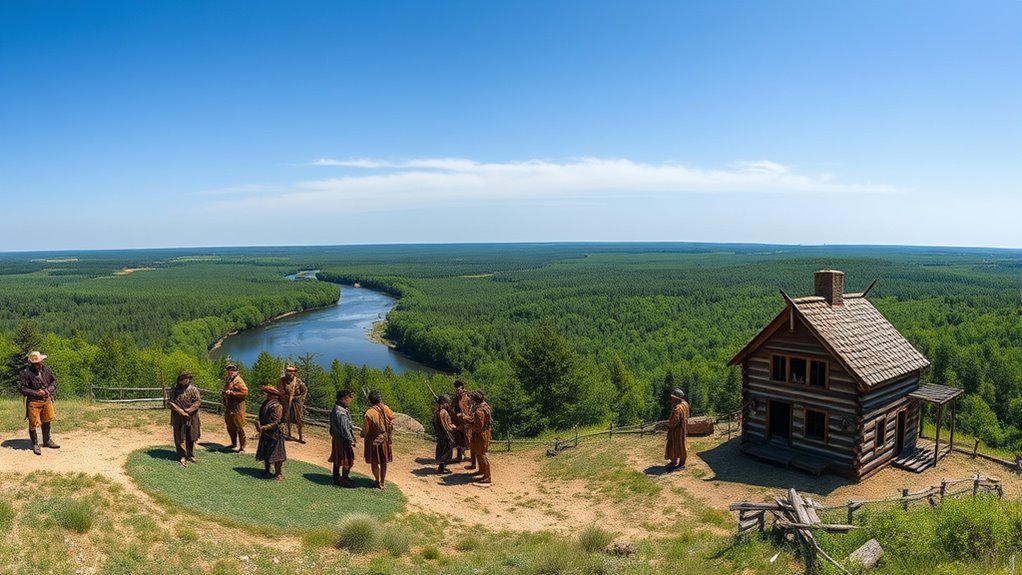
European exploration and colonial foundations in Missouri began with French settlers, who established the first permanent white settlement at Sainte Genevieve in 1735. You’ll see that French traders and explorers later founded St. Louis in 1764 as an essential fur trading post. Control shifted from France to Spain in 1763, but France regained it in 1800 before the Louisiana Purchase of 1803 transferred Missouri to the United States. During this period, you observe a blend of French, Spanish, and Native influences shaping the region’s culture. Fur trading, mining, and agriculture thrived under European rule, laying the groundwork for Missouri’s diverse heritage. These colonial foundations set the stage for Missouri’s future development and interactions among different cultures that continue to influence the state today. Additionally, the European settlement patterns contributed to the diverse architectural styles found throughout Missouri, reflecting the various colonial powers’ influences.
Statehood, Political Tensions, and Civil War
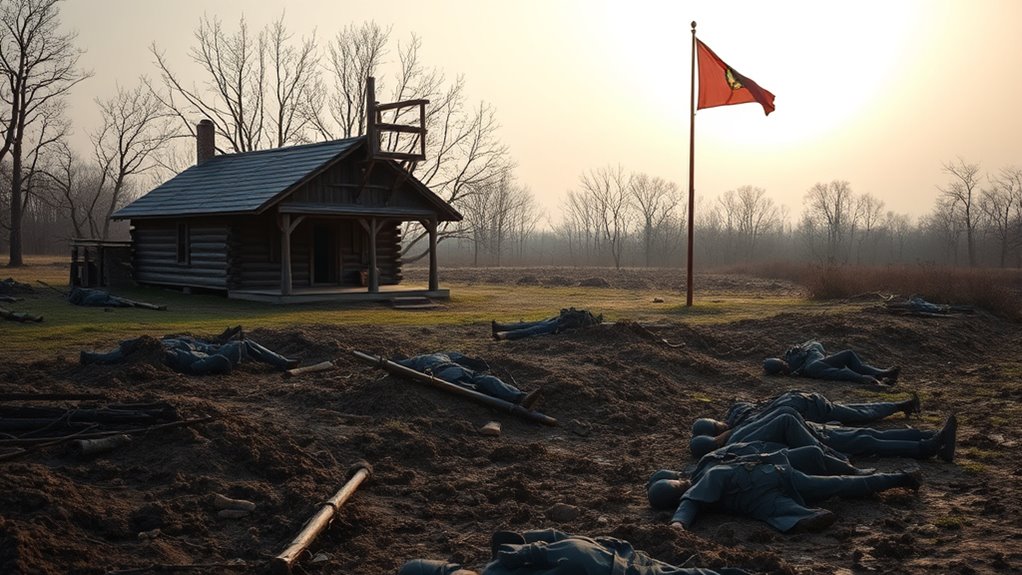
Why did Missouri become such a focal point of political conflict in the early 19th century? The state’s location and economy made it a battleground for tensions over slavery and state rights. When Missouri petitioned for statehood in 1818, debates flared over whether it would allow slavery. The Missouri Compromise of 1820 struck a balance, admitting Missouri as a slave state and Maine as a free state, while drawing the 36°30′ line to limit slavery’s expansion. Missouri’s divided loyalties intensified during the Civil War, with many residents supporting both Union and Confederate causes. The Dred Scott case from St. Louis highlighted racial tensions and legal conflicts. After emancipation in 1865, Missouri faced ongoing political struggles, shaping its complex history of division and change. The state’s targeted demographic groups and diverse communities contributed significantly to its historical narrative.
Economic Growth and Cultural Diversity
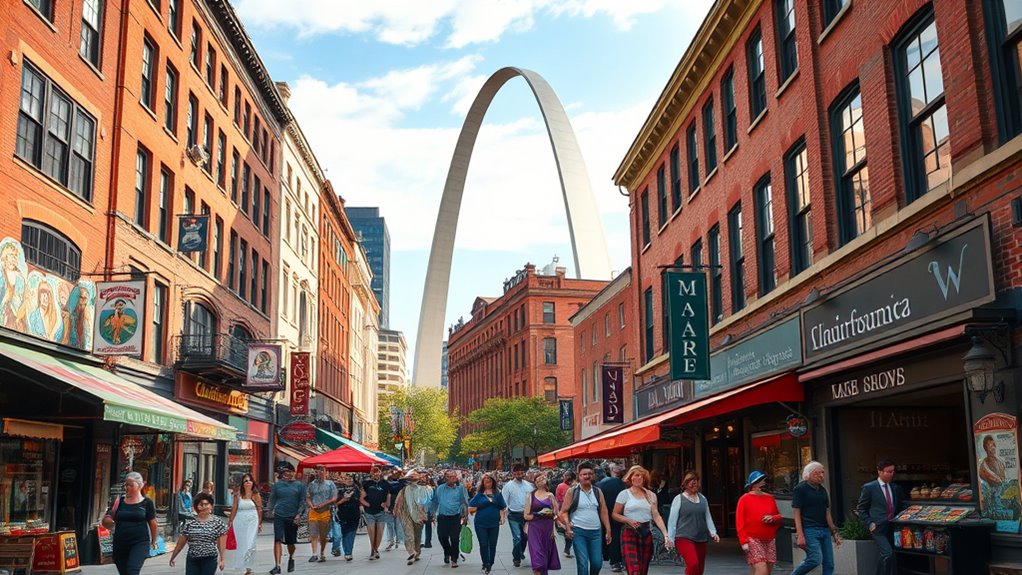
Missouri’s economy has historically been shaped by its strategic location along major rivers and trail routes, which facilitated trade, transportation, and westward expansion. These waterways, especially the Mississippi and Missouri Rivers, enabled commerce and connected Missouri to markets across the nation. Over time, the state became a melting pot of diverse cultures, including French, Spanish, Native American, German, and later Eastern European immigrants. This cultural mix influenced everything from cuisine to festivals and contributed to Missouri’s vibrant social fabric. Industries such as lead mining, fur trading, agriculture, and manufacturing fueled economic growth. Today, Missouri continues to diversify economically, embracing sectors like aerospace, healthcare, and technology, while its rich cultural diversity remains a crucial part of its identity, blending history with modern innovation.
Missouri’s Role in Westward Expansion
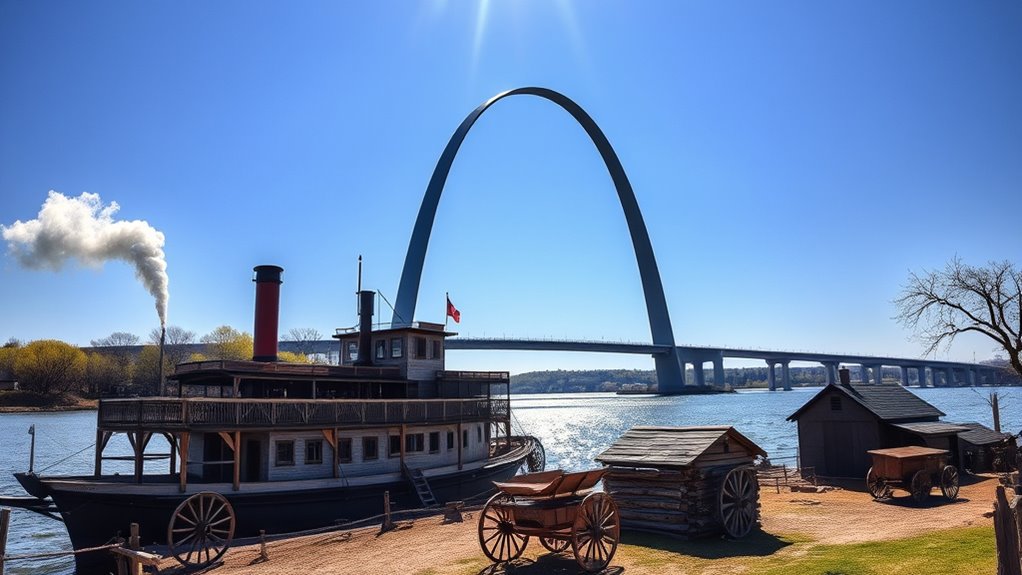
As Missouri’s diverse cultural landscape developed through its early economic activities like fur trading and lead mining, it also became a gateway for westward expansion. You can see this clearly in how towns like Independence and St. Louis served as starting points for explorers heading west on the Oregon and Santa Fe Trails. These routes brought settlers, traders, and adventurers into new territories, fueling America’s growth across the continent. Missouri’s strategic location along the Mississippi and Missouri Rivers made it a essential transportation hub, facilitating the movement of people and goods. The Platte Purchase of 1837 expanded Missouri’s territory further north, reinforcing its role as a launching point for westward migration. Additionally, leadership skills such as strategic planning and coordination were vital in managing the logistics of migration and settlement efforts. Ultimately, Missouri’s position helped shape the nation’s expansion, connecting settled regions to uncharted territories.
Modern Heritage and Preservation Efforts
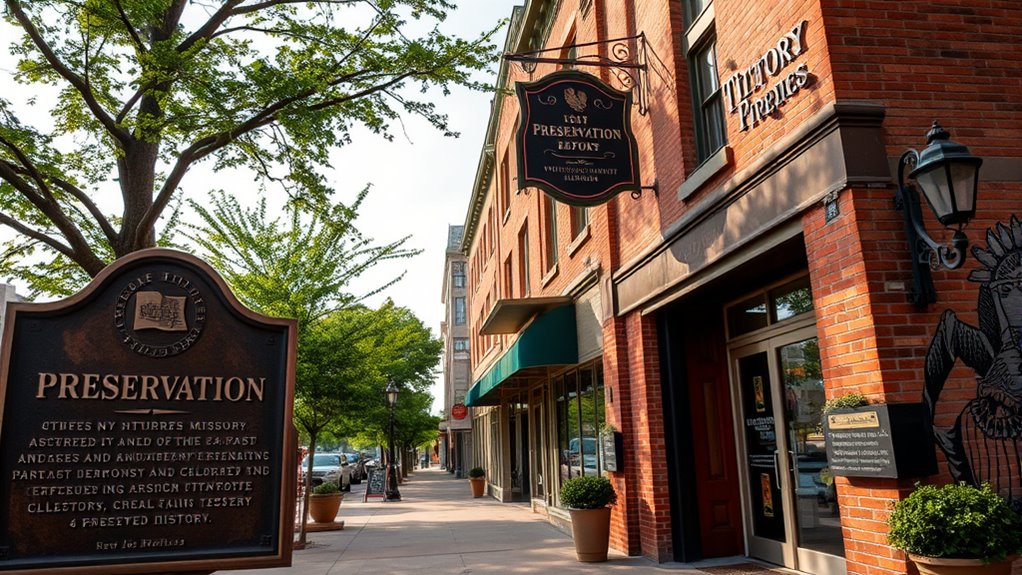
Modern heritage and preservation efforts in Missouri actively protect and celebrate the state’s rich history through museums, digital archives, and educational programs. You can explore the Missouri History Museum or visit the Missouri Digital Heritage project online, which offers access to countless documents, photographs, and artifacts. Local organizations and state agencies work together to restore historic sites like the Sainte Genevieve Historic District and the Old Courthouse in St. Louis. Schools incorporate Missouri’s history into their curricula, fostering awareness among students. Events such as heritage festivals and reenactments engage communities and highlight diverse cultural legacies. These efforts guarantee Missouri’s history remains accessible, engaging, and preserved for future generations, honoring the stories of indigenous peoples, early explorers, and pivotal moments that shaped the state. The effectiveness of these preservation initiatives is often enhanced by hydrocolloid technology, which helps in restoring and maintaining historic artifacts and sites.
Frequently Asked Questions
What Are Some Lesser-Known Indigenous Tribes Native to Missouri?
You might not know that aside from the Osage, tribes like the Kanza (Kansas), Quapaw, and Shawnee also called Missouri home. The Kanza inhabited parts of northern Missouri, while the Quapaw settled along the Arkansas River but had influence in southeastern Missouri. The Shawnee migrated through the region, establishing villages. These lesser-known tribes played essential roles in Missouri’s indigenous history, shaping its cultural diversity long before European contact.
How Did Missouri’s Architecture Evolve Through Different Historical Periods?
You see Missouri’s architecture as a reflection of its evolving history, from indigenous earth mounds to European-influenced structures. Early Native designs were functional, while French and Spanish settlers introduced stone and adobe buildings, blending European styles. As American influence grew, you notice Greek Revival and Victorian homes, contrasting with modern architecture. This mix showcases Missouri’s layered past, where tradition and innovation come together in its buildings’ enduring character.
What Unique Cultural Festivals Are Celebrated in Missouri Today?
You can experience Missouri’s vibrant culture through festivals like the Missouri State Fair, which celebrates agriculture and community, and the International Film Festival in St. Louis that showcases global cinema. Don’t miss the Greek Festival in Kansas City, honoring Greek heritage with food and dance. The Renaissance Festival offers medieval fun, and the Mardi Gras celebrations in St. Louis highlight lively parades and costumes. These events reflect Missouri’s diverse cultural heritage today.
How Did Missouri Influence the Development of Jazz and Blues Music?
You see, Missouri played a crucial role in shaping jazz and blues by fostering diverse musical traditions rooted in African, European, and Native American influences. Cities like St. Louis became hubs for talented musicians, blending styles that led to the development of jazz and blues. The state’s vibrant music scene inspired countless artists, and its cultural melting pot continues to influence these genres today, making Missouri a cornerstone of American musical history.
What Are the Most Significant Archaeological Sites in Missouri?
Imagine walking through Cahokia Mounds, and you’ll see Missouri’s most significant archaeological site. This UNESCO World Heritage Site features massive earthen mounds built by the Mississippian culture around 1050-1350 AD. It offers insights into prehistoric Native American societies, their social structure, and spiritual practices. Visiting Cahokia Mounds, you get a tangible connection to Missouri’s rich indigenous history, making it a must-see for understanding ancient life in the region.
Conclusion
You might find it fascinating that Missouri’s rich history isn’t just about the past but also about how its diverse cultures shaped the nation. Some believe the state’s pivotal role in westward expansion helped define American identity. By exploring its indigenous roots, civil war struggles, and modern preservation efforts, you see a story of resilience and change. Missouri’s history invites you to contemplate how history’s mysteries continue to influence its vibrant culture today.