North Dakota’s culinary traditions blend German, Scandinavian, and Native American influences. You’ll find hearty dishes like Fleischkuekle, walleye, and wild rice, often served at community festivals and special gatherings. Baked goods such as krumkake, lefse, and caramel rolls are staples at family events. Native ingredients like chokecherries and berries also play a key role. To discover how these traditions shape regional flavors, explore more about North Dakota’s unique food heritage.
Key Takeaways
- North Dakota’s cuisine blends German, Scandinavian, and Native American traditions, emphasizing hearty, baked, and preserved foods.
- Traditional dishes include Fleischkuekle, lefse, krumkake, wild rice, and locally caught fish like walleye.
- Baking customs feature krumkake, lefse, honey buns, and caramel rolls, often showcased during festivals and family gatherings.
- Native American food practices incorporate wild rice, regional fish, and indigenous ingredients, highlighting cultural significance.
- Community festivals like Norsk Høstfest celebrate culinary heritage through traditional foods, demonstrations, and cultural performances.
Tastes of the Prairie: 47 North Dakota Recipes (Flavors of the USA: A Culinary Journey Through 50 States Book 35)
As an affiliate, we earn on qualifying purchases.
As an affiliate, we earn on qualifying purchases.
Influences of German and German-Russian Heritage

The German and German-Russian settlers have left a lasting mark on North Dakota’s culinary landscape, shaping both everyday meals and special traditions. You’ll notice their influence in dishes like Kuchen, a sweet fruit or custard-topped cake, and summer sausage, a cured meat sliced for snacks or sandwiches. Fleischkuekle, a deep-fried meat pie, remains a local favorite, while Knoephla soup offers hearty comfort with tender dumplings in chicken broth. These foods reflect their baking, sausage-making, and hearty cooking traditions. Their recipes have become foundational to North Dakota’s cuisine, celebrated in community gatherings and festivals. Whether enjoyed at family dinners or special events, these dishes honor the enduring legacy of German and German-Russian heritage in the state.
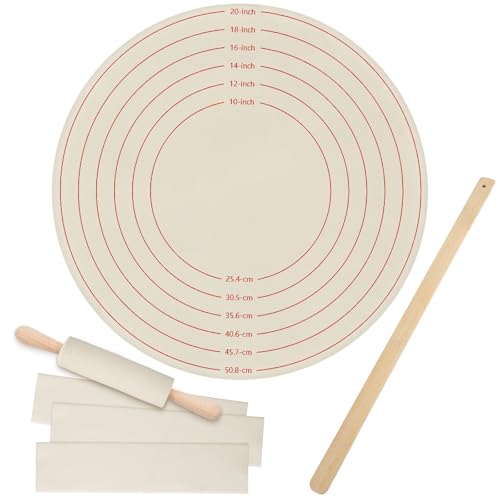
Jingmore 5 Pcs Christmas Traditional Norwegian Lefse Making Kit, 20 Inch Pastry Cloth and 3 Pcs 11 x 2.5 Inch Rolling Pin Cover 24" Wood Turning Stick for Baking(Not Included Board)
Lefse Making Kit: there are 3 pieces of rolling pin covers, a 10 inch wood turning stick and…
As an affiliate, we earn on qualifying purchases.
As an affiliate, we earn on qualifying purchases.
Scandinavian and Norwegian Culinary Roots

You’ll find that traditional Scandinavian dishes like lefse and krumkake are still enjoyed at local celebrations, reflecting their cultural significance. Baking customs, such as honey buns and butter cookies, highlight the community’s love for sweet treats during festivals and holidays. These food traditions come alive at events like Norsk Høstfest, where festival foods celebrate Scandinavian heritage through vibrant, shared meals.
Traditional Scandinavian Dishes
Traditional Scandinavian dishes form an essential part of North Dakota’s culinary heritage, reflecting the deep roots of Norwegian and Scandinavian immigrants. You’ll find these flavors in both everyday meals and special celebrations. Popular dishes include:
- Lefse: soft potato flatbread often topped with butter, sugar, or savory fillings
- Krumkake: delicate, crispy cones filled with whipped cream or fruit
- Lutefisk: dried whitefish soaked in lye, served during holidays with traditional sides
- Raspeball: potato dumplings paired with meat, showcasing Norwegian comfort food
- Scandinavian-inspired meatballs, rømmegrøt (sour cream porridge), and pickled herring
These dishes highlight the importance of heritage, with recipes passed down through generations. They’re integral to community gatherings and festive occasions, celebrating Scandinavian traditions in North Dakota. Traditional recipes play a key role in preserving these culinary customs for future generations.
Baking and Pastry Customs
Scandinavian and Norwegian baking traditions run deep in North Dakota, shaping the state’s culinary landscape through recipes passed down across generations. You’ll notice these customs in everyday baking and special celebrations, featuring treats like krumkake, thin crispy cones filled with whipped cream or fruit, and soft, buttery lefse, often topped with butter and sugar or used for savory wraps. Honey-sweetened buns and sandbakkelse, small buttery cookies, are common holiday favorites. Caramel rolls, popularized by early bakeries like Hughes Brothers, remain a beloved breakfast item. These baked goods reflect a blend of immigrant heritage and adaptation, preserving cultural ties while embracing local ingredients. Whether enjoyed at family gatherings or festive events, Scandinavian and Norwegian pastries continue to celebrate community and tradition across North Dakota.
Festival Food Celebrations
Festival food celebrations in North Dakota vividly showcase the state’s rich Scandinavian and Norwegian culinary roots, bringing communities together to honor their heritage through traditional dishes and lively events. During these festivals, you’ll find a variety of authentic foods that highlight immigrant traditions and local ingredients. You might enjoy:
- Lefse, soft potato flatbread, often topped with butter and sugar
- Krumkake, crispy cones filled with whipped cream or fruit
- Lutefisk, dried whitefish soaked in lye, served during holiday gatherings
- Scandinavian meatballs, seasoned and cooked to perfection
- Rømmegrøt, creamy sour cream porridge with sugar and cinnamon
These celebrations often feature smorgasbord-style meals, cultural performances, and community bonding, allowing you to experience North Dakota’s Scandinavian heritage firsthand through its vibrant food traditions. Additionally, traditional dishes like these often incorporate local ingredients, which are essential to maintaining the authenticity of these culinary practices.
CWSDXM Walleye Rigs Kit, 41.5LB Spinner Rig Crawler Harness with Large Colorado Blades, 7PCS Pre-Rigged for Walleye & Perch Fishing, Worm Rig
【Hand-Tied for Maximum Strength & Versatile Hook Options】:Meticulously hand-tied for superior durability and reliability. Features versatile double hook…
As an affiliate, we earn on qualifying purchases.
As an affiliate, we earn on qualifying purchases.
Native American Food Traditions and Contributions

You can see Native American food traditions in North Dakota through the use of local wild plants and regional fish like walleye. Frybread remains a staple dish, reflecting cultural history and adaptation. These ingredients and techniques continue to influence the state’s culinary landscape today. Additionally, traditional cooking methods such as open-fire roasting and the use of natural seasonings are still practiced, highlighting cultural preservation within the community.
Wild Plant Use
Have you ever wondered how Native Americans shaped North Dakota’s culinary landscape? They harnessed wild plants to create nutritious, flavorful foods integral to their traditions. You might find them gathering and using:
- Chokecherries for jams, syrups, and dried snacks
- Wild rice, a sacred grain, cooked as a side or in stews
- Berries like Saskatoon and elderberries for flavoring and preservation
- Roots and tubers such as prairie turnips and camas bulbs
- Nuts, including acorns and hickory nuts, for added nutrition
These plants not only provided sustenance but also connected communities to their land and seasons. Their knowledge of wild flora influenced cooking methods and recipes still appreciated today, blending history and flavor in North Dakota’s food culture. Understanding industry trends helps preserve and celebrate these culinary traditions.
Traditional Frybread Dishes
Frybread holds a special place in Native American culinary traditions, symbolizing resilience and cultural identity. You’ll find it served in a variety of dishes, most especially as frybread tacos, where crispy bread acts as a vessel for meats, beans, and toppings. It’s also enjoyed simply with honey, powdered sugar, or jam, offering a sweet contrast to savory uses. Making frybread involves a simple dough, fried until golden and fluffy. Native communities value it not only as a comfort food but as a symbol of endurance through history’s hardships. Frybread’s versatility makes it a staple at celebrations, powwows, and family gatherings. Its presence reflects Native American ingenuity in adapting traditional ingredients to new methods, preserving cultural heritage through every bite. Additionally, frybread preparation and consumption are often cultural practices that reinforce community bonds and shared history.
Regional Fish Incorporation
Native American communities in North Dakota have long relied on regional fish species like walleye, northern pike, and catfish as essential sources of nutrition and cultural expression. These fish feature prominently in traditional recipes, ceremonies, and community gatherings. You’ll find dishes such as smoked fish, fish fry, and dried filets that highlight native techniques. Fish is often prepared using methods like grilling, baking, or drying, preserving flavor and nutrients.
- Incorporation of fish into frybread tacos
- Traditional smoking and drying techniques
- Use of regional fish in stews and soups
- Fish in ceremonial and festive foods
- Sharing fish during communal gatherings
These practices keep Native culinary traditions alive and deepen cultural connections through food.
German-Russian sausage maker
As an affiliate, we earn on qualifying purchases.
As an affiliate, we earn on qualifying purchases.
Signature Dishes and Local Ingredients of North Dakota
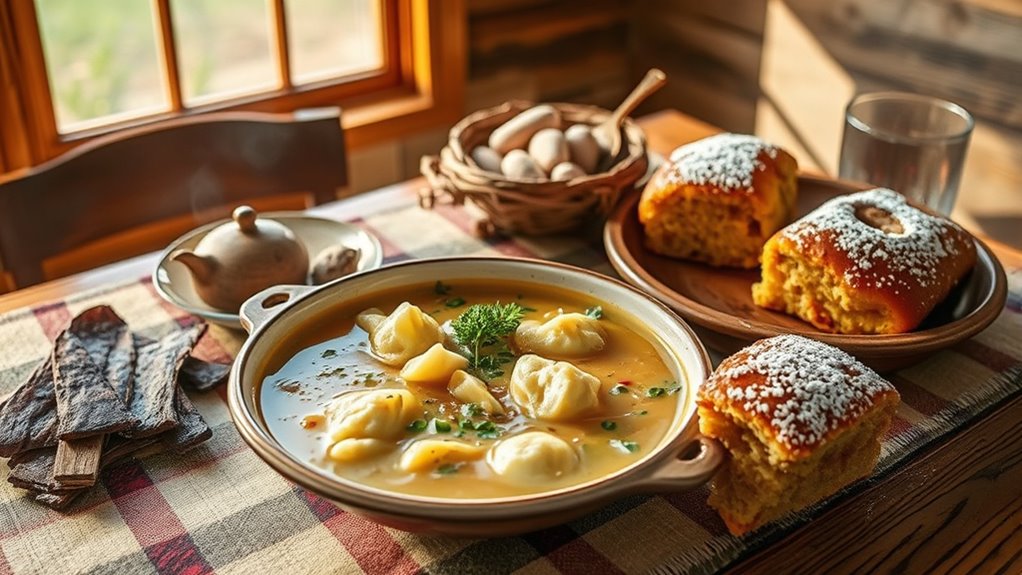
What makes North Dakota’s culinary scene truly unique are its signature dishes and locally sourced ingredients that reflect a rich tapestry of cultural influences. You’ll find Fleischkuekle, a deep-fried meat pie, known as the state’s iconic comfort food. Potatoes play a central role, appearing in various forms like mashed, baked, or in traditional dishes like raspeball. Locally caught walleye fish features prominently in many recipes, highlighting regional fishing traditions. Cured meats, especially summer sausage, are popular for snacks and sandwiches. Berries such as chokecherries and blueberries add a sweet touch to desserts and sauces. These ingredients and dishes embody the blend of German, Scandinavian, and Native American heritage, creating a diverse and hearty culinary landscape that’s both authentic and inviting. Incorporating local ingredients and traditional recipes helps preserve North Dakota’s unique food culture for future generations.
Community Celebrations and Food Festivals
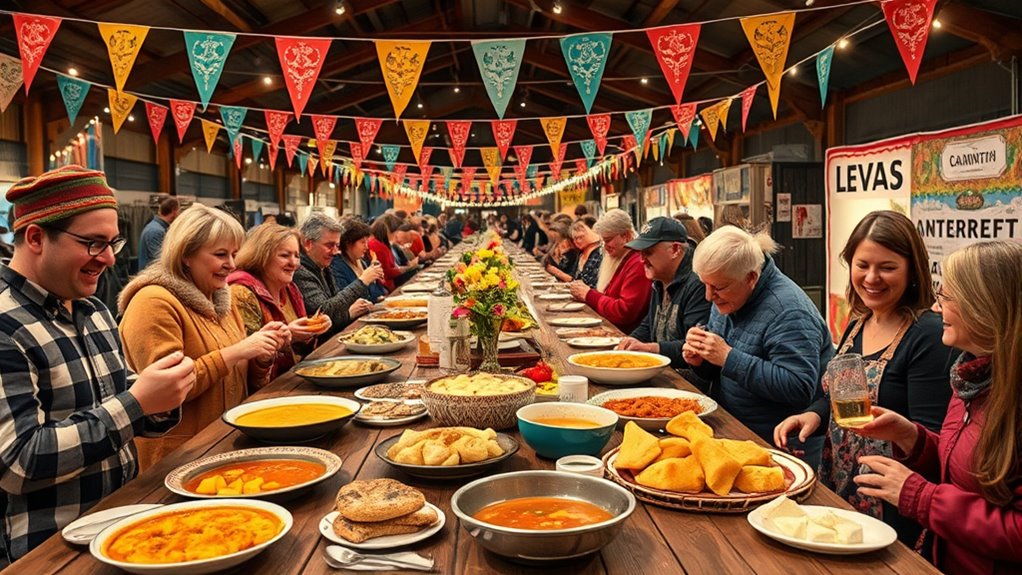
Community celebrations and food festivals play an essential role in North Dakota’s cultural landscape, bringing together diverse traditions through shared meals and lively gatherings. These events showcase local dishes, celebrate heritage, and foster community bonding. When you attend, you’ll experience a variety of activities, like:
Community festivals unite North Dakota’s diverse culinary traditions through lively gatherings and shared traditions.
- Sampling traditional dishes at Norsk Høstfest, North America’s largest Scandinavian festival
- Participating in church dinners serving lutefisk and hearty casseroles
- Enjoying smorgasbords filled with cured meats, potatoes, and regional specialties
- Engaging in cooking demonstrations highlighting Native American and immigrant recipes
- Celebrating seasonal festivals with berry pies, caramel rolls, and baked goods
- Many of these festivals incorporate cultural preservation techniques, helping to sustain culinary traditions and community identity.
These festivals emphasize cultural preservation and unity, offering a vibrant way to connect with North Dakota’s rich culinary heritage and community spirit.
Baking and Sweet Pastry Traditions

Have you ever noticed how North Dakota’s baking and sweet pastry traditions reflect a blend of immigrant influences and local flavors? You’ll find that Scandinavian and German roots shape many beloved treats. Kuchen, a sweet, fruit- or custard-topped cake, is a common dessert at family gatherings, while krumkake cones, filled with whipped cream or fruit, highlight Scandinavian baking skills. Caramel rolls, popularized by early bakeries like Hughes Brothers, remain a breakfast favorite. Scandinavian customs also bring honey-sweetened buns and sandbakkelse cookies, which are buttery and delicate. These baked goods often appear at holidays and community events, showcasing a rich heritage of immigrant adaptation. You’ll notice that baking remains central to North Dakota’s cultural identity, connecting traditions across generations through shared flavors and recipes. Additionally, traditional baking techniques, such as hand-rolled dough, have been preserved and passed down, ensuring the continuation of these cherished culinary practices.
Frequently Asked Questions
How Have Immigrant and Native American Cuisines Blended in North Dakota?
You see how immigrant and Native American cuisines blend seamlessly in North Dakota. You might enjoy dishes like frybread tacos, which combine Native techniques with immigrant ingredients. Potatoes, cured meats, and local berries are featured in traditional recipes, reflecting a mix of influences. Community meals and festivals celebrate this fusion, emphasizing shared heritage. You’ll find both Native and immigrant flavors in hearty hotdishes, Scandinavian baked goods, and regional fish dishes, illustrating a rich culinary tapestry.
What Are the Most Popular Traditional Dishes Across North Dakota Communities?
You’ll find that hotdish, Fleischkuekle, and walleye dishes dominate North Dakota’s community tables, showcasing an incredible blend of immigrant and Native American influences. These dishes are celebrated with fervor, almost like culinary legends passed down through generations. From hearty casseroles to deep-fried meat pies and locally caught fish, North Dakotans cherish these traditional foods, making them the heartbeat of communal gatherings and cultural pride across the state.
How Do Seasonal Festivals Influence North Dakota’s Culinary Practices?
Seasonal festivals deeply influence North Dakota’s culinary practices by highlighting traditional dishes and local ingredients. You’ll find community gatherings serving hearty hotdishs, Scandinavian baked goods, and Native American specialties, fostering cultural pride. During events like Norsk Høstfest, you get to taste authentic foods like lefse and krumkake. These festivals encourage sharing recipes, preserving heritage, and adapting seasonal ingredients, creating a vibrant, communal food culture that celebrates the state’s diverse culinary roots.
Are There Modern Twists on Traditional North Dakota Recipes?
Yes, modern chefs and home cooks put creative twists on traditional North Dakota recipes. You might find Fleischkuekle filled with gourmet ingredients or served with unique dipping sauces. Many adapt classic dishes like hotdish with healthier ingredients or international spices. Baked goods such as kuchen get updated with new flavors or gluten-free options. These twists honor heritage while appealing to contemporary tastes, keeping North Dakota’s food scene vibrant and innovative.
What Role Do Local Ingredients Play in North Dakota’s Food Culture?
Think of North Dakota’s food culture as a garden where local ingredients like potatoes, walleye, and berries bloom vividly. You play a part in this living tapestry, using fresh, regional produce to craft hearty dishes that echo the land’s history. These ingredients aren’t just flavors; they’re stories woven into every meal, connecting you to Native traditions and immigrant roots, making each bite a tribute to North Dakota’s rich culinary heritage.
Conclusion
As you explore North Dakota’s culinary landscape, you’ll find a warm tapestry woven from diverse traditions and shared stories. The flavors invite you to savor more than just food—they offer a gentle reminder of community, history, and home. Embrace these tastes with an open heart, and you’ll discover that every bite holds a quiet celebration of the state’s rich cultural heritage, making your journey through North Dakota’s cuisine truly memorable.