South Dakota’s cuisine combines Native American foods, Pioneer spirit, and diverse immigrant influences. You’ll find signature dishes like chislic, hearty German-Russian noodle and potato dishes, and traditional open-fire game meats. Local beverages include craft beers and spirits. The culture emphasizes resourcefulness, simple ingredients, and regional flavors rooted in history. If you’re curious about how these traditions blend and shape the state’s flavor, there’s much more to discover.
Key Takeaways
- South Dakota’s signature dish is Chislic, a deep-fried meat skewers seasoned with garlic salt and regional variations.
- Native American cuisine emphasizes game meats, corn, beans, and traditional cooking methods like open-fire roasting and sun-drying.
- German-Russian influences contribute hearty dishes such as knoephla soup, potato strudel, and dense bread traditions.
- Pioneer and cowboy traditions focus on rustic, hearty foods like meat, potatoes, beans, and open-fire cooking techniques.
- Regional drinks include craft beers and flavored spirits from local breweries and distilleries, complementing the hearty regional cuisine.
The Signature Dish: Chislic and Its Regional Variations

Chislic stands out as South Dakota’s signature meat dish, capturing the state’s hearty culinary spirit. You’ll find it served at gatherings, festivals, and local diners, often seasoned with garlic salt and skewered on toothpicks. The meat, usually lamb or mutton, is deep-fried to crispy perfection, though regional variations exist. In Pierre, it’s battered; Sioux Falls favors a flour coating; near Watertown, ranch dressing is common; and Redfield locals prefer seasoned salt like Lawry’s. Some places use beef or venison instead of lamb, reflecting local hunting and farming traditions. Despite these differences, the core concept remains the same: flavorful, tender meat prepared simply to satisfy South Dakota’s robust, no-nonsense palate. Incorporating traditional cooking methods and regional ingredients helps preserve the authenticity of this beloved dish.
German-Russian Culinary Heritage and Its Impact

The German-Russian immigrants who settled in South Dakota left a lasting mark on the region’s culinary landscape, shaping many of its most beloved dishes. You’ll notice their influence in hearty, carb-rich foods like homemade egg noodles, dense breads, and flavorful strudels. Potato strudel remains a regional favorite, requiring skillful technique to perfect its texture. Knoephla soup, a creamy potato and dumpling stew, also highlights their culinary traditions. These settlers brought farming customs that center on simple, filling meals designed for hardworking communities. Their emphasis on hearty, satisfying food helped sustain them through tough winters and long workdays. Additionally, the use of traditional ingredients like potatoes and cabbage reflects their resourcefulness and adaptation to the local environment. Today, their legacy endures in the local cuisine, reflecting a blend of German culinary techniques and the practical needs of early South Dakota settlers.
Native American Food Practices and Ingredients
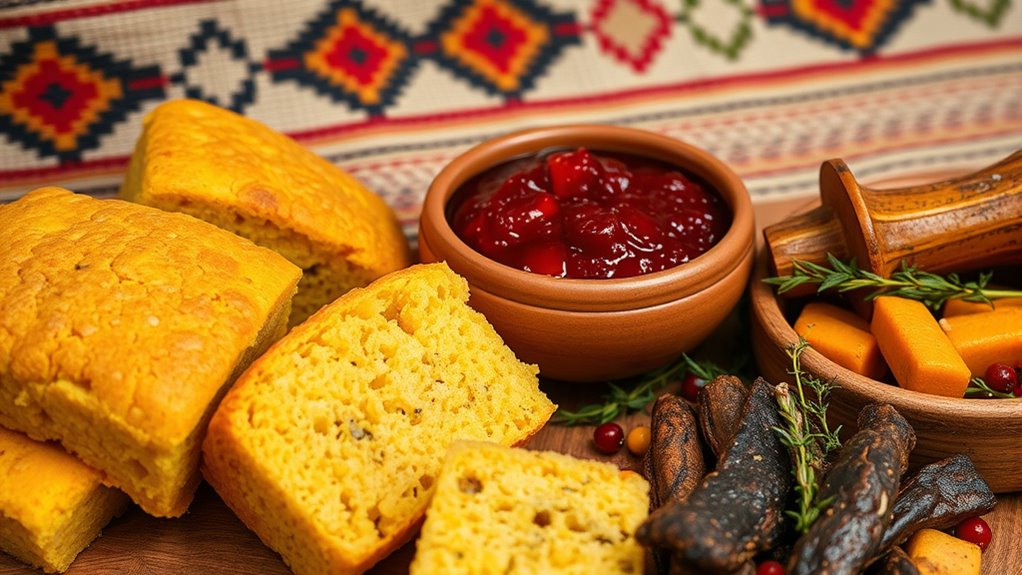
You’ll notice that Native American food practices rely heavily on local ingredients like game meats, corn, and beans. Traditional cooking methods, such as open-fire roasting and simple seasoning, still influence regional dishes today. Celebrations like harvest festivals highlight these foods and keep Native culinary traditions alive in South Dakota. These practices also reflect a deep respect for cultural heritage and the natural resources available to indigenous communities.
Indigenous Ingredients Use
How have Native American food practices shaped South Dakota’s culinary landscape? You notice how indigenous ingredients remain central to regional flavors. Native tribes introduced staple foods and preparation methods that persist today. You might find these ingredients in local dishes or celebrations, reflecting their importance. Some key indigenous ingredients include:
- Corn, used in cornbreads, pancakes, and hominy, symbolizing sustenance and cultural identity
- Wild game meats like buffalo, venison, and rabbit, often featured in stews and fry bread
- Seeds and nuts, such as sunflower seeds and acorns, incorporated into dishes or eaten as snacks
- Dried fruits like berries, adding flavor to desserts and trail mixes
- Cultural heritage continues to influence modern culinary practices, emphasizing the enduring legacy of Native traditions in South Dakota’s food scene.
Traditional Cooking Techniques
Native American communities have passed down cooking techniques that remain influential in South Dakota’s culinary landscape today. You can still see these methods in traditional dishes, often prepared over open fires or using simple tools. Rock heating, where stones are heated in a fire and then used to cook food in a pouch or directly on the stones, is a common technique. You might also encounter smoking meats or drying foods in the sun, which preserve ingredients for later use. Many dishes feature corn, beans, and game meats, prepared with minimal seasoning to highlight natural flavors. These techniques emphasize resourcefulness and respect for the ingredients, creating hearty, flavorful meals that connect present-day South Dakota to its Native American roots. Additionally, these traditional methods foster a deep cultural connection that continues to influence contemporary culinary practices.
Native Food Celebrations
Celebrations honoring Native American food traditions play a vital role in South Dakota’s cultural gatherings, highlighting the rich culinary heritage of indigenous communities. During these events, you might see traditional foods prepared with age-old techniques, emphasizing connection to the land. You could witness:
- Open-fire roasting of game meats like venison and bison
- Cornmeal dishes such as cornbread or frybread
- Dried corn used in stews or ground into mush
- Traditional dishes like wild rice pilaf or berry desserts
These celebrations often include storytelling, dances, and singing, reinforcing cultural identity. The focus remains on communal sharing of foods rooted in Native practices, celebrating the history and resilience of tribes. This vibrant culinary expression preserves ancestral flavors and techniques in contemporary South Dakota.
Pioneer and Cowboy Food Traditions in South Dakota

You can see that pioneer and cowboy meals in South Dakota centered on simple, hearty ingredients like meat, potatoes, and beans. Open-fire cooking was essential, giving dishes a smoky flavor and rustic appeal. These meals were designed to fuel hard labor, with minimal seasoning and straightforward preparation methods.
Rustic Meal Components
Rustic meal components form the backbone of pioneer and cowboy food traditions in South Dakota, reflecting a practical approach to sustenance during long, hard days. You often rely on hearty, simple ingredients that provide energy and durability. Meals typically include:
- Thick cuts of beef or game cooked over open flames
- Root vegetables like potatoes and carrots, stored and cooked easily
- Beans and dried legumes for lasting nourishment
- Strong black coffee to stay alert and warm
- These meals are designed to be portable and easy to prepare, ensuring they can be quickly made in the rugged frontier environment.
Open-Fire Cooking Techniques
Open-fire cooking remains a defining feature of pioneer and cowboy food traditions in South Dakota, bringing a raw, hands-on approach to preparing hearty meals. You’ll find yourself tending to an open flame, whether it’s a campfire or a hearth, to cook everything from thick steaks to simple stews. Using cast iron pots and skewers, you can build a robust flavor that only direct heat can provide. You might toss potatoes and vegetables directly into the flames or cook meats slowly over glowing embers for tender, smoky results. Seasoning is minimal, letting the fire’s natural flavors shine. This method requires patience and skill but rewards you with rustic, satisfying dishes that connect you to the frontier spirit and the rugged landscape of South Dakota. Understanding proper fire management techniques can enhance your cooking experience and safety when working with open flames.
Regional Specialty Foods and Local Beverages

South Dakota’s regional specialty foods and local beverages reflect a rich tapestry of cultural influences and practical traditions. You’ll find hearty, flavorful dishes that showcase local ingredients and immigrant legacies. For example:
- Chislic, skewered and fried meat, seasoned with garlic salt and enjoyed across the state.
- German-Russian potato strudel and knoephla soup, hearty dishes rooted in immigrant farming communities.
- Native American staples like cornmeal pancakes and dried corn, prepared using traditional methods.
- Pioneer and cowboy favorites such as thick steaks, biscuits, and beans, cooked simply over open fires.
Local breweries and distilleries add regional drinks like craft beers and flavored spirits. These foods and beverages reflect South Dakota’s diverse history and resourcefulness.
The Influence of Multicultural Communities on South Dakota’s Cuisine
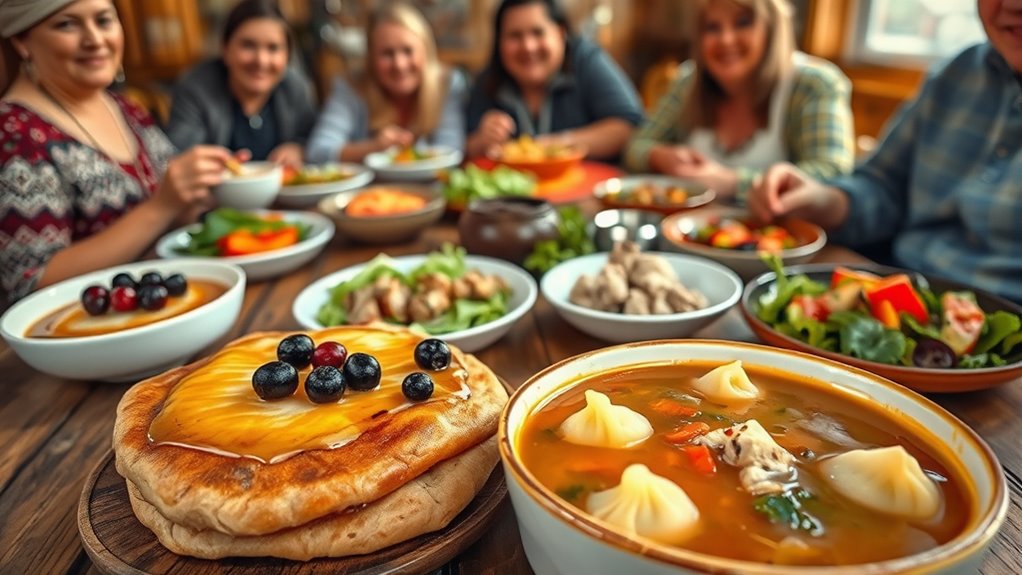
Multicultural communities have profoundly shaped South Dakota’s culinary landscape, blending diverse traditions into a unique regional identity. You’ll find German-Russian influences evident in hearty potato and noodle dishes like knoephla soup and potato strudel, reflecting their farming roots. Native American ingredients such as corn and game meats are woven into local recipes, showcasing centuries-old techniques like open-fire cooking. The Black Hills area reflects Irish, Scottish, and Welsh heritage through hearty stews and pub-style fare, brought by early immigrants during the gold rush. Pioneer and cowboy traditions contribute simple, robust meals like chuckwagon dinners with meat, potatoes, and beans. Additionally, understanding culinary history helps explain how these diverse influences have persisted and evolved over time. Today, these multicultural roots continue to influence South Dakota’s cuisine, creating a vibrant, diverse food scene that celebrates its rich immigrant, Native, and frontier heritage.
Frequently Asked Questions
How Has South Dakota’s Climate Influenced Its Traditional Ingredients?
South Dakota’s climate, characterized by harsh winters and short growing seasons, shapes your traditional ingredients by emphasizing hearty, preserved foods. You rely on locally available game meats, dried corn, and root vegetables that withstand cold storage. These climate influences encourage simple, robust dishes like Knoephla soup and dried corn, helping you sustain through tough seasons. The climate’s demands foster a resilient culinary culture rooted in preservation and resourcefulness.
What Role Do Festivals Play in Preserving Local Culinary Traditions?
Festivals play a crucial role in preserving South Dakota’s culinary traditions by showcasing local dishes and celebrating cultural heritage. You get to experience authentic foods like chislic, hearty stews, and Native American favorites, which helps keep these recipes alive. Participating in festivals also allows you to learn cooking techniques, share stories, and connect with communities, ensuring these culinary customs continue to thrive and evolve for future generations.
Are Vegetarian or Vegan Options Common in South Dakota Cuisine?
Vegetarian and vegan options are becoming more common in South Dakota, especially in urban areas and trendy restaurants. You’ll find plant-based dishes inspired by local ingredients and immigrant influences, like hearty vegetable stews or farm-fresh salads. While traditional cuisine mainly emphasizes meat, modern eateries are increasingly offering vegetarian and vegan choices to accommodate diverse dietary preferences, making it easier for you to enjoy regional flavors without meat.
How Do Modern Chefs Incorporate Traditional South Dakota Dishes?
Imagine a chef in a modern kitchen, blending history with innovation. They incorporate traditional South Dakota dishes by using authentic ingredients like chislic or knoephla soup, then giving them a fresh twist—perhaps a gluten-free batter or plant-based meat alternatives. You’ll find these chefs respecting regional flavors while experimenting with presentation and dietary needs, creating dishes that honor the past while appealing to today’s diverse tastes.
What Are Some Lesser-Known Regional Dishes Beyond Chislic?
You should explore lesser-known South Dakota dishes like potato strudel, a hearty, baked pastry filled with potatoes, or Knoephla soup, a creamy German-Russian stew with dumplings. Pheasant salad sandwiches, made from local game, offer a unique twist. Don’t forget traditional pioneer foods like thick-cut steaks cooked over open fires or simple chuckwagon meals of meat, potatoes, and beans. These dishes reflect the state’s diverse culinary heritage and rustic roots.
Conclusion
You might be surprised to learn that over 20% of South Dakota’s population claims German or Russian ancestry, shaping its hearty cuisine. From chislic to Native American ingredients, your culinary journey here is a blend of traditions and flavors. Embrace these diverse influences, and you’ll experience a region where history and culture serve up a truly unique taste of the Great Plains. South Dakota’s food scene is as rich and varied as its history itself.