

Rhode Island’s history is rich with Native American roots, early colonial settlements, and a strong tradition of religious tolerance, exemplified by landmarks like Brown University and Touro Synagogue. Its people fought for independence during the Revolutionary War, and the state became known for social progress, including women’s voting rights. Today, Rhode Island balances historic preservation with vibrant urban growth. To explore how these elements shape its unique culture, there’s much more to uncover.
Key Takeaways
- Rhode Island was founded on principles of religious tolerance and self-governance, exemplified by the 1663 Royal Charter and early educational institutions.
- Native American tribes, especially the Narragansett, played a crucial role in the region’s history, resisting colonization and influencing land treaties.
- The state has a legacy of social progress, including pioneering integrated military units and granting women voting rights in 1917.
- Cultural landmarks like Brown University, Touro Synagogue, and Newport Mansions reflect Rhode Island’s diverse heritage and historical development.
- Modern Rhode Island emphasizes sustainability, diversity, and social justice, maintaining core values of religious freedom and inclusion.
Top picks for "history culture rhode"
Open Amazon search results for this keyword.
As an affiliate, we earn on qualifying purchases.
Early Inhabitants and Settlements

Before European settlers arrived, the area now known as Rhode Island was home to Indigenous peoples, most notably the Narragansett tribe. You would have encountered their villages along the coast and inland, where they thrived through fishing, hunting, and agriculture. The Narragansett people built sturdy longhouses and relied on a rich oral tradition to pass down stories and customs. When Roger Williams arrived in 1636, he negotiated land from the Narragansett, leading to the founding of Providence. Newport was established in 1639 by William Coddington, who sought a haven from Massachusetts’ strict religious rules. These early Native settlements and their relationships with settlers shaped Rhode Island’s initial development, setting the foundation for the colony’s diverse cultural history. Vetted
Colonial Governance and Territorial Boundaries
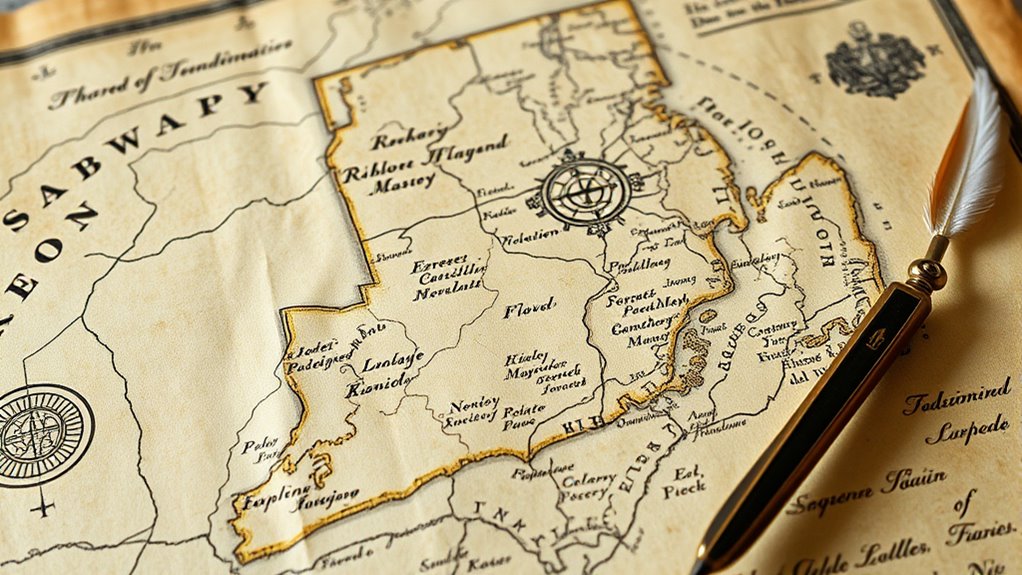
You can see how Rhode Island’s colonial governance was shaped by its royal charter of 1663, which granted it self-rule and religious freedom. Throughout its history, boundary disputes with neighboring colonies like Massachusetts and Connecticut prompted territorial adjustments and negotiations. These conflicts reveal how Rhode Island carefully defended its borders while maintaining its independence during the colonial period.
Colonial Charters and Rights
How did Rhode Island establish its political independence and territorial boundaries during colonial times? You realize that Rhode Island’s independence came from its 1663 Royal Charter granted by King Charles II. This document guaranteed religious freedom and self-governance, serving as the colony’s constitution until 1842. When neighboring colonies like Massachusetts and Connecticut laid claim to parts of Rhode Island, disputes arose, but Rhode Island resisted losing its territory, often hiding its charter to protect its rights. The colony also refused to submit to the Dominion of New England from 1686 to 1689, maintaining its autonomy. Throughout colonial times, Rhode Island’s leadership, such as Governor Richard Ward, worked to defend its boundaries, ensuring the colony’s independence and territorial integrity amid ongoing conflicts and disputes. High contrast ratios played a key role in the colony’s ability to maintain its visual identity and assert its sovereignty in conflicts over territory.
Boundary Disputes and Adjustments
During colonial times, Rhode Island actively defended its territorial boundaries amid frequent disputes with neighboring colonies like Massachusetts and Connecticut. These disagreements often centered on land claims and jurisdiction, prompting negotiations and legal battles. Rhode Island consistently sought to protect its independence, resisting attempts by larger colonies to assert control. Boundary adjustments were common, with settlements reached through meetings and treaties, such as those involving Richard Ward in 1726. Rhode Island also worked to assert its borders by reinforcing its claims during conflicts, like the disputes over Aquidneck Island and Narragansett territory. Despite these challenges, Rhode Island maintained its sovereignty and expanded its borders through negotiations and legal means, ensuring its distinct identity within the colonial landscape. Studies show that boundary disputes could impact the stability and growth of colonies, making resolution strategies critical to colonial governance.
Native American Relations and Conflicts

You see that Native alliances and guardians played a key role in Rhode Island’s history, with leaders like Richard Ward acting as protectors for sachems such as Ninigret. However, King Philip’s War in 1675 devastated Native communities, weakening their power and leading to widespread displacement. The conflict’s aftermath opened more land for settlers and marked a turning point in Native American relations in the region. Additionally, efforts to preserve indigenous cultures have become vital in understanding the full scope of Rhode Island’s history.
Native Alliances and Guardians
Native American tribes, particularly the Narragansett, held significant influence over Rhode Island’s early history, forging alliances and resisting colonial encroachment. You see, they often acted as guardians of their land and people, forming strategic partnerships to protect their sovereignty. During the 17th and 18th centuries, tribes like the Narragansett and Ninigret’s sachemship worked to maintain their culture and autonomy amid growing colonial pressure. These tribes also worked to preserve their cultural identity through traditions and negotiations. They negotiated land treaties, sometimes securing concessions or recognition of their rights. Native leaders acted as guardians, mediating between settlers and their communities. Some tribes allied with colonial powers during conflicts, aiming to strengthen their position. These alliances shaped Rhode Island’s complex history of Native resilience and adaptation.
Impact of King Philip’s War
King Philip’s War in 1675 profoundly reshaped Rhode Island’s Native American relations by decimating the Narragansett and other tribes’ power in the region. The war, marked by brutal battles like the Great Swamp Fight, led to devastating losses for Native communities, including many killed or sold into slavery. Native resistance was broken, and Native territories shrank markedly, opening the way for increased English settlement. You’ll find that after the war, the colony appointed trustees to oversee Native sachems like Ninigret, but Native influence waned. Many Narragansett warriors faced captivity or slavery, and Native presence in Rhode Island diminished. The war’s aftermath left lasting scars, transforming Native-American relations from alliances and resistance to marginalization and subjugation, profoundly shaping the region’s social and political landscape. Additionally, the conflict resulted in a significant decline in indigenous populations, which further diminished Native communities’ ability to resist colonial encroachment.
The Revolutionary War and Its Impact
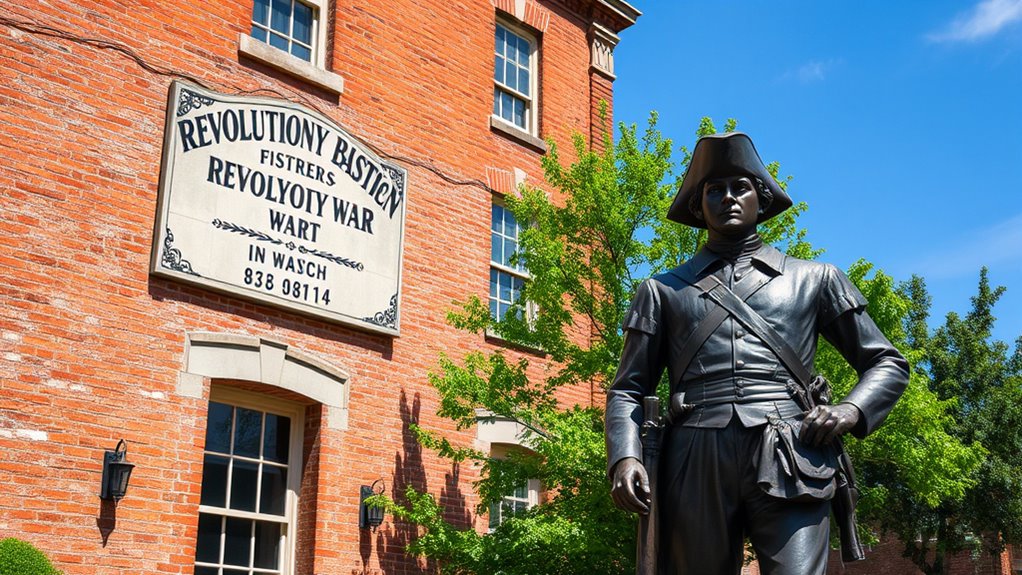
How did Rhode Island’s early actions during the Revolutionary War shape its future? Your state’s bold stance helped define its independence and resilience. Rhode Island ratified the Declaration of Independence on July 18, 1776, showing early support for rebellion against Britain. The Burning of the Gaspee in 1772 demonstrated fierce opposition to British naval enforcement, inspiring patriotism. Rhode Island also formed the 1st Rhode Island Regiment in 1778, notable as the first integrated unit with African American and Native American soldiers. The state’s commitment to zodiac sign principles of equality and resistance contributed to its reputation as a fiercely independent and progressive state. Key impacts include:
- Strengthening local resistance and unity against British forces
- Establishing a tradition of political activism and independence
- Promoting early efforts toward racial equality in military service
These actions laid the groundwork for Rhode Island’s future identity as a fiercely independent and progressive state.
Foundations of Education and Religious Tolerance
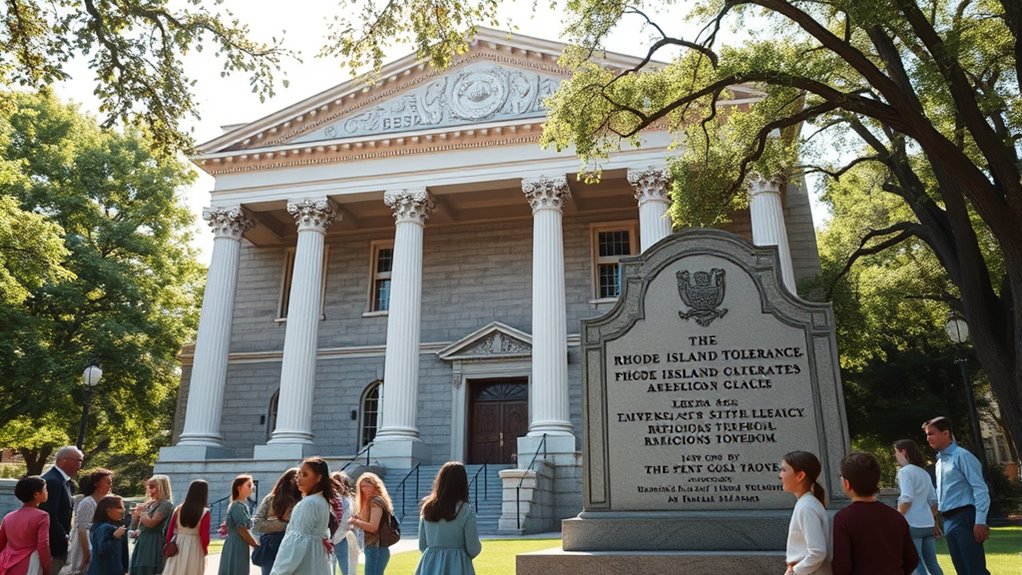
Rhode Island’s commitment to education and religious tolerance has deep roots that shaped its society from the very beginning. When Roger Williams founded Providence in 1636, he promoted religious freedom and the separation of church and state, values that became central to the colony’s identity. The colony’s 1663 Royal Charter guaranteed religious liberty, allowing diverse faiths to flourish. Rhode Island also pioneered education with the establishment of Brown University in 1764, emphasizing accessible learning. The Touro Synagogue in Newport, built in 1763, stands as a testament to religious tolerance, welcoming different faiths. These foundations fostered an environment where individuals could pursue knowledge and practice their beliefs freely, laying a lasting groundwork for the state’s progressive social values. Additionally, the emphasis on religious freedom has continued to influence Rhode Island’s inclusive culture today.
Cultural Landmarks and Social Progress

Cultural landmarks in Rhode Island highlight the state’s rich history and ongoing commitment to social progress. These sites reflect the evolving values and diverse communities that shape Rhode Island today. You can visit:
Rhode Island’s cultural landmarks showcase its rich history and ongoing pursuit of social progress.
- Touro Synagogue in Newport, symbolizing religious tolerance since 1763.
- Brown University, established in 1764, representing educational progress and intellectual freedom.
- The Newport Mansions, like the Vanderbilt estate, showcasing the state’s cultural and economic development in the late 19th century.
These landmarks embody Rhode Island’s dedication to preserving its history while advancing social change. They stand as testaments to the state’s efforts in promoting religious freedom, education, and cultural diversity. By visiting these sites, you witness how Rhode Island celebrates its past and endeavors for a more inclusive future.
Economic Shifts and Urban Development

Economic shifts have transformed Rhode Island’s urban landscape over the past century, shifting its economy from manufacturing and shipping to technology, healthcare, and education. As industries like textiles and shipbuilding declined, cities like Providence and Newport reimagined their roles. You’ll see revitalized waterfronts, modern office complexes, and tech hubs replacing old docks and factories. Providence’s downtown experienced significant renewal with new colleges, healthcare centers, and cultural venues emerging. Newport, once a bustling seaport, now attracts tourism and luxury living, fueling urban growth. These transformations have spurred population shifts, gentrification, and infrastructure upgrades. You’re witnessing a city adapting to new economic realities while honoring its historic roots, creating vibrant urban spaces that blend modern innovation with Rhode Island’s rich maritime and cultural legacy. Additionally, these economic transitions have led to a shift in urban planning strategies, emphasizing sustainable development and historic preservation.
Modern Political Achievements and Social Movements
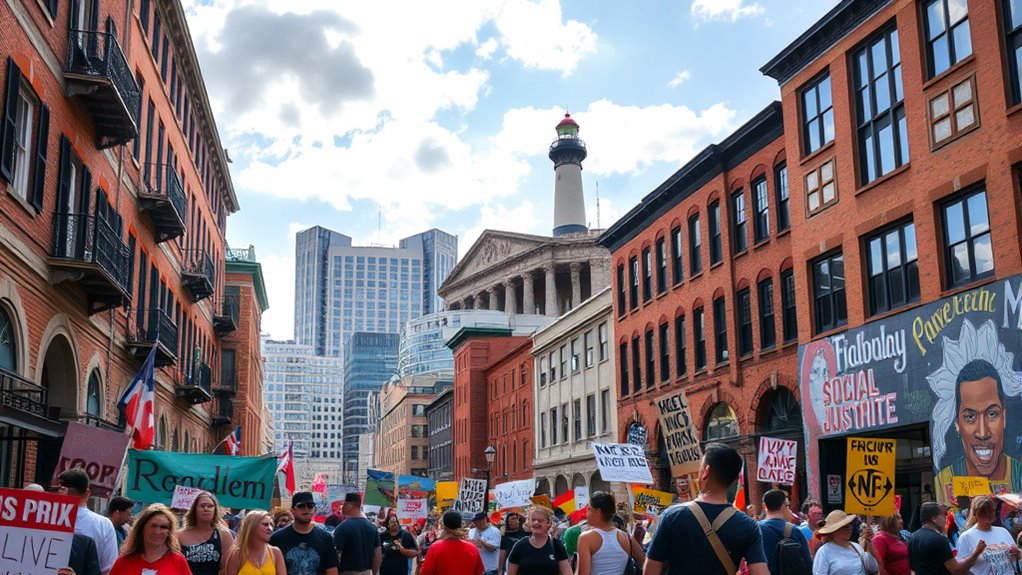
In recent decades, Rhode Island has made significant strides in advancing political representation and social equality. You’ll see this progress reflected in various achievements. For example:
- Women gained the right to vote in presidential elections in 1917, leading to increased gender equality.
- Providence’s waterfront redevelopment in the 1980s and 1990s revitalized the economy and promoted inclusive urban growth.
- Gina Raimondo’s election as the first female governor symbolizes gender progress in state leadership.
- The state has also implemented policies to support reliable power and ensure resilient infrastructure during emergencies.
These milestones show Rhode Island’s commitment to social justice and political reform. You can also recognize the state’s efforts to preserve historic sites and promote diversity through social movements and policy changes. Overall, Rhode Island continues to evolve, shaping a more inclusive and equitable future.
Frequently Asked Questions
How Did Rhode Island Maintain Its Independence During Colonial Conflicts?
You can see Rhode Island maintained its independence during colonial conflicts by fiercely defending its charter and resisting outside control. When the Dominion of New England threatened its self-governance, colonists hid their charter to prevent revocation. They also actively opposed territorial disputes and rebellions, like resisting British authority during the Revolution. These actions helped Rhode Island preserve its autonomy and uphold its rights against larger colonial powers.
What Role Did Rhode Island Play in Early American Abolition Movements?
They say actions speak louder than words, and Rhode Island’s role in abolition proves this. You see, Rhode Island was an early supporter of anti-slavery efforts, passing a gradual emancipation law in 1784. Though enforcement was weak initially, the colony’s progressive stance laid the groundwork for future abolition. By standing against slavery, Rhode Island showed that even small steps can make a big difference in the fight for freedom.
How Did Native American Tribes Influence Rhode Island’s Cultural Heritage?
Native American tribes, especially the Narragansett, markedly shape Rhode Island’s cultural heritage. You can see their influence in local traditions, place names, and historical sites like the Touro Synagogue. Their resilience and interactions with settlers fostered a sense of identity rooted in Native history and culture. You’ll find that Native stories, art, and heritage continue to inform Rhode Island’s community values and celebrations today, highlighting enduring Native contributions.
What Are Unique Traditions Associated With Rhode Island’s Maritime History?
You can experience Rhode Island’s maritime traditions through activities like sailing and yachting, reflecting its rich nautical history. Attend events such as the Newport Folk Festival and watch traditional boat races like the New York Yacht Club races. Explore historic lighthouses, seafood festivals, and maritime museums that showcase local shipbuilding and fishing heritage. These traditions celebrate Rhode Island’s deep connection to the sea, fostering community pride and preserving its maritime legacy.
How Has Rhode Island’s Diverse Religious History Shaped Its Modern Society?
Your modern society in Rhode Island is deeply shaped by its diverse religious history. You see this in the state’s strong commitment to religious tolerance, exemplified by the Touro Synagogue and early laws promoting freedom of worship. This diversity fosters an inclusive culture where different faiths coexist peacefully, influencing social values, politics, and community life. It encourages open dialogue and respect, making Rhode Island a place that celebrates religious freedom and diversity.
Conclusion
As you explore Rhode Island’s rich tapestry, you see how its history gently unfolds like a timeless mural, blending diverse colors of culture, resilience, and progress. From its humble beginnings to modern achievements, the state’s story whispers of growth and harmony. You can imagine the waves of change softly shaping its shores, guiding it toward a future where tradition and innovation dance together in a graceful balance. Rhode Island’s legacy continues to softly inspire those who walk its storied streets.