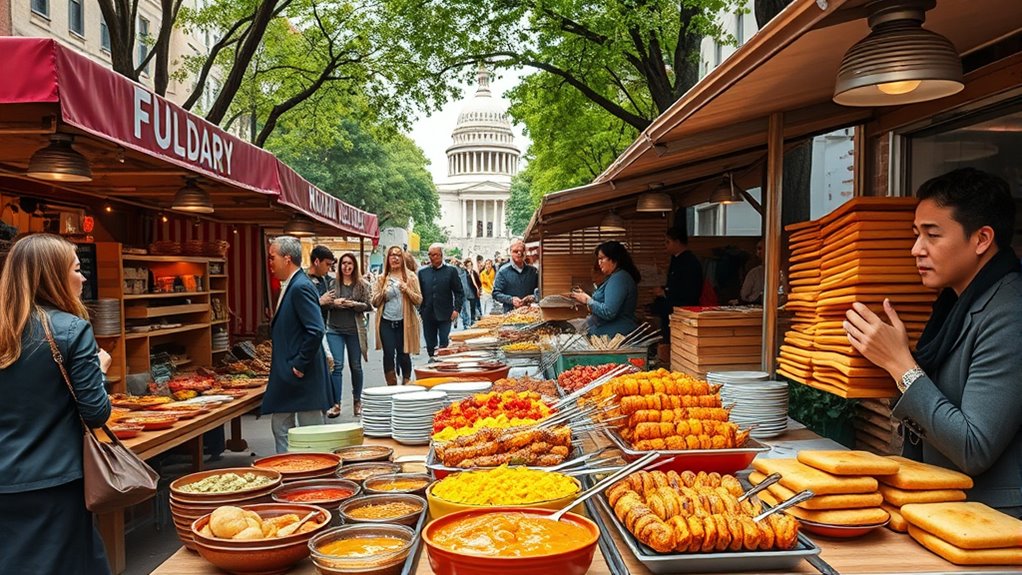

Washington D.C.’s culinary scene reflects a rich history rooted in diverse communities and social movements. You’ll find iconic landmarks like Ben’s Chili Bowl and Old Ebbitt Grill, which tell stories of resilience and political history. Modern trends blend traditional flavors with innovative techniques, emphasizing sustainability and multicultural influences. Local eateries serve as community hubs, preserving traditions while embracing new culinary ideas. Continue exploring, and you’ll discover how D.C.’s food culture celebrates its vibrant, evolving identity.
Key Takeaways
- Washington D.C.’s culinary scene is a blend of traditional American, soul food, and diverse fusion cuisines reflecting its multicultural heritage.
- Historically significant Black-owned restaurants like Ben’s Chili Bowl symbolize resilience and civil rights activism.
- Local eateries serve as cultural landmarks, preserving social and historical narratives through their menus and community roles.
- Modern trends emphasize farm-to-table practices, sustainability, and innovative fusion dishes integrating global influences.
- Food festivals, celebrity chefs, and historic venues celebrate D.C.’s rich culinary diversity and evolving traditions.
Historical Influences Shaping D.C.’s Food Scene
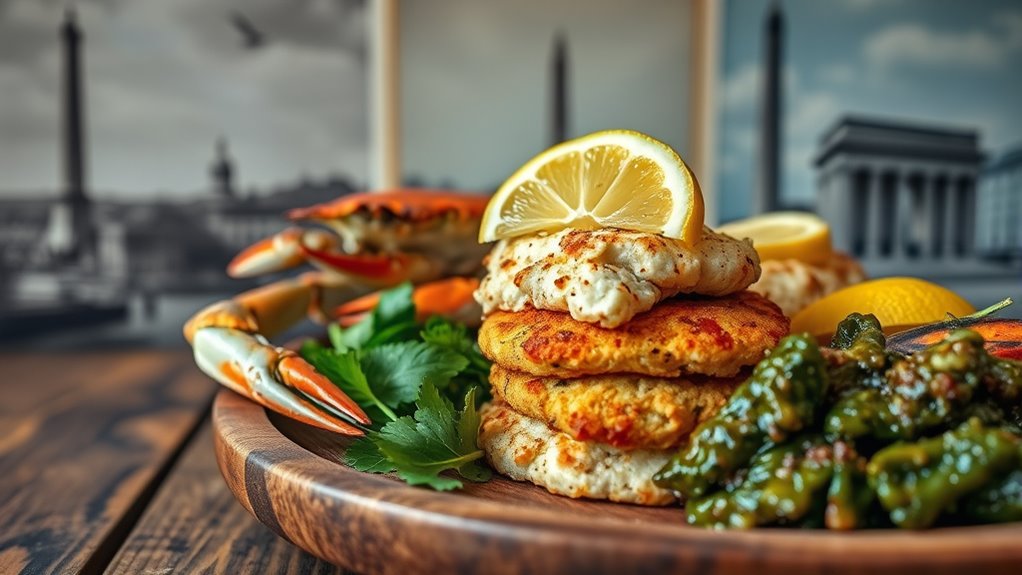
Washington D.C.’s food scene has been deeply shaped by its rich history, reflecting both political and social changes over the centuries. You’ll find that early establishments served as social hubs for politicians and citizens alike, shaping the city’s culinary identity. During segregation, African American-owned restaurants like Harrison’s and Cecilia’s emerged, fostering community and resilience. The city’s multicultural environment brought international flavors into its cuisine, creating a diverse palette for your dining experiences. Prohibition forced many venues to adapt, giving rise to informal eateries that still influence modern dining. Today, the farm-to-table movement emphasizes local sourcing, connecting you to D.C.’s agricultural roots. Incorporating authentic rustic decor and traditional cooking methods, the city’s culinary landscape continues to honor its historical influences. These historical influences blend to give Washington D.C. a vibrant, evolving culinary landscape rooted in its complex past.
Iconic Culinary Landmarks and Their Stories

Many of the city’s most celebrated culinary landmarks tell stories of its rich history and cultural evolution. When you visit Old Ebbitt Grill, you step into a space that’s hosted presidents, journalists, and socialites since 1856, reflecting D.C.’s political and social past. Ben’s Chili Bowl, opened in 1958, stands as a symbol of resilience and civil rights, famous for its half-smokes and community role during social movements. Union Market has transformed from a traditional farmers’ market into a vibrant hub showcasing diverse foods that mirror D.C.’s multicultural identity. Harvey’s Restaurant, known for serving steamed oysters to President Lincoln, highlights the city’s historical ties to presidential history. These landmarks aren’t just places to eat; they’re living stories that embody D.C.’s evolving culinary and cultural landscape. Understanding emotional support can deepen our appreciation for how community spaces foster connections and resilience amid change.
Modern Food Trends Defining the Capital’s Cuisine
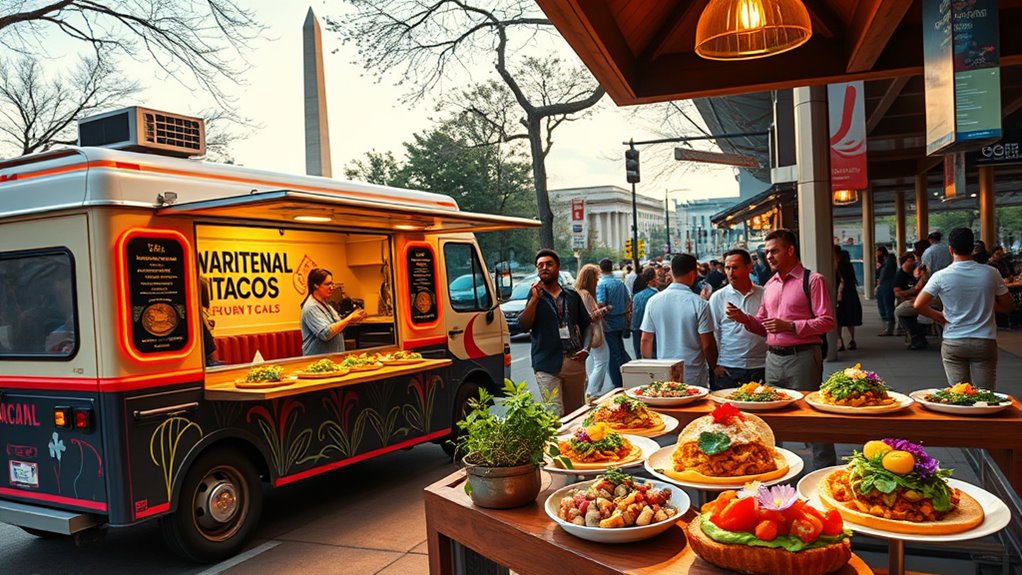
You’ll notice that many restaurants in D.C. focus on farm-to-table practices, highlighting locally sourced ingredients to keep flavors fresh and support the community. Fusion cuisine is also thriving, blending diverse cultural influences into innovative dishes that reflect the city’s multicultural vibe. Sustainable dining practices are becoming a standard, with chefs prioritizing eco-friendly methods to promote environmental responsibility. Additionally, some establishments incorporate elements of spiritual energy, such as mindful food preparation and presentation, to enhance diners’ overall experience.
Farm-to-Table Emphasis
The farm-to-table movement has become a defining trend in D.C.’s culinary scene, emphasizing fresh, locally sourced ingredients that highlight the region’s agricultural bounty. You’ll notice restaurants prioritizing ingredients from nearby farms, ensuring dishes are seasonal and sustainable. This focus supports local farmers and reduces environmental impact, aligning with the city’s commitment to sustainability. When you dine at these establishments, you experience vibrant flavors that reflect the season’s best produce. Chefs often work directly with farmers, creating menus that adapt to what’s available. This approach fosters a deeper connection between diners and the region’s agriculture. Additionally, many restaurants incorporate mindful decluttering principles by streamlining their kitchens and ingredient lists to focus on quality over quantity. By choosing farm-to-table options, you help promote responsible practices while enjoying authentic, high-quality meals rooted in D.C.’s local landscape.
Fusion Cuisine Innovation
Fusion cuisine innovation has become a hallmark of Washington D.C.’s vibrant culinary scene, as chefs blend diverse cultural influences to create exciting, boundary-pushing dishes. You’ll find restaurants experimenting with flavors from Asia, Africa, Latin America, and Europe, all in one plate. This creativity pushes traditional boundaries, making dining in D.C. an adventure.
Here’s what you can expect:
- Creative sushi rolls combining Latin and Asian flavors
- Tacos with Mediterranean-inspired fillings
- Spicy Ethiopian-inspired barbecue sauces
- Modern takes on soul food with international spices
- Fusion desserts blending Asian and Western ingredients
These innovations reflect the city’s multicultural vibe, inspiring chefs to reimagine what’s possible. Whether you’re a foodie or a casual diner, you’ll experience a dynamic culinary landscape that celebrates diversity and creativity.
Sustainable Dining Practices
Sustainable dining practices have become a defining feature of Washington D.C.’s modern culinary scene, as chefs and restaurateurs prioritize environmentally responsible choices. You’ll notice many restaurants sourcing ingredients locally, reducing their carbon footprint and supporting nearby farmers. These establishments often emphasize seasonal menus that adapt to what’s fresh and available, minimizing waste. You’re also likely to see eco-friendly packaging and energy-efficient appliances in use. Many chefs incorporate plant-based dishes, recognizing their lower environmental impact. D.C.’s food scene encourages transparency about sourcing and sustainability efforts, empowering you to make conscious dining decisions. This shift not only benefits the environment but also enhances flavor and freshness, reflecting the city’s commitment to innovative, responsible cuisine. Additionally, the focus on sustainable practices promotes a deeper connection between diners and the origins of their food.
Cultural Significance and Community Impact of Local Eateries
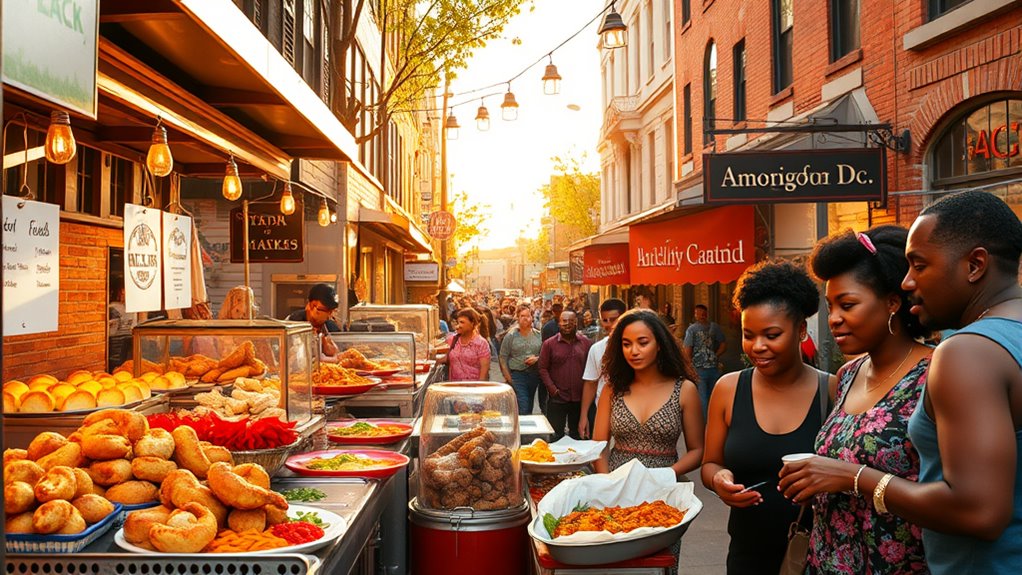
You can see how local eateries in D.C. serve as essential community gathering spots that foster connection and identity. These restaurants also preserve the city’s rich cultural heritage, celebrating its diverse traditions and histories. Additionally, they have played pivotal roles in social movements, shaping the city’s history and ongoing community efforts. The culinary traditions of Washington D.C. are deeply rooted in regional comfort food that reflects the city’s unique historical and cultural landscape.
Community Gathering Spaces
Many local eateries in Washington, D.C., serve as essential community gathering spaces that foster social connections and cultural identity. These spots aren’t just places to eat—they’re where stories are shared, histories are celebrated, and traditions are passed down. When you visit, you’ll find that establishments like Ben’s Chili Bowl or Union Market become social hubs, bringing people together from diverse backgrounds. They offer more than food; they create a sense of belonging and community pride. These spaces often host events, support local artists, and serve as venues for important conversations. Whether you’re grabbing a quick bite or spending hours with friends, you feel the city’s heartbeat in these lively, welcoming environments.
- Sharing local stories over coffee or drinks
- Celebrating cultural festivals and events
- Supporting neighborhood artists and vendors
- Building lifelong friendships and networks
- Keeping traditions alive through communal meals
Cultural Heritage Preservation
Local eateries in Washington, D.C., do more than serve food—they preserve the city’s rich cultural heritage and shape community identity. These establishments act as living monuments to your city’s history, reflecting its diverse roots and social struggles. Places like Ben’s Chili Bowl and Old Ebbitt Grill have endured generations, maintaining traditions while adapting to modern tastes. They foster a sense of belonging, connecting residents and visitors through shared stories and experiences. These eateries often commemorate significant moments, honoring civil rights, social movements, and local legends. By supporting and visiting these restaurants, you help sustain their legacy, ensuring that D.C.’s culinary history remains vibrant and accessible for future generations. Your patronage keeps cultural heritage alive and strengthens community bonds. Recognizing the unique dog breeds celebrated in the city can also deepen your appreciation for its diverse cultural fabric.
Social Movement Roles
Restaurants in Washington, D.C. have long served as powerful platforms for social change and community solidarity. You’ll find many eateries that have played key roles in social movements and cultural identity. These establishments bring people together, foster dialogue, and support community resilience. For example:
- Ben’s Chili Bowl became a symbol of civil rights and racial unity.
- Historic venues like the Epicurean Eating House witnessed social unrest and progress.
- African American-owned restaurants provided safe spaces during segregation.
- Food festivals celebrate cultural diversity and promote inclusion.
- Many local spots preserve culinary traditions tied to social and political history.
- The impact of color accuracy and contrast ratios in visual presentations underscores the importance of authentic representation in community storytelling and cultural preservation.
Key Events That Have Molded D.C.’s Culinary Heritage
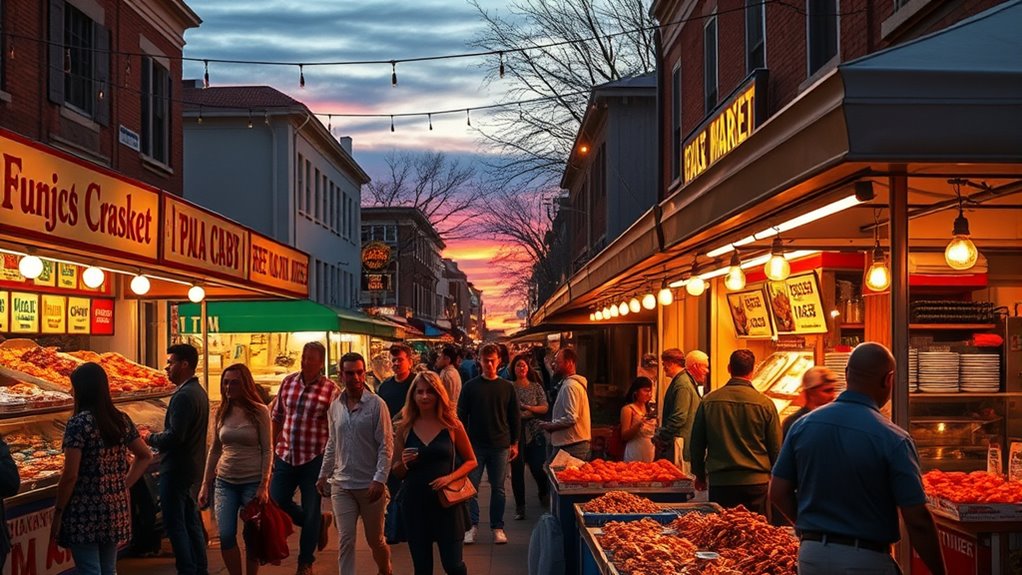
Key events have played a pivotal role in shaping Washington D.C.’s rich culinary heritage, reflecting its social, political, and cultural evolution. The Snow Riot of 1835 targeted African American businesses, including the Epicurean Eating House, highlighting racial tensions. The Prohibition era pushed citizens toward informal eateries and speakeasies, altering dining habits. The Civil Rights Movement saw restaurants like Ben’s Chili Bowl become community hubs for social change. Additionally, presidential visits and events boosted the prominence of establishments like Harvey’s Restaurant and Old Ebbitt Grill. These moments fostered resilience, cultural identity, and innovation in D.C.’s food scene. The table below summarizes key influences:
| Event | Impact |
|---|---|
| Snow Riot of 1835 | Racial tensions affected business landscape |
| Prohibition Era | Shift to informal dining and speakeasies |
| Civil Rights Movement | Destigmatized Black-owned restaurants |
| Presidential Visits | Elevated local restaurants’ prominence |
| Urban Development | Modernization and diversification of food options |
A new sentence with culinary influences and the rest of the sentence.
The Vibrant and Diverse Contemporary Dining Landscape

The culinary scene in Washington D.C. has blossomed into a vibrant tapestry that reflects its rich history and dynamic cultural makeup. You’ll find an exciting mix of modern innovations and traditional flavors, creating a food landscape that’s constantly evolving. Chefs incorporate contemporary techniques, experiment with fusion cuisines, and emphasize sustainability through farm-to-table practices. D.C. offers diverse options—from Mediterranean and Asian fusion to classic American bistros—ensuring there’s something for everyone. Food festivals and pop-up events celebrate the city’s multicultural roots, bringing communities together. Innovative eateries, celebrity chefs, and local favorites blend the old with the new, making D.C.’s dining scene both exciting and meaningful. You’re invited to explore its ever-changing, flavorful landscape. Leadership skills like collaboration and adaptability are increasingly valued in today’s culinary industry as chefs and restaurateurs navigate a competitive environment.
Notable Chefs and Food Festivals Celebrating D.C.’s Flavors
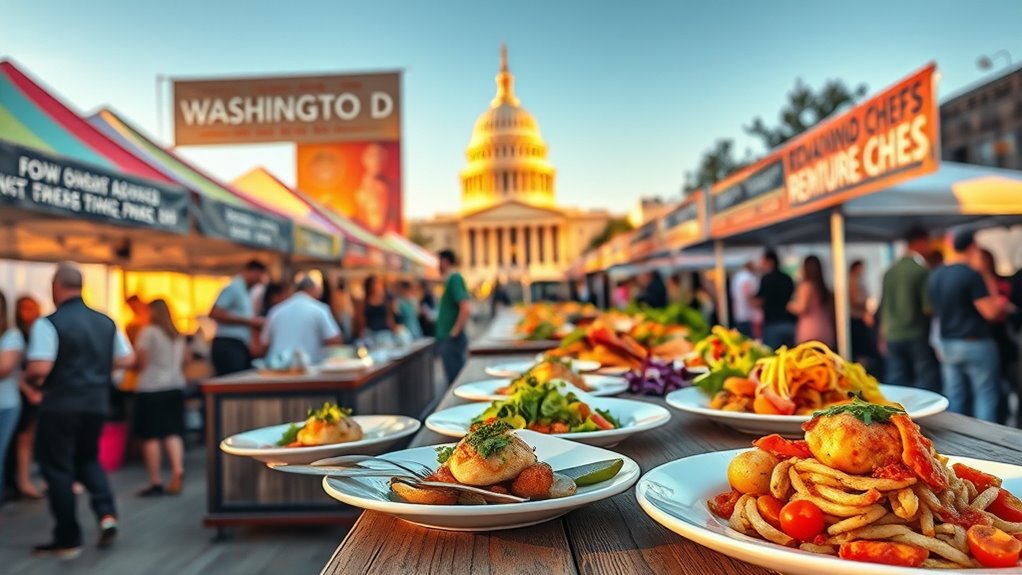
Washington D.C.’s culinary scene shines brightly thanks to its innovative chefs and lively food festivals that celebrate the city’s diverse flavors. You can meet influential chefs like Kwame Onwuachi, known for blending African and American cuisines, or participate in festivals such as the D.C. Food and Wine Festival, which showcases local talent. These events highlight D.C.’s multicultural palate and rich history. Here’s a snapshot of notable chefs and festivals:
| Chef/Person | Specialty | Notable Event |
|---|---|---|
| Kwame Onwuachi | Modern American, fusion | D.C. Food & Wine Festival |
| Carla Hall | Soul Food, Southern | Taste of D.C. |
| José Andrés | Spanish, Tapas | D.C. Restaurant Week |
| Marcus Samuelsson | International Cuisine | Capital Food Fight |
| Anne Burrell | Italian, Classic Dishes | Chef’s Table D.C. |
This vibrant scene invites you to explore D.C.’s flavors firsthand.
Frequently Asked Questions
How Has D.C.’s Political History Influenced Its Culinary Development?
Your understanding of D.C.’s political history shows how it shaped its culinary scene. You see how historic establishments became social and political hubs, hosting influential figures and events. You notice how restaurants like Ben’s Chili Bowl grew alongside civil rights movements, reflecting social change. You also observe that politics inspired preservation efforts and innovative dining experiences, making food a essential part of D.C.’s cultural identity and ongoing political narrative.
What Role Do Immigrant Communities Play in Shaping D.C.’s Food Scene?
You’ll find that immigrant communities have profoundly shaped D.C.’s food scene, bringing rich flavors and diverse traditions. Their influence sparks a sense of unity, as you taste authentic dishes from Ethiopia, Vietnam, El Salvador, and more. These communities create vibrant eateries that foster cultural exchange, making the city’s culinary landscape dynamic and inclusive. Their contributions remind you that D.C.’s food is a reflection of its diverse, resilient people.
How Do Historic Events Like the Snow Riot Impact Current Culinary Practices?
You see, historic events like the Snow Riot of 1835 have shaped D.C.’s culinary practices by highlighting the importance of community and resilience. Today, restaurants honor this history by preserving cultural traditions and serving as gathering spaces for diverse communities. The city’s food scene reflects these past struggles, fostering inclusivity and social awareness, which continue to influence how chefs innovate and connect with their patrons through meaningful culinary experiences.
In What Ways Do Local Eateries Preserve African American Culinary Traditions?
You might think these eateries just serve food, but they’re guardians of history. By maintaining recipes, cooking techniques, and community stories, they keep African American culinary traditions alive. Every plate you enjoy at places like Ben’s Chili Bowl or local soul food spots connects you to a powerful cultural legacy. Their dedication preserves a rich heritage, ensuring future generations experience the flavors and stories that shaped D.C.’s vibrant history.
How Does Washington D.C. Integrate Sustainability Into Its Modern Food Culture?
You see Washington D.C. integrating sustainability into its food culture through a strong farm-to-table movement, where restaurants prioritize locally sourced ingredients. Chefs experiment with innovative techniques while supporting local farmers and reducing waste. You’ll notice many establishments emphasizing organic and seasonal produce, promoting environmental responsibility. This focus on sustainability helps preserve the city’s culinary integrity, enhances flavors, and fosters a community committed to eco-friendly practices across its vibrant and diverse dining scene.
Conclusion
Exploring D.C.’s culinary scene is like taking a flavorful journey through history and culture. From historic landmarks to vibrant festivals, each bite tells a story of community and tradition. As you dine here, you’ll discover a city where food is more than just sustenance—it’s a celebration of diversity and innovation. So, plunge in and savor every moment, just like a rich, colorful tapestry waiting to be unraveled with each delicious bite.