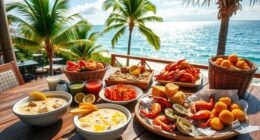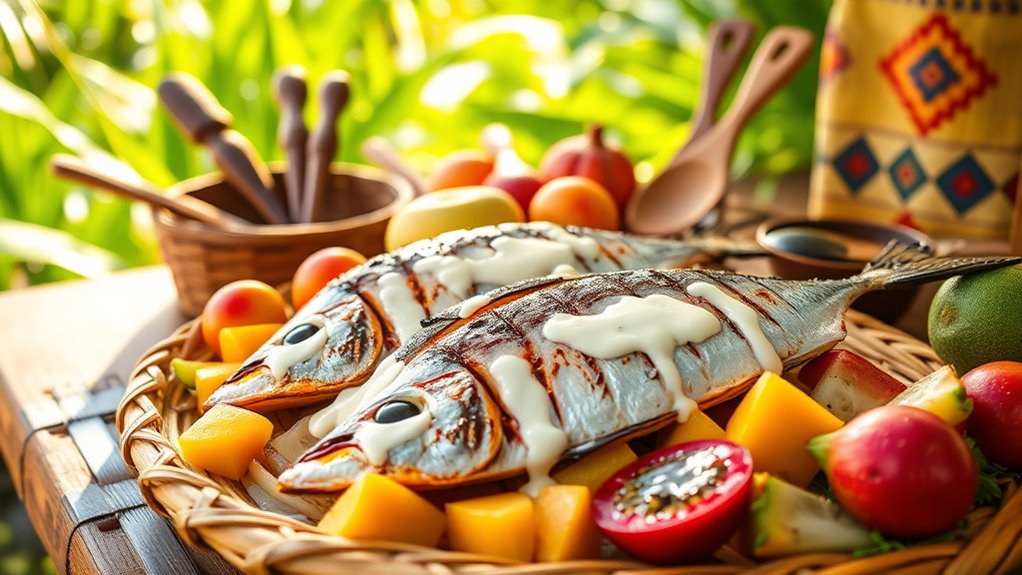

French Polynesian cuisine combines French techniques with traditional Pacific Island methods, creating a unique blend of flavors and techniques. You’ll find dishes cooked in underground ovens called ahima’a, wrapped in banana leaves, or cooked over hot stones. Key ingredients like coconut, taro, breadfruit, and tropical fruits shape the dishes. Food is deeply tied to community, culture, and celebrations, offering rich stories and traditions that you’ll uncover further as you explore more.
Key Takeaways
- Combines French techniques with Pacific Island traditions, emphasizing slow cooking methods like underground Ahima’a ovens and banana leaf wrapping.
- Utilizes native ingredients such as coconut, taro, breadfruit, and tropical fruits to create flavorful, community-centered dishes.
- Features traditional beverages like coconut water, kava, and fruit-infused rums that foster social bonding and cultural identity.
- Showcases culinary heritage through festivals, communal feasts, and demonstrations of traditional cooking methods, attracting tourism.
- Emphasizes food’s role in cultural continuity, supporting local agriculture and preserving traditional recipes and cooking techniques.
French and Pacific Island Influences on Local Cuisine

French Polynesian cuisine beautifully combines French culinary techniques with the vibrant traditions of Pacific Islanders. You’ll notice how French methods influence the way dishes are prepared, from sauces to presentation, blending seamlessly with native ingredients and flavors. The islands’ rich cultural heritage shines through, evident in dishes that incorporate tropical fruits, coconut, taro, and breadfruit. Seafood dominates, reflecting the islands’ close relationship with the ocean, often prepared with French-inspired marinades or cooking styles. The fusion creates a unique culinary identity that honors both French sophistication and Pacific island traditions. This blend results in a diverse, flavorful cuisine that celebrates the local environment while embracing French culinary artistry, making each dish a reflection of the islands’ rich cultural tapestry. Additionally, the use of local ingredients highlights the islands’ sustainable practices and deep connection to their natural resources.
Traditional Cooking Techniques and Methods

You’ll discover that traditional Polynesian cooking relies on methods like underground ovens, banana leaf wrapping, and hot stones to prepare food. These techniques use natural materials and heat sources to slow cook and flavor dishes authentically. Exploring these methods reveals how they connect to the islands’ cultural and environmental roots, emphasizing the importance of seasonal variations in their culinary practices.
Underground Ahima’a Oven
The underground Ahima’a oven is a traditional Polynesian cooking method that involves slow-cooking food in an earth-formed pit. You start by digging a hole, then placing hot stones at the bottom, which are heated using fire. You add your prepared ingredients—meats, seafood, taro, or breadfruit—wrapped in leaves or placed directly on the stones. Cover the food with more leaves and earth to trap the heat. Over several hours, the heat and steam cook the food slowly, allowing flavors to meld and ensuring tenderness. This method is ideal for preparing large quantities for community feasts or special occasions. The process emphasizes communal participation and patience, resulting in dishes rich in flavor and deeply rooted in Polynesian tradition. Understanding traditional cooking methods enhances appreciation for the cultural significance of this technique.
Banana Leaf Wrapping
Wrapping ingredients in banana leaves is a traditional Polynesian technique that imparts a unique flavor and aroma to the dishes. When you use banana leaves, you create a natural barrier that locks in moisture and infuses the food with a subtle sweetness. This method is common for preparing fish, meats, and vegetables, especially during communal feasts. The leaves also add a visual appeal, making presentation special. To guarantee proper wrapping, you fold carefully, sealing the contents tightly. Here’s a key benefit:
| Benefit of Banana Leaf Wrapping | Explanation |
|---|---|
| Preserves Moisture | Keeps ingredients tender and juicy |
| Adds Flavor | Imparts a subtle banana aroma |
| Eco-Friendly | Biodegradable and sustainable |
| Enhances Presentation | Attractive for serving |
| Traditional Technique | Preserves cultural heritage |
Additionally, the use of biodegradable materials like banana leaves aligns with sustainable practices.
Use of Hot Stones
Hot stones are a traditional and essential element of Polynesian cooking, used to generate consistent and even heat for preparing dishes. You place heated stones in an underground or earth oven, allowing them to radiate steady warmth. This method heats food slowly and evenly, perfect for tenderizing meats and cooking root vegetables like taro and breadfruit. You can also use hot stones for grilling, directly placing seafood or meats onto them, which imparts a smoky flavor. The technique emphasizes communal cooking, often in a shared earth oven during gatherings. Carefully heated stones retain their temperature for hours, making them ideal for slow-cooked feasts. Additionally, thermal conduction plays a crucial role in evenly transferring heat from the stones to the food, enhancing cooking efficiency. This method highlights the deep connection between Polynesians and their natural environment, showcasing their resourcefulness and respect for traditional techniques.
Essential Ingredients in Polynesian Cooking

You’ll find that native plant staples like coconut, taro, and breadfruit form the backbone of Polynesian cooking. These ingredients bring tropical flavors and textures to many dishes, from main courses to desserts. Understanding their role helps you appreciate the rich culinary traditions rooted in the islands’ natural bounty. Incorporating aesthetic wall organization solutions can also enhance the presentation of traditional Polynesian dishes in a modern setting.
Native Plant Staples
Have you ever wondered what keeps Polynesian cuisine rooted in its rich cultural landscape? Native plant staples form the foundation of many traditional dishes. You’ll find coconut, taro, and breadfruit at the heart of these recipes, providing essential flavors and textures. Coconut enriches dishes with its milk and cream, adding creaminess and tropical aroma. Taro, a versatile root vegetable, is used in everything from stews to desserts, offering a starchy comfort. Breadfruit serves as a hearty side or main ingredient, often roasted or boiled for a smoky flavor. These plants are more than just ingredients—they’re symbols of Polynesian life, sustaining communities and shaping culinary traditions.
- Coconut: Coconut milk, cream, and shredded flesh
- Taro: Root vegetable for savory and sweet dishes
- Breadfruit: Nutty, starchy staple used in various preparations
Tropical Flavor Agents
Tropical flavor agents are essential ingredients that define the vibrant taste profile of Polynesian cuisine. You’ll notice the prominent use of coconut, which appears as milk, cream, or grated flesh, adding richness and depth. Fruits like mangoes, papayas, and pineapples contribute natural sweetness and tang, brightening dishes and beverages. Banana leaves often serve as fragrant wraps, imparting subtle flavor to cooked foods. Pandanus leaves are used to infuse dishes with a unique aroma, enhancing seafood and rice. These ingredients, combined with fresh seafood and root vegetables, create a harmonious balance of flavors that reflect the islands’ lush environment. Incorporating essential oils in culinary practices can also enhance the sensory experience of traditional Polynesian dishes. By embracing these tropical agents, you experience the true essence of Polynesian culinary tradition.
Popular Dishes and Culinary Staples

French Polynesian cuisine features a variety of popular dishes that highlight fresh ingredients and traditional cooking methods. You’ll find dishes that showcase the islands’ rich seafood, tropical fruits, and native staples. Poisson Cru is a must-try—marinated raw fish in coconut milk and lime. Fafaru offers a unique fermented fish flavor, often enjoyed with rice. For dessert, Po’e combines bananas or taro into a sweet pudding cooked in an ahima’a oven, giving it a smoky flavor. You’ll also encounter Maa Tinito, a hearty roasted meat feast with vegetables, perfect for communal gatherings. These staples reflect the islands’ reliance on fresh produce, seafood, and traditional techniques like earth ovens and banana leaf wrapping, creating authentic flavors that define French Polynesian cuisine. Incorporating traditional cooking methods such as earth ovens and fermentation plays a vital role in preserving the authentic taste of these dishes.
Traditional Beverages and Refreshing Drinks

Traditional beverages in French Polynesia offer a vibrant taste of island life, blending local ingredients with cultural practices. You’ll find invigorating drinks made from fresh coconuts, such as coconut water, which hydrates and cools you under the tropical sun. Kava, a traditional Polynesian brew, provides a relaxing effect and is often shared during social gatherings. Manutea pineapple rum captures the island’s fruity flavors, perfect for sipping or mixing into cocktails. For a non-alcoholic option, freshly pressed fruit juices from mangoes, papayas, or pineapples are popular choices. These drinks reflect the islands’ rich natural resources and communal spirit, serving both as everyday refreshers and integral parts of celebrations. Sampling these beverages offers a true taste of French Polynesia’s vibrant island culture. Additionally, understanding the local brewing techniques enhances appreciation of these traditional drinks and their cultural significance.
Cultural Significance of Food and Communal Feasts

Food in French Polynesia goes beyond nourishment; it embodies community bonds and cultural identity. When you participate in a communal feast or gather around an ahima’a oven, you’re experiencing more than just a meal—you’re connecting with traditions that unite people. These gatherings foster a sense of belonging and celebrate shared heritage. They’re often held during special occasions like festivals and family milestones, emphasizing the importance of food in maintaining cultural continuity. Through these events, locals pass down recipes and techniques, strengthening cultural ties across generations. You’ll notice that food serves as a symbol of unity, resilience, and pride, making each communal feast a meaningful experience.
Food in French Polynesia unites communities, celebrates heritage, and passes down traditions through shared meals and cultural gatherings.
- Bonding through traditional cooking methods
- Celebrating cultural heritage with local ingredients
- Strengthening community ties through shared meals
The Role of Food in Tourism and Festivals

Tourism in French Polynesia heavily relies on its vibrant culinary scene, with local dishes and traditional cooking methods playing a central role in attracting visitors. You’ll find that food is more than sustenance; it’s a cultural experience that draws travelers enthusiastic to taste authentic flavors. Festivals and events showcase Polynesian cuisine through lively food stalls, traditional feasts, and cooking demonstrations. When you participate in these celebrations, you get immersed in community bonding over dishes like poisson cru or maa tinito. Food becomes a gateway to understanding local customs, history, and social connections. Tourists actively seek out these culinary experiences, making food festivals a crucial part of the islands’ tourism appeal. Incorporating local ingredients and traditional techniques not only preserves cultural heritage but also enhances the authenticity of the culinary offerings. Your participation helps preserve and promote the rich culinary heritage of French Polynesia.
Preserving Culinary Heritage in French Polynesia

Preserving the culinary heritage of French Polynesia requires active efforts to maintain traditional cooking techniques and ingredients. You can support these traditions by participating in community feasts, learning about ancient methods like the ahima’a oven, and using native ingredients such as coconut, taro, and breadfruit. By embracing these customs, you help keep the islands’ culinary identity alive for future generations.
Support French Polynesia’s culinary heritage by practicing traditional cooking and using native ingredients.
You might also:
- Attend local festivals celebrating Polynesian cuisine
- Support farmers and markets that prioritize indigenous produce
- Share traditional recipes with friends and family
These actions foster appreciation and ensure that authentic flavors and techniques continue to thrive amid modern influences. Preserving this heritage is crucial to honoring the islands’ cultural and culinary legacy.
Frequently Asked Questions
How Do French Influences Specifically Modify Traditional Polynesian Recipes?
French influences modify traditional Polynesian recipes by introducing new techniques like French-style sauces, baking methods, and presentation styles. You might notice French ingredients such as butter, cream, and wine added to local dishes, enriching flavors. French culinary techniques also encourage more refined plating and cooking methods, blending Polynesian ingredients with European flavors. This fusion creates a unique culinary experience that respects tradition while embracing new tastes and styles.
What Are the Regional Variations in Cooking Methods Across the Islands?
You’ll notice regional variations in cooking methods across French Polynesia, with some islands favoring underground earth ovens called ahima’a for slow cooking, while others prefer grilling or using hot stones. For example, Tahiti often uses banana leaf wrapping, whereas Moorea emphasizes earth ovens for communal feasts. These differences reflect local traditions, available ingredients, and cultural influences, creating diverse culinary experiences across the islands.
Are There Any Unique, Lesser-Known Ingredients Used in Local Dishes?
Did you know that the Polynesians use pandanus leaves not just for wrapping food but also for flavoring? You’ll find lesser-known ingredients like noni fruit, prized for its medicinal properties, and ufi, a type of wild yam, in traditional dishes. These ingredients add unique flavors and health benefits, reflecting the islands’ rich biodiversity. Incorporating them highlights the depth and variety of French Polynesia’s culinary heritage, beyond common staples.
How Has Modern Cuisine Impacted Traditional Polynesian Food Practices?
Modern cuisine has profoundly influenced traditional Polynesian food practices by introducing new ingredients, cooking techniques, and presentation styles. You might find fusion dishes blending local flavors with international trends, making meals more diverse and appealing to tourists. While some purists cling to ancient methods like the ahima’a oven, others embrace innovation, leading to a dynamic culinary scene that evolves without losing its cultural roots.
What Are the Customary Etiquette and Traditions During Communal Feasts?
During communal feasts, you should show respect by waiting for the host to start eating and participating wholeheartedly. Share food generously, as it symbolizes community and hospitality. Use your hands when eating traditional dishes and express gratitude through words or gestures. Avoid waste or rushing, and dress modestly. Engaging in conversations and celebrating together strengthens bonds, reflecting the deep cultural importance of unity and sharing in Polynesian tradition.
Conclusion
As you explore French Polynesia’s vibrant cuisine, you’ll find a mesmerizing blend of old traditions and new influences. While ancient cooking methods preserve timeless flavors, modern festivals showcase lively, contemporary dishes. The contrast between deeply rooted cultural rituals and innovative culinary expressions highlights how food both connects and evolves. Embrace this dynamic heritage, where every bite tells a story—rich in history yet alive with the spirit of today’s Polynesian community.