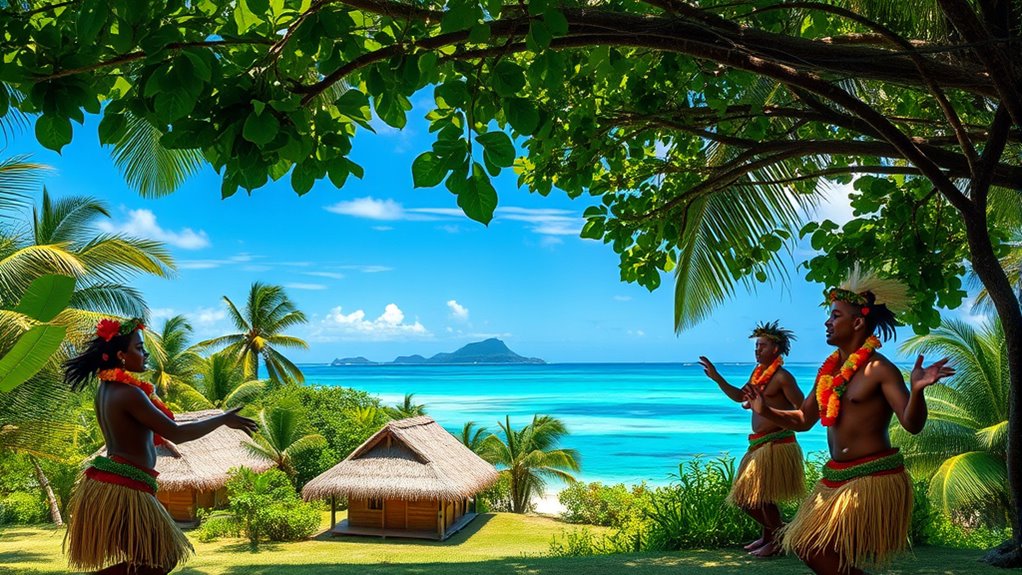

French Polynesia’s history blends ancient Polynesian voyages with European encounters, mainly French influence. You’ll find traditions like tattooing, dance, and storytelling still alive, reflecting a deep connection to land and sea. Colonial history shaped modern culture, language, and architecture, while efforts to preserve arts thrive today. The islands celebrate their vibrant identity through festivals and customs, balancing tradition with tourism and modern growth. If you explore further, you’ll discover how these elements keep their unique culture alive today.
Key Takeaways
- Polynesian settlers arrived around 500 BC, establishing rich traditions in navigation, arts, and spiritual beliefs centered on nature.
- European contact began in 1521, with French later becoming the dominant colonial power, blending indigenous and European cultures.
- French Polynesia evolved from a protectorate to an overseas territory, gaining greater autonomy and modern infrastructure.
- Traditional arts like tattooing, dance, and wood carving are preserved through festivals, workshops, and cultural initiatives.
- Today, French Polynesia’s culture reflects a vibrant mix of indigenous heritage and external influences, supported by tourism and international relations.
Early Polynesian Settlement and Cultural Foundations
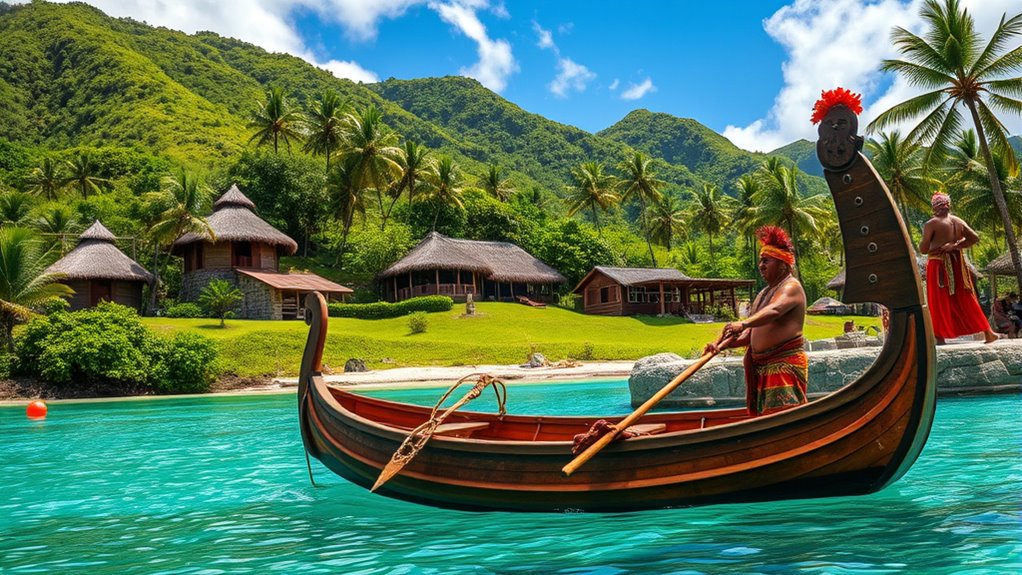
Around 500 BC, Polynesian explorers set sail across the vast Pacific Ocean and became the first people to settle on French Polynesian islands. You’re standing on land shaped by their journey, feeling the rich heritage they brought with them. These early settlers navigated using stars, ocean currents, and their deep knowledge of nature. They established vibrant communities, developing unique traditions, art, and social structures rooted in their Polynesian identity. Their spiritual beliefs centered around nature and ancestors, shaping rituals and daily life. Over generations, they adapted to the islands’ environment, cultivating taro, breadfruit, and fishing. The Polynesian culture you see today — from dance and tattooing to language and storytelling — stems from these resilient, adventurous people and their profound connection to the land and sea. Their remarkable navigation skills allowed them to explore and settle vast ocean distances, demonstrating their exceptional expertise in wayfinding techniques.
European Exploration and Colonial Encounters
When you explore the early European encounters, you’ll see how Ferdinand Magellan first spotted Puka-Puka in 1521, marking the islands’ initial European record. Although Spain made a brief attempt at settlement in 1774, it didn’t last long, and France soon took control. These encounters set the stage for French colonization, profoundly shaping the islands’ history and culture.
Magellan’s Puka-Puka Sightings
Ferdinand Magellan’s arrival marked one of the earliest European encounters with Puka-Puka, a remote atoll in French Polynesia. As you imagine his fleet approaching, picture the vast ocean shimmering under the sun. You see:
- A tiny, coral-fringed island rising from the turquoise sea, barely visible on the horizon.
- Swirling currents and gentle waves lapping against the reef, hinting at hidden depths below.
- Mysterious seabirds circling high above, their calls echoing across the calm waters.
Magellan’s crew likely observed the island’s lush vegetation and untouched beauty, marking their first European sighting of this remote paradise. This encounter set the stage for future exploration and marked an important moment in the European discovery of the Pacific Islands.
Spanish Settlement Attempts
Did European powers ever attempt to establish a lasting presence in French Polynesia? Yes, the Spanish made brief settlement efforts in the 18th century. In 1774, Spanish explorers tried to establish a colony on one of the islands, aiming to expand their Pacific empire. However, their presence was short-lived, lasting only a few months due to logistical challenges, unfamiliar terrain, and resistance from local Polynesian communities. The Spanish faced difficulties maintaining supply lines and failed to find economic resources that justified long-term occupation. After this failed attempt, Spanish interest waned, and they shifted focus elsewhere in the Pacific. These early efforts left little lasting impact, and France eventually became the dominant colonial power in the region. European exploration played a significant role in shaping the history and culture of French Polynesia.
Impact of French Rule and Cultural Integration

French rule has profoundly shaped the culture of French Polynesia, blending European and indigenous influences into a unique identity. You see this in everyday life, where traditional Tahitian dance coexists with French culinary delights. Imagine:
- Colorful festivals like Heiva i Tahiti, where Polynesian costumes dance alongside French music.
- The blending of languages, with Tahitian and French spoken side by side in homes and schools.
- Architectural styles that combine native designs with colonial French structures, creating a distinctive landscape.
- The cultural fusion evident in arts, music, and daily traditions that continue to evolve and reflect both heritages.
French governance introduced modern infrastructure, boosting tourism and international trade. Despite political debates about independence, the culture remains resilient, celebrating its diverse roots through festivals, arts, and language. This fusion defines the vibrant identity of French Polynesia today.
Artistic Inspirations and Cultural Expression
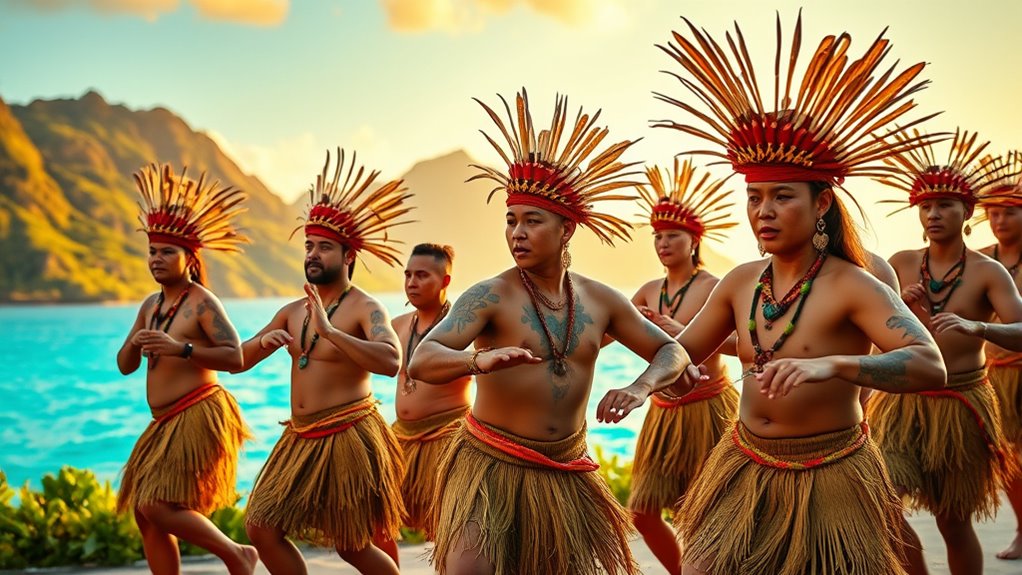
Artistic inspiration in French Polynesia blossoms from a rich blend of indigenous traditions and external influences, creating a vibrant cultural tapestry. You’ll notice how traditional Polynesian arts, like tattooing, wood carving, and dance, remain essential expressions of identity. These art forms often draw from nature, mythology, and ancestral stories, preserving cultural memory. At the same time, European contact introduced new techniques and themes, inspiring painters like Paul Gauguin and local artists to blend island motifs with Western styles. Festivals such as Heiva celebrate this fusion, showcasing elaborate costumes, music, and dance. Language also plays a role, with Tahitian and French influences shaping lyrical poetry and storytelling. Additionally, the preservation of ancestral knowledge ensures that traditional arts continue to thrive and evolve within contemporary society. Together, these elements foster a dynamic artistic scene that honors heritage while embracing contemporary innovation.
Administrative Evolution and Political Changes
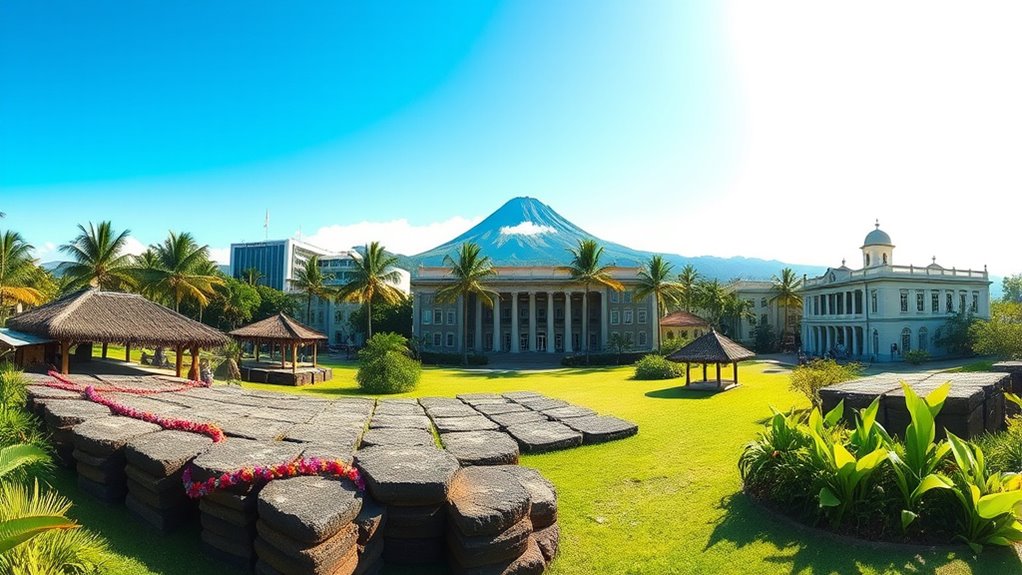
The rich cultural expressions of French Polynesia have evolved alongside its shifting political landscape. You can see this change in 1) the migration from a protectorate to a colony in 1880, marking French control’s solidification, 2) the move to an overseas territory in 1946, which increased administrative ties to France, and 3) the granting of autonomy in 1977, empowering local governance. In 2003, French Polynesia became an overseas collectivity, giving it more self-rule. Then, in 2004, it gained additional autonomy through an organic act, allowing for greater local decision-making. These shifts reflect a gradual journey from direct French rule to a more autonomous political entity, shaping its identity while maintaining ties to France. Political evolution continues to influence its cultural expressions and governance structures today.
Economic Transformation and Infrastructure Development
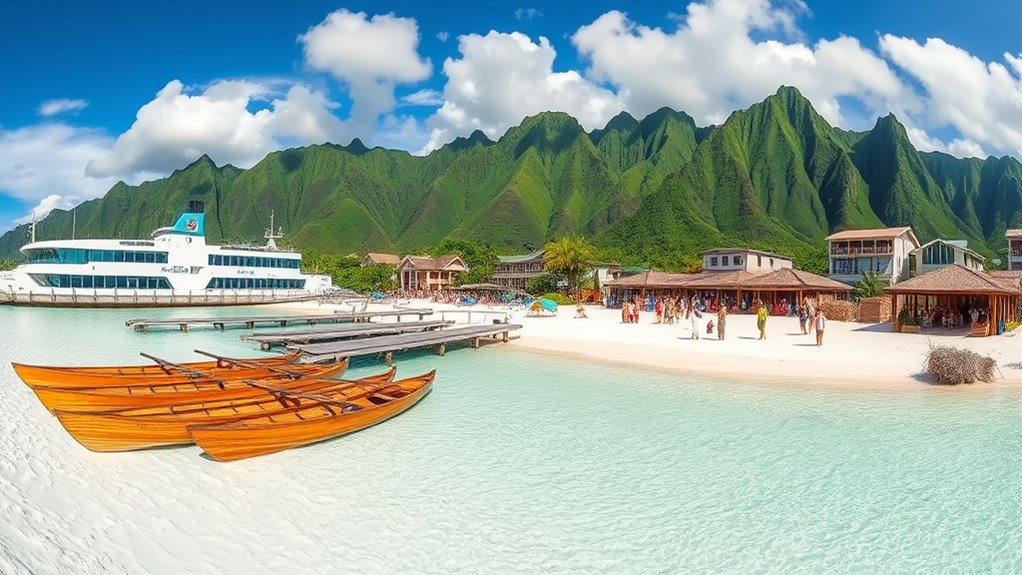
You can see how infrastructure modernization, like the construction of harbors and airports in the 1960s, transformed the islands’ economy. These developments paved the way for a booming tourism sector, attracting visitors from around the world. As a result, French Polynesia’s economy shifted from agriculture and fishing to tourism and international trade. Greenhouse construction and sustainable practices can further support the islands’ economic diversification and environmental resilience.
Infrastructure Modernization Efforts
Modern infrastructure has played a vital role in transforming French Polynesia’s economy by facilitating trade, tourism, and local development. You can visualize this progress through:
- The bustling international airport in Tahiti, connecting islands and global destinations.
- The deep-water port that handles cargo ships, supporting trade and economic growth.
- Upgraded road networks linking remote villages to urban centers, improving accessibility and mobility.
These efforts have modernized transportation, making travel smoother and more efficient. The expansion of telecommunications infrastructure has enhanced connectivity, allowing for better communication and business operations. Investments in renewable energy sources, like solar and wind farms, reduce reliance on imported fuels and promote sustainability. Overall, these developments boost economic resilience, attract investment, and lay the foundation for future growth across the islands. load‑planning tools also support effective infrastructure development by optimizing resource allocation.
Growth of Tourism Sector
As infrastructure improvements have expanded across the islands, tourism has become a cornerstone of French Polynesia’s evolving economy. You now find easier access via upgraded airports, harbors, and roads, attracting more visitors each year. Resorts, cruise ships, and eco-tourism ventures flourish, supporting local jobs and businesses. The government continues investing in sustainable tourism to preserve natural beauty and Polynesian culture. Here’s a quick look at some key developments:
| Year | Major Infrastructure Project | Impact on Tourism |
|---|---|---|
| 1960s | Construction of Papeete Airport | Increased international arrivals |
| 1980s | Expansion of luxury resorts | Boosted high-end tourism |
| 2000s | Development of eco-parks | Promoted eco-tourism and conservation |
| 2020s | Digital tourism platforms | Attracts global travelers efficiently |
This growth shapes your experience, blending modern amenities with Polynesian charm. Additionally, automation technologies in the tourism sector continue to enhance visitor experiences and operational efficiency.
Preservation of Traditional Arts and Practices
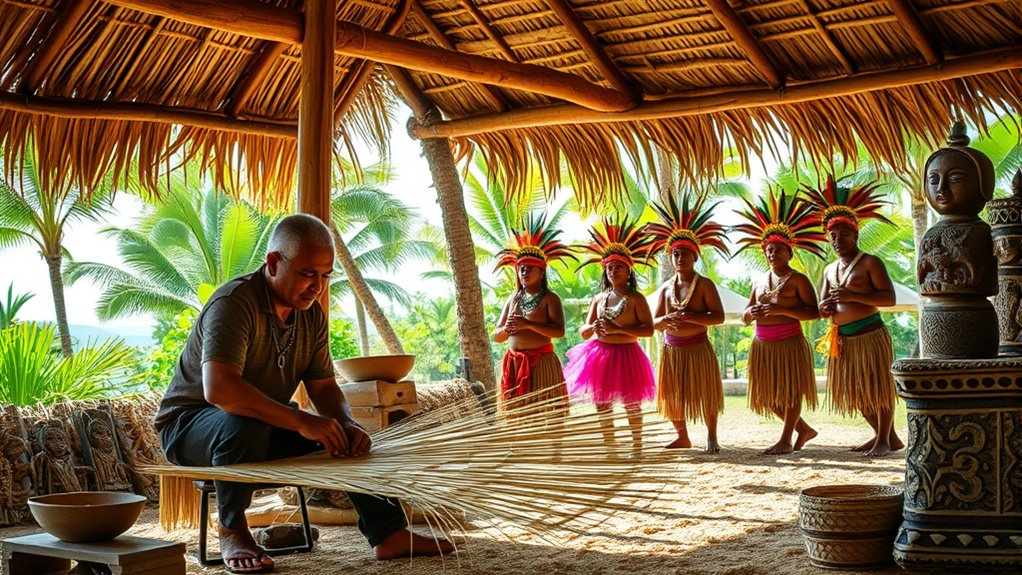
Despite the influence of French and European cultures, the people of French Polynesia actively work to preserve their traditional arts and practices. You’ll see this in vibrant dance performances that tell stories through swift movements and colorful costumes. You might encounter artisans crafting intricate tapa cloths from bark, showcasing centuries-old techniques. Or, during local festivals, you’ll witness the skill of carvers shaping wooden masks and tools that carry cultural significance. These efforts keep traditions alive through community workshops, cultural festivals, and educational programs. By embracing these practices, the people guarantee that their heritage endures amidst modern influences. Additionally, cultural preservation initiatives play a vital role in maintaining these customs for future generations, ensuring a unique Polynesian identity that continues to thrive and inspire both locals and visitors alike.
Contemporary Cultural Identity and International Relations
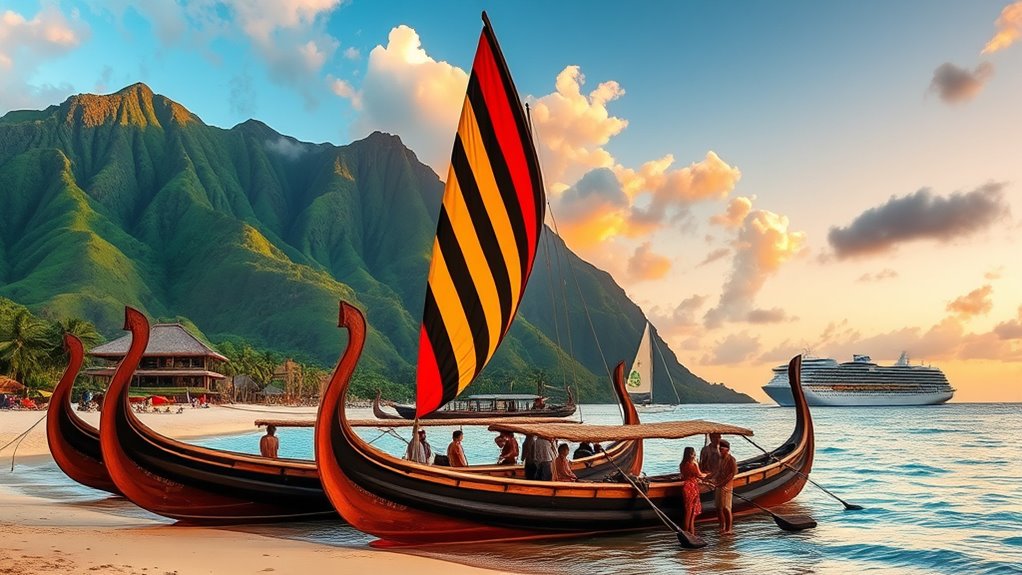
The enduring pride in traditional arts and practices continues to shape French Polynesia’s cultural identity today, even as the islands engage more fully with the international community. You’ll notice this in vibrant festivals like Heiva i Tahiti, where dance, music, and crafts celebrate Polynesian heritage. Despite French influence, Tahitian language and customs remain essential, symbolizing resilience and cultural pride. International relations bring opportunities for cultural exchange, tourism, and cooperation, strengthening local identities. You might also see how French Polynesia balances autonomy with its relationship to France, asserting its unique identity on the world stage. This dynamic fosters a sense of pride among residents while welcoming global connections. Additionally, the region’s efforts to preserve indigenous languages and traditional practices demonstrate a commitment to cultural resilience, ensuring that their heritage endures amid modern influences. Ultimately, their cultural identity continues to evolve, blending tradition with modern influences and international engagement.
Frequently Asked Questions
How Has Modern Tourism Affected Indigenous Cultural Practices?
Modern tourism has both helped and challenged your indigenous cultural practices. It brings greater awareness and appreciation, encouraging you to preserve and showcase traditions like dance, arts, and festivals. However, it can also lead to commercialization, diluting authentic customs and altering social dynamics. You might find that balancing tourism’s economic benefits with maintaining cultural integrity requires conscious effort, ensuring your traditions remain genuine and vibrant amidst increased global interest.
What Role Do Language Preservation Efforts Play Today?
You might feel the tension as language preservation efforts push forward, trying to save Tahitian from fading away. Today, you see communities actively reviving and promoting the native tongue through schools, festivals, and media. This fight for cultural identity keeps the language alive, connecting generations and strengthening pride. Every lesson, every song, becomes a victory in safeguarding an essential piece of French Polynesia’s unique heritage against the tide of change.
How Do Local Festivals Reflect Historical and Cultural Identities?
You see local festivals like Heiva i Tahiti as vibrant expressions of your cultural identity. These celebrations showcase traditional dances, music, and crafts that have been passed down through generations, reflecting your Polynesian roots and history. By participating, you keep your heritage alive, honor your ancestors, and strengthen community bonds. Festivals serve as a colorful reminder of your unique cultural journey, blending history, tradition, and modern identity into a lively, meaningful experience.
What Is the Influence of Asian Immigrant Communities on Local Culture?
You notice how Asian immigrant communities subtly enrich your local culture through cuisine, traditions, and labor contributions. Their influence brings a delicate blend of flavors and customs, enhancing the island’s diversity. You might see Chinese and Japanese festivals alongside Polynesian celebrations, creating a vibrant cultural tapestry. Their presence fosters a sense of shared history and mutual respect, helping you appreciate how different heritages weave together to shape the unique identity of your community.
How Are Indigenous Arts Integrated Into Contemporary Education?
You see indigenous arts integrated into contemporary education through dedicated programs that teach traditional crafts, dance, and music. Schools often include lessons on Polynesian history and cultural practices, encouraging students to learn and preserve their heritage. Cultural festivals are also part of the curriculum, giving students hands-on experience. This approach helps you appreciate and maintain your indigenous traditions while adapting to modern educational standards.
Conclusion
As you explore French Polynesia’s rich history and vibrant culture, you’ll find it’s like a woven tapestry, each thread representing a different era and influence. From ancient Polynesian roots to modern-day expressions, the islands’ story is a demonstration of resilience and adaptability. Embrace the unique blend of traditions and innovations, and you’ll see how these islands continue to shine as a colorful jewel in the Pacific, inviting you to discover their timeless spirit.