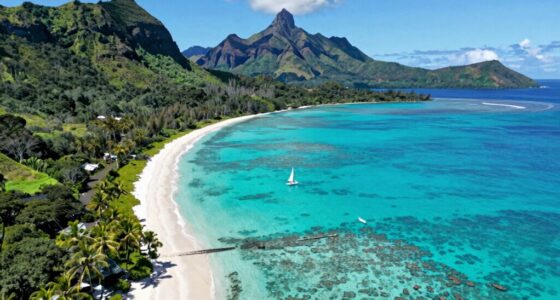
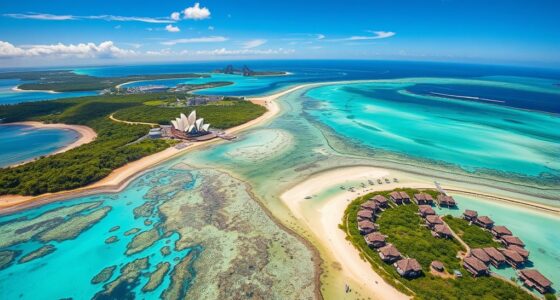
Oceania’s history starts with early human migrations over 60,000 years ago, leading to diverse societies with complex political systems like Polynesian chiefdoms. Navigators used stars, ocean currents, and natural cues to explore vast seas, building impressive maritime networks. Encounters with Europeans brought disease and colonization, transforming societies and environments. Today, Oceania’s vibrant cultural traditions, art, and spiritual practices reflect resilience and identity. To uncover the full story behind Oceania’s rich history and culture, keep exploring more.

Get travel and outdoor gear delivered free with Prime
- Fast, free delivery on millions of items
- Prime Video, Amazon Music and more included
- Member-only deals all year
Key Takeaways
- Oceania’s history features early human migrations, complex societies, and the development of navigation skills that enabled long-distance voyaging.
- Indigenous cultures emphasize oral traditions, artistic expressions, and rituals linked to land, sea, and ancestral spirits.
- European contact and colonization significantly impacted societal structures, causing population decline and cultural transformation.
- Traditional navigation techniques and maritime networks facilitated settlement across islands and the Pacific region.
- Contemporary challenges include cultural preservation, language revival, and resilience amid climate change and globalization.
Oceania traditional navigation tools
As an affiliate, we earn on qualifying purchases.
As an affiliate, we earn on qualifying purchases.
Early Human Migrations and Settlement Patterns
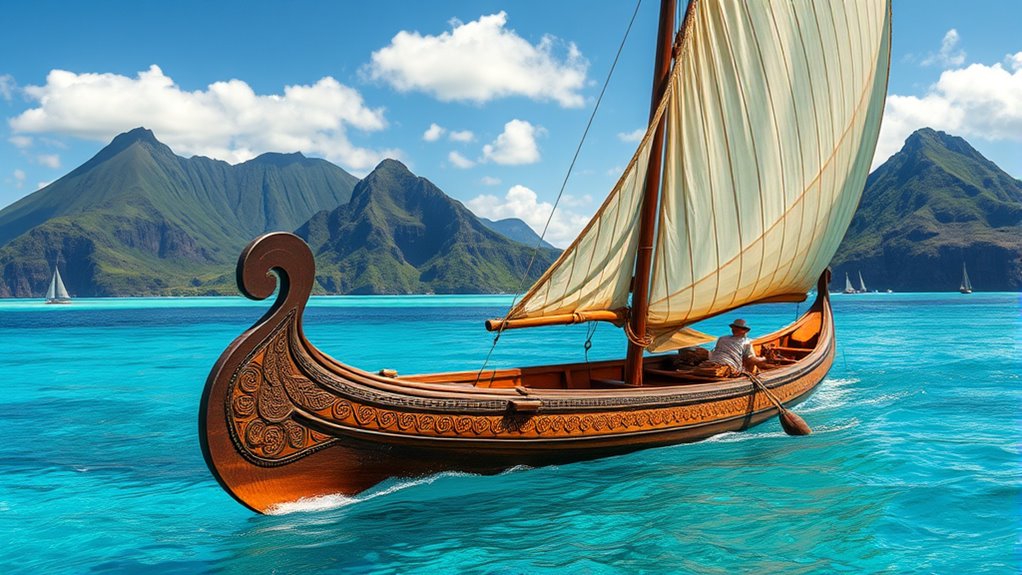
The earliest human migrations in Oceania began around 60,000 to 50,000 years ago, when Aboriginal Australians and people in New Guinea started spreading across their respective landmasses. You’re likely to find that Aboriginal Australians moved extensively, adapting to diverse environments. When land bridges connected Australia and New Guinea, some groups settled in New Guinea, while others remained in Australia. These early travelers relied on simple tools and fire to survive. As sea levels rose, populations moved into isolated islands, including parts of Melanesia and Polynesia. You might be surprised to learn that these migrations were driven by curiosity, resource needs, and environmental changes. They laid the groundwork for complex societies and rich cultural traditions across Oceania, shaping the region’s history for thousands of years. Understanding early human migrations helps explain the diverse cultural landscape of Oceania today.
As an affiliate, we earn on qualifying purchases.
Development of Societies and Political Systems

Across Oceania, societies developed complex political structures that organized their social and economic lives. In Tonga, a centralized system emerged around the Tuʻi Tonga dynasty by around 950 CE, extending influence through trade and alliances. Polynesian societies, like those in New Zealand, organized into iwi (tribes) and hapū (sub-tribes), with chiefs (aliʻi) leading and land and resource management playing key roles. On Easter Island, oral tradition credits a chief, Hotu Matuꞌa, with the island’s settlement. These societies often had hierarchical systems supporting social stratification, with chiefs, priests, and commoners. Influence spread through maritime networks, fostering cultural exchange and intertribal relationships. Over time, these political systems adapted to local environments, balancing authority, kinship, and resource control. Additionally, the development of complex societal structures facilitated the coordination of large-scale projects and cultural practices across the islands.
indigenous Oceanian art supplies
As an affiliate, we earn on qualifying purchases.
As an affiliate, we earn on qualifying purchases.
Navigational Skills and Technological Achievements
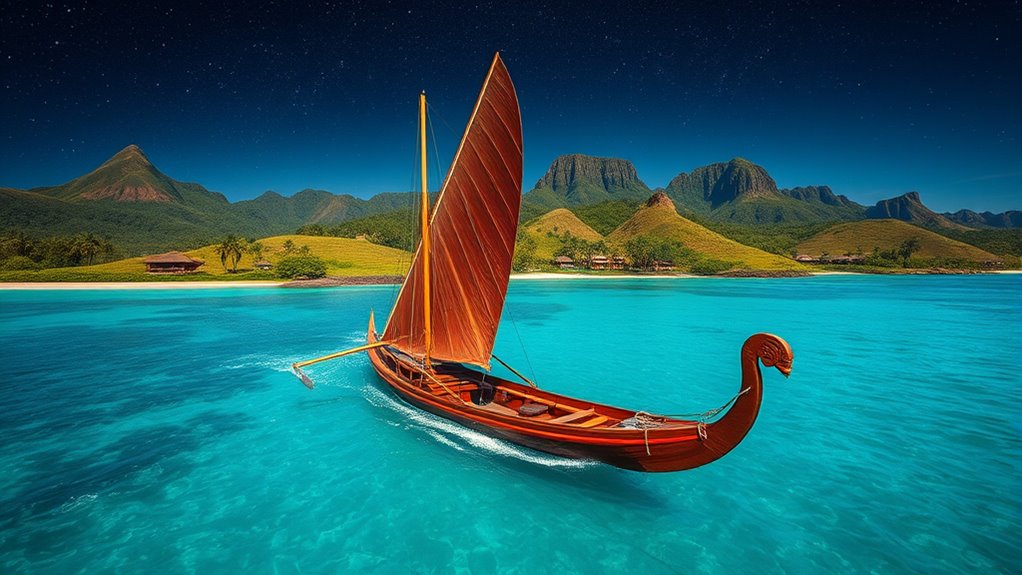
Polynesian navigators mastered the art of ocean exploration by relying on natural cues such as the sun, moon, stars, and migratory birds to chart their courses. They developed sophisticated methods to read the night sky, recognizing star patterns that remained consistent across the Pacific. Using observations of the sun’s position during the day and the moon’s phases at night, they maintained accurate directions. They also tracked the flight paths of migratory birds and the movement of ocean swells and currents. Their double-hulled canoes, capable of carrying large crews, enabled long-distance voyages, trade, and settlement across vast distances. These technological achievements allowed Polynesians to explore, connect, and settle remote islands, creating one of the most remarkable seafaring cultures in history. Regional knowledge of ocean currents and weather patterns further enhanced their navigational expertise.
As an affiliate, we earn on qualifying purchases.
Encounters With Europeans and Colonial Transformations

When Europeans arrived in Oceania, they brought devastating diseases like smallpox and measles that decimated local populations. These outbreaks weakened traditional societies and created opportunities for colonizers to impose new structures of power. As colonial influence grew, it reshaped governance, economies, and social systems across the islands. The introduction of new indigenous plant species also significantly altered local ecosystems and cultural practices.
European Diseases and Decline
European contact with Oceania brought devastating waves of disease that caused widespread population declines and social upheaval. Smallpox, measles, and influenza swept through island communities, decimating populations that had no prior exposure or immunity. Entire societies collapsed, and traditional social structures unraveled. The table below illustrates the scale of destruction:
| Disease | Impact |
|---|---|
| Smallpox | Nearly wiped out entire villages |
| Measles | Killed thousands, causing chaos |
| Influenza | Spread rapidly, reducing populations |
| Unseen toll | Loss of elders, knowledge, culture |
You witness how these diseases shattered the social fabric, leaving communities vulnerable to colonization and drastically altering Oceania’s demographic landscape. Disease impact changed the course of history for these societies.
Colonial Influence and Restructuring
European contact fundamentally reshaped Oceania’s societies, introducing new governance structures, religious beliefs, and economic practices. You see, colonizers imposed their laws, replacing traditional leadership with colonial administrations that often disregarded indigenous authority. Christian missionaries spread faiths that challenged existing spiritual systems, leading to conversions but also cultural erosion. Economically, Europeans introduced plantation agriculture, export crops, and new trading networks, transforming local economies and often exploiting resources and labor. Diseases like smallpox and measles decimated populations, weakening societies and making them more vulnerable to colonization. Colonial powers also established borders, legal systems, and land ownership models, disrupting traditional land tenure and social organization. These changes caused lasting shifts, shaping the political, spiritual, and economic landscape of Oceania long after independence.
Cultural Traditions, Artistic Expressions, and Religious Practices
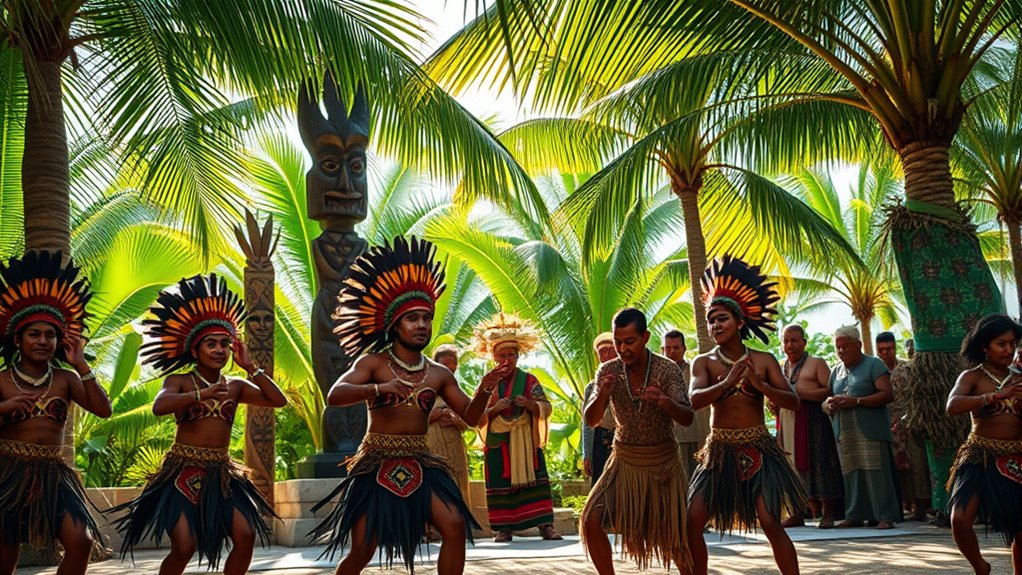
Cultural traditions, artistic expressions, and religious practices are essential to understanding Oceania’s diverse identities. You’ll notice vibrant dance, intricate tattooing, and storytelling that connect communities to their ancestors. Music and art serve as powerful symbols of cultural pride, often reflecting nature and spiritual beliefs. Many societies honor gods, spirits, or ancestors through rituals and ceremonies that reinforce social bonds. These practices vary across islands but share a deep respect for tradition and the land. Additionally, cultural preservation efforts play a vital role in maintaining these indigenous expressions for future generations.
Contemporary Challenges and Movements for Revival

Despite the many challenges facing Oceania today, communities are actively working to revive and preserve their cultural identities. Movements for language preservation, such as revitalizing native tongues in Fiji, Samoa, and Māori communities, gain momentum through education and media. Indigenous leaders push for political autonomy and recognition of traditional land rights, countering colonial legacies. Climate change threatens island homes and cultural sites, prompting regional cooperation and adaptive strategies. Tourism, while boosting economies, raises concerns about cultural commodification and environmental damage. Diaspora communities in Australia, New Zealand, and the U.S. strengthen ties to their roots through cultural festivals, arts, and advocacy. These efforts reflect resilience, ensuring Oceania’s rich heritage endures amid modern pressures. Additionally, fostering creative practices within communities can serve as a vital tool for cultural expression and healing in the face of adversity.
Frequently Asked Questions
How Did Polynesian Navigators Find Their Way Across Vast Oceans Without Modern Tools?
You rely on your deep knowledge of natural signs and celestial cues. Polynesian navigators use the sun, moon, and stars to orient themselves, and observe migratory birds, cloud patterns, and wave behavior to find their way. They memorize the position of islands and currents, and use their understanding of wind and ocean swells. This skill, passed down through generations, allows them to navigate vast distances with incredible accuracy.
What Are the Origins of the Lapita Pottery and Its Significance in Oceanic History?
You learn that Lapita pottery originated around 1400 BCE in the Bismarck Archipelago, part of northwest Melanesia. Its distinctive geometric designs and craftsmanship mark the cultural identity of early Oceanic societies. This pottery signifies the spread of Austronesian peoples and their maritime skills, enabling them to explore and settle across vast Pacific islands. It represents a key link in understanding the development of complex societies and cultural exchange in Oceania.
How Did European Contact Affect Indigenous Social Structures and Economies?
Oh, the Europeans arrived just in time to turn entire societies upside down—because what’s better than a little chaos? They disrupted indigenous social structures by replacing chiefs and elders with new rulers, imposed foreign laws, and undermined traditional authority. Economies shifted from sustainable practices to cash crops and resource extraction, often leading to poverty and dependence. Fundamentally, colonial contact was a masterclass in social upheaval and economic upheaval—served with a side of cultural loss.
What Roles Do Oral Traditions Play in Preserving Oceanic History and Culture?
You rely on oral traditions to preserve oceanic history and culture, passing stories, myths, and genealogies across generations. These oral accounts encode important events, social values, and ancestral knowledge, keeping traditions alive even without written records. By listening and sharing these stories, you maintain cultural identity, honor your ancestors, and guarantee that your community’s history remains vibrant, guiding future generations in understanding their roots and cultural practices.
How Are Oceanian Communities Addressing Climate Change and Environmental Threats Today?
You might think Oceania’s communities are powerless against climate change, but they’re actively fighting back. They’re advocating for policies, building resilient infrastructure, and embracing traditional knowledge to safeguard their lands and seas. Ironically, their rich cultural ties to nature inspire innovative solutions. Despite limited resources, these communities show remarkable resilience, proving that even small islands can stand strong against environmental threats, shaping their future with fierce determination and hope.
Conclusion
As you explore Oceania’s rich history, you see vibrant islands awakening with life—stirring traditions, colorful artworks, and resilient communities. The waves of change have shaped its shores, yet the spirit of its people persists like a glowing ember beneath the surface. With each sunrise, you witness the ongoing dance of past and present, a tapestry of culture that continues to thrive amidst challenges, shining brightly like a beacon guiding future generations.
Halloween Picks
halloween
As an affiliate, we earn on qualifying purchases.