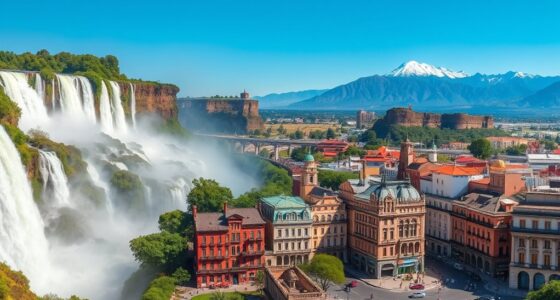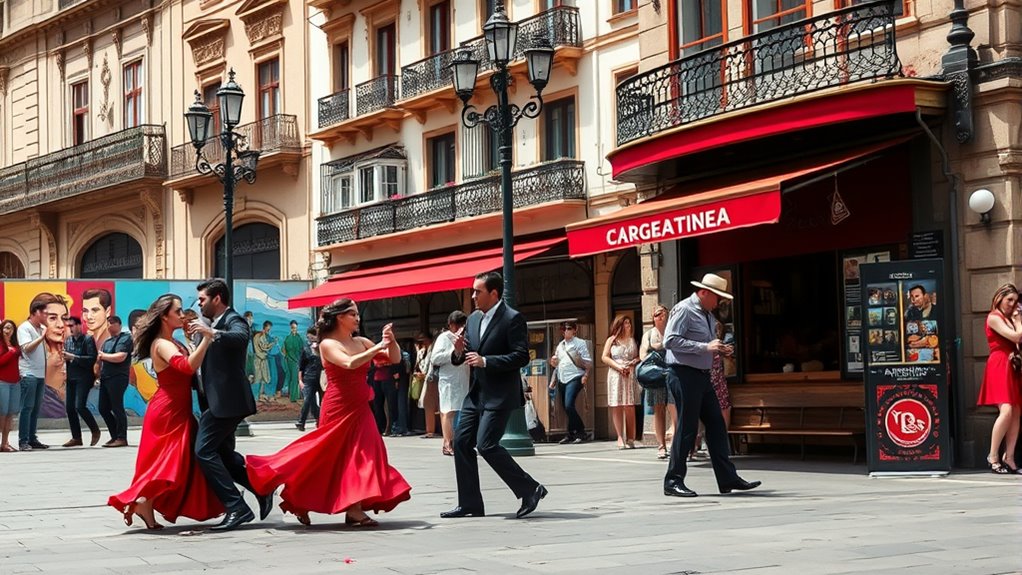

Argentina’s history and culture are a vibrant mix of indigenous roots, colonial influence, revolutionary struggles, and modern resilience. You’ll find stories of early indigenous groups like the Yámana, Tehuelche, and Mapuche, and the impact of European contact and immigration. From the rise of populist leaders like Perón to the dark days of military dictatorship and the Falklands War, the country’s identity continues to evolve. Exploring further reveals how Argentina’s traditions, arts, and social movements shape its unique spirit.
Key Takeaways
- Argentina’s history features indigenous roots, European colonization, independence, and waves of immigration shaping its diverse cultural identity.
- Political upheavals, caudillos, and military coups have influenced its governance and social dynamics throughout history.
- The Perón era promoted social justice, workers’ rights, and populist policies, leaving a lasting impact on national identity.
- The Falklands War and dictatorship era significantly affected Argentina’s political landscape, human rights, and national consciousness.
- Argentine culture is vibrant, blending indigenous, European, and modern influences through tango, festivals, arts, cuisine, and storytelling traditions.

Women Rhinestone Ballroom Latin Salsa Performance Dance Shoes (8, Nude-2.5inch Heels)
Suede Sole for Ballroom Dance
As an affiliate, we earn on qualifying purchases.
As an affiliate, we earn on qualifying purchases.
Early Indigenous Inhabitants and European Contact
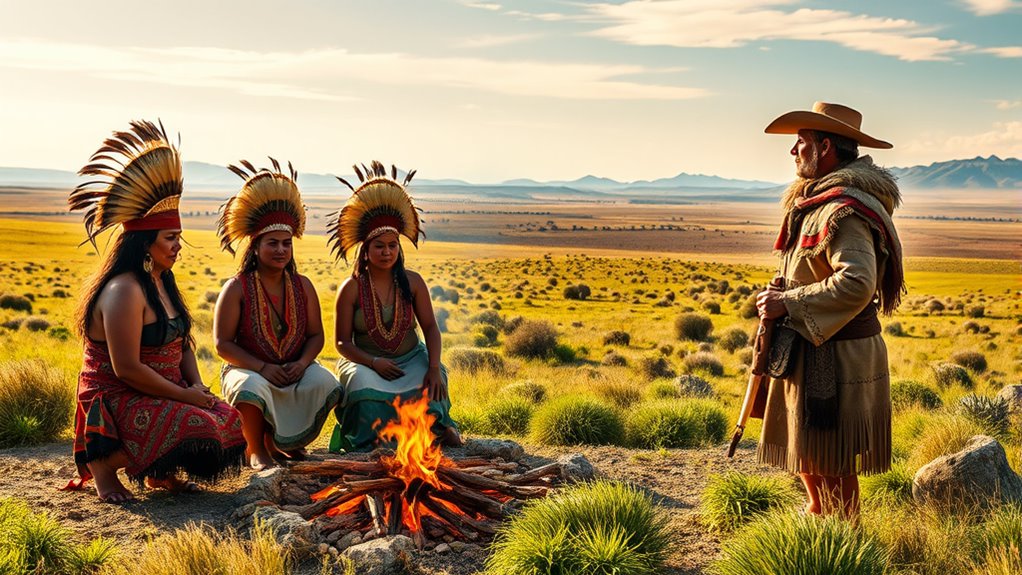
Argentina’s earliest inhabitants settled in the southern Patagonia region around 13,000 years ago, with groups like the Yámana and Tehuelche thriving long before Europeans arrived. These indigenous peoples adapted to harsh environments, developing unique cultures and survival strategies. They relied on hunting, fishing, and gathering for sustenance, creating tools and traditions suited to their landscapes. When Europeans arrived in the early 1500s, their contact dramatically altered indigenous life. Explorers like Juan de Solis and Sebastian Cabot charted the coast, but it was the subsequent colonization that led to conflict, displacement, and cultural change. Despite these upheavals, many indigenous communities persisted, maintaining their identities and traditions. Their early history forms the foundation of Argentina’s rich, diverse cultural heritage, shaping the nation’s identity even today. Additionally, the resilience of these communities highlights the importance of cultural preservation in understanding Argentina’s history.

The Argentine Guitar Vol. II – Juan Pablo Esmok Lew: Pieces for Guitar Ensemble, Solo Guitar, Guitar and Cello, and Guitar and Melody (Flexible Instrumentation) (German Edition)
As an affiliate, we earn on qualifying purchases.
As an affiliate, we earn on qualifying purchases.
Struggle for Independence and Nation Formation
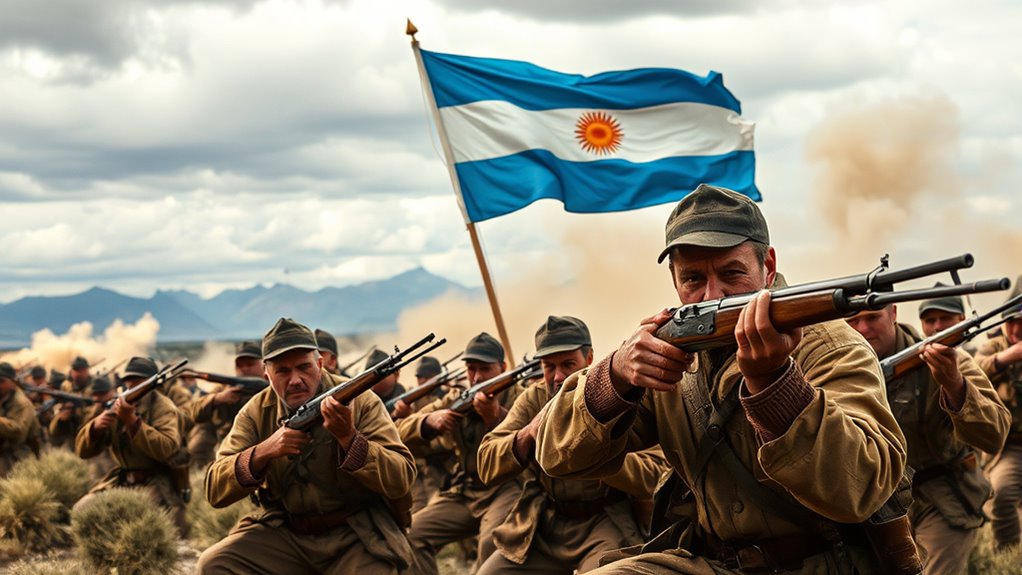
You see, Argentina’s fight for independence was shaped by early indigenous resistance and fierce regional conflicts. As you explore the period, you’ll notice how political struggles both divided and united different groups endeavoring for a common nation. This turbulent journey ultimately set the foundation for Argentina’s national identity.
Early Indigenous Resistance
How did indigenous groups resist Spanish colonization and shape Argentina’s early history? You see, groups like the Yámana, Tehuelche, and Mapuche fought fiercely to defend their land and culture. They launched guerrilla attacks, resisted forced labor, and maintained their traditions despite colonial pressures. These acts of resistance slowed Spanish expansion into southern Patagonia and the Andes. The Mapuche, in particular, resisted for centuries, creating a formidable barrier to colonization in the south. Their resilience preserved important aspects of their identity and challenged colonial dominance. Their persistent resistance influenced Spanish policies and shaped the region’s social landscape. Even as colonization progressed, indigenous communities remained an essential force, shaping Argentina’s early history through their fight for autonomy and cultural survival.
Political Struggles and Unity
The fierce resistance of indigenous groups like the Mapuche and Tehuelche delayed Spanish efforts to fully control southern regions, setting the stage for ongoing political struggles. You face a history of rebellion, negotiation, and unification as Argentina fought to form a nation. Key moments include:
- The May Revolution of 1810, which sparked local resistance against Spanish rule.
- The declaration of independence on July 9, 1816, uniting diverse regions temporarily.
- The leadership of figures like José de San Martín, who led military campaigns for independence.
- The regional conflicts and political instability that followed, shaping Argentina’s quest for unity.
These struggles reflect your nation’s complex journey from colonial divisions toward a unified identity, marked by continuous efforts to reconcile internal differences.

The Argentine Traditional Cookbook: Food, Flavors, and Recipes of Argentina (Full Color Pictures) (The Traditional Cookbook)
As an affiliate, we earn on qualifying purchases.
As an affiliate, we earn on qualifying purchases.
Political Turmoil and the Rise of Caudillos
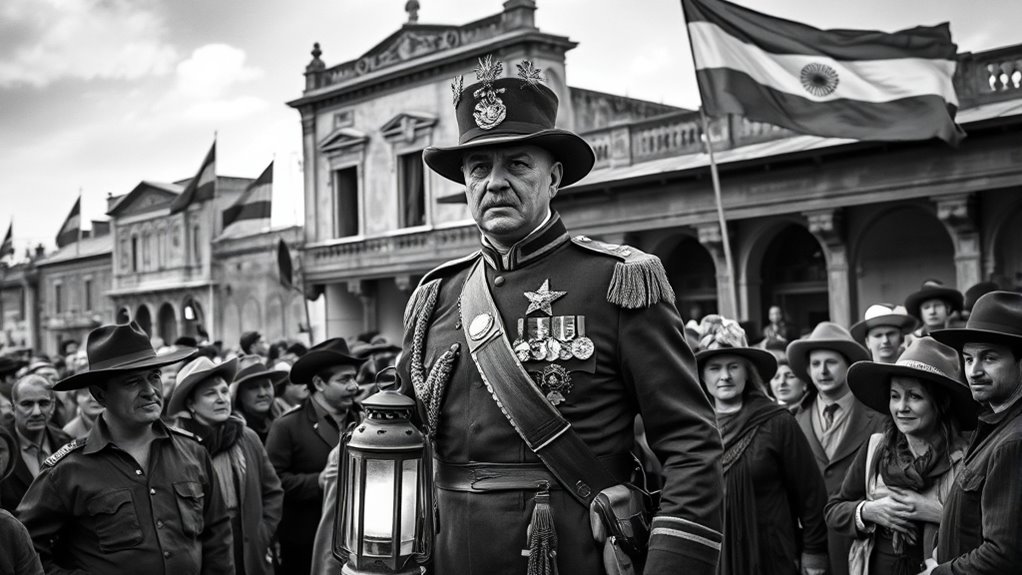
You see how caudillos gained power by exploiting regional loyalties and military strength during times of instability. Their influence often depended on direct control over armies and local resources, shaping the political landscape. Understanding these dynamics helps explain the recurring pattern of military interventions and regional conflicts in Argentina’s history. Additionally, recognizing the role of local governance provides deeper insight into how regional leaders maintained authority amidst national upheavals.
Caudillos’ Power Dynamics
Amid periods of political chaos and weak central authority, powerful local leaders known as caudillos emerged as dominant figures in Argentine history. You’ll see that their influence grew through a few key ways:
- They capitalized on regional loyalties, securing local support and bypassing national governments.
- They used military strength or violence to maintain control and suppress opposition.
- They formed alliances with landowners and business elites to bolster their power.
- They often dictated local policies, acting as de facto rulers in their territories.
- Their rise was facilitated by the weak central governments, which created a power vacuum that allowed caudillos to flourish.
These leaders thrived in unstable times, filling the power vacuum left by weak governments. Their dominance shaped regional politics, often resisting central authority and asserting local independence.
Military Intervention Patterns
How did military interventions shape Argentina’s political landscape during times of instability? You’ll see that Argentina experienced frequent military coups, especially in the 19th and 20th centuries, as armed forces stepped in to fill political voids. These interventions often aimed to restore order or protect sectional interests but led to cycles of authoritarian rule and chaos. Military leaders, or caudillos, rose to power by exploiting unrest, claiming to defend national unity, and suppressing opposition. Their influence persisted through coups in 1930, 1943, and 1976, each bringing brief periods of military dominance. These interventions disrupted democratic processes, created political polarization, and fostered a pattern where armed forces acted as arbiters of power, shaping Argentina’s turbulent history of governance and resistance. Additionally, the rise of caudillos often reflected broader social and economic tensions that military interventions sought to manage or exploit.
Regional Political Influences
Regional political turmoil in Argentina often created a fertile ground for caudillos—local strongmen who capitalized on unrest to seize power. These leaders gained influence by exploiting regional grievances, personal loyalty, and military support. Their dominance shaped local politics and often challenged central authority. You should note:
- Caudillos emerged during periods of instability, filling power vacuums.
- They used violence and patronage to maintain control.
- Regional conflicts fueled their rise, especially in frontier areas.
- Their influence contributed to fragmented national unity, delaying centralized governance. Additionally, these leaders often thrived by exploiting regional grievances and fostering personal loyalty among their followers.

HomeArtPrint Argentina Art Print Poster, Caribbean South America Countries Culture Wall Art for Bedroom Bathroom Living Room Decor 95 (Argentina, 8 x 10 inches, Unframed)
COLORFUL PASTEL WALL PRINTS: Add a burst of color to your home with our Art Print. Our paintings…
As an affiliate, we earn on qualifying purchases.
As an affiliate, we earn on qualifying purchases.
Economic Growth and Mass Immigration at the Turn of the Century
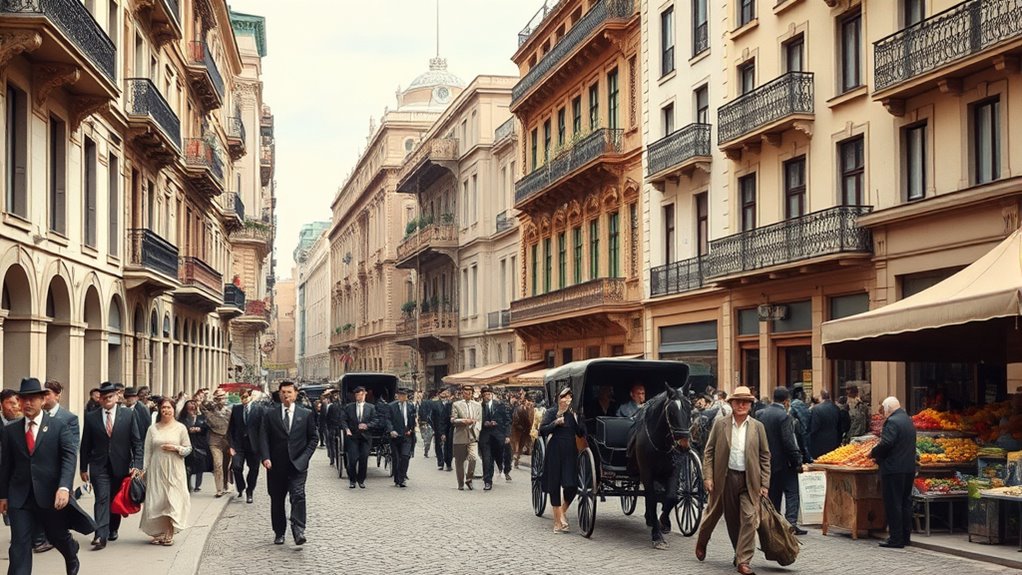
At the turn of the 20th century, Argentina experienced rapid economic growth fueled by a surge of European immigrants. You see, the country became a magnet for Italians, Spaniards, Germans, and others seeking better opportunities. This influx boosted the labor force, especially in agriculture, industry, and infrastructure projects like railways. As a result, Argentina’s economy flourished, making it one of South America’s wealthiest nations. You notice how cities like Buenos Aires transformed into bustling urban centers, blending diverse cultures and ideas. The government encouraged immigration through policies that promoted land grants and settlement incentives. Meanwhile, the population grew considerably, and society became more cosmopolitan. This period marked a pivotal shift, shaping Argentina’s social fabric, economic development, and global connections well into the following decades.
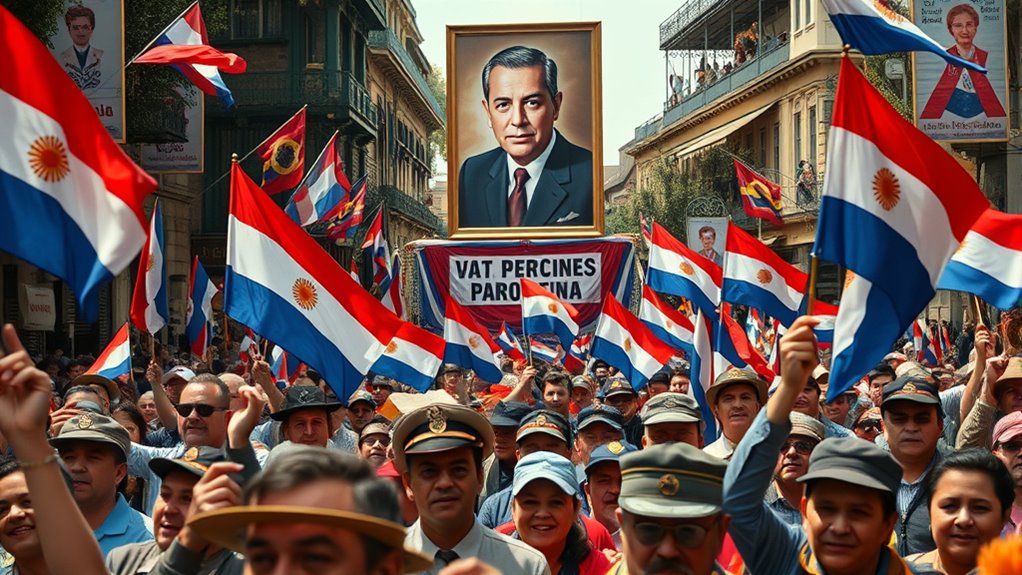
The Perón Era transformed Argentine society through a bold wave of populist policies that aimed to empower the working class and reshape the nation’s social fabric. You experience this shift through key developments:
- Labor reforms: Improved wages, working conditions, and recognition of unions.
- Social programs: Expanded healthcare, education, and welfare to reduce inequality.
- Political mobilization: Fostering a sense of national pride and participatory politics.
- Iconic figures: Eva Perón’s advocacy for women’s rights and social justice inspired millions.
This era challenged traditional elites and created a new political landscape centered on social justice and populist ideals. You see how Perón’s policies laid the groundwork for ongoing debates about democracy, social welfare, and national identity in Argentina. Vetted
Military Coups and the Dark Days of Dictatorship
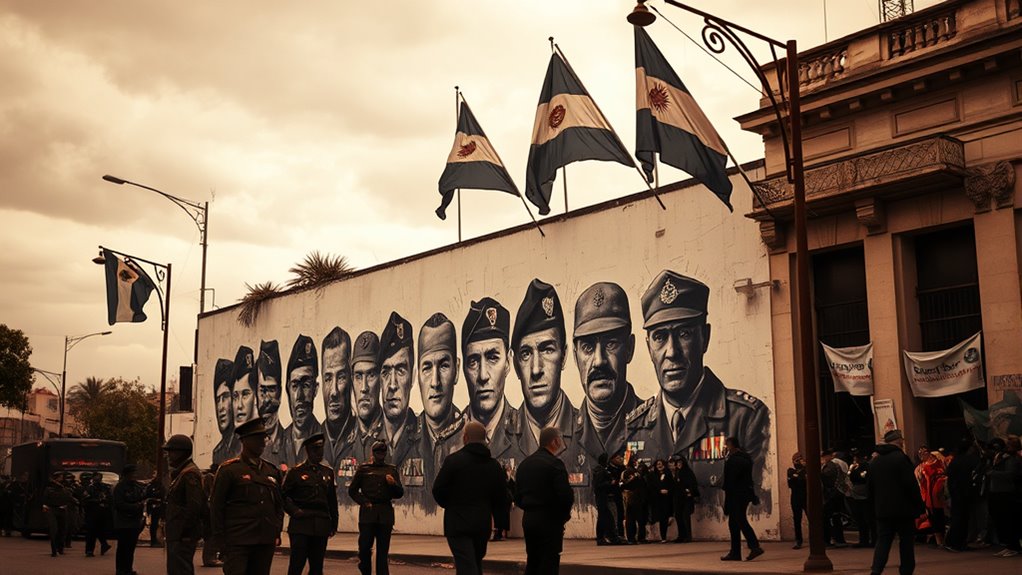
Why did Argentina experience such a turbulent period of military coups and brutal dictatorship? You might say it stemmed from deep political instability, economic crises, and social unrest. After Perón’s fall in 1955, military leaders grew distrustful of civilian governments they viewed as weak or corrupt. They believed they needed to restore order through force. From 1958 onward, coups became frequent, disrupting democratic governance. By 1976, the military seized power again, aiming to eliminate guerrillas and perceived threats. Instead, they imposed a brutal dictatorship, using state terrorism, disappearances, and censorship to suppress opposition. Thousands of citizens vanished during this “Dirty War,” creating a climate of fear and repression. This dark chapter lasted until 1983, when democracy finally returned, but the scars remained. Understanding the role of cost variances and how they can influence military budgeting could shed light on some of the logistical challenges faced during this turbulent period.
The Falklands War and Democratic Revival
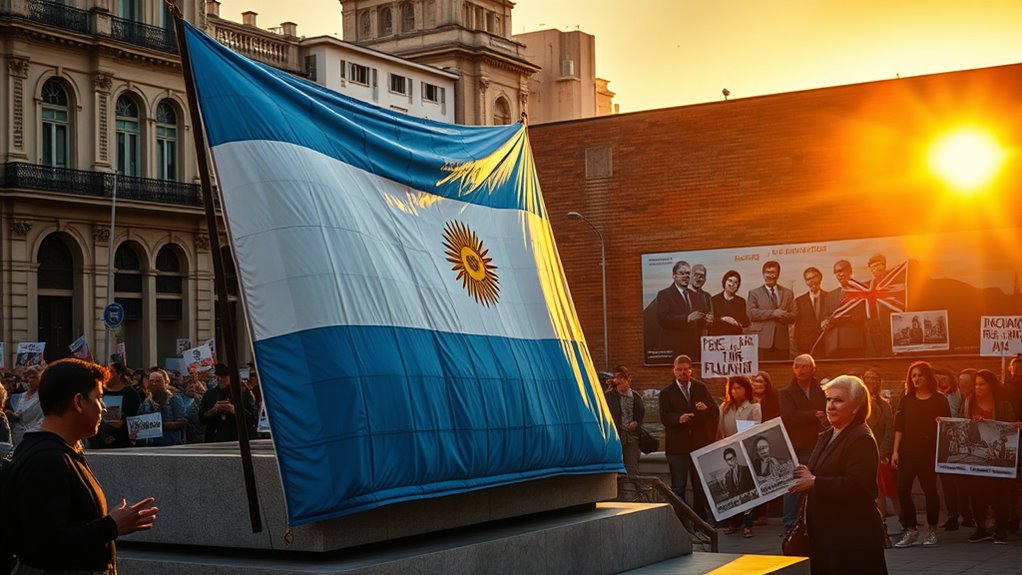
Following years of military rule and social unrest, Argentina’s return to democracy in 1983 marked a pivotal moment in its history. The Falklands War in 1982 exposed the military regime’s weaknesses and fueled national discontent. After the war, Argentines sought change, leading to democratic reforms. Here’s what you should know:
- The defeat in the Falklands War diminished the military’s legitimacy and spurred democratic efforts.
- Raúl Alfonsín’s election in 1983 symbolized Argentina’s return to civilian rule.
- The country faced challenges like economic instability, but democracy became firmly rooted.
- This period saw efforts to reconcile with past human rights abuses and strengthen political institutions.
These events set the stage for Argentina’s ongoing struggle to balance democracy, economic growth, and social justice.
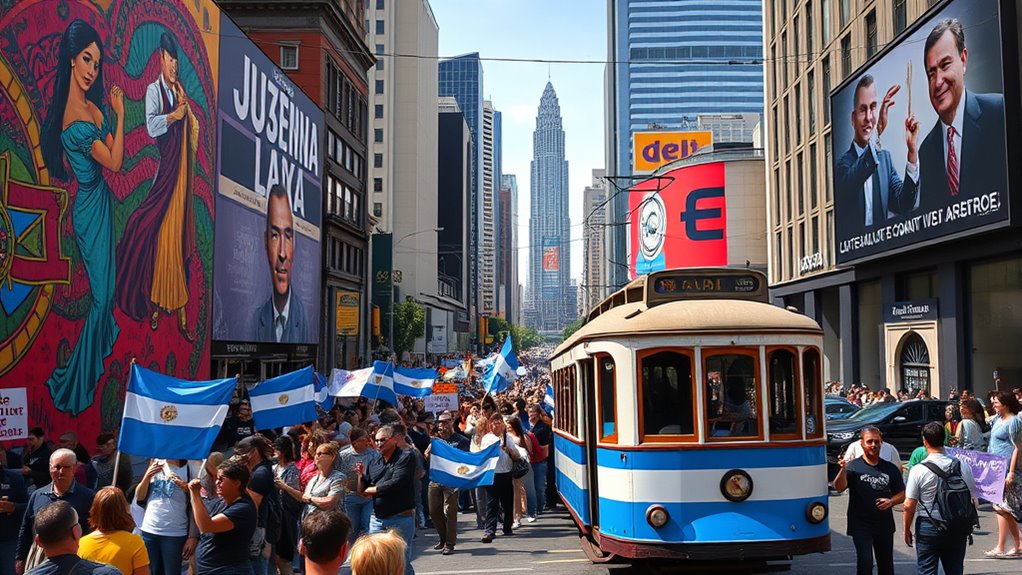
Despite Argentina’s progress since returning to democracy, the country continues to face significant economic instability that affects everyday life. You might notice frequent inflation, currency devaluations, and rising poverty levels, which make planning for the future difficult. These economic challenges often spark social movements demanding change, justice, and better living conditions. Strikes, protests, and grassroots campaigns become common as citizens push back against government policies they see as ineffective or corrupt. The volatile economy also fuels political polarization, making consensus hard to achieve. You’ll see how economic struggles intertwine with social activism, shaping Argentina’s modern identity. These ongoing issues test the resilience of its democracy and highlight the importance of addressing structural problems to foster stability and social equity. Additionally, the economic instability influences projected future growth, impacting long-term development strategies.
Cultural Heritage: Traditions, Arts, and Identity
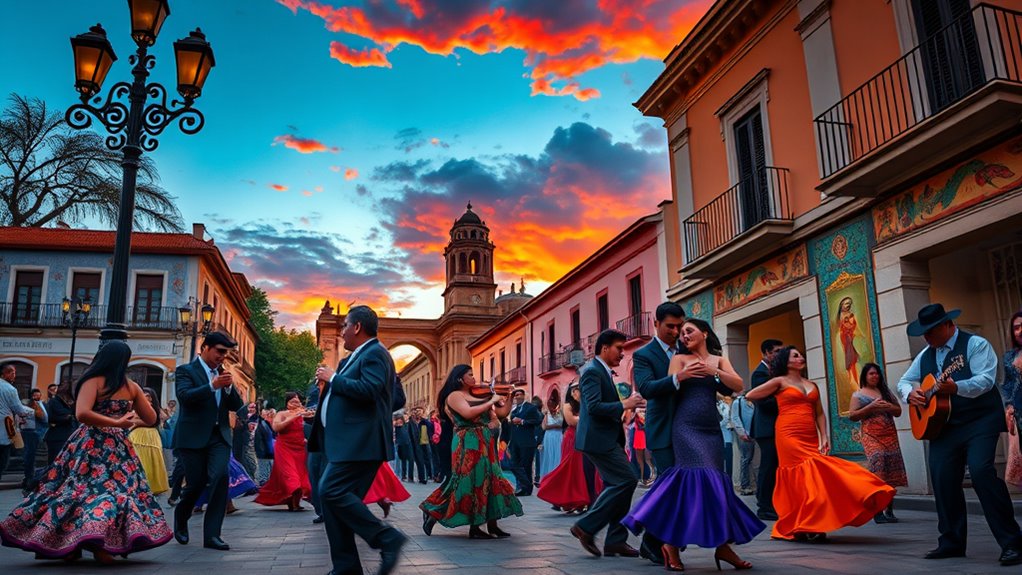
Argentina’s rich cultural heritage is woven from a diverse blend of indigenous traditions, European influences, and modern innovations that shape its national identity. You can explore this through:
Argentina’s culture blends indigenous roots, European influences, and modern innovations shaping its vibrant identity.
- Music and Dance: Tango, born in Buenos Aires, blends African, European, and indigenous rhythms, symbolizing Argentine passion.
- Festivals: Celebrations like Carnival and local rodeos showcase vibrant costumes, folk music, and community spirit.
- Arts: Renowned painters like Xul Solar and Fernando Fader reflect Argentina’s evolving identity through vivid imagery.
- Cuisine: Asado grilling and mate sharing highlight social bonds, blending indigenous plants with European culinary techniques.
- Cultural Expressions: Handcrafts and visual arts also serve as vital expressions of Argentina’s cultural identity, illustrating a rich tradition of storytelling and community history.
These elements form a dynamic cultural mosaic that defines Argentina’s unique character and deep-rooted traditions.
Frequently Asked Questions
How Did Indigenous Cultures Influence Modern Argentine Traditions?
You’ll notice that indigenous cultures deeply influence modern Argentine traditions through music, dance, and cuisine. You might enjoy tango, which blends indigenous rhythms with African and European elements. Traditional foods like mate and asado have roots in indigenous practices. Indigenous symbols and stories also shape regional festivals and art. By embracing these influences, you connect with Argentina’s rich cultural heritage and appreciate how indigenous roots continue to shape contemporary life.
What Role Did Women Play During Argentina’s Political Upheavals?
Women played vital roles during Argentina’s political upheavals by organizing protests, supporting revolutionary movements, and advocating for social justice. You might have seen figures like Eva Perón, who championed women’s rights and labor reforms, shaping the nation’s social landscape. During military coups and dictatorships, women often risked their safety to resist oppression, becoming symbols of resilience and change in Argentina’s turbulent history.
How Has Immigration Shaped Argentina’s Diverse Cultural Identity?
Imagine a vibrant mosaic, each piece representing a different culture—this is Argentina’s identity shaped by immigration. You’re part of a nation built on waves of Europeans, especially Italians and Spaniards, who brought their traditions, language, and customs. These influences blend with indigenous roots and African heritage, creating a rich cultural tapestry. Your country’s diversity fuels its unique character, making Argentina a lively, ever-evolving symphony of global traditions.
What Are Key Symbols of Argentine National Identity?
You recognize iconic symbols like the Argentine flag with its blue and white stripes and the Sun of May, representing independence. The national anthem evokes pride, while tango music and dance reflect cultural passion. You also see the gaucho as a symbol of rural heritage, embodying bravery and tradition. These symbols unite Argentinians, reminding you of your shared history, resilience, and vibrant cultural identity.
How Is Argentina Preserving Its Indigenous Heritage Today?
You can see Argentina actively preserving its indigenous heritage through cultural initiatives, such as supporting indigenous languages, traditions, and crafts. You might participate in festivals celebrating indigenous roots or visit museums showcasing their history. The government and NGOs also promote indigenous rights and land recognition, encouraging communities to maintain their identity. By engaging with these efforts, you help guarantee the rich indigenous legacy continues to thrive in modern Argentina.
Conclusion
You’ve seen how Argentina’s history is full of resilience and transformation. Did you know that over 50% of Argentinians today claim European ancestry, reflecting a rich blend of cultures? Despite political upheavals and economic challenges, the country’s vibrant arts, traditions, and passionate people continue to define its identity. Your journey through Argentina’s past shows that, no matter the struggles, its spirit remains strong and inspiring.