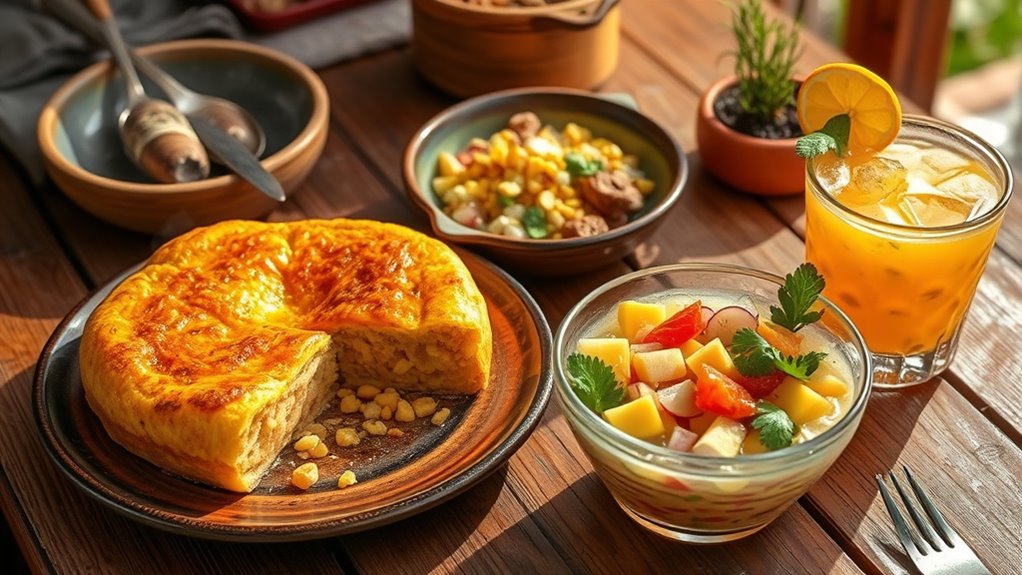

Chilean cuisine blends indigenous ingredients like corn, potatoes, and seafood with Spanish and European influences, creating a rich regional diversity. You’ll find hearty dishes such as cazuela, empanadas, and curanto that reflect local traditions and seasonal ingredients. Celebrations and social gatherings highlight the importance of food in Chilean culture, while modern chefs experiment with fusion techniques and wines that boost the country’s global culinary reputation. Exploring further reveals how these traditions shape national identity and contemporary innovations.
Key Takeaways
- Chilean cuisine combines indigenous ingredients like corn, potatoes, and seafood with European influences, creating a diverse culinary landscape.
- Traditional dishes such as empanadas, cazuela, and curanto reflect regional ingredients and ancient cooking techniques.
- Fusion cuisine and modern chefs innovate with international techniques, blending flavors and presentation styles.
- Regional and seasonal ingredients, including seafood in the north and hearty stews in the south, shape diverse regional dishes.
- Food plays a vital role in cultural identity, celebrations, and social gatherings, symbolizing Chile’s rich heritage and community spirit.

Magic Dumpling Maker Kit, Set of 4 – Mold Ravioli, Empanadas, Momos, Gyozas, Pot Stickers, Jamaican Beef Patties, Pierogi and Calzones – Wonton Dough Press and Pasta Making Tools
VERSATILE; More than just a simple dumpling maker, this set of four dough press accessories can be used…
As an affiliate, we earn on qualifying purchases.
As an affiliate, we earn on qualifying purchases.
Indigenous Roots and Traditional Ingredients

Have you ever wondered how Chile’s rich indigenous heritage shapes its culinary traditions? You’ll find that indigenous ingredients like corn, potatoes, beans, and seafood form the backbone of Chilean dishes. These staples come from pre-Columbian agriculture and the Pacific coast’s abundant waters. Dishes such as humitas—corn tamales—and milcao—potato pancakes—originate from indigenous methods and local crops. The Humboldt Current provides a variety of seafood, including abalones and mussels, which are integral to coastal cuisine. Traditional cooking techniques like earth pit baking, seen in the southern region’s curanto, are still practiced today. These elements reflect a deep connection to the land and sea, preserving indigenous flavors and methods that continue to influence Chile’s culinary identity. Additionally, the use of traditional pottery in cooking and serving emphasizes the importance of cultural preservation in Chilean food practices.

Mis Jarritos Mexican Clay Bean Pot W/Lid, Olla De Barro Frijolera Decorada Con Tapa, Cazuela,Cookware, Traditional Classic Pot. (1-1.25Gallon) (Food Safe) (Made In Mexico) (Olla Jalisco) (1) (1)
Olla Frijolera (hand‑crafted clay bean pot) Handcrafted by Mexican artisans, versatile for cooking beans, stews, café de olla—or decorative…
As an affiliate, we earn on qualifying purchases.
As an affiliate, we earn on qualifying purchases.
Colonial and European Culinary Influences

Chile’s culinary landscape has been profoundly shaped by colonial and European influences, which introduced new ingredients and cooking techniques that blend seamlessly with indigenous traditions. When Europeans arrived, they brought beef, pork, wheat, and dairy, transforming local diets. You’ll find dishes like empanadas, cazuela, and asado, reflecting Spanish culinary roots. German, Italian, and French immigrants added pastries, cheeses, and wines, enriching the cuisine further. European techniques merged with local ingredients, giving rise to hybrid dishes like pastel de choclo—a savory corn pie. These influences shifted preferences from indigenous staples to more diverse flavors, textures, and preparation styles. As a result, Chile’s cuisine boasts a rich fusion of native ingredients and European culinary craftsmanship, creating a vibrant, evolving gastronomic identity.

New York Steak & Seafood Chilean Sea Bass Fillets – Wild-Caught MSC Certified 4 × 8 oz Skinless Center-Cut Portions – Flash-Frozen & Vacuum-Sealed, Buttery Rich Flavor, High Omega-3 Protein for Grill/Bake/Pan-Sear (4 Fillets)
Restaurant-Quality Flavor at Home – Rich, buttery Chilean Sea Bass fillets (Patagonian toothfish) turn weeknight dinners into fine-dining…
As an affiliate, we earn on qualifying purchases.
As an affiliate, we earn on qualifying purchases.
Regional and Seasonal Diversity in Chilean Cuisine

The diverse influences shaping Chilean cuisine extend beyond historical origins to include distinct regional and seasonal variations that make the country’s food culture truly vibrant. In the north, you’ll find dishes inspired by the arid desert landscape, like ceviche and charqui (dried meat), highlighting seafood and preserved meats. Central Chile offers fresh produce such as corn, beans, and fruits like cherimoya, with dishes like humitas and pastel de choclo that match seasonal harvests. In the south, hearty stews, potatoes, and seafood dominate, with specialties like curanto and pulmay reflecting cooler climates. Seasonal ingredients considerably influence menus; you enjoy humitas in summer’s bounty and warm cazuela during winter. Each region’s unique climate and resources shape its culinary identity, creating a diverse tapestry of flavors across Chile. Additionally, the availability of Seasonal ingredients plays a crucial role in shaping traditional dishes and regional specialties throughout the year.

10-Piece Organic Spice Starter Set | Badia Cayenne Pepper, Paprika, Oregano, Cumin, Gonsalves Crushed Red Pepper & More – Gift for Home Cooks
10 Premium Badia Spices for Bold Flavor: Cayenne Pepper, Paprika, Basil, Cumin, Garlic Powder, Onion Powder, Oregano, Rosemary,…
As an affiliate, we earn on qualifying purchases.
As an affiliate, we earn on qualifying purchases.
Iconic Dishes and National Favorites

You’ll find that classic Chilean empanadas are a staple, filled with meat, onions, olives, and eggs, symbolizing national pride. Cazuela offers a hearty, comforting stew with meat and vegetables that’s loved across the country. And everyone agrees that pastel de choclo, with its sweet corn topping and savory filling, represents the heart of Chilean home cooking. Incorporating unique and creative planters into your kitchen or dining space can also reflect the vibrant and diverse culture of Chilean cuisine.
Classic Chilean Empanadas
Have you ever tasted a Chilean empanada? These golden pastries are a true national favorite, often enjoyed during festivals, family gatherings, or as street food. Made with a flaky crust, they’re filled with a savory mixture of seasoned ground meat, onions, olives, and sometimes hard-boiled eggs or raisins for a touch of sweetness. The filling’s rich aroma and bold flavors reflect Chile’s blend of indigenous ingredients and Spanish culinary influences. You can find empanadas baked or fried, depending on regional traditions or personal preference. They’re often served with a simple salsa or pebre for added zest. Whether enjoyed warm or at room temperature, these empanadas embody Chile’s hearty, comforting, and culturally significant cuisine.
Heartwarming Cazuela Stew
A steaming bowl of cazuela embodies the heart of Chilean home cooking, offering comfort and warmth with every spoonful. This hearty stew combines tender meat—beef, chicken, or pork—with a colorful mix of potatoes, pumpkin, corn, and sometimes rice or noodles. The broth is rich and flavorful, often infused with local herbs and vegetables, creating a harmony of simple yet satisfying tastes. You’ll find cazuela at family gatherings and regional festivals, especially during colder months, reflecting its status as a national favorite. It’s a dish that brings people together around the table, celebrating Chile’s indigenous ingredients and culinary traditions. Each spoonful reminds you of Chile’s diverse landscape and the warmth of its communal spirit. Regional variations showcase unique ingredients and preparation styles across different areas of the country.
Celebrated Pastel De Choclo
Pastel de choclo stands as one of Chile’s most beloved and iconic dishes, blending indigenous ingredients with European culinary influences. You’ll notice how the sweet corn crust covers a savory filling of ground beef, chicken, onions, hard-boiled eggs, olives, and raisins, creating a perfect harmony of flavors. This dish showcases Chile’s agricultural bounty, especially its corn, which is central to many traditional recipes. The topping, made from fresh, mashed corn, is spread over the seasoned meat mixture and baked until golden. Often served during festive occasions and family gatherings, pastel de choclo embodies comfort and national pride. Its rich combination of sweet, savory, and salty elements makes it a true reflection of Chile’s culinary history and cultural fusion.
Cultural Customs and Celebrations

Chile’s rich cultural identity shines through its customs and celebrations, which often emphasize community, family, and heritage. You’ll notice that gatherings like the once (afternoon tea) bring people together over bread, cheese, and sweets, blending Spanish and European traditions. Family meals are central, especially on Sundays, when many enjoy asado or cazuela, reflecting the importance of togetherness. Festivals and regional fairs showcase local dishes, crafts, and culinary competitions, celebrating regional identities and indigenous roots. Chileans also observe Chilean Cuisine Day on April 15, honoring their food heritage. During these events, community bonds strengthen, and cultural pride flourishes. These customs keep Chile’s culinary traditions alive, reinforcing a sense of belonging and continuity across generations. Portable restroom solutions have become an essential part of these gatherings, ensuring comfort and sanitation for all attendees.
Modern Trends and Global Impact

You’ll notice that modern Chilean cuisine is embracing fusion, blending traditional flavors with global culinary techniques. Chilean wines have gained international acclaim, boosting the country’s reputation on the world stage. These trends highlight how Chile’s food scene continues to evolve while respecting its rich culinary heritage. Additionally, the incorporation of dynamic communication exercises into culinary experiences fosters greater appreciation and understanding of Chilean food traditions among diverse audiences.
Fusion Cuisine Innovations
Modern Chilean cuisine is increasingly embracing fusion, blending traditional flavors with global culinary techniques to create innovative dishes. You’ll notice chefs experimenting with international ingredients and methods, elevating classic recipes. This trend results in vibrant plates that honor the country’s heritage while appealing to global palates. Incorporating cultural elements into the dishes further enriches the culinary experience.
| Technique | Fusion Dish Example |
|---|---|
| Searing & Grilling | Chilean-Asian miso-marinated salmon |
| Fermentation | Kimchi-inspired pebre |
| Baking & Pastry | Empanadas with Mediterranean fillings |
This blending enhances Chile’s culinary appeal, fostering creativity and attracting international attention. The focus remains on fresh, local ingredients, but the ways they’re prepared and presented evolve continuously, reflecting a dynamic culinary landscape that respects tradition yet embraces innovation.
Chilean Wines’ Global Rise
Over the past few decades, Chilean wines have gained international acclaim, establishing a reputation for quality and innovation. You’ll notice that Chile’s diverse climates and soils allow for a wide variety of high-quality wines, from crisp Sauvignon Blancs to rich Carménère. The country’s focus on sustainable practices and modern winemaking techniques has boosted its global standing. Chilean wines are now featured in top restaurants worldwide, and wine tourism thrives in regions like the Central Valley and Colchagua Valley. You’ll also see that international awards and critical recognition continue to elevate Chile’s wine industry. This global rise not only highlights Chile’s winemaking expertise but also reinforces its cultural identity, drawing more people to explore its vibrant wine heritage alongside traditional cuisine. sustainable practices have become a key factor in maintaining quality and environmental responsibility within the industry.
The Role of Food in Chile’s Social and Cultural Identity

Food in Chile serves as a powerful symbol of national identity, reflecting both its indigenous roots and colonial history. It brings people together during celebrations, family gatherings, and festivals, fostering a sense of community. Traditional dishes like empanadas and cazuela remind you of shared heritage, while regional specialties highlight local pride. Food also marks important milestones, from national holidays to religious events, serving as a link between past and present. It’s a way to honor ancestors and preserve customs. Additionally, the significance of cultural symbolism in Chilean cuisine emphasizes its role in maintaining cultural resilience and unity.
Frequently Asked Questions
How Do Indigenous Ingredients Influence Modern Chilean Cooking?
Indigenous ingredients like corn, potatoes, beans, and seafood shape modern Chilean cooking by adding authentic flavors and regional diversity. You’ll find traditional staples in contemporary dishes, blending old techniques with new styles. For example, chefs incorporate humitas and curanto in innovative ways, highlighting local produce. These ingredients connect you to Chile’s roots while inspiring fresh, creative cuisines that celebrate the country’s rich cultural heritage.
What Are the Health Benefits of Traditional Chilean Dishes?
You’ll be blown away by the health benefits of traditional Chilean dishes! Their rich ingredients like seafood, potatoes, and beans are packed with omega-3s, fiber, and essential nutrients that boost your energy, improve your mood, and strengthen your immune system. Plus, using natural, locally sourced ingredients means you’re fueling your body with pure goodness. Embrace these hearty, wholesome dishes for a healthier, more vibrant life every day!
How Has Globalization Changed Chilean Culinary Practices?
Globalization has transformed your Chilean culinary practices by introducing new ingredients, techniques, and fusion dishes. You now have access to a broader range of spices, international cuisines, and modern cooking methods, which blend seamlessly with traditional flavors. This mix encourages creativity in your kitchen, making dishes more diverse and globally appealing. You also see an increased focus on sustainable sourcing and local ingredients, reflecting modern influences while honoring your culinary heritage.
What Role Do Regional Wines Play in Chilean Food Culture?
Regional wines are the heartbeat of Chilean food culture, like a vibrant rhythm that guides every meal. You’ll find wine pairing essential, enhancing flavors from hearty cazuela to fresh seafood. In vineyards across the Central Valley, winemakers craft varieties that mirror local dishes, creating harmony on your plate. By savoring these wines, you connect deeply with Chile’s land and traditions, making each dining experience a celebration of its rich, flavorful heritage.
How Are Sustainable Food Practices Incorporated Into Chilean Cuisine Today?
You can see sustainable food practices in Chilean cuisine today through the growing use of local, seasonal ingredients, and emphasis on organic farming. Chefs and farmers prioritize minimizing environmental impact, sourcing seafood responsibly, and supporting small-scale producers. Many restaurants serve dishes crafted with eco-friendly methods, and regional markets often feature organic produce. By choosing these options, you’re helping preserve Chile’s culinary heritage while promoting ecological balance and health.
Conclusion
Your journey through Chile’s culinary landscape reveals a vibrant tapestry woven from indigenous roots, colonial influences, and regional diversity. Food here isn’t just sustenance; it’s the heartbeat of cultural identity, like a lively dance that keeps traditions alive. As modern trends blend with age-old customs, Chile’s cuisine continues to evolve, inviting you to savor a rich heritage that’s as colorful and dynamic as the country itself. Immerse yourself, and let the flavors tell their story.