
Peruvian cuisine is a vibrant mix of indigenous ingredients like potatoes, corn, aji peppers, and seafood, blended with influences from Chinese, Japanese, African, and Spanish traditions. You’ll find iconic dishes like ceviche, Lomo Saltado, and Aji de Gallina, alongside unique drinks like Pisco Sour and chicha morada. Its regional diversity showcases coastal, Andean, and Amazonian flavors. To explore how tradition and fusion create this dynamic culinary landscape, keep discovering the rich flavors Peru offers.
Key Takeaways
- Peruvian cuisine features diverse regional dishes, highlighting coastal seafood, Andean potatoes and quinoa, and Amazonian fruits and fish.
- Ceviche is a national symbol, complemented by dishes like Lomo Saltado, Aji de Gallina, and Rocoto Relleno, reflecting local flavors and Chinese influence.
- Fusion cuisine integrates Chinese, Japanese, African, and Spanish elements, creating innovative dishes like chifa, Nikkei, and traditional stews.
- Traditional beverages such as Pisco Sour, chicha morada, and Inca Kola are integral, along with desserts like picarones and suspiro limeño.
- Peru’s culinary scene is globally recognized, with Lima renowned for its top restaurants, food festivals, and cultural culinary innovations.
The Significance of Ceviche in Peruvian Culture

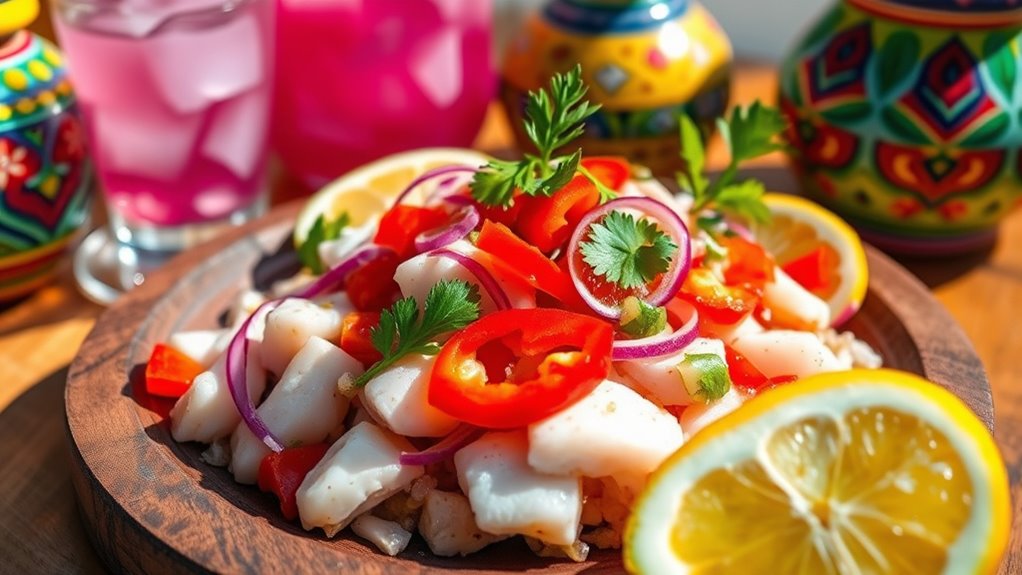
Ceviche holds a special place in Peruvian culture because it embodies the country’s rich coastal heritage and culinary ingenuity. When you enjoy ceviche, you’re experiencing more than just a dish—you’re tasting a tradition passed down through generations. It reflects Peru’s connection to the sea, showcasing the country’s abundant marine resources. The dish also represents a fusion of indigenous ingredients and Spanish influence, especially with the lime marinating process. Ceviche is often a centerpiece at celebrations, family gatherings, and festivals, symbolizing national pride. Its regional variations highlight Peru’s diversity and local flavors. Whether served with sweet potato, corn, or cancha, ceviche remains a vibrant symbol of Peru’s culinary identity and coastal legacy. Additionally, the dish’s significance is amplified by the cultural meaning it holds within Peruvian society.
Staple Ingredients and Agricultural Heritage of Peru
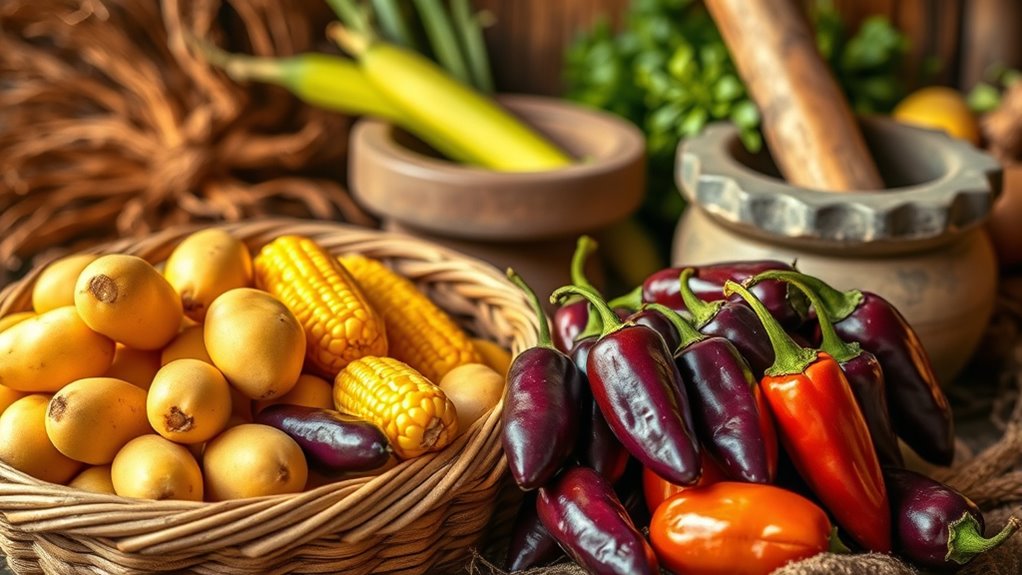
Peru’s rich agricultural heritage forms the backbone of its diverse cuisine, providing a wealth of unique ingredients that define its flavors. You’ll find over 4,000 native potato varieties, used in dishes like causa and papa a la huancaína, showcasing their cultural importance. Corn, especially choclo and cancha, serves as a staple side or snack, adding texture and sweetness. Aji peppers, particularly aji amarillo, give dishes their distinctive heat and flavor, appearing in sauces and ceviche. Quinoa, native to the Andes, is prized for its nutritional value and versatility in soups and salads. Meats like beef, chicken, and seafood are common, while alpaca and cuy highlight Andean traditions. These ingredients reflect Peru’s agricultural diversity and long-standing relationship with its land. Additionally, the agricultural diversity of Peru has been supported by its varied climate zones, enabling the cultivation of numerous native crops.
Iconic Dishes Beyond Ceviche
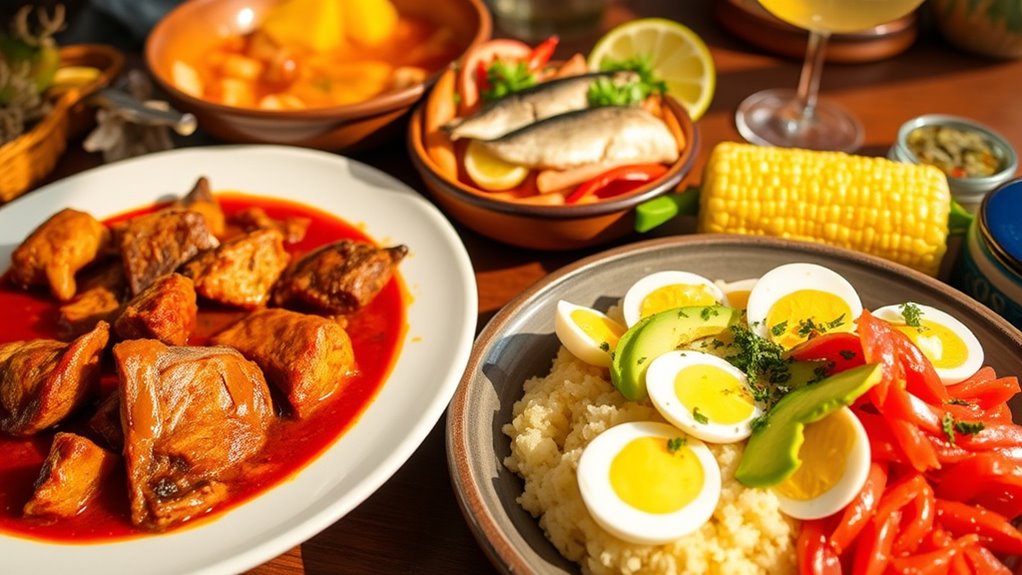
Beyond ceviche, Peru boasts a rich array of iconic dishes that showcase its culinary diversity. You’ll find hearty flavors and unique combinations that reflect different regions and cultures. Here are three must-try dishes:
- Lomo Saltado: A stir-fry blending beef, onions, tomatoes, and fries, highlighting Chinese influence with its soy sauce touch.
- Aji de Gallina: Shredded chicken in a creamy, spicy yellow chili sauce, served with rice, olives, and cheese.
- Rocoto Relleno: Spicy red peppers filled with minced meat, nuts, and cheese, then grilled and paired with potato gratin from Arequipa.
These dishes celebrate Peru’s culinary innovation and regional flavors, offering a taste beyond the popular ceviche.
Regional and Cultural Diversity in Peruvian Cuisine

You’ll notice that Peruvian cuisine varies greatly by region, with coastal areas focusing on fresh seafood like ceviche and tiradito. In the Andes, staples such as potatoes, quinoa, and alpaca define the local flavors, while the Amazon offers unique ingredients like freshwater fish and exotic fruits. These regional differences reflect Peru’s diverse landscapes and rich agricultural heritage.
Coastal Seafood Specialties
Coastal regions of Peru boast a vibrant array of seafood dishes that highlight the country’s rich marine resources. You’ll find a variety of specialties that reflect regional tastes and cultural influences. Here are three key highlights:
- Ceviche: The national dish, featuring raw fish marinated in lime juice with cilantro, onions, and aji amarillo, often served with sweet potato and toasted corn.
- Tiradito: Thinly sliced raw fish similar to sashimi, drizzled with spicy sauces made from Peruvian peppers and citrus, showcasing Japanese and local fusion.
- Arroz con Mariscos: A flavorful seafood rice dish with shrimp, squid, and mussels cooked with garlic, onions, and herbs, favored along the northern coast. Additionally, the preparation of seafood dishes often involves cultural influences, reflecting Peru’s diverse culinary heritage.
These dishes celebrate Peru’s marine bounty and diverse culinary traditions.
Andean Agricultural Staples
The Andean region of Peru is central to the country’s culinary identity, providing a diverse array of staple ingredients that shape traditional dishes. You’ll find over 4,000 native potato varieties, which form the base for dishes like causa and papa a la huancaína. Corn, especially choclo and cancha, serves as both side and snack, adding texture and flavor. Aji peppers, particularly aji amarillo, are essential for sauces, ceviche, and stews, giving dishes their vibrant heat and color. Quinoa, an ancient grain, features prominently in soups and salads, while meats like beef, chicken, alpaca, and cuy highlight Andean culinary traditions. These ingredients reflect a deep agricultural heritage that influences the rich, diverse flavors found throughout highland Peru. Additionally, understanding the cultivation of these staples can enhance appreciation for their agricultural significance in Peruvian cuisine.
Amazonian Unique Flavors
Amazonian cuisine offers a vibrant array of flavors rooted in the region’s rich biodiversity. You’ll discover ingredients like freshwater fish, tropical fruits, and native herbs that define this unique culinary style. Here are three key aspects:
- Freshwater Fish: Dishes like pirarucu and tambaqui showcase the region’s abundant aquatic life, often prepared grilled or in stews.
- Exotic Fruits: Fruits such as camu camu, cupuaçu, and aguaje add tangy, sweet, and sour notes to beverages and desserts.
- Native Herbs and Spices: Herbs like huacatay and wild peppers lend distinctive aromas and heat, used in marinades and sauces.
This diversity creates bold, vibrant flavors that highlight the Amazon’s ecological richness, offering a truly distinct culinary experience.
Chinese and Global Influences on Peruvian Food
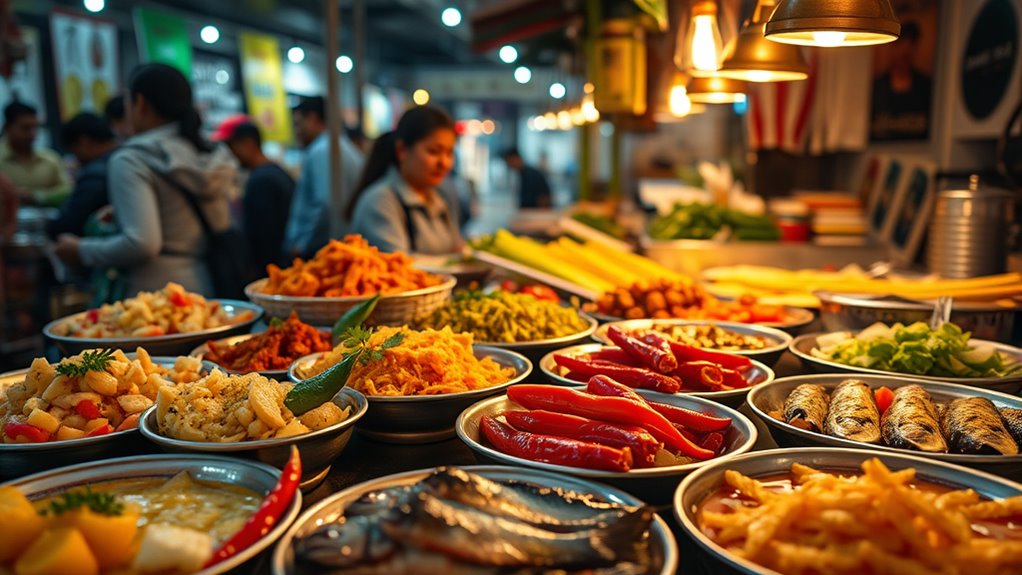
You’ll notice how Chinese and other global cuisines have shaped Peruvian food through dishes like arroz chaufa and lomo saltado, which combine traditional ingredients with wok techniques and soy sauce. These fusion dishes reflect a history of migration and international influence that enriches Peru’s culinary scene. By exploring these flavors, you’ll see how Peru seamlessly integrates diverse culinary traditions into its vibrant food culture. Additionally, the fusion of culinary styles demonstrates how cultural exchange influences regional cooking practices and ingredient use.
Chinese Culinary Fusion
Chinese culinary influence has profoundly shaped Peruvian cuisine, blending wok techniques, soy sauce, and stir-frying methods with local ingredients and flavors. You’ll notice this fusion in dishes like lomo saltado, where beef, onions, and tomatoes are stir-fried with soy sauce, and arroz chaufa, Peruvian fried rice with Chinese seasonings. To get a better sense, consider these key points:
- Wok cooking techniques bring a quick, flavorful twist to traditional Peruvian ingredients.
- Soy sauce and ginger add depth to both classic and modern dishes.
- Chinese-inspired dishes like tallarín saltado and chifa-style fried rice showcase the seamless blend of cultures.
- The Chifa cuisine reflects a long-standing culinary tradition that continues to evolve in Peru today.
This fusion highlights Peru’s openness to diverse culinary influences, creating vibrant, innovative flavors.
International Flavor Integration
How has Peru’s culinary scene become a vibrant tapestry of international influences? You’ll notice how Chinese and global flavors seamlessly blend with traditional ingredients. Chifa cuisine, a fusion of Peruvian and Chinese techniques, offers dishes like arroz chaufa and lomo saltado, where wok cooking, soy sauce, and ginger are key. Japanese influences appear in Nikkei dishes like tiradito and sushi, often featuring aji amarillo for a Peruvian twist. You also see African roots in tacu tacu and carapulcra, while Spanish colonization introduced garlic, vinegar, and frying methods. Lima’s restaurants showcase these diverse influences, earning worldwide recognition. This mix creates a dynamic, innovative food scene where flavors from around the globe enrich Peru’s traditional palate, making it a true culinary melting pot. Additionally, color accuracy in modern restaurants helps showcase the vibrant presentation of these diverse dishes, elevating the dining experience.
Beverages and Traditional Drinks of Peru
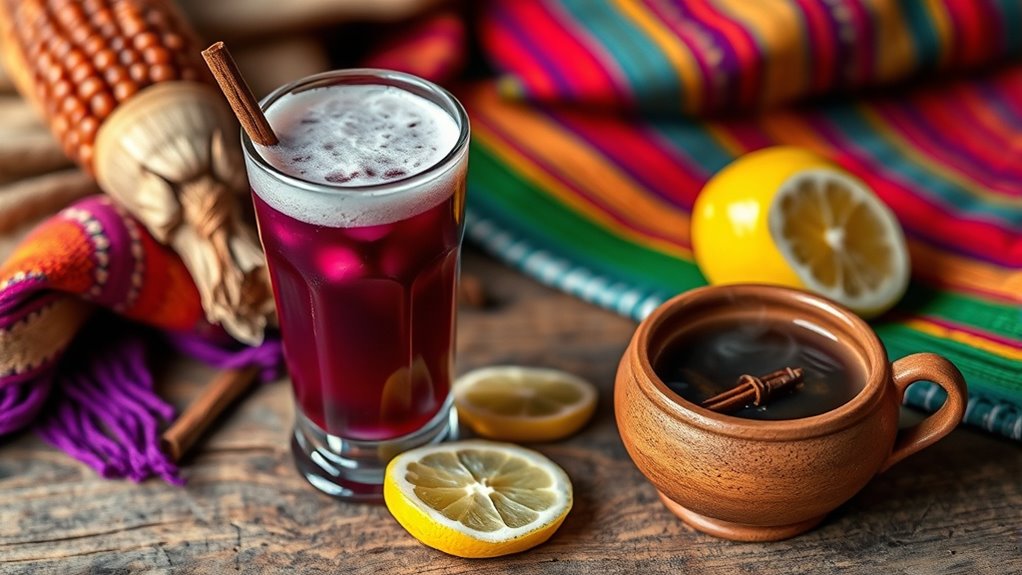
Peru’s vibrant beverage culture features a mix of traditional drinks rooted in history and local ingredients, offering a taste of the country’s diverse regions. You’ll find drinks that reflect Peru’s rich cultural tapestry, from coastal to highland areas. Here are three popular beverages to try:
- Pisco Sour – Peru’s national cocktail made with pisco, lime juice, simple syrup, egg white, and bitters, offering a perfect balance of tartness and froth.
- Chicha morada – A revitalizing non-alcoholic purple corn drink infused with pineapple, cinnamon, and cloves, enjoyed throughout the country.
- Inca Kola – A bright yellow soda with a bubblegum flavor, loved by Peruvians and a staple at celebrations.
These drinks showcase Peru’s unique ingredients and cultural influences, and exploring their preparation can deepen appreciation for culinary traditions and regional ingredients.
Unique Desserts and Sweets in Peruvian Cuisine
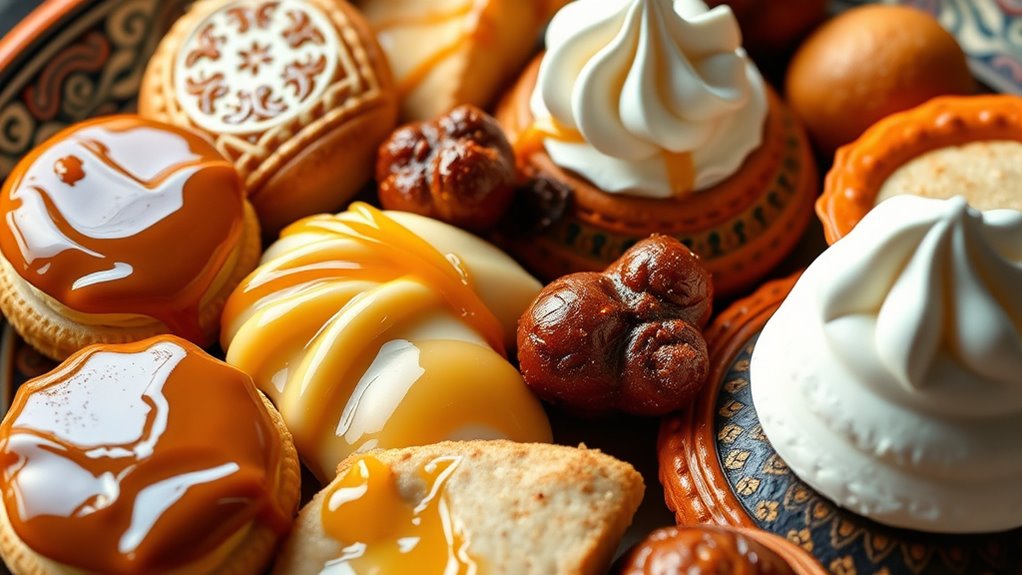
| Sweet Treats | Key Ingredients |
|---|---|
| Picarones | Sweet potato, squash, chancaca syrup |
| Suspiro Limeño | Caramel, egg whites, cinnamon |
| Alfajores | Shortbread, dulce de leche |
| Turrón de Doña Pepa | Pastry, chancaca, spices |
| Tejas | Peanut, honey, sugar |
| Traditional Peruvian desserts often incorporate encryption solutions to preserve their unique flavors and recipes, emphasizing the importance of secure data protection.
The Role of Local Markets and Food Festivals
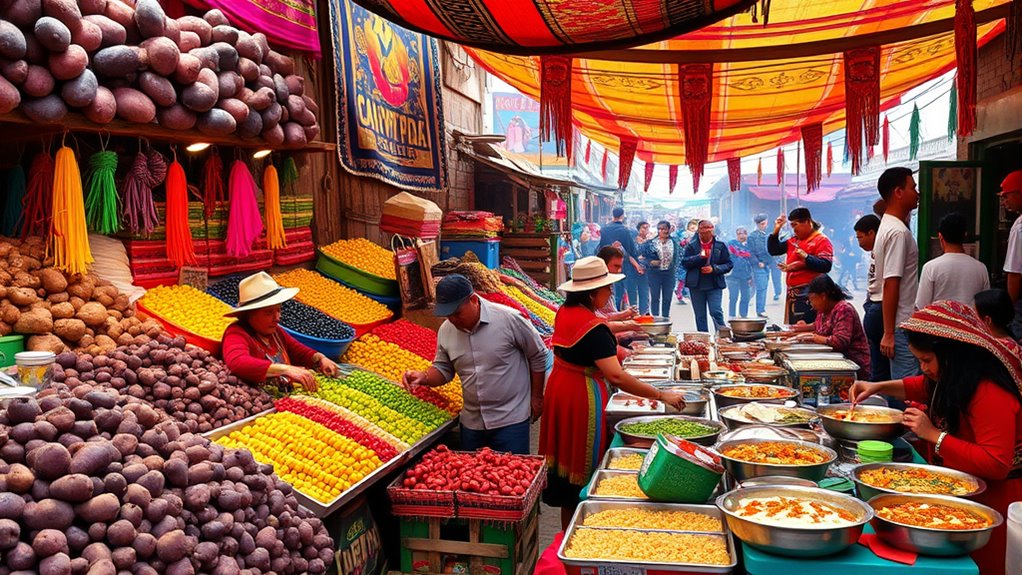
Local markets and food festivals play a vital role in Peru’s culinary scene by showcasing the country’s rich agricultural heritage and diverse regional flavors. When you visit these vibrant spaces, you experience firsthand how local ingredients and traditions come together. Here’s what you can expect:
- Sampling fresh produce like potatoes, corn, and aji peppers straight from farmers, giving you insight into regional specialties.
- Engaging with vendors who share stories behind dishes like ceviche and causa, deepening your understanding of Peruvian culture.
- Participating in lively festivals that celebrate seasonal ingredients, such as the Inti Raymi or regional harvest fairs, connecting you to local customs and festivities.
- These markets and festivals also highlight emerging technologies like digital payment systems and online marketing, which are transforming how vendors reach customers and promote traditional foods.
These markets and festivals keep Peru’s culinary traditions alive, authentic, and accessible to everyone.
Peru’s Culinary Scene and International Recognition
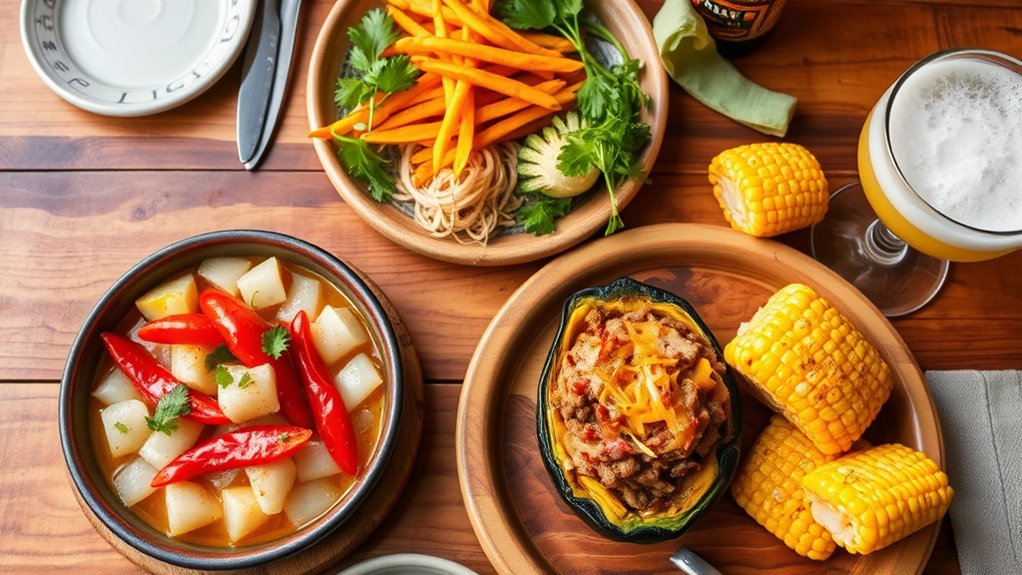
Thanks to its innovative blending of indigenous traditions and global influences, Peru has become a culinary powerhouse that attracts food lovers from around the world. Lima, in particular, hosts numerous restaurants ranked among the best globally, showcasing Peru’s culinary creativity and fusion. Chefs incorporate native ingredients like potatoes, corn, and aji peppers into modern dishes, gaining international acclaim. The rise of Peruvian cuisine has sparked tourism, with food tours, cooking classes, and culinary festivals drawing visitors enthusiastic to taste authentic flavors. Peru’s culinary scene reflects its diverse cultural history, combining Spanish, Chinese, Japanese, African, and Andean influences. This dynamic mix positions Peru as a leader in global gastronomy, continually earning recognition for its inventive, flavorful, and authentic cuisine.
Frequently Asked Questions
How Has Peruvian Cuisine Evolved Through Historical Influences?
Peruvian cuisine has evolved through a blend of indigenous, Spanish, Asian, and African influences. You’ll notice Spanish colonization introduced ingredients like garlic and citrus, while Chinese immigrants brought wok techniques and soy sauce, seen in dishes like lomo saltado. Japanese influence appears in nikkei dishes like tiradito, and African heritage shows in tacu tacu. This fusion creates a diverse, vibrant food scene that continuously adapts and innovates, reflecting Peru’s rich history.
What Regional Ingredients Define Different Peruvian Culinary Traditions?
You see regional ingredients shaping Peru’s culinary traditions, like fresh seafood and lime in coastal ceviche, native potatoes and quinoa in the Andes, and exotic fruits and freshwater fish in the Amazon. In the coastal areas, you find choclo and cancha, while the highlands feature trout and aji peppers. These ingredients reflect your country’s diverse geography and rich agricultural heritage, giving each region its unique flavor and culinary identity.
How Do Indigenous Practices Influence Modern Peruvian Cooking Methods?
You can see indigenous practices influence modern Peruvian cooking through traditional techniques like marinating fish in lime juice, which “cooks” the raw fish as in ceviche. You’ll notice the use of native ingredients like potatoes, corn, and aji peppers, often prepared using ancestral methods like roasting, boiling, or grinding. These practices preserve flavor and cultural heritage, blending seamlessly with contemporary dishes, creating a unique culinary identity rooted in indigenous traditions.
What Role Do Food Festivals Play in Preserving Culinary Heritage?
Food festivals play a essential role in preserving your culinary heritage by celebrating traditional dishes, ingredients, and cooking techniques. They bring communities together, allowing you to experience authentic flavors and learn about cultural roots firsthand. These festivals also promote local artisans and farmers, ensuring that regional specialties and recipes are passed down to future generations. By participating, you help keep Peru’s rich culinary history alive and vibrant.
How Is Peru’s Culinary Innovation Recognized Globally Today?
You’ll find Peru’s culinary innovation shining brightly on the global stage, with Lima’s vibrant gastronomy scene at the forefront. Imagine bustling restaurants earning top international rankings, chefs blending traditional ingredients with modern techniques, and dishes like ceviche and causa enthralling taste buds worldwide. This recognition is backed by prestigious awards, culinary festivals, and the rise of Peruvian cuisine as a UNESCO Intangible Cultural Heritage, making Peru a beacon of culinary creativity.
Conclusion
You’ll find that Peruvian cuisine, with over 3,000 traditional recipes, beautifully blends indigenous ingredients and global influences. Ceviche alone has earned UNESCO recognition as an Intangible Cultural Heritage, highlighting its cultural importance. Exploring Peru’s vibrant markets and festivals reveals a rich culinary tapestry that has captivated food lovers worldwide. So, next time you enjoy a Peruvian dish, remember you’re tasting centuries of history, tradition, and a diverse cultural melting pot.