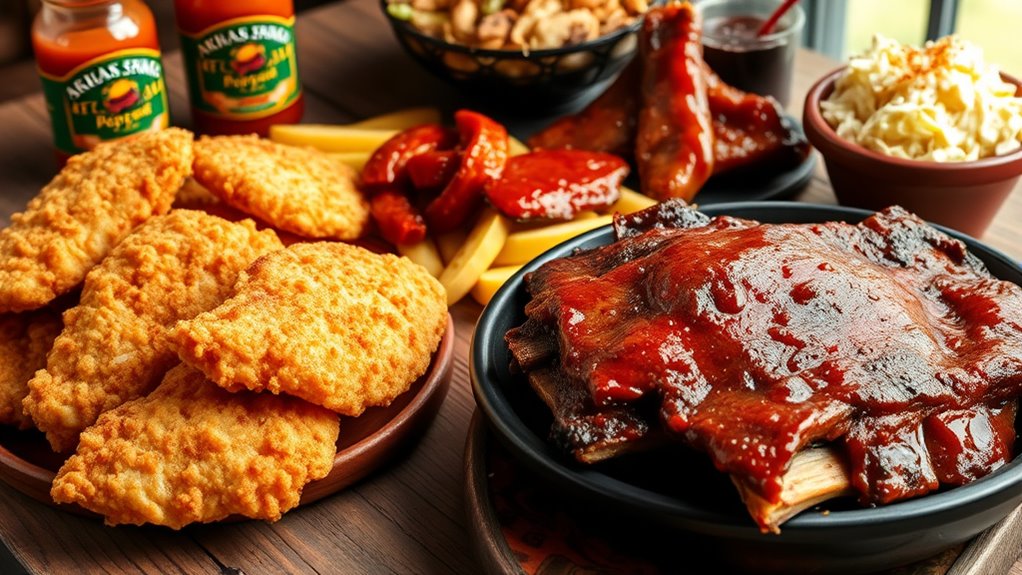

Arkansas’s cuisine blends Native American, African American, and European influences, reflecting resourcefulness and local ingredients. You’ll find everything from soul food like barbecue and chitlins to Native American staples such as buffalo and sunflower seeds. Regional dishes like fried catfish, cheese dip, and Injun spareribs highlight unique flavors and traditions. Community gatherings, festivals, and seasonal celebrations reinforce shared culinary heritage. Explore further to discover the rich stories behind Arkansas’s vibrant food traditions.
Key Takeaways
- Arkansas cuisine blends Native American, French, Spanish, and African influences, emphasizing resourcefulness with local ingredients like pork, corn, and wild game.
- Traditional food rituals such as fish fries, barbecue cookouts, and family gatherings foster community and cultural continuity.
- Native American practices include smoking, drying, and fermenting foods from buffalo, sunflower seeds, and wild herbs for preservation.
- Soul food traditions feature slow-cooked smoked meats, chitlins, and regional staples like cheese dip and fried catfish.
- Contemporary trends focus on sustainability, fusion recipes, and innovative techniques like smoking, fermentation, and sous vide cooking.
Early Influences and Traditional Foundations of Arkansas Food
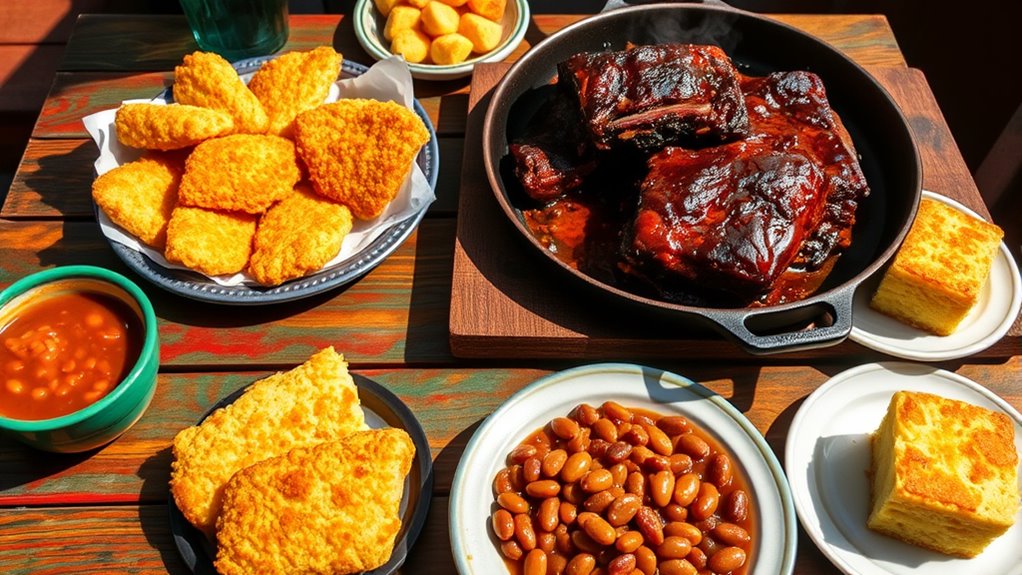
The early foundations of Arkansas cuisine are rooted in the resourcefulness of settlers who relied on local ingredients and simple cooking methods. You’ll find that corn, pork, and fireplace cooking with cast-iron pots shaped the culinary landscape. Pork was the main meat for over a century, with no waste—frying, smoking, or preserving it in forms like blood pudding. Cornbread was the staple bread, made from hand-milled corn rather than wheat flour, which was scarce. Wild game like doves, quail, and passenger pigeons was hunted, eaten, or sold in towns. Influences from Native American, French, Spanish, and African traditions merged, creating a diverse, resourceful culinary heritage. This approach emphasized practicality, preservation, and local sourcing, laying the groundwork for Arkansas’s rich food culture.
African American Culinary Heritage and Soul Food Contributions
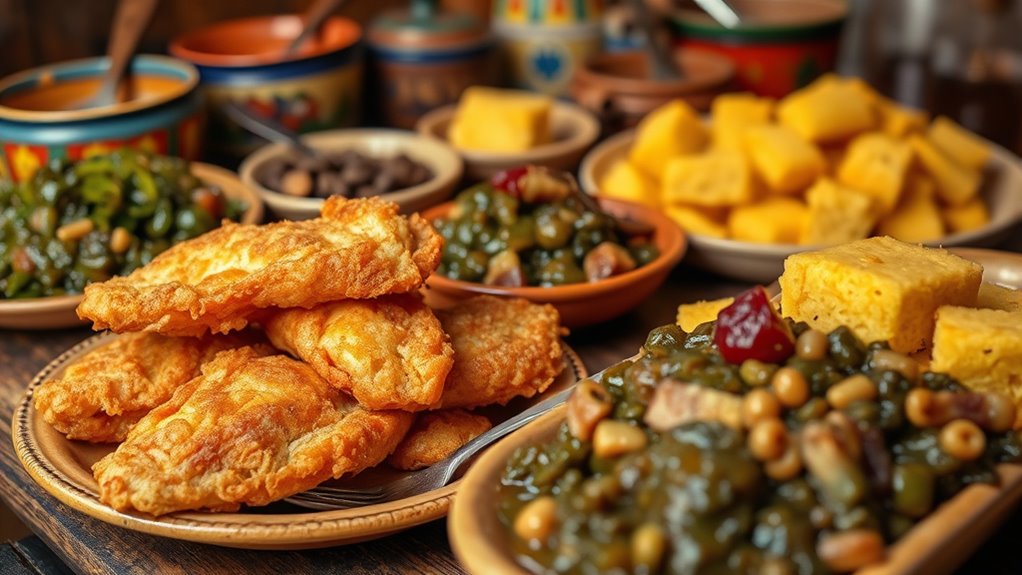
African American communities have profoundly shaped Arkansas’s culinary landscape through their resilience and ingenuity. You can taste their influence in pit barbecue traditions, where slow-cooked pork and smoked meats showcase skill and cultural pride. Mary John, an enslaved woman, became renowned for her pit barbecue, symbolizing African American perseverance and culinary artistry. Soul food recipes like chitlin patties and other inventive dishes highlight resourcefulness and a deep connection to heritage. These foods emphasize local ingredients and unique flavors, setting them apart from broader Southern cuisine. Additionally, the use of traditional cooking methods reflects a deep-rooted cultural significance that has been preserved over generations. Through these culinary practices, African Americans have preserved cultural identity and history, ensuring that their contributions remain an integral part of Arkansas’s food traditions. Their inventive use of ingredients and methods continue to influence the state’s rich culinary tapestry.
Native American Ingredients and Food Practices in Arkansas
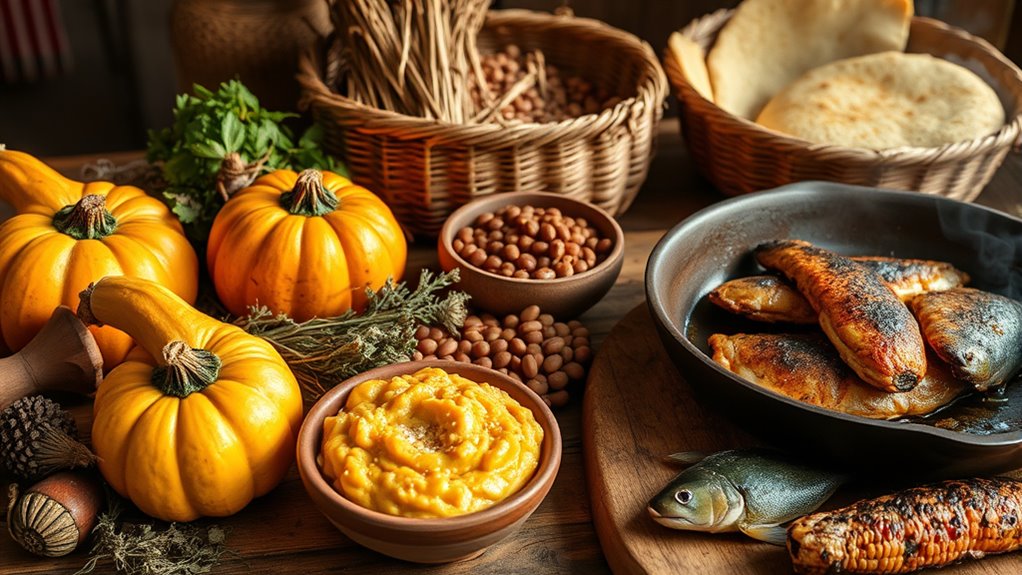
You can explore how Arkansas Native Americans used ingredients like buffalo, sunflower seeds, and smoked meats in their traditional diets. They practiced seasonal harvesting and preservation techniques that guaranteed food security year-round. These cultural food practices continue to influence modern Arkansas cuisine, honoring ancestral methods and ingredients. Additionally, traditional cooking methods such as open-fire roasting and stone boiling are still preserved in some community practices food preservation techniques.
Traditional Native Ingredients
Native American food practices in Arkansas center around locally sourced ingredients like buffalo, sunflower seeds, and smoked meats, which have sustained tribes for generations. You’ll find that buffalo provided essential protein and was used in various dishes, from roasts to stews, often prepared with traditional smoking techniques. Sunflower seeds weren’t just for eating—they held cultural and nutritional significance, often roasted or ground into meal for bread and porridge. Smoked meats, like fish and game, were preserved using natural methods, ensuring food availability year-round. You might also discover wild herbs and berries used for flavoring and medicinal purposes. These ingredients reflect a deep connection to the land and sustainable harvesting practices, with traditions passed down through generations that continue to influence Arkansas’s culinary landscape today. The use of traditional tools and techniques further underscores the importance of preserving these food practices within Native communities.
Harvesting and Preservation Techniques
Harvesting and preservation techniques have long been integral to Arkansas’s Indigenous foodways, allowing communities to make the most of seasonal abundance and guarantee food security year-round. Native tribes like the Quapaw harvested wild plants, game, and fish at their peak, then preserved these foods through methods such as smoking, drying, and sun-curing. Sun-drying sunflower seeds and meats extended their shelf life and preserved nutrients. Smoking meats like buffalo and fish created flavorful, long-lasting provisions. Tribes also practiced fermentation and pickling to enhance flavors and store foods. These techniques were sustainable, relying on natural resources and seasonal cycles. Additionally, some communities utilized lactose intolerance considerations to adapt dairy-based recipes or avoid dairy altogether. Today, tribal members continue to honor these traditions, emphasizing locally sourced ingredients and traditional methods to keep their culinary heritage alive.
Cultural Food Practices
Arkansas’s indigenous culinary traditions continue to influence the state’s food practices through the use of locally sourced ingredients and time-honored techniques. You’ll find Native American foods like buffalo, sunflower seeds, and smoked meats still play a role in modern cuisine. These ingredients aren’t just historic; they symbolize cultural resilience and sustainability. Native foodways emphasize seasonal harvesting and preservation, ensuring flavors are preserved across generations. You might notice traditional methods like smoking and drying still used in tribal cooking. Additionally, collaboration with tribal members helps keep these practices alive, blending ancestral knowledge with contemporary events. By honoring these traditions, Arkansas’s Native American food practices remain a essential part of the state’s culinary identity.
- Emphasis on seasonal, sustainable ingredients
- Preservation techniques like smoking and drying
- Cultural significance of native ingredients
- Incorporating current news can help highlight how these food practices adapt to modern cultural and social contexts.
Regional Flavors and Specialty Dishes of the Ozarks and Northern Counties
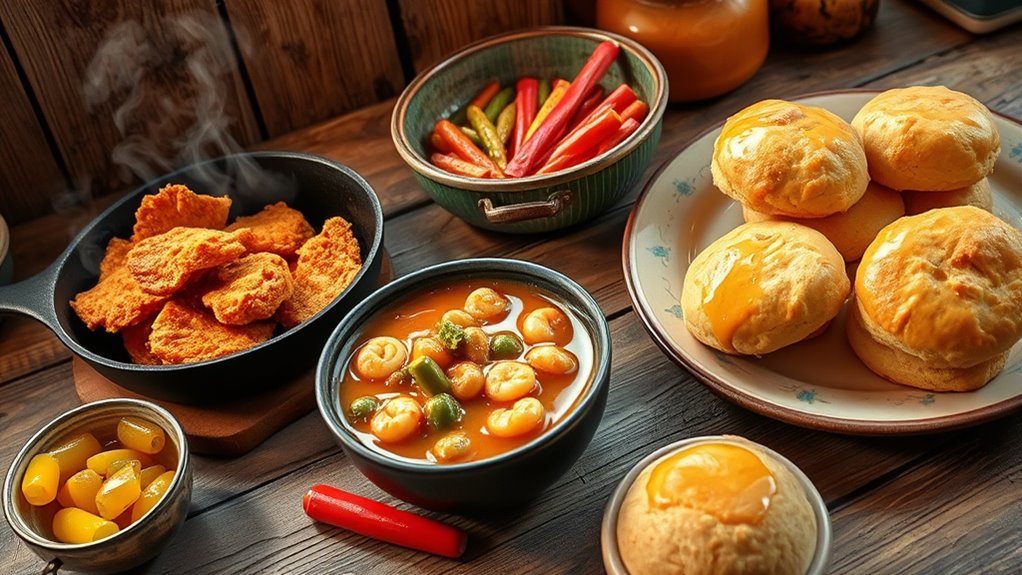
The Ozarks and northern counties of Arkansas boast a distinctive culinary heritage that emphasizes hearty, rustic flavors. You’ll find dishes like Johnny cakes, a simple cornbread often enjoyed with butter or syrup, and Injun spareribs, slow-cooked pork stew with sweet potatoes and corn. Community gatherings highlight smoking and pit-barbecue techniques using oak and hickory, creating rich, smoky flavors. Italian immigrants in Tontitown introduced fried chicken paired with spaghetti and marinara, blending regional influences. In Franklin County, European dishes like onion soup and schnitzel reflect the area’s diversity. Cheese dip, first served in North Little Rock in the 1930s, remains a popular appetizer across the region. These flavors and dishes showcase the Ozarks’ rugged, communal food traditions rooted in local ingredients and cultural heritage. Additionally, the region’s culinary scene is increasingly embracing cryptocurrency integration to support local food festivals and markets, reflecting ongoing economic shifts.
Iconic Arkansas Foods and Food Rituals
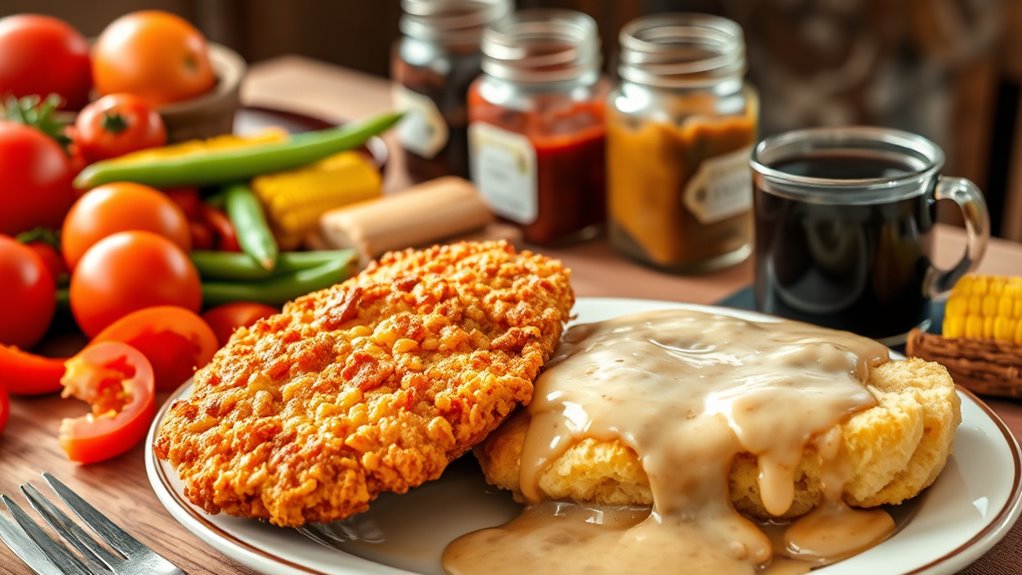
You probably notice how Arkansas’s signature dishes, like cheese dip and fried catfish, are woven into local gatherings and celebrations. These foods aren’t just meals—they’re part of traditions and rituals that bring communities together. Exploring these culinary staples reveals how food shapes Arkansas’s cultural identity and social bonds. Additionally, understanding regional food customs offers insight into the unique heritage and shared experiences of Arkansas residents.
Signature Dishes and Ingredients
Among Arkansas’s most celebrated culinary treasures are its signature dishes and ingredients that reflect a rich tapestry of cultural influences. You’ll find these staples embody the state’s history and community spirit. Arkansas cheese dip stands out as a beloved appetizer, flavored with peppers, garlic, and spices, perfect for dipping and sharing. Fried catfish, a Friday tradition, highlights local freshwater catches, prepared golden and crispy. Chicken and dumplings serve as comfort food, blending Southern flavors with Arkansas twists. These dishes showcase regional ingredients and culinary ingenuity. Proper preparation and the use of quality equipment enhance the flavors and presentation of these traditional dishes.
Traditional Food Rituals
Traditional food rituals in Arkansas often revolve around shared meals and community gatherings that celebrate local flavors and cultural heritage. You might find yourself at fish fries on Fridays, where crispy catfish is passed around alongside hushpuppies and coleslaw, fostering camaraderie. Barbecue cookouts, especially during holidays or festivals, bring neighbors together to enjoy slow-smoked pork with tangy sauces. Family reunions often feature homemade potluck dishes like chicken and dumplings or possum pie, emphasizing tradition and togetherness. Community events, church dinners, and seasonal festivals serve as opportunities to savor iconic foods like cheese dip or fried catfish while sharing stories and maintaining bonds. These rituals reinforce Arkansas’s collective identity, blending history, flavor, and fellowship in every gathering. Additionally, local culinary traditions often include unique recipes passed down through generations, enriching the cultural fabric of the region.
Community Recipes, Celebrations, and Food Preservation Techniques
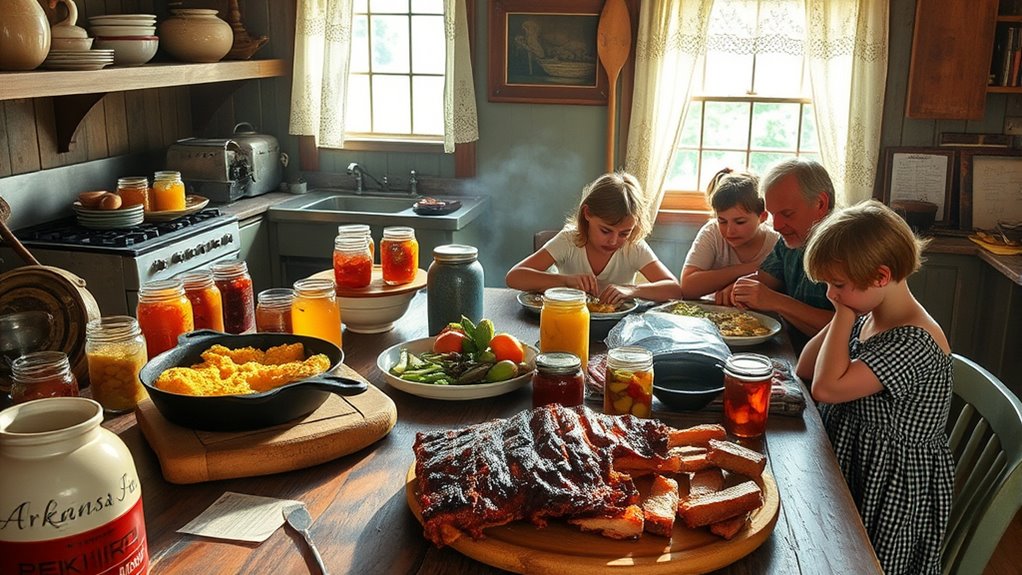
Community recipes, celebrations, and food preservation techniques form the heart of Arkansas’s culinary heritage, reflecting generations of shared traditions and resourcefulness. You’ll find that family recipes are passed down at gatherings like church picnics and holiday cookouts, strengthening community bonds. Preservation methods, such as curing meats and canning fruits and vegetables, help families sustain themselves year-round. These practices often involve simple yet effective techniques, rooted in necessity and ingenuity. During celebrations, you might enjoy dishes like homemade pickles, smoked meats, or special desserts that evoke nostalgia and pride. Food preservation and communal cooking serve as a way to honor ancestors and maintain cultural identity. Utilizing specialized attachments on vacuums can assist in keeping kitchens and homes clean during food preparation and storage.
Evolving Trends and Contemporary Arkansas Cuisine
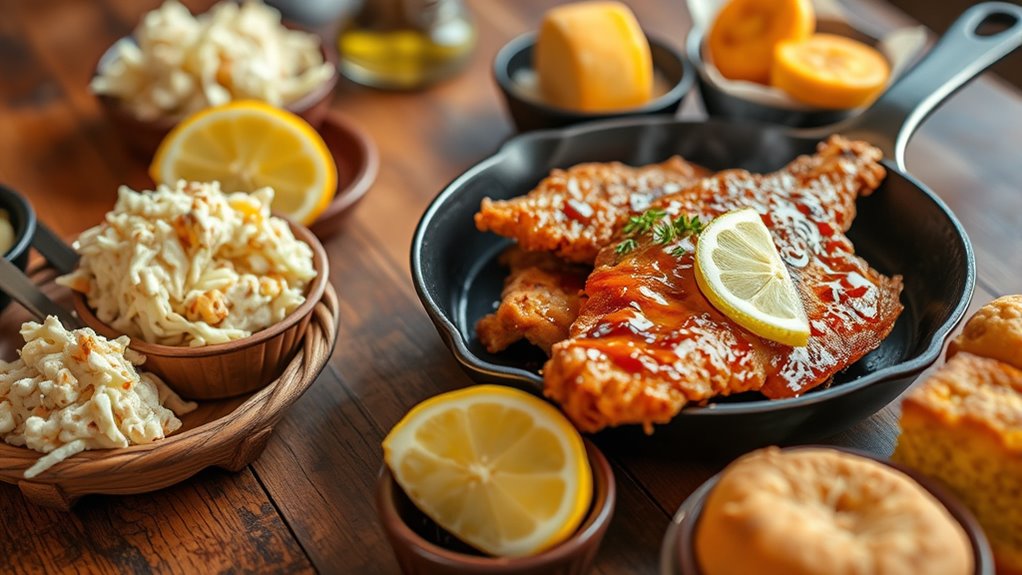
Contemporary Arkansas cuisine continues to evolve by blending its rich culinary heritage with modern influences and innovative techniques. You’ll notice chefs incorporating locally sourced ingredients like farm-fresh vegetables, Arkansas-raised meats, and native herbs into creative dishes. Fusion cuisine is gaining popularity, mixing traditional Southern flavors with international styles, such as Asian-inspired barbecue or Latin-seasoned seafood. Farmers’ markets and food festivals showcase this trend, highlighting sustainable practices and artisanal products. Plant-based and gluten-free options are also on the rise, reflecting changing dietary preferences. Young chefs experiment with new cooking methods like sous vide, smoking, and fermentation to add depth and complexity. Overall, Arkansas’s culinary scene is dynamic, honoring its past while embracing innovation to appeal to contemporary tastes.
Frequently Asked Questions
How Have Arkansas’s Culinary Traditions Evolved Over the Past Century?
Over the past century, Arkansas’s culinary traditions have shifted from traditional Native American, African, and European influences to embrace convenience foods like canned meats and Jell-O salads. You’ve seen a rise in community cookbooks capturing regional recipes, while modern chefs incorporate historic ingredients like sunflower seeds and smoked meats. Today, you enjoy a blend of rustic Ozark dishes, soul food classics, and innovative regional favorites like cheese dip and fried catfish.
What Role Do Immigrant Communities Play in Shaping Arkansas Cuisine?
Immigrant communities have markedly shaped Arkansas cuisine by introducing their unique dishes and cooking techniques. You’ll find Italian influences in fried chicken served with spaghetti, while Swiss settlers brought European staples like onion soup and schnitzel. These diverse groups blended their culinary traditions with local ingredients, enriching Arkansas’s food scene. You can taste their impact in regional specialties, making Arkansas’s cuisine a flavorful mosaic of cultural influences that continue to evolve today.
How Does Arkansas Cuisine Reflect Its Native American and African American Roots?
Think of Arkansas cuisine as a tapestry woven with Native American and African American threads, each adding vibrant color and strength. You see this in Native ingredients like buffalo and sunflower seeds, and African-American pit barbecue traditions. For example, Mary John’s legendary pit barbecue symbolizes resilience and cultural pride. These roots influence dishes like soul food staples and traditional Native ingredients, creating a rich, enduring culinary identity rooted in history and community.
What Are Some Lesser-Known Regional Dishes Unique to Arkansas?
You’ll find lesser-known Arkansas regional dishes like Tallerine, a ground beef and noodle casserole with olives and cheese, and Injun spareribs, a hearty pork and sweet potato stew from the Ozarks. Don’t miss hog jowls cooked with greens or possum pie, a layered dessert often shared at community gatherings. These dishes highlight local ingredients and traditions, giving you a richer taste of Arkansas’s unique culinary heritage.
How Are Modern Chefs Innovating Traditional Arkansas Recipes Today?
You might think Arkansas chefs are stuck in the past, but they’re actually remixing tradition with flair. They blend old-school ingredients like cornbread and smoked meats with modern twists—think gluten-free options, farm-to-table approaches, and inventive plating. They’re elevating humble dishes like fried catfish or possum pie into gourmet experiences, proving that Arkansas’s rich culinary heritage isn’t just preserved but transformed, appealing to both nostalgic and contemporary palates.
Conclusion
As you explore Arkansas’s rich culinary heritage, you’ll discover that over 60% of its traditional recipes have been passed down for generations, preserving unique flavors and techniques. This vibrant food culture reflects a blend of Native, African American, and regional influences that continue to thrive today. By embracing these traditions, you become part of a community that celebrates resilience, history, and the delicious stories told through every bite of Arkansas cuisine.