
Louisiana’s history is a vibrant blend of indigenous peoples, French and Spanish colonization, and the Louisiana Purchase, shaping its unique culture. You’ll find a rich mix of Creole, Cajun, and African influences reflected in music, food, and festivals like Mardi Gras. From its early plantation economy to its role in the Civil War and Civil Rights, Louisiana’s resilient spirit and lively traditions offer a fascinating story that continues to evolve. Explore further to uncover its full cultural richness.

Get travel and outdoor gear delivered free with Prime
- Fast, free delivery on millions of items
- Prime Video, Amazon Music and more included
- Member-only deals all year
Key Takeaways
- Louisiana’s history includes Native American habitation, European exploration, French and Spanish colonization, and the Louisiana Purchase, shaping its unique cultural identity.
- The state boasts a diverse cultural heritage with Creoles, Cajuns, African, Spanish, French, and Native influences reflected in language, music, cuisine, and architecture.
- Louisiana’s economy was historically based on sugar plantations, later expanding into oil, industry, shipping, and petrochemicals.
- The Civil War, Reconstruction, and racial tensions significantly impacted Louisiana’s social, political, and racial landscape.
- Rich artistic traditions like jazz, Cajun and Creole music, Mardi Gras festivals, and historic architecture embody Louisiana’s resilient cultural spirit.
As an affiliate, we earn on qualifying purchases.
Early Indigenous Presence and European Discoveries

Did you know that indigenous peoples first inhabited the lower Mississippi Valley around 14,000 years ago? You can imagine their ancestors thriving in this rich landscape long before European explorers arrived. In 1519, Spanish explorer Alonso de Pineda reached the mouth of the Mississippi River, marking one of the earliest European contacts. Hernando de Soto later explored the region in 1541-42, passing through present-day northeastern Louisiana and discovering the mighty Mississippi. French explorers Marquette and Joliet descended the river in 1673, expanding European knowledge of the area. Then, in 1682, La Salle claimed the entire Mississippi River drainage for France, naming the territory Louisiana after King Louis XIV. These discoveries set the stage for centuries of cultural exchange and change in the region. Additionally, the introduction of European exploration significantly impacted the indigenous populations and their way of life.
As an affiliate, we earn on qualifying purchases.
Colonial Era: French and Spanish Rule

During the colonial era, Louisiana changed hands multiple times as French and Spanish powers vied for control of the region. You’ll see this reflected in the land’s shifting borders and diverse influences. Here’s what you should know:
- French explorers like La Salle claimed the territory for France in 1682, naming it Louisiana.
- French colonists settled around 1699, establishing key towns such as Biloxi and New Orleans in 1722.
- Spain secretly took control in 1762, especially over New Orleans, after France ceded the territory.
- The Treaty of Paris in 1763 divided Louisiana, giving Spain control of the west and Britain the east, shaping the region’s early political landscape.
- The influence of colonial powers significantly contributed to Louisiana’s rich cultural heritage and diverse architecture.
As an affiliate, we earn on qualifying purchases.
The Louisiana Purchase and Early State Formation
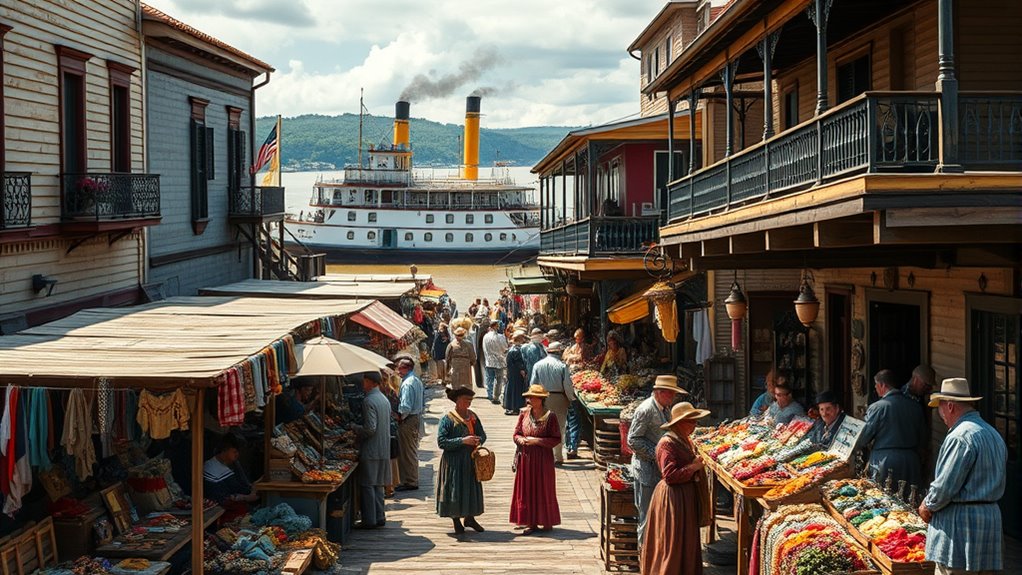
The Louisiana Purchase of 1803 dramatically reshaped the region by transferring vast territories from France to the United States, doubling the size of the young nation. This land deal opened up new opportunities for settlement, commerce, and expansion westward. You can imagine how this purchase accelerated American influence in the region, leading to the creation of the Territory of Orleans, which would become the state of Louisiana in 1812. As you explore early state formation, you’ll see how Louisiana’s unique blend of cultures was already taking shape through diverse settlers, including Creoles, Cajuns, and enslaved peoples. The purchase marked the beginning of Louisiana’s shift from colonial holdings to a vibrant, independent state, setting the stage for its rich and complex history. Additionally, the Louisiana Purchase played a crucial role in expanding territorial boundaries, shaping the future development of the United States.
Louisiana architecture tour book
As an affiliate, we earn on qualifying purchases.
As an affiliate, we earn on qualifying purchases.
Cultural Melting Pot: Creoles, Cajuns, and Enslaved Peoples

Louisiana’s identity as a true melting pot stems from its diverse communities—Creoles, Cajuns, and enslaved peoples—all contributing unique traditions, languages, and customs. You experience this mix in every aspect of life, from food to music. Here are four key ways this diversity shapes Louisiana:
- Creoles bring French, Spanish, and African influences, creating rich traditions in language, cuisine, and architecture.
- Cajuns, descendants of Acadian exiles, preserve their distinct French dialect and Cajun cuisine, such as gumbo and jambalaya.
- Enslaved Africans introduced musical rhythms, spirituals, and cultural practices that deeply influence Louisiana’s jazz and blues.
- Native American tribes contributed their own languages and customs, blending seamlessly into the broader cultural landscape.
- The fusion of these diverse heritages is celebrated through cultural events and community festivals that showcase Louisiana’s vibrant history.
Economic Foundations: Agriculture, Oil, and Industry
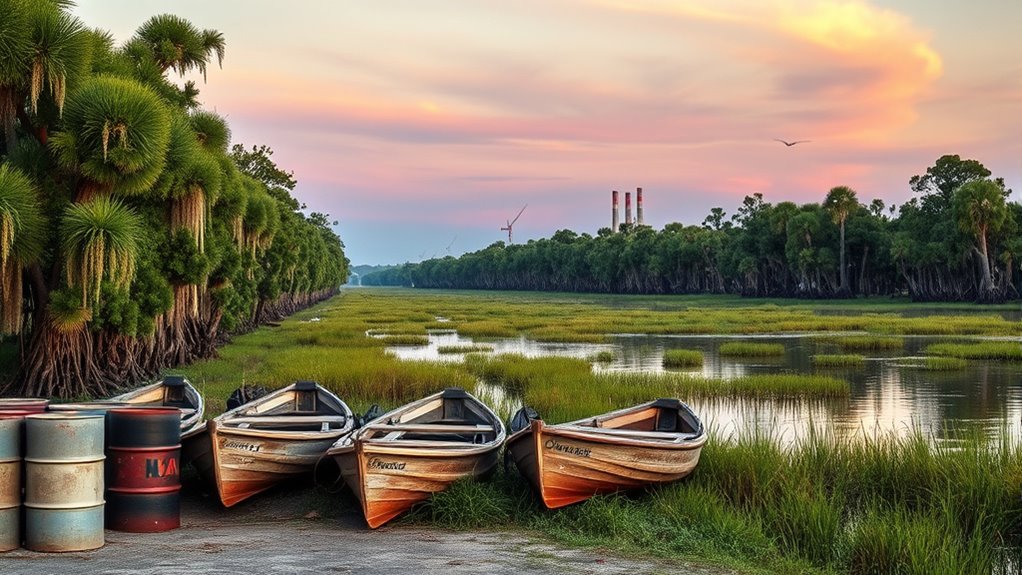
Louisiana’s economy has long relied on its natural resources, starting with sugar cane as a crucial cash crop in the 18th century. The discovery of oil in 1901 transformed the state’s industrial landscape, fueling growth beyond agriculture. Today, industry development continues to shape Louisiana’s economic future, building on these foundational industries.
Sugar Cane Economy
Have you ever wondered how sugar cane became the backbone of Louisiana’s economy? It all started with early plantings by Jesuit priests from Santo Domingo. Over time, sugar plantations thrived, shaping Louisiana’s economy and society. Here’s how:
- Introduction of Sugar Cane: By 1751, sugar became Louisiana’s first major cash crop, fueling economic growth.
- Plantation System: Large plantations like LaBranche emerged, relying on enslaved labor to maximize production.
- Processing and Trade: Sugar mills processed the cane, and the product was exported worldwide, making Louisiana a key player.
- Cultural Impact: The industry influenced local culture, blending African, French, and Spanish traditions, which still resonate today.
- Economic Foundations: The sugar economy was supported by a robust agricultural system, which included the use of slave labor and cultivation practices that shaped the region’s development.
This thriving sugar economy laid the foundation for Louisiana’s prosperity and cultural identity.
Oil Discovery Impact
The discovery of oil in Louisiana in 1901 transformed the state’s economic landscape, adding a new pillar alongside agriculture and trade. Suddenly, Louisiana became a hub for energy, attracting investments and jobs that fueled growth. This shift brought hope during tough economic times and reshaped communities. You can feel the excitement in towns sprouting oil rigs and refineries, symbolizing opportunity and progress. The surge in oil production also led to technological advancements that impacted other industries across the region.
Industry Development Growth
Industry development in Louisiana has shaped its economic landscape by building upon early roots in agriculture, expanding through the rise of oil, and fostering diverse industries. You can see this evolution through key milestones:
- Agriculture laid the foundation with sugar cane, rice, and cotton, fueling local economies.
- The discovery of oil in 1901 transformed Louisiana into an energy hub, attracting companies and jobs.
- Manufacturing industries, including shipbuilding and petrochemicals, grew alongside oil, creating a diverse economic base.
- Infrastructure projects, such as levees and ports, supported trade and industry growth, connecting Louisiana to national and global markets.
- The development of affiliate marketing has also contributed to supporting economic growth and diversification in recent years.
This development reflects Louisiana’s ability to adapt, innovate, and expand its economic strength beyond agriculture, making it a essential regional player.
Louisiana During the Civil War and Reconstruction
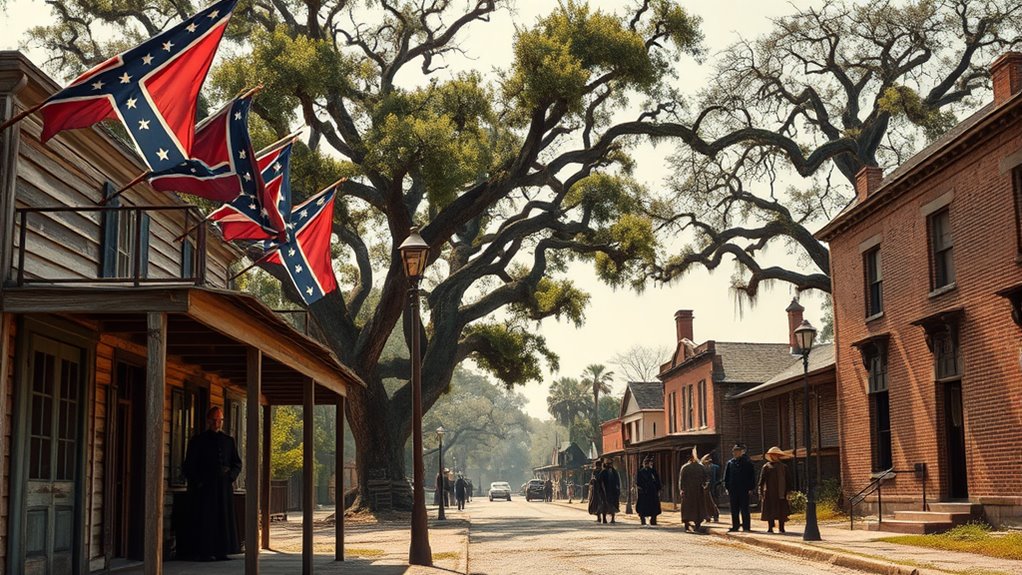
Did you know that Louisiana played a pivotal role in the Civil War, with its strategic port of New Orleans falling into Union hands early in 1862? This victory gave the Union control of the Mississippi River, crippling the Confederacy’s supply lines and splitting Confederate territory. During Reconstruction, Louisiana faced significant challenges rebuilding its economy and society. You’d see political tensions rise as efforts aimed to restore the Union while addressing racial divisions. The state struggled with integrating freed slaves into society and maintaining order. The Civil War’s legacy deeply affected Louisiana’s social fabric, leaving scars that would influence its development for decades. Despite these struggles, Louisiana’s resilience laid the groundwork for its complex cultural identity and ongoing quest for unity.
The Evolution of Louisiana’s Social and Political Landscape

Louisiana’s social and political landscape has been shaped by shifting colonial powers, which left a lasting mark on its culture and governance. The Civil War and Reconstruction dramatically altered the state’s racial dynamics and political structure, fueling ongoing tensions. You’ll see how these historical shifts continue to influence Louisiana’s identity today. Additionally, ongoing discussions about affiliate marketing disclosures reflect the importance of transparency and consumer awareness in today’s digital environment.
Colonial Power Shifts
How did control of Louisiana shift between European powers, shaping its social and political landscape? The region saw rapid changes as France, Spain, and Britain fought for dominance. Here’s how these shifts unfolded:
- France claimed Louisiana in 1682, establishing it as a crucial colony with New Orleans as a key port.
- Spain secretly took control in 1762, leading to Spanish governance and unrest among settlers.
- The 1763 Treaty of Paris transferred Louisiana east of the Mississippi to Britain, while Spain kept the west including New Orleans.
- In 1803, France sold Louisiana to the U.S., ending European control and setting the stage for Louisiana’s unique identity. These power shifts created a complex social fabric, blending influences that persist today.
Civil War Impact
The Civil War dramatically reshaped Louisiana’s social and political landscape, exposing deep divisions rooted in its diverse heritage. You witness how Union forces captured New Orleans in 1862, a strategic blow that shifted control and morale. The war’s end brought emancipation, transforming the social fabric by freeing enslaved African Americans and challenging existing power structures. Reconstruction efforts aimed to rebuild the state’s political system, but racial tensions persisted, shaping future conflicts. You see how the war’s aftermath led to new laws, including Black Codes, restricting freedpeople’s rights. The economic devastation from battles and blockades forced Louisiana to adapt. These upheavals laid the groundwork for ongoing struggles over race, governance, and identity that continue to influence Louisiana’s social and political evolution today. Additionally, the legacy of civil rights activism emerged from these turbulent times, inspiring future generations to advocate for equality and justice.
Racial and Political Tensions
Racial and political tensions in Louisiana have evolved through a complex history of conflict, resistance, and struggle for equality. You can see this in several ways:
- The 1811 German Coast Uprising, the largest slave revolt in U.S. history, was brutally suppressed but highlighted resistance against slavery.
- During Reconstruction, tensions surged as freedmen fought for civil rights amid violent opposition from white supremacists.
- The rise of figures like Huey Long in the early 20th century exemplified political power struggles and populist movements.
- Contemporary issues, such as disparities in education and policing, continue to reflect deep-rooted racial and political divisions that shape Louisiana’s society today.
- The ongoing fight for civil rights illustrates the persistent efforts to address systemic inequalities rooted in this turbulent history.
Artistic and Musical Heritage of the State

Louisiana’s artistic and musical heritage runs deep, shaping the state’s vibrant identity through a rich blend of cultures and traditions. You feel this in the lively rhythms of jazz, born in New Orleans, where African, French, and Caribbean influences collide. The city’s clubs and streets pulse with soulful melodies, reflecting its diverse history. Cajun and Creole music, with lively fiddles and accordions, echo the Acadian and French roots. Mardi Gras and festivals showcase colorful parades, vibrant costumes, and musical celebrations rooted in French Catholic customs. Visual arts thrive through folk crafts, vibrant murals, and historic architecture that tells stories of colonial pasts. This fusion of artistic expressions captures Louisiana’s spirit, making it a cultural crossroads celebrated worldwide.
Louisiana’s Unique Architectural and Cultural Landmarks

Louisiana’s landscape is marked by a remarkable array of architectural and cultural landmarks that reflect its diverse history. You’ll notice these symbols of Louisiana’s unique identity everywhere you go.
- The French Quarter in New Orleans showcases historic Creole townhouses, wrought-iron balconies, and vibrant courtyards, embodying French and Spanish influences.
- Plantation homes like Oak Alley and Laura Plantation reveal antebellum architecture and tell stories of the state’s plantation economy.
- The State Capitol building stands as a striking example of Art Deco design, towering over Baton Rouge.
- The Marigny and Bywater neighborhoods feature colorful shotguns and Creole cottages, celebrating Cajun, African, and Caribbean cultural roots.
These landmarks give you a glimpse into Louisiana’s rich, layered past and vibrant present.
Frequently Asked Questions
How Did Native American Tribes Influence Louisiana’s Early Culture?
You can see Native American tribes markedly shaped Louisiana’s early culture through their traditions, art, and social practices. They introduced farming techniques, local crops, and hunting methods that influenced settlement patterns. Their spiritual beliefs and ceremonies also blended with European customs, creating a unique cultural mix. Native tribes’ resilience and interactions with explorers and settlers helped forge Louisiana’s diverse heritage, leaving lasting impacts on language, cuisine, and community traditions today.
What Role Did Louisiana Play in the Transatlantic Slave Trade?
Louisiana played a central role in the transatlantic slave trade, serving as a major hub for importing enslaved Africans. You see, the French and Spanish rulers relied heavily on enslaved labor to build their plantations, especially for sugar cane and cotton. When ships arrived, they brought thousands of Africans, which deeply influenced Louisiana’s demographics, culture, and economy. This tragic history left enduring scars and shaped the diverse community you see today.
How Did the French and Spanish Colonial Periods Shape Louisiana’s Legal System?
During the French and Spanish periods, Louisiana’s legal landscape laid a lasting foundation. French laws fostered freedoms and formalities, while Spanish statutes strengthened sovereignty and security. You see, these colonial codes clashed and combined, creating a complex, contradictory court system. You witness the weaving of French influence’s freedoms with Spanish strictness, shaping Louisiana’s unique legal legacy. This layered legal fabric still influences the state’s laws and lifestyles today, blending old-world order with new-world nuance.
What Are the Origins of Louisiana’s Unique Mardi Gras Traditions?
You’ll find that Louisiana’s Mardi Gras traditions originate from French Catholic customs brought by early settlers, blending with local cultures over centuries. You participate in lively parades, masked balls, and unique rituals like throwing beads and coins called “throws.” These festivities embody a vibrant mix of French, Spanish, African, and Native American influences, creating a colorful, spirited celebration that reflects Louisiana’s rich cultural heritage and love for community and tradition.
How Did the Discovery of Oil Impact Louisiana’s Economy in the 20TH Century?
When the discovery of oil hit Louisiana in 1901, it transformed your state’s economy dramatically. You see, oil brought new wealth, creating jobs and attracting investment in industries beyond agriculture and sugar. It spurred infrastructure development, urban growth, and technological advances. This shift helped Louisiana diversify its economy, making it less dependent on farming. Overall, oil’s arrival marked a pivotal change, shaping Louisiana’s economic landscape well into the 20th century and beyond.
Conclusion
As you explore Louisiana’s rich tapestry, imagine a vibrant mosaic woven from centuries of diverse cultures, fierce resilience, and timeless traditions. From Indigenous roots to modern marvels, each piece tells a story of a land that refuses to be forgotten. Embrace its spirit—a symphony where history’s echoes dance with the heartbeat of today, reminding you that Louisiana’s soul is as deep and flowing as the mighty Mississippi itself.
Fall Picks
fall essentials
As an affiliate, we earn on qualifying purchases.