West Virginia’s history is rooted in its Civil War birth, when western counties broke away from Virginia to form a new state, driven by loyalty and regional identity. Its culture reflects rugged landscapes, historic conflict, and a resilient spirit. The state’s governance shifted over time, with emphasis on infrastructure, social progress, and racial rights. If you keep exploring, you’ll discover how these rich roots continue to shape West Virginia today.
Key Takeaways
- West Virginia formed during the Civil War, with loyalty to the Union influencing its separation from Virginia in 1863.
- The state’s early governance was led by Francis Pierpont, and its constitution included gradual emancipation and racial equality measures.
- West Virginia played a strategic military role in the Civil War, with significant Union enlistment and divided loyalties.
- The state’s culture reflects a blend of Appalachian traditions, frontier resilience, and evolving social attitudes toward racial equality.
- West Virginia’s capitals shifted from Wheeling to Charleston, symbolizing political and infrastructural progress over the late 19th century.
Foundations and State Formation
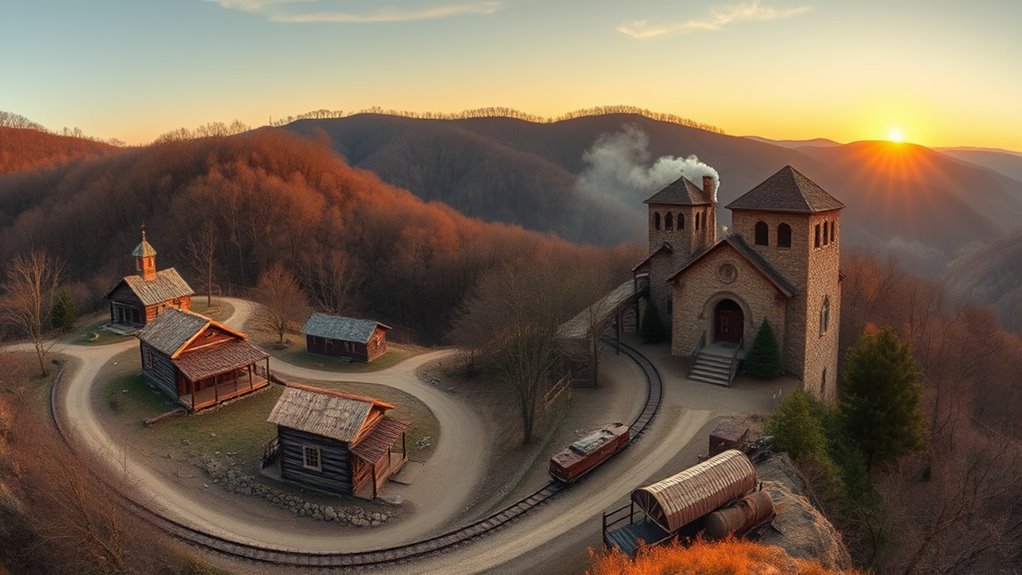
West Virginia’s journey to statehood began amid the turmoil of the Civil War, rooted in the distinct loyalties of its western counties. You should know that these counties strongly opposed Virginia’s secession and wanted to remain loyal to the Union. The process started with the First and Second Wheeling Conventions in 1861, where leaders declared a new government for the region. They drafted a constitution that initially banned slavery, but included provisions for gradual emancipation to gain federal approval. You’ll find that the conflict over which counties would join the new state was intense, often involving court rulings, especially over Berkeley and Jefferson Counties. West Virginia officially became a state on June 20, 1863, marking a unique chapter rooted in loyalty, politics, and regional identity. Additionally, the regional identity played a crucial role in shaping the state’s formation and its subsequent cultural development.
Political Evolution and Governance
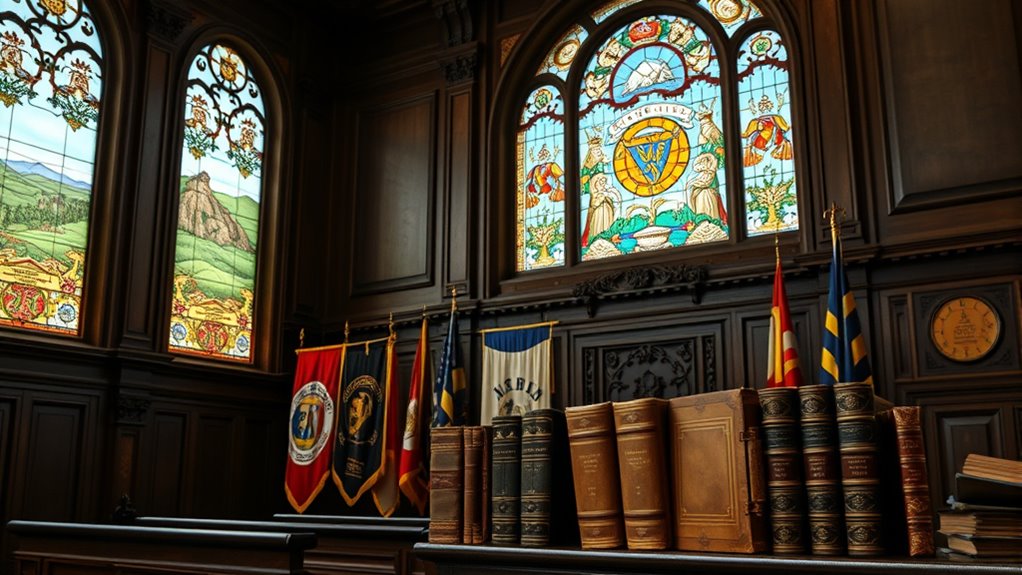
The political landscape of West Virginia quickly took shape after its statehood, reflecting both the region’s Unionist roots and the challenges of establishing a stable government. You’ll find three key aspects that shaped its governance:
- The leadership of Francis H. Pierpont, known as the “Father of West Virginia,” who helped organize the state’s early government.
- The contentious process of adopting a revised constitution, which included gradual emancipation to gain congressional approval.
- The struggle to move the capital from Wheeling to Charleston, involving logistical hurdles and shifting political priorities.
- The development of state security measures, especially regarding the enforcement of laws during the turbulent post-war period, played a crucial role in stabilizing governance.
These elements highlight how West Virginia’s governance evolved through compromise, regional conflicts, and efforts to build a unified political identity amid the turbulence of Civil War-era divisions.
Civil War and Military Legacy

During the Civil War, the region that would become West Virginia played a crucial strategic role due to its divided loyalties and military significance. You would see that Union forces quickly moved into northwestern Virginia to secure essential transportation routes and protect the border. About 32,000 West Virginians enlisted in the Union Army, demonstrating strong support for the Union cause. The Restored Government of Virginia, based in Wheeling, served as the legitimate government, facilitating West Virginia’s statehood. The state’s divided loyalties led to fierce skirmishes and guerrilla warfare, shaping its military legacy. West Virginia’s terrain and strategic position made it a key battleground and supply route, leaving a lasting mark on its military history and regional identity. Understanding the strategic importance of geography and its influence on military operations helps explain the state’s pivotal role during the conflict.
Social Change and Racial Progress
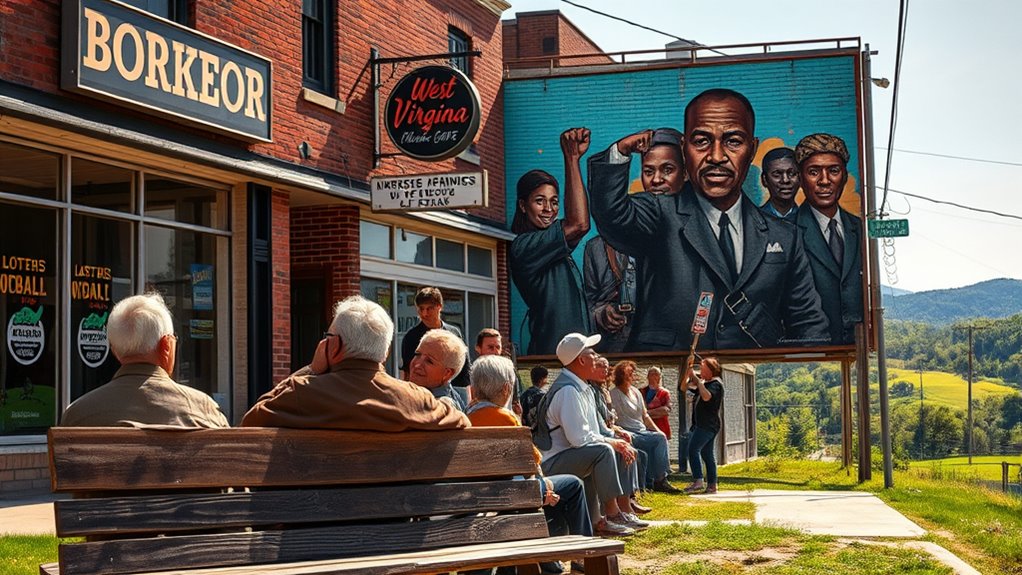
How did West Virginia begin to reshape its social landscape and advance racial progress in its early years? You see, the state faced a complex start, but significant steps paved the way. First, the 1863 constitution initially banned free Blacks and enslaved people, reflecting the era’s attitudes. Second, the Willey Amendment mandated gradual emancipation, setting a foundation for change. Third, in 1863, West Virginia’s governor approved legislation granting African Americans equal rights, a progressive move at the time. These measures marked a shift toward racial inclusion, despite ongoing struggles. African American soldiers fought valiantly during the Civil War, helping to reshape perceptions. Additionally, social change efforts and community activism played a vital role in fostering progress in the region. Racial progress was slow but steady, laying groundwork for future civil rights efforts and shaping West Virginia’s social identity.
Shifting Capitals and Infrastructure Development
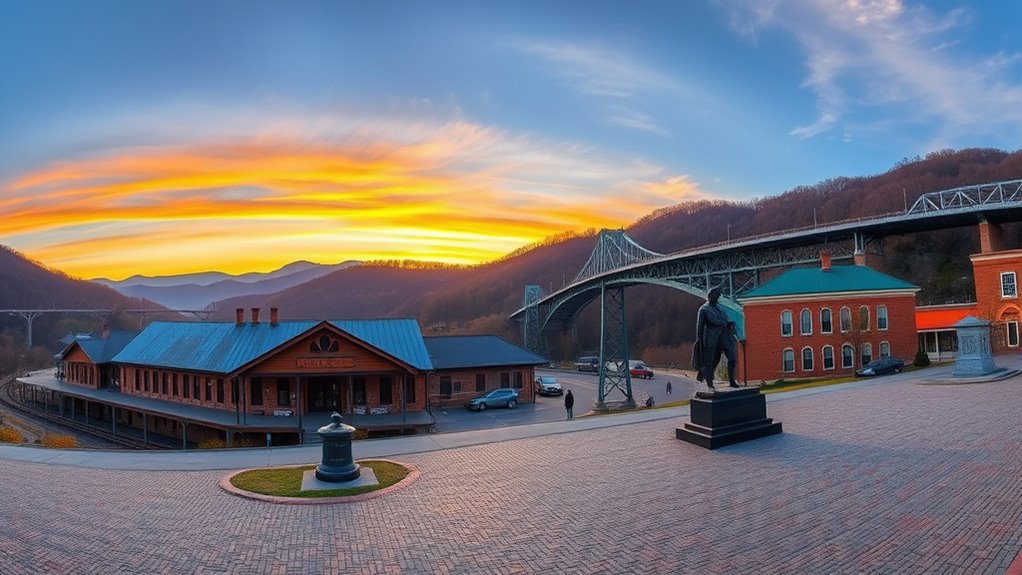
As West Virginia’s social landscape began to evolve through reforms and increased racial inclusion, the state also faced significant logistical challenges in establishing a stable government infrastructure. Initially, Wheeling served as the capital in 1863, but political disagreements and practical concerns prompted moves to Charleston in 1870. You would have seen efforts by local citizens, especially in Kanawha County, to transport records by boat during this transition. The capital briefly returned to Wheeling in 1875 before a 1877 vote made Charleston permanent. The new state Capitol, completed in 1885, symbolized progress but faced setbacks, like the devastating fire in 1921, which required rebuilding. These shifts highlight ongoing political rivalry and geographic considerations that shaped West Virginia’s infrastructure development and administrative stability. Additionally, the development of transportation methods, such as boat transportation, played a crucial role in overcoming geographic challenges during this period.
Frequently Asked Questions
What Are Some Unique Cultural Traditions Specific to West Virginia?
You’ll find that West Virginia’s unique cultural traditions include lively Appalachian music, with fiddles and banjos creating energetic bluegrass and folk tunes. You might participate in traditional crafts like quilting and woodworking, or attend local festivals celebrating heritage, such as the West Virginia State Folk Festival. Outdoor activities like hunting, fishing, and storytelling are also essential parts of life, connecting you to the mountain roots and community spirit that define this state.
How Has Appalachian Music Influenced West Virginia’s Cultural Identity?
You can see Appalachian music’s influence in West Virginia’s cultural identity through the annual Vandalia Gathering, where traditional fiddle and banjo tunes take center stage. This lively event celebrates the region’s musical roots, fostering pride and community spirit. As you listen to these authentic sounds, you realize how Appalachian music shapes West Virginia’s identity by preserving history, encouraging storytelling, and strengthening the bond among its people.
What Are Major Festivals That Celebrate West Virginia’s History and Heritage?
You can experience West Virginia’s rich history and heritage through major festivals like the West Virginia Mountain State Art and Craft Fair, celebrating local artisans and traditions, and the West Virginia State Folk Festival, which honors Appalachian music, dance, and storytelling. The West Virginia Independence Festival highlights historic pride and cultural roots, while the Appalachian String Band Music Festival showcases traditional mountain music. These events let you connect with West Virginia’s unique cultural legacy.
How Did West Virginia’s Early Industries Shape Its Cultural Landscape?
You’ll see that West Virginia’s early industries, like coal mining, timber, and ironworking, deeply influenced its cultural landscape. These industries brought diverse workers, fostering vibrant communities with unique traditions, music, and folklore. The rugged, resource-based economy shaped values like resilience and hard work. You’ll notice these roots in local festivals, folk art, and storytelling that reflect the hardworking spirit and cultural diversity born from the state’s industrial beginnings.
What Role Do Local Dialects and Folklore Play in West Virginia’s Culture?
Your local dialects and folklore are the heartbeat of West Virginia’s soul, shaping its culture in ways that are nothing short of legendary. These stories and speech patterns carry the spirit of resilience, echoing through generations and fueling pride. They create a vivid tapestry of tradition, making every mountain, river, and town feel like a living, breathing monument to the enduring spirit of the people.
Conclusion
As you walk through West Virginia’s rich tapestry, you see a land shaped by fire and resilience, where history’s echoes forge a spirit that refuses to fade. From tumultuous beginnings to steady progress, its culture blooms like a wildflower in mountain crevices. You’re part of this ongoing story, a vibrant thread woven into the fabric of a state that stands tall—steadfast as the mountains themselves, forever whispering tales of strength and renewal.