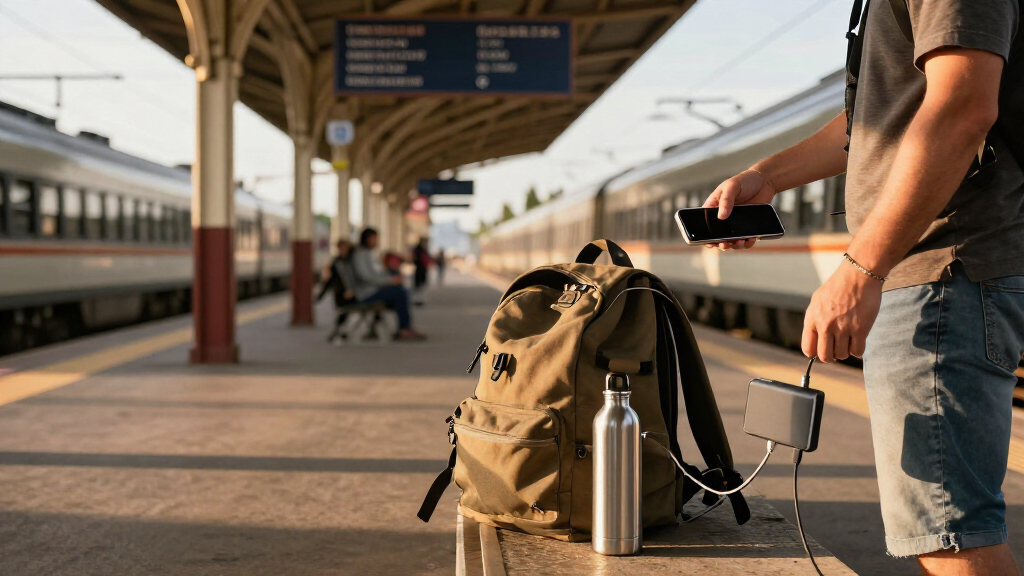
For most travelers, I’d choose the Anker 20,000mAh Power Bank with Built-In USB-C Cable, 87W as the best overall pick because it pairs a useful capacity with enough output for more demanding devices. The INIU 10,000mAh 45W Portable Charger is a better fit for lighter packing, while the Anker Laptop Power Bank 25,000mAh suits travelers who need to charge a laptop on the move. The main tradeoff is between capacity and carry weight: a larger bank can handle more recharges, but it takes up more space and may face stricter airline limits. Built-in cables reduce loose accessories, though they can limit flexibility if a cable is damaged or incompatible. Read on for the full breakdown and guidance on choosing a travel-ready power bank for your devices and itinerary.

Get travel and outdoor gear delivered free with Prime
- Fast, free delivery on millions of items
- Prime Video, Amazon Music and more included
- Member-only deals all year
Complete the kit


Key Takeaways
- The Anker 20,000mAh 87W model is the strongest all-around balance: it offers more output for demanding devices than the 22.5W options while avoiding the bulk of the 25,000mAh laptop-focused pick.
- Capacity alone does not make a travel bank more useful: the 50,000mAh and 60,000mAh models promise extended reserve power, but their size and airline-carry concerns make them less practical for many trips.
- Built-in cables serve different travel styles: multi-cable models cut down on packing loose leads, while a single built-in USB-C cable can be simpler and less cluttered.
- Compact picks suit day-to-day charging, not every device: the 10,000mAh options are easier to carry, but travelers charging several devices or a laptop should look at higher-capacity, higher-output models.
- The lineup’s best fit depends on the trip: Miady’s two-pack offers flexible sharing or separate-day use, while the Anker 25,000mAh 165W model is aimed at travelers with laptop-level power needs.
| VRURC 20,000mAh Portable Charger with Built-In Cables |  | Best for Cable-Free Packing | Battery capacity: 20,000mAh | Maximum charging power: 22.5W | Built-in cables: Type-C, phone, Micro USB, USB Type-A | VIEW LATEST PRICE | See Our Full Breakdown |
| INIU 20,000mAh 22.5W Portable Charger with Built-In USB-C Cable |  | Best for USB-C Travel Kits | Model: P512 | Battery capacity: 20,000mAh | Maximum output: 22.5W | VIEW LATEST PRICE | See Our Full Breakdown |
| 60000mAh 22.5W Fast Charging Power Bank with Digital Display |  | Best for Extended Off-Grid Trips | Battery capacity: 60,000mAh | Maximum output power: 22.5W | Dimensions: 15 × 7.5 × 2.8 cm | VIEW LATEST PRICE | See Our Full Breakdown |
| INIU 10,000mAh 45W Portable Charger |  | Best for Fast Charging in a Compact Size | Battery capacity: 10,000mAh | Output wattage: 45W | Ports: 2 × USB-C, 1 × USB-A | VIEW LATEST PRICE | See Our Full Breakdown |
| AIFENG CP2 Portable Charger Power Bank 10000mAh with Built-in Cables and AC Plug |  | Best All-in-One for Short Trips | Model: CP2 | Battery capacity: 10,000mAh | Maximum output: 22.5W | VIEW LATEST PRICE | See Our Full Breakdown |
| HELLEE 15,000mAh Portable Charger with Four Built-In Cables |  | Best for Mixed-Device Groups | Battery capacity: 15,000mAh | Battery type: Lithium polymer | Connectors: USB-C, USB-A, iOS, Micro | VIEW LATEST PRICE | See Our Full Breakdown |
| ZZI 60,000mAh Portable Charger with 22.5W Fast Charging |  | Best for Road Trips and Extended Stays | Battery capacity: 60,000mAh | Battery cell type: Lithium polymer | Maximum output power: 22.5W | VIEW LATEST PRICE | See Our Full Breakdown |
| Anker 20,000mAh Power Bank with Built-In USB-C Cable, 87W, Black |  | Best for Fast-Charging Travel Devices | Battery capacity: 20,000mAh | Maximum total output: 87W | Maximum single-device output: 65W | VIEW LATEST PRICE | See Our Full Breakdown |
| Orfeika 20000mAh Power Bank with 4 Built-in Cables |  | Best for Cable-Free Carry-On Packing | Battery capacity: 20,000mAh | Maximum output power: 20W | Input power: 18W | VIEW LATEST PRICE | See Our Full Breakdown |
| GrnOas.E 10,000mAh Portable Charger with Built-In Cables | 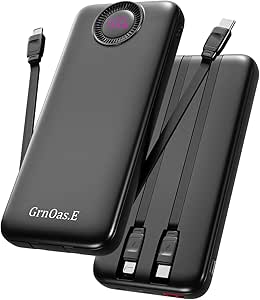 | Best Compact Pick | Battery capacity: 10,000mAh | Battery type: Lithium polymer | Maximum listed output: 22.5W | VIEW LATEST PRICE | See Our Full Breakdown |
| Moihosso P8 50000mAh Portable Charger with Built-in Cables and Flashlight |  | Best for Extended Trips Without an Outlet | Brand and model: Moihosso P8 | Battery capacity: 50,000mAh | Fast charging output: 22.5W | VIEW LATEST PRICE | See Our Full Breakdown |
| Miady 2-Pack Slim 10,000mAh Portable Chargers |  | Best Value for Two Travelers | Pack quantity: 2 power banks | Capacity: 10,000mAh each | Ports: USB-A and USB-C on each bank | VIEW LATEST PRICE | See Our Full Breakdown |
| Anker PowerCore Slim 10000 Portable Charger |  | Best Compact Everyday Backup | Brand and model: Anker A1229 | Battery capacity: 10,000mAh | Connectors: USB-C and USB-A | VIEW LATEST PRICE | See Our Full Breakdown |
| Anker Laptop Power Bank 25,000mAh with 165W Output and Built-In Cables |  | Best for Laptop-Centric Travel | Brand and model: Anker A1695 | Battery capacity: 25,000mAh | Total output: 165W | VIEW LATEST PRICE | See Our Full Breakdown |
| Zmmyuluo 10000mAh Portable Charger with 4 Built-in Cables |  | Best for Cable-Free Packing | Brand: Zmmyuluo | Battery capacity: 10,000mAh | Connectors: USB-C, Lightning (iOS), and Micro USB | VIEW LATEST PRICE | See Our Full Breakdown |
| portable power banks for travel | Battery capacity | Dimensions | Weight | Ports |
|---|---|---|---|---|
| VRURC 20,000mAh Portable Charg | 20,000mAh | — | — | 6 total, including USB-A and USB-C ports |
| INIU 20,000mAh 22.5W Portable | 20,000mAh | 4.1 × 2.8 × 1.2 inches | 320g | 3 |
| 60000mAh 22.5W Fast Charging P | 60,000mAh | 15 × 7.5 × 2.8 cm | 15.5 oz | 2 × USB-A, 1 × USB-C, integrated 3-in-1 cable |
| INIU 10,000mAh 45W Portable Ch | 10,000mAh | — | — | 2 × USB-C, 1 × USB-A |
| AIFENG CP2 Portable Charger Po | 10,000mAh | 3.66 × 2.36 inches | 7.05 oz | — |
| HELLEE 15,000mAh Portable Char | 15,000mAh | 6 x 3.2 x 1.1 inches | 250g | — |
| ZZI 60,000mAh Portable Charger | 60,000mAh | 5.8 × 2.9 × 1.1 inches | — | 3 |
| Anker 20,000mAh Power Bank wit | 20,000mAh | 6.22 x 2.91 x 1.02 inches | 15.2 oz | 3 |
| Orfeika 20000mAh Power Bank wi | 20,000mAh | 6.33 x 2.85 x 0.74 inches | 0.73 lb | — |
| GrnOas.E 10,000mAh Portable Ch | 10,000mAh | 5.9 x 2.7 x 0.72 inches | 8.4 oz | — |
| Moihosso P8 50000mAh Portable | 50,000mAh | 6.5 x 3.5 x 1 inches | — | — |
| Miady 2-Pack Slim 10,000mAh Po | — | 5.5 x 2.6 x 0.6 inches each | 7.68 ounces each | USB-A and USB-C on each bank |
| Anker PowerCore Slim 10000 Por | 10,000mAh | 6.01 x 0.61 x 2.82 inches | 8.48 oz | — |
| Anker Laptop Power Bank 25,000 | 25,000mAh | — | — | 4 |
| Zmmyuluo 10000mAh Portable Cha | 10,000mAh | 4.41 x 2.8 x 0.7 inches | 189 g | 3 built-in cables and 2 external ports |
More Details on Our Top Picks
VRURC 20,000mAh Portable Charger with Built-In Cables
The VRURC is my pick for travelers who want to leave a bundle of charging cords at home. Its four built-in cable types cover USB-C, phone, Micro USB, and USB-A connections, while separate USB-A and USB-C ports add flexibility for other devices. That makes it more connector-inclusive than the INIU P512, whose built-in cable is USB-C only. The 20,000mAh capacity also offers more backup than a compact 10,000mAh option such as the AIFENG CP2, though it adds bulk compared with a small daily-carry bank. At 19mm thick, it is relatively slim for its capacity, and the display helps track remaining charge. The tradeoff is that charging speed depends on the device and cable, and the supplied description gives inconsistent estimates for how quickly a phone reaches 50% or 60%.
Pros:- Four built-in cable types suit a wider mix of devices than USB-C-only banks.
- 20,000mAh capacity can support multiple device top-ups on a trip.
- 19mm profile and cable strap help keep the bank manageable in a bag.
- Digital display shows remaining battery charge.
Cons:- Built-in cable compatibility and charging speed vary by device.
- The product description gives conflicting estimates for charging to 50% or 60% in 30 minutes.
Best for: Travelers carrying a mix of older and newer devices who want a high-capacity backup without packing several separate cables.
Not ideal for: Minimalist packers who want the lightest pocket-sized option, or anyone who needs a clearly verified charging-time claim.
- Battery capacity:20,000mAh
- Maximum charging power:22.5W
- Built-in cables:Type-C, phone, Micro USB, USB Type-A
- Ports:6 total, including USB-A and USB-C ports
- Thickness:19mm
- Voltage:3.85V
- Features:Digital display, battery protection, overcharge protection, low-temperature fast charging
- Compatibility:Phones, tablets, headphones, and other devices with compatible connectors
Our verdict“Choose the VRURC if connector variety and fewer loose cables matter more than the weight and simplicity of a smaller travel bank.”
INIU 20,000mAh 22.5W Portable Charger with Built-In USB-C Cable
The INIU P512 suits travelers whose everyday devices already use USB-C and who want a built-in cable without giving up a useful capacity. Its 20,000mAh battery and 22.5W output make it a more capable backup than the 10,000mAh INIU 45W model when a trip includes several days away from an outlet. The built-in USB-C cable doubles as a nylon lanyard, so it stays attached and can make the bank easier to carry. A digital display and flashlight add practical travel touches. Compared with the VRURC, however, the P512 is less flexible for older connectors: its integrated cable is USB-C, so other devices may need a separate cord. At 320g, it also asks for more bag space and weight than a compact 10,000mAh option.
Pros:- 20,000mAh capacity provides more reserve than compact 10,000mAh banks.
- Built-in USB-C cable doubles as a nylon lanyard.
- 22.5W maximum output supports fast charging on compatible devices.
- Digital display and flashlight add useful travel functions.
Cons:- At 320g, it is relatively heavy for a portable bank.
- The built-in cable is USB-C, so other connector types require a separate cable.
Best for: USB-C phone and tablet owners who want substantial backup capacity, an attached charging cable, and a flashlight for travel.
Not ideal for: Travelers with several Micro USB or other non-USB-C devices, or those prioritizing the lightest possible bag.
- Model:P512
- Battery capacity:20,000mAh
- Maximum output:22.5W
- Ports:3
- Built-in cable:USB-C cable with detachable nylon lanyard
- Weight:320g
- Dimensions:4.1 × 2.8 × 1.2 inches
- Battery charge time:5.4 hours
- Features:Digital display, flashlight, overcharge protection
Our verdict“Pick the INIU P512 if your travel devices are mostly USB-C and you want more capacity than a compact bank provides.”
60000mAh 22.5W Fast Charging Power Bank with Digital Display
This 60,000mAh bank is aimed at trips where access to a wall outlet is scarce and several devices need power. Its capacity far exceeds the 20,000mAh VRURC and INIU options, and the integrated 3-in-1 cable plus multiple ports can support up to five devices at once. The digital percentage display makes it easier to judge whether the remaining reserve will last through another day outdoors. That reserve comes with a real travel penalty: at 15.5 oz and 15 × 7.5 × 2.8 cm, it is less suited to pocket carry than the slim VRURC or either 10,000mAh pick. Its 22.5W maximum output is not a substitute for a high-output laptop bank, either. Check the applicable airline rules before flying; the listed capacity may exceed limits in some jurisdictions.
Pros:- 60,000mAh capacity offers substantially more reserve than the 20,000mAh models.
- Multiple ports and an integrated 3-in-1 cable can charge up to five devices simultaneously.
- Digital battery percentage display helps track remaining charge.
- Includes overcharge, short-circuit, and temperature protection.
Cons:- 15.5 oz weight and larger dimensions make it awkward for pocket carry.
- High listed capacity may exceed airline carry-on limits in some jurisdictions without prior approval.
- 22.5W maximum output is less suited to devices requiring higher-wattage charging.
Best for: Campers and travelers on extended trips who need to recharge several phones or small USB devices away from outlets.
Not ideal for: Air travelers seeking an easy-to-pack everyday backup, or people who need laptop-class charging output.
- Battery capacity:60,000mAh
- Maximum output power:22.5W
- Dimensions:15 × 7.5 × 2.8 cm
- Weight:15.5 oz
- Ports:2 × USB-A, 1 × USB-C, integrated 3-in-1 cable
- Simultaneous charging:Up to 5 devices
- Charging protocols:PD, QC, SCP, FCP, AFC
- Safety features:Overcharge, short-circuit, and temperature protection
Our verdict“Choose this model for multi-device trips far from outlets, but skip it for light packing or frequent air travel without checking capacity rules.”
INIU 10,000mAh 45W Portable Charger
The INIU 10,000mAh stands out for travelers who value charging speed and a smaller capacity over carrying a larger reserve. Its listed 45W output is higher than the 22.5W ceilings of the INIU P512 and the VRURC, making this the more compelling fit for compatible devices that benefit from faster charging. Two USB-C ports and one USB-A port also give it more connection options than a single-cable setup, while the detachable braided USB-C cable can be replaced if lost or worn. The tradeoff is endurance: its 10,000mAh capacity is half that of the P512, so heavy users may need to recharge the bank sooner. The included cable is only 0.4 ft long, and the listed voltage and amperage do not clarify performance for each port.
Pros:- 45W maximum output is higher than the 22.5W limits of the larger INIU P512 and VRURC.
- Compact 10,000mAh capacity is better suited to light packing than 20,000mAh banks.
- Two USB-C ports and one USB-A port offer multiple connection options.
- Detachable braided USB-C cable can be replaced.
Cons:- 10,000mAh capacity offers less trip-long reserve than the 20,000mAh alternatives.
- Included USB-C cable is short at 0.4 ft.
- Listed voltage and amperage do not specify charging performance for each port.
Best for: Travelers with compatible phones or tablets who prefer a compact bank with higher maximum output over multi-day battery reserve.
Not ideal for: People who need several full device recharges, or buyers who want a long included cable and clearly specified output by port.
- Battery capacity:10,000mAh
- Output wattage:45W
- Ports:2 × USB-C, 1 × USB-A
- Included cable:0.4 ft detachable braided USB-C cable
- Voltage:12V
- Amperage:3A
- Features:Flashlight, overcharge protection, slim design
- Compatible devices:Phones, tablets, watches, and earbuds
Our verdict“Choose this INIU when a compact form and higher maximum output matter more than the longer reserve of a 20,000mAh bank.”
AIFENG CP2 Portable Charger Power Bank 10000mAh with Built-in Cables and AC Plug
The AIFENG CP2 brings together the pieces that are easiest to forget: built-in USB-C and USB-A cables and a foldable AC plug. For a short trip or daily commute, that all-in-one setup can be handier than the INIU 10,000mAh, which comes with a short detachable cable but no integrated plug. Its 7.05 oz weight and compact stated dimensions also suit small bags better than the 20,000mAh VRURC. The compromise is less battery reserve: 10,000mAh is a modest capacity for heavy phone use or multiple devices, even though the CP2 supports up to four devices simultaneously. Its maximum output is 22.5W, below the INIU 10,000mAh’s listed 45W. The product information also conflicts on wireless charging, so I would treat it as a wired charger rather than rely on Qi support.
Pros:- Built-in USB-C and USB-A cables reduce the need to pack separate cords.
- Foldable AC plug lets the bank recharge directly from a wall outlet.
- 7.05 oz weight and compact stated dimensions suit small bags.
- Supports pass-through charging while the bank itself is recharging.
Cons:- 10,000mAh capacity provides less reserve than the VRURC or INIU P512.
- 22.5W maximum output is below the INIU 10,000mAh’s listed 45W.
- Product information conflicts on Qi support, so wireless charging should not be assumed.
Best for: Commuters and short-trip travelers who want an integrated wall plug and built-in USB-A and USB-C charging cables.
Not ideal for: Travelers needing a large multi-day reserve, higher-wattage charging, or dependable wireless charging.
- Model:CP2
- Battery capacity:10,000mAh
- Maximum output:22.5W
- Built-in cables:USB-C and USB-A
- AC plug:Foldable
- Dimensions:3.66 × 2.36 inches
- Weight:7.05 oz
- Recharge time:2–2.5 hours
- Battery cell type:Lithium-ion
Our verdict“Pick the CP2 for short trips when an integrated wall plug and charging cables matter more than capacity or higher output.”
HELLEE 15,000mAh Portable Charger with Four Built-In Cables
The HELLEE suits travel companions who want to share one charger across devices with different connectors. Its four built-in cable types cover USB-C, USB-A, iOS, and Micro, while six outputs let several devices connect at once. That makes it more connector-flexible than the Anker 20,000mAh Power Bank, whose built-in cable is USB-C, though Anker offers more capacity and much higher output for demanding devices.
At 15,000mAh and 250g, the HELLEE balances a useful reserve with a carry-on-friendly form, but it is not the lightest pick here: the GrnOas.E 10,000mAh model weighs 8.4 ounces and is easier to pack. The HELLEE’s 22.5W maximum and digital display help with everyday phone charging, though its output is modest for laptops. The product details also mention Qi without clearly describing wireless charging, so I would choose it for its cables and wired ports, not wireless use.
Pros:- Four integrated cable types reduce the need to pack separate cords.
- Six outputs let multiple travelers charge devices from one bank.
- 15,000mAh capacity offers more reserve than a compact 10,000mAh bank.
- Digital battery display and 22.5W fast charging support practical phone charging.
Cons:- At 250g, it is heavier than smaller-capacity travel options.
- 22.5W output is limited for laptops and other power-hungry devices.
- Wireless charging is not clearly explained in the supplied product details.
Best for: Traveling families or groups carrying a mix of USB-C, iPhone, and Micro-USB devices who want to share a single wired charger.
Not ideal for: Solo travelers prioritizing the lightest bag, or laptop users who need high-wattage charging; its 250g weight and 22.5W output are less suited to those needs.
- Battery capacity:15,000mAh
- Battery type:Lithium polymer
- Connectors:USB-C, USB-A, iOS, Micro
- Number of outputs:6
- Maximum fast-charging output:22.5W
- Weight:250g
- Dimensions:6 x 3.2 x 1.1 inches
- Battery charge time:3 hours
Our verdict“Choose the HELLEE if connector variety and shared charging matter more than minimum weight or laptop-level output.”
ZZI 60,000mAh Portable Charger with 22.5W Fast Charging
The ZZI is the capacity-first option for trips where access to an outlet may be limited. Its 60,000mAh battery can serve several phones and accessories over an extended stretch, while the LED display makes the remaining reserve easy to check. For ordinary air travel, though, this is a poor match: the product description says it is not allowed on airplanes. By comparison, the Anker 20,000mAh bank is explicitly airline-approved and much better suited to a flight itinerary.
The ZZI can connect up to five devices using three ports and its included 3-in-1 cable, but its 22.5W ceiling is modest for sharing across a group. Its listed seven-hour recharge time also means refilling this large pack takes planning; the Anker can recharge in 1.5 hours with a 65W charger. The ZZI makes more sense in a car, cabin, or other fixed-base trip than in a carry-on bag, despite dimensions that look compact for its capacity.
Pros:- 60,000mAh capacity provides an unusually large reserve for multi-day use.
- Included 3-in-1 cable covers USB-C, iOS, and Micro USB devices.
- Can charge up to five devices at once.
- LED display and multiple listed electrical protections help with monitoring and everyday use.
Cons:- Product description says it is not allowed on airplanes.
- Seven-hour recharge time makes replenishing the large battery a planned task.
- 22.5W maximum output is limited when several devices need faster charging.
Best for: Road-trippers, campers, and travelers staying somewhere with access to ground transport who need a large reserve for several USB devices.
Not ideal for: Air travelers and light packers; the product description says it is not permitted on airplanes, and its large capacity adds bulk to a personal travel kit.
- Battery capacity:60,000mAh
- Battery cell type:Lithium polymer
- Maximum output power:22.5W
- Ports:3
- Included cable:3-in-1 Type-C, iOS, and Micro USB
- Maximum simultaneous device count:Up to 5
- Battery charge time:7 hours
- Dimensions:5.8 × 2.9 × 1.1 inches
- Airline suitability:Product description says not allowed on airplanes
Our verdict“Pick the ZZI for long road trips or stays away from outlets, but skip it for any trip that includes flying.”
Anker 20,000mAh Power Bank with Built-In USB-C Cable, 87W, Black
For travelers carrying a tablet, handheld console, or compatible laptop alongside a phone, the Anker has the strongest output profile in this group. It provides up to 65W to one device, with 87W shared across its three ports, so it can do more than the 20W Orfeika or 22.5W HELLEE when a connected device benefits from higher power. Its built-in USB-C cable also saves space and is designed to withstand over 10,000 bends.
The 20,000mAh capacity remains suitable for carry-on travel, and the product is explicitly listed as airline-approved. That balance makes it more flight-ready than the ZZI 60,000mAh, though the ZZI holds far more charge for ground trips. The tradeoff is weight: at 15.2 ounces, this is not a featherweight phone-only bank. Also, 87W is a combined figure; a single device gets up to 65W, and connecting multiple devices shares available output.
Pros:- Up to 65W for one device suits compatible laptops and other higher-draw gear.
- 20,000mAh capacity offers a useful travel reserve without the ZZI’s extreme capacity.
- Built-in USB-C cable is designed to withstand over 10,000 bends.
- Airline-approved and capable of recharging in 1.5 hours with a 65W charger.
Cons:- 15.2-ounce weight is substantial for a phone-focused carry kit.
- 87W is shared across devices; one device receives up to 65W.
- Built-in cable is USB-C only, so other device types may require extra cords.
Best for: Frequent flyers carrying a USB-C laptop, tablet, or handheld console who want a built-in cable and enough output to charge demanding devices.
Not ideal for: Minimalist phone-only travelers who value low weight over charging speed, or users who need four connector types built into one bank.
- Battery capacity:20,000mAh
- Maximum total output:87W
- Maximum single-device output:65W
- Ports:3
- Connectors:Built-in USB-C cable, 1 USB-C port, 1 USB-A port
- Weight:15.2 oz
- Dimensions:6.22 x 2.91 x 1.02 inches
- Recharge time:1.5 hours with a 65W charger
- Airline travel:Listed as airline-approved
Our verdict“Choose the Anker if fast USB-C charging and flight suitability outweigh its heavier build and limited built-in cable variety.”
Orfeika 20000mAh Power Bank with 4 Built-in Cables
The Orfeika is made for travelers who would rather pack one charging brick than a tangle of separate cords. Its four built-in cable types cover USB-C, Lightning, USB-A, and Micro-USB, and six outputs support several devices at once. That gives it wider connector coverage than the Anker 20,000mAh Power Bank, which centers on USB-C but offers substantially more output for compatible laptops and tablets.
At 20,000mAh and 0.73 lb, the Orfeika offers more capacity than the HELLEE while remaining a practical carry-on option according to its product details, which list a 77Wh capacity and airline compliance. Its 20W maximum output is a better fit for phones and small electronics than high-demand gear, and power is shared across ports, so multiple connections may charge more slowly. The LED percentage display and low-power mode add useful detail for managing earbuds and other small devices, but this is still a denser, heavier choice than a simple compact bank.
Pros:- Four built-in cable types cover a broad mix of common device connectors.
- 20,000mAh capacity provides more reserve than the HELLEE 15,000mAh.
- Six outputs and a digital percentage display support shared charging and battery planning.
- Product data lists a 77Wh capacity and airline carry-on compliance.
Cons:- At 0.73 lb, it is heavier than smaller-capacity travel banks.
- 20W maximum output is modest for laptops and other demanding devices.
- Total output is shared, which can slow charging when several devices are connected.
Best for: Carry-on travelers with a mix of iPhone, USB-C, and older Micro-USB devices who want one bank with cords already attached.
Not ideal for: Laptop users or travelers who need rapid charging across several connected devices; its 20W output is shared among ports.
- Battery capacity:20,000mAh
- Maximum output power:20W
- Input power:18W
- Connector types:USB-C, Lightning, USB-A, Micro-USB
- Number of outputs:6
- Weight:0.73 lb
- Dimensions:6.33 x 2.85 x 0.74 inches
- Listed battery energy:77Wh
- Display:LED digital percentage
Our verdict“Pick the Orfeika if built-in cable variety and carry-on capacity matter more than high-wattage charging or a lighter load.”
GrnOas.E 10,000mAh Portable Charger with Built-In Cables
The GrnOas.E is the more packable choice for travelers who mainly need a phone top-up and do not want a 20,000mAh bank weighing down a day bag. At 8.4 ounces and 0.72 inches thick, it is lighter and slimmer than the Anker 20,000mAh, while its built-in USB-C and iPhone cables mean fewer loose accessories. It can charge up to four devices, a useful option for a solo traveler with a phone, earbuds, and other small gear.
The tradeoff is its 10,000mAh capacity: it has less reserve than the HELLEE 15,000mAh and is a less reassuring choice for repeated charging over a long trip. Its stated maximum output is 22.5W, but the supplied details list 20W for the USB-C port and 12W for the iPhone cable, so fast charging depends on the connection used. A digital display and listed charging protections help with everyday use, and the three-year warranty is a stated support feature.
Pros:- At 8.4 ounces, it is lighter than the 20,000mAh options in this lineup.
- Built-in USB-C and iPhone cables reduce loose accessories in a travel bag.
- Can charge up to four devices and shows remaining battery percentage.
- Includes listed electrical protections and a three-year warranty.
Cons:- 10,000mAh capacity offers less reserve than the HELLEE or 20,000mAh banks.
- The iPhone cable is listed at 12W, below the USB-C port’s stated 20W output.
- Four-device charging can divide a modest battery reserve among several devices.
Best for: Solo travelers taking short trips who want a lighter power bank for a phone and a few small accessories, with USB-C and iPhone cables built in.
Not ideal for: Families, multi-day travelers away from outlets, or laptop users; its 10,000mAh capacity and listed cable outputs are better suited to phones and small electronics.
- Battery capacity:10,000mAh
- Battery type:Lithium polymer
- Maximum listed output:22.5W
- Built-in cables:USB-C and iPhone
- Outputs:4
- USB-C port output:20W
- USB-A port output:18W
- Weight:8.4 oz
- Dimensions:5.9 x 2.7 x 0.72 inches
Our verdict“Choose the GrnOas.E for a lighter short-trip phone charger, but step up to the HELLEE or Orfeika for more capacity.”
Moihosso P8 50000mAh Portable Charger with Built-in Cables and Flashlight
For trips where access to wall power may be limited, the 50,000mAh capacity gives this Moihosso a different purpose from the smaller backup chargers here: it is built around having a large reserve, not disappearing into a pocket. Its built-in USB-C and iOS cables reduce the chance of leaving a charging lead behind, while the battery display and flashlight add practical utility for overnight travel or outdoor stops. Compared with the Anker Laptop Power Bank, it offers more stated capacity but far less output, so it is a better match for phones and tablets than laptop charging. The tradeoff is portability: its listed dimensions are substantial, and the supplied weight of 100 g seems unusually low for this capacity, so I would verify the weight before buying. 22.5W output also limits its appeal for devices that need higher wattage.
Pros:- 50,000mAh stated capacity offers a large reserve for repeated phone charging.
- Built-in USB-C and iOS cables reduce the number of separate leads to pack.
- Digital battery display makes remaining charge easy to check.
- Flashlight can be useful at campsites or during power interruptions.
Cons:- The 6.5 x 3.5 x 1-inch body is bulky for pocket carry.
- 22.5W output is not suited to many laptop charging needs.
- The listed 100 g weight appears unusually low for a power bank of this stated capacity and merits verification.
Best for: Travelers on multi-day trips with limited access to outlets who mainly need phone and tablet charging plus an emergency light.
Not ideal for: Air travelers seeking a compact everyday backup or anyone who needs high-wattage laptop charging; its large stated capacity and 22.5W output are a poor fit.
- Brand and model:Moihosso P8
- Battery capacity:50,000mAh
- Fast charging output:22.5W
- Connectors:USB Type-C; built-in USB-C and iOS cables
- Number of ports:3
- Dimensions:6.5 x 3.5 x 1 inches
- Listed weight:100 g
- Battery cell type:Lithium-ion
Our verdict“Choose this for extended phone-focused trips where capacity and built-in cables matter more than compact size or laptop-level output.”
Miady 2-Pack Slim 10,000mAh Portable Chargers
The Miady set is a practical choice when two people need their own backup battery: it supplies two separate 10,000mAh banks, rather than one shared unit. That makes it more flexible for couples or families splitting up during a trip, though each charger has less reserve than the Anker Laptop Power Bank’s 25,000mAh pack. Both USB-C ports support input and output, so the included cables can recharge the banks as well as connect compatible devices. The slim profile is easier to tuck into a day bag than the Moihosso P8, but these are still two items to keep charged and track. The listed output is 2.4A, not a high-wattage laptop option, and a Lightning cable is not included. Note that the 10,000mAh capacity applies to each bank, not the pair combined.
Pros:- Two independent banks let travel companions carry separate backups.
- Each bank has USB-A and USB-C, with USB-C supporting input and output.
- Slim 0.6-inch profile packs easily in a purse or day bag.
- Includes two USB-C cables and LED charge indicators.
Cons:- Each unit has 10,000mAh capacity; the pair does not form one 20,000mAh bank.
- Lightning cable is not included.
- The listed 2.4A output is less suited to fast-charging demands than higher-wattage options.
Best for: Couples, parents, or travel companions who want separate phone-focused backup chargers and can share USB-C charging leads.
Not ideal for: Solo travelers who prefer one higher-capacity pack, or iPhone users who expect a Lightning cable in the box.
- Pack quantity:2 power banks
- Capacity:10,000mAh each
- Ports:USB-A and USB-C on each bank
- USB-C function:Input and output
- Dimensions:5.5 x 2.6 x 0.6 inches each
- Weight:7.68 ounces each
- Output current:2.4A
- Included:Two USB-C cables
Our verdict“Pick this set when two travelers want separate, slim phone backups and do not need laptop charging or included Lightning leads.”
Anker PowerCore Slim 10000 Portable Charger
The PowerCore Slim is the straightforward pick for travelers who want a slim, conventional backup without permanently attached cables. At 0.61 inches thick, it slips alongside a phone or notebook more easily than the built-in-cable Zmmyuluo, and its USB-C port handles both charging the bank and powering a device. The USB-A port adds flexibility for older accessories, while the stated scratch resistance and drop-test certification suit frequent packing. Compared with the Miady two-pack, this is one self-contained unit rather than separate chargers for two people; compared with the Anker Laptop Power Bank, it is much more focused on phones and tablets than laptops. Its 10,000mAh capacity is a useful top-up, not a large travel reserve, and the listed full recharge time of more than five hours may require planning between travel days.
Pros:- Slim 0.61-inch profile is easy to pack in a small travel bag.
- Two-way USB-C supports charging the bank and connected devices.
- USB-A provides an option for older cables and accessories.
- Scratch resistance and drop-test certification support frequent travel use.
Cons:- 10,000mAh capacity offers limited reserve for larger devices or long trips.
- Full recharge takes more than five hours according to the product information.
- No built-in cables are included.
Best for: Solo travelers who want a slim, durable phone-and-tablet backup with standard USB-C and USB-A ports.
Not ideal for: Laptop users, travelers needing several full device recharges, or anyone who wants built-in charging cables.
- Brand and model:Anker A1229
- Battery capacity:10,000mAh
- Connectors:USB-C and USB-A
- Dimensions:6.01 x 0.61 x 2.82 inches
- Weight:8.48 oz
- Output current:3A
- Voltage:5V / 10V
- Battery cell type:Lithium polymer
Our verdict“Choose this slim Anker for routine phone and tablet top-ups, but pick the Anker Laptop Power Bank for laptop charging or a larger reserve.”
Anker Laptop Power Bank 25,000mAh with 165W Output and Built-In Cables
For a trip built around a laptop, the Anker A1695 is the most capable option in this group: its 165W total output and up-to-100W single-port output are designed for demanding devices, not just phone top-ups. Three USB-C ports and two retractable built-in cables can reduce cable clutter when several devices need power at once. Compared with the Anker PowerCore Slim, this is far more useful for laptops and longer workdays, but it is a larger, more specialized pack than a casual traveler needs. Its 25,000mAh capacity is stated to meet the airline carry-on limit, and a 100W-plus charger can refill it in about two hours. That recharge speed depends on having a suitable wall charger, which is not included; fixed cable lengths also offer less flexibility than carrying your own leads.
Pros:- 165W total output and up to 100W from a single port support laptop charging.
- Three USB-C ports and two retractable cables help power multiple devices with less cable clutter.
- 25,000mAh capacity is specified to comply with airline carry-on restrictions.
- Can recharge in about two hours when paired with a 100W-plus charger.
Cons:- Fast self-recharging requires a 100W-plus wall charger, which is not included.
- Retractable cables have fixed lengths and may not suit every setup.
- Higher output and capacity are unnecessary bulk for travelers who only need occasional phone top-ups.
Best for: Remote workers and frequent flyers who need to recharge a USB-C laptop alongside phones or other devices while away from outlets.
Not ideal for: Light packers who only need phone top-ups, or travelers who do not own a 100W-plus wall charger and want a fast refill.
- Brand and model:Anker A1695
- Battery capacity:25,000mAh
- Total output:165W
- Maximum single-port output:100W
- Ports:4
- Built-in cable lengths:2.3 ft retractable cable; 0.98 ft strap cable
- Recharge time:About 2 hours with a 100W-plus charger
- Battery cell type:Lithium polymer
Our verdict“Choose this when laptop charging and multi-device output justify carrying a larger bank and a compatible high-wattage wall charger.”
Zmmyuluo 10000mAh Portable Charger with 4 Built-in Cables
The Zmmyuluo is aimed at travelers who routinely pack several cable types and would rather carry them on the battery itself. Its built-in cables for iOS, USB-C, and Micro USB, plus two external ports, cover a wider mix of devices than the Anker PowerCore Slim’s standard USB ports alone. The digital display also makes it easier to judge whether the bank has enough charge before leaving the hotel. This is still a 10,000mAh phone-focused pack, so the Anker Laptop Power Bank is a better choice for laptops or a larger reserve. The supplied dimensions are compact, but the listed 189g weight is not especially light for this capacity, despite the product’s compactness claims. Built-in leads save packing space, yet they cannot be swapped out if damaged, and charging up to five devices at once will divide the available output.
Pros:- Built-in iOS, USB-C, and Micro USB cables cover several common device types.
- Two external ports add connection options beyond the built-in leads.
- Digital display shows the remaining battery percentage.
- Compact dimensions help it fit in a small day bag.
Cons:- 10,000mAh capacity is limited for repeated charging of larger devices.
- Built-in cables cannot be replaced if they become damaged.
- The listed 189g weight is relatively substantial for a 10,000mAh travel bank.
Best for: Travelers carrying a mix of iPhones, USB-C devices, and older Micro USB accessories who want fewer separate cables in their bag.
Not ideal for: Laptop users, travelers prioritizing the lightest possible 10,000mAh bank, or anyone who prefers replaceable cables.
- Brand:Zmmyuluo
- Battery capacity:10,000mAh
- Connectors:USB-C, Lightning (iOS), and Micro USB
- Ports:3 built-in cables and 2 external ports
- Output wattage:18W
- Dimensions:4.41 x 2.8 x 0.7 inches
- Weight:189 g
- Charge time:4 hours
Our verdict“Pick this for mixed-device travel when cable convenience matters more than replaceable leads, low weight, or laptop-level power.”
How We Picked
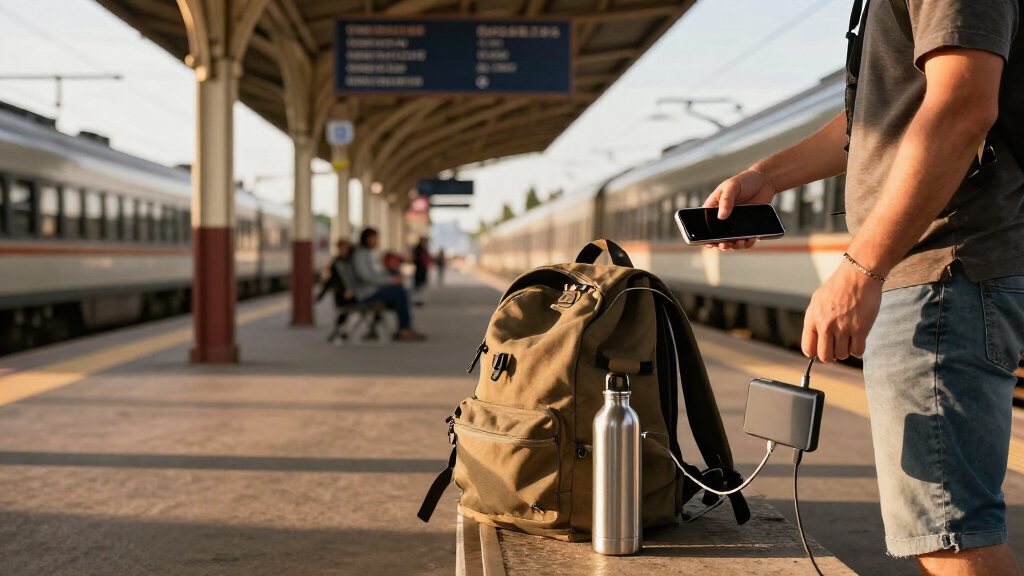
I ranked these portable power banks for travel by how well their stated capacity, output, cable setup, and form factor suit common trips. I gave more weight to useful output and manageable carrying demands than to the largest capacity number, since a bank is less convenient if it is too heavy to carry or does not match the devices a traveler needs to charge. Built-in cables, plug designs, displays, and multi-pack formats counted as usability benefits when they reduce packing friction without creating an obvious compatibility tradeoff.
The ranking favors versatility for typical travel, then separates compact everyday options from high-capacity and laptop-oriented banks. Higher-output models place well when they add meaningful device compatibility, but a bigger number alone does not earn a higher rank. Since product names do not provide every detail a buyer needs, I avoid assuming weight, charging speed across all devices, or airline approval; travelers should verify the manufacturer’s specifications and current airline rules before packing.
Factors to Consider When Choosing Portable Power Banks For Travel
I’d start with the devices you plan to charge and the length of time you’ll be away from an outlet, then narrow the choice by output, capacity, and carry setup. These factors help avoid two common mistakes: carrying more battery than a trip needs or choosing a compact bank that cannot serve a key device.
Match Output to the Device, Not Just the Capacity
A high-capacity bank can still charge slowly if its output does not suit your phone, tablet, or laptop. Check the power requirements for the device you most need to charge and compare them with the bank’s supported output and charging standards. Laptop charging calls for particular care: USB-C shape alone does not confirm that a power bank can deliver enough power. A higher-output model can serve more demanding devices, but it may add cost, bulk, or complexity you do not need for phone-only trips. For a mixed-device itinerary, I’d prioritize a bank that can handle the most demanding device rather than assuming every port performs equally. Also check whether multiple devices can charge at once and whether doing so reduces output.
Choose Capacity Around Your Actual Time Away From Outlets
Think about how many devices need backup power and how often you can recharge the bank, rather than treating the largest capacity as the automatic winner. A compact 10,000mAh model may be enough for a day out with a phone, while a longer itinerary or several devices can justify more reserve. Capacity labels do not translate directly into a guaranteed number of full device charges because conversion losses and device battery sizes vary. Very large banks can also be tiring to carry, so compare their practical benefit with the space and weight they take in your day bag. A useful rule is to pack for the longest stretch between outlets, not every possible emergency. If you have multiple long days without charging access, confirm the bank’s specifications and airline requirements before choosing an oversized option.
Treat Airline Rules as a Packing Check, Not an Assumption
Portable batteries are generally subject to airline restrictions, and rules can depend on the battery’s rated energy, the airline, and where you carry it. Do not assume a high mAh figure is enough to confirm cabin eligibility; look for the watt-hour rating on the product or its documentation. Check the current rules for every airline on your itinerary, especially when considering 50,000mAh or 60,000mAh models. Keep the bank accessible if your carrier requires power banks to travel in cabin baggage rather than checked luggage. A large capacity may be appealing for a remote trip, but it is a poor fit if it complicates boarding or exceeds a carrier’s limit.
Decide Whether Built-In Cables Reduce or Add Packing Friction
Built-in cables can reduce the number of loose accessories in a travel pouch and make quick charging simpler. A model with several cable types may suit a group or a traveler carrying older and newer devices, but the extra hardware can make the bank less streamlined. A single built-in USB-C cable is a cleaner setup if that matches your devices, while a separate cable can be replaced or swapped more easily. Think through what happens if an attached cable wears out or stops working: a bank with an additional output may still be usable, but a built-in lead can limit convenience. Also check that the cable supports the charging speed you expect, rather than choosing by connector alone. Pack a spare cable when a built-in lead is your only charging route.
Balance a Single Large Bank Against Smaller Backups
One large power bank keeps charging gear consolidated, but it can leave you without a backup if the unit is misplaced or unavailable. A two-pack of smaller banks can split the load between bags or let two travelers carry separate reserves. That approach adds more items to track and may require more charging cables, so it is not automatically simpler. Consider whether you need to charge devices while moving, share power with a companion, or leave one bank at your accommodation. A single higher-capacity option is often tidier for a solo traveler, while smaller separate banks can offer more flexibility across a group. Keep all batteries within airline rules regardless of how you divide the capacity.
Pay More Only for a Capability You Will Use
Higher output, laptop support, built-in cable convenience, and added capacity can all be useful, but each only matters if it fits your trip. Travelers carrying a laptop may benefit from a high-output bank; phone-only travelers may be better served by a smaller model that is easier to pack. A flashlight, display, or several integrated cables can be handy extras, yet they should not outweigh the basics of output, capacity, and carry suitability. Before buying, check port details, supported charging standards, dimensions, and the manufacturer’s stated battery rating. If the product listing leaves a key specification unclear, I would choose a better-documented option for travel rather than guessing. Spend on capability that solves a real packing or charging problem, not on the largest feature list.
Frequently Asked Questions
Can I bring a 50,000mAh or 60,000mAh power bank on a flight?
Do not decide from the mAh number alone. Airlines and aviation rules commonly use a battery’s watt-hour rating, and approval can depend on the carrier and route. Find the watt-hour figure on the bank or its documentation, then check the current rules for every airline you will use. Some large batteries may require airline approval or may not be allowed, so verify before packing. If the rating is missing or unclear, contact the airline or choose a model with a clearly stated rating.
Is a built-in cable better than carrying a separate charging cable?
A built-in cable is convenient when it matches your devices and you want fewer loose items in your bag. A separate cable is easier to replace and gives you more choice if you switch devices or need a different connector. Multi-cable banks can cover several device types, but their extra leads may add clutter rather than reduce it. Check that the built-in cable supports the output you need, not only the right connector. For a trip where charging is essential, carrying a spare compatible cable is a sensible backup.
Should I choose a 10,000mAh bank or a 20,000mAh bank for a weekend trip?
The better choice depends on how many devices you carry and how often you can reach an outlet. A 10,000mAh bank is easier to pack for a phone-focused weekend with regular access to charging. A 20,000mAh model offers more reserve for long days out, multiple devices, or sharing with another traveler, though it takes up more space. Capacity figures do not guarantee a set number of full charges, so compare the bank with your devices’ battery sizes and expected use. If you are unsure, prioritize comfortable everyday carry over unused reserve.
Can a travel power bank charge my laptop as well as my phone?
Some can, but the product must support enough output and a compatible charging standard for your laptop. A USB-C connector by itself does not confirm laptop charging capability. Check your laptop’s power requirements against the bank’s stated output, and look at how much capacity remains for your phone after charging the computer. Higher-output laptop banks can reduce the need to pack a separate charger, but they are often larger and may face added airline-rule checks. If laptop charging is occasional rather than routine, compare whether carrying that extra capacity is worthwhile for your itinerary.
Is one large power bank better than a two-pack of smaller banks for travel?
One large bank is simpler to keep track of and can provide a substantial reserve in a single unit. A two-pack lets you split power between bags or travelers and can be useful if one person needs a separate backup. The tradeoff is that two units take more space, may need separate cables, and create more items to charge and manage. Check the rating and airline rules for each battery rather than assuming a split makes restrictions irrelevant. Choose the setup that matches how you share gear and how you move through the trip.
Conclusion
For the best overall travel balance, I’d pick the Anker 20,000mAh Power Bank with Built-In USB-C Cable, 87W: it offers more output headroom than the 22.5W choices without moving into the laptop bank’s larger-capacity niche. The best value-style choice for everyday phone carry is the INIU 10,000mAh 45W Portable Charger, while the best premium pick for laptop users is the Anker 25,000mAh 165W model. Beginners who want fewer accessories to manage can start with the VRURC 20,000mAh or another built-in-cable option that matches their devices. For specific needs, choose Miady’s two-pack for split or shared charging, or look at the higher-capacity 50,000mAh and 60,000mAh models only when extended reserve outweighs bulk and airline-rule checks. Before buying, confirm the output, dimensions, cable compatibility, and watt-hour rating against your itinerary.
Fall Picks

DJI Osmo Action 5 Pro Essential Combo Waterproof 4K Action Camera
As an affiliate, we earn on qualifying purchases.